Tab Key Not Working? 9 Fixes for Windows 10 and 11 (2026)
Tab key not working on Windows? Try these 9 fixes for stuck keys, driver issues, browser conflicts, and remote-desktop apps that hijack Tab.
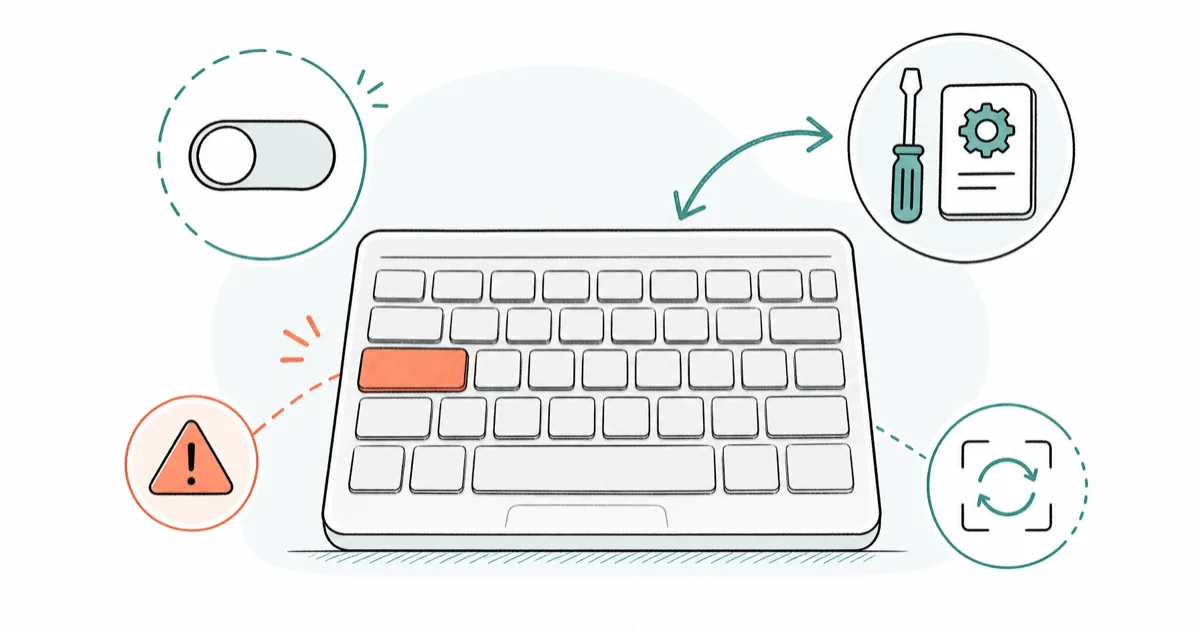
Quick AnswerFirst, blow compressed air under the Tab key to clear debris and press Windows + U to confirm Sticky Keys is off. If Tab still ignores you, open Device Manager, uninstall the keyboard driver, and reboot to let Windows reinstall it.
A Tab key not working stops you from indenting code, jumping between form fields, and Alt+Tabbing through windows. The cause on your own computer is usually one of three things: a sticky key cap, a corrupted driver, or a background app eating the keystroke. Most fixes take under five minutes and need no extra hardware.
The playbook covers desktops, laptops, and external USB keyboards alike, starting with the fastest checks before moving into driver and app-level fixes.
- Start with a 60-second triage: press Windows + U to rule out Sticky Keys, then test the Tab key in Notepad to isolate the problem from any specific app.
- Reinstall the keyboard driver in 4 clicks (Win + X, Device Manager, right-click keyboard, Uninstall) and reboot — Windows reinstalls the driver automatically and this fixes most software-side Tab failures.
- If Tab works in Notepad but fails in Chrome or Firefox, an extension is hijacking the keystroke; disable extensions one by one in Incognito mode to find the culprit.
- Remote-desktop tools like TeamViewer, AnyDesk, and Microsoft Remote Desktop intercept Tab even when minimized. Quit the host process from Task Manager before assuming the key is broken.
- A physically broken Tab key takes 90 seconds to remap with Microsoft PowerToys Keyboard Manager, so you can stay productive until you replace the keyboard.
#Why Is the Tab Key Suddenly Not Working?
The Tab key is a single keystroke, but it routes through four layers before something happens on your screen: the physical switch, the keyboard’s onboard controller, the Windows HID driver, and finally whatever application has focus. A failure at any layer looks identical to the user, which is why a “broken” Tab key is often a software issue.
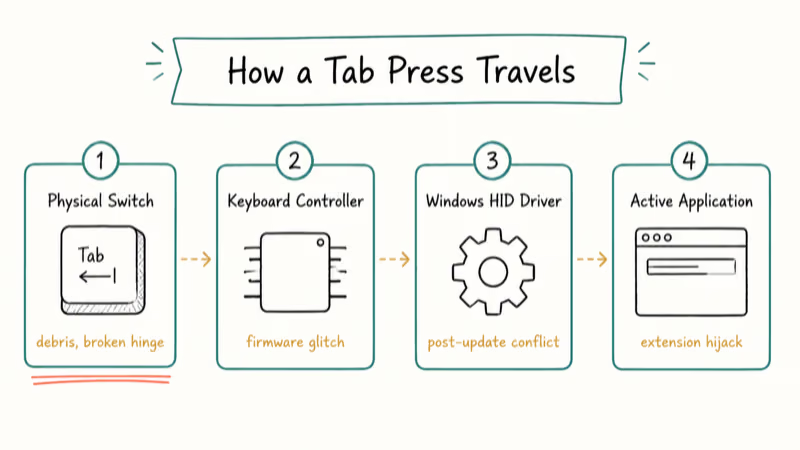
Three patterns cover most Tab key complaints in r/Windows10 and r/techsupport threads: debris under the keycap, a corrupted keyboard driver after a Windows feature update, and remote-desktop or accessibility software intercepting the keystroke before it reaches the active window.
The rest split between hardware damage (cracked dome, broken hinge, liquid spill) and edge cases like a misconfigured BIOS keymap on gaming keyboards. Knowing which layer is broken saves time. If Tab works in Notepad but fails in Chrome, the keyboard and driver are fine and you’ve got an application-level problem.
If Tab works in Safe Mode but not normal boot, a third-party app is the suspect. If Tab fails everywhere including the Windows login screen, you’re looking at hardware or driver-level damage.
#Quick Checks Before You Dig In
Run these four checks before you start uninstalling anything. Each takes under a minute and rules out the easy causes.
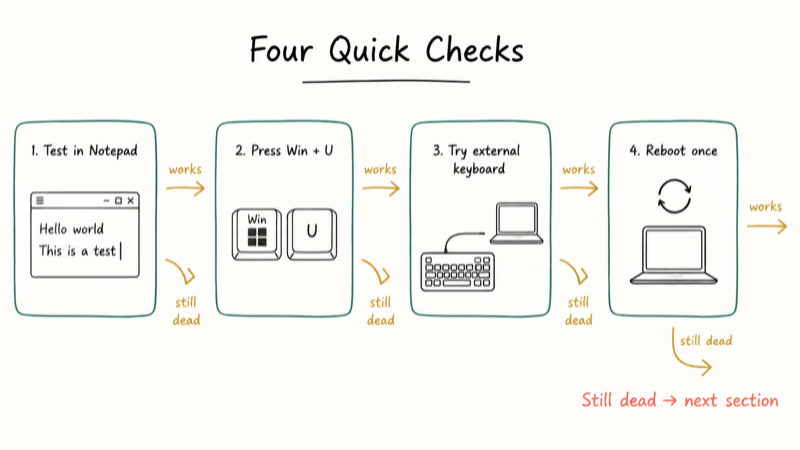
1. Test in Notepad first. Open Notepad and press Tab a few times. If it indents, the key works and your problem lives inside one app. Skip to the browser-extension section below.
2. Disable Sticky Keys. Press Windows + U to open Accessibility settings, then click Keyboard and toggle Sticky Keys, Filter Keys, and Toggle Keys all to off. Microsoft confirms that Filter Keys ignores keystrokes shorter than 0.5 seconds by default, which makes Tab feel dead even when the hardware is fine. The threshold is visible and adjustable in Settings > Accessibility > Keyboard > Filter Keys on Windows 11.
3. Try an external keyboard. Plug in any USB keyboard. If Tab works on the second keyboard, your built-in keyboard has a hardware fault. If Tab still fails, the problem is on the PC side.
4. Reboot once. A fresh boot clears stuck keyboard state and resets driver locks, especially right after a cumulative update.
If Tab is still dead after these four checks, the next sections walk through the least disruptive fixes first.
#How Do I Fix the Tab Key on Windows 10 and 11?
These five fixes target the Windows software stack. Run them in order and test Tab in Notepad after each step.
#1. Reinstall the Keyboard Driver
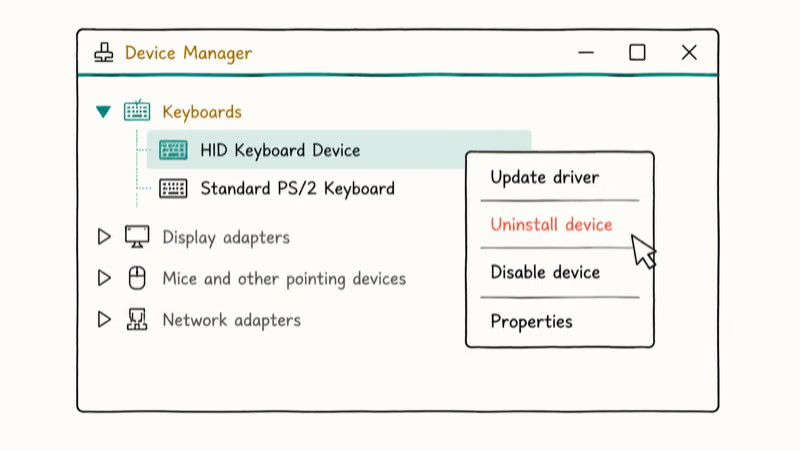
This is the highest-yield fix on Windows 10 and 11. Press Windows + X and select Device Manager. Expand Keyboards, right-click your keyboard (usually “HID Keyboard Device” or “Standard PS/2 Keyboard”), and click Uninstall device.
Confirm, then reboot. Windows detects the missing driver during startup and reinstalls a clean copy automatically.
If you have a vendor utility installed (Logitech G Hub, Razer Synapse, Corsair iCUE), uninstall the vendor app first and reboot before reinstalling, because the vendor’s filter driver sometimes overrides the generic HID driver.
#2. Run the Windows Keyboard Troubleshooter
Windows ships a built-in keyboard troubleshooter. On Windows 11, go to Settings > System > Troubleshoot > Other troubleshooters and run “Keyboard”. On Windows 10, the path is Settings > Update & Security > Troubleshoot > Additional troubleshooters > Keyboard.
The troubleshooter resets the input service, clears the input queue, and re-registers HID devices. It’s not magic, but it fixes the small set of cases where the input service has crashed silently. If you’re also seeing other broken keys, our walkthrough on the Windows 10 keyboard not working covers a wider battery of fixes.
#3. Quit Remote-Desktop Software
TeamViewer, AnyDesk, Chrome Remote Desktop, and Microsoft Remote Desktop all install a low-level keyboard hook so they can forward keystrokes to a remote session. The hook can intercept Tab even when the remote window is minimized or closed.
Open Task Manager (Ctrl + Shift + Esc), look in the Processes tab for any remote-access app, and click End task. This targets the symptom where Tab works fine after a clean boot but stops working later because the remote tool’s tray icon is silently active.
#4. Disable Sticky and Filter Keys (Permanently)
If Sticky Keys keeps re-enabling itself, the shortcut is firing accidentally. Press Windows + U, click Keyboard, scroll to “Use Sticky Keys”, and toggle off “Keyboard shortcut for Sticky Keys”. Do the same under “Use Filter Keys”. This stops the five-Shift-press shortcut from re-arming the feature.
The same Filter Keys threshold (0.5 seconds by default) is what makes Tab presses feel dropped when the feature is on. Turning off the activation shortcut prevents accidental re-enablement, and it takes 20 seconds.
#5. Update Windows
Outdated builds occasionally ship a buggy keyboard stack. Go to Settings > Windows Update and install all pending updates including optional driver updates. After a reboot, test Tab again. If a recent update is what broke Tab, you can also roll back: Settings > Windows Update > Update history > Uninstall updates.
#Fixing Tab That Works in Some Apps but Not Others
If Tab works in Notepad but fails in your browser, code editor, or remote desktop session, the problem is application-level. The fix depends on the app.
#Browser: Disable Extensions
Browser extensions are the single most common cause of Tab failing in Chrome, Edge, or Firefox. Open an Incognito or Private window first to confirm. If Tab works in Incognito (where most extensions are disabled by default), an extension is the culprit.
Open chrome://extensions or about
, disable all extensions, then enable them one at a time, testing Tab after each. Vimium, Tridactyl, and any extension that remaps keyboard navigation are the usual suspects.According to the Vimium project documentation on GitHub, the extension intercepts Tab and other navigation keys to provide vim-style page hints. If you find a guilty extension, check its settings for a “Tab key handling” or “keyboard shortcuts” toggle before uninstalling it.
#Code Editor: Check Indent Settings
In VS Code, Sublime Text, and most IDEs, Tab can be remapped to spaces, focus-mode escape, or snippet expansion. In VS Code, press Ctrl + Shift + P and type “Toggle Tab Key Moves Focus” — if Tab is stuck in focus-move mode, this command toggles it back to indent. In Sublime Text, View > Toggle Tab Translation does the same.
#Games and Specialized Apps
Some games, especially MMOs and competitive shooters, bind Tab to in-game functions like the scoreboard or target switching. If your physical Tab key is fine in Notepad but does nothing in-game, check the game’s keybind settings. Our guide on the WoW Escape key not working covers a similar pattern for World of Warcraft, where addons can hijack standard keys.
#Hardware Fixes When the Tab Key Is Physically Broken
If software fixes don’t help and Tab fails on every external keyboard test, the keyboard hardware is the cause. Here’s how to triage and repair.
#Clean Under the Keycap
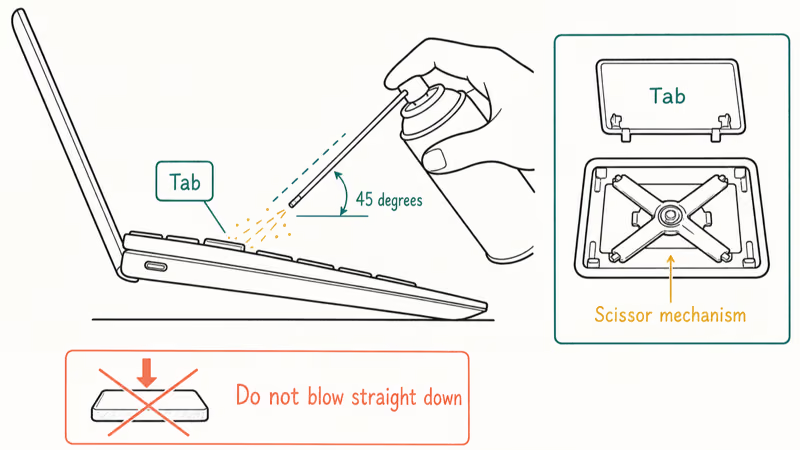
Debris is the leading cause of stuck keys on laptops because Tab sits on the edge of the keyboard where dust accumulates. Power down, flip the laptop upside down, and shake gently to dislodge loose debris. Then use a can of compressed air with the straw nozzle and short bursts at a 45-degree angle around the Tab keycap.
Avoid blowing directly downward into the switch, which can push debris deeper. For sticky residue from spilled drinks, dip a cotton swab in 90% or higher isopropyl alcohol (not rubbing alcohol with water), squeeze out excess, and clean the edges of the keycap. Let it dry for 30 minutes before powering on.
#Reseat or Replace the Keycap
On most laptops you can pop the Tab keycap off with a thin plastic tool (a guitar pick or the edge of a credit card) by lifting from the bottom-left corner. Inspect the scissor mechanism underneath for broken plastic clips or a bent metal hinge.
A scissor mechanism that’s lost a single corner clip will work intermittently and feel mushy. Replacement keycaps and hinges for major laptop brands cost between $5 and $15 on eBay or laptop-parts sites, and the swap takes under two minutes once the part arrives.
#Test the Keyboard Connection
For desktops and laptops with detachable keyboards (Surface Pro, ThinkPad with KB dock), unplug and reconnect. Try a different USB port, ideally on the rear of a desktop or directly on the laptop body rather than through a dock.
Wireless keyboards are worth checking for low batteries: Tab and Shift are common keys that flake first when battery falls below 15%. If you use a Surface keyboard, our Surface keyboard not working guide covers the connector cleaning steps that fix most contact failures.
#Replace the Keyboard
When a single key is permanently dead and the rest of the keyboard works, replacement is straightforward. External USB keyboards cost $20 to $50 for a quality membrane model. For laptops, replacement keyboards run $30 to $80 and require five to fifteen screws plus a ribbon-cable swap.
iFixit publishes free guides for most laptop models with photos of every step, and many guides also list the OEM part numbers you’ll need to source the right keyboard.
#Remap Tab to a Different Key with PowerToys
If you can’t replace the keyboard right away, remap Tab to an unused key. This works on Windows 10 and 11 with no driver hacks. Microsoft recommends PowerToys for keyboard customization on Windows, and the Keyboard Manager module handles single-key remaps in three clicks.
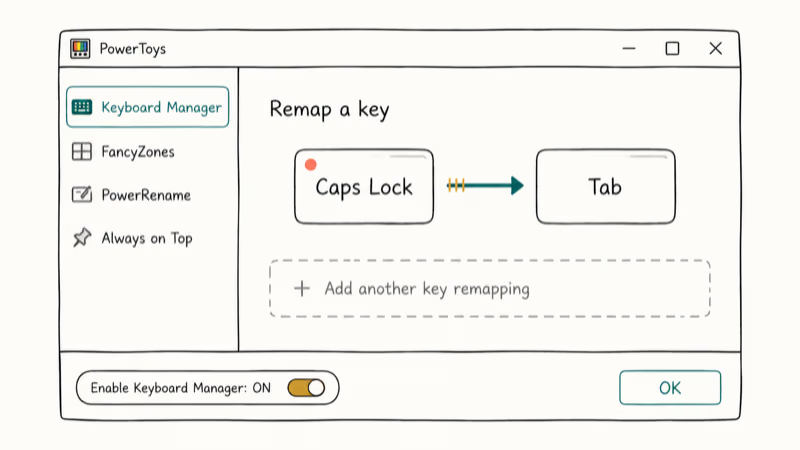
Install PowerToys from the Microsoft Store or GitHub, open it, click Keyboard Manager in the left rail, and toggle “Enable Keyboard Manager” on. Click “Remap a key”, press the physical key you want to act as Tab, and set the mapped output to Tab.
Caps Lock and the right Windows key are both popular targets because most users never press them. Click OK and the remap is active immediately, no reboot required.
PowerToys runs in the background and applies the remap globally, including in browsers, IDEs, and most games. If you also have other keyboard quirks like keyboard typing backwards, PowerToys handles those remaps the same way.
#Bottom Line
If your Tab key is dead on Windows, your three highest-yield moves are: reinstall the keyboard driver from Device Manager, kill any remote-desktop tool running in the tray, and clean under the keycap with compressed air.
The driver reinstall fixes most post-update breakage. Killing remote-desktop tools fixes the “Tab worked yesterday” pattern. Compressed air fixes the slow-decline mushy press. Run those three before anything else.
If the key is physically broken, install Microsoft PowerToys and remap Tab to Caps Lock in under a minute so you can keep working while you arrange a hardware fix. If you’re also seeing other Windows input issues like a Dell laptop keyboard locked, the same Device Manager reinstall trick usually clears those too.
#Frequently Asked Questions
Why does my Tab key only work sometimes?
Intermittent Tab failure usually means a partly clogged switch, a worn scissor mechanism, or a low wireless-keyboard battery. Test in Notepad over a 30-second period. If you see roughly half the presses register, the switch is mechanically failing and replacing the keycap or the keyboard is the only permanent fix. Filter Keys also causes this exact symptom in software, so press Windows + U and confirm it’s off before you blame the hardware.
Can a Windows update break the Tab key?
Yes, and it’s more common than you’d think. A Windows feature update can install a generic HID driver that conflicts with vendor keyboard utilities. The fix is to uninstall the keyboard driver in Device Manager and reboot to let Windows reinstall a clean copy. If the update itself is the cause, you can also roll it back from Settings > Windows Update > Update history > Uninstall updates within 10 days of installation.
Will Sticky Keys disable my Tab key?
Sticky Keys doesn’t disable Tab directly, but Filter Keys (which sits in the same Accessibility menu) does. Filter Keys ignores keystrokes shorter than a configurable threshold, and the default 0.5-second hold time makes normal Tab presses feel dropped. Turn off Filter Keys at Settings > Accessibility > Keyboard, and disable the keyboard shortcut for Sticky Keys at the same time so the five-Shift-press combo can’t re-enable either feature.
How do I check if my Tab key is broken on a laptop?
Plug in any external USB keyboard and test Tab on it. If the external Tab works, your laptop’s built-in Tab key is broken. If the external Tab also fails, the problem is on the Windows side, not the hardware.
As a second check, boot into the BIOS (usually F2 or F12 at startup) and try Tab there. The BIOS uses no Windows drivers, so a working Tab in BIOS plus a dead Tab in Windows means the issue is software.
Is it safe to clean my keyboard with isopropyl alcohol?
Yes, with two conditions. Use 90% concentration or higher because lower concentrations leave water residue that can corrode contacts. Apply with a cotton swab rather than pouring or spraying, especially around the Tab key area which sits above the laptop motherboard on most ultrabooks. Let the keyboard dry for 30 minutes before powering on.
Can a virus stop my Tab key from working?
Malware-induced single-key failure is rare but not impossible. Some keyloggers and unwanted browser extensions hook the keyboard at a low level and can drop specific keys to confuse the user or capture input. Run a full scan with Windows Defender (Settings > Privacy & security > Windows Security > Virus & threat protection > Scan options > Full scan) and a second-opinion scan with Malwarebytes Free. If both come back clean, the problem isn’t malware.
Will a factory reset fix the Tab key?
A factory reset fixes Tab failures only if the cause is software corruption that survived the simpler driver reinstall. Try the Device Manager driver reinstall first because it takes 60 seconds and resolves the same software-level issues a reset would. If a hardware fault is the cause, no software action will help. Reserve a factory reset for cases where multiple keys or other input devices are also failing system-wide.

Best Laptop for Running LLMs in 2026: Memory Comes First
The best laptop for running LLMs is a memory purchase first. Compare MacBook unified memory against NVIDIA laptop VRAM, and see what each tier really runs.
How to Run a Local LLM on Windows: A 2026 Setup Guide
Run a local LLM on Windows with LM Studio or Ollama. Pick a model that fits your GPU memory, keep every prompt offline, and skip the monthly bill.
Bluetooth Not Working on Snapdragon X? Fixes for 2026
Bluetooth not working on your Snapdragon X Copilot+ PC? Generic audio, mice, and keyboards work, but vendor apps often lack an ARM build. Fixes inside.
Docker Desktop and WSL2 Not Working on Snapdragon X? Fix It
WSL2 runs fine on Snapdragon X, but Docker Desktop ARM is Early Access and throws WSL errors. Use WSL2 plus native ARM64 Ubuntu and Docker Engine.