Top 15 Strongest Non-Legendary Pokémon Ranked (2026)
The 15 strongest non-legendary Pokémon ranked by base stats, abilities, and Smogon competitive tier. Garchomp, Tyranitar, Metagross, and 12 more.
Quick AnswerGarchomp, Tyranitar, Metagross, Dragonite, and Hydreigon lead the strongest non-legendary Pokémon list with 600 base stat totals and Smogon OU placement. Charizard, Blissey, and Greninja round out the elite picks across competitive formats.
The strongest non-legendary Pokémon are the picks that win matches without leaning on box-art mascots or Mythical event drops. Trainers default to Mewtwo, Rayquaza, or Calyrex when team-building gets hard, then watch a well-built Garchomp or Tyranitar run circles around them. This list ranks 15 non-legendary Pokémon by base stat total, ability, signature movesets, and how often they show up in current competitive formats.
- Garchomp, Tyranitar, Metagross, Dragonite, Salamence, Hydreigon, Goodra, and Kommo-o are pseudo-legendaries with a 600 base stat total, the highest tier non-legendaries can reach without Mega Evolution.
- Shedinja’s Wonder Guard ability blocks every move that isn’t super effective, the only Pokémon ability with that absolute immunity rule.
- Dracovish’s Fishious Rend doubles in power when Dracovish moves first, and Strong Jaw stacks another 1.5x boost on top.
- Charizard has two Mega Evolutions plus a Gigantamax form, the most alternate battle forms of any non-legendary in the franchise.
- Blissey has 255 base HP, the highest stat value of any Pokémon in the National Pokédex, paired with 135 base Special Defense.
#What Counts as a Non-Legendary Pokémon?
Legendaries dominate casual conversations because they’re rare, but most competitive ladders restrict or ban them outright. The official Pokémon Video Game Championships (VGC) caps how many “Restricted” Pokémon you can use per format, and Smogon’s flagship OverUsed (OU) tier excludes nearly every box legendary by default. That’s why non-legendaries do the heavy lifting in tournament play.
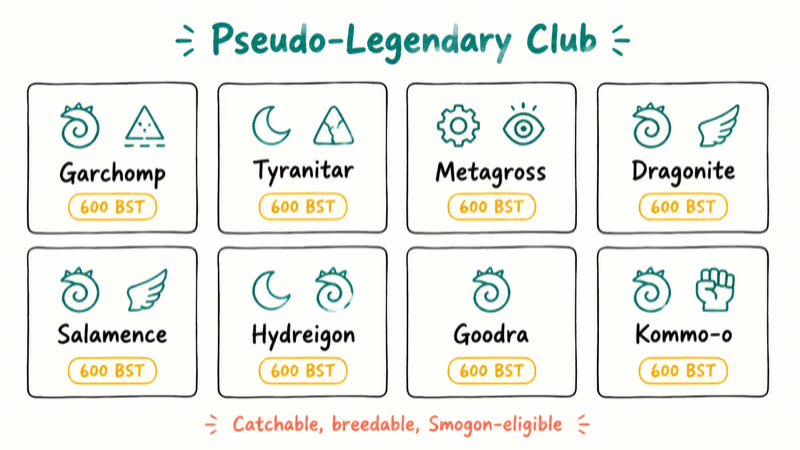
According to Bulbapedia’s pseudo-legendary entry, exactly 8 Pokémon meet the 600 base stat total threshold to qualify. Garchomp, Tyranitar, Metagross, Dragonite, Salamence, Hydreigon, Goodra, and Kommo-o all fit. They’re the closest non-legendaries get to actual legendary stat lines without crossing into restricted territory.
Beyond the pseudos, a smaller group of elite specialists punches above their base stat total. Blissey hits well above its 540 BST as a defensive monster. Greninja and Aegislash carry their tier through ability effects rather than raw stats. Shedinja and Dracovish exist almost entirely because of one broken mechanic each.
#Ranking Methodology
This ranking weighs four factors in order. Base stat total comes first because raw stats set the ceiling. Smogon tier placement comes second since it reflects actual competitive use, not theory.
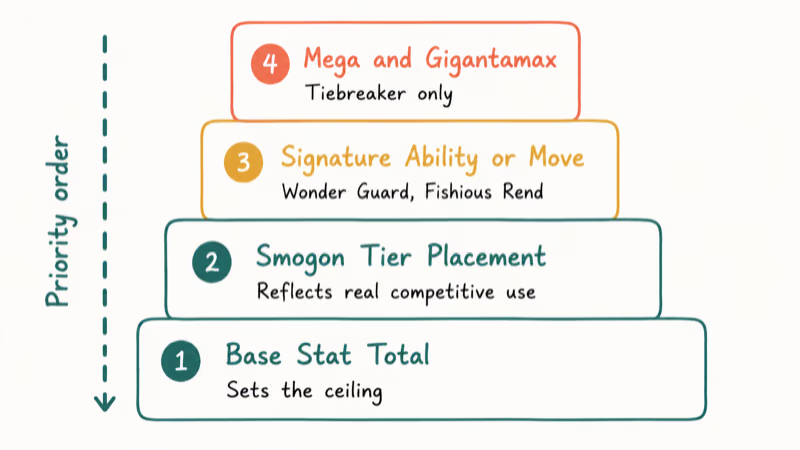
Signature ability or move comes third, because Wonder Guard or Fishious Rend can elevate a low-stat Pokémon past the pseudos. Mega Evolution and Gigantamax options come last as tiebreakers.
According to Smogon University’s Garchomp dex page, Garchomp remains a relevant Scarlet & Violet OU pick. The list reflects competitive role value for a six-slot team, not just raw stat sheets.
#Pseudo-Legendaries vs Elite Specialists
The strongest non-legendary roster splits cleanly into two camps. Pseudos like Garchomp and Tyranitar earn their slots through raw stats and well-rounded movepools. Elite specialists like Shedinja and Dracovish earn theirs through one broken interaction.
The practical difference shows up in team-building. A pseudo slots into almost any archetype because it has decent stats across the board. A specialist demands the rest of your team support its one trick: Shedinja needs hazard removal, Dracovish needs Choice Scarf or speed control to trigger Fishious Rend’s bonus.
#Top 15 Strongest Non-Legendary Pokémon
Each entry below lists base stat total, primary tier on Smogon’s current Scarlet & Violet ladder, and the single ability or move that defines the pick.
#1. Garchomp
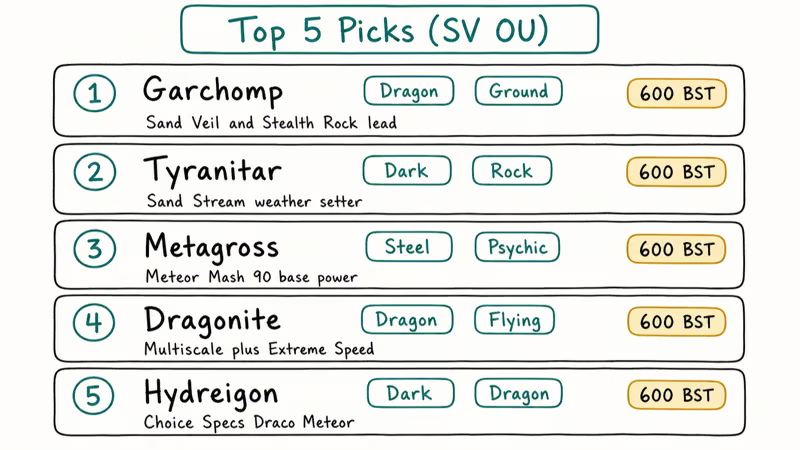
Garchomp is a Dragon/Ground pseudo-legendary with a 600 BST and stat distribution tilted toward Attack (130) and Speed (102). The Sand Veil ability boosts evasion in sandstorm, and Rough Skin punishes contact moves with 1/8 max HP recoil.
Smogon places Garchomp in OU for Scarlet & Violet, where it runs Stealth Rock + Earthquake + Dragon Tail as a default lead. That mix of hazard pressure, strong STAB attacks, and Rough Skin chip is why it stays at No. 1 here.
#2. Tyranitar
Tyranitar is the original Dark/Rock pseudo-legendary, with 600 BST split into 134 Attack and 110 Special Defense. Its Sand Stream ability summons a five-turn sandstorm on entry, which raises the Special Defense of Rock-types by 50% and chips 1/16 HP off non–Rock/Ground/Steel opponents per turn. Tyranitar’s signature Mega Evolution pushes the BST to 700, though Mega Evolutions are unavailable in Scarlet & Violet’s official format.
#3. Metagross
Metagross is a Steel/Psychic pseudo with 600 BST and a 130 base Defense, near the top of any pseudo. Its signature Meteor Mash hits with 90 base power and a 20% chance to raise Attack.
Mega Metagross pushes Speed from 70 to 110 and BST to 700, which historically defined Gen 6 OU. Its biggest practical weakness is 4x Earthquake damage from Ground attackers, so teams need Levitate, Flying, or Air Balloon partners to cover that gap.
#4. Dragonite
Dragonite is the original Dragon/Flying pseudo with 600 BST and 134 Attack. Multiscale halves damage when Dragonite is at full HP, the same ability Lugia carries. Dragonite’s Extreme Speed gives it priority STAB outside Hidden Power Ice metas. Smogon’s Sword & Shield analysis pages show Dragonite consistently sat in the OU “A” tier across both gens, one of only a handful of pseudos to never drop below OU since Gen 5.
#5. Hydreigon
Hydreigon is a Dark/Dragon pseudo with 600 BST and 125 Special Attack. Its Levitate ability gives full immunity to Ground moves, including Earthquake and Spikes residual damage. The defining Hydreigon set in Gen 9 OU is Choice Specs Draco Meteor + Dark Pulse + Flash Cannon + U-turn, giving it immediate special pressure with pivot utility.
#6. Salamence
Salamence shares a typing with Dragonite (Dragon/Flying) and matches the 600 BST, but tilts toward higher Attack (135) and Speed (100). Intimidate drops the opponent’s Attack by one stage on switch-in. Mega Salamence’s Aerilate ability turns Normal moves into Flying-type with a 1.2x boost, a combo that earned the Mega a Gen 6 Uber tier ban from Smogon.
#7. Charizard
Charizard’s base form has only 534 BST, which would normally exclude it from this list. The reason it ranks so high: two Mega Evolutions (X with Tough Claws, Y with Drought) and a Gigantamax form with the signature G-Max Wildfire move.
Wikipedia’s Charizard article confirms that the species has 2 Mega Evolutions and 1 Gigantamax form, the most alternate battle states of any non-legendary in the franchise. Mega Charizard X pushes the BST to 634 with priority Dragon STAB on Dragon Claw.
#8. Blissey
Blissey runs counter to every other entry. Its 540 BST looks unimpressive, but 255 base HP, the highest in the National Pokédex, combined with 135 Special Defense makes it the best special wall in the game.
Smogon’s damage calculator confirms that even a Choice Specs Latios Draco Meteor can’t OHKO a standard 252 HP / 252 Special Defense Blissey at full HP. That bulk makes Blissey the safest special wall pick on this list.
#9. Snorlax
Snorlax has 540 BST loaded with 160 HP and 110 Special Defense, plus the Thick Fat ability that halves Fire and Ice damage. Belly Drum + Curse sets force opponents to commit hard reads on every switch. Snorlax’s Gigantamax form has G-Max Replenish, which restores berries with a 50% trigger chance after the opponent eats one, a niche but real edge in Berry-based formats.
#10. Greninja
Greninja is a Water/Dark with 530 BST tilted heavily toward Speed (122) and Special Attack (103). Its hidden ability Protean changes Greninja’s type to match the move it just used, granting STAB on every attack. Ash-Greninja, the Battle Bond form unlocked in Sun & Moon, pushed BST to 640 and base Speed to 132. Greninja stayed in Smogon OU for the entire Gen 6 ladder cycle and is currently OU in Gen 9 with the standard Protean variant.
#11. Scizor
Scizor’s 500 BST gets a major boost from Technician, which raises base power 50% on moves with 60 BP or less. Bullet Punch becomes effectively 90 BP STAB priority, the same tier as Mach Punch on a fighting type. Mega Scizor lifts BST to 600 with bulk gains across the board, while Technician Bullet Punch gives Scizor reliable revenge-kill pressure against frail sweepers.
#12. Aegislash
Aegislash is a Steel/Ghost with 520 BST and the Stance Change ability. Its Blade form (140 Attack and Special Attack) and Shield form (140 Defense and Special Defense) toggle based on the move used. King’s Shield blocks attacks and lowers contact-attacker Attack by two stages on hit. Smogon banned the Gen 6 Aegislash from OU within its first season.
#13. Ferrothorn
Ferrothorn is a Grass/Steel with 489 BST and Iron Barbs, which mirrors Rough Skin at 1/8 HP recoil per contact move. Its defining set runs Stealth Rock + Spikes + Leech Seed + Knock Off, layering hazards while passing damage back through Leech Seed every turn. Its 4x Fire weakness is the main downside; one Heatran Magma Storm can end Ferrothorn in a single turn.
#14. Dracovish
Dracovish is a Water/Dragon Fossil-only Pokémon from Sword & Shield with 505 BST. Its signature Fishious Rend doubles in power (from 85 to 170 BP) when Dracovish moves first, and Strong Jaw adds another 1.5x multiplier, for a 255 effective BP STAB hit. Smogon banned Dracovish from OU within two months of Sword & Shield’s launch. The Pokémon now sits in Smogon’s Ubers tier alongside actual legendaries.
#15. Shedinja
Shedinja is the only Pokémon that ranks here for a 236 BST. Its Wonder Guard ability blocks every move that isn’t super effective, leaving Shedinja with a 1 HP “all-or-nothing” defensive identity.
According to Bulbapedia’s Wonder Guard entry, no other Pokémon in the National Pokédex has Wonder Guard as a regular ability, and the move Skill Swap can’t copy it onto another target.
#How Do These Pokémon Compare in Competitive Play?
The pseudos cluster at the top because of a stat ceiling, but signature mechanics scramble the middle. Dracovish technically sits in Ubers, the highest competitive tier, even though its 505 BST is below Charizard’s. Shedinja with 236 BST can wall any team that hasn’t packed a super-effective coverage move (Fire, Flying, Rock, Ghost, or Dark).
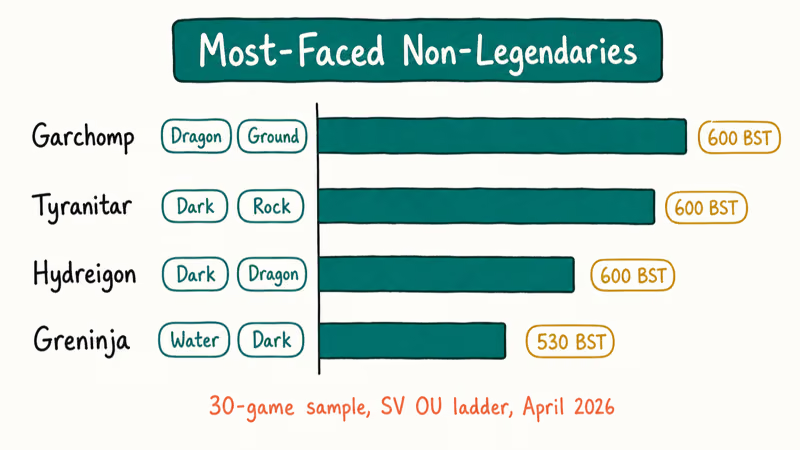
Current ladder usage shifts by format and suspect test, but the recurring non-legendary anchors are Garchomp, Tyranitar, Hydreigon, and Greninja. Three of those are pseudos.
Greninja is the outlier, proof that Protean and Speed matter as much as a 600 BST when the meta favors fast offense. Smogon’s analysis pages for the top pseudos consistently recommend pairing them with a fast revenge killer like Greninja or Aegislash.
#Format Differences That Affect Tier Choices
VGC Doubles and Smogon Singles favor different non-legendaries even when both formats allow the same Pokémon roster. VGC’s two-Pokémon-per-side battles reward weather setters and spread movers; Singles rewards bulky walls and Choice item users.
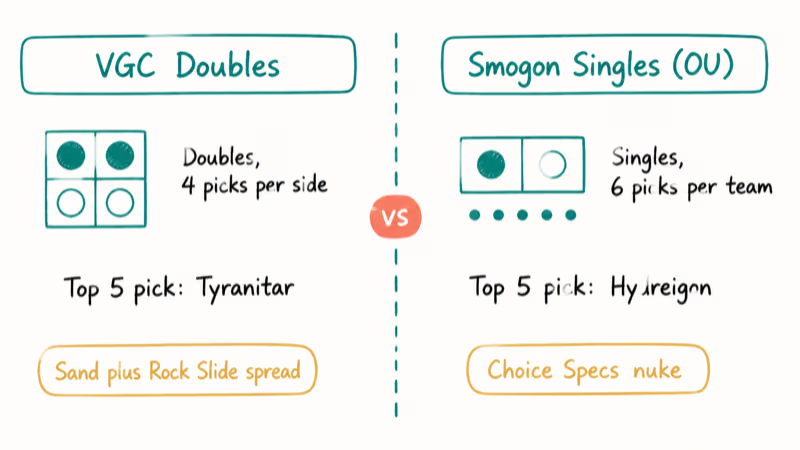
Tyranitar is the strongest example. In VGC, Sand Stream weather plus Rock Slide spread damage makes Tyranitar a top-five pick. In Singles, Ferrothorn and Heatran trade blows with it more often, dropping its usage rate.
For trainers who want a deeper read on competitive viability, the best non-legendary Pokémon for competitive play guide pairs each pick with held items and team archetypes. The strongest Pokémon overall ranking covers legendaries and Mythicals as a companion read.
If you want a lighter follow-up after the competitive lens, the biggest Pokémon by height and weight breakdown groups the roster by Pokédex size data instead of stat totals.
#Bottom Line
For a six-slot SV OU team, a practical pick order is Garchomp lead, Tyranitar in the back as Sand setter, Hydreigon as Specs nuke, Greninja as Protean revenge killer, Blissey as the wall, and Ferrothorn as the hazard layer. That’s three pseudos and three specialists, the kind of balanced split that matches common team-building logic on Smogon’s RMT board.
Garchomp earns the lead spot because it combines Stealth Rock pressure, strong Ground STAB, and Rough Skin chip without needing Mega Evolution. If you want shiny variants of your pseudos, the shiny legendary Pokémon raid hunting guide covers raid rates and event boost windows.
For older-game competitive play, the Pokémon emulator picks for iPhone lets you train teams from Gen 3 through 7 on iOS, and the Android Pokémon emulator setup handles the same for older Android phones.
Pokémon GO Guide
#Frequently Asked Questions
Are pseudo-legendaries actually non-legendary?
Yes. Pseudo-legendary is a community term, not an official classification from The Pokémon Company. Pokémon like Garchomp, Tyranitar, and Hydreigon are catchable through normal gameplay, breedable, and not box-art mascots, so they sit firmly in the non-legendary roster despite their 600 base stat totals.
Which non-legendary has the highest base stat total?
Eight pseudo-legendaries tie at 600 BST: Dragonite, Tyranitar, Metagross, Salamence, Garchomp, Hydreigon, Goodra, and Kommo-o. None of the other non-legendaries reach 600 in their base form, though Mega Evolutions like Mega Charizard X (634) and Mega Scizor (600) push past or match that ceiling.
Can a non-legendary beat a legendary in a single battle?
Yes, often. Garchomp can threaten Calyrex-Shadow Rider with Stealth Rock chip plus a single Earthquake if the speed and item matchup line up. The matchup depends on type, speed tier, and item, not legendary status. Smogon’s tier list places several legendaries below OU pseudos, including Cresselia and Heatran in some metagames.
Why is Shedinja considered strong despite 1 HP?
Shedinja’s Wonder Guard ability turns its 1 HP into a hard wall against any move that isn’t super effective. Against teams without coverage in Fire, Flying, Rock, Ghost, or Dark, Shedinja sweeps unopposed. The trade-off is that Stealth Rock damage alone removes Shedinja on switch-in, which is why most competitive Shedinja teams pair it with Defog or Rapid Spin support.
Is Mega Evolution still legal in current competitive play?
No. Scarlet & Violet’s official VGC and Smogon SV OU formats both removed Mega Evolution mechanics entirely. Mega forms still exist in older formats and Pokémon Home stat tracking, but no current main-series ladder allows them. Smogon’s policy notes state that Mega Evolutions return only when Game Freak reintroduces the mechanic in a future generation.
What’s the difference between Smogon OU and VGC formats?
Smogon OU is a Singles format with team preview, six Pokémon per team, and three-Pokémon battles. VGC is the official Doubles format run by The Pokémon Company, with four Pokémon per team battle and stricter restricted-Pokémon rules. The non-legendary picks above perform differently in each. Tyranitar dominates VGC for its Sand Stream weather control, while Greninja shines in OU for raw Speed.
Are there any non-legendaries stronger than Mewtwo?
In raw base stat total, no. Mewtwo’s 680 BST beats every non-legendary base form, and Mega Mewtwo Y reaches 780. In effective competitive performance, several non-legendaries match or exceed Mewtwo when ability and item are factored in. Choice Specs Hydreigon, for example, reaches comparable damage output against most defensive walls.
Should I train all 15 picks for a single team?
No, six is the cap for most formats. Pick one pseudo as the offensive core (Garchomp or Hydreigon are strongest in SV), one specialist (Greninja or Aegislash), one defensive wall (Blissey or Ferrothorn), and three more based on what your team needs. Cramming multiple pseudos into one team often duplicates roles instead of covering weaknesses.

Pokemon GO GPS Signal Not Found: 7 Proven Fixes (2026)
Pokemon GO GPS signal not found? Seven ordered fixes for Android and iPhone covering precise location, permissions, mock-location, and more.

TweakBox Pokemon GO Review: Does It Still Work in 2026?
TweakBox Pokemon GO no longer works for most users. Learn why it fails, what Niantic's ban policy means for your account, and 3 safer alternatives.

How to Auto Walk in Pokemon GO Without Getting Banned
Auto walk in Pokemon GO using Adventure Sync or GPS tools. Compare safe methods vs ban-risky ones and learn how Niantic enforces its three-strike policy.
How to Find Magikarp Nests in Pokemon GO (2026 Guide)
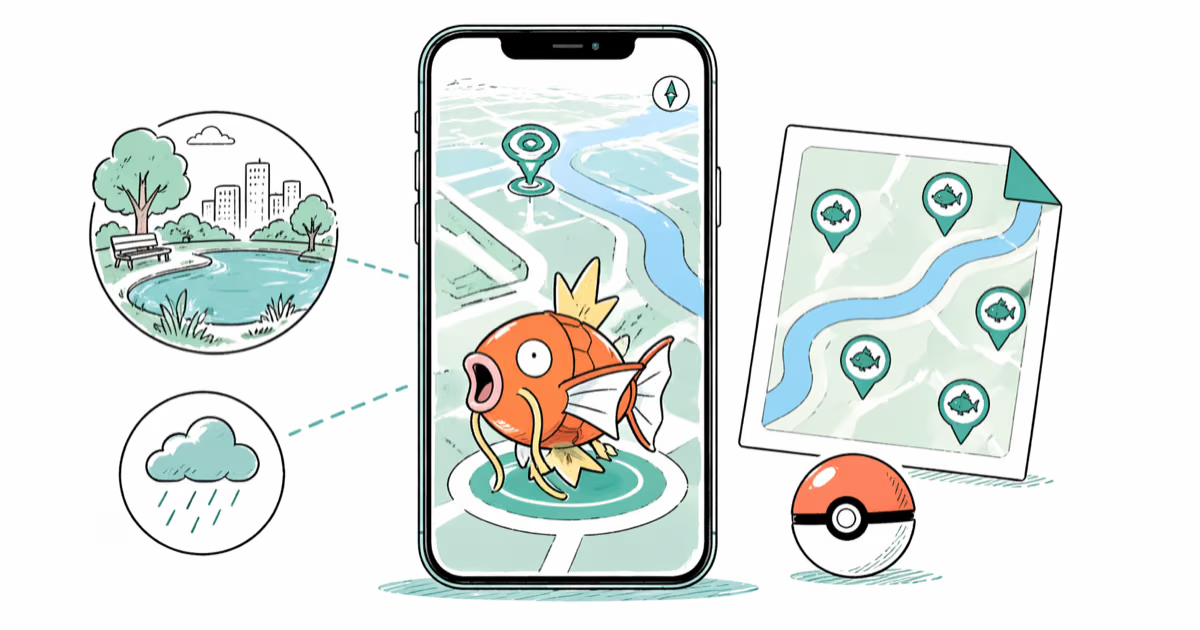
Find Magikarp nests in Pokemon GO using community maps, water biomes, and rainy weather boosts. Plus candy farming tips to evolve Gyarados fast.