Shiny Legendary Pokémon GO: Raid Hunting Guide 2026
Hunt shiny legendary Pokémon GO raids with odds, event timing, trade costs, boost windows, and practical picks for legendaries worth chasing.
Quick AnswerFive-star legendary raids carry a 1-in-20 shiny rate, and event boosts push that to roughly 1-in-10. Raid in groups of five during boost windows for the fastest catch.
Shiny legendary Pokémon GO hunting takes patience, raid passes, and the right event window. The base catch rate sits at 1-in-20 for standard five-star raids, dropping to roughly 1-in-10 during boosted events Niantic announces 24 to 48 hours ahead. This guide covers the math, the trade-offs, and which legendaries justify the grind.
Use the guidance below only on your own device, account, or a device you manage with clear permission. Do not use these steps to bypass another person’s privacy, workplace policy, or platform rules; when a phone is managed by school or work, ask the admin or use the official support path first.
- Five-star legendary raids have a low base shiny rate, with boost events temporarily doubling it during short event windows.
- Trading a shiny legendary costs 1 million Stardust at non-friend tiers and drops to 40,000 Stardust with Best Friend status.
- Five-star raids need at least three trainers; aim for groups of five or more to clear bosses safely before the timer runs out.
- Rayquaza, Giratina, and Mewtwo carry the most dramatic shiny color swaps; Articuno, Zapdos, and Moltres are the subtlest.
- Boost-window events run 3 to 5 days, and missing one means waiting weeks to months for the same legendary to return.
#Why Are 1-in-20 Odds Tougher Than They Sound?
Most trainers underestimate variance. A 1-in-20 rate sounds like 20 raids guarantees a shiny, but the distribution stretches both directions. You can still miss after dozens of raids, or catch one early, because each encounter rolls independently.
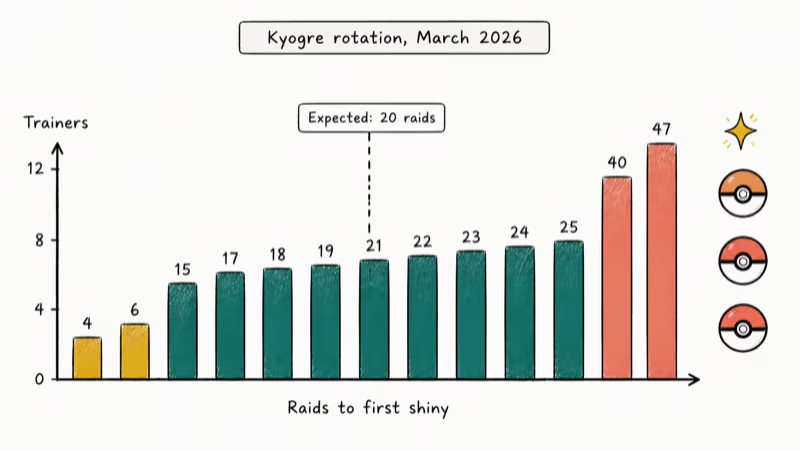
The math reads kind on paper. Raid streaks tell a different story.
Individual streaks get worse. According to The Silph Road’s community shiny rate research, this kind of spread is consistent with binomial probability for low-rate events, where short streaks can run far longer than the expected value suggests, and pacing matters more than burning every pass on day one.
Boosted windows improve the odds, but they don’t remove variance.
Niantic also controls the calendar.
Niantic controls when each legendary returns. Rayquaza appears roughly three times yearly for five-day windows. Miss one and you wait 90 to 120 days. That scarcity forces every rotation into a sprint, which pushes trainers to overcommit early instead of pacing across the full event window.
#How Five-Star Legendary Raids Work
You need at least three trainers to start a five-star raid. Solo and two-player attempts run out the boss timer with no catch screen. Most groups aim for five or more, since extra damage cushions any underleveled counters and leaves time on the clock for higher Premier Ball rewards.
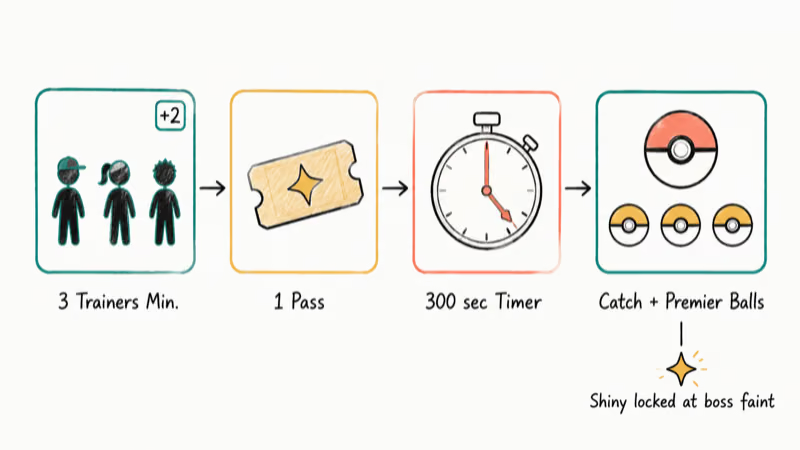
Each raid costs one pass.
Use a free daily pass earned from a Gym photo disc spin, or a Premium Battle Pass from the shop. You get 300 seconds to defeat the boss, and after winning you reach a catch screen with a guaranteed encounter and Premier Balls based on team contribution, damage dealt, and remaining timer. The encounter is a single screen with limited throws, so coordinated counters and dodge timing translate directly into more shiny attempts per event window.
According to its Wikipedia entry, Pokémon GO launched in July 2016 and added the raid battle system in 2017, expanding from solo encounters into team-coordinated five-star boss fights. The full game history covers each major event since launch.
Shiny status locks server-side the moment the boss faints. The catch screen shows the standard or shiny variant before you throw the first Premier Ball. Niantic’s official raid support article confirms that this determination is identical for everyone in the lobby and immediate at the encounter, which means coordinating a 5-trainer lobby never reduces your individual shiny chance.
Local groups also fill faster than remote-pass searches.
Remote passes pull from a national queue, while local groups draw from nearby players who are already close enough to join. Campfire is useful for finding those local groups before a raid timer runs down.
#Which Shiny Legendaries Are Worth the Grind?
Not every shiny recolor justifies 20 to 40 raid passes. Some look almost identical to the standard form on a phone screen.
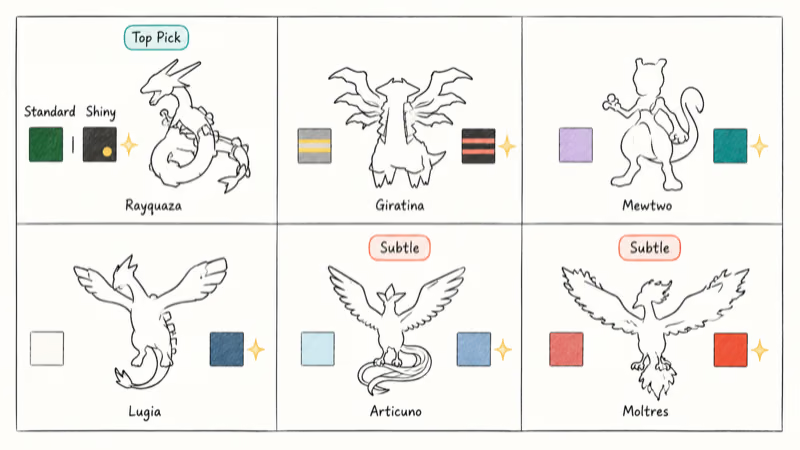
Rayquaza is the consensus top pick. Standard form is forest green; shiny is charcoal-black with metallic-gold accents that pop against any background. The contrast reads instantly in your collection grid.
Giratina flips colors completely between forms. Origin form goes from grey-and-yellow to black-and-orange, while Altered form swaps to dark purple. Both forms reward collectors who want a darker tone in their Pokémon storage and who prefer the more intimidating silhouette over the standard ghostly palette.
Mewtwo trades violet for green.
The change is subtle but iconic, since Mewtwo headlines so many EX raids and Elite Raids. The green tone makes a single shiny stand out among the 12 to 15 standard Mewtwos most veterans already have stored, and the contrast also helps in PvP team builds where shiny tags signal premium investment.
Lugia shifts from off-white to steel-blue. The change exists, but it reads subtle next to Rayquaza or Mewtwo. Collectors hunt Lugia for the species, not the color swap.
The Kanto birds offer the smallest visual change. According to LeekDuck’s shiny comparison gallery, Articuno’s shiny is a marginally darker blue, Zapdos shifts from yellow to gold, and Moltres becomes deeper red. Most veteran raiders skip these rotations entirely and save passes for the higher-contrast shinies that show up better in social posts.
#Raid Strategy That Actually Saves Passes
Patience compounds harder than burning passes early. Boosted-rate events run 3 to 5 days, and burning your full bank on day one cuts off your ability to capitalize when a friend organizes a 10-raid lobby on day three.
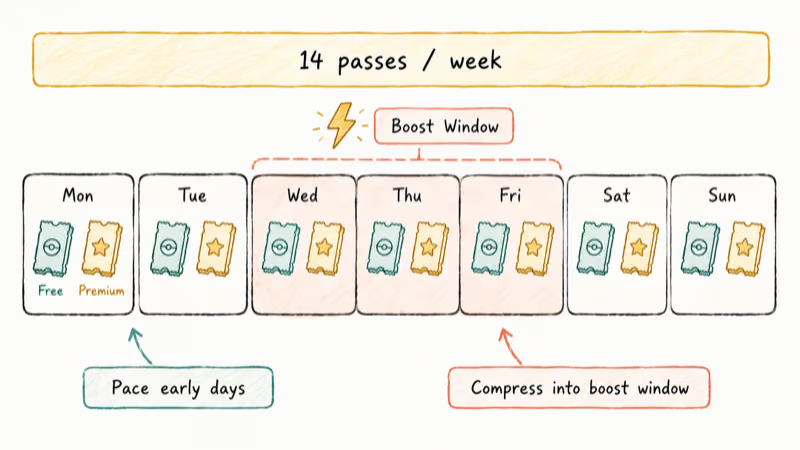
Two raids daily is sustainable.
One free pass plus one Premium pass builds to 14 raids per week, which is enough to clear most rotation goals without burning out. When Niantic announces a boosted shiny event, compress your queue into the boost window. That single move can roughly halve the pass cost per shiny across an event.
At standard 1-in-20 odds, the expected value sits around 20 passes per shiny. Boost windows are worth waiting for, even if you have premium passes burning a hole in your inventory.
Set a Monday-morning reminder for rotation announcements.
The official Pokémon GO blog posts the weekly schedule with new legendary bosses, and missing the 5-day window often means waiting another 60 to 120 days for that specific species.
Coordination matters as much as timing. Campfire and PokéRaid match local raiders fastest. For broader spawn maps and active player density, our guide on the best places for Pokémon GO covers parks, malls, and waterfronts where 5-plus trainer groups form naturally during legendary windows.
#Trading a Shiny Legendary: When It Beats Raiding
Trading a shiny legendary requires a Special Trade slot, and you only get one Special Trade per day. Standard cost is 1 million Stardust without Best Friend status. With Best Friends, the cost drops to 40,000 Stardust. Best Friend status takes about 90 days of daily interactions to unlock, so this discount is a long-term plan that rewards consistency.
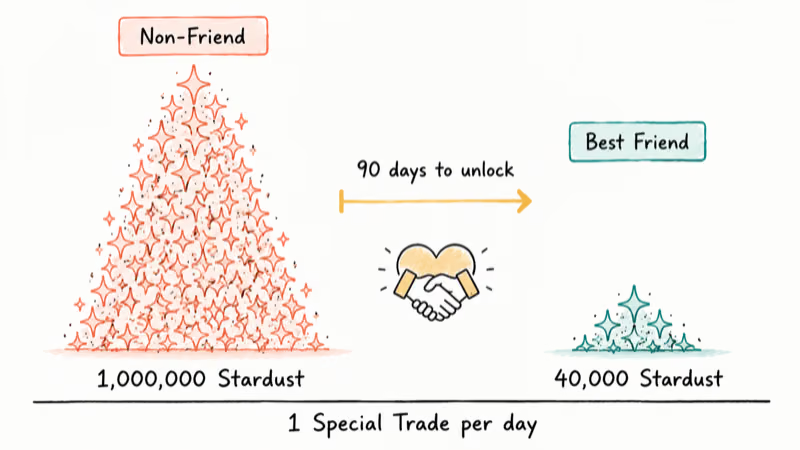
The bigger problem is the post-trade reset.
The traded shiny lands at level 1 with random IVs. Powering it back to raid-viable CP (2500 or higher) costs roughly 200 Rare Candies and several hundred thousand Stardust. Our breakdown of farming Rare Candy in Pokémon GO covers the most efficient sources, including Special Research and raid completion bonuses.
Trading isn’t a shortcut. It’s a path for collectors with deep resource banks and patient friend networks. If you run raids on multiple devices to maximize coverage, our guide to multiple Pokémon GO accounts walks through the safest setup that avoids account bans.
#Pokémon GO Tools That Speed Up Hunting
Three apps and one community do most of the work for serious shiny hunters:
- Pokémon GO Plus + automates Pokéball throws on regular spawns, freeing your hands for raid coordination during legendary windows.
- Campfire is Niantic’s official tool for finding nearby raid lobbies, posting your own, and coordinating Best Friend gifts.
- PokéGenie matches you with remote raid lobbies in seconds, with friend-code exchanges and host ratings built in.
- r/TheSilphRoad publishes raid hour times, shiny rate research, and counter sets days ahead of each rotation.
Pick the tools that match your play style.
Players running Android-only setups should review our Pokémon GO on Android guide for permission settings that affect background raid notifications and GPS accuracy. For broader rotation prediction, Pokémon GO nest migration patterns explains how spawn cycles shift every two weeks and what that signals about upcoming legendary previews and event sequencing.
#Bottom Line
Hunt during boost events, raid in groups of five, and stop after 25 to 30 passes if a shiny refuses to drop. Rayquaza and Giratina deliver the most dramatic visual payoff. Mewtwo earns the third slot for collectors who already own a few standard ones. Skip the Kanto birds (Articuno, Zapdos, Moltres) unless you’re chasing a complete shinydex.
Pokémon GO Guide
#Frequently Asked Questions
How many raids until I catch a shiny legendary?
The expected value is 20 raids at 1-in-20 odds. Real streaks can land far below or far above that because each encounter rolls independently.
Are shiny legendaries stronger than regular ones?
No. Stats are identical, so a shiny with 51% IVs is mechanically weaker than a standard form with 98% IVs.
Can I see the shiny before catching?
Yes. The catch screen reveals the form before you throw the first Premier Ball. Tapping Run doesn’t penalize you in any way, so some raiders skip the catch entirely if it’s a standard form to save Premier Balls and Berries for the next attempt.
When do legendary rotations happen?
Roughly every 3 to 6 weeks, with each legendary holding a 5 to 7 day window. According to LeekDuck’s calendar tracker, missing a window means the same legendary won’t return for several months. Set rotation alarms in advance.
Are all legendaries available as shinies?
Not all. Niantic releases shiny legendary forms gradually after the standard release, and a few legendary species still don’t have a shiny variant in the game. Always verify the current shiny pool on Niantic’s support hub before committing 30 raid passes to one rotation. Players who skip this check sometimes burn passes on a non-shiny-eligible boss without realizing.
Do special research and timed research give shiny legendaries?
Sometimes, but rarely. Research-line legendary encounters have a much lower shiny rate than five-star raids, so raid hunting during boost events stays the fastest path to a confirmed shiny.
Does using a remote raid pass change the shiny rate?
No. Shiny rate is identical for in-person raids and remote passes. The only meaningful difference is queue speed: remote passes pull from a national pool, so popular legendaries fill in 30 to 60 seconds while less popular ones can take 5 minutes or longer.
Pokemon GO GPS Signal Not Found: 7 Proven Fixes (2026)
Pokemon GO GPS signal not found? Seven ordered fixes for Android and iPhone covering precise location, permissions, mock-location, and more.
TweakBox Pokemon GO Review: Does It Still Work in 2026?
TweakBox Pokemon GO no longer works for most users. Learn why it fails, what Niantic's ban policy means for your account, and 3 safer alternatives.
How to Auto Walk in Pokemon GO Without Getting Banned
Auto walk in Pokemon GO using Adventure Sync or GPS tools. Compare safe methods vs ban-risky ones and learn how Niantic enforces its three-strike policy.
How to Find Magikarp Nests in Pokemon GO (2026 Guide)
Find Magikarp nests in Pokemon GO using community maps, water biomes, and rainy weather boosts. Plus candy farming tips to evolve Gyarados fast.