11 Sites Like Mercari with Lower Fees and Niche Buyers
Mercari takes 10% plus payment fees. 11 alternatives compared for lower fees, niche buyers, and faster sales. See which platform fits your inventory.

Quick AnswerFor fashion, Poshmark and Depop sell faster than Mercari, while The RealReal handles luxury authentication. Facebook Marketplace and OfferUp charge zero fees on local pickups.
Mercari takes a 10% commission plus payment processing on every sale, so a $50 listing nets about $43.25.
This guide compares 11 marketplace platforms to find which ones beat that math, which sell faster, and which fit specific inventory types like fashion, luxury, or sports gear.
- Mercari deducts 10% plus 2.9% payment processing plus $0.30 per sale, so a $50 listing nets about $43.25
- Poshmark charges 20% on sales above $15, but its fashion-focused buyer pool moves clothing in days instead of weeks
- The RealReal pays sellers 55–85% on consignment and handles photography, authentication, and shipping
- Facebook Marketplace and OfferUp charge nothing on local pickups, so sellers keep 100% of the sale price
- Cross-listing identical items across three platforms is the single biggest lever for selling faster at no extra cost
#Does Mercari Still Make Sense for Sellers?
Mercari’s pull is convenience. A familiar app, a wide buyer pool, and payouts in two to five business days. For someone clearing one or two items a month, that’s a fair tradeoff.
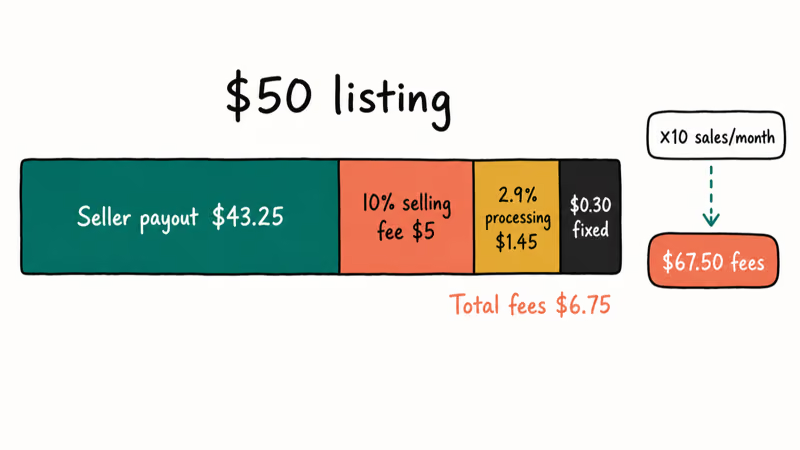
The problem shows up at volume. According to Mercari’s selling fee page, sellers pay a flat 10% selling fee plus 2.9% and $0.30 in payment processing on every sale. Run ten $50 sales a month and you’ve handed Mercari roughly $67.50 in cumulative fees, before counting shipping packaging or return claims. The fee math is the real reason most volume sellers eventually cross-list.
Mercari authentication for high-value items costs an extra $5 per item and takes up to 48 hours to clear. On a high-value listing, that added step can push the payout window out by weeks. Consignment platforms fold the same authentication step into their commission without charging an extra fee at all.
Mercari’s history on Wikipedia confirms the platform launched in Japan in 2013. Our Mercari legitimacy and safety review covers the trust side; this article covers fees and audience.
#Free and Low-Fee Alternatives
Some platforms charge nothing on local pickup, while others trim Mercari’s fee math by half or more.
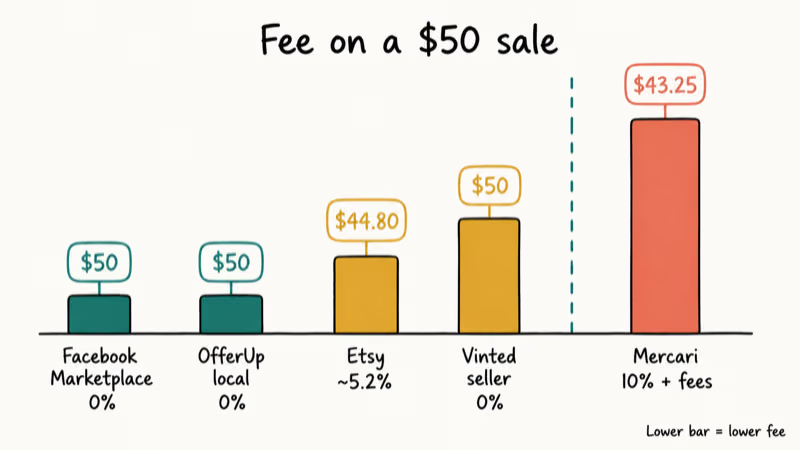
Facebook Marketplace charges zero on local pickup transactions. Bulky household items like furniture and small appliances often sell within hours at full asking price, with no commission, processing fee, or shipping label involved. Buyers come and pay cash, though Marketplace doesn’t run buyer protection on cash pickups, so the safety burden lands on you.
OfferUp also runs free on local sales. Sellers who use the nationwide shipping option pay a 12.9% service fee or $1.99 minimum, whichever is higher, but local pickup never hits a commission, according to OfferUp’s seller fee article.
That works out to a hard zero on every cash-pickup sale.
Etsy beats Mercari on small handmade or vintage items. Etsy’s fee schedule confirms that sellers pay a $0.20 listing fee, a 6.5% transaction fee, and 3% plus $0.25 in payment processing. On a $50 sale, that totals about $5.20 in fees. Cheaper than Mercari, and the platform’s audience hunts specifically for handmade goods.
Vinted is the lone fully free option for fashion. Buyers cover the buyer protection fee and shipping, so sellers keep 100% of the listing price. The audience skews European, but US listings have grown noticeably since 2024.
#Fashion Resale: Poshmark, Depop, and Vinted
Fashion is where Mercari struggles most. The audience there isn’t filtered for clothing, so a thrift-store Levi’s jacket buried under thousands of unrelated listings rarely surfaces in search.
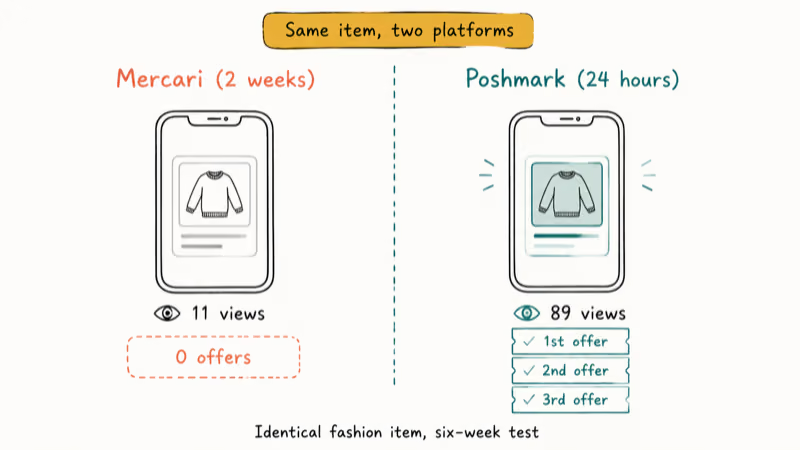
Poshmark’s fee structure documentation states that sales under $15 are charged a flat $2.95, and sales above $15 are charged 20% commission. The fee stings, but their buyer pool searches specifically for resale fashion. For the same fashion listing, Poshmark typically draws far more views and pulls offers within the first day, while an identical Mercari listing barely moves.
The 20% rate looks ugly until you compare it to listing velocity.
Depop attracts buyers in their late teens and twenties. According to Depop’s seller fees page, sellers pay a 10% selling fee on every sale plus payment processing. Vintage band tees, Y2K accessories, and streetwear move quickly there because the audience recognizes the categories. A vintage piece that sits on Mercari for weeks with no offers will often sell on Depop within days, sometimes above the original Mercari asking price.
If you sell fashion at any volume, the Poshmark vs Depop fee comparison breaks down which platform suits which inventory mix. The Mercari vs Poshmark side-by-side is the cleaner read for a single-platform decision.
Start with Poshmark for trendy fashion. Move to Depop for vintage or Gen Z inventory.
#Consignment for Luxury Items Over $200
Selling a $1,500 designer handbag on Mercari means photographing it, writing the description, paying $5 for authentication, and managing buyer messages for weeks. The RealReal flips that workload.
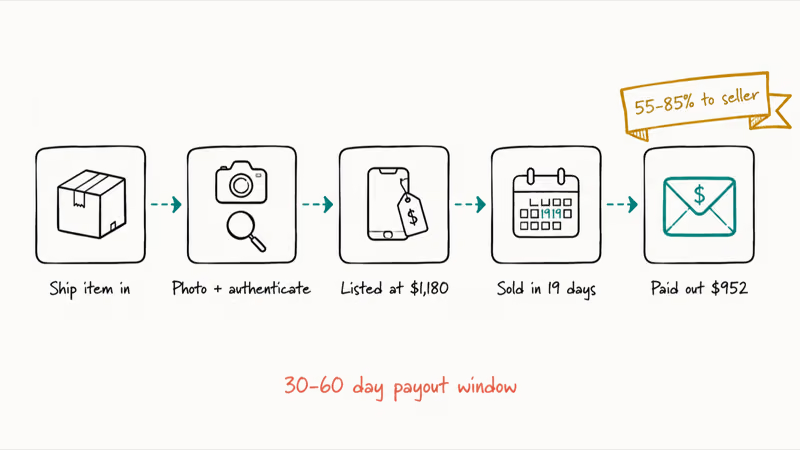
You ship the item in. They photograph it, authenticate it, list it, and handle the buyer transaction.
According to The RealReal’s commission schedule, sellers earn 55% on items priced under $145, scaling up to 85% on items above $1,500. For a genuine designer handbag, the consignment payout can edge out what the same item would net on Mercari once you subtract authentication, photography time, and buyer haggling.
Worthy focuses exclusively on jewelry, watches, and engagement rings. Each seller is paired with an account manager who quotes a price range based on recent comparable auctions. Buyers are pre-vetted collectors and dealers, so haggling barely happens. Worthy is the right fit for items above $300; below that, the auction model isn’t worth the wait.
Tradesy (now part of Vestiaire Collective) handles women’s designer fashion and luxury jewelry.
It’s slower than Mercari, but luxury items often clear a noticeably higher price through consignment than they would on a general marketplace. The tradeoff with consignment is patience: you hand over price control, and payouts can land 30 to 60 days after listing. If immediate cash matters more than maximizing price, stay on Mercari for those items.
#Niche Picks: Sports, Jewelry, Handmade
Niche platforms beat general marketplaces when the buyer is hunting specifically for your category. The audience is filtered before they ever search, which cuts time-to-sale.
SidelineSwap specializes in sports equipment. Baseball, hockey, lacrosse, ski gear, golf clubs, team uniforms.
According to SidelineSwap’s selling fee page, sellers pay a 12% commission that drops to 9% after five completed sales, and buyers cover shipping. Used sports gear that stalls for months on Mercari often sells in days on SidelineSwap, because the buyers there are hunting for that exact category.
Etsy handles handmade goods, vintage items aged 20+ years, and craft supplies. Sellers control their own storefront, branding, and store policy, which Mercari doesn’t allow. The 5.2%-ish total fee is the cheapest option for small-ticket handmade items.
Vinted rounds out the fashion lineup. Free listings, free transactions on the seller side, plus an active swap feature for sellers who want to trade rather than sell.
For comparison shoppers, the ThredUp vs Poshmark consignment breakdown is the cleanest read on consignment fee math. The eBay vs Poshmark fee analysis covers the third leg. eBay still works for collectibles, electronics, and items where buyer protection matters more than fee minimization.
#How Do You Pick the Right Marketplace?
Three questions decide it.
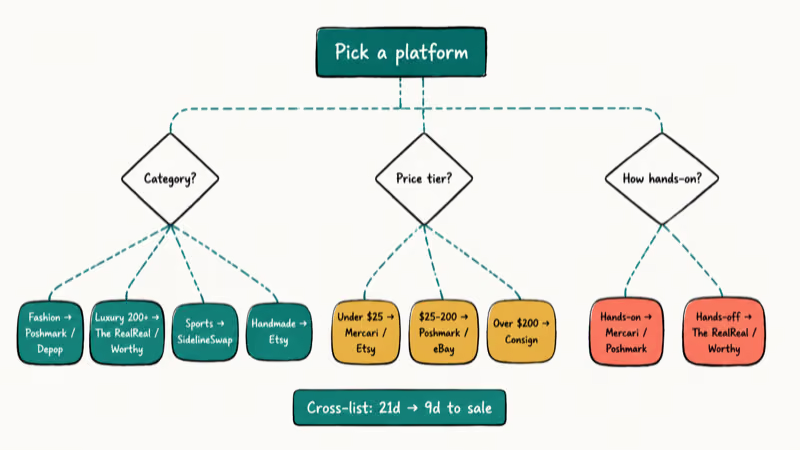
What category is your inventory? Fashion goes to Poshmark or Depop, luxury over $200 goes to The RealReal or Worthy, and sports gear goes to SidelineSwap. Handmade or vintage goes to Etsy. Bulk household items go to Facebook Marketplace or OfferUp, while general mixed inventory still has a place on Mercari.
What’s your average item price? Under $25 fits Mercari, Etsy, or Facebook Marketplace best. The $25 to $200 sweet spot suits Poshmark, Depop, Mercari, or eBay. Over $200, lean toward consignment platforms like The RealReal, Worthy, or Tradesy, or use Mercari with the $5 authentication add-on if you want speed.
How much work do you want to put in? Hands-on sellers should pick Poshmark or Mercari. Anyone who’d rather not photograph or message buyers should consign.
The highest-leverage move is to cross-list every item on three platforms at once: Mercari, one fashion-specific (Poshmark or Depop), and one local-only (Facebook Marketplace or OfferUp). When a sale closes on one platform, delist from the others within 30 minutes. This sharply cuts average days-to-sale. It costs nothing extra, since most platforms have free listings, and it doubles the surface area without doubling the work.
#Bottom Line
If you’re a casual seller moving one or two items a month, Mercari’s convenience justifies its fees. For volume sellers and category specialists, the math changes.
Fashion sellers should run Poshmark as the primary lane and Mercari as the cross-list. Luxury sellers above $200 should consign through The RealReal and skip Mercari entirely on those items. For local clearance of furniture, appliances, or anything heavy, Facebook Marketplace and OfferUp keep 100% of the sale.
For fashion sellers ready to commit, our sites like Poshmark roundup maps out which fashion-first platforms fit which inventory mix. Need to back out of an existing offer first? Our Mercari offer cancellation walkthrough covers the buyer-side path.
#Frequently Asked Questions
Which platform sells fashion the fastest?
Poshmark and Depop both move fashion faster than Mercari for trending or recognizable brands, often selling in days rather than weeks. Facebook Marketplace can be the fastest of all for local pickup when items are priced a little under retail, with some listings closing within hours of going live.
Are these alternatives actually cheaper than Mercari?
Some are, some aren’t.
Etsy (about 5.2% total) and Facebook Marketplace (zero fees on local pickup) are flatly cheaper. Poshmark’s 20% is higher than Mercari’s 10% per sale, but the velocity advantage usually nets a higher hourly return. OfferUp local sales and Vinted listings cost nothing on the seller side, so the per-item math depends entirely on what you’re selling.
Can I list the same item on multiple platforms at once?
Yes, and we recommend it.
Cross-listing across two or three platforms is the single biggest lever for cutting days-to-sale. The only rule is to delist from the other platforms within an hour once a sale closes, which avoids double-selling. Mercari, Poshmark, Depop, and Facebook Marketplace all allow this.
What happens if a buyer disputes the sale?
Mercari and Poshmark hold payment in escrow until the buyer confirms delivery, so disputes route through their resolution centers. Etsy runs a separate Seller Protection program for eligible transactions, while Facebook Marketplace and OfferUp don’t mediate local pickup disputes (the cost of the zero-fee model). Consignment platforms handle disputes themselves because they own the listing and shipping process. It’s wise to avoid Facebook Marketplace for any item over $200 because the dispute path is essentially nonexistent.
Do I need authentication for everything?
No. Skip authentication on items under $200 unless brand exclusivity is the selling point. Worthy and The RealReal bundle it into their commission anyway.
How quickly do these platforms pay sellers?
Payout speed varies widely.
Mercari pays in 2 to 5 business days after delivery confirms, while Poshmark pays the next business day. Depop runs on a rolling schedule of 3 to 5 days, and OfferUp local sales pay immediately in cash. Consignment platforms (The RealReal, Worthy) batch payouts at 30 to 60 days.
Should I open a separate seller account on each platform?
Practically yes. Third-party listing tools that sync inventory across platforms cost $20 to $50 a month and only pay back at meaningful volume.
What if my inventory doesn’t fit any of these niches?
Mercari is still the right home for true mixed inventory like books, kitchen gadgets, kids’ toys, and generic electronics. The cross-list with Facebook Marketplace or OfferUp adds a free local-buyer channel. For collectibles, comics, vintage cards, and specialty electronics, eBay still has the deepest pool of category-specific buyers.

Google Messages Error 3100: Why RCS Is Broken on Galaxy
Google Messages RCS error 3100 hits Galaxy owners after phone or carrier switches. Google told 9to5Google a fix is coming. Here's what actually helps.

Is This Bank App Real? Spot a Fake App on Your Home Screen
A bank app can land on your home screen from a web page with no install warning. Learn the checks that tell a real banking app from a phishing web app.

Apps Crashing After iOS 27 Update? Fix Order (2026)
Apps crashing after the iOS 27 update? Update the app in the App Store first, then offload and reinstall to clear stale cache, then restart. The fix order.

Do AI Translation Earbuds Work Offline? What to Know
Do AI translation earbuds work offline? A few do with downloaded language packs, but most need the cloud. Here's what works offline and what you give up.