thredUP vs Poshmark: Which Resale App Pays Sellers More?
Compare thredUP and Poshmark on commission rates, listing workflow, payouts, and shipping rules. Find out which resale app suits your style.
Quick AnswerPoshmark gives sellers full control with a flat 20% commission above $15 and self-managed listings, while thredUP handles photos and shipping for you but keeps a much larger share of each sale. Poshmark wins for most sellers; thredUP wins for clearing out a closet without effort.
Choosing between thredUP vs Poshmark comes down to one question: do the work yourself for a bigger payout, or hand off everything for a smaller cut? Both apps have built large U.S. resale audiences, but the seller experience could not feel more different. The gap shows up in fees, listing work, buyer control, and how much you actually pocket per item.
- Poshmark charges $2.95 on listings under $15 and 20% on listings $15 or higher
- thredUP keeps roughly half of low-priced sales and pays sellers 80% on items above $200
- Poshmark sellers handle their own photos, shipping, and customer messaging
- thredUP mails a Clean Out Kit, lists items for you, and ships everything from a central warehouse
- Both ship within the United States; Poshmark also operates in Canada, Australia, and India
#How Do thredUP and Poshmark Differ at a Glance?
thredUP and Poshmark both turn closet clutter into cash. They take opposite approaches.
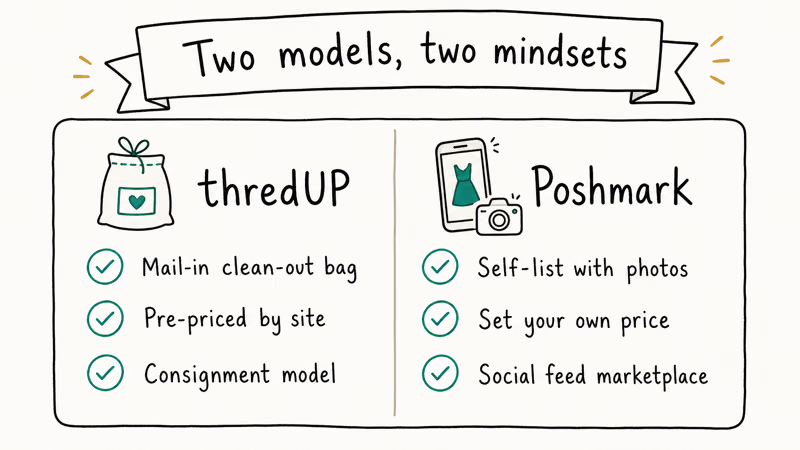
Poshmark is a peer-to-peer marketplace, closer in feel to Instagram than to a traditional consignment store. You photograph items, write captions, set prices, and ship orders to buyers yourself. You stay in full control of price, photos, and timing.
thredUP, by contrast, is an online consignment store. You request a Clean Out Kit, fill it with clothes, and the company photographs, lists, prices, and ships everything for you.
That structural split shapes every other decision. According to thredUP’s Clean Out Kit page, the company photographs, lists, ships, and handles all customer service for every accepted item.
Poshmark sellers do that same work themselves. The trade-off is real: more effort, much larger share of each sale.
| Feature | thredUP | Poshmark |
|---|---|---|
| Founded | 2009 | 2011 |
| Model | Online consignment store | Peer-to-peer marketplace |
| Who lists | thredUP staff | The seller |
| Commission | 5% to 80% (tiered by sale price) | $2.95 flat under $15, 20% over $15 |
| Markets | United States | U.S., Canada, Australia, India |
| Best for | Hands-off closet cleanouts | Active sellers chasing top dollar |
Table 1: Side-by-side comparison of thredUP and Poshmark seller terms, 2026.
Wikipedia’s entry on Poshmark states that Poshmark went public on Nasdaq in 2021, then Naver Corporation acquired it for $1.2 billion in a deal finalized in 2023.
If you’ve already compared resale apps, our breakdowns of Mercari vs Poshmark and eBay vs Poshmark cover related decisions in more depth.
#Which Platform Pays Sellers More?
Price point decides this one.
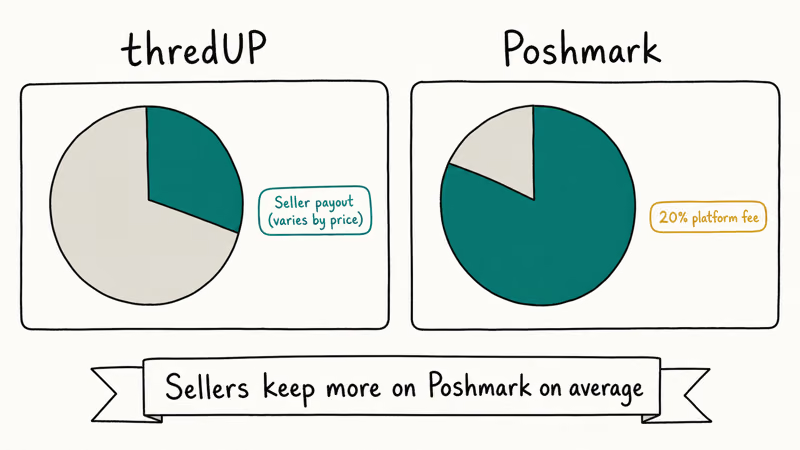
Poshmark charges a flat $2.95 commission on listings under $15 and a 20% commission on listings $15 or higher. Sell a $40 dress, you pocket $32. Sell a $12 shirt, you pocket $9.05. There are no extra payment-processing fees on top, and shipping is paid by the buyer.
thredUP works the opposite way.
Sellers don’t set the price; thredUP’s algorithm does. Your payout is then a percentage of that sale price, and the percentage scales with the price tier:
- $5.00 to $19.99: 5% to 15%
- $20.00 to $49.99: 15% to 30%
- $50.00 to $99.99: 30% to 60%
- $100.00 to $199.99: 60% to 80%
- $200.00 and above: 80%
A $10 thredUP sale might net you $1. A $200 luxury sale could clear $160. Brand demand also moves the percentage, so a sought-after Lululemon zip-up earns more than a generic department-store top at the same price.
For a $35 sale, Poshmark’s flat 20% commission leaves $28 before shipping supplies. A $35 thredUP sale falls into the 15% to 30% payout tier, and the final payout depends on brand demand and thredUP’s accepted sale price.
The trade-off is real.
Poshmark required photographing the sweater, writing a description, and shipping it the day it sold. thredUP required nothing after dropping the bag at FedEx.
Short answer for sellers chasing maximum payout: Poshmark. For sellers who treat resale as decluttering rather than income, thredUP makes sense.
#Listing Process and Seller Control
The listing flow is where the two apps split the most.
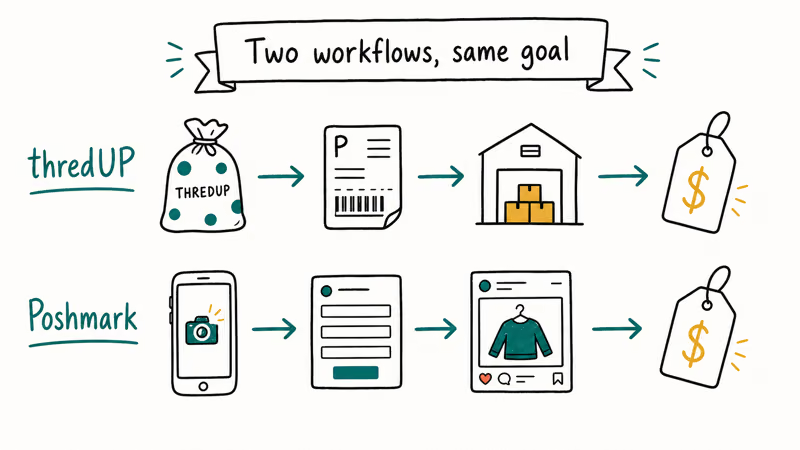
On Poshmark, you open the app, snap photos, write a title, set a category, and publish. The work is manual, but sellers control the photos, title, pricing, bundle discounts, and timing.
Once a buyer purchases, Poshmark emails you a prepaid USPS label. You box the item, slap on the label, and drop it off. Buyers cover shipping at a flat rate per order.
Poshmark recommends listing items with at least three clear photos and brand-specific keywords in the title to surface in search.
thredUP’s flow starts with a Clean Out Kit order. You request the bag online, fill it with items you want to consign, and ship it back using the prepaid label inside.
From there, thredUP staff sort, photograph, list, price, and store everything. You don’t see your items until they go live in your seller dashboard, and you can adjust the suggested price within a small range.
Anything thredUP rejects (out of season, worn condition, off-brand) gets recycled or returned to you for a fee.
Active sellers usually pick Poshmark’s control. Casual sellers usually pick thredUP’s hands-off model. There isn’t a wrong answer; there’s a trade-off between time and payout.
If you’re worried about what happens when items don’t sell or buyers aren’t satisfied, our thredUP return policy breakdown covers refund windows, restocking fees, and the fine print on rejected items.
#Buyer Experience: Browse, Bargain, and Bid
Sellers might split between the two apps, but buyers can shop both happily.
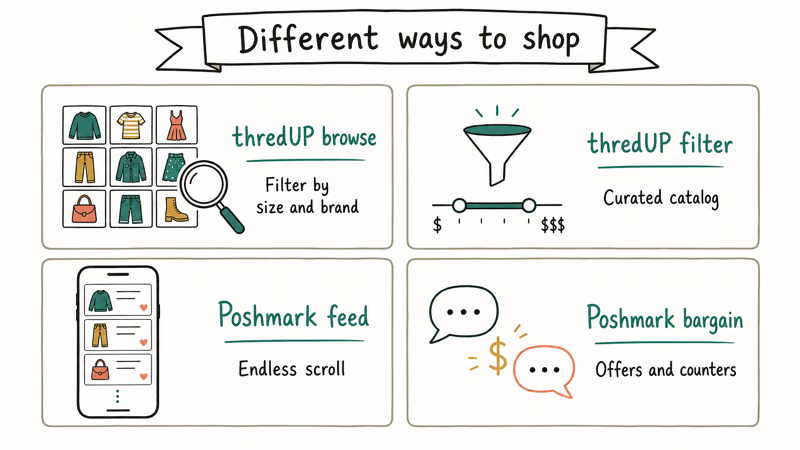
Poshmark feels social. You follow closets, like items, attend live “Posh Parties,” and send offers over private message.
Sellers expect haggling, and most listings end up selling for 10% to 20% under the sticker price. Poshmark’s bundle discount lets you stack items from one closet into a single shipment for a small markdown.
thredUP feels like a thrift store website.
You search, filter by size and brand, add to cart, and check out. There’s no haggling and no chat. Returns are tightly controlled: most items come with a 14-day return window if marked refundable, and final-sale items can’t be returned at all.
Poshmark’s marketplace tends to surface more premium and contemporary brands like Madewell, Reformation, and Lululemon. thredUP’s catalog often skews toward mall and fast-fashion brands at lower entry prices.
If your budget is tight and you want predictable returns, thredUP is the safer bet.
If you want negotiation room and a wider luxury selection, head to Poshmark. Shoppers comparing fast-fashion options should also see our take on Cider vs Shein and shopping apps like Temu before checking out.
#Sustainability and Brand Authentication
Both apps push the sustainability angle, but they back it up differently.
thredUP publishes an annual Resale Report that tracks the secondhand market’s growth and the company’s own carbon-offset numbers.
The report states that the secondhand apparel category continues to grow faster than traditional retail and keeps clothing in circulation longer than fast-fashion alternatives. thredUP also runs a Recycle Promise: items the company can’t sell get recycled rather than landfilled, and sellers receive a small credit if they opt in.
Poshmark doesn’t publish a comparable sustainability report.
The platform’s environmental impact is structural (every resold item is one fewer manufactured), but the company doesn’t track or report on individual carbon savings. For shoppers who want a measurable environmental claim, thredUP has the better paper trail.
On authentication, Poshmark runs a luxury concierge service called Posh Authenticate. Items priced over $500 ship to Poshmark headquarters first, where staff verify authenticity before sending the item to the buyer. thredUP runs its own intake authentication on luxury submissions.
#Practical Tips for Selling Faster on Either App
A few habits work on both platforms and pay back the time you spend.
Time your listings against the season. Coats sell in October, swimsuits in May. Listing a winter coat in May leaves you waiting six months for a buyer.
Clean before you photograph. Lint roller, depill, replace a missing button, dab out the small stain with a Tide pen. Items in clean condition pay out faster on both apps and reduce thredUP rejection rates.
Use brand names in your title.
Search-friendly titles include the brand, item type, color, and size. “Madewell Linen Camp Shirt, White, Size M” outperforms “cute summer top” by a wide margin on Poshmark, and it helps thredUP staff route your item correctly during intake.
Photograph in daylight against a plain wall. Poshmark’s algorithm prefers listings with at least four photos. Three is the floor, four lifts your view count noticeably.
#Bottom Line: Pick the Platform That Fits Your Selling Style
For active sellers who want to maximize payout and don’t mind packing boxes, Poshmark is the clear winner. The 20% commission above $15 is straightforward, you control your prices, and you ship from your own front door. Even after factoring in your time, the per-item payout beats thredUP for most price points above $20.
For closet cleanouts where you’d rather donate than fuss with photos, thredUP is the right call.
Send the Clean Out Kit, accept that the payout is small, and treat any check as found money. Don’t expect to make rent off a single bag.
If you sell a mix of items, run both.
Use thredUP for the unbranded, fast-fashion stuff you’d otherwise donate; use Poshmark for the J.Crew, Madewell, and Lululemon pieces where 80% of $40 beats 15% of $10.
#Frequently Asked Questions
Why choose thredUP over Poshmark?
thredUP suits sellers who want a hands-off cleanout: you ship one bag and the company handles photos, listings, pricing, and customer service. The trade-off is a smaller cut of each sale.
What makes Poshmark stand out?
Poshmark blends marketplace mechanics with social features: closet follows, live parties, and bundle discounts.
Which app pays sellers more per item?
Poshmark generally pays more per item above $15 because of its flat 20% commission. thredUP only matches Poshmark when items sell above $200, where its tiered payout reaches 80%.
How do thredUP and Poshmark handle shipping?
Poshmark sellers print a prepaid USPS label, box the item, and drop it at any post office. The buyer pays a flat shipping fee per order, currently around $8 for packages under five pounds. thredUP handles all shipping from its central warehouse: sellers send one Clean Out Kit on a prepaid label and never touch packing materials again. That saves time on thredUP and saves money for Poshmark sellers with a printer.
Can I sell luxury items on both platforms?
Yes, both accept luxury items, but Poshmark adds Posh Authenticate verification on items over $500.
Does Poshmark charge fees beyond the 20% commission?
No additional payment-processing fees apply on Poshmark itself. The buyer pays a flat shipping fee on top of the listing price, and the seller’s payout is the listing price minus the 20% commission (or $2.95 flat for items under $15). Sellers can withdraw earnings via direct deposit or paper check, and Poshmark covers the bank transfer cost. There’s no annual or monthly subscription, no listing fee, and no relisting fee.
Are thredUP and Poshmark available outside the United States?
thredUP currently ships within the U.S. only. Poshmark operates in the U.S., Canada, Australia, and India, and you can list and sell within each country’s local marketplace.