Best Poshmark Alternatives: Reselling Platforms Compared
Compare the best Poshmark alternatives for reselling clothes and accessories. Detailed fee breakdowns, seller payouts, and which platform sells fastest.

Quick AnswerMercari, Depop, eBay, Vinted, and ThredUp are the strongest Poshmark alternatives. Vinted charges no seller commission, Mercari moves items in days instead of weeks, and The RealReal handles luxury authentication so designer pieces sell at full price.
Poshmark alternatives are easy to find, but only a few actually pay better or sell faster. The six resale platforms below differ sharply on how long items take to sell, what you keep after fees, and how much work each listing requires. The right platform depends on what you have and how hands-off you want to be.
- Vinted charges no seller commission, so a $50 sale puts close to $50 in your pocket after a small buyer protection fee
- Mercari’s flat fee structure and faster turnover tend to move items quicker than Poshmark’s share-driven feed
- eBay reaches the largest audience and is the right home for collectibles, but seller fees stack to roughly 12 to 15 percent across categories
- The RealReal authenticates designer bags, watches, and jewelry on consignment and pays sellers a tiered split based on item value
- ThredUp accepts bulk closet kits and handles every step except mailing in the items, but keeps the largest cut on lower-priced pieces
#What’s the Right Platform for Your Inventory?
Speed, effort, and fees aren’t equally important to every seller. Some readers want a hands-off cleanout. Others want the highest payout per item.
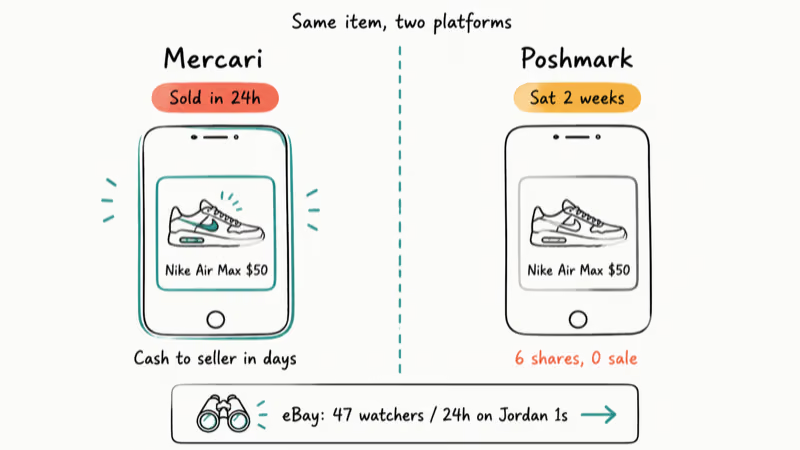
Mercari tends to win on speed. Popular sneakers can sell within a day on Mercari while sitting for weeks on Poshmark with only a handful of shares. eBay attracts more watchers, and a limited-edition pair of Jordan 1s can pull dozens onto a watchlist within a day, but the bidding format adds two to three days before payout.
Vinted appeals to sellers who hate fees because there’s no commission. ThredUp appeals to closet-clearers who don’t want to photograph or ship anything. The RealReal wins with luxury sellers because authentication kills buyer hesitation on a designer handbag or a vintage watch consigned through the platform.
Start here: what are you selling?
Fast fashion goes to Vinted or Depop. Luxury items go to The RealReal. Sports gear goes to SidelineSwap.
Vintage pieces sell faster on Depop, and bulk cleanouts work best on ThredUp. eBay is the catchall when nothing else fits, and it remains the right home for collectibles, electronics, and rare items that benefit from a global bidding audience.
#What Does Each Platform Cost Sellers?
Seller fees aren’t just the headline commission. Payment processing, shipping labels, and buyer protection all chip away at your payout. Here’s the seller’s take on a $50 sale, based on each platform’s published fee structure.
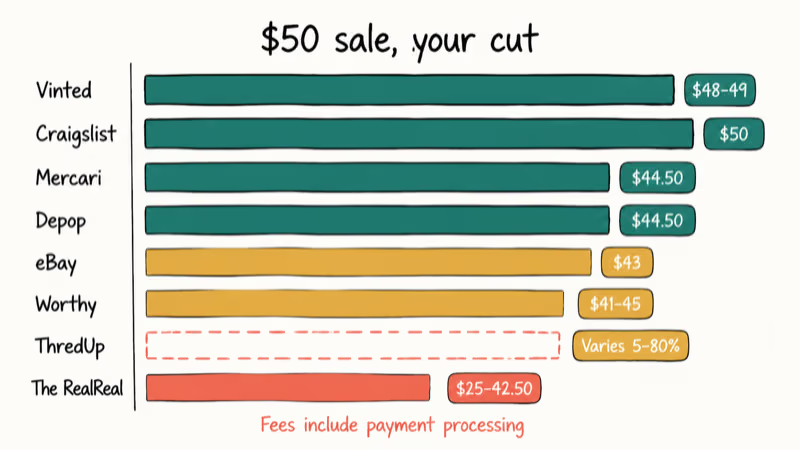
| Platform | Your Cut on $50 Sale | Commission | How It Works |
|---|---|---|---|
| Vinted | $48-$49 | 0% seller fee | Buyer pays small protection fee; you keep almost all |
| eBay | $43 | 12.9% + payment processing | Variable by category; shipping discounts available |
| Mercari | $44.50 | 10% + payment processing | Flat rate; buyers usually cover shipping |
| Depop | $44.50 | 10% seller fee | Processing included; Stripe handles payment |
| ThredUp | Varies | Keeps 5% to 80% of sale | Pays more on higher-value items; they photograph |
| The RealReal | $25-$42.50 | 15-55% | Authentication adds value; higher-end items pay better |
| Worthy | $41-$45 | 10-18% | Auction format; disputes rare |
| Craigslist | $50 | 0% | Face-to-face; you handle safety and shipping |
Three primary sources confirm the fee structures above:
- Mercari’s selling page states that sellers pay a flat 10 percent fee on each sale, plus a small payment processing charge.
- eBay’s seller fees overview confirms that final value fees range from 12.9 percent to 15 percent across most categories.
- Vinted’s seller earnings article states that sellers pay no commission, with buyer protection covered at checkout.
#Best for Speed: Mercari and eBay
Mercari is built for fast listings. Upload a photo, set a price, ship the item.
The interface skips the social-feed shares Poshmark requires. Inventory gets discovered through search instead of follower mechanics, which means you don’t need to share your closet to friends every morning to keep listings alive.
The speed gap is real. A popular pair of sneakers can sell in a day on Mercari while the same pair sits on Poshmark for two weeks with just a few shares. Mercari’s buyers come with cash ready. They’re closing a purchase, not casually browsing for outfit ideas the way Poshmark’s social feed encourages, and that intent gap is exactly why the same item clears faster there.
eBay’s audience advantage shows up most on rare or collectible items. Mercari and Poshmark mostly attract everyday fashion buyers, while eBay still pulls in collectors hunting niche items. A limited-edition pair of Jordan 1s can draw dozens of watchers within 24 hours. That kind of demand simply doesn’t surface on Poshmark.
The trade-off: eBay charges higher total fees once shipping and per-order fees stack, and the auction format adds days to your payout. Use Mercari for fast cash on everyday items. Use eBay if you’re sitting on something rare.
If you can’t decide between the two, our eBay vs. Poshmark comparison breaks the choice down by item type.
#Best for Zero Fees: Vinted
Vinted charges sellers nothing on the sale price.
The buyer pays a small buyer protection fee at checkout, and you receive close to the full sticker amount once they accept the item.
According to Vinted’s Wikipedia page, the company is based in Lithuania and expanded into North America in 2019, which explains why the audience is steadily growing in the US but is still smaller than Mercari’s.
A $50 listing on Vinted puts $48 to $49 in your pocket depending on payment method. No listing fee, no commission, no payment processing taken from your side. For casual resellers clearing closets, this matters. Ten items at $50 each is an extra $50 to $100 of pure profit compared to Mercari’s 10 percent take.
Vinted’s catch is reach. Items move slower than on Mercari or eBay because the buyer base is still building. Mid-range basics that clear within a week on Mercari can sit untouched for two weeks on Vinted at the same prices.
Use Vinted if you’re clearing mid-range basics and want to keep the most money per sale. Skip it if you need fast turnover or want bidding pressure on collectibles.
#Best for Luxury Items: The RealReal
Designer handbags, watches, and jewelry sell for better prices on The RealReal because authentication removes buyer risk.
A counterfeit Chanel listing on eBay costs a seller their reputation and often the sale itself. A real Chanel bag backed by The RealReal’s authentication team sells at consigned market price with no haggling. That trust gap is the entire reason luxury sellers consign instead of listing themselves.
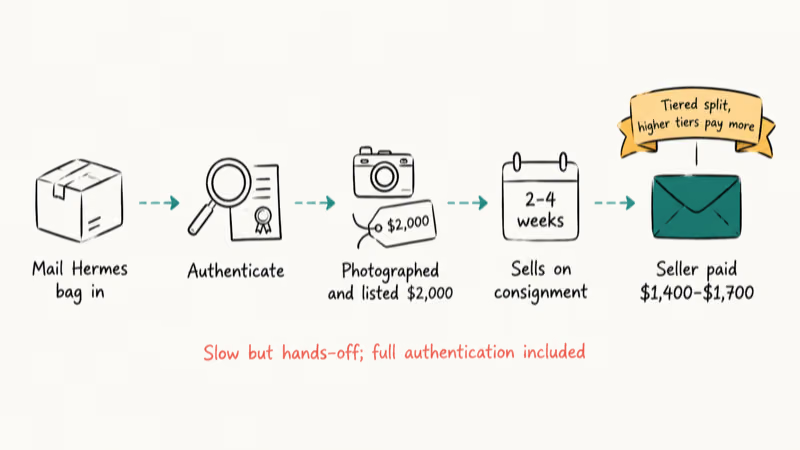
The RealReal’s consignment page confirms that sellers earn a tiered split that scales with item value, with the highest payouts reserved for premium luxury watches and handbags. A $2,000 Hermès bag returns roughly $1,400 to $1,700 to the seller depending on the consignment tier.
The trade-off is hands-off but slow. You mail the item in. The RealReal authenticates, photographs, lists, handles customer service, and pays you once the item sells.
Expect two to four weeks before cash hits your account.
Use The RealReal if you own luxury bags, watches, or jewelry and want maximum payout without the work. Use Worthy for diamonds and fine jewelry, since their auction format puts vetted professional buyers in front of your listing.
#Best for Hands-Off Selling: ThredUp
ThredUp is the right answer when you have an overstuffed closet and zero patience for individual listings. Order the free Clean Out Kit, stuff it with up to 160 items, and mail it back. Their team handles photography, pricing strategy, listing, and shipping.
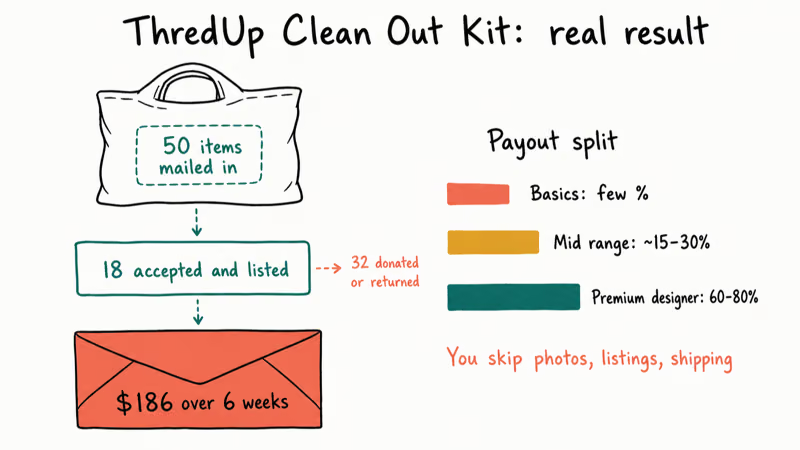
The catch is the payout split.
Basic t-shirts and fast-fashion pieces earn just a few percent of the sale price. Premium designer or vintage pieces earn 60 to 80 percent. Roughly half of items in a typical kit get accepted for listing, and the rest get donated or returned at your cost.
A typical 50-item closet kit might see about 18 pieces accepted and listed, paying out a couple hundred dollars over roughly six weeks.
That’s less than Mercari would pay on the same selected items, but the trade is time. There’s no photographing, no shipping individual orders, and no buyer messages to field during the entire window. For someone clearing a closet on a single weekend with no patience for photography or shipping logistics, that hands-off trade is worth the lower per-item return.
Use ThredUp if you have bulk inventory and value your time more than per-item payout. Use individual platforms if you’re selective about what you sell or want full pricing control.
#Best for Vintage and Streetwear: Depop
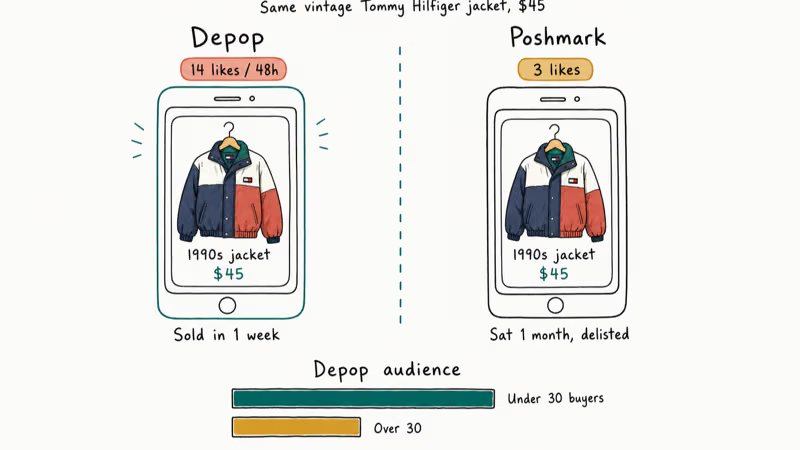
Depop attracts younger buyers (mostly under 30) hunting for vintage band tees, 90s fashion, and streetwear. The app feels like Instagram shopping rather than a traditional marketplace.
Sellers who cross-promote on Instagram and TikTok move inventory roughly twice as fast as those relying only on Depop’s built-in search. Aesthetic product photos matter more here than on most resale platforms because Depop’s audience is scrolling for vibe and styling, not specs and condition reports.
A 1990s Tommy Hilfiger jacket listed at $45 on Depop can pull more than a dozen likes within 48 hours and sell at full price within a week, while the same item on Poshmark might attract a handful of likes and sit for a month.
Depop’s 10 percent commission stings less when items sell fast. Higher turnover beats lower fees when inventory is sitting in a closet eating shelf space.
Use Depop if you specialize in vintage, streetwear, or trendy pieces. Skip it for basic clothing or anything aimed at older buyers.
#Smaller Platforms for Specific Inventory
#SidelineSwap for Athletic Gear
SidelineSwap dominates sports equipment. Cleats, jerseys, hockey gear, lacrosse sticks, and golf clubs all find buyers fast because users come specifically for these categories. Zero listing fees apply. Commission runs at 12 percent on your first five sales, dropping to 9 percent after that.
#Worthy for Jewelry Auctions
Worthy’s seller page confirms that live auctions match jewelry sellers with vetted professional buyers, with fees ranging from 10 to 18 percent and charged only when an item sells. Ideal for diamonds, fine jewelry, and Rolex-class watches. The auction format works best for items that are hard to price comparably, since competitive bidding among professional buyers settles fair value better than a static fixed-price listing on a generic marketplace where lowball offers tend to dominate.
#Etsy for Handmade or Vintage Over 20 Years Old
Etsy targets makers and vintage sellers, not general resellers. The platform charges $0.20 per listing plus a 6.5 percent transaction fee on sales. A steeper learning curve pays off if you build brand identity and restock consistently.
#Heroine for Curated Designer Fashion
Heroine’s roughly 6 percent commission plus payment processing appeals to sellers moving designer pieces in the $100 to $500 range. Editorial curation means fewer listings compete for attention, but the application process limits who can sell.
#Bottom Line
For speed, start with Mercari. It tends to move items faster than Poshmark and pays out within a week.
For maximum payout, choose Vinted. Zero seller commission means more cash per sale, and the trade-off is patience.
For luxury bags, watches, and jewelry, The RealReal is the only place where authentication removes buyer hesitation enough to support full retail-adjacent pricing on premium designer pieces and certified watches.
If you have 50-plus items piled up and zero free weekends, ThredUp’s bulk model trades a smaller per-item payout for a single mailed bag. For vintage band tees, Y2K fashion, or streetwear, Depop moves that inventory faster than most other platforms.
Cross-list on at least two platforms when you can. Items listed on both Mercari and Depop generally sell faster than single-platform listings, and the duplication itself takes under five minutes per item once the photos and description are ready. Track your inventory carefully so you don’t accidentally sell the same piece twice across marketplaces, which can trigger negative reviews and account flags on whichever app gets the duplicate buyer first.
#Frequently Asked Questions
Which platform sells clothes the fastest?
Mercari and eBay tend to sell items fastest. Popular sneakers can move within a day on Mercari. eBay’s strength is rare items, where dozens of watchers can pile onto a listing within a day.
Can you sell non-clothing items on these sites?
Yes. Mercari and eBay accept electronics, furniture, books, and almost anything else. Etsy allows handmade crafts and vintage goods at least 20 years old. SidelineSwap is sports gear only, while ThredUp focuses on clothing and shoes.
How much can you actually earn reselling on these platforms?
Casual resellers clearing their own closet typically earn $200 to $600 before inventory runs dry. Professional resellers sourcing from thrift stores, estate sales, and liquidation pallets earn $2,000 to $5,000 monthly, but that’s a real business operation with sourcing, photography, and shipping infrastructure behind it. The casual range above is what a typical closet cleanout returns.
Is cross-listing worth the time?
Yes. Items listed on two or more platforms generally sell faster than single-platform listings because they reach more buyers at once.
How do you avoid selling the same item twice?
Use a spreadsheet or your platform’s built-in inventory tools to mark items as sold across all accounts the moment one platform commits. List with “pending” status when you accept an offer, and check daily before shipping anything. Buyer disputes from double-sold items are a fast way to lose seller status.
Which platform has the best buyer protection?
eBay’s Money Back Guarantee runs 30 days. Mercari gives buyers three days to inspect after delivery, while Vinted holds funds for five days. All four use escrow-style protection that holds the buyer’s money until the item arrives. Payment-side disputes through PayPal’s chargeback process run on a separate timeline from platform protection.
Does authentication matter for used items?
Yes, for luxury goods. The RealReal’s authentication removes buyer skepticism on high-value bags, watches, and jewelry, which lets sellers price closer to retail because buyers no longer demand a counterfeit-risk discount. For regular clothing, clear photos and honest descriptions matter more than authentication. Newer marketplaces like TikTok Shop handle authentication differently for resale items, so check policies before buying or selling there; verified labels often pull noticeably higher prices than no-name pieces in identical condition.
Which platform pays sellers the fastest?
Mercari pays within three to five business days after delivery confirmation. Vinted pays within about a week, while eBay’s payout depends on payment method but usually runs one to two weeks for managed payments. ThredUp pays 14 to 21 days after an item sells, and The RealReal is the slowest of the group at roughly 14 days after sale completion. If cash flow matters more than payout size, Mercari is the clear winner among the five.

Google Messages Error 3100: Why RCS Is Broken on Galaxy
Google Messages RCS error 3100 hits Galaxy owners after phone or carrier switches. Google told 9to5Google a fix is coming. Here's what actually helps.

Is This Bank App Real? Spot a Fake App on Your Home Screen
A bank app can land on your home screen from a web page with no install warning. Learn the checks that tell a real banking app from a phishing web app.

Apps Crashing After iOS 27 Update? Fix Order (2026)
Apps crashing after the iOS 27 update? Update the app in the App Store first, then offload and reinstall to clear stale cache, then restart. The fix order.

Do AI Translation Earbuds Work Offline? What to Know
Do AI translation earbuds work offline? A few do with downloaded language packs, but most need the cloud. Here's what works offline and what you give up.