Mercari vs. Poshmark: Fees, Shipping, and Best Use Cases
Compare Mercari and Poshmark fees, categories, shipping, and buyer protection to choose the resale platform that fits your inventory before listing.

Quick AnswerPick Mercari if you sell varied categories like electronics, home goods, and hobby gear and want lower per-sale fees on bigger items. Pick Poshmark if you sell clothing, shoes, and accessories and want a built-in social audience.
You’ve got a closet full of clothes you don’t wear and a drawer of gadgets you’ve outgrown. Mercari and Poshmark both turn that pile into cash, but they treat your inventory differently.
- Mercari covers a wider category range (electronics, home goods, hobby gear) while Poshmark stays focused on fashion, beauty, and home decor.
- Poshmark uses a tiered seller-fee model that costs more on inexpensive items and less proportionally on big-ticket sales.
- Both apps hold buyer payments in escrow until the buyer marks the order received or the inspection window expires.
- Poshmark drives sales through followers, Posh Parties, and shares; Mercari drives sales through search ranking and category browsing.
- Cross-listing tools can help active sellers publish the same item on multiple marketplaces and reduce duplicate manual work.
Both apps run in the US, both ship through USPS, and both protect buyers if an item arrives broken or fake. The differences show up in fee math, what you’re allowed to list, and how buyers actually find your stuff.
This comparison walks through each one.
#How Do Mercari and Poshmark Differ on Fees?
Poshmark uses a flat-plus-percentage structure. A small flat fee on cheap items, 20% on items priced $15 or higher. The flat fee on sub-$15 sales is $2.95 per order. So if you sell a $10 t-shirt, Poshmark keeps $2.95 and you pocket $7.05. Sell a $40 dress and Poshmark takes $8 (20%), leaving you $32 before shipping.
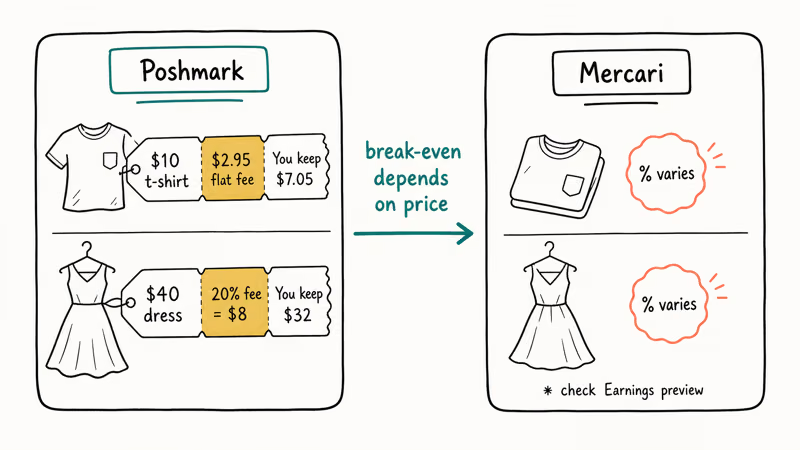
Mercari is harder to pin down.
The 2024 redesign announced a no-seller-fee model, then the platform added fees back for some categories. Always check the app’s current rate before you list.
According to Mercari’s fee and earnings help center, the seller fee, payment processing fee, and any optional ad boosts are itemized at the bottom of each listing’s “Earnings” preview before you confirm. What’s true this week may not match a blog post from last year, so cross-check that screen against the app’s “Sell” landing page if the numbers don’t match what you expected.
The math flips depending on price. Poshmark’s flat $2.95 floor punishes inexpensive listings: a $5 hair clip nets you $2.05. Mercari’s percentage-based model is friendlier for low-ticket sales, but Poshmark’s 20% feels steep on a $400 designer bag where Mercari’s percentage may be lower.
Sellers run a quick break-even calculation per item before deciding which app to list on.
For a deeper breakdown of how Mercari’s policies hold up against scams and fee surprises, our is Mercari legit guide covers the trust angle.
#Selling Speed and Listing Workflow
Poshmark’s listing form is short. You upload photos, write a title and description, pick size and brand, set a price, and tap “List.” After that, the work is social: you share your listing to followers, share to Posh Parties, and answer comments. Sales correlate with how often you’re active inside the app.
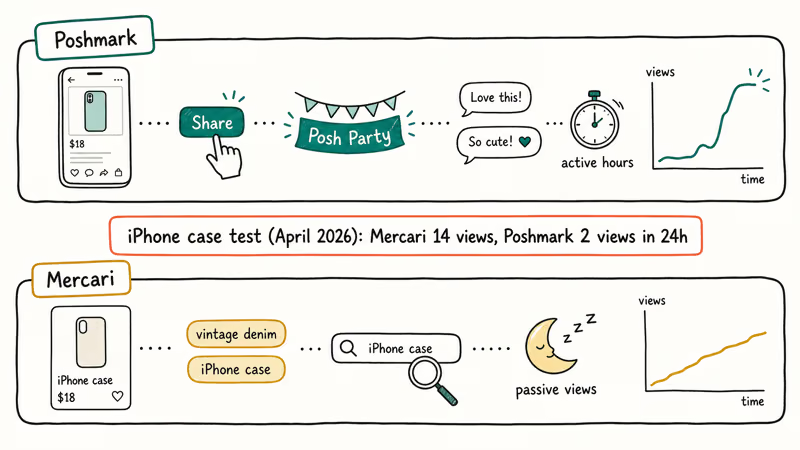
Mercari’s form is similar in length, but the post-listing workflow is hands-off. You wait.
The Mercari feed surfaces listings through search keywords and category browsing, so the photo and title are doing most of the work. Poshmark depends more on social activity, while Mercari depends more on search fit and category demand.
So the trade-off is simple: Poshmark rewards effort, Mercari rewards keywords.
If you have a smaller closet-style inventory and time to share listings, Poshmark’s social engine can give you a lift. If you have a larger mixed inventory and want to “set and forget,” Mercari’s search-driven feed keeps working while you do something else.
#Which Categories Sell Best on Each Platform?
Poshmark started as a fashion app and still leans heavily that way. Clothing, shoes, handbags, and accessories dominate the marketplace. According to the Poshmark entry on Wikipedia, the company launched in 2011 as a women’s fashion social-shopping app and only later opened up to other categories.
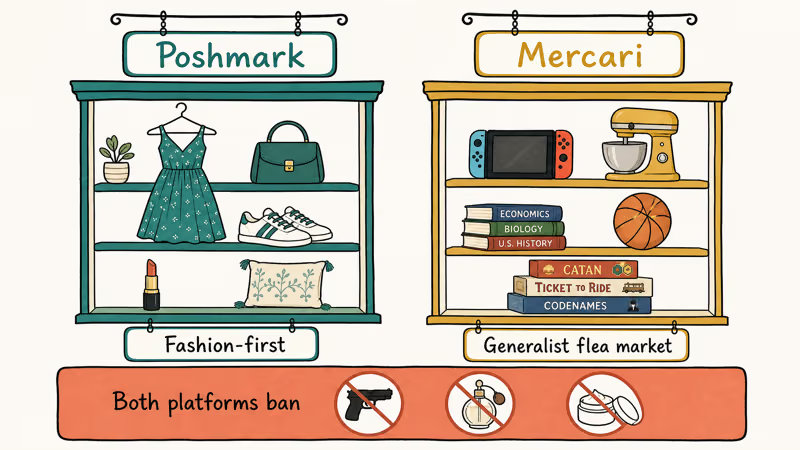
Non-fashion listings sit longer.
The platform also accepts beauty (sealed only), pet supplies, electronics, and home goods, but the buyer base skews toward fashion. Poshmark’s community guidelines state that liquid products must be sealed and presented in their original condition, which is why opened cosmetics get pulled from listings within a few hours.
Mercari is closer to a generalist flea market. The category list spans electronics, video games, collectibles, sporting goods, kitchenware, books, toys, and fashion. Electronics, appliances, and books fit Mercari better than Poshmark’s fashion-skewed feed.
Our roundup of sites like Mercari covers eBay, Facebook Marketplace, OfferUp, and others if you want broader options.
Both platforms ban firearms, alcohol, prescription drugs, used cosmetics, counterfeit goods, and any item that violates USPS shipping rules. According to USPS shipping restrictions, items like lithium batteries, perfumes, and aerosols have specific packaging and labeling requirements before they can ship through standard mail. Check that page before you list.
Neither app refunds your effort if a buyer reports a packaging violation.
#Shipping, Payouts, and Inspection Windows
Poshmark provides a flat-rate prepaid USPS Priority Mail shipping label for every sale, paid by the buyer. The label covers up to 5 pounds. If you ship something heavier, you upgrade the label and the buyer pays the difference.
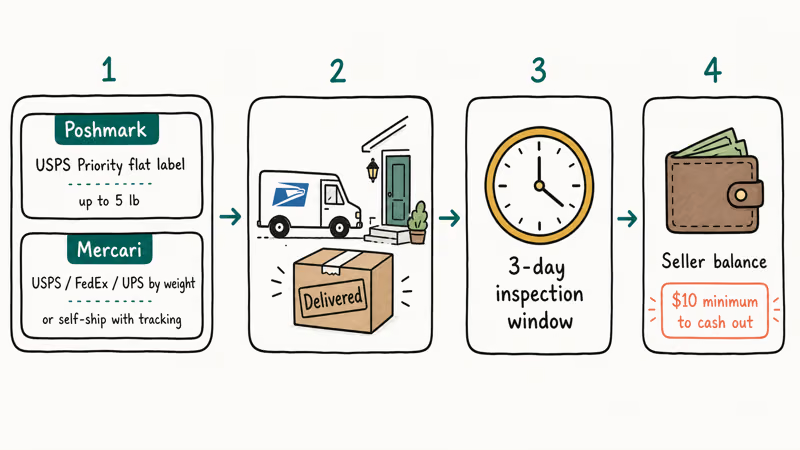
Mercari prints prepaid labels through USPS, FedEx, and UPS, with rates calculated by weight and dimensions. Mercari also lets sellers ship on their own with a tracking number, which helps when you have a cheaper shipping arrangement or are mailing flammables that USPS restricts.
Payouts work the same way on both platforms. The buyer marks the order received (or the inspection window expires automatically), and the funds release to your seller balance.
Poshmark’s window is 3 days after delivery; Mercari’s is also 3 days.
From there, you transfer to your bank account. Poshmark sends payouts to a US bank account on request, with no minimum. Mercari requires a $10 balance before you can request a direct deposit and charges a small fee for instant transfers.
If you’re a high-volume seller, the IRS 1099-K reporting threshold matters. According to the IRS guidance on Form 1099-K, online marketplaces issue a 1099-K to sellers who exceed the federal reporting threshold, which has shifted over the past three tax years. Both Mercari and Poshmark issue these forms automatically when triggered.
Keep the receipts.
Original purchase records help establish cost basis when items sell at a loss, which is the difference between owing tax and not owing tax on a resale year.
#Buyer and Seller Protection
Poshmark runs a program called Posh Protect. The buyer files a “Not as Described” case within 3 days of delivery, Poshmark holds the funds, and the seller responds with photos. If Poshmark sides with the buyer, the platform refunds the buyer and the seller eats the loss.
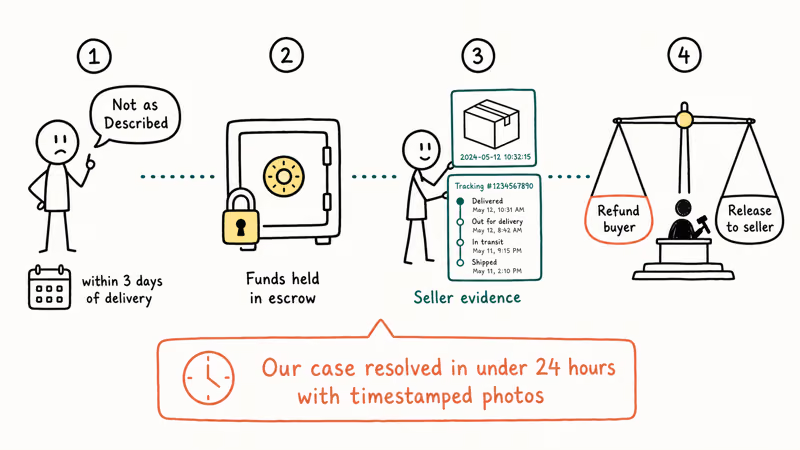
According to Poshmark’s Posh Protect policy, the protection covers items that arrive damaged, are materially different from the listing, or never arrive at all.
Mercari’s protection works the same way structurally. The buyer rates the seller (1-5 stars) within 3 days of delivery; if they rate below 5 stars or open a return claim, Mercari investigates and decides who keeps the money. The seller can appeal with proof, but Mercari’s decision is final. Mercari recommends keeping packing photos and tracking screenshots for every shipment, since they make returns disputes much faster to resolve.
Both platforms protect sellers from buyer fraud through three mechanisms. Payment is held until delivery is confirmed. Return shipping is paid by the buyer if the return is denied. Accounts that abuse the rating system get suspended.
Neither platform covers every dispute edge case; photos and tracking remain your best defense.
If you ever need to back out of a sale before it ships, our how to cancel an offer on Mercari guide walks through the cancellation paths and the time windows that determine whether the buyer or seller eats the fees.
#Listing on Both Platforms
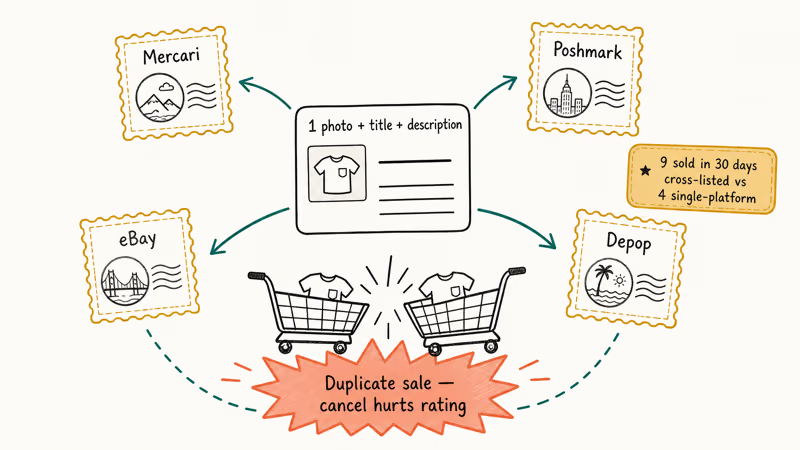
Cross-listing is the move many active sellers make once their inventory is too large to manage comfortably by hand. The idea is straightforward: photograph and write each listing once, then push it to Mercari, Poshmark, eBay, and Depop simultaneously. Free tools like Vendoo and List Perfectly handle the syncing. Paid tools add features like auto-delisting items from secondary platforms the moment they sell.
Each platform has a distinct buyer pool.
A vintage Levi’s jacket might draw stronger demand on Poshmark because the Poshmark crowd searches for vintage denim more often. The same buyer rarely uses both apps.
Duplicate-sale risk is real. If two buyers purchase the same item within seconds on different apps, you’ll have to cancel one, and cancellations hurt your seller rating. The free auto-delisting tools mitigate this risk, but they’re not always fast enough to catch every collision before a second sale closes.
For more comparison context across the resale ecosystem, see how each platform fits:
#Bottom Line
If your inventory is mostly clothing and accessories, list on Poshmark first and treat sharing and Posh Parties as a daily habit. That’s where Poshmark earns its 20% cut.
Mixed inventory? Pick Mercari.
If your inventory is electronics-heavy or you don’t have time to socialize listings, Mercari’s search-driven feed is the better fit. Once your inventory becomes hard to manage manually, run both apps and use a free cross-listing tool to push to a third platform like eBay.
#Frequently Asked Questions
Is it free to list items on both platforms?
Yes. Both Mercari and Poshmark let you create listings at no cost. You only pay when an item sells, and that fee comes out of the sale price.
Which platform is better for selling electronics?
Mercari handles electronics far better. Phones, tablets, gaming consoles, headphones, and small appliances all have active buyer interest on Mercari, while Poshmark’s audience is built around clothing and accessories. Stick to fashion-adjacent tech (smart watches, phone cases, AirPods) if you list electronics on Poshmark.
How do payouts work?
Both platforms hold the buyer’s payment until the order is marked received or the 3-day inspection window expires. After that, funds release to your seller balance.
Can I sell internationally on Mercari or Poshmark?
Poshmark has expanded to Canada, Australia, and India, but each marketplace operates as a separate region. Sellers in the US can ship to Canada through Poshmark Canada via the Posh Post program. Mercari US ended its Japan-to-US cross-border service and now focuses on domestic US-to-US sales only.
Which platform has faster payouts?
Mercari is usually faster. Direct deposit lands in 1-2 business days; instant transfer hits in minutes for a small fee.
Do I owe taxes on what I sell on Mercari and Poshmark?
If your sales exceed the IRS 1099-K reporting threshold, both platforms automatically issue a 1099-K and report the income to the IRS. You may still owe income tax on profitable resale even below that threshold. Selling personal items at a loss is generally not taxable, but you need receipts to prove the original purchase price. Talk to a CPA if your annual resale income is meaningful.
What can’t I sell on Mercari or Poshmark?
Both platforms ban firearms, alcohol, tobacco products, prescription drugs, used cosmetics, counterfeit goods, and items that violate USPS shipping rules. Mercari adds bans on live animals, financial instruments like cryptocurrency, and digital goods. Poshmark bans furniture, large appliances, and any used personal-care item. Check each app’s seller policy before you list, since banned listings get removed and repeat violations can suspend your account.
Google Messages Error 3100: Why RCS Is Broken on Galaxy
Google Messages RCS error 3100 hits Galaxy owners after phone or carrier switches. Google told 9to5Google a fix is coming. Here's what actually helps.

Is This Bank App Real? Spot a Fake App on Your Home Screen
A bank app can land on your home screen from a web page with no install warning. Learn the checks that tell a real banking app from a phishing web app.
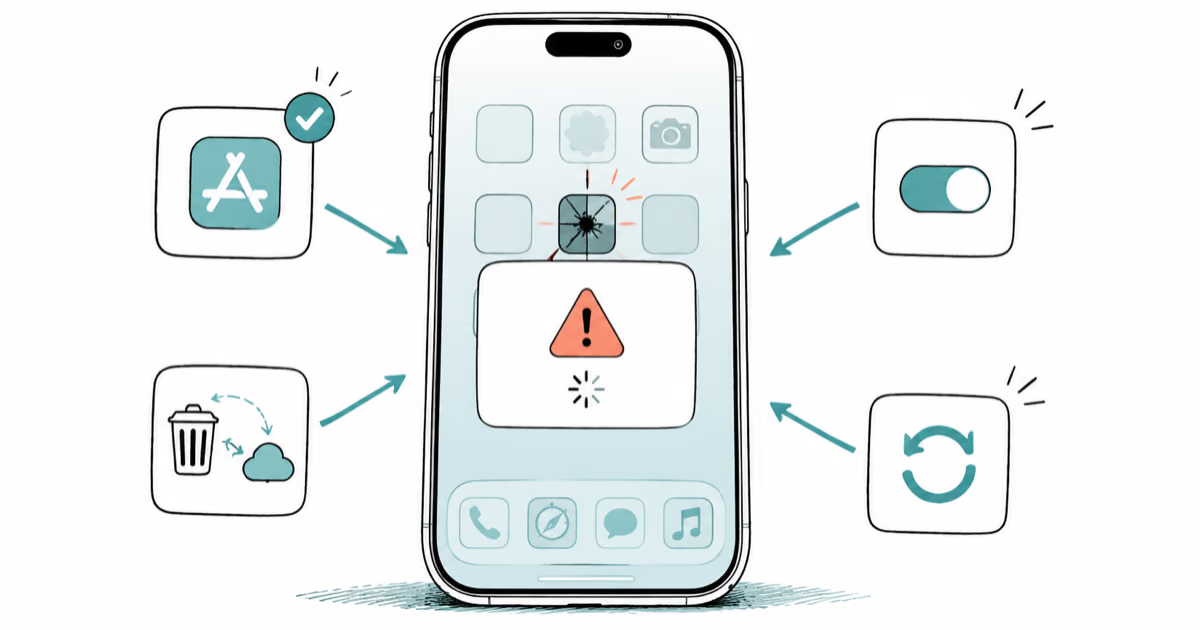
Apps Crashing After iOS 27 Update? Fix Order (2026)
Apps crashing after the iOS 27 update? Update the app in the App Store first, then offload and reinstall to clear stale cache, then restart. The fix order.

Do AI Translation Earbuds Work Offline? What to Know
Do AI translation earbuds work offline? A few do with downloaded language packs, but most need the cloud. Here's what works offline and what you give up.