Poshmark vs. Depop: Fees, Audience, and Speed Compared
Poshmark vs. Depop compared: fees, audience, shipping, payouts, and selling speed, so you know which app pays faster for the pieces in your closet.
Quick AnswerPick Poshmark if you sell mainstream brands like Nike, Lululemon, or Madewell to a US Millennial audience that buys at the listed price. Pick Depop if you sell vintage, Y2K, streetwear, or thrifted pieces to Gen Z buyers who expect to negotiate.
You’ve got a closet of clothes that don’t fit anymore and a few thrifted pieces you never wore. Poshmark and Depop both turn that pile into cash, but the buyer on the other end is a different person on each app. This comparison breaks down which one moves inventory faster, pays more after fees, and requires less back-and-forth.
- Poshmark charges a flat $2.95 on items under $15 and 20% on items at $15 or more, while Depop takes a flat 10% selling fee plus payment processing.
- Poshmark’s audience skews US Millennials shopping mainstream brands; Depop skews global Gen Z hunting vintage, Y2K, and streetwear.
- Poshmark mails a prepaid USPS Priority label up to 5 lb for a $8.27 buyer-paid flat fee; Depop sellers pick the carrier and label themselves.
- Bargaining is built into Poshmark through Offers and Bundles; on Depop, buyers DM sellers to haggle and most listings move below the sticker price.
- Depop tends to move vintage and Y2K pieces faster, while Poshmark tends to sell mainstream brand-name items at higher prices.
The two apps overlap on the surface (peer-to-peer fashion resale, US-based selling, in-app messaging) but diverge once you factor in who the buyer is and what they expect to pay. We’ll walk through fees, audience, shipping, payouts, and the parts that matter when you’re deciding where to list a specific piece.
#Fee Breakdown: Cheap and Pricey Items Compared
| Dimension | Poshmark | Depop |
|---|---|---|
| Selling fee under $15 | $2.95 flat | 10% of total |
| Selling fee $15 and up | 20% of total | 10% of total |
| Payment processing | Included | 3.3% + $0.45 (US) |
| Shipping label | Prepaid USPS Priority | Seller buys label |
| Listing fee | Free | Free |
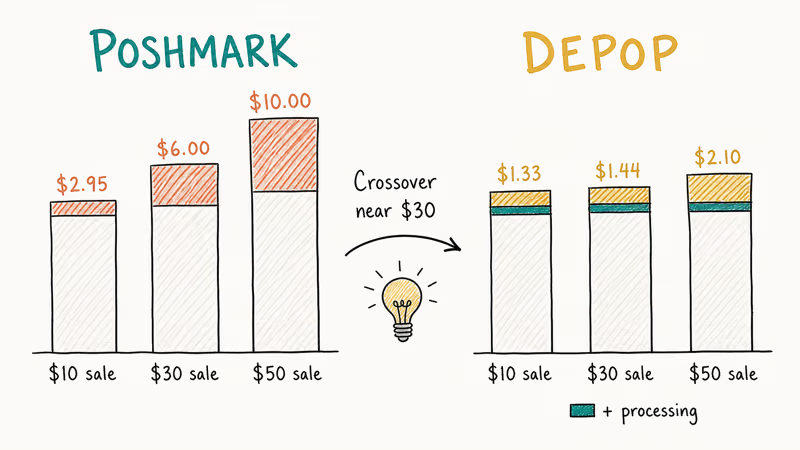
Poshmark’s flat $2.95 floor punishes cheap listings. Sell a $10 t-shirt and Poshmark keeps $2.95, leaving you $7.05 before any boost or bundle discount. The same shirt on Depop nets you $9 minus payment processing.
The math reverses past about $30. A $50 dress nets $40 after Poshmark’s 20% cut versus roughly $43.20 on Depop after both fees, and Poshmark sellers tend to get closer to their list price because the audience is less negotiation-heavy.
According to Depop’s seller fees page, the 10% fee and the payment processing fee are both shown on the listing’s “Earnings” preview before you confirm the post. Poshmark itemizes its fee inside the order summary at sale time. Both surface the math before you commit, so check the in-app preview if a published number doesn’t match.
Short version: Depop wins on cheap items. Poshmark wins on bundles and big-ticket pieces that command full price.
#Who Actually Buys on Each App?
Depop’s user base is overwhelmingly under 26.
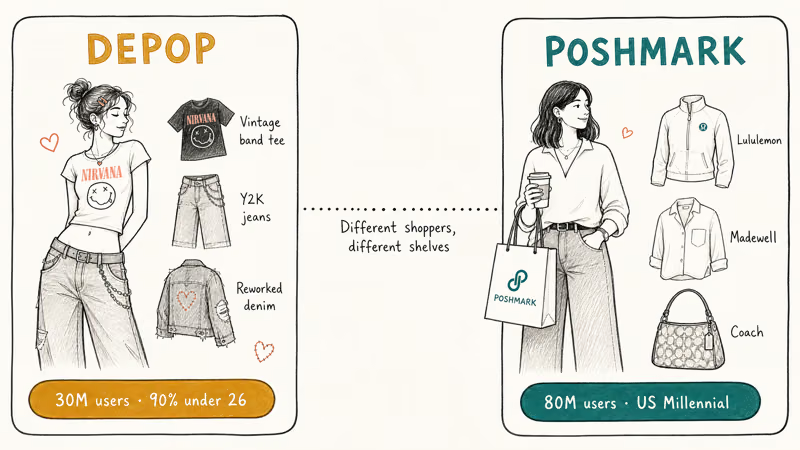
According to public reporting, Depop hit 30 million registered users by 2021, with around 90% of active users under age 26. That demographic shows up in what sells: Y2K low-rise jeans, baby tees, vintage Adidas tracksuits, hand-thrifted band shirts, and reworked denim.
Poshmark leans older and broader. Its newsroom describes a buyer base skewed toward US-based Millennial women shopping mainstream brands, and its published seller fees take a flat cut on low-priced items and a percentage cut on higher-priced sales.
That gap explains why the same item often performs unevenly on the two platforms. A vintage single-stitch tee that stalls on Poshmark can sell fast on Depop, while Lululemon Align leggings often do the reverse: ignored on Depop, snapped up on Poshmark. The buyer base, not the item, drives the difference, so match the piece to the audience that actively hunts it rather than listing everywhere by default.
Pick the platform that matches the piece, not the platform you happen to know better.
#Listing Speed and Selling Workflow
Poshmark’s listing form takes about 2 minutes. Snap up to 16 photos, write a title and description, pick brand and size from dropdowns, set a price, and post.
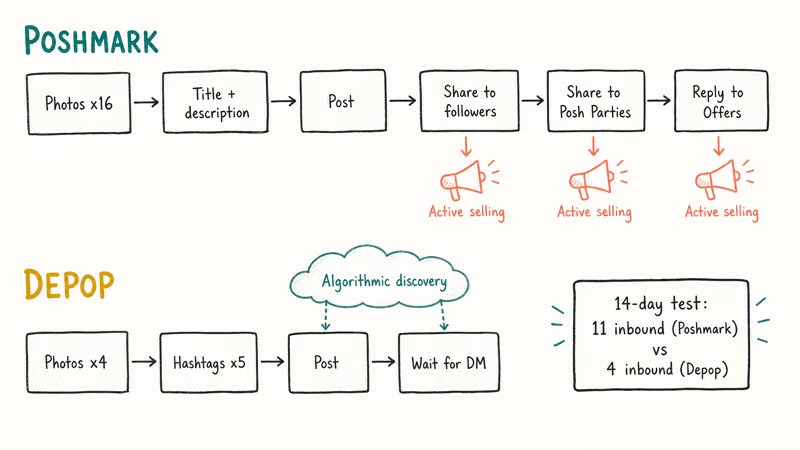
After that, the work is social. You share your closet to followers, share to Posh Parties, and respond to Offers in the Notifications tab. Sales correlate hard with how active you are inside the app, and Poshmark sellers describe it as a part-time hustle rather than a passive listing.
Depop’s flow is shorter and looks closer to Instagram. Up to four photos, five hashtags, a price, and you’re live. Sales come from search ranking, hashtag discovery, and the algorithmic Explore feed.
You don’t have to be active to sell. Many top Depop sellers list once and let the listings sit until a buyer DMs.
The contrast shows up in seller behavior.
Poshmark tends to generate more inbound Offers, while Depop’s messages are mostly haggling DMs. Depop sells vintage faster; Poshmark sells mainstream brands higher.
Bargaining is structural on both apps but it works differently. Poshmark’s Offer button sends a private number to the seller with a 24-hour expiration. Depop expects buyers to DM “would you take $X?” and most sellers list 10–20% above their floor knowing buyers will negotiate down.
For sellers thinking about diversifying, our thredUP vs. Poshmark breakdown covers a third lane (consignment, where you ship a bag and let the platform price and list). And the eBay vs. Poshmark guide compares Poshmark to a generalist auction marketplace.
#Shipping, Payouts, and How Money Moves
Here’s the short version. Poshmark hands you a prepaid USPS Priority Mail label as soon as the buyer pays.
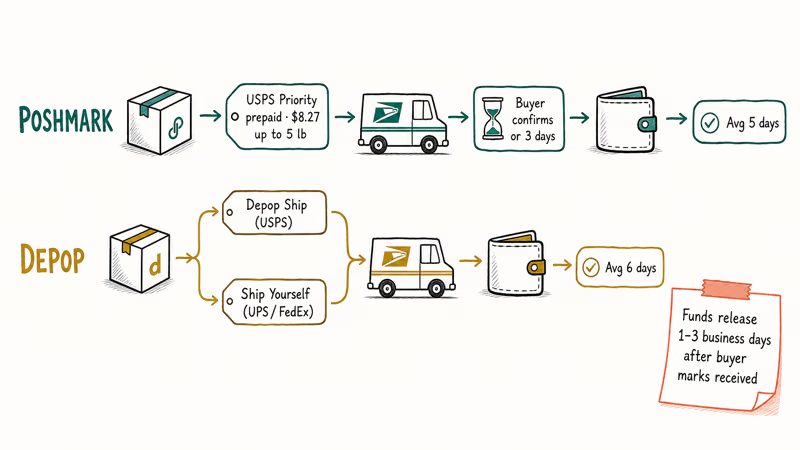
The buyer covers the flat fee ($8.27 for parcels up to 5 lb at recent rates, with heavier rates for 10 lb and higher). You print the label, drop the package at any USPS box, and the buyer marks the order received. Funds release to your Poshmark balance after the buyer confirms or 3 days after delivery, whichever comes first.
Depop hands you the choice. Two options:
- Depop Ship (US only): A USPS-discounted prepaid label generates inside the app at a price tied to package weight and dimensions.
- Ship Yourself: You buy a label from any carrier (USPS, UPS, FedEx) and upload tracking to Depop manually.
Either way, payouts release through the in-app wallet. Depop processes payments through its own payment system after the 2024 PayPal split, with most US sellers receiving funds within 1–3 business days of the buyer marking the order received.
The trade-off here is straightforward. Poshmark’s prepaid-label model removes one decision and caps the package weight at 5 lb for the standard rate. Depop’s BYO-label approach gives you flexibility on heavy or oddly-shaped items, but it requires you to actually go price out the label, walk it to a carrier, and upload tracking back into the app once the package is in transit.
In practice, Poshmark’s ship-to-payout runs around 5 days. Depop can run a day longer when you choose Ship Yourself on heavier items and walk them to UPS instead of using a prepaid USPS label.
If you decide to leave the platform later, our how to delete your Poshmark account and how to cancel a Poshmark order guides cover the closeout flows.
#Returns, Buyer Protection, and Disputes
Poshmark and Depop both protect buyers against items arriving fake, broken, or significantly different from the listing. The escalation paths look different.
Poshmark’s “Posh Protect” handles disputes through its in-app case system. If a buyer files within 3 days of delivery citing not-as-described, Poshmark reviews the photos and either refunds the buyer (and you keep your item back) or sides with the seller. Returns for fit or change-of-mind are not allowed.
Sellers don’t see refund money come out of their wallet, since Poshmark eats the chargeback itself.
According to Depop’s protection policy, the program covers fraudulent or significantly-not-as-described items reported within 180 days of purchase. The buyer opens a dispute in-app, the seller responds with proof (photos, tracking, original listing screenshots), and Depop arbitrates.
Sellers who routinely lose disputes risk listing-visibility penalties.
Both platforms ban returns for fit or buyer’s remorse. The lesson for sellers: write descriptions that honestly call out flaws, condition issues, and measurements. Adding pit-to-pit and length measurements to every listing is the simplest way to head off not-as-described disputes.
#Which Platform Sells What Best?
This is where the comparison gets sharp. Same closet, different rooms.
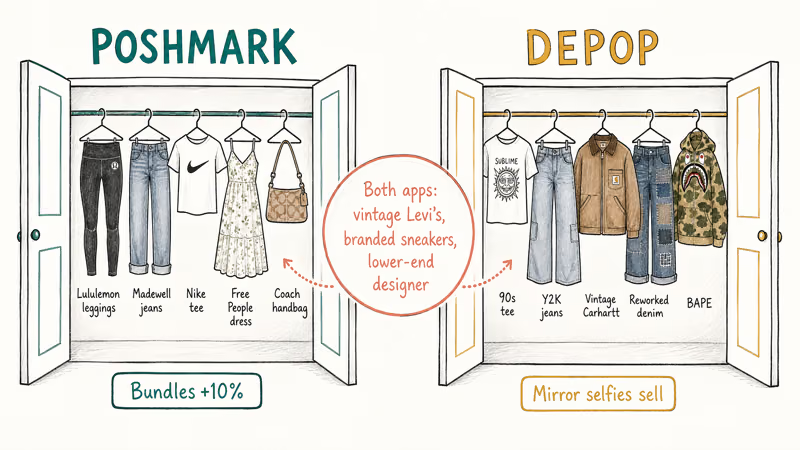
Poshmark wins on:
- Mainstream contemporary brands (Madewell, Lululemon, Nike, Free People, Anthropologie)
- Bundles (multiple items to one buyer triggers a 10% discount)
- Higher-priced designer items (Coach, Tory Burch, Kate Spade)
- Items in like-new condition with original tags
Depop wins on:
- Vintage (anything 90s, Y2K, single-stitch tees, vintage band merch)
- Streetwear (Supreme, BAPE, Stüssy, vintage Carhartt)
- Reworked or DIY pieces
- Items where the photo aesthetic carries the listing (mirror selfies, flat-lays with props)
- International buyers, especially in the UK and EU
Some pieces fit both. Lower-end designer items, branded sneakers, and vintage Levi’s tend to sell on both apps at similar prices. Cross-listing those is fine. Just remember to pull the duplicate listing the moment one sells (Poshmark and Depop don’t talk to each other).
If you want a wider scan of where else to list, our sites like Poshmark and sites like Mercari roundups cover the full secondhand fashion market.
#Bottom Line
If your closet leans contemporary mainstream (Lululemon, Madewell, Nike, Free People), list it on Poshmark first. The audience skews to people who already shop those brands at full price and want a discount, and bundle pricing rewards selling multiple pieces to one buyer. The 20% fee stings on cheap pieces, so price your sub-$15 items at $15.99 or higher to dodge the flat-fee floor.
If your closet leans vintage, streetwear, Y2K, or anything thrifted, list it on Depop. The Gen Z buyer knows what to do with a single-stitch ‘96 tee, expects to haggle a little, and will pay more for a piece that fits the algorithm’s aesthetic.
For everything in the middle, cross-list and pull the duplicate when one sells.
#Frequently Asked Questions
How do Poshmark and Depop selling fees compare?
Poshmark charges a flat $2.95 fee on items under $15 and 20% on items at $15 or higher. Depop charges a flat 10% on every sale plus a payment processing fee of about 3.3% + $0.45 in the US. Below about $30, Depop usually nets the seller more; above that, the gap narrows.
Can I list the same items on both apps at the same time?
Yes, and many sellers do. The catch is that neither platform talks to the other, so you have to manually pull the duplicate listing the moment one sells.
Which app pays out faster after a sale?
Both apps release funds within 1–3 business days after the buyer confirms receipt or after the 3-day inspection window expires. In practice, Poshmark runs about 5 days from “shipped” to “available to withdraw,” and Depop about 6 days. The gap is small, and bank transfer adds another 1–3 business days on top of either app’s release.
Is Poshmark available outside the US?
Poshmark covers the US, Canada, Australia, and India. Depop’s reach is wider, especially in the UK where it first launched.
Which platform handles disputes better for sellers?
Poshmark eats the chargeback on lost cases, so refund money does not come out of your wallet. Depop arbitrates and penalizes sellers who lose disputes repeatedly. Accurate descriptions are the best defense on both apps.
What sells best on Depop versus Poshmark?
Depop wins on vintage, Y2K, streetwear, and reworked pieces because the Gen Z buyer base actively hunts those styles. Poshmark wins on mainstream contemporary brands like Lululemon, Madewell, Coach, and Free People because Millennial buyers treat the platform like a discount channel for retail brands they already shop. Cross-list borderline pieces and pull the duplicate when one sells.
Do I need to pay for shipping labels on either app?
On Poshmark, the buyer pays a flat shipping fee (about $8.27 for parcels up to 5 lb) and Poshmark generates the prepaid USPS Priority label automatically. On Depop, you choose between Depop Ship (a discounted USPS label generated in-app) or buying your own label from any carrier.
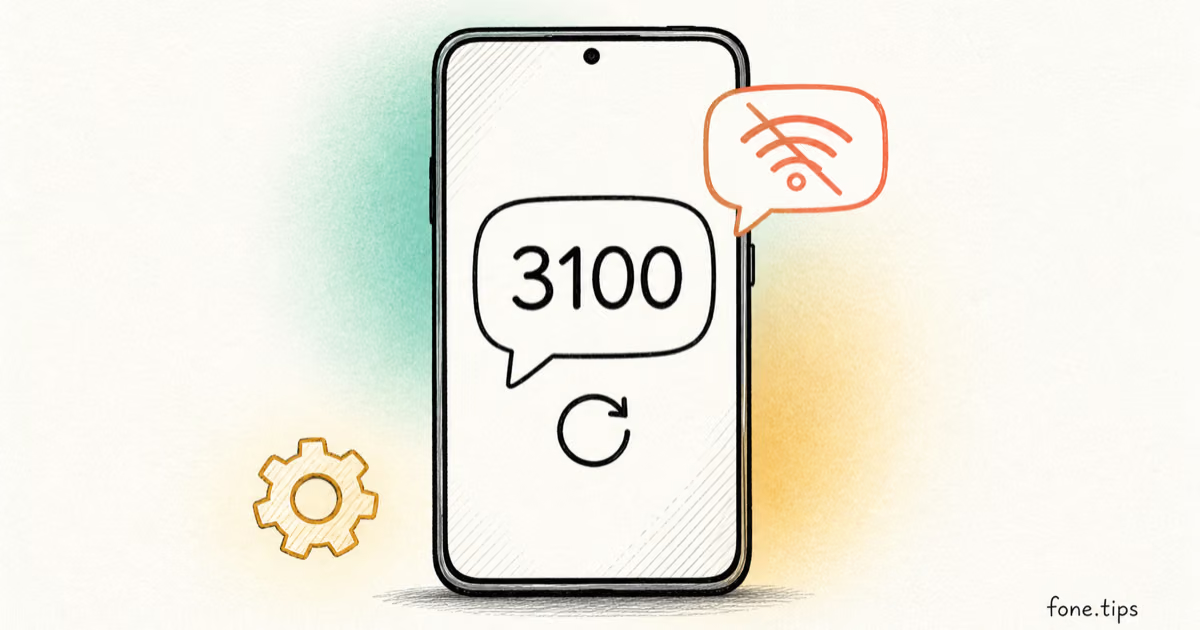
Google Messages Error 3100: Why RCS Is Broken on Galaxy
Google Messages RCS error 3100 hits Galaxy owners after phone or carrier switches. Google told 9to5Google a fix is coming. Here's what actually helps.

Is This Bank App Real? Spot a Fake App on Your Home Screen
A bank app can land on your home screen from a web page with no install warning. Learn the checks that tell a real banking app from a phishing web app.
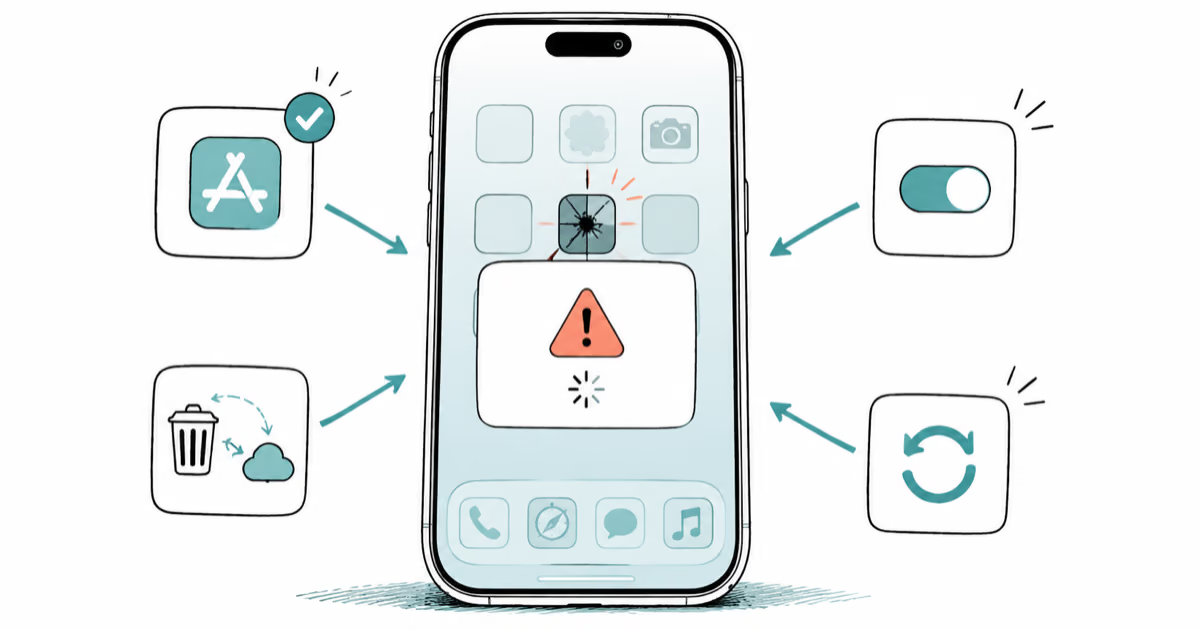
Apps Crashing After iOS 27 Update? Fix Order (2026)
Apps crashing after the iOS 27 update? Update the app in the App Store first, then offload and reinstall to clear stale cache, then restart. The fix order.
Do AI Translation Earbuds Work Offline? What to Know
Do AI translation earbuds work offline? A few do with downloaded language packs, but most need the cloud. Here's what works offline and what you give up.