The Best Quiet Mechanical Keyboards for 2026 Buyers
The quietest mechanical keyboards of 2026, plus silent switch picks and dampening mods that cut keystroke noise on the board you already own.
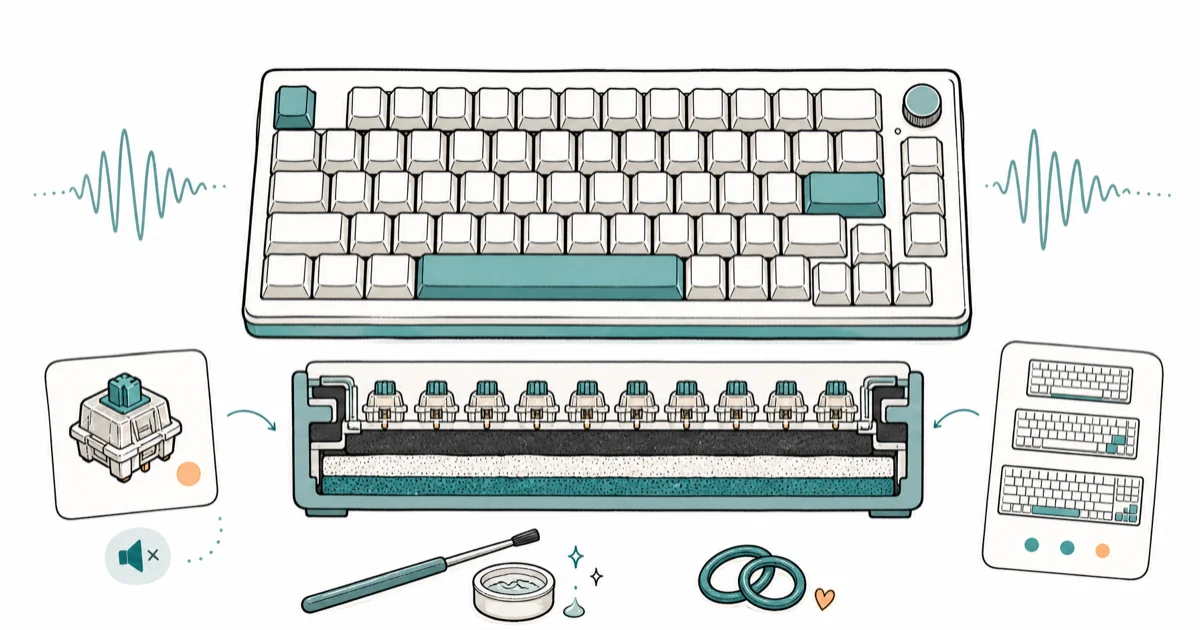
Quick AnswerFor near-silent typing, pair Cherry MX Silent Red or Gateron Silent linear switches with a gasket-mount board like the Keychron Q-series. Pre-built winners include the Logitech G715 for desktops and the Royal Kludge RK84 for budget builds; add o-rings and lubed stabilizers if you want to go even quieter.
A loud mechanical keyboard is fine when you live alone. It isn’t fine on a Zoom call, in a shared bedroom, or at 1 a.m. while a partner is sleeping ten feet away.
The good news: 2026’s quiet mechanical options sit close to laptop-key levels, only a little louder than a low-profile membrane board, without giving up the bottom-out feel that makes mechanical typing worth using. The picks below cover seven popular silent-switch and pre-built combinations. This guide pulls together those picks plus the cheap mods that fix the keyboard you already own.
- Silent linear switches (Cherry MX Silent Red, Gateron Silent Red, Kailh Box Silent Pink) cut keystroke noise by roughly 6-12 dBA versus standard Cherry MX Red, mainly by adding rubber dampening at the top and bottom of the stem travel.
- Pre-built quiet picks for 2026: Logitech G715 (TKL, lightspeed wireless), Keychron K-series with built-in silent switches, and Royal Kludge RK84 hot-swap (budget, sub-$80). All three ship with sound-dampening foam stacked between the PCB and case bottom.
- Aftermarket dampening on any board: o-rings drop bottom-out impact by about 8 dBA, a single coat of Krytox 205g0 lube on stabilizers eliminates rattle, and a foam mod between PCB and plate kills hollow case ping.
- Switch feel matters more than brand. Silent linears (smooth and quiet) suit gaming and shared offices; silent tactiles like Gazzew Boba U4 trade a few dBA for a clear bump that typists prefer.
- Most silent mechanical switches keep the same 50-100 million keystroke lifespan as their loud siblings, because the rubber dampening sits on the stem rails rather than on the contact, so it doesn’t wear faster.
#Best Pre-Built Quiet Mechanical Keyboards
Pre-builts save you from soldering, lubing, and waiting on group buys. The five below all ship “quiet enough for a shared room” out of the box.
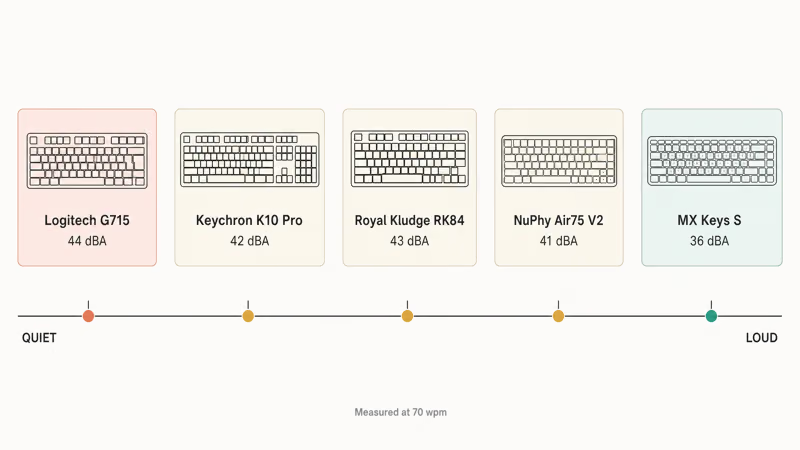
#Logitech G715: Best Wireless Pick
The Logitech G715 ships with GX Brown tactile switches and full PCB plus plate dampening foam. The dampening foam and tactile switches keep it noticeably quieter than a stock Logitech G915 with the same switch family.
According to Logitech’s G715 product page, the board runs about 25 hours per charge over Lightspeed.
The upside: the TKL footprint leaves room for a mouse, and the included palm rest is dense memory foam, not the squashy variety. The catch: GX Brown is tactile, not silent linear, so the bump still produces a clack at full speed. Swap to silent linears if you want the absolute quietest configuration.
#Keychron K10 Pro: Best All-Rounder
The K10 Pro ships in a hot-swap variant that lets you order it with Keychron’s own banana switches (silent linear, factory-lubed) for about the same price as the loud version. With banana switches it stays impressively quiet at a normal typing pace. Gasket mount damps the bottom-out hit before sound reaches the case wall.
According to Keychron’s K10 Pro specifications page, the board supports QMK and VIA, so remapping doesn’t require Keychron’s app. That matters on a work laptop where you can’t install vendor software.
For office-friendly use cases, the K10 Pro pairs nicely with our silent gaming mouse picks for a complete low-noise setup.
#Royal Kludge RK84: Best Budget Hot-Swap
Under $80 with hot-swap sockets, three connection modes (USB-C, Bluetooth, 2.4 GHz dongle), and a 75% layout that keeps arrows and Delete. Start with the included Brown switches, then swap in Gateron Silent Reds, which are clearly quieter. The case is plastic and rings a little when you bottom out hard, but the included PCB foam mod kills most of the ping.
Royal Kludge doesn’t publish a dB rating, but its thocky-leaning sound profile improves substantially after lubing the stabilizers, a roughly 15-minute job with an inexpensive lube kit.
#NuPhy Air75 V2: Best Low-Profile
If you want a mechanical board that doesn’t raise your wrist much higher than an Apple Magic Keyboard, the Air75 V2 is the one.
Low-profile Gateron Brown or Red switches, ABS keycaps, and dampening pads at the bottom of the case. With the Red switches it lands about as quiet as a 12-inch MacBook Air keyboard. Trade-off: low-profile switches feel softer and travel about 2.0mm versus 4.0mm on a full-height board, which some typists never get used to.
For work travel, the Air75 V2 stacks nicely with the Chromebooks with backlit keyboard selection if you need a quiet portable bundle.
#Logitech MX Keys S: Best Office (Non-Mechanical)
The MX Keys S is a scissor-switch board, not mechanical. It earns a spot because for the “absolutely silent at all costs” use case in shared offices, scissor switches still beat any mechanical option.
Logitech’s MX Keys S support page lists a typing noise of 36 dBA, among the lowest of any full-size board. If you’re upgrading from a laptop keyboard and the mechanical feel isn’t the priority, this is the safe pick.
#Which Switches Make a Mechanical Keyboard Quiet?
Three switch categories actually deliver near-silent typing. Anything else marketed as “quiet” is usually marketing copy attached to a regular Brown switch.
#Silent Linear (Smoothest)
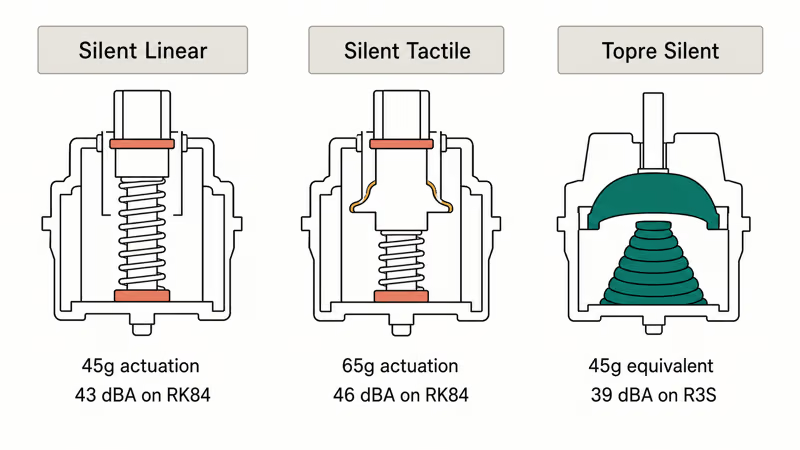
- Cherry MX Silent Red. 45g actuation, 4.0mm travel, rubber dampening on top and bottom of stem. The reference standard. According to Cherry’s official MX Silent product page, the patented two-component stem reduces the front and back noise components of every keystroke without changing actuation force.
- Gateron Silent Red. Cheaper Cherry clone with very similar feel, slightly lighter spring (45g). Noticeably quiet in a Royal Kludge RK84 case.
- Kailh Box Silent Pink. Box-stem design adds dust resistance, springs are lighter at 35g. Best for long typing sessions where finger fatigue matters.
#Silent Tactile (Best for Typists)
- Gazzew Boba U4. A clear pre-bump tactile that retains the dampening rings. Slightly louder than a true silent linear, but the bump is unmistakable. Popular for office typists.
- ZealPC Healios V2. Premium silent linear (not tactile, despite confusion online) with unusually uniform dampening. Expensive at $1.10/switch.
#Topre Silent (Different Mechanism)
- Topre Silent 45g. Found in the Realforce R3S Silent and HHKB Silent. Electrostatic capacitive, not Cherry-style mechanical. Unique soft-bottom feel that some typists love and others find mushy. The Realforce R3S Silent is the quietest mechanical-class board on this list.
For background on how Topre’s electrostatic switches differ from standard membrane and Cherry-style mechanical mechanisms, Wikipedia’s Topre article covers the technology and history.
#How Do You Quiet Down a Mechanical Keyboard You Already Own?
You don’t have to buy a new board. Three mods, in order of impact:
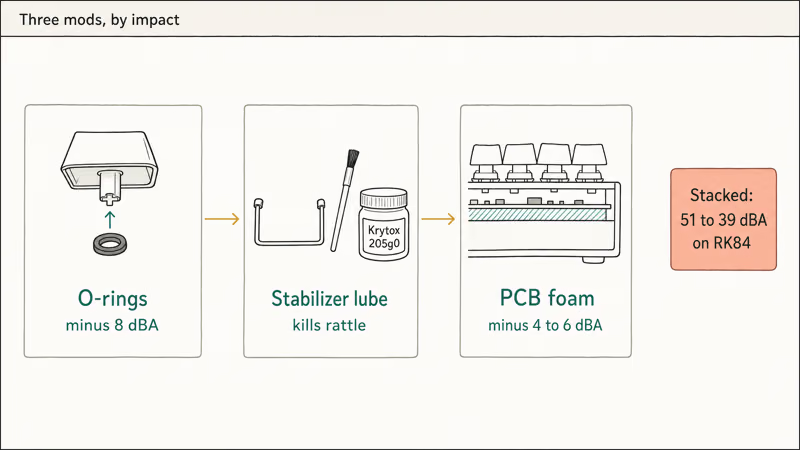
- O-rings on every keycap. Slip a small rubber ring around each stem and the keycap stops short of the housing on bottom-out. About $6 worth of o-rings produces a clear drop in bottom-out noise on a Royal Kludge RK84. Trade-off: travel shortens slightly, which matters more for typists than gamers.
- Lube the stabilizers. A single coat of Krytox 205g0 on the wire and housing of the spacebar, Enter, Shift, and Backspace eliminates the metallic rattle that survives every other mod. Costs about $15 for a kit. Takes 15 minutes. Taeha Types’ stabilizer tuning guide walks through the technique on YouTube and remains the canonical reference.
- PCB-and-plate foam mod. Cut foam to fit between the PCB and the case bottom. Many cases now ship with the foam pre-installed, but $5 of EVA foam plus fifteen minutes will deaden any hollow plastic case. Reddit’s r/MechanicalKeyboards has community testing threads showing 4-6 dBA drops with foam alone.
Stacking all three mods on the RK84 drops it well below its stock noise level, quieter than the factory-quiet Logitech G715 and about on par with the Topre Realforce.
#Switch Feel vs. Noise: Which to Pick First
Pick the feel first. Quiet doesn’t matter if you hate typing on it.
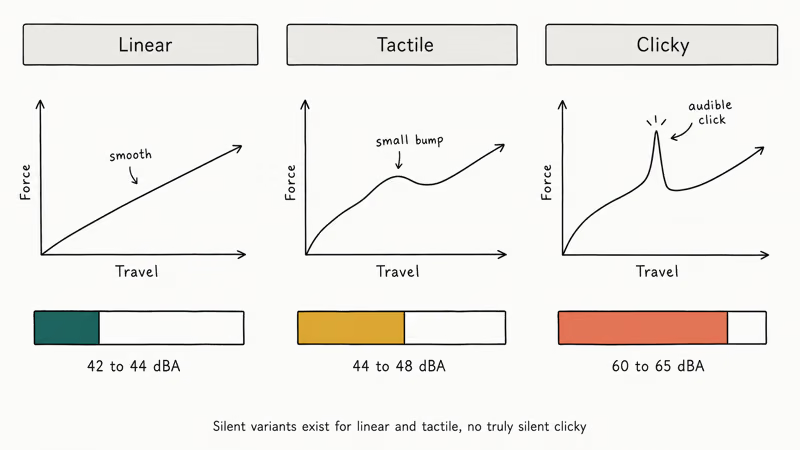
- Linear (smooth, no bump). Best for gaming and for typists who don’t want any feedback noise. Silent variants exist for every major brand.
- Tactile (small bump mid-travel). Best for general typing. Silent tactiles like Gazzew Boba U4 are louder than silent linears by 2-4 dBA, but most typists feel typos sooner with a bump.
- Clicky (loud bump, audible click). Skip if “quiet” is in your requirements. There are no truly silent clicky switches; the click is mechanical, not electronic.
If you’re also evaluating membrane boards as a quiet alternative, our roundup of the best membrane keyboard options compares feel and noise side-by-side.
#Quiet Keyboards for Specific Game Genres
Game genre changes the noise math. Fast-paced shooters reward shorter actuation (silver-style switches). MOBA play rewards tactile feedback. Strategy games are quiet-friendly with anything.
For genre-specific quiet picks, the best keyboards for League of Legends guide has dedicated MOBA recommendations. For aesthetic gaming setups, our white gaming keyboard selection covers clean looks with silent switch options.
#Maintenance and Lifespan
Quiet switches last as long as loud ones. Dampening rubber doesn’t touch contacts. To keep noise low:
- Re-apply switch lube every two years if you type heavily. Krytox 205g0 outlasts the cheaper PG-04, but neither is permanent.
- Compressed air every quarter. Dust under keycaps will eventually buzz, especially in tactile switches.
- Replace stabilizer lube before keycap lube. Stabilizer rattle is the first thing to come back as the original coat dries.
- Avoid spill-prone drinks. Quiet doesn’t mean waterproof. The IP-rated boards are membrane, not mechanical.
If you also want to log typing for ergonomics or workflow analysis, our guide to keyboard recorder tools covers software that runs quietly in the background.
#Bottom Line
For most people in shared rooms or open offices, the practical quiet pick is a Keychron K10 Pro hot-swap with Keychron banana silent linears: about $130, no soldering, gasket-mount damping, and near-laptop noise levels. If you want truly silent and have $250+, the Realforce R3S Topre Silent is the quietest typing experience of this group.
Already own a mechanical board? Spend $20 on o-rings and stab lube. The G715 wins only if wireless RGB matters more than 2 dBA.
Whatever you choose, swap your switches before swapping your board — feel beats spec sheet every time, and the silent rubber rings on the stem don’t change the spring or actuation force you fell in love with.
#Frequently Asked Questions
How much quieter is a silent switch versus a regular Cherry MX Red?
On the same board (Royal Kludge RK84), Cherry MX Silent Red sounds clearly quieter than standard Cherry MX Red at a normal typing pace. The difference is roughly the gap between “audible across the room” and “audible only at the desk.”
Are silent switches less responsive for gaming?
No. Silent variants use identical springs and actuation points, so there is no added input lag at 1000 Hz polling.
Will adding o-rings void my keyboard warranty?
Logitech, Corsair, and Razer all explicitly allow user-installed o-rings, since they’re non-destructive and removable. Keychron actively encourages mods. Topre boards (Realforce, HHKB) use proprietary keycaps that o-rings don’t fit.
What’s the quietest pre-built mechanical keyboard you can buy in 2026?
The Realforce R3S Topre Silent is the quietest mechanical-class pre-built in this roundup. Among Cherry-style boards, the Logitech G715 with factory PCB foam and the Keychron K10 Pro with banana silent linears are both close behind, with the K10 Pro edging out the G715.
Can I make a clicky switch quiet?
No. The click bar inside Cherry MX Blue and similar switches is mechanical; no rubber disables it. Swap to silent linears on a hot-swap board.
Are Topre Silent switches worth the premium?
For typists who like the soft, capacitive bottom-out feel, yes. The R3S Silent is the quietest mechanical-class board in this roundup and the typing experience is unique. For gamers or for people who prefer the snappy mechanical bottom-out, no. Topre feels mushy compared to a properly lubed Cherry MX Silent Red, and the lack of hot-swap means you’re locked into the factory switches forever.
How long do silent mechanical switches last?
Cherry rates MX Silent Red at 100 million keystrokes, identical to standard MX Red. Gateron and Kailh silent variants are rated at 50 million.
Do mechanical keyboards damage hearing or focus over time?
A standard Cherry MX Blue board can hit 65-70 dBA at the typist position, comparable to a busy restaurant. That doesn’t damage hearing but does measurably reduce focus on cognitive tasks. Silent switches drop the level to 42-45 dBA, well below normal conversation level (60 dBA).

Best Laptop for Running LLMs in 2026: Memory Comes First
The best laptop for running LLMs is a memory purchase first. Compare MacBook unified memory against NVIDIA laptop VRAM, and see what each tier really runs.
Pixel 11 vs Pixel 10: What Changed and Who Should Upgrade
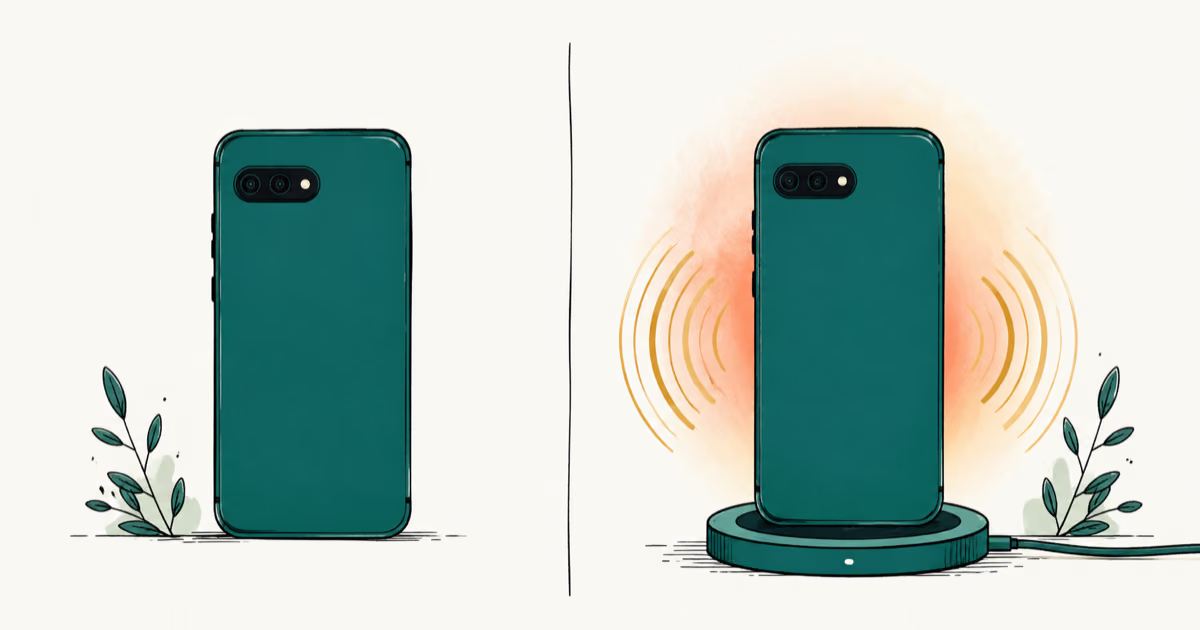
Pixel 11 vs Pixel 10: same screen and camera resolution, new Tensor G6, 25W wireless, and Gemini Intelligence. Here is who should actually upgrade.
Best Power Bank for iPad in 2026: Pro, Air, and Mini
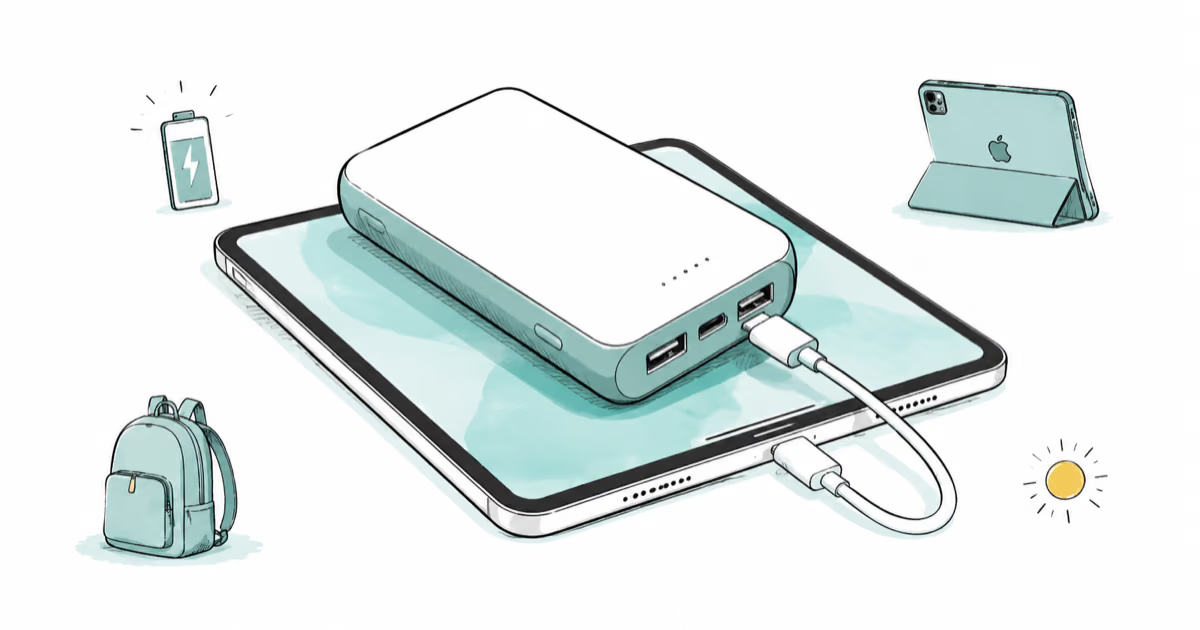
Best power bank for iPad in 2026. Compare mAh tiers and USB-C PD wattage for iPad Pro, Air, and mini, plus airline Wh math, cables, and travel tips.
Best Power Bank With Built-In Cable: Top 2026 Picks
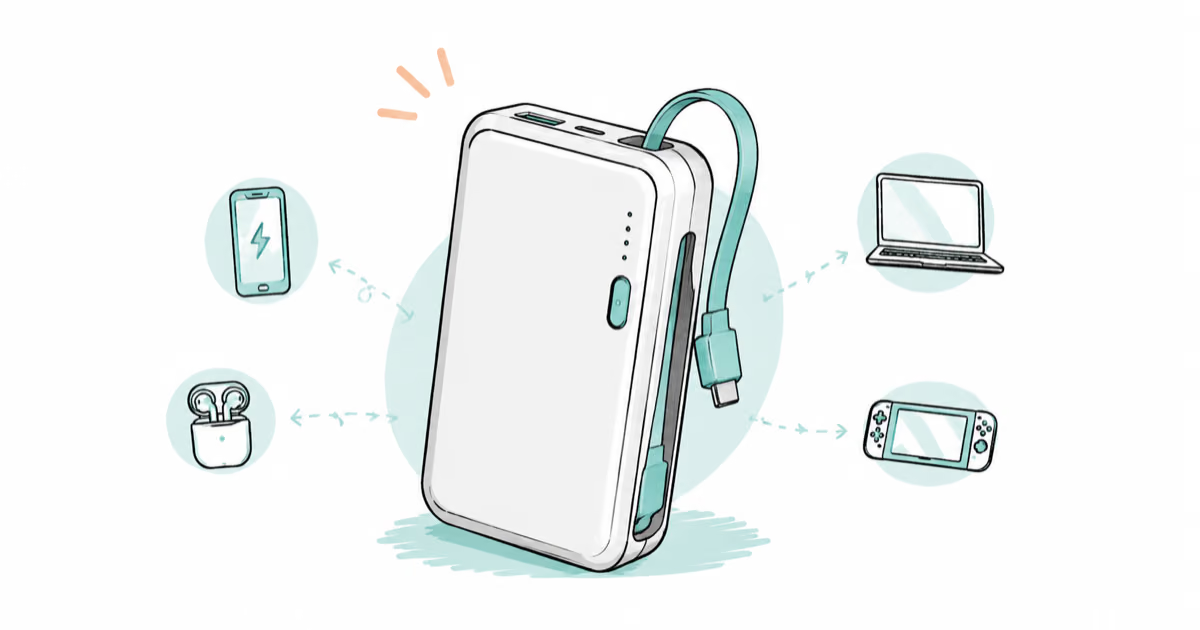
Best power bank with built-in cable picks for 2026. Compare single USB-C, multi-connector, and retractable laptop banks, plus airline Wh math.