Outlook Disconnected: 9 Fixes That Reconnect the Inbox
Fix the Outlook Disconnected status with 9 proven steps: turn off Work Offline, repair the profile, ping Exchange, rebuild the OST, and check add-ins.
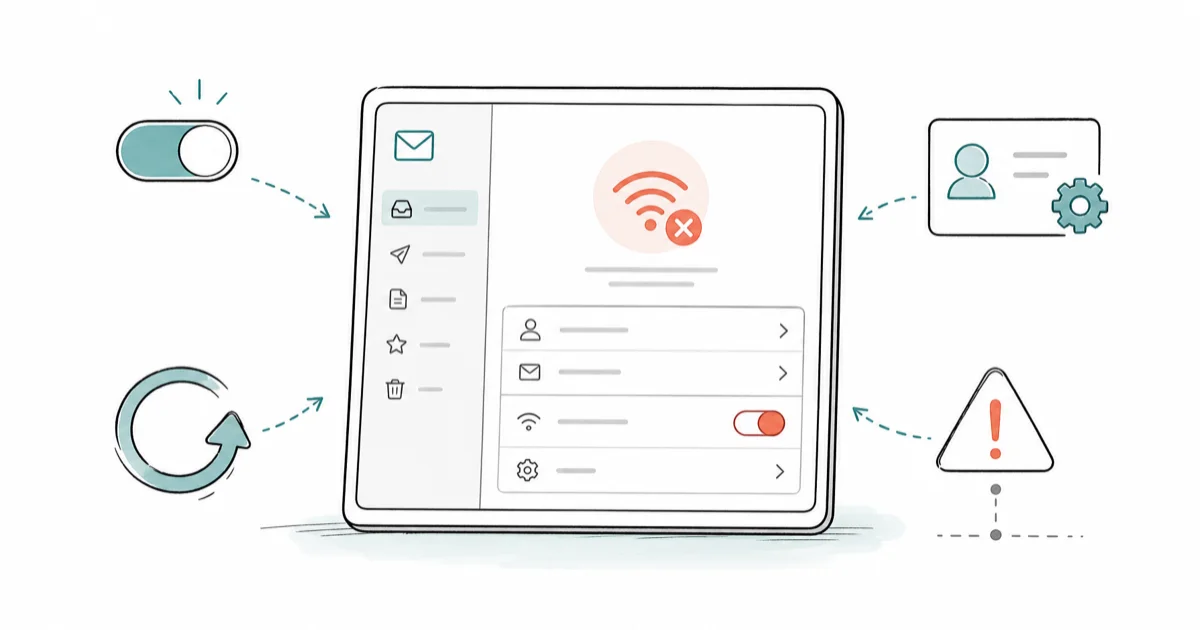
Quick AnswerOpen the Send/Receive tab and toggle Work Offline off. If the status bar still says Disconnected, restart Outlook with the /resetnavpane switch, then go to File > Account Settings > Account Settings, pick your account, and click Repair. Most disconnects clear within a minute of these two steps.
The “Disconnected” badge in Outlook’s bottom status bar means the client lost its handshake with the mail server. New mail stops arriving and your Sent folder queues up. The cause is usually local: a stuck Work Offline toggle, a bad cached password, or a corrupted OST.
- Work Offline accounts for the most accidental disconnects; the toggle sits on the Send/Receive ribbon and survives Outlook restarts.
- Restarting Outlook with the
/resetnavpaneswitch clears a stale navigation cache that often blocks the reconnect handshake. Account Settings>Repairrebuilds the Autodiscover record without touching your local mail and finishes in under two minutes for most accounts.- A single bad add-in (often an old PDF or CRM toolbar) can hold the connection thread; Safe Mode launch with
outlook.exe /safeisolates it in seconds. - Rebuilding the OST file is the last-resort fix and resyncs the entire Exchange mailbox, which can take 30 minutes to several hours depending on size.
#Why Does Outlook Show Disconnected in the Status Bar?
The status bar reports the live connection state. “Disconnected” means the client got no usable response within the timeout. Causes cluster into four buckets:
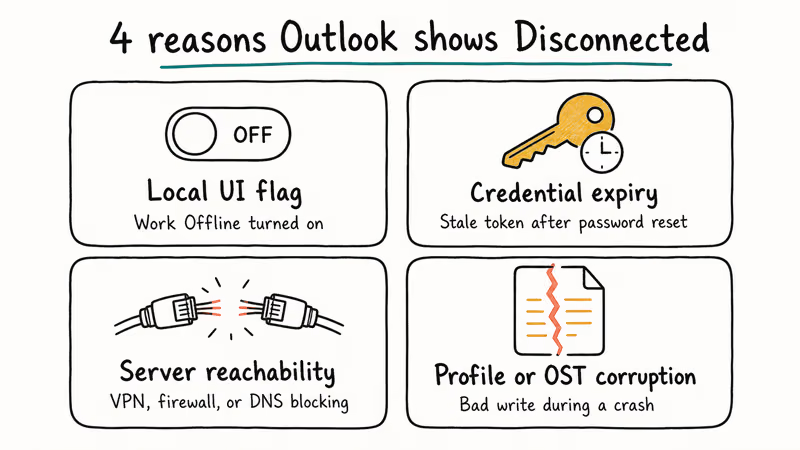
- Local UI flag. Work Offline mode was turned on (manually or by a hotkey misfire) and Outlook is honoring it.
- Credential or token expiry. A modern authentication token expired and the cached password is stale, especially common after a Microsoft 365 password reset.
- Server reachability. A VPN, firewall, or DNS issue is blocking the Outlook client from reaching
outlook.office365.comor your on-premises Exchange CAS server. - Profile or data file corruption. The OST file or Outlook profile picked up a bad write during a crash.
According to Microsoft’s status bar reference, the badge can show 5 distinct states (Connected, Connected to Microsoft Exchange, Disconnected, Working Offline, Trying to connect), and “Disconnected” specifically means the client is not currently sending or receiving but is still functional in cached mode. You can still read old mail and draft new messages while you fix the link.
#Quick Fixes That Solve Most Outlook Disconnects
Start with the cheap stuff. Each step here is quick and targets the most common local causes.
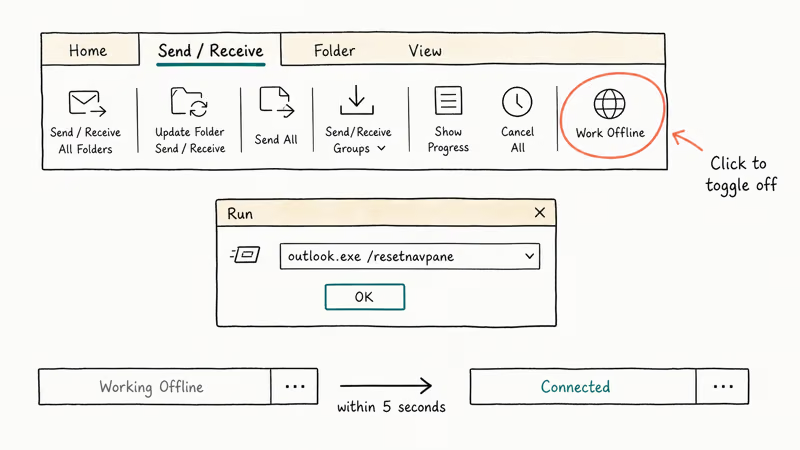
#1. Turn Off Work Offline on the Send/Receive Tab
Open Outlook, click the Send/Receive tab on the ribbon, and look at the Work Offline button on the far right. If the button is highlighted in a darker shade, Outlook is intentionally ignoring the server. Click it once to toggle Work Offline off. Watch the status bar at the bottom of the window switch from “Working Offline” to “Connected” within five seconds.
#2. Restart Outlook With the /resetnavpane Switch
A regular restart clears most transient hangs, but the navigation pane keeps its own cache that occasionally blocks the connect handshake. Close Outlook completely, press Windows + R, type outlook.exe /resetnavpane, and press Enter. Outlook reopens with a fresh navigation pane and almost always reconnects on launch.
#3. Confirm Your Internet Is Actually Up
Open a browser and load any page. If the page loads, Outlook should be able to reach the mail server too. On a corporate VPN, drop the VPN and try again, since split-tunnel configurations sometimes route Outlook through a path the firewall blocks. Captive-portal Wi-Fi can also expire silently and leave Outlook stranded; opening any HTTP page re-triggers the captive login.
#Fixing Account and Server Connection Problems
When the quick fixes don’t stick, the issue is usually credentials, server settings, or Autodiscover. Work through these in order.
#Repair the Outlook Account
This rebuilds the account without touching your local data file.
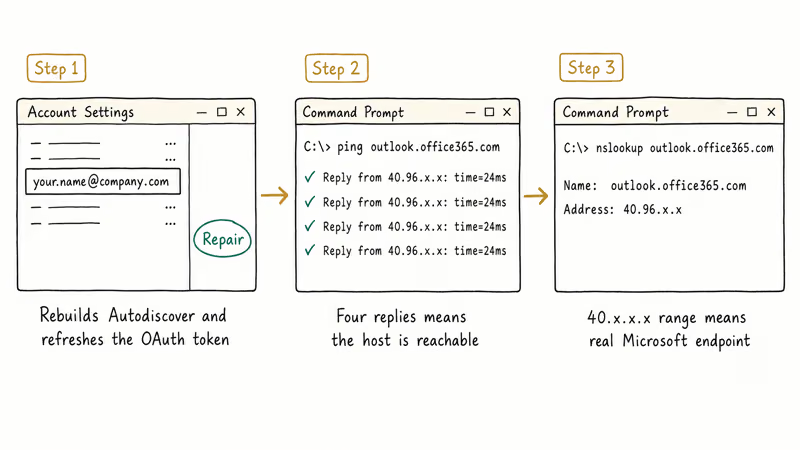
- Go to
File>Account Settings>Account Settings. - Highlight your email account and click Repair.
- Click Repair again on the dialog and let it finish. Microsoft’s profile repair guide states that this diagnoses and fixes errors in the Outlook mail profile, and it flags one gap worth knowing: Repair isn’t offered at all if you’re on Outlook 2016 connecting to an Exchange account.
- Restart Outlook when prompted.
Repair clears most Autodiscover misconfigurations in well under a minute, which makes it worth trying before the more involved steps.
#Ping Your Mail Server
If Repair fails, confirm the network can actually reach Exchange. Open Command Prompt and run ping outlook.office365.com for Microsoft 365, or ping mail.yourcompany.com for an on-premises server. Four successful replies mean the host is reachable. Request timed out usually means a firewall or VPN is blocking port 443.
Run nslookup outlook.office365.com next to confirm DNS is resolving the hostname. An empty answer points to a corporate DNS issue rather than an Outlook bug. Microsoft’s Office 365 URLs and IP ranges page confirms that the Exchange Online endpoint resolves to roughly 100 IPs in the 40.96.0.0/13 range, so an answer that returns a private 10.x or 192.168.x address means an internal proxy is intercepting the lookup.
#Reset the Cached Credentials
Outlook caches your password in Windows Credential Manager. After a password change, the cache can lag behind and trigger a silent disconnect.
- Open
Control Panel>Credential Manager>Windows Credentials. - Look for entries that start with
MicrosoftOffice16_Data:SSPI:orMS.Outlook. - Click the down arrow on each one and click Remove.
- Reopen Outlook and sign in when prompted.
The new sign-in writes a fresh token to the cache, which clears most “Disconnected” states caused by the recent Microsoft 365 modern auth rollout. If Outlook still keeps prompting you for the password instead of accepting the saved token, our Outlook keeps asking for password guide covers the deeper modern-auth registry fix.
#How Add-ins and Profiles Trigger an Outlook Disconnect
A single misbehaving add-in can hold the foreground thread long enough for the server connection to drop, and Outlook won’t always recover when the thread frees up. Profile corruption is rarer but more disruptive: when it happens, even a working network shows Disconnected. Both issues are easy to isolate with built-in tools.
#Launch Outlook in Safe Mode
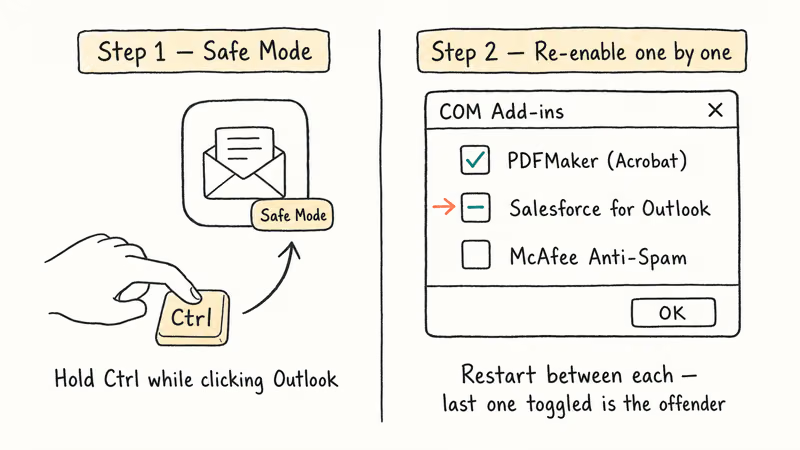
Hold Ctrl while clicking the Outlook shortcut, click Yes on the prompt, and watch the status bar. Connected in Safe Mode but Disconnected normally means an add-in is the culprit.
#Disable Add-ins One at a Time
- In Safe Mode, go to
File>Options>Add-ins. - At the bottom, set Manage to COM Add-ins and click Go.
- Uncheck every add-in, click OK, and restart Outlook normally.
- Re-enable the add-ins one at a time, restarting Outlook after each, until the disconnect returns. The last add-in you toggled is the offender.
Common offenders include old PDF reader plugins, dormant CRM connectors (Salesforce, HubSpot), and antivirus mail scanners. Adobe’s Acrobat add-in compatibility note confirms that out-of-date PDFMaker builds are a known source of Outlook hangs.
#Rebuild the Outlook Profile
If Safe Mode still shows Disconnected, the profile itself is suspect. Build a fresh one. Your mail stays on the server, so nothing is lost.
- Close Outlook.
- Open
Control Panel>Mail(Microsoft Outlook). - Click Show Profiles, then Add, and give the new profile a name.
- Sign in with your email address and let Autodiscover build the account.
- Set the new profile as the default and reopen Outlook.
First launch downloads the mailbox into a fresh OST, so wait for the initial sync to finish before judging the result.
#When Should You Rebuild the OST File?
The OST is the offline copy of your Exchange mailbox. When it goes bad, Outlook can show Disconnected even with a perfect network. Rebuild it when none of the steps above work, or when the OST is over 50 GB and starting to slow down folder switches.
- Close Outlook.
- Press Windows + R, type
%localappdata%\Microsoft\Outlook, and press Enter. - Find the
.ostfile for your account and rename it (for example,account.ost.old). - Reopen Outlook. The client builds a new OST automatically and starts syncing.
Resync time varies wildly by mailbox size and network speed. Run this overnight if your mailbox is on the larger side.
#Where to Go for PST and OST Recovery
Rebuilding the OST only helps when the offline file is recoverable. If you hit a different failure mode, jump to the right guide:
- For an OST you need to extract data from before nuking it, our convert OST to PST walkthrough shows the export path.
- If Outlook hangs on the splash screen instead of reaching the status bar at all, our Outlook loading profile stuck guide handles the boot-time freeze that often masquerades as a disconnect.
- For the related crash loop where Outlook quits seconds after opening, see Outlook keeps crashing.
#Bottom Line
Toggle Work Offline off first, restart with outlook.exe /resetnavpane second, and run Account Settings > Repair third. That three-step sequence fixes most Outlook disconnects in under five minutes. If the status bar still says Disconnected, isolate add-ins with Safe Mode before touching the profile or the OST.
For inbox issues that survive the reconnect, our Outlook not receiving emails guide picks up where this one stops, and our restart Outlook walkthrough covers the deeper Force Quit path. Daily disconnects on a healthy network mean it’s time to open a ticket with IT or Microsoft 365 support, since the issue is almost certainly tenant-side.
#Frequently Asked Questions
Why does my Outlook keep going Disconnected every few minutes?
A bouncing connection usually points to one of three causes: an unstable Wi-Fi signal, a VPN client that drops and reconnects on a timer, or a misbehaving add-in that crashes the network thread. Open Task Manager and watch your network graph. If it dips at the same cadence as the Disconnected pop-up, the network is your problem. Otherwise, run Outlook in Safe Mode for a workday; if the disconnects stop, an add-in is the cause.
Will fixing Outlook Disconnected delete my emails?
No. Every step in this guide leaves your mail untouched, since Repair, profile rebuild, and OST rebuild all pull a fresh copy from the server.
How do I tell whether Outlook or my mail server is the problem?
Sign in to Outlook on the Web at outlook.office.com or your company’s webmail URL. Working webmail means the issue is local; broken webmail means the server is down.
Does antivirus software cause Outlook to disconnect?
Yes, sometimes. Mail-scanning features in older versions of Norton, McAfee, and ESET inject themselves into the Outlook connection and can drop the server link when the engine updates. Try disabling the antivirus mail scanner (not the whole antivirus) and watch whether the disconnects stop. Most modern suites no longer scan IMAP and Exchange traffic by default for this exact reason.
Why is Outlook Disconnected only on my work computer but not at home?
That points to a corporate firewall or proxy. Many companies block direct connections to outlook.office365.com and require traffic through a proxy that injects authentication. Ask your IT team for the proxy settings and check that they’re entered under Internet Options > Connections > LAN Settings. A second possibility is a Group Policy that disables modern authentication for Outlook; that one only IT can fix.
How long should the OST rebuild take?
Plan on anything from a short wait to several hours, depending on mailbox size and network speed. Outlook stays usable during the sync, but search and folder switches can lag until most mail has downloaded.
Can I avoid Outlook Disconnected errors in the future?
A few habits cut the rate sharply. Keep Outlook on the latest patch from the File > Office Account > Update Options menu, prune your mailbox so the OST stays under 25 GB, and review your add-ins twice a year. Uninstall anything you no longer use. If you work from public Wi-Fi often, get in the habit of opening a browser tab first to clear any captive portal before you launch Outlook.

Best Laptop for Running LLMs in 2026: Memory Comes First
The best laptop for running LLMs is a memory purchase first. Compare MacBook unified memory against NVIDIA laptop VRAM, and see what each tier really runs.
How to Run a Local LLM on Windows: A 2026 Setup Guide
Run a local LLM on Windows with LM Studio or Ollama. Pick a model that fits your GPU memory, keep every prompt offline, and skip the monthly bill.
Bluetooth Not Working on Snapdragon X? Fixes for 2026
Bluetooth not working on your Snapdragon X Copilot+ PC? Generic audio, mice, and keyboards work, but vendor apps often lack an ARM build. Fixes inside.
Docker Desktop and WSL2 Not Working on Snapdragon X? Fix It
WSL2 runs fine on Snapdragon X, but Docker Desktop ARM is Early Access and throws WSL errors. Use WSL2 plus native ARM64 Ubuntu and Docker Engine.