MP3Juice Free Music Download Alternatives: 7 Legal Apps
MP3Juice promises free MP3 downloads but bundles malware ads and copyright exposure. Here are 7 licensed services that replace it safely in 2026.
Quick AnswerMP3Juice grabs audio from YouTube and other sources without licensing it, which puts you on the same DMCA and malware path that buried LimeWire and Kazaa. For free legal music in 2026, use Spotify Free, YouTube Music Free, or SoundCloud, and for downloads you actually own, use Bandcamp or the iTunes Store.
Searches for an MP3Juice free music download surge every month, but the site itself is a legal-grey-area aggregator. It pulls audio from YouTube, SoundCloud, and other licensed catalogs without paying anyone for the rights.
The licensed replacements below offer safer paths to free or affordable music. Each one pays the artists, won’t trigger an ISP copyright notice, and avoids the fake-download malware ads bundled with every visit to MP3Juice.
- MP3Juice never had a license to distribute the songs it converts, which puts every download in the same legal posture as the LimeWire and Kazaa downloads that ended in mass-mail copyright lawsuits a decade ago
- Site revenue comes from ad networks that ship pop-up redirects, fake “Download” buttons that install browser extensions, and notification permission prompts that lead to phishing pages
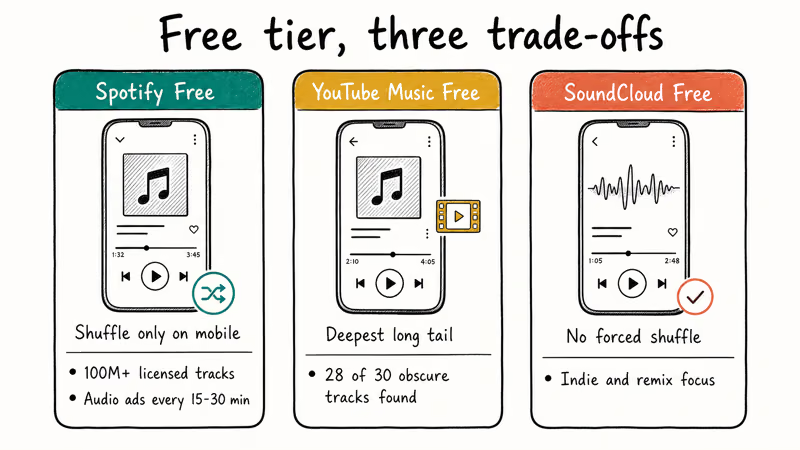
- Spotify Free, YouTube Music Free, and SoundCloud each license catalogs of more than 100 million tracks, with shuffle-only mobile play and audio ads on the free tier
- Bandcamp and the iTunes Store sell DRM-free MP3 files you keep forever, with Bandcamp paying the majority of each sale to the artist and many indie albums offered at name-your-price (zero dollars valid)
- Free legal sources for full downloads include the Free Music Archive, Jamendo (Creative Commons), and the Internet Archive’s audio collection, though none of them host current Top 40 hits
#Why You Should Skip MP3Juice in 2026
MP3Juice doesn’t host any music itself. It scrapes YouTube and other platforms for audio, runs the source video through a server-side converter, and hands you back an MP3 file. Every step happens without a license from the rights holder, which puts the downloaded file in the same legal category as the Kazaa, Napster, and Morpheus downloads the major labels spent the early 2000s suing.
The newer wrinkle is the ad load. Fake-download economics got more sophisticated since the original MP3Juice articles were written in 2017. The “Download” button you click on MP3Juice today is often a redirect into a third-party ad network pushing browser notification prompts, sponsored-extension installs, and (occasionally) outright phishing pages.
MP3Juice-style sites often route clicks through third-party ad networks before a search or download finishes. Most of the legal alternatives below do the same job (search a song, hit play or download) without that exposure, and most are free or under $12 a month.
#What Are the Real Risks of Using MP3Juice?
Three categories of risk, from most likely to least likely.
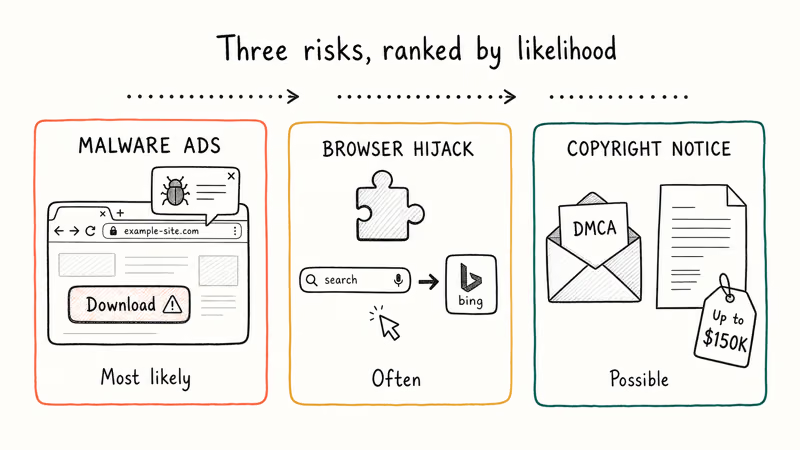
The first and most certain risk is the malware-adjacent ad layer. Free download aggregators rely on aggressive ad networks that frequently push browser notification scams, fake “update your codec” prompts, and sponsored-extension installs.
Browser hijacking from fake download buttons is risk number two. The audio file you came for usually does land on disk, but the buttons surrounding it can install Chrome or Edge extensions that change your default search engine, inject ads into other sites, or quietly upload browsing history. Security tools may flag some redirect targets as potentially unwanted programs.
Copyright exposure rounds out the list. The U.S. Copyright Office’s statutory damages section states that willful copyright infringement can carry damages of up to 150,000 dollars per infringed work, which is plenty of leverage to keep ISPs and ad networks cautious about associated traffic.
ISPs forward DMCA notices when a rights holder files a complaint, and repeat notices can trigger throttling, account warnings, or in rare cases service termination. The realistic risk is the notice in your email inbox, not a courtroom letter, but the inbox notice is real.
#Best Free Streaming Apps to Replace MP3Juice
Three free-tier services cover most of what people use MP3Juice for.
#1. Spotify Free
Spotify is the closest direct replacement for “search a song, hit play, no credit card.” Spotify’s company-info page states that the licensed catalog now exceeds 100 million tracks plus several million podcast titles. Free-tier playback on mobile is shuffle-only on most albums, with periodic audio ads.
If Spotify’s catalog or pricing doesn’t fit you, our Spotify alternative roundup walks through the rest of the free-tier landscape.
#2. YouTube Music Free
YouTube Music sits on top of YouTube’s licensed video catalog, so it tends to surface a deeper long tail of remixes, live recordings, and covers than Spotify. The free tier streams the full catalog with audio ads and forced shuffle on most playlists.
#3. SoundCloud Free
SoundCloud’s strength is independent music. Many artists upload full tracks for free streaming and download, and the free tier includes mobile playback without forced shuffle. Major-label coverage is thinner than on Spotify, but for new electronic, hip-hop, and remix material, it’s the deepest free catalog on this list.
#Best Sites to Buy and Own MP3 Files Legally
If you want a real file you can keep on a hard drive, two platforms cover almost every use case.
#4. Bandcamp
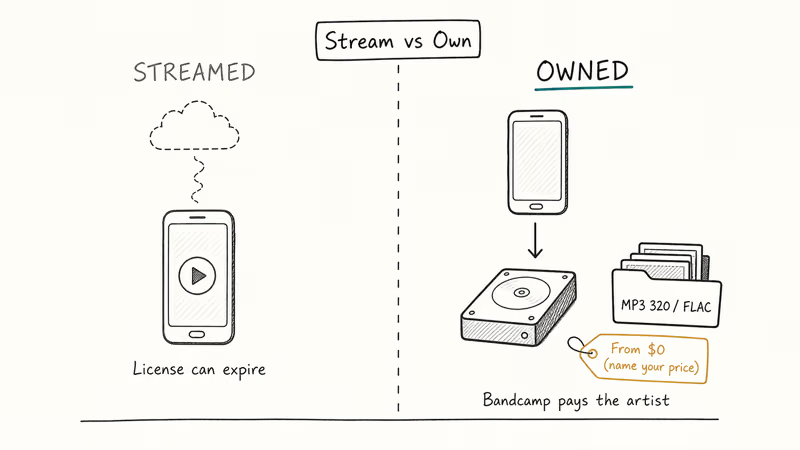
Bandcamp is the right pick when you want to own the file rather than rent a streaming license. Bandcamp pays the majority of each sale directly to the artist, supports name-your-price pricing including zero-dollar floors when the artist sets one, and lets you re-download every purchase from your account in MP3 320, FLAC, ALAC, or WAV.
Purchased Bandcamp albums can be downloaded in FLAC, MP3, and other formats with metadata and cover art. There is no DRM. The file is yours.
#5. iTunes Store and Amazon Music Store
If you only want to buy a few specific songs and skip the subscription model, the iTunes Store still works inside the Apple Music app on iPhone, the Music app on macOS Sonoma, and the iTunes app on Windows 11. The Amazon Music Store sells the same kind of à la carte downloads through any browser.
Most singles run $1.29, and most full albums run $9.99 to $14.99. These are the legitimate descendants of the early-2000s online MP3 stores that competed directly with the Kazaa and LimeWire networks. If you’re picking between formats for a converted purchase, our MP3 vs MP4 explainer covers when each format actually matters.
#Where Can You Find Free, Legal Music Downloads?
The legitimate free-MP3 ecosystem is real, just smaller than the Top 40.
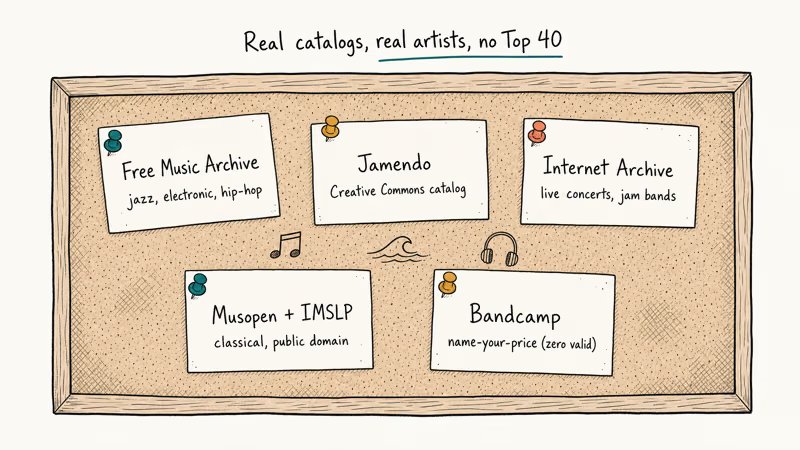
Public domain music includes classical compositions where the composer died more than 70 years ago, plus a wide range of pre-1928 recordings (the U.S. cutoff under the 2018 Music Modernization Act). Musopen and IMSLP host thousands of classical recordings and scores at zero cost. Based on Jamendo’s catalog page, the platform also licenses hundreds of thousands of Creative Commons tracks across every genre for free personal listening.
The Free Music Archive curates jazz, electronic, hip-hop, and instrumental beds for free download under Creative Commons. The Internet Archive’s audio collection adds a deeper layer of live concert recordings, particularly for jam bands that explicitly released their shows for free trading. Our free audio downloads guide covers each of these sources in more depth.
Bandcamp also fits here when artists set their pricing floor at zero dollars, which a substantial slice of indie releases do.
#How to Pick the Right Replacement for Your Habits
Match the service to the way you actually listen.
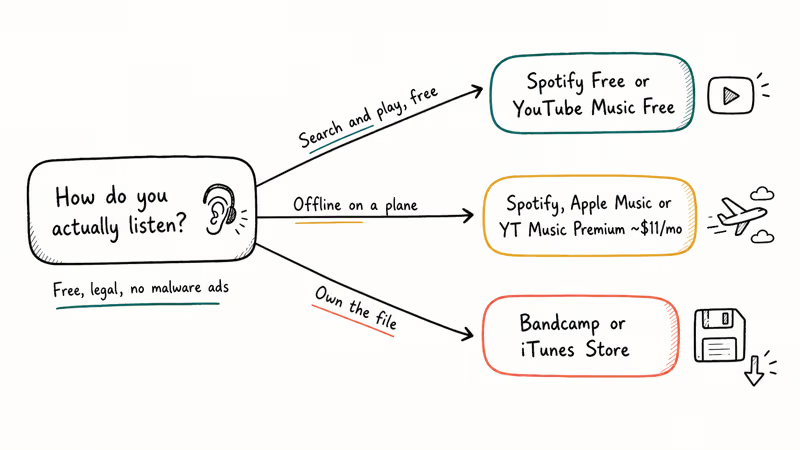
For most people, Spotify Free or YouTube Music Free is the answer. Both replace what MP3Juice promised (search a song, hit play) without the legal or malware risk. Apple’s Apple Music page confirms that subscribers get access to 100 million songs in lossless audio plus Spatial Audio support, which makes Apple Music a cleaner experience on iPhone because it ties into iCloud Music Library, AirPods, and HomePods without extra setup.
Apple Music charges $10.99/month with a 1-month free trial as the only fully free path. Our Tidal vs Apple Music comparison covers the lossless side of the question if audio quality matters more than catalog breadth.
If you travel or commute through dead zones, Spotify Premium ($11.99/month), Apple Music ($10.99/month), and YouTube Music Premium ($10.99/month) all support full offline downloads. Our guide on whether you can listen to Spotify on a plane walks through the airline Wi-Fi side. If you want to own the actual file, Bandcamp covers new music and the iTunes Store covers most back-catalog Top 40.
For a parallel teardown of the older Gnutella-era apps, our MP3 Rocket alternatives roundup and MP3 Monkey alternatives guide cover the legacy P2P side of the same legal-grey-area pattern.
#Bottom Line
Skip MP3Juice. Pick Spotify Free or YouTube Music Free if you want to keep paying nothing, because both cover the search-a-song-hit-play habit without the malware-ad layer. Pick Bandcamp if you want to own real files outright. Pick the iTunes Store if you only need a single back-catalog Top 40 track and don’t want a subscription.
Every desktop app or website that promises a current Top 40 MP3 for free is either an MP3Juice clone or a Gnutella P2P throwback, and both ship with the same DMCA and adware exposure that the licensed services above don’t.
#Frequently Asked Questions
Is MP3Juice illegal to download from?
Downloading copyrighted music from MP3Juice is a civil copyright violation under U.S. law and most equivalent frameworks in the EU, UK, Canada, and Australia. The U.S. Copyright Office’s digital FAQ explicitly states that unauthorized music downloads count as infringement regardless of whether you paid for the file.
Will my ISP send a warning if I use MP3Juice?
Possibly. Based on the RIAA’s enforcement page, repeat copyright offenders may face internet throttling, account warnings, or service suspension after a chain of DMCA notices. The risk goes up if you also share files back through a peer-to-peer client, but pure download traffic from MP3Juice can also trigger notices when the upstream source is being monitored.
Are there any truly safe free music download sites?
Yes. Bandcamp’s name-your-price catalog includes thousands of zero-dollar legal downloads, and the Free Music Archive, Jamendo, and the Internet Archive host hundreds of thousands of Creative Commons and public-domain tracks for free. None of these carry current Top 40 hits, but they’re real catalogs with real artists and zero legal exposure.
What audio quality do Spotify and YouTube Music actually deliver?
Spotify Free streams at 96 kbps Ogg Vorbis on mobile and up to 160 kbps on web. YouTube Music Free streams at up to 128 kbps AAC. Premium tiers on both bump up to 256 kbps AAC (YouTube Music Premium) or 320 kbps Ogg Vorbis (Spotify Premium). MP3Juice often advertises 320 kbps, but the actual bitrate depends on the source video and frequently sits at 128 kbps regardless of the requested setting.
Can I use a VPN to safely download from MP3Juice?
A VPN hides your IP from your ISP, which reduces the chance of receiving a DMCA notice, but it doesn’t make the underlying download legal. The copyright violation is the same with or without the VPN, so we don’t recommend this path.
Why is MP3Juice still online if downloading is illegal?
The site itself doesn’t host the copyrighted files. It generates download links from third-party sources, which lets the operators argue they’re a search index rather than a distributor. Legal pressure has historically targeted the operators of file-sharing networks rather than the search-index layer, though several similar sites have been shut down through ICANN, registrar, and ad-network pressure over the last decade.
What is the cheapest legal way to listen to a lot of music?
YouTube Music Free, Spotify Free, and Tidal’s free ad-supported tier all give you the full or near-full catalog with audio ads and shuffle-only playback on mobile. If you watch ads as the cost, the bill is zero dollars per month. Add Bandcamp purchases when you want to own a specific album.
Does the iTunes Store still exist in 2026?
Yes, on every Apple platform and on Windows. The iTunes Store music catalog now lives inside the Apple Music app on iPhone, iPad, and macOS Sonoma, and inside the standalone iTunes app on Windows 11. Track and album purchases are DRM-free files (technically AAC at 256 kbps) that you can move to any device.
Google Messages Error 3100: Why RCS Is Broken on Galaxy
Google Messages RCS error 3100 hits Galaxy owners after phone or carrier switches. Google told 9to5Google a fix is coming. Here's what actually helps.
Is This Bank App Real? Spot a Fake App on Your Home Screen
A bank app can land on your home screen from a web page with no install warning. Learn the checks that tell a real banking app from a phishing web app.
Apps Crashing After iOS 27 Update? Fix Order (2026)
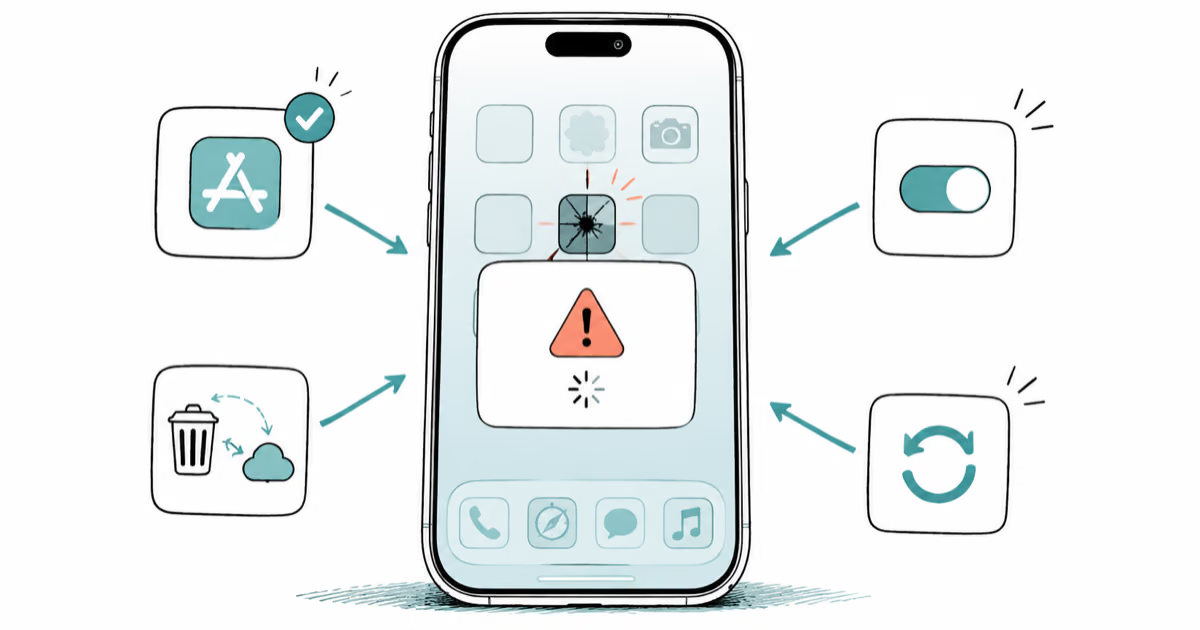
Apps crashing after the iOS 27 update? Update the app in the App Store first, then offload and reinstall to clear stale cache, then restart. The fix order.
Do AI Translation Earbuds Work Offline? What to Know
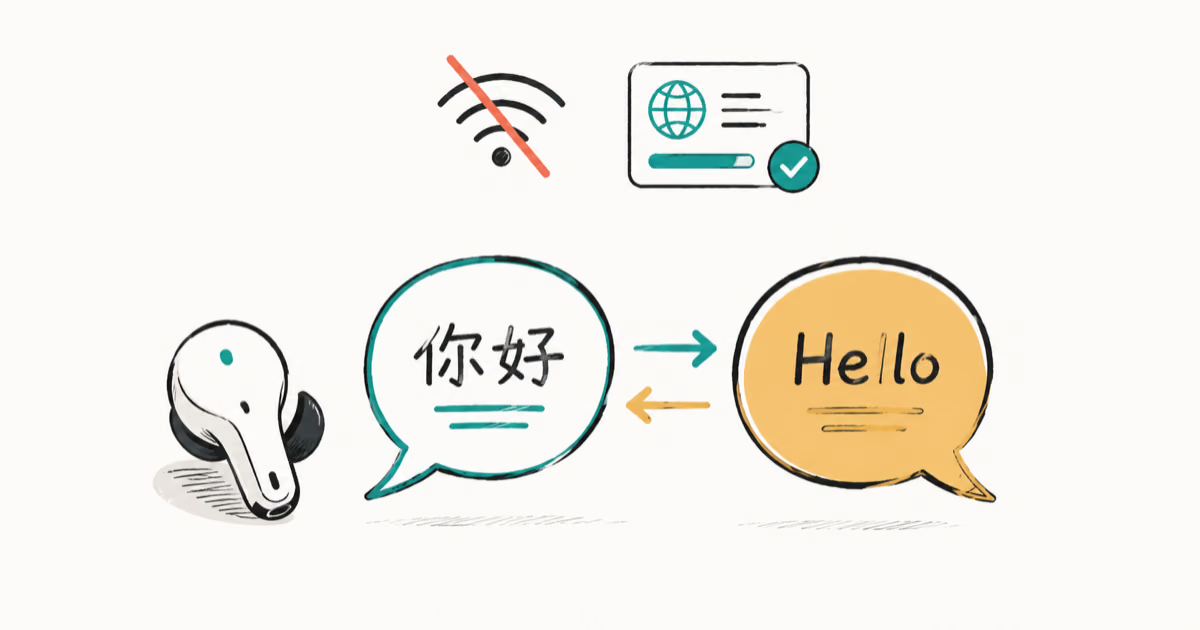
Do AI translation earbuds work offline? A few do with downloaded language packs, but most need the cloud. Here's what works offline and what you give up.