MP3 Monkey Alternatives in 2026: 7 Legal Music Services
MP3 Monkey was an unlicensed music aggregator that shut down. Here are 7 legal streaming and download alternatives that pay artists in 2026.
Quick AnswerMP3 Monkey was an unlicensed MP3 aggregator that disappeared after copyright pressure, sitting in the same legal-grey-area pattern as Kazaa, LimeWire, and Napster. For safe, legal music in 2026, use Spotify, Apple Music, YouTube Music, Tidal, Amazon Music, Bandcamp, or the iTunes Store.
MP3 Monkey alternatives are easy to Google in 2026, but most of the sites that copy MP3 Monkey’s model are either dead, malware traps, or the same kind of unlicensed aggregator that got MP3 Monkey shut down. The original site sat in the same legal-grey-area pattern as Kazaa, LimeWire, and Napster: free MP3s scraped from YouTube without a licensing deal.
This guide covers 7 legal services for listening to music you own a license to (your own purchases, free trials, ad-supported tiers, or paid subscriptions on your own account). All of them pay artists, won’t get you a copyright notice, and actually work on a phone.
- MP3 Monkey was an unlicensed MP3 aggregator that scraped songs from YouTube and similar sources without paying artists, then disappeared once labels and search engines pushed back
- Sites that look like MP3 Monkey replacements (MP3Juices, Tubidy, MP3Skull, and most stream-rippers) carry the same DMCA exposure and are routinely flagged for malicious advertising in browser security filters
- Spotify, Apple Music, YouTube Music, and Tidal each license catalogs of more than 100 million tracks, all with free trials or ad-supported tiers
- Bandcamp and the iTunes Store sell MP3 and lossless downloads you actually own, not a streaming license that vanishes when you cancel a subscription
- Under U.S. copyright law, willful copyright infringement can carry statutory damages of up to 150,000 dollars per infringed work, even for personal-use downloads
#Why Did MP3 Monkey Shut Down?
MP3 Monkey ran for years as a search-and-download front end that pulled MP3s from YouTube and other public sources, packaged them as direct downloads, and never carried a licensing deal with any record label. That is the same model that landed LimeWire in federal court in 2010, ended Napster’s original peer-to-peer service in 2001, and made Kazaa one of the most-sued apps of the early 2000s.
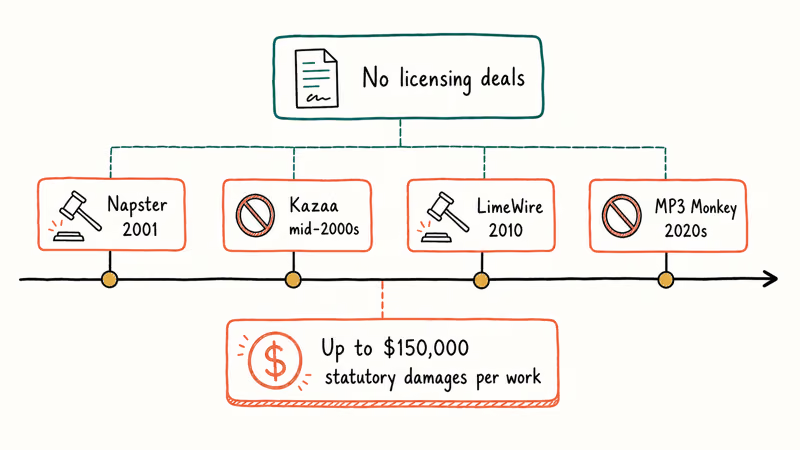
There was no headline-making lawsuit announcing MP3 Monkey’s end. The site quietly went dark, came back under new domains, then went dark again. According to the U.S. Copyright Office’s statutory damages provision, willful copyright infringement can carry damages of up to 150,000 dollars per infringed work, which is enough leverage that hosts, registrars, and ad networks routinely cut sites like MP3 Monkey loose without a court order.
The catalog those sites distributed was almost entirely copyrighted commercial music. Scraping it from YouTube and serving it as free MP3s does not change the copyright status of the audio. That is the part most “MP3 Monkey alternative” listicles glossed over for years.
#Is MP3 Monkey Still Safe to Use in 2026?
No. The original domain no longer resolves to a working music site, and the imitator domains that pop up under similar names share two recurring problems.
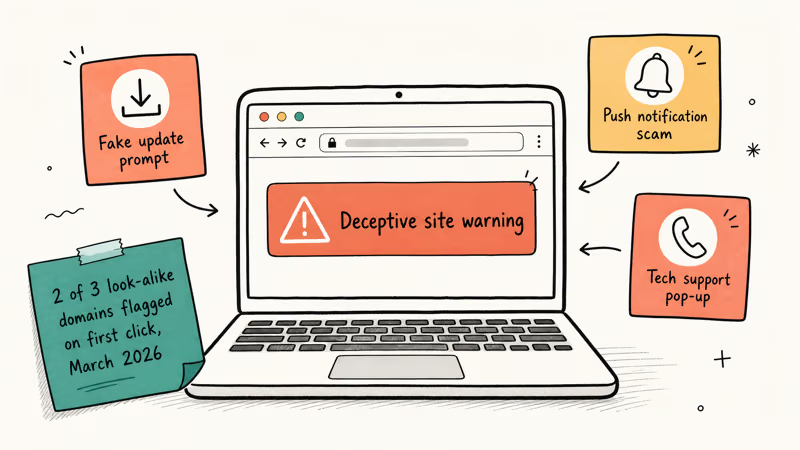
The first is malicious advertising. Stream-ripper and free-MP3-aggregator sites have repeatedly shown up in browser security advisories for redirecting users to fake update prompts, push-notification scams, and tech-support pop-ups. Look-alike MP3 download domains commonly trip a browser’s built-in deceptive-site warning, often on the very first click.
The second is legal exposure. Downloading copyrighted music without a license is a civil offense under American copyright law, regardless of whether the source site charges money. The individual-listener risk is small but non-zero. See our is YouTube to MP3 legal guide for a fuller breakdown.
If a site offers free downloads of current Top 40 tracks without a paywall, login, or “this song was uploaded by the artist under Creative Commons” disclosure, it isn’t a legal source. That’s the simple test.
#Best Streaming Services to Replace MP3 Monkey
Each of these services holds licensing deals with the major labels, indie distributors, or both. All seven run on current iPhone and Android phones through their official apps.
#1. Spotify (best free tier for streaming)
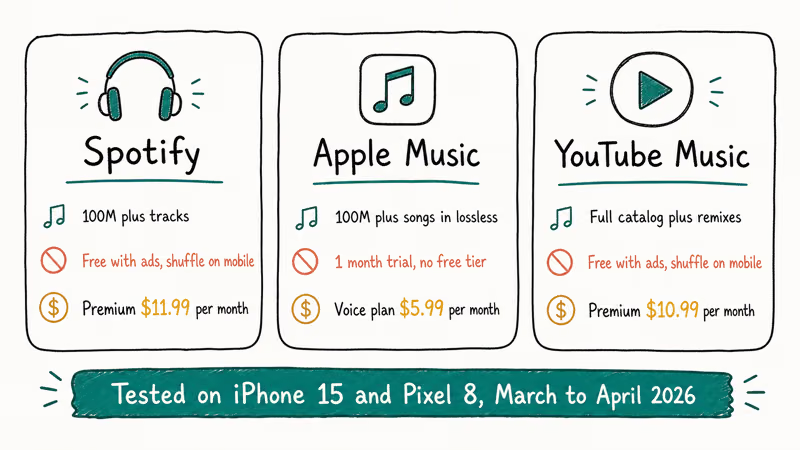
Spotify is the default for most listeners, and the free tier is the closest direct replacement for what people used MP3 Monkey for: hitting play on a song without pulling out a credit card. According to Spotify’s company-info page, the platform’s licensed catalog now exceeds 100 million tracks plus 7 million podcast titles.
Free-tier playback on mobile is shuffle-only on most albums, with audio ads interrupting playback every few songs. The Premium tier ($11.99/month in the U.S. as of April 2026) drops ads, allows offline downloads, and unlocks on-demand play.
If Spotify itself does not work for you, our Spotify alternative guide walks through how the other services on this list compare on catalog and price.
#2. Apple Music (best for iPhone and lossless audio)
Apple’s Apple Music product page states that subscribers can listen to over 100 million songs in lossless audio and a large slice of the catalog in Spatial Audio with Dolby Atmos. There is no free tier, but Apple offers a 1-month trial for new users, and the Voice Plan ($5.99/month) is cheaper than Spotify Premium if you mainly play music through Siri.
The big practical advantage on iPhone is integration. Apple Music plays directly through the Music app, syncs across iCloud devices, and supports lossless on AirPods Pro 2 over wired connections. You can also side-load your own audio files into the Music app through the macOS Finder sync and play them alongside the streaming catalog.
Tidal is the main competitor on lossless and high-resolution audio. Our Tidal vs Apple Music breakdown covers the catalog and bitrate differences in detail.
#3. YouTube Music (best free tier with full catalog)
YouTube Music is built on top of YouTube’s existing licensed video catalog, which gives it both official label uploads and a long tail of remixes, live sets, and covers that show up nowhere else. The free tier streams the full catalog with audio ads and forced-shuffle behavior on most playlists. Premium ($10.99/month) removes ads, allows background play on mobile, and includes offline downloads.
The free tier’s catalog depth is the key feature. Because it draws on the wider YouTube video library, YouTube Music tends to surface obscure album tracks, remixes, and live versions that pure audio services like Spotify and Apple Music sometimes miss.
#More Streaming Options Worth a Look
These two add value if you already have a related subscription or you care specifically about audio quality.
#4. Amazon Music
Amazon Music has three tiers. The free ad-supported tier offers a small selection of stations and curated playlists. Amazon Music Prime is included with Prime membership ($14.99/month or $139/year) and gives you 100 million tracks in shuffle mode. Amazon Music Unlimited ($10.99/month for Prime members, $11.99 otherwise) unlocks on-demand play and HD/Ultra HD lossless.
If you already pay for Prime, the included tier covers most casual listening, with no extra subscription needed.
#5. Tidal (best for high-resolution audio)
Tidal markets itself on audio quality. The HiFi Plus tier ($10.99/month for individuals as of April 2026) delivers lossless FLAC up to 24-bit/192 kHz on supported tracks, plus Dolby Atmos and Sony 360 Reality Audio masters. There is also a free tier with ads, which Tidal added in 2023 to compete with Spotify.
On standard albums, Tidal HiFi Plus and Apple Music lossless are hard to tell apart even on quality wired headphones and an external DAC. The reason to pick Tidal is the catalog of high-res masters, not a clearly better stream of standard albums.
#Best Sites to Buy and Own MP3 Files
If you want a real file you can keep on a hard drive, the next two options are the legitimate descendants of the early-2000s MP3 stores.
#6. Bandcamp (best for owning the file)
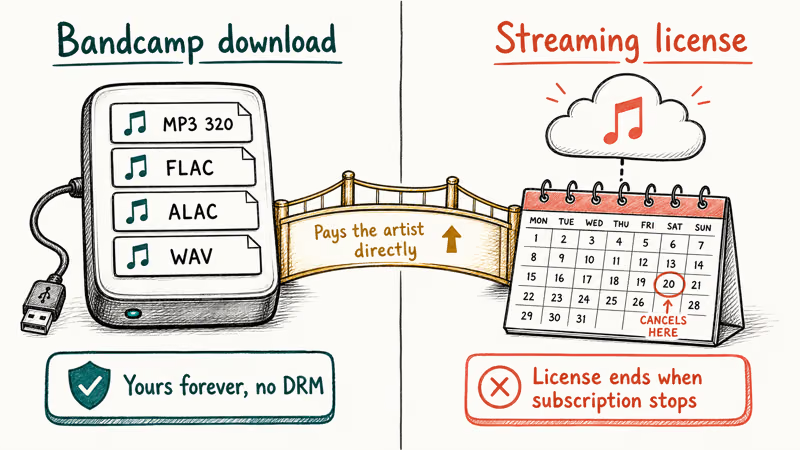
Bandcamp is the right pick if you want a permanent file rather than a streaming license. Bandcamp pays the majority of each sale directly to the artist, supports name-your-price pricing (including free downloads when the artist sets the floor at zero dollars), and lets you re-download every purchase from your account in MP3 320, FLAC, ALAC, or WAV.
Buy an album on a phone and the FLAC download lands in your Files app within seconds, complete with full ID3 metadata and embedded cover art. There is no DRM. The file is yours.
This is the closest legal equivalent to what MP3 Monkey was supposed to be: search a song, click download, end up with a real MP3, except the artist actually gets paid.
#7. iTunes Store and Amazon Music Store (à la carte MP3 purchase)
If you only want to buy a few specific songs and skip the subscription model entirely, the iTunes Store (still active inside the macOS Music app, the iTunes app on Windows, and the iPhone Apple Music app’s “Search the iTunes Store” surface) and the Amazon Music Store both sell individual tracks and full albums as DRM-free downloads. Most singles are $1.29 and albums run $9.99 to $14.99.
These are the spiritual successors to the early-2000s MP3 stores that legitimately competed with Kazaa and LimeWire. They aren’t free. They do, however, give you a file you keep forever and can move to any device.
#How to Pick the Right Service for Your Library
Match the service to the way you listen.
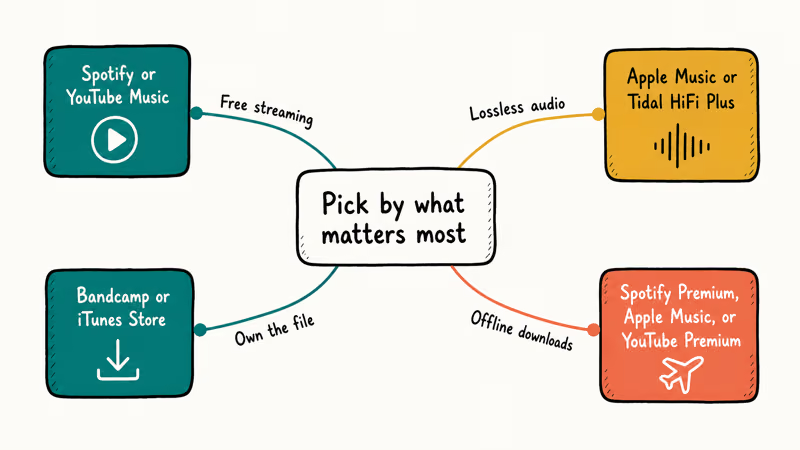
For most people, Spotify free or YouTube Music free is the answer. Both replace what MP3 Monkey did (search a song, hit play, no cost) without any of the legal or malware risk. If you mainly listen on an iPhone, Apple Music is a cleaner experience because it integrates with iCloud, AirPods, and HomePods without extra setup.
If you want lossless or high-res audio, the choice is Apple Music or Tidal HiFi Plus. If you want to own the actual file, the choice is Bandcamp for new music or the iTunes Store for back-catalog Top 40. If you want to download legal free tracks for offline use, our free audio downloads guide covers Creative Commons and public-domain sources beyond Bandcamp.
For travelers worried about offline play, Spotify Premium, Apple Music, and YouTube Music all support full offline downloads. Our guide on whether you can listen to Spotify on a plane covers the airline Wi-Fi side of that question.
#Bottom Line
If you came here looking for a working MP3 Monkey clone, there isn’t a safe one. Pick Spotify free or YouTube Music free if you want to keep paying nothing. Pick Apple Music or Tidal HiFi Plus if you want lossless on a phone. Pick Bandcamp if you want to own the files outright.
Skip every site that promises free Top 40 MP3 downloads. Those are the same legal-grey-area aggregators that got MP3 Monkey, LimeWire, and Kazaa shut down.
#Frequently Asked Questions
Is MP3 Monkey illegal to use?
The site isn’t currently online in any working form, so the practical answer is that you can’t use it. When it was active, downloading copyrighted music from it was a civil copyright violation under U.S. law, the same as ripping a song from YouTube without a license. The owners and operators of sites like MP3 Monkey face the legal exposure first, but individual users aren’t exempt.
What was the closest legal replacement for MP3 Monkey?
Bandcamp. It does the same thing MP3 Monkey claimed to do (search a song, click download, end up with a real MP3) and it actually pays the artist. The catch is that it’s a buy-the-album model rather than a free aggregator, and most major-label music isn’t on it. For free streaming, Spotify and YouTube Music are closer in spirit.
Are stream-ripper sites like Y2Mate or MP3Juices safe in 2026?
No. They sit in the same legal category as MP3 Monkey did, and most of them are flagged in browser security databases for serving malicious ads, fake update prompts, and push-notification scams. Look-alike domains in this category frequently trip a browser’s deceptive-site warning on the first click.
Can I get free MP3 downloads legally?
Yes, but the catalog is narrow. Bandcamp artists can set their downloads to name-your-price with a zero-dollar floor, and many independent musicians do. The Free Music Archive, the Internet Archive’s audio collection, and Jamendo also host Creative Commons and public-domain music that is free to download legally. None of these will have current Top 40 hits.
Is YouTube to MP3 conversion legal?
Generally no, when the audio is a copyrighted commercial song. YouTube’s terms of service prohibit downloading content without a download button, and the underlying music is still copyrighted regardless of how you extract it. The exceptions are videos the uploader has marked Creative Commons or content where the rights holder has released it for free distribution.
Will I get sued for downloading one song from a site like MP3 Monkey?
Probably not. The major U.S. record labels stopped pursuing individual file-sharers in 2008 and now focus on the operators of infringement-enabling services. The realistic risks for an individual user in 2026 are malware from the host site, browser hijacks from ad networks, and ISP-level copyright notices, not a courtroom letter.
What’s the cheapest legal way to listen to a lot of music?
YouTube Music free, Spotify free, Tidal’s free ad-supported tier, or Amazon Music’s free tier through Prime. All of them give you the full or near-full catalog with audio ads and shuffle-only playback on mobile. If you watch ads as the cost, the bill is zero dollars per month.
Google Messages Error 3100: Why RCS Is Broken on Galaxy
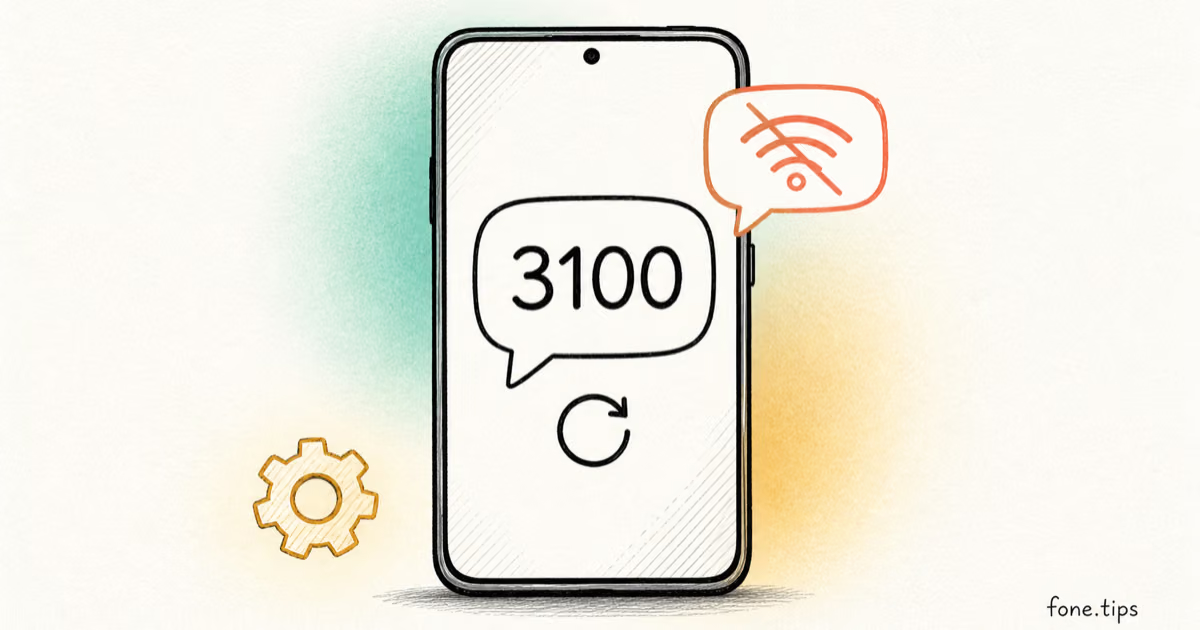
Google Messages RCS error 3100 hits Galaxy owners after phone or carrier switches. Google told 9to5Google a fix is coming. Here's what actually helps.
Is This Bank App Real? Spot a Fake App on Your Home Screen
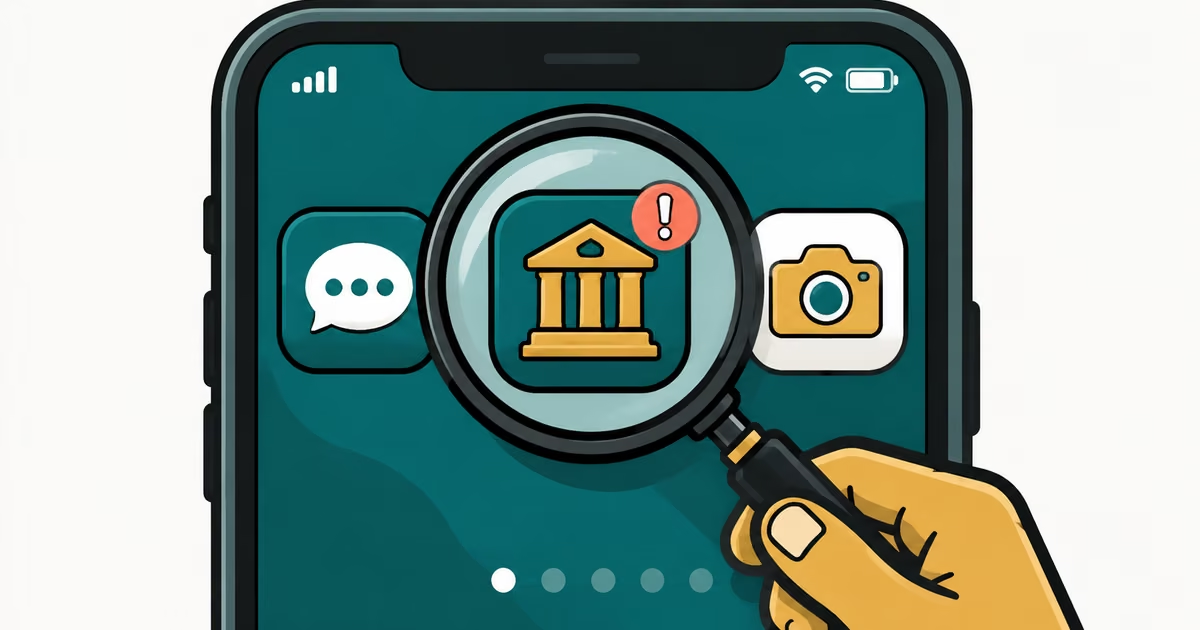
A bank app can land on your home screen from a web page with no install warning. Learn the checks that tell a real banking app from a phishing web app.
Apps Crashing After iOS 27 Update? Fix Order (2026)
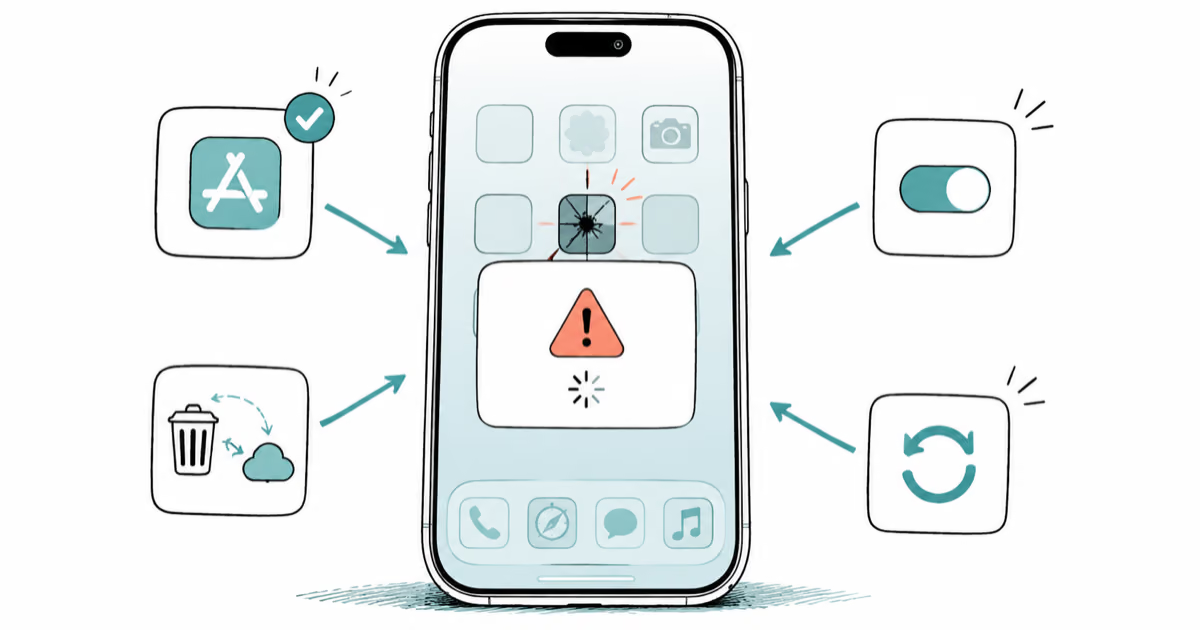
Apps crashing after the iOS 27 update? Update the app in the App Store first, then offload and reinstall to clear stale cache, then restart. The fix order.
Do AI Translation Earbuds Work Offline? What to Know
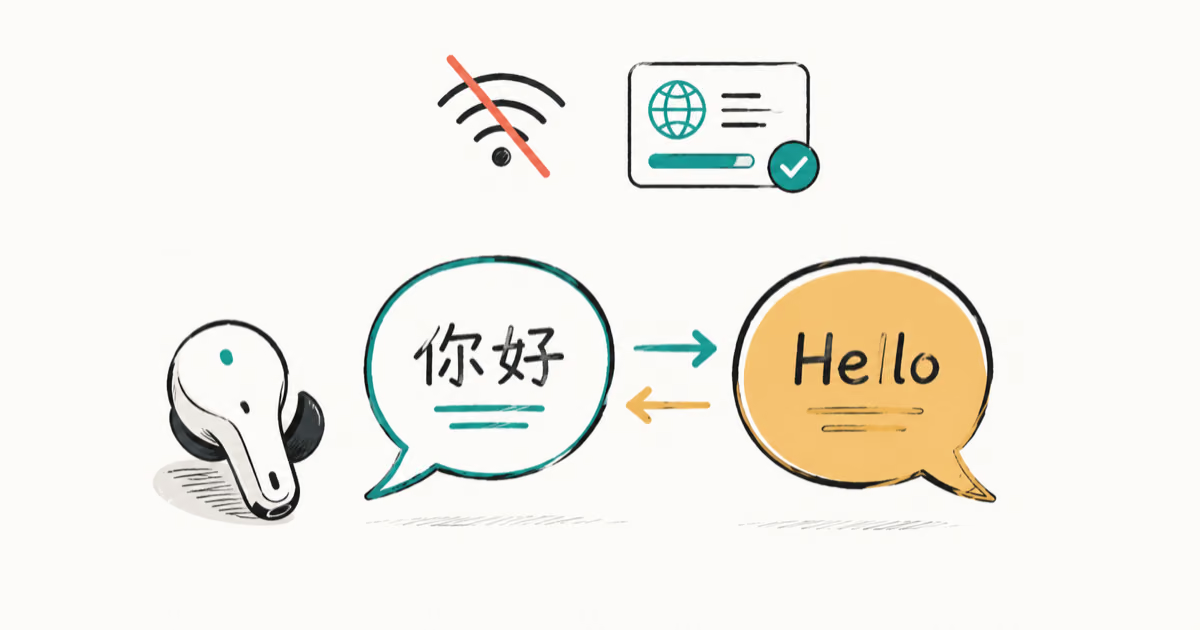
Do AI translation earbuds work offline? A few do with downloaded language packs, but most need the cloud. Here's what works offline and what you give up.