Free Audio Downloads: 10 Legal Royalty-Free Sources
Ten royalty-free audio download sites with Creative Commons or public domain licensing, clear terms, attribution notes, and safer download habits.
Quick AnswerThe safest free audio downloads come from licensed libraries like Free Music Archive, Freesound, YouTube Audio Library, Pixabay Music, and the Internet Archive. Every track lists its license on the download page, so you always know whether attribution or non-commercial limits apply.
Free audio downloads are everywhere, but only a slice of them are legal. A safe royalty-free or Creative Commons library should show the license for each track and make the rights holder traceable. The sites below meet that bar, which matters because downloading a copyrighted song from a random MP3 blog is a DMCA violation regardless of whether you ever hit play.
This guide applies only to a device or account you own.
- Free Music Archive, Jamendo, and ccMixter host Creative Commons tracks where the license is attached to every file, not the site footer
- YouTube Audio Library and Pixabay Music release their catalogs for commercial use without attribution, which is the lowest-friction option for video creators
- Freesound covers sound effects, field recordings, and Foley under mixed CC licenses, so always read the license on the individual file page
- LibriVox, Internet Archive audio, and the Smithsonian Folkways archive are public domain or CC-licensed, so they’re safe for personal and most commercial projects
- Downloading copyrighted commercial music from rippers, torrents, or YouTube-to-MP3 converters stays illegal even when the file says free
The strongest libraries make license terms visible before download and don’t ask for payment details for their free catalogs. Jamendo puts some licensing details behind a separate click, which we note in the section below.
#What Counts as a Legal Free Audio Download
Before the site list, it helps to know which licenses you’re actually dealing with. Most free music online falls into one of three buckets.
Public domain audio has no copyright because the work expired or the creator dedicated it to the public. You can use it for anything (commercial video, remix, resale) with no attribution required. LibriVox recordings and most Internet Archive music from before 1929 fall here. It’s the cleanest bucket you’ll find.
Creative Commons licenses are a spectrum: CC0 is effectively public domain, CC BY requires credit, CC BY-SA requires credit plus same-license release for derivatives, CC BY-NC blocks commercial use, and CC BY-ND blocks remixes. Creative Commons’ own license chooser page explains the combinations, and it’s the document every library below points back to.
Royalty-free means you paid once (or got it free) and owe no ongoing royalties. It’s not the same as license-free.
The line that breaks this list is simple. Copyrighted commercial music (Taylor Swift, Drake, anything on the Billboard Hot 100) stays copyrighted no matter which site claims otherwise. The Recording Industry Association’s anti-piracy page states that unauthorized downloading of copyrighted recordings is a federal offense carrying civil and criminal penalties. Stick to the clearly licensed sources below.
#Best Free Music Download Sites With Creative Commons Licensing
These libraries host music written and released by artists who have granted a Creative Commons license directly. Every track carries a license tag on its own page.
Free Music Archive (FMA) is the biggest general-purpose CC music library on the open web, with a catalog spanning electronic, hip-hop, jazz, classical, and experimental, every track tagged by license type. License blocks sit directly on track pages, so you can check attribution and reuse terms before downloading. The FMA about page confirms that WFMU launched the archive in 2009 and still curates it with partner stations.
Jamendo Music has a large independent-artist catalog with filters for mood, instrument, and use case, and personal listening is always free. Commercial use routes through a paid license, which Jamendo’s licensing page explains for videos, ads, and retail music. The license sits behind one click rather than inline on each track, so you’ll spend a few extra seconds per file verifying terms compared with FMA.
ccMixter hosts remixes, samples, and a cappella stems under CC BY or CC BY-NC. Start here for mashups. Catalog is smaller than FMA but deeper in remix culture.
Bandcamp is a purchase-first platform, but many artists set “name your price” to $0 on at least one release. The Bandcamp FAQ confirms that fans can enter any amount, including zero, on releases where the artist has enabled that option. Files come in FLAC, MP3 320, ALAC, AAC, Ogg Vorbis, or WAV. Pick FLAC for anything you plan to keep.
#Top Royalty-Free Libraries Built for Video and Podcast Creators
These are the sites built around letting you download, drop in a video timeline or podcast edit, and ship without attribution friction.
YouTube Audio Library is built into the YouTube Studio dashboard and contains thousands of tracks and sound effects licensed for use in YouTube videos and beyond. Each track shows whether attribution is required (most don’t), and the download gives you a clean MP3 file. Google’s Audio Library help article confirms that attribution-free tracks can be used commercially with no separate license.
Pixabay Music releases its catalog under the Pixabay Content License, which permits commercial use without attribution. The Pixabay license page states that content may be used and modified for commercial and non-commercial purposes without the need to attribute the creator. Think cinematic, corporate, ambient, with fewer vocal tracks than FMA and more usable background beds for explainer videos and corporate montages.
Bensound is a royalty-free library popular with YouTubers. The free tier requires crediting “Bensound” in your description and limits some tracks to non-monetized use; a paid tier removes both limits. Read the license tag on every track.
Incompetech is composer Kevin MacLeod’s personal library. Hundreds of CC BY tracks sit here. Credit MacLeod with a link and the music is yours for commercial projects, including indie films, podcasts, tutorials, and monetized YouTube.
Pond5 Free is the free slice of Pond5’s commercial stock audio catalog. The roster rotates. Grab tracks when you see them.
#Where Can You Find Free Sound Effects and Field Recordings?
Music is only half of audio work. Sound effects, Foley, ambience, and field recordings live in a different set of libraries.

Freesound is the largest open sound-effects database on the web, built by the Music Technology Group at Universitat Pompeu Fabra. Contributors upload under a license of their choice, so CC0 footsteps can sit next to CC BY-NC rain in a single search result. Freesound’s FAQ confirms that each sound carries its own uploader-chosen license. Check each clip’s license before reuse because attribution and commercial-use rules vary by upload.
Internet Archive Audio Archive holds over 15 million audio items. Library of Congress field recordings sit alongside Grateful Dead concert tapes and out-of-copyright music. The Archive publishes a rights page that covers the public-domain and CC distinctions. Filter by mediatype: audio and by rights.
BBC Sound Effects Archive opened a library for personal, educational, and research use. Commercial projects need a separate license. The collection is deep on British ambience, historical sounds, and archival material you won’t find anywhere else, including decades of Radiophonic Workshop tape experiments, outdoor broadcasts from across the UK and the Commonwealth, crowd noise from studio audiences in the 1960s and 1970s, and location recordings from BBC wildlife documentaries.
Smithsonian Folkways Archive carries the historical folk, world, and spoken-word music the Smithsonian preserves. Not all of it’s free (the site also sells). A growing slice is CC-licensed or public domain. The Folkways rights and permissions page explains how to check each track.
If you’re working on a video project, our guide on free video editing software without watermarks pairs well with these audio libraries, since both problems usually come up in the same session.
#Free Audiobooks and Public Domain Spoken Word
Audiobooks from public domain literature are legal, complete, and often very well read. Three libraries cover almost everything you’d want.
LibriVox is the flagship volunteer project for recording public domain books, and every recording itself goes into the public domain too. The LibriVox rights statement makes it explicit: you can listen, rebroadcast, remix, or drop the file straight into a podcast feed. Narration quality varies because readers are volunteers, but popular titles like Pride and Prejudice have five or more versions to pick from.
Loyal Books (the rebranded Books Should Be Free) aggregates public domain audiobooks alongside downloadable text transcripts. Listener ratings on each recording help you skip the narrators you won’t enjoy. Useful when a book has six LibriVox versions and you want to audition before committing an hour.
Internet Archive LibriVox collection mirrors the full LibriVox catalog. Direct MP3 and Ogg downloads sit next to bulk torrent access, which is handy when you want to pull an entire author’s catalog in one session without clicking through each chapter individually.
For library patrons, OverDrive and Libby route newer commercial audiobooks through your local library card. That’s a lending license.
If you also follow Japanese media, our roundup of anime OST download options covers niche catalogs the big libraries miss, including fan-curated OST archives and officially licensed streaming-era soundtracks that only surfaced after 2020.
#How Do You Stay on the Right Side of Audio Copyright?
Free doesn’t always mean legal, and legal doesn’t always mean commercial-ready. Six habits will keep your project and your devices on the right side of the line.

Read the license on every individual track. Two tracks in the same library can have different CC licenses. Freesound is the clearest example.
Keep a credit log. For every CC BY track, note the artist name, track title, source URL, and license type the moment you hit download. Without that paper trail, attribution becomes a frantic email-and-browser-history scramble six months later when the project ships and the production coordinator asks for cue sheets.
CC BY-SA infects your project. Use a ShareAlike track and your derivative must ship under CC BY-SA too. That usually rules it out for client work.
CC BY-NC blocks monetization. A YouTube video with ads is commercial. A corporate training video is commercial. A Patreon post is usually commercial. Pick CC BY or public domain if any of those apply.
Skip YouTube-to-MP3 converters for copyrighted songs. Ripping a Drake track off YouTube is still a DMCA violation. YouTube’s terms of service state that downloading content outside the official download feature is prohibited unless YouTube or the rights holder expressly permits it. No ripper tool changes that rule. For legitimate Spotify subscribers, our guide on downloading and converting Spotify music covers the subset that’s allowed.
Virus-wise, stick to the libraries above. Legitimate audio libraries should hand you audio files, archives, or project-safe media downloads. If a download hands you a .exe or an .msi, close the tab.
If your audio playback breaks after the download, our fix guide for Discord stream with no sound covers the driver and permission issues that cause most silent-output problems on Windows and Mac. You’ll find the same fixes apply when Spotify’s stack breaks, and our companion page on what to do when Spotify isn’t responding covers the app-specific steps.
#Audio Format Cheat Sheet for Your Free Downloads
The site tells you the container. Here’s what to pick when you have a choice.
| Format | Typical Bitrate | File Size Per Hour | Best For |
|---|---|---|---|
| FLAC | Lossless | ~300 MB | Music archiving, audiophile use |
| ALAC | Lossless | ~300 MB | Same as FLAC, Apple ecosystem |
| WAV | Uncompressed | ~600 MB | Editing masters, Foley sessions |
| MP3 320 kbps | 320 kbps | ~140 MB | General music listening |
| AAC 256 kbps | 256 kbps | ~115 MB | Podcasts, Apple devices |
| Ogg Vorbis | 160-320 kbps | ~100-140 MB | Open-source players, smaller files |
| MP3 128 kbps | 128 kbps | ~55 MB | Voice-only audio, podcasts |
For music you plan to keep, grab FLAC when Bandcamp or the Internet Archive offers it. For voice content such as audiobooks, podcasts, and interviews, 128 to 160 kbps MP3 sounds transparent and saves storage. Our companion guides on OGG player apps and FLAC playback on Android cover which apps play each format without conversion.
#Bottom Line
Start with Free Music Archive for general music, Freesound for effects, YouTube Audio Library for no-attribution video beds, and LibriVox for audiobooks. Those four cover most audio needs for creators and listeners, carry clear licenses on every track, and never ask for payment info. Log the license on every CC BY download and skip YouTube-to-MP3 converters for copyrighted songs. A $40 pair of wired headphones makes every free file sound better than phone speakers ever will.
#Frequently Asked Questions
Are free audio downloads always legal?
Only if the rights holder has licensed them that way. Public domain tracks, Creative Commons releases, and royalty-free libraries are all legal. Ripping copyrighted songs is a DMCA violation.
What is the difference between royalty-free and Creative Commons?
Royalty-free means you pay once and owe no ongoing royalties, with rules like no resale. Creative Commons is a family of public licenses whose tags (CC BY, CC BY-NC, and so on) spell out attribution and commercial-use terms. Many royalty-free libraries use a Creative Commons license underneath.
Can I use free audio downloads in YouTube videos with ads?
Yes, when the license permits it.
Do I need to credit the artist on Creative Commons tracks?
If the license includes BY (CC BY, CC BY-SA, CC BY-NC), you must credit the artist with their name, track title, source URL, and license type. CC0 and public domain tracks require no credit. Keep a credit log so you aren’t scrambling at ship time.
Are YouTube-to-MP3 converters safe and legal?
For copyrighted songs, no. YouTube’s terms of service prohibit downloading outside the official download feature unless the rights holder has granted permission, and the prohibition applies to any web or desktop ripper. Converters may be safe virus-wise on reputable sites, but using them to rip commercial music is still a DMCA violation. Reserve them for Creative Commons videos and content you own outright.
How do I check a track’s license on Freesound or FMA?
Each track has a license block beside or below the download button showing the CC license name (for example, CC BY 4.0) or a public domain dedication. Click the license for plain-language terms. If you can’t find a license, skip the track.
What audio format gives the best quality for free music?
FLAC and ALAC preserve every detail because they’re lossless. Bandcamp, the Internet Archive, and a few FMA uploads offer them. For most listening on standard headphones, a 320 kbps MP3 is effectively indistinguishable from lossless. Drop to 128 kbps only for voice-only content where storage matters more than fidelity, such as audiobooks, podcasts, and spoken-word lectures.
Can I download free audiobooks to my iPhone or Android phone?
Yes. LibriVox and Loyal Books provide direct MP3 downloads that play in the stock Files app on iPhone or any Android media player. Import into a dedicated audiobook app with chapter support for smoother listening.
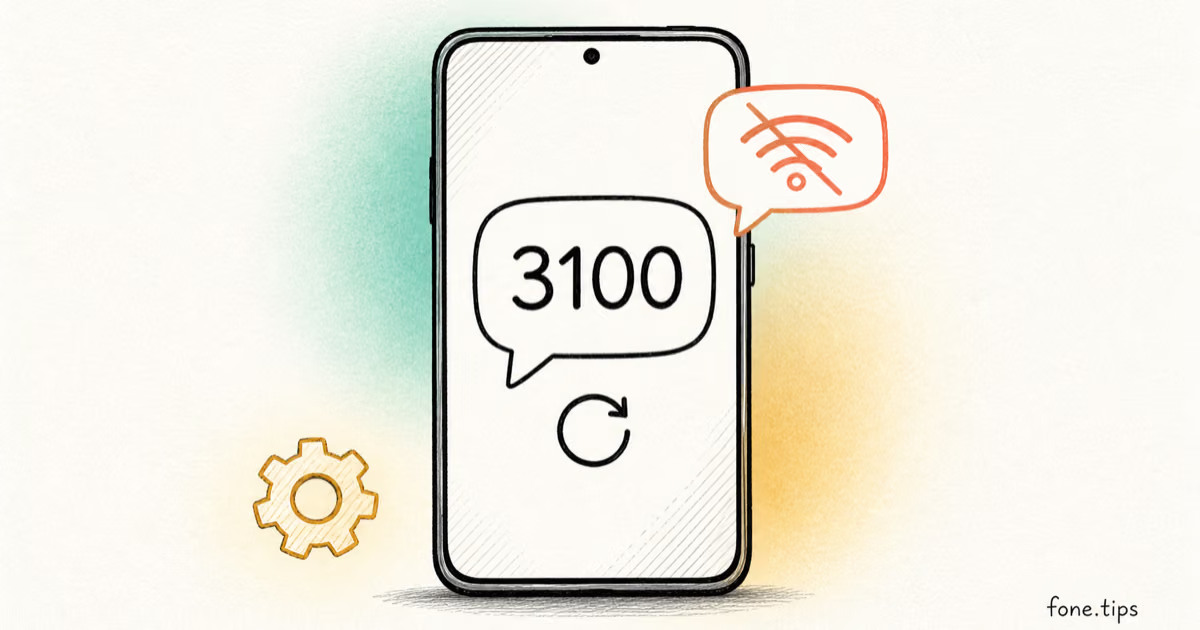
Google Messages Error 3100: Why RCS Is Broken on Galaxy
Google Messages RCS error 3100 hits Galaxy owners after phone or carrier switches. Google told 9to5Google a fix is coming. Here's what actually helps.
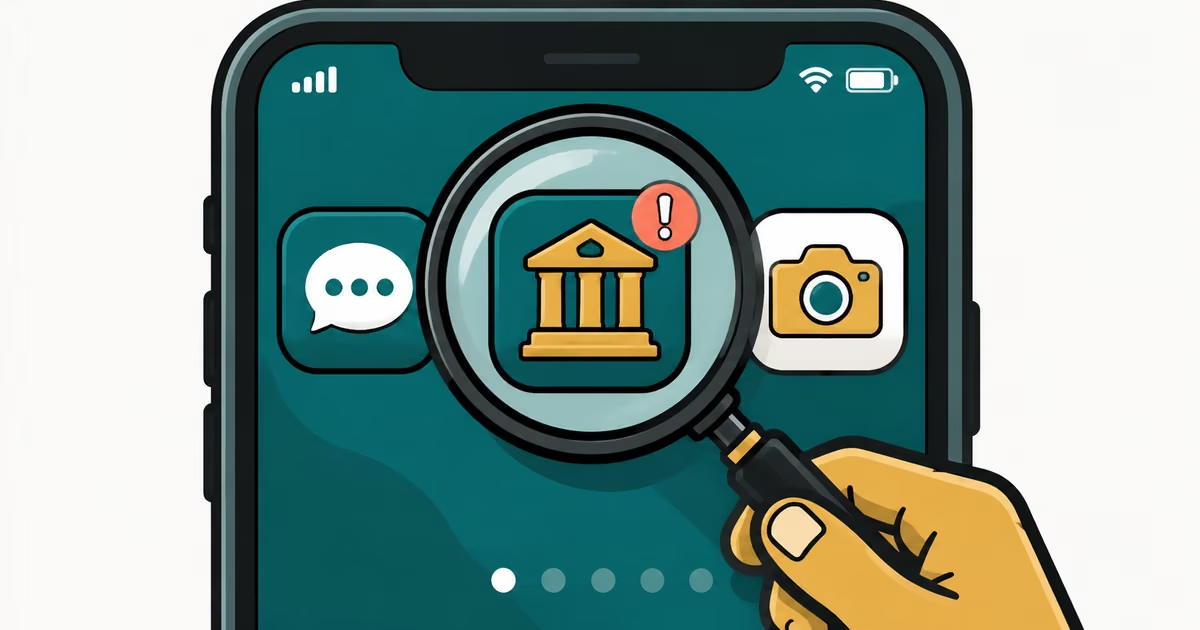
Is This Bank App Real? Spot a Fake App on Your Home Screen
A bank app can land on your home screen from a web page with no install warning. Learn the checks that tell a real banking app from a phishing web app.
Apps Crashing After iOS 27 Update? Fix Order (2026)
Apps crashing after the iOS 27 update? Update the app in the App Store first, then offload and reinstall to clear stale cache, then restart. The fix order.
Do AI Translation Earbuds Work Offline? What to Know
Do AI translation earbuds work offline? A few do with downloaded language packs, but most need the cloud. Here's what works offline and what you give up.