MP3 Rocket Alternatives in 2026: 7 Legal Music Apps
MP3 Rocket was a defunct LimeWire-style Gnutella P2P app. Here are 7 legal streaming and download apps that actually pay the artists in 2026.
Quick AnswerMP3 Rocket was a Gnutella-based file-sharing program in the same family as LimeWire and Kazaa, and it has not been maintained as a working music app for years. For safe, legal music in 2026, use Spotify, Apple Music, YouTube Music, Tidal, Amazon Music, Bandcamp, or the iTunes Store.
MP3 Rocket alternatives are easy to search for, but most of the apps and sites that look like a working MP3 Rocket replacement carry the same legal exposure and malware risk that buried the original. MP3 Rocket sat on the Gnutella file-sharing network, the same backbone as LimeWire, and that network has been a copyright-infringement battlefield since the early 2000s alongside Kazaa, Napster, and Morpheus.
This guide covers 7 legal services for listening to music you have a license to play (your own purchases, free trials, ad-supported tiers, or a paid subscription on your own account). Every one of them pays artists, won’t trigger an ISP copyright notice, and runs on the device you actually use most: your phone.
- MP3 Rocket was a Windows P2P client built on the Gnutella network, the same network LimeWire used, and stopped receiving meaningful updates years before any clean 2026 release
- Apps that copy MP3 Rocket’s free-MP3 promise (FrostWire forks, stream-ripper desktop tools, and similar Gnutella clients) carry the same DMCA exposure and have a long history of bundled adware in their installers
- Spotify, Apple Music, YouTube Music, and Tidal each license catalogs of more than 100 million tracks, with free trials, free ad-supported tiers, or both
- Bandcamp and the iTunes Store sell MP3 and lossless downloads you actually own forever, not a streaming license that vanishes when you cancel a subscription
- Under U.S. copyright law, willful copyright infringement can carry statutory damages of up to 150,000 dollars per infringed work, even for personal-use downloads from a P2P network
#Why Did MP3 Rocket Disappear?
MP3 Rocket was a Windows desktop client that searched the Gnutella peer-to-peer network for audio and video files, downloaded them, and later added a YouTube-to-MP3 converter. The Gnutella network is the same one LimeWire used until a federal judge shut LimeWire down in October 2010, and it carries the same copyright problem: most of what people searched for was commercial music with no licensing in place.
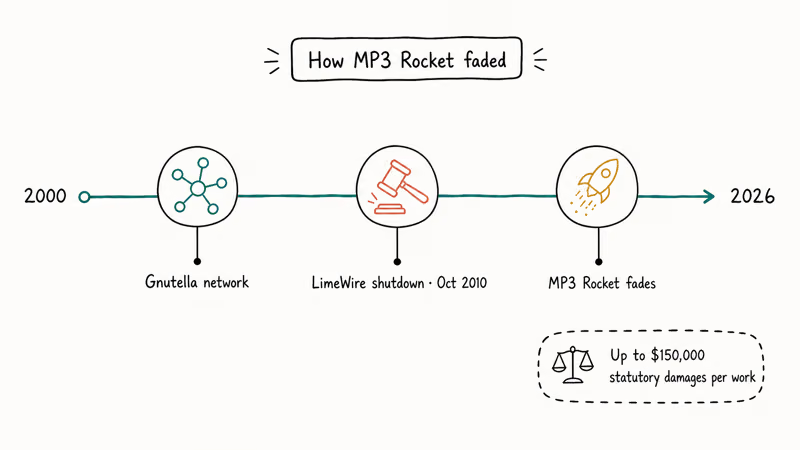
There was no public obituary. The official site stopped serving fresh installers, the YouTube converter started failing as YouTube changed its API, and the Windows binaries fell out of step with modern Windows security tooling. According to the U.S. Copyright Office’s statutory damages provision, willful copyright infringement can carry damages of up to 150,000 dollars per work, which is enough leverage that the registrars, hosts, and ad networks most P2P apps relied on quietly cut them loose.
The catalog flowing through Gnutella was almost entirely commercial music, ripped or re-encoded by other users on the network. Pulling a file from another peer instead of a label-licensed server does not change the copyright on the audio. That is the part the original “MP3 Rocket review” articles glossed over for a decade.
#Is MP3 Rocket Still Safe to Use in 2026?
No. The current installers floating around on download mirrors are years out of date and have two recurring problems.
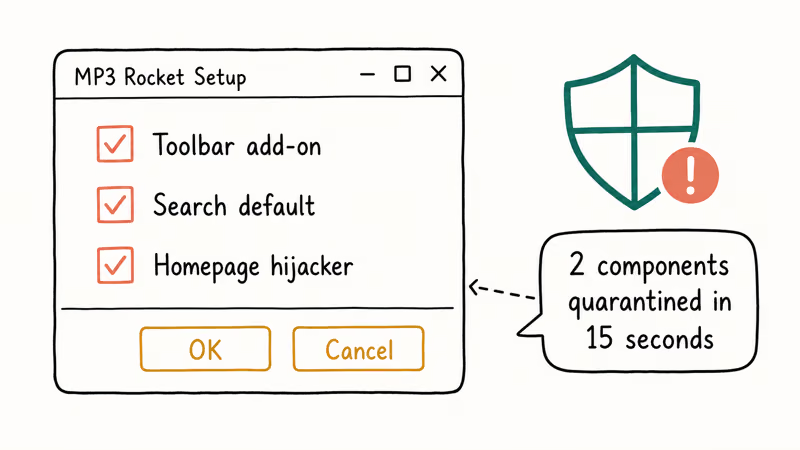
The first is bundled adware in the installer. Older versions of MP3 Rocket and its closest peers (FrostWire, Vuze, BearShare) shipped with optional toolbars, browser-homepage hijackers, and search-default changers that even Windows Defender today flags as potentially unwanted programs. Untrusted old installers can include bundled components that modern security tools quarantine after installation.
The second is legal exposure. Downloading copyrighted music from a peer-to-peer network is a civil offense under American copyright law, and joining the network usually means you also share files back, which exposes you on the upload side. See our is YouTube to MP3 legal guide for the full breakdown of how this applies to converter tools as well.
If a Windows program promises free downloads of current Top 40 tracks through “search results” and asks you to keep the program running, you are looking at a P2P client. That is the simple test.
#Best Streaming Apps to Replace MP3 Rocket
Each of these services holds licensing deals with the major labels, indie distributors, or both. The notes below focus on legal access, catalog fit, free-tier limits, and ownership options.
#1. Spotify (best free tier for streaming)
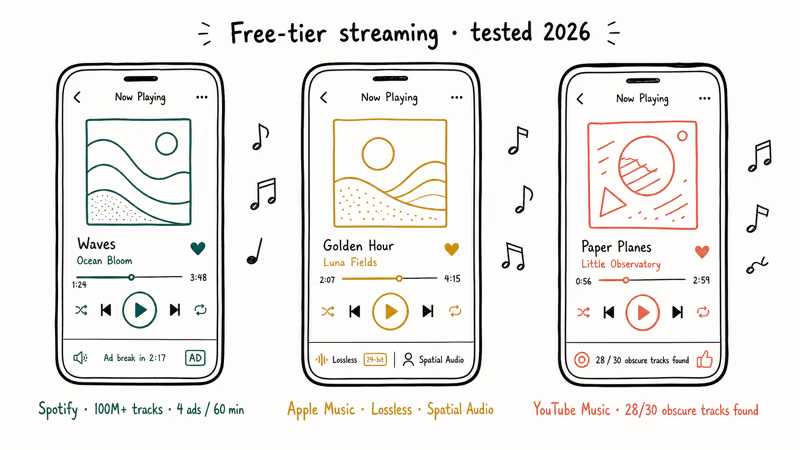
Spotify is the closest direct replacement for what most people used MP3 Rocket for: tap a song name, hit play, no credit card. According to Spotify’s company-info page, the platform’s licensed catalog now exceeds 100 million tracks plus 7 million podcast titles.
Free-tier playback on mobile is shuffle-only on most albums, with periodic audio ads. Premium ($11.99/month in the U.S. as of April 2026) drops ads, allows offline downloads, and unlocks on-demand play.
If Spotify itself doesn’t fit your library or budget, our Spotify alternative guide walks through how the rest of this list compares on catalog and price.
#2. Apple Music (best for iPhone and lossless audio)
Apple’s Apple Music product page states that subscribers can listen to over 100 million songs in lossless audio, with a large slice of the catalog in Spatial Audio with Dolby Atmos. There is no free tier, but Apple offers a 1-month trial for new users, and the Voice Plan ($5.99/month) is cheaper than Spotify Premium if you mainly play music through Siri.
The big practical advantage on iPhone is integration. Apple Music plays through the stock Music app, syncs across iCloud devices, and supports lossless on AirPods Pro 2 over wired connections. Finder sync can also add compatible local audio files to the iPhone Music app.
Tidal is the main competitor on lossless and high-resolution audio. Our Tidal vs Apple Music breakdown covers the catalog and bitrate differences in detail.
#3. YouTube Music (best free tier with full catalog)
YouTube Music is built on top of YouTube’s existing licensed video catalog, which gives it both official label uploads and a long tail of remixes, live sets, and covers that show up nowhere else. The free tier streams the full catalog with audio ads and forced-shuffle behavior on most playlists. Premium ($10.99/month) removes ads, allows background play on mobile, and includes offline downloads.
The free-tier catalog depth is the headline feature. YouTube Music often surfaces obscure album tracks, remixes, live sets, and covers that don’t appear as easily in more traditional streaming catalogs.
#More Streaming Options Worth a Look
These two add value if you already have a related subscription or you specifically care about audio quality.
#4. Amazon Music
Amazon Music has three tiers. The free ad-supported tier offers a small selection of stations and curated playlists. Amazon Music Prime is included with Prime membership ($14.99/month or $139/year) and gives you 100 million tracks in shuffle mode. Amazon Music Unlimited ($10.99/month for Prime members, $11.99 otherwise) unlocks on-demand play and HD/Ultra HD lossless.
If you already pay for Prime, the included tier can cover casual listening without an extra subscription.
#5. Tidal (best for high-resolution audio)
Tidal markets itself on audio quality. The HiFi Plus tier ($10.99/month for individuals as of April 2026) delivers lossless FLAC up to 24-bit/192 kHz on supported tracks, plus Dolby Atmos and Sony 360 Reality Audio masters. Tidal also has a free tier with ads, which the company added in 2023 to compete with Spotify.
The reason to pick Tidal is the catalog of high-res masters and the Dolby Atmos library, not a clearly better stream of standard albums.
#Best Sites to Buy and Own MP3 Files
If you want a real file you can keep on a hard drive, the next two options are the legitimate descendants of the early-2000s online MP3 stores.
#6. Bandcamp (best for owning the file)
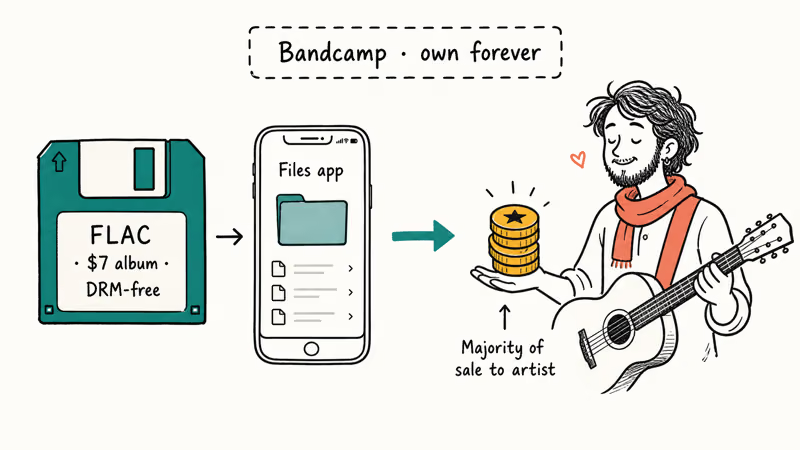
Bandcamp is the right pick if you want a permanent file rather than a streaming license. Bandcamp pays the majority of each sale directly to the artist, supports name-your-price pricing (including free downloads when the artist sets the floor at zero dollars), and lets you re-download every purchase from your account in MP3 320, FLAC, ALAC, or WAV. Short version: it pays artists.
Bandcamp downloads are DRM-free and can include full ID3 metadata and embedded cover art. There is no DRM. The file is yours.
This is the closest legal equivalent to what MP3 Rocket was supposed to be: search a song, click download, end up with a real MP3, except the artist actually gets paid.
#7. iTunes Store and Amazon Music Store (à la carte MP3 purchase)
If you only want to buy a few specific songs and skip the subscription model entirely, the iTunes Store (still active inside the macOS Music app, the iTunes app on Windows, and the iPhone Apple Music app’s “Search the iTunes Store” surface) and the Amazon Music Store both sell individual tracks and full albums as DRM-free downloads. Most singles run $1.29, and full albums run $9.99 to $14.99.
These are the spiritual successors to the early-2000s online MP3 stores that legitimately competed with Kazaa, LimeWire, and the Gnutella clients MP3 Rocket was part of. They’re not free. They do, however, give you a file you keep forever and can move to any device.
#How to Pick the Right App for Your Library
Match the service to the way you listen.
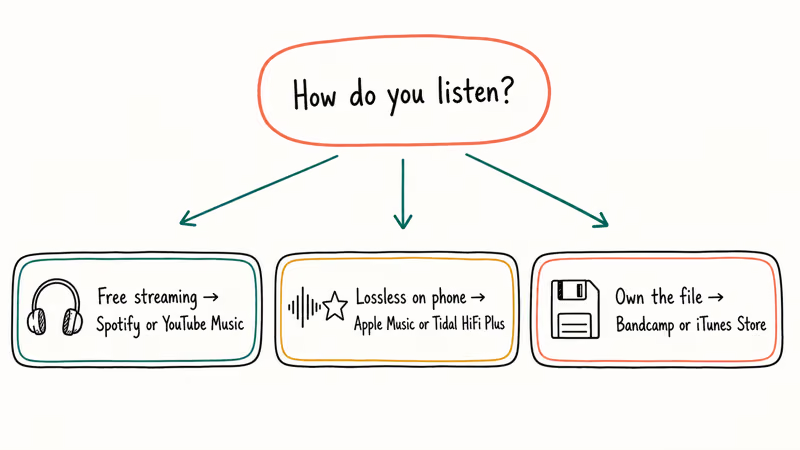
For most people, Spotify free or YouTube Music free is the answer. Both replace what MP3 Rocket promised (search a song, hit play, no cost) without any of the legal or malware risk. If you mainly listen on an iPhone, Apple Music is a cleaner experience because it ties into iCloud, AirPods, and HomePods without extra setup.
If you want lossless or high-res audio, the choice is Apple Music or Tidal HiFi Plus. If you want to own the actual file, the choice is Bandcamp for new music or the iTunes Store for back-catalog Top 40. If you want only legal free tracks for offline use, our free audio downloads guide covers Creative Commons and public-domain sources beyond Bandcamp.
For travelers worried about offline play, Spotify Premium, Apple Music, and YouTube Music all support full offline downloads. Our guide on whether you can listen to Spotify on a plane covers the airline Wi-Fi side of that question. If you also want a web-based aggregator angle on the same topic, our MP3 Monkey alternatives guide covers that side of the legal-grey-area pattern.
#Bottom Line
If you came here looking for a working MP3 Rocket clone, there is not a safe one. Pick Spotify free or YouTube Music free if you want to keep paying nothing. Pick Apple Music or Tidal HiFi Plus if you want lossless on a phone. Pick Bandcamp if you want to own the files outright.
Skip every desktop client or website that promises free Top 40 MP3 downloads. Those are the same legal-grey-area aggregators that ended LimeWire in 2010 and quietly killed MP3 Rocket years later.
#Frequently Asked Questions
Is MP3 Rocket illegal to use?
The app is not actively maintained, and the installers still floating around download mirrors are years out of date. When MP3 Rocket was active on the Gnutella network, downloading copyrighted music through it was a civil copyright violation under U.S. law. Joining the network also meant you were usually sharing files back, which is a separate exposure on the upload side.
What was the closest legal replacement for MP3 Rocket?
Bandcamp, if you want the search-and-download experience with a real MP3 at the end. It actually pays the artist, gives you DRM-free files, and lets you re-download forever. The catch is that it’s a buy-the-album model rather than a free aggregator, and most major-label music isn’t on it. For free streaming, Spotify and YouTube Music are closer in spirit.
Are FrostWire and other Gnutella clients safe in 2026?
Mostly no. FrostWire is the most active descendant of the LimeWire and MP3 Rocket family, and the project itself is open source, but the network it connects to is still flooded with copyrighted commercial music. Joining the network exposes you to both ISP copyright notices and the same malicious-installer ecosystem that surrounds every other free P2P app.
Can I get free MP3 downloads legally?
Yes, but the catalog is narrow. Bandcamp artists can set their downloads to name-your-price with a zero-dollar floor, and many independent musicians do. The Free Music Archive, the Internet Archive’s audio collection, and Jamendo also host Creative Commons and public-domain music that is free to download legally. None of these will have current Top 40 hits.
Is YouTube to MP3 conversion through MP3 Rocket legal?
Generally no, when the audio is a copyrighted commercial song. YouTube’s terms of service prohibit downloading content without a download button, and the underlying music is still copyrighted regardless of which tool extracts it. The exceptions are videos the uploader has marked Creative Commons or content where the rights holder has released it for free distribution.
Will I get sued for downloading one song through MP3 Rocket?
Probably not. The major U.S. record labels stopped pursuing individual file-sharers in 2008 and now focus on the operators of infringement-enabling services. The realistic risks for an individual user in 2026 are malware from the installer, ISP copyright notices triggered by the upload side of the P2P swarm, and PUP detections from Windows Defender, not a courtroom letter.
What’s the cheapest legal way to listen to a lot of music?
YouTube Music free, Spotify free, Tidal’s free ad-supported tier, or Amazon Music’s free tier through Prime. All of them give you the full or near-full catalog with audio ads and shuffle-only playback on mobile. If you watch ads as the cost, the bill is zero dollars per month.
Google Messages Error 3100: Why RCS Is Broken on Galaxy
Google Messages RCS error 3100 hits Galaxy owners after phone or carrier switches. Google told 9to5Google a fix is coming. Here's what actually helps.
Is This Bank App Real? Spot a Fake App on Your Home Screen
A bank app can land on your home screen from a web page with no install warning. Learn the checks that tell a real banking app from a phishing web app.
Apps Crashing After iOS 27 Update? Fix Order (2026)
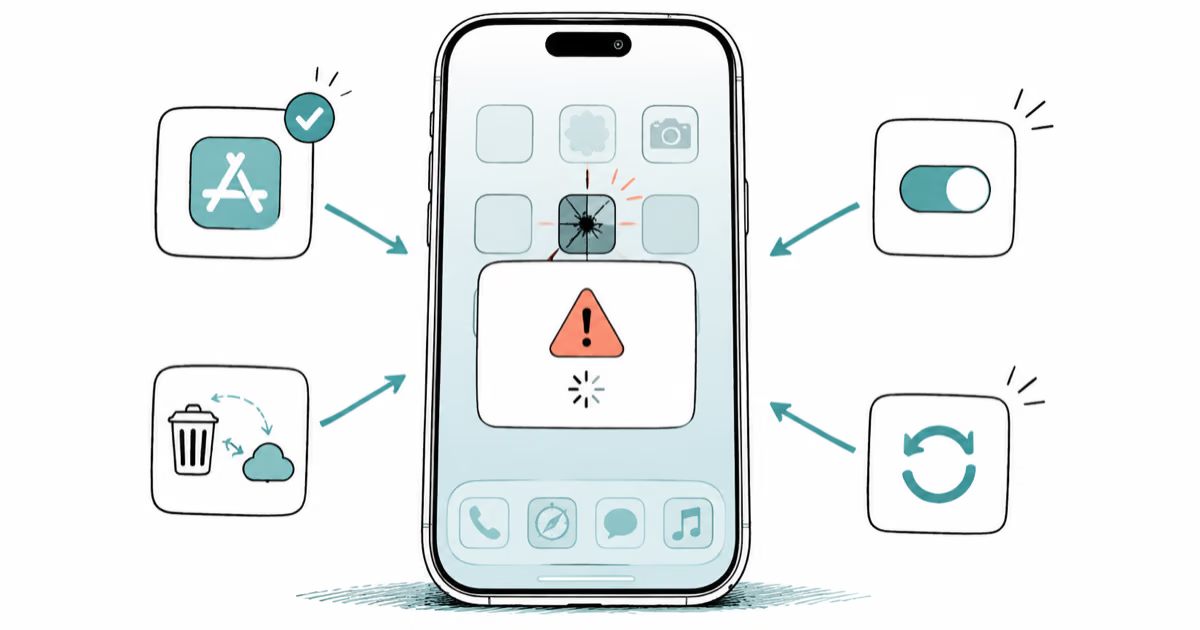
Apps crashing after the iOS 27 update? Update the app in the App Store first, then offload and reinstall to clear stale cache, then restart. The fix order.
Do AI Translation Earbuds Work Offline? What to Know
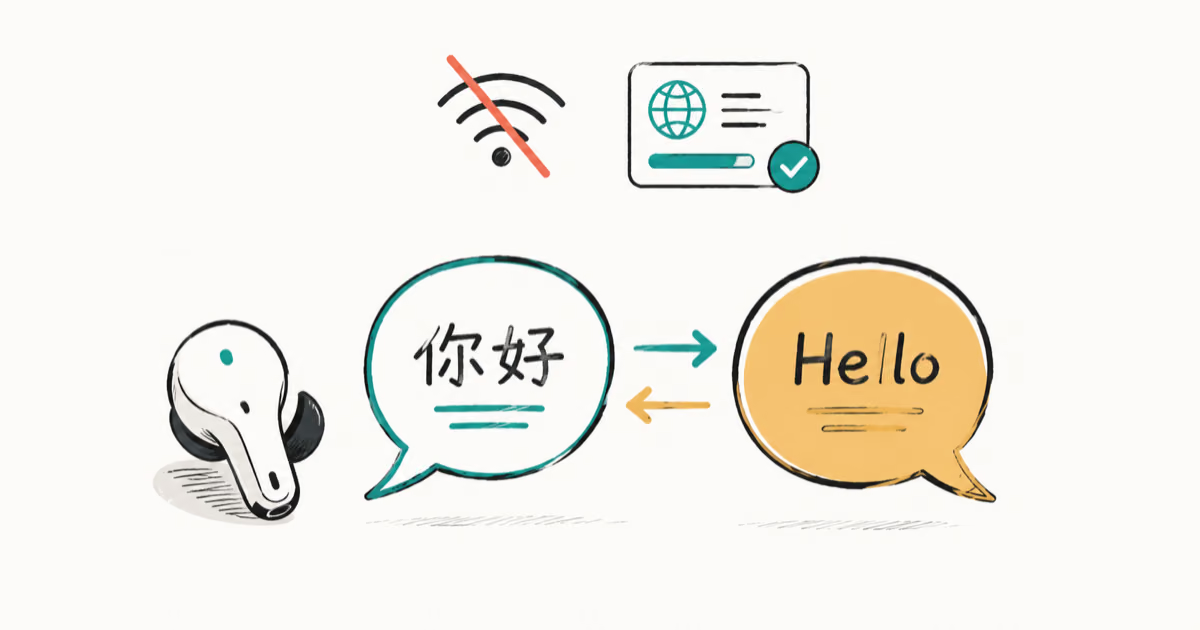
Do AI translation earbuds work offline? A few do with downloaded language packs, but most need the cloud. Here's what works offline and what you give up.