LimeWire Alternatives: 8 Legal Ways to Get Music in 2026
LimeWire shut down in 2010 over copyright lawsuits. Here are 8 legal alternatives for streaming, buying, and downloading music safely in 2026.
Quick AnswerLimeWire shut down in 2010 after losing a copyright lawsuit, and the current LimeWire brand belongs to an unrelated NFT marketplace. For legal music in 2026, use Spotify, Apple Music, YouTube Music, Bandcamp, or SoundCloud.
Looking for a LimeWire alternative? The original LimeWire was shut down by federal court order in October 2010, and the brand name today belongs to an unrelated NFT marketplace. The good news is that every kind of music people used to download from LimeWire is now available through legal streaming services and storefronts that pay artists and won’t expose you to copyright lawsuits.
This guide assumes you want to listen to music you have a right to use. We don’t cover torrent or peer-to-peer networks for commercial music, since downloading copyrighted songs without a license is a federal civil offense in the United States.
- The original LimeWire was shut down in October 2010 after losing a federal copyright lawsuit brought by the major U.S. record labels
- The current LimeWire brand (relaunched in 2022) is an NFT and digital-collectibles marketplace, not a peer-to-peer file-sharing app
- Spotify, Apple Music, and YouTube Music each offer fully licensed catalogs of more than 100 million tracks across web and mobile apps
- Bandcamp pays the majority of each sale to the artist and supports name-your-price downloads, including free
- U.S. copyright law allows statutory damages of up to 150,000 dollars per work for willful copyright infringement on P2P networks
#Why Did LimeWire Shut Down?
LimeWire was a peer-to-peer file-sharing app launched in 2000 that ran on the Gnutella network.
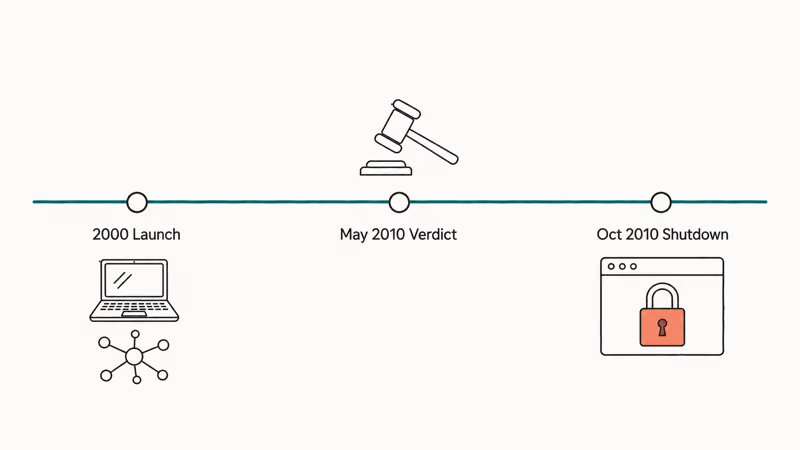
The Recording Industry Association of America and the major American record labels sued LimeWire and its parent company, Lime Group LLC, for inducing copyright infringement. In May 2010, a federal judge in the Southern District of New York found the company liable for inducing widespread piracy. The court found that LimeWire’s developers knew their software was used overwhelmingly to share copyrighted music without permission.
The court issued a permanent injunction in October 2010 that ordered LimeWire to stop distributing the software. Lime Group subsequently settled with the major labels in May 2011, which ended the original LimeWire as a working app.
Old LimeWire installers still circulate online, but they don’t provide a practical or legal path back to the original peer-to-peer music-sharing era.
The Gnutella network has effectively dispersed since the shutdown.
#What About the New LimeWire NFT Marketplace?
In 2022, two Austrian brothers, Paul and Julian Zehetmayr, bought the LimeWire trademark and relaunched the brand as a digital-collectibles platform. The relaunched LimeWire site states that the new platform is an NFT marketplace and AI content store, with no technical or legal connection to the original peer-to-peer file-sharing software.
The brand is recycled. The product is different. There is no legal way to revive the original software, so the legitimate replacements live in streaming apps and licensed download stores.
#Best Legal Music Streaming Alternatives
For most people, a streaming subscription replaces almost everything LimeWire used to do.
#Spotify
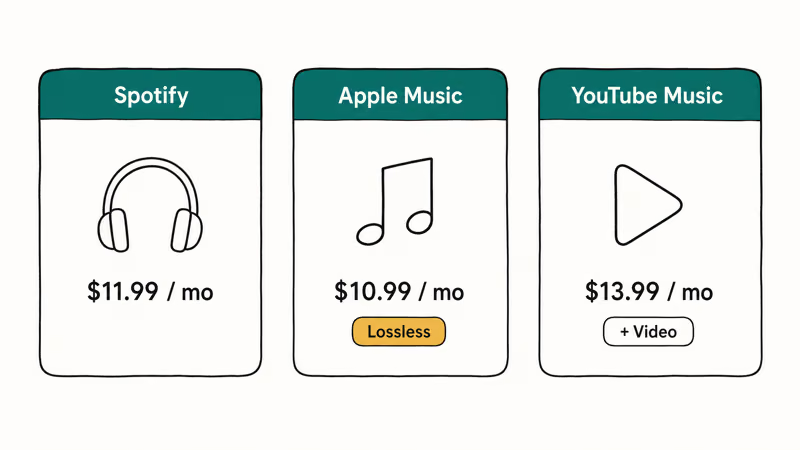
Spotify is the largest paid music streaming service worldwide. The free tier plays full songs with audio and display ads, while Spotify Premium (about 11.99 dollars per month for individuals in the U.S. as of 2026) removes ads, lets you cache tracks for offline listening, and adds higher audio quality.
Spotify’s free tier includes ads and shuffle restrictions on many mobile playlists. Spotify’s official help center confirms that Premium downloads are encrypted and only playable inside the Spotify app.
If you want files you actually own, see Bandcamp below.
For Spotify-specific guides, see our walkthroughs on changing your Spotify country and listening to Spotify on a plane.
#Apple Music
Apple Music states that its catalog includes over 100 million songs, with lossless audio on every plan and Dolby Atmos spatial audio on supported devices. There is no free tier, but the standard plan runs about 10.99 dollars per month with a one-month free trial.
Family plans cover six people for about 16.99 dollars; student plans are 5.99 dollars.
Lossless ALAC files are larger than standard AAC downloads. If you have wired headphones or a USB-C DAC, the difference can be audible. Over Bluetooth (including AirPods Pro 2) the lossless tier is downsampled, so most listeners won’t hear the gain. See Apple Music crashing for troubleshooting.
#YouTube Music
YouTube Music is bundled with YouTube Premium (about 13.99 dollars per month) and offers a free, ad-supported tier. The library overlaps heavily with Spotify and Apple Music, but YouTube Music’s edge is its catalog of live performances, fan uploads, remixes, and covers that don’t exist on licensed-only services. The free tier won’t play in the background on mobile, so locking the screen stops the music. Premium fixes that and adds audio-only downloads.
#Free Music Sources That Are Legal
Free music is the main thing people miss when they hear “LimeWire alternative.” Here are three legal sources.
#Bandcamp
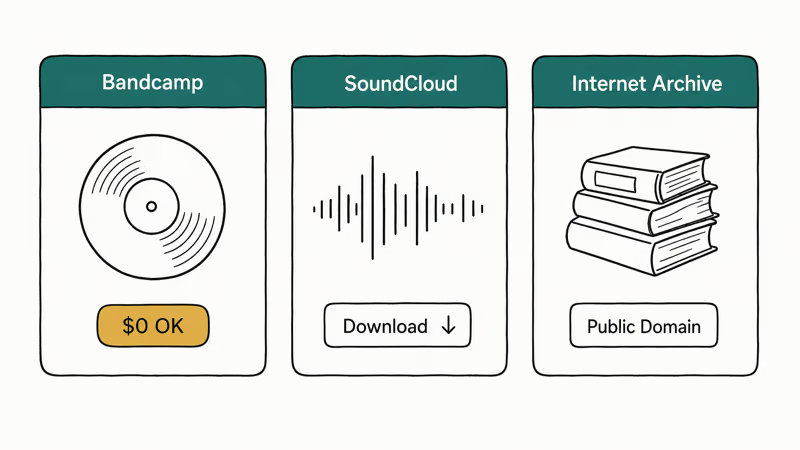
Bandcamp is an artist-direct music store. Most artists let you stream the full track in the browser before deciding whether to buy, and many enable a name-your-price option that includes zero, which means a legal free download.
Files come as DRM-free MP3, FLAC, ALAC, or other formats you choose at checkout.
According to Bandcamp’s about page, the platform pays the majority of each sale to the artist after Bandcamp’s revenue share and payment processing fees. That share is higher than typical streaming royalties.
When an artist enables name-your-price downloads, Bandcamp can provide legal MP3, FLAC, ALAC, or other file formats directly after checkout.
If you also want to keep purchased tracks in offline format, our guide on getting MP3 files from Spotify subscriptions explains why Bandcamp is a cleaner option than DRM workarounds.
#SoundCloud
SoundCloud is the largest platform for independent and unsigned artists, hip-hop mixtapes, DJ sets, podcasts, and remixes. The free tier streams everything in the catalog and lets artists optionally enable free downloads on individual tracks. Look for the “Download file” button under the waveform — if it’s there, it’s a legal download authorized by the uploader.
SoundCloud Go+ (about 9.99 dollars per month) adds offline listening and full-catalog access for restricted tracks. SoundCloud is also where many artists post music before it ships to Spotify or Apple Music.
#Internet Archive
The Internet Archive’s audio collection hosts millions of recordings, including public-domain music, Creative Commons releases, live concerts from the Grateful Dead and other taper-friendly bands, and old radio broadcasts. The Live Music Archive is uploaded with the artist’s permission, and most public-domain material is free to download in MP3, FLAC, or OGG.
This is the closest experience to LimeWire’s “search and download” feel, except every file is legally cleared. For older blues, jazz, classical, and folk recordings now in the U.S. public domain (most U.S. recordings published before 1929), the Internet Archive is the canonical free source on the open web.
#Legal Alternatives for Games and Software
If you used LimeWire for software or games, the legal stores below have replaced it.
#Steam
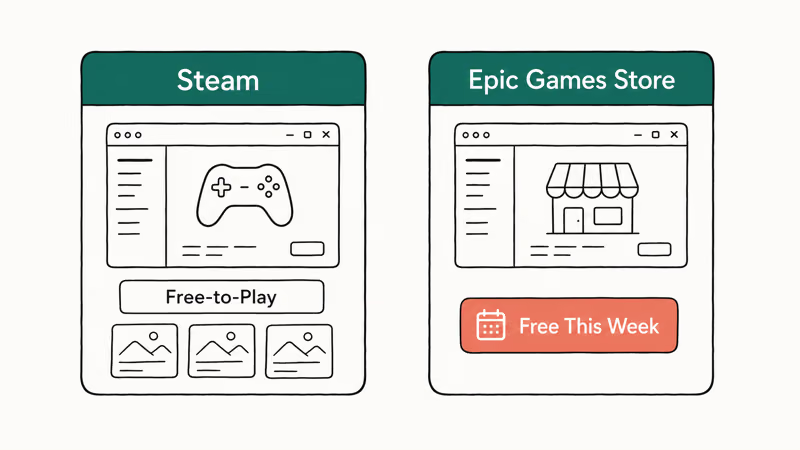
Steam is the largest PC game store. Most launch-week sales, free weekends, and bundles save 50 to 80 percent off retail during seasonal events. Steam also has a sizable free-to-play catalog that includes Dota 2, Team Fortress 2, Path of Exile, and Warframe, all free to install and play permanently.
#Epic Games Store
Epic Games Store gives away paid games through its rotating free-game program, and any game claimed during its offer window stays in your library permanently. Epic also runs aggressive seasonal sales with publisher coupons that frequently undercut Steam pricing on the same title.
For other download-related context, our archive includes the MP3 Rocket alternative writeup, which covers the same legal-replacement angle for another defunct file-sharing app.
#P2P File-Sharing and Copyright Law
Downloading copyrighted music from P2P or BitTorrent networks without a license is a federal civil offense in the United States.
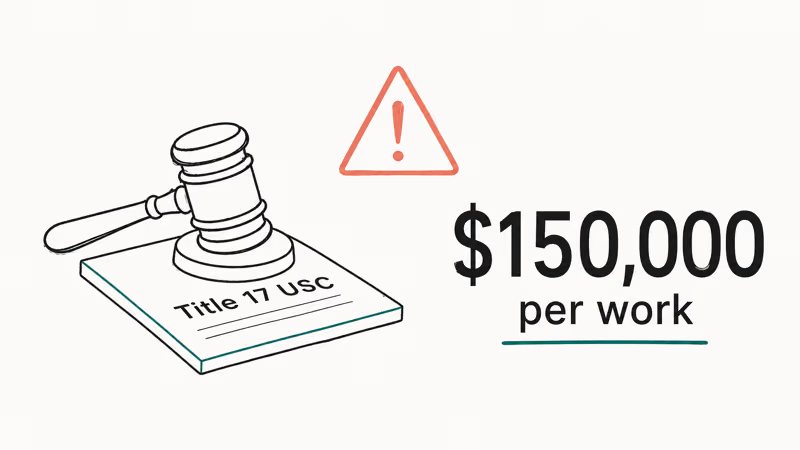
The major record labels and movie studios still pursue ISPs and BitTorrent users, which is why P2P-based file-sharing for commercial music carries real legal risk in 2026. According to Title 17 of the U.S. Code, statutory damages reach up to 150,000 dollars per infringed work for willful copyright infringement.
If a song is in the public domain, released under a Creative Commons license, or free-licensed by the artist on Bandcamp or SoundCloud, you can download it freely. Anything else, the safer path is one of the streaming services or storefronts above.
#Bottom Line
If your LimeWire era was about streaming everything, pick Spotify or Apple Music. Both clear the 100-million-track mark and run between 10 and 12 dollars per month.
If you specifically want to download files you own outright, Bandcamp is the closest legal replacement, with FLAC-quality downloads and a name-your-price option that frequently lets you pay zero.
For older recordings, public-domain music, and live concert archives, the Internet Archive is the closest match to LimeWire’s old search-and-grab feel. Every file there is legally cleared, which the original LimeWire could never claim, and the catalog still grows every week through community uploads.
#Frequently Asked Questions
Is LimeWire still available?
The original LimeWire was permanently shut down in October 2010 by federal court order. The current LimeWire site is a different company that bought the trademark in 2022 and uses it for an NFT marketplace, not a file-sharing app. Old installers from 2010 still circulate online, but they connect to a Gnutella network that has effectively no active users.
Can I get sued for downloading music from LimeWire alternatives?
You can be sued for downloading copyrighted music without permission, regardless of which app or network you use. Streaming through Spotify, Apple Music, or YouTube Music carries no legal risk because the platform pays the rights holders.
Is the new LimeWire NFT marketplace safe?
The new LimeWire is a registered company headquartered in Vienna, Austria. It’s a legitimate NFT and digital-content platform, but it has no technical or legal connection to the original LimeWire file-sharing app. If you’re not interested in NFTs or digital collectibles, there isn’t a reason to use it as a “LimeWire alternative” for music.
What’s the closest free LimeWire replacement?
For legal free music, the Internet Archive is closest in spirit because it’s a search-driven library where you can download files outright. For new music from independent artists, Bandcamp’s name-your-price option gets you legal MP3 or FLAC downloads at zero cost when the artist opts in. SoundCloud is a third option for tracks where the artist enables the download button.
Does Spotify or Apple Music let me download MP3 files?
No. Both services let Premium subscribers cache tracks for offline listening inside their apps, but those files are encrypted and locked to the app.
Are there any legal P2P file-sharing apps in 2026?
The BitTorrent protocol itself is legal and is still the standard way to distribute Linux ISOs, large open-source software releases, public-domain video archives, and Creative Commons content. The legal problem with classic LimeWire-style use was the content (commercial music without licenses), not the technology. Apps like qBittorrent and Transmission are fine for licensed or public-domain torrents.
How much does Apple Music cost compared to Spotify?
As of early 2026, Spotify Premium is about 11.99 dollars per month for the standard individual plan in the U.S., with a free ad-supported tier. Apple Music has no free tier and charges about 10.99 dollars per month for individuals, 16.99 dollars per month for a family plan covering up to six people, and 5.99 dollars per month for verified college students. Both offer one to three months free for new subscribers.
Google Messages Error 3100: Why RCS Is Broken on Galaxy
Google Messages RCS error 3100 hits Galaxy owners after phone or carrier switches. Google told 9to5Google a fix is coming. Here's what actually helps.
Is This Bank App Real? Spot a Fake App on Your Home Screen
A bank app can land on your home screen from a web page with no install warning. Learn the checks that tell a real banking app from a phishing web app.
Apps Crashing After iOS 27 Update? Fix Order (2026)
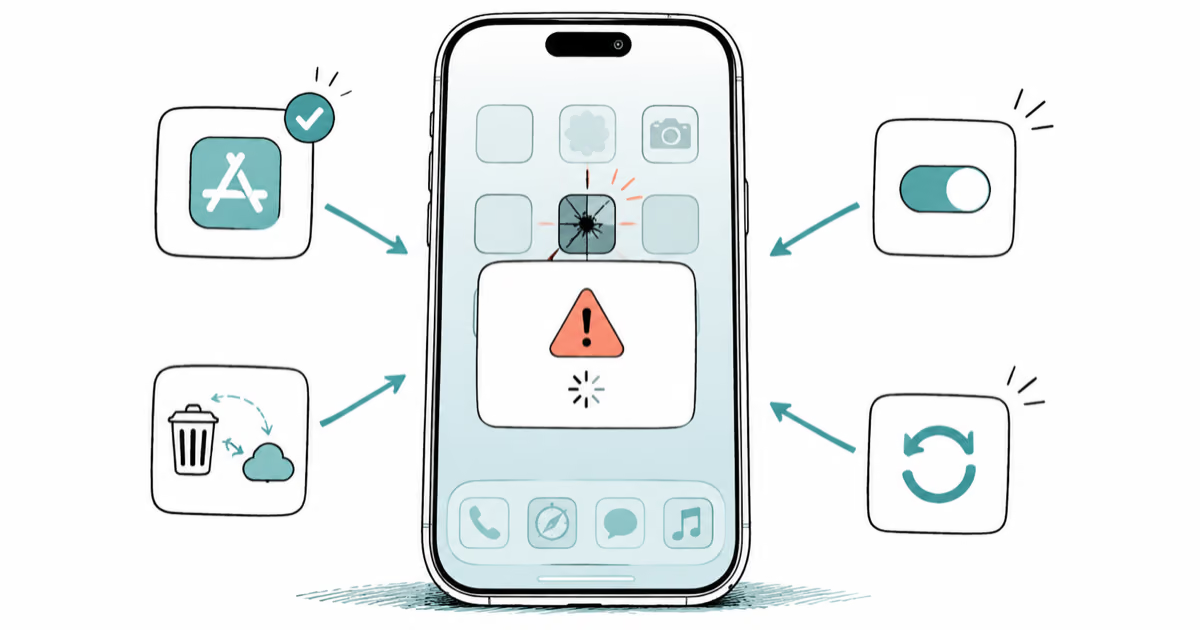
Apps crashing after the iOS 27 update? Update the app in the App Store first, then offload and reinstall to clear stale cache, then restart. The fix order.
Do AI Translation Earbuds Work Offline? What to Know
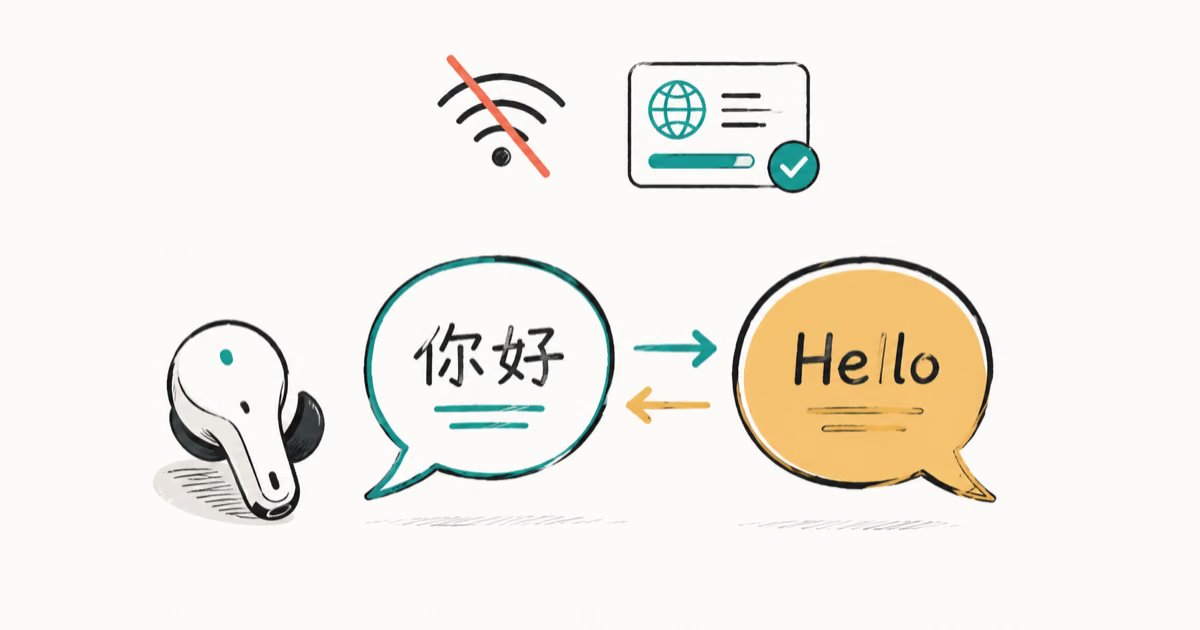
Do AI translation earbuds work offline? A few do with downloaded language packs, but most need the cloud. Here's what works offline and what you give up.