Is YouTube to MP3 Legal? Copyright Law Explained (2026)
Converting YouTube to MP3 violates copyright law and YouTube's Terms of Service. Learn about fair use limits, legal alternatives, and converter risks.
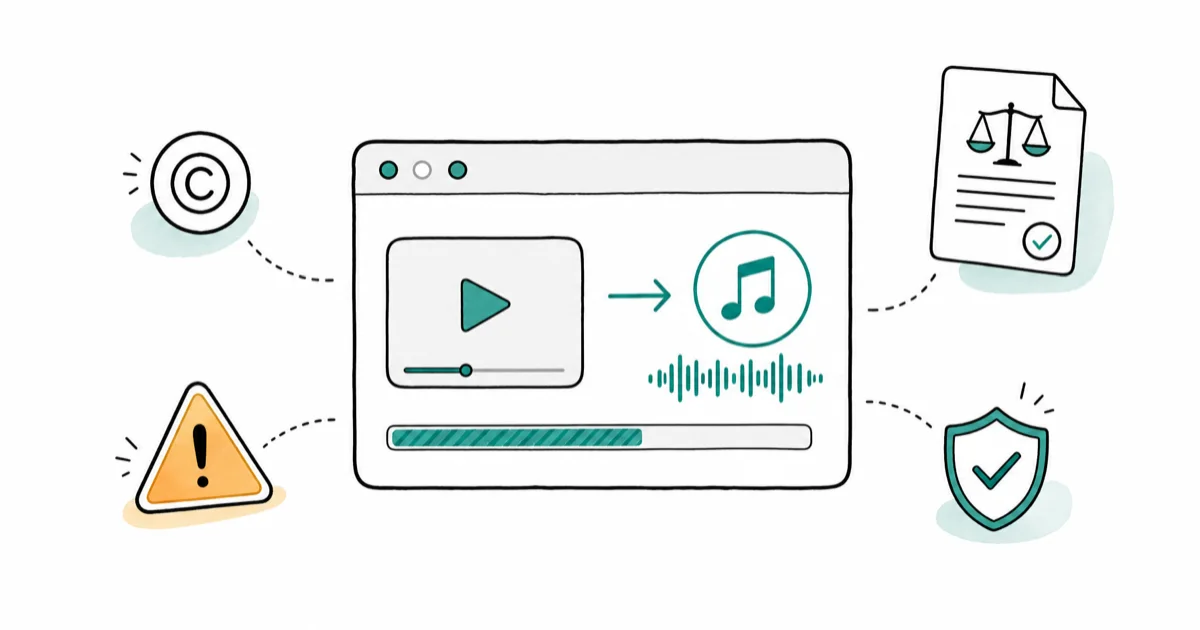
Quick AnswerConverting YouTube videos to MP3 without the copyright holder's permission violates YouTube's Terms of Service and copyright law in most countries.
Converting YouTube to MP3 is something millions of people do without thinking twice about legality. The short answer: it violates YouTube’s rules and copyright law in most cases. Here’s what the law actually says, where the exceptions are, and what alternatives work without legal risk.
- YouTube’s Terms of Service prohibit downloading or converting any content unless YouTube itself displays a download button or the creator provides a direct link
- Copyright law in the US, EU, and most countries protects audio and video content automatically, making unauthorized downloads an infringement
- Fair use is a narrow legal defense that rarely covers personal music downloads because the conversion replaces a paid stream or purchase
- Creative Commons-licensed videos are the one clear exception where converting to MP3 is permitted under the specific license terms
- YouTube Premium includes offline playback and background listening as the only YouTube-sanctioned download method
#Is Converting YouTube to MP3 Legal?
No. Converting a YouTube video to MP3 without permission from the copyright holder breaks copyright law in almost every jurisdiction.
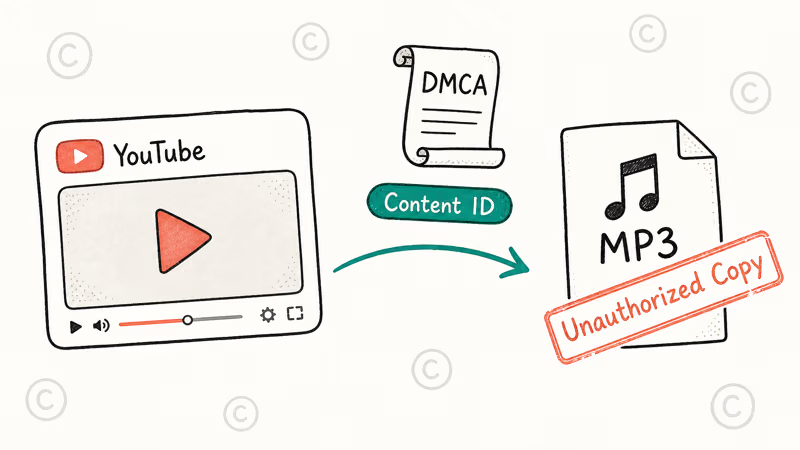
Copyright protection applies automatically to music, podcasts, and spoken-word content the moment it’s created. You don’t need to see a copyright symbol for protection to kick in. When you use a converter tool to rip audio from a YouTube video, you’re making an unauthorized copy that exists outside YouTube’s platform, stripping the copyright holder of control over distribution.
Popular YouTube to MP3 converter websites perform no copyright verification before processing a request. They convert the audio instantly with zero permission checks.
Under the Digital Millennium Copyright Act (DMCA) in the US and equivalent statutes in the EU and UK, creating that unauthorized copy without a license counts as infringement regardless of whether you intend to share the file or keep it for personal use.
According to YouTube, Content ID has tracked ownership since 2007 by matching audio and video fingerprints against rightsholders’ claimed works. YouTube’s copyright help page details how the system operates.
#What Does YouTube’s Terms of Service Say?
YouTube’s Terms of Service address this directly. The ToS states that you’re only allowed to access content “as intended through the provided functionality of the Service,” which means streaming in your browser or app. It specifically prohibits downloading content unless “a download button or similar link is displayed by YouTube on the Service for that content.”
Third-party converter tools fall outside that permitted functionality.
Breaking YouTube’s ToS isn’t a criminal act on its own, and YouTube won’t call the police. But the platform can terminate your account without warning, and the copyright holder can pursue a separate legal claim. These are two independent problems: one contractual, one legal.
On iPhone, YouTube’s mobile app displays a “Download” button on most videos for offline viewing within YouTube Premium. Those downloads stay encrypted inside the app, expire after about a month, and can’t be exported as MP3 files or transferred to another device.
#Fair Use and YouTube Downloads
Fair use is the defense people cite most when discussing downloading YouTube videos. It exists in US copyright law, but it’s far narrower than most people assume.
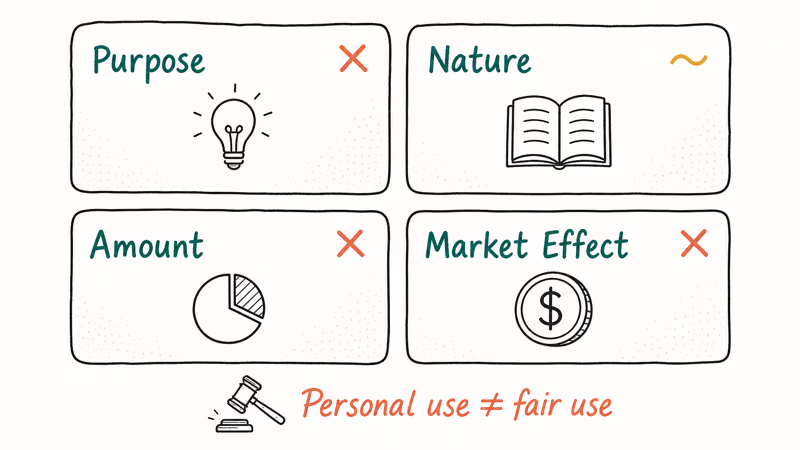
Courts evaluate fair use on four factors: the purpose of your use, the nature of the copyrighted work, how much you copied, and the effect on the market for the original. Downloading an entire song to listen offline fails on at least three of those tests.
For the purpose test, listening to a ripped MP3 is the exact same use as streaming on YouTube. Nothing new is added.
An MP3 rip copies the entire audio track, failing the amount test. And the market-effect test is just as clear: your offline copy replaces a stream or purchase, which directly harms the rightsholder’s revenue. All three factors favor the copyright holder.
In Capitol Records v. MP3tunes (2014), the court ruled personal use alone does not qualify as fair use.
#Creative Commons Videos on YouTube
Creative Commons-licensed videos are the legitimate exception. When a creator uploads a video with a Creative Commons license, they grant permission for others to download, reuse, and modify the content under specific conditions.
YouTube’s help page confirms that creators choose between 2 license types when uploading to YouTube Studio: standard YouTube license or CC BY. Videos marked CC BY are free to convert to MP3 legally, as long as you credit the original creator. You can filter YouTube search results by Creative Commons license using the search filters.
Most of YouTube’s music catalog carries standard licenses, not Creative Commons. Popular songs from major label artists won’t have CC-licensed versions.
Creative Commons works best for educational content, ambient music, and independent creators who explicitly share their work. Our guide on Standard YouTube License vs. Creative Commons covers the differences in detail.
#Legal Alternatives to YouTube to MP3 Converters
If you want audio from YouTube content without breaking the law, several options actually work.
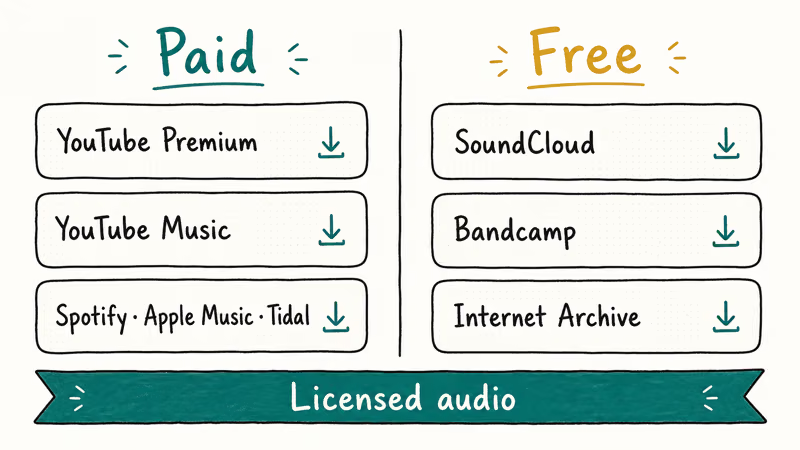
YouTube’s Premium subscription is the legitimate download option. It includes offline downloads within the YouTube app, background playback with your screen off, and ad-free viewing. Individual and family plans are available, with current pricing on YouTube’s site. Downloads stay inside YouTube’s ecosystem, which is why they’re legal.
YouTube Music (included with Premium or available separately) gives you offline downloads, background play, and audio-only mode.
Streaming services like Spotify Premium, Apple Music, and Tidal license music directly from labels and pay per-stream royalties. All three offer paid tiers with offline downloads to your device.
Free legal sources include SoundCloud (many artists upload free downloads), Bandcamp (artists set their own pricing, including “pay what you want” at $0), and the Internet Archive’s audio collection with public domain and CC-licensed recordings.
For saving content from other platforms, our Instagram video converter guide covers the specifics for Instagram.
#Risks of Using Third-Party YouTube Converters
Beyond legal exposure, converter sites carry practical risks that aren’t obvious at first glance.
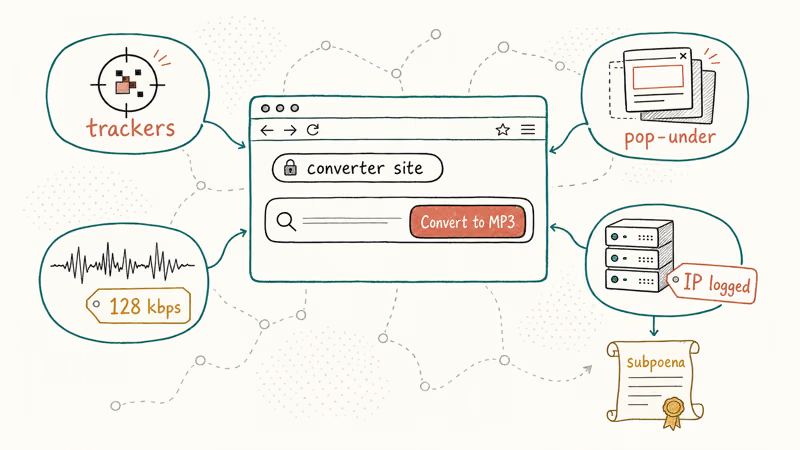
Most converter sites load third-party tracking scripts from flagged domains, and many trigger pop-under windows that redirect to suspicious download pages. Audio quality is inconsistent too, with some sites outputting low-bitrate 128kbps files regardless of the source video’s actual audio quality.
Your IP address gets logged by these services. If a copyright holder files a DMCA subpoena against the converter site’s operator, those server logs become discoverable evidence.
Individual users rarely face lawsuits for personal downloads, but the legal mechanism exists. Screen recording audio from YouTube creates the same copyright problem, and on iPhones it often causes recordings with no sound from DRM-protected content anyway.
Sites like Soap2Day operate in a similar gray area with streaming video content, sharing the same risk profile: legal uncertainty for users, unreliable quality, and potential malware.
#Bottom Line
Skip the YouTube to MP3 converters for copyrighted content. YouTube Premium or a streaming service like Spotify gives you legal offline listening with better audio quality and no malware risk. For occasional tracks, check Bandcamp or SoundCloud where artists offer free legal downloads directly. Save converter tools only for the rare Creative Commons-licensed content where the creator explicitly allows it.
#Frequently Asked Questions
Is converting YouTube to MP3 illegal everywhere?
Copyright law varies by country, but the core principle holds across the US, EU, UK, Canada, and Australia: making an unauthorized copy of copyrighted audio is infringement. A few countries like Germany have broader “private copying” exceptions (Privatkopie), but those typically require the source itself to be legal and don’t extend to circumventing platform access controls. In practice, no major jurisdiction gives you a blanket right to rip copyrighted audio from YouTube.
Can YouTube ban my account for using a converter?
Yes. YouTube can terminate your account without warning for using third-party download tools, since it violates their Terms of Service.
Is it legal to convert a YouTube video I uploaded myself?
If you own all rights to the content, downloading your own video is legal. YouTube Studio provides a built-in download option for your uploads.
What’s the difference between downloading and streaming legally?
Streaming plays content in real time without creating a permanent copy on your device. Downloading creates a persistent file you control. Copyright law treats them differently because a download removes the rightsholder’s ability to track plays, serve ads, or revoke access. That loss of control is what makes unauthorized downloads an infringement even when the original stream was free.
Are YouTube to MP3 converter sites safe to use?
Most are not safe. The majority of popular converters load third-party tracking scripts from domains flagged as potentially harmful, and many serve pop-under redirects. Even when the audio conversion itself works, the advertising ecosystem surrounding these sites poses real risks to your device security and personal data.
Does YouTube’s Content ID system detect MP3 downloads?
Content ID monitors uploads, not downloads. It scans new videos and matches fingerprints against claimed works.
Is YouTube Premium worth it for offline listening?
Premium makes financial sense if you regularly want offline YouTube content, background playback, and ad-free viewing. If you only want music, YouTube Music or Spotify Premium offer stronger music-specific features like curated playlists and lyrics. The deciding factor is whether you consume YouTube video content offline or just want audio. Check YouTube’s pricing page for current rates in your region.
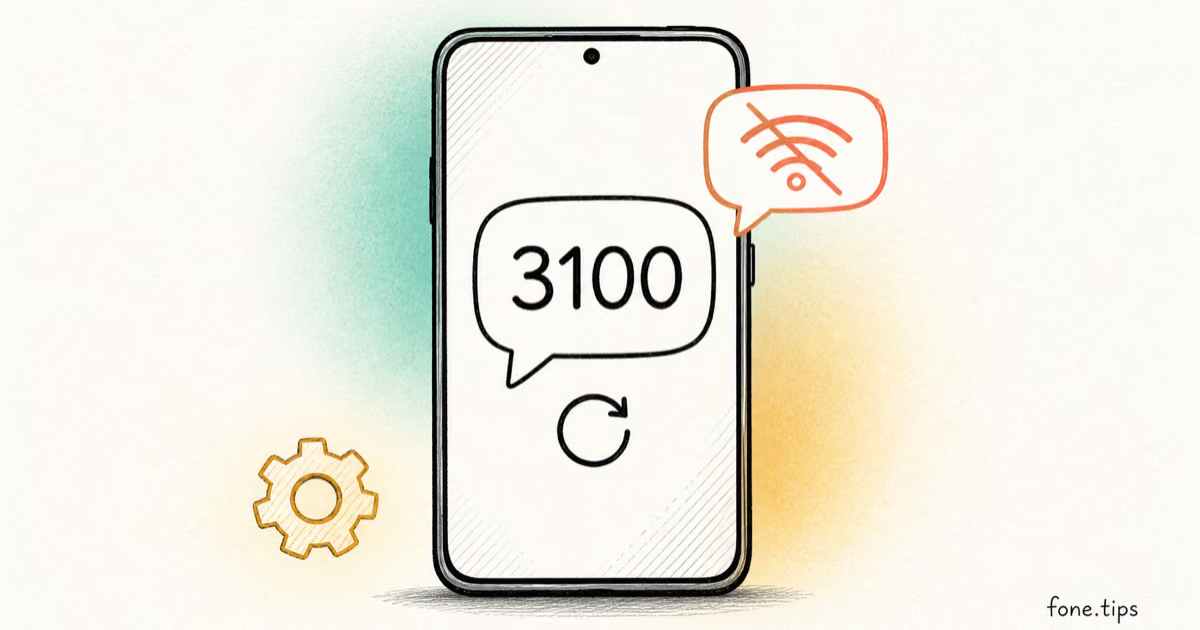
Google Messages Error 3100: Why RCS Is Broken on Galaxy
Google Messages RCS error 3100 hits Galaxy owners after phone or carrier switches. Google told 9to5Google a fix is coming. Here's what actually helps.
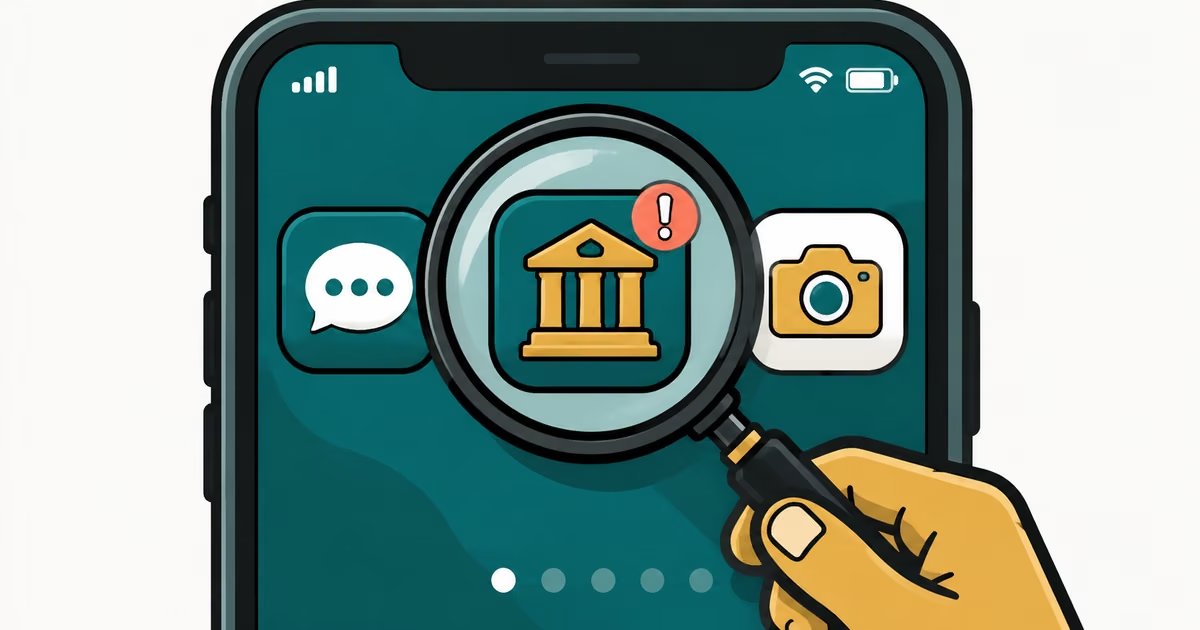
Is This Bank App Real? Spot a Fake App on Your Home Screen
A bank app can land on your home screen from a web page with no install warning. Learn the checks that tell a real banking app from a phishing web app.
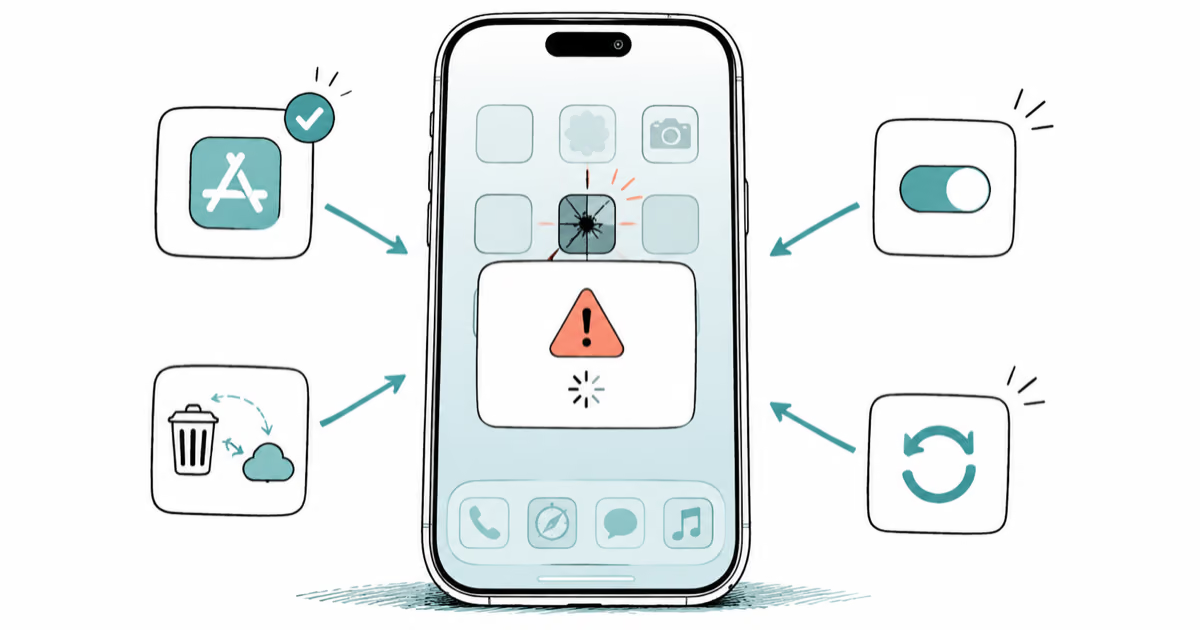
Apps Crashing After iOS 27 Update? Fix Order (2026)
Apps crashing after the iOS 27 update? Update the app in the App Store first, then offload and reinstall to clear stale cache, then restart. The fix order.
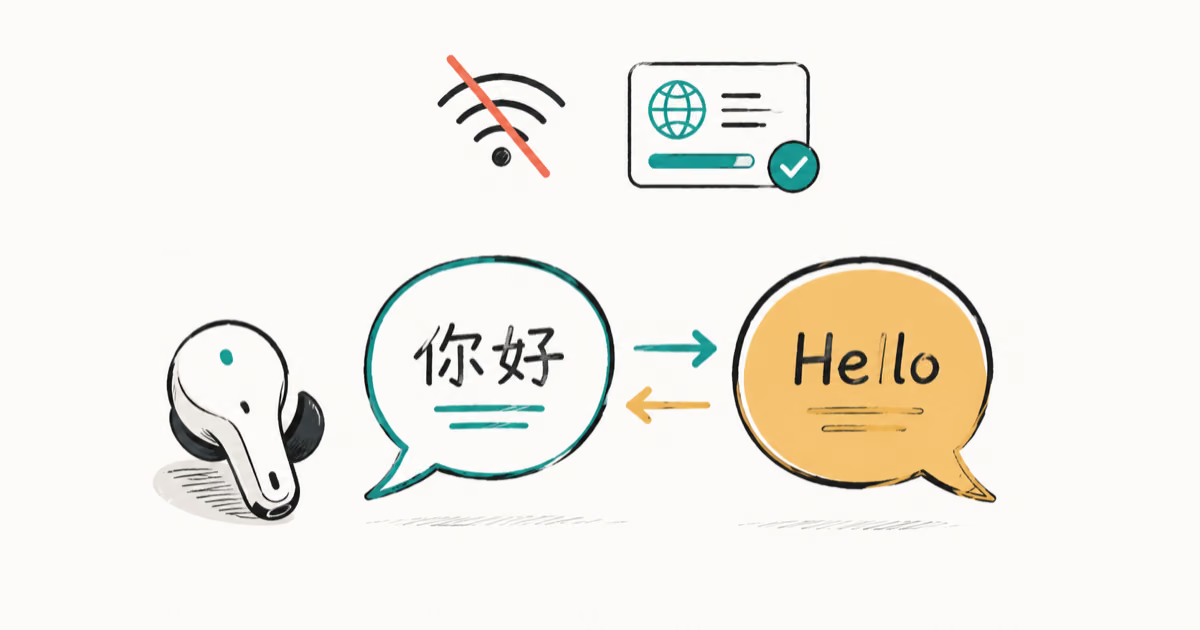
Do AI Translation Earbuds Work Offline? What to Know
Do AI translation earbuds work offline? A few do with downloaded language packs, but most need the cloud. Here's what works offline and what you give up.