Listening Games for Kids: 8 Activities That Build Focus
Listening games for kids build focus, language, and following directions. 8 activities like Simon Says and Broken Telephone with age-by-age guidance.
Quick AnswerSimon Says, Broken Telephone, and Musical Statues are the most effective listening games for kids. Just 10 minutes a day builds focus, vocabulary, and the ability to follow instructions.
Listening games for kids turn ordinary playtime into focus training. Ten minutes a day is enough — no apps, no screens, no setup. The eight games below are ordered by age accessibility, with notes on which ones hold attention best for younger versus older kids.
- Simon Says works for ages 3 and up because the rule is binary: follow only commands that start with “Simon Says.”
- Broken Telephone needs at least three players and works best when you start with single words for kids under 5.
- Musical Statues works with any phone, Bluetooth speaker, or stereo and reinforces stop-and-go listening in five-minute rounds.
- Daily 10-minute sessions through preschool and early elementary are when these games have the biggest payoff.
- You can start as soon as a baby reacts to sounds, then ramp up the difficulty as vocabulary grows.
#How Listening Games Build Real Skills
Listening is not the same as hearing. Hearing is automatic. Listening means paying attention, holding what you heard, and acting on it. Most kids only get good at listening if they practice on purpose.
According to ASHA’s auditory processing disorder page, kids who can’t separate speech from background noise often struggle with reading, spelling, and following multi-step directions later in school. The fix is not more screen time. It’s deliberate practice in distinguishing, remembering, and acting on sounds.
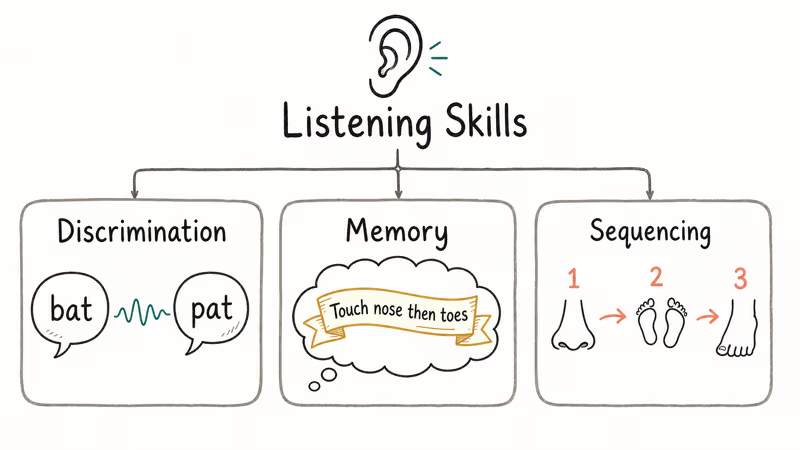
Listening games hit three skills at once:
- Auditory discrimination: telling sounds apart, like “bat” vs. “pat”
- Auditory memory: holding a phrase in your head long enough to repeat it
- Auditory sequencing: keeping the order right, such as “touch your nose, then your toes”
The NIDCD’s auditory processing page confirms that auditory processing weaknesses often look like attention problems but trace to a different brain pathway. KidsHealth’s central auditory processing article states that practice with another person, not a screen, builds the back-and-forth processing that reading depends on.
The games that drill all three skills together tend to hold attention longest. A couple of weeks of nightly Broken Telephone is often enough for a school-age child to start catching multi-step verbal instructions on the first try.
#When Should You Start These Games?
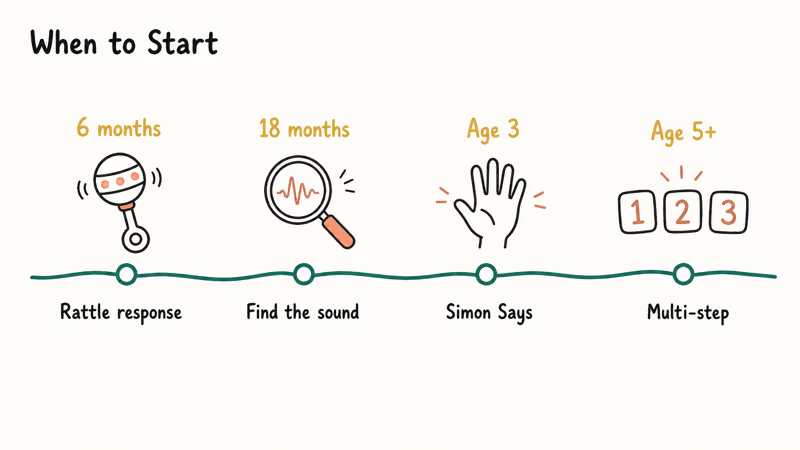
The earlier the better. Babies as young as 6 months respond to listening play, like rattling a toy and watching them turn toward the sound. By 18 months you can play simple “where is it?” sound-finding games. Around age 3 most kids can follow the binary rule of Simon Says.
Pediatric guidance is consistent on what to prioritize. The American Academy of Pediatrics’ HealthyChildren.org guidance on digital media states that young children learn best from real-world interaction rather than solo screen use, because back-and-forth interaction is what wires language and social skills. Listening games are about as interactive as you can get without leaving the dinner table.
If you want to set healthy screen limits alongside listening time, our guide to Screen Time on iPhone and iPad covers daily caps, app blocking, and downtime windows.
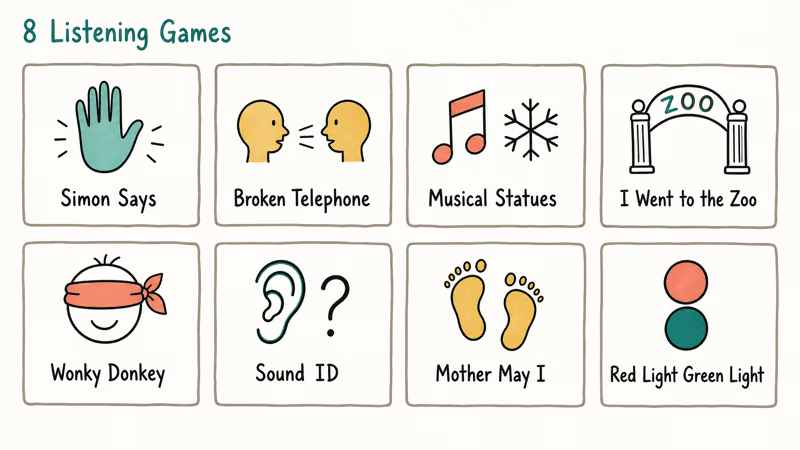
#8 Listening Games to Try This Week
These are ordered roughly by age accessibility, easiest first. Pick two or three that fit your child’s age and rotate them across the week. Each entry notes the ages it suits best and which ones tend to hold attention versus flop with younger kids.
#1. Simon Says
The rule: your child only follows commands when you say “Simon Says” first. Skip the phrase, and acting on the command means losing the round. Start with simple body movements: touch your nose, hop on one foot, clap twice. Once your child catches on, mix in two-step commands like “Simon Says touch your ear, then your knee.”
Simon Says works for ages 3 and up because the rule is binary. Most preschoolers will stay engaged for ten minutes or more once they catch on, which is a long stretch of focused attention at that age. According to Simon Says’s Wikipedia entry, this command-and-listen format has been a documented children’s game for at least 200 years.
#2. Broken Telephone
Whisper a word, phrase, or sentence into your child’s ear. They whisper it to the next person. The last in line says it out loud. The garbled result is the lesson, and careful listening matters.
Start with single words for kids under 5, two-word phrases for ages 5 to 7, and short sentences for older kids. You need at least three players, so this is a dinner-table or playdate game, not a parent-and-only-child one. The longer the line, the funnier the ending.
#3. Musical Statues
Play music, then stop it randomly. Players freeze when the music stops. Anyone who moves is out. The last one standing wins.
Use any phone, a Bluetooth speaker, or a laptop. Turning the volume down low makes the stop cues harder to spot, which raises the difficulty without changing the rules. Five-minute rounds keep it fresh.
#4. I Went to the Zoo, and I Saw a…
You start: “I went to the zoo, and I saw a lion.” Your child repeats and adds an animal: “I went to the zoo, and I saw a lion and a penguin.” Each turn adds one animal. The chain gets longer. Forget an animal and you are out.
This is best for ages 5 and up, when working memory can hold four to six items at a time. You can swap “zoo” for “grocery store,” “playground,” or any setting your child likes. The category change does not affect the listening drill, but it keeps things interesting after a few sessions.
#5. Wonky Donkey
One child stands in the middle of a circle with eyes covered, holding a small piece of cloth or rope as a “tail.” Another child quietly walks up, shakes the tail, shouts “Wonky Donkey!” and sits down. The kid in the middle gets three guesses to identify who said it.
This drills voice recognition and direction sensing, which are hard listening skills to practice any other way. It needs at least four players to be fun, so save it for sleepovers or family gatherings.
#6. Sound ID (Noisy Neighbor)
Collect six to eight objects that make distinct sounds: a bell, a crinkly chip bag, a squeaky dog toy, a set of keys, a wooden spoon on a metal pot. Show them all to your child and demonstrate each sound. Then hide them in a box and shake one at a time. The chant: “Noisy Neighbor, Noisy Neighbor, what’s that noise?” Your child guesses without looking.
Swap objects every few rounds so it does not turn into pure pattern matching. Rotating a few objects out each round keeps it challenging, and similar-sounding items like a spoon tap versus a pen tap will trip up even older kids.
#7. Mother, May I
One person plays “Mother” at one end of the room. Players line up at the other end. Each takes a turn asking: “Mother, may I take three big steps?” or “Mother, may I take two bunny hops?” Mother says yes, no, or counters with a different number. Acting before getting a “yes” sends you back to the start.
The listening drill is two-layer: kids have to remember the size and type of step they asked for, then wait for permission before moving. Plenty of fun, plus it sneakily teaches direction-following and impulse control.
#8. Red Light, Green Light
Caller says “green light” and players walk forward. “Red light” means freeze. Anyone moving on red goes back to start. First to reach the caller wins.
Variations level up the listening: yellow means skip, blue means walk backward, purple means bunny hop. The more colors you add, the harder the auditory load. With five or more colors, even older kids have to pause to recall the rule before moving. This game also works as a one-on-one with a parent calling out the colors.
#How Do You Keep Kids Interested?
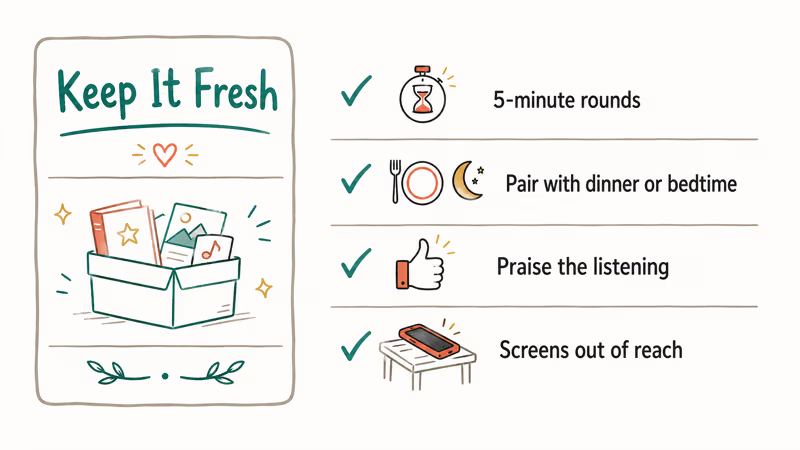
Most listening games lose their charm after about a week of nightly play. The fix is rotation, not abandonment. A simple system is to run a different game each weeknight and save one weekend night for whichever game the kids ask for most.
Simon Says tends to stay fun for weeks at a stretch. I Went to the Zoo can wear out fast with younger kids, who often start inventing made-up animals instead of remembering the chain.
A few patterns worth knowing:
- Five-minute timer beats “until you’re tired.” Kids settle into longer rounds once the format becomes familiar, but in the first week, end on a high note before they ask to stop.
- Pair listening games with bedtime or dinner. Built-in transitions make the game feel like a treat, not homework.
- Praise the listening, not the winning. “You caught the trick command” lands better than “you won.”
- Put screens out of reach. Even a phone face-down on the table pulls attention. Try the game with phones in another room.
If you want a structured way to track other daily wins alongside game time, our roundup of the best chores apps for kids covers the apps families actually stick with. For game-night nights when you want a co-op video game instead, the best family game apps list pairs nicely with a listening warm-up first.
#Pairing Listening Games With Game Consoles
Game consoles can support listening drills if you set them up that way. Co-op modes that require verbal coordination, like calling out which item your kid should pick up, double as Simon Says with controllers. We’ve covered which devices fit different ages in our game console for kids guide and which Wii titles still work for the youngest set in best Wii games for kids.
Just lock down the parental controls first. Our Nintendo Switch parental controls walkthrough shows the exact daily-time, content-filter, and purchase-block settings that prevent surprises. Without them, “10 minutes of co-op” becomes 90 minutes of solo Mario Kart by 7pm.
#Mistakes to Avoid
A few common traps to skip from the start:
Treating the games like homework. If your tone is “okay, time for listening drill,” kids tune out by minute two. Frame it as a game you both want to play.
Playing too long. Let a Simon Says session stretch past 20 minutes and a young child often starts guessing randomly, even when they were locked in earlier. Cap sessions at 10 to 15 minutes even when things go well.
Adding rules mid-round. New variations belong at the start of the next round. Changing rules mid-game confuses the listening test you are running and frustrates kids fast.
Skipping the harder games. Simon Says is the easiest entry point, but the real listening gains come from games that combine memory, direction sensing, and quick rule changes. Cycle in Wonky Donkey and Red Light Green Light once Simon Says feels stale.
#Bottom Line
Start with Simon Says tonight at dinner — it works for the most kids, needs zero setup, and holds a preschooler’s attention for a solid ten minutes or more. If your child is under 3 or just starting out, run Broken Telephone with one parent on each side and single words. Keep sessions to 10 minutes, rotate three games across the week, and skip any game that flops twice in a row.
#Frequently Asked Questions
What age should kids start listening games?
Babies as young as 6 months respond to listening play with their parents, like rattling a toy and watching them turn toward the sound. Active games with rules, such as Simon Says or Musical Statues, click around age 3 once a child can follow simple verbal commands. The games still pay off through ages 8 and 9.
How long should a session last?
Ten minutes a day is the sweet spot. Going past 15 tends to lose attention, especially with kids under 5.
Do listening games actually improve reading?
Yes, indirectly. Reading depends on auditory processing, and these games drill exactly that. Don’t expect a leap in two days. After a couple of weeks of nightly play, many school-age kids start catching multi-step instructions on the first try, which is the same skill teachers grade as “follows directions” on report cards.
Can one parent and one child play these games?
Most of them, yes. Simon Says, I Went to the Zoo, Mother May I, and Red Light Green Light all work fine with two players. Broken Telephone and Wonky Donkey need at least three. Use siblings, neighbors, or video-call cousins to fill the line when you need more players.
Do digital listening apps replace these games?
No. Apps lack the back-and-forth turn-taking that builds real auditory attention. They can work as a supplement on long car rides, but the bulk of practice should be face-to-face. The American Academy of Pediatrics’ guidance favors interactive over passive screen activities for this reason.
What if my child gets bored fast?
Switch games every five minutes during the first week. Kids settle into longer rounds once a game becomes familiar. If a game still flops after three tries, drop it for a month and come back.
Can listening games help kids with ADHD or auditory processing differences?
They can, but they don’t replace evaluation by a speech-language pathologist or audiologist. Treat the games as practice that supports what the specialist recommends, not a fix on their own. ASHA has a public auditory processing disorder page that explains when to seek a formal evaluation.
What’s the easiest game to start with tonight?
Simon Says. You don’t need extra players, props, or music. Just the rule that your child only follows commands that start with “Simon Says.” Five rounds and you’ll know if your child is ready for the slightly harder games on the list.
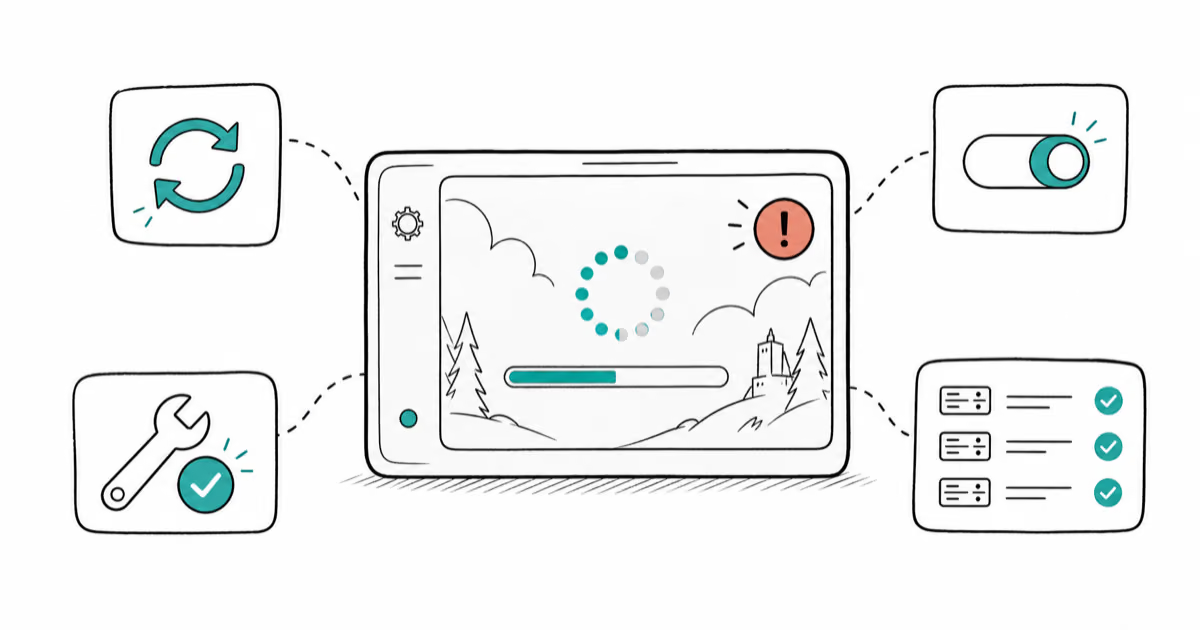
Fortnite Stuck on the Loading Screen? Fix It in 2026
Fortnite stuck on the loading screen? Check server status, fix the Windows N Media Pack and DirectX 11 on PC, clear the console cache, and verify files.
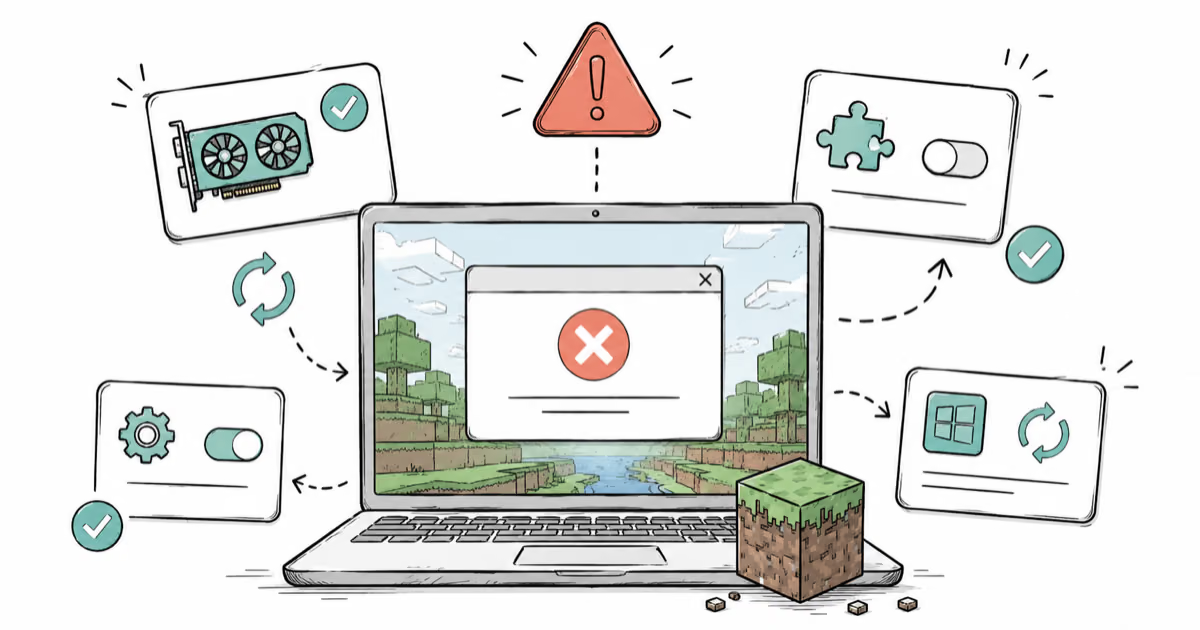
Minecraft Keeps Crashing? Java and Bedrock Fixes (2026)
Minecraft keeps crashing on startup or mid-game? Update your GPU driver, remove mods on Java, and reinstall Gaming Services on Bedrock. Fixes for both.
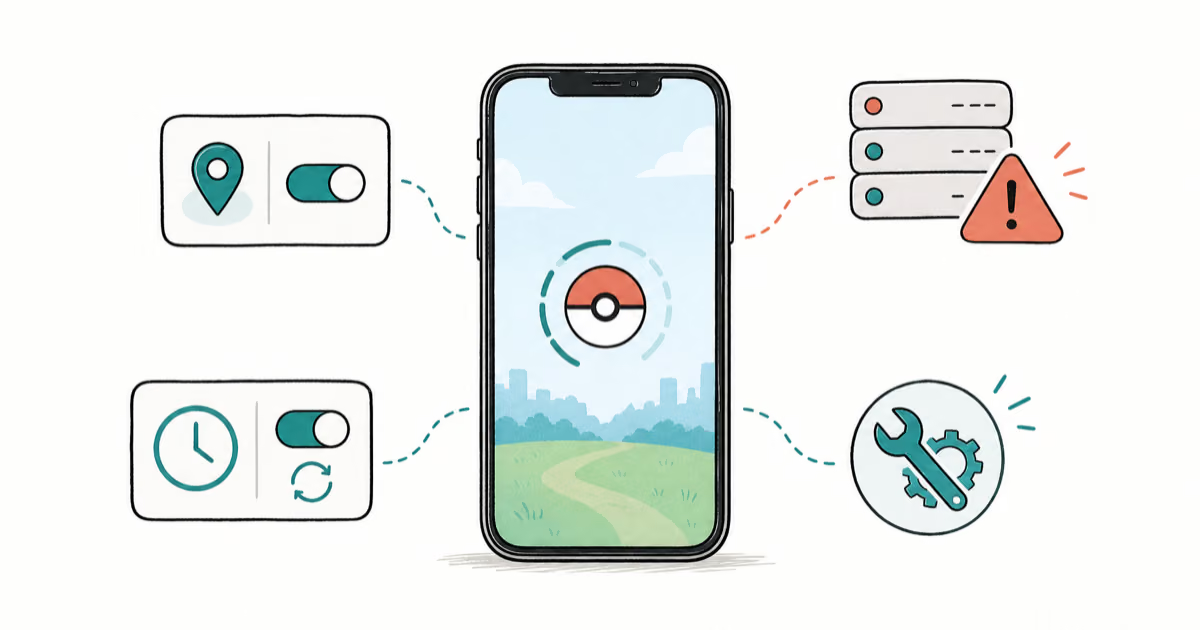
Pokemon GO Not Loading? Fix the Loading Screen 2026
Pokemon GO not loading or stuck on the Pokeball? Check server status, fix automatic date and time, grant location permission, clear the cache, and update.
PS5 Controller Not Charging? 9 Fixes That Work (2026)
DualSense not charging? Swap the cable, use a rear port in Rest Mode, clean the USB-C port, and check power settings. 9 fixes for a dead PS5 controller.