Nintendo Switch Parental Controls: Setup Guide (2026)
Set up Nintendo Switch Parental Controls in 5 minutes. Cap play time, restrict games by age rating, block eShop purchases, and monitor usage from a phone.
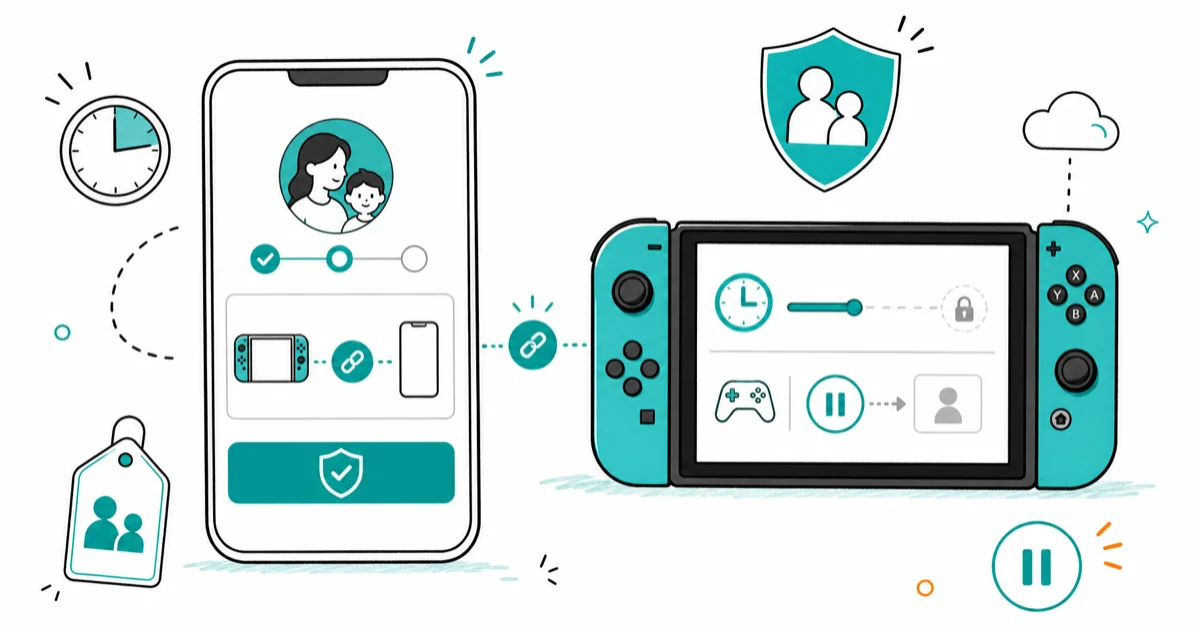
Quick AnswerInstall the free Nintendo Switch Parental Controls app on your phone, link it to the console with the on-screen registration code, then set a daily play time limit, pick an age-based Restriction Level, and turn on Suspend Software so games stop automatically when time runs out.
This guide assumes you’re setting parental controls on your own device for a child in your care. Changing controls on a console you don’t legally own can violate Nintendo’s terms and trigger privacy concerns.
Nintendo Switch Parental Controls solve a real problem: you want your kid to enjoy Mario Kart, but you don’t want them on the console at midnight or burning through eShop credit.
The free companion app pairs with the console and controls play time, age ratings, online communication, and purchases.
- Daily play time limits range from 15 minutes to 6 hours in 15-minute increments, with separate weekday and weekend schedules.
- Suspend Software is the enforcement teeth: when the timer hits zero the game closes mid-session unless you enter the PIN.
- Restriction Levels (Child, Pre-Teen, Teen, Young Adult) map to ESRB age ratings and block both physical and downloaded games above the threshold.
- Bedtime Alarm sets a nightly cutoff anywhere from 9 PM to 11 PM, with optional Suspend Software to enforce it.
- One Nintendo Account can manage up to three Switch consoles from the same app, useful for split-custody households or multi-kid families.
#What Do Nintendo Switch Parental Controls Actually Do?
The system has four levers: time limits, age-based content blocks, online communication restrictions, and activity reports.
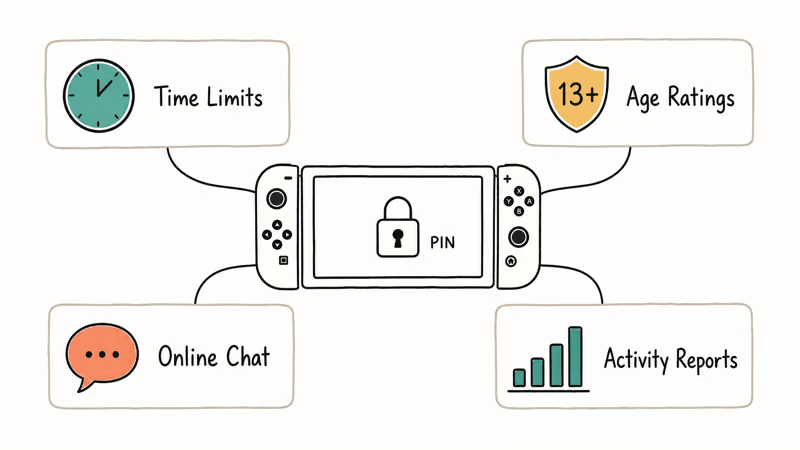
According to Nintendo, one account can manage up to 3 Switch consoles from a single app installation, with full setup details in Nintendo’s parental controls overview. The iOS and Android versions are functionally identical.
The console enforces whatever you set in the app. If your kid tries to launch a Mature-rated game and the Restriction Level is set to Teen, the game refuses to start and asks for your PIN. The same gate applies to time limits, eShop purchases, screenshot posting, and online interaction toggles, so once a single PIN is set the entire console respects every restriction in one place and the kid can’t sidestep it by switching user profiles.
It can’t monitor voice chat, block YouTube, or filter web pages.
For Roblox-style chat moderation or YouTube filtering, layer a router-level parental control on top of what Nintendo provides.
#How to Set Up Parental Controls in About 5 Minutes
Setup needs one console, one phone, and a Nintendo Account. Have the Switch in handheld or docked mode, signed in to Wi-Fi, and your phone within reach.
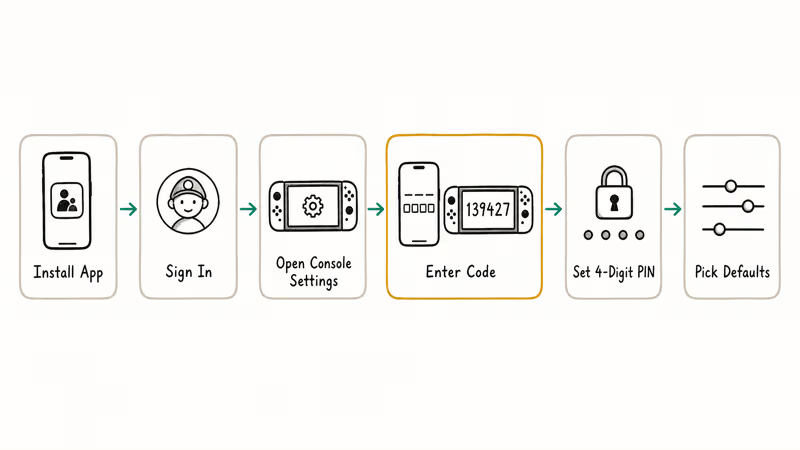
- Install the app. Search “Nintendo Switch Parental Controls” in the App Store or Google Play. The publisher should be Nintendo Co., Ltd. No other parental control app is the official one.
- Sign in. Open the app and sign in with your Nintendo Account. If you don’t have one, create it from the same screen using your email.
- On the console, go to
System Settings>Parental Controls>Use Your Smart Device. The console displays a 6-digit registration code. - Enter the code in the app. Type it into the linking screen on your phone. The console and phone should link once the code is accepted.
- Set a PIN. Pick a 4-digit code (or up to 8 digits) that your child can’t guess. Don’t reuse your phone passcode or Nintendo Account password.
- Pick initial settings. The app walks you through age-rating and time-limit defaults. You can adjust everything later.
The flow is short if your Nintendo Account is ready before you start.
If the registration code expires before you finish typing, tap Generate New Code on the console and run the linking step again.
#How Do You Set Daily Play Time Limits?
Tap Console Settings > Play-Time Limit in the app.
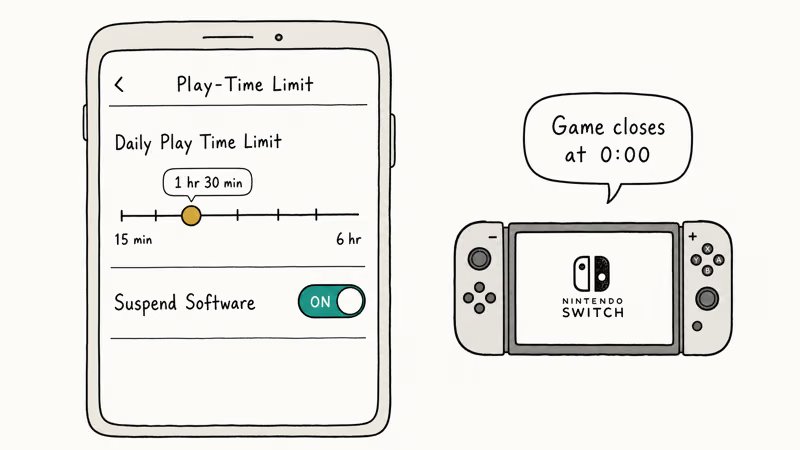
You’ll see two settings:
- Daily play time limit: 15 minutes to 6 hours, in 15-minute increments
- Suspend Software: a toggle that decides what happens when time runs out
Without Suspend Software, the console only shows a notification and lets your kid keep playing. With Suspend Software on, the game closes when the timer hits zero, and the home screen reappears with a message asking for the PIN if they want extra time. In online games, that can count as leaving a match, so set the limit with active sessions in mind.
You can set different limits for each day of the week. A common pattern is a 1-hour weekday cap and a 2-hour weekend cap.
For nighttime cutoffs, scroll down to Bedtime Alarm. Set a time between 9
PM and 11 PM in 15-minute steps. With Suspend Software on, the alarm closes any active game at the chosen time. Without it, the alarm just sounds a chime and a banner.When a limit hits, your child can ask you for an extension. You enter the PIN on the console (not the app) to grant extra time, since there’s no built-in way to grant an extension remotely.
#Restricting Games by Age and Blocking eShop Purchases
Restriction Level controls which games can launch based on ESRB age ratings (or PEGI, ACB, and other regional systems).
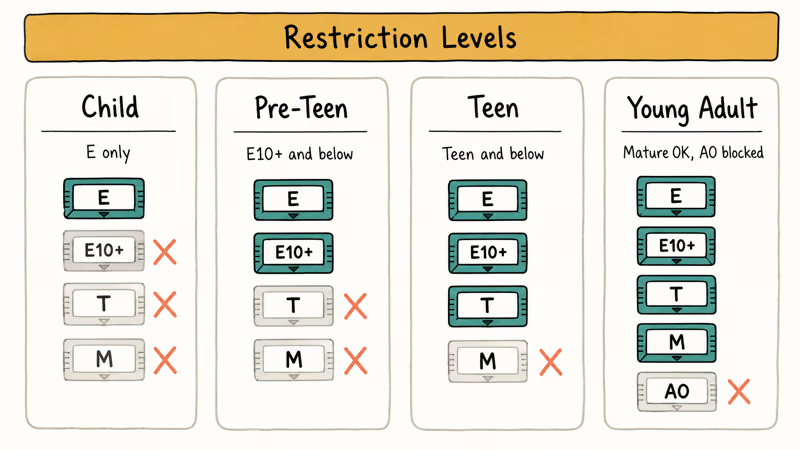
The four presets are:
- Child: only ESRB Everyone (E) games
- Pre-Teen: blocks Teen and Mature, allows E10+ and below
- Teen: blocks Mature 17+, allows Teen and below
- Young Adult: blocks Adults Only (AO) games but allows Mature
Most families use Pre-Teen or Teen as a starting point, then turn to Individual Software Restriction to override specific titles. For example, you can leave the level at Pre-Teen but explicitly allow Splatoon 3 (rated Teen) for an 11-year-old.
The full rating-system reference is the ESRB Wikipedia entry, which catalogs every category and content descriptor.
According to the ESRB ratings guide, Teen-rated games may contain “violence, suggestive themes, crude humor, minimal blood, simulated gambling, and/or infrequent use of strong language.” Knowing the actual rating definitions helps you set the level instead of guessing.
To block surprise charges, scroll to Nintendo eShop Purchases and Restrictions and toggle it on. Your child can still browse the eShop, but the checkout button asks for your Nintendo Account password (which they shouldn’t have) before completing the purchase. This stops both card purchases and eShop gift-card balance spending.
For online interaction limits, Other Restrictions has toggles for:
- Posting screenshots to social media (X, Facebook)
- Communicating with other players via voice or text in supported games
- Viewing user-generated content like custom Splatoon posts
Each toggle is independent. For kids under 13, social media posting and free-text communication are the two highest-risk settings to disable, while friends-only voice chat is the safer option for online play with classmates.
#Monitoring Activity and Adjusting Settings Over Time
Open the app and tap Today’s Play Activity to see how long the console has been used and which games were played.
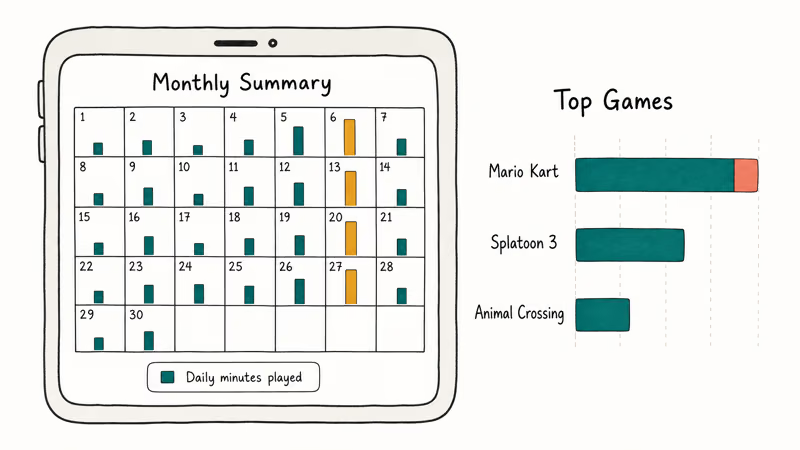
The activity refreshes whenever the console syncs with Nintendo’s servers, which happens any time the console comes online.
Tap Monthly Summary for a calendar view. Each day shows total minutes played and a per-game breakdown. The data is retained for the past several months, so you can spot trends like “Mario Kart spikes on Fridays” or “Animal Crossing dropped off when school started.”
Push notifications come from the app:
- “Today’s play time limit has been reached” fires when Suspend Software triggers.
- “New software was played” fires when your child launches a game for the first time.
- “Bedtime alarm” fires when the nightly cutoff happens.
Notifications are useful for the first two weeks of setup. After that, many families mute everything except the limit-reached alert.
The Restriction Level deserves a yearly review or a check-in whenever your child reaches a milestone birthday. A Pre-Teen setting locked in at age 7 will start blocking games your child’s classmates are talking about by age 11. Bumping to Teen and then using Individual Software Restriction to block the games you specifically don’t want is usually the cleanest path forward.
For multi-kid households, the controls apply to the whole console — there’s no per-user profile-level restriction.
Workaround: youngest-kid level, override individual titles.
For phone and tablet gaming, our Android screen time guide covers Family Link’s similar limit system.
#Fixing Common Setup and Sync Problems
Five issues come up most often.
The app won’t link to the console. Make sure both devices are signed in to the same Nintendo Account, and confirm the console has internet access (System Settings > Internet > Test Connection). The 6-digit code expires after a short window, so re-generate it on the console if you’ve been entering it slowly.
Activity reports look wrong. The console only updates the app when it goes online. If your kid played in airplane mode or with Wi-Fi off, the play time logs when the console reconnects. Wait 5-10 minutes after the console comes back online, then pull-to-refresh in the app.
You forgot the PIN. In the app, tap Settings > Change PIN > Forgot PIN, then enter your Nintendo Account password.
The PIN resets immediately. Console-side recovery uses a master key Nintendo emails to your account.
Suspend Software didn’t trigger. Check that the toggle is actually on (it ships off by default), and that the daily limit isn’t set to “Bedtime Alarm Only.” Both settings live under Console Settings > Play-Time Limit.
Switch won’t connect to the TV during dock testing. This isn’t a parental controls issue, but it interrupts setup if you can’t see what’s on screen. Our Switch not connecting to TV troubleshooting guide covers the dock and HDMI fixes.
For platform-specific parental control problems on phones and tablets, see our guides on removing screen time passcodes and turning off Fortnite parental controls.
#Bottom Line
For most families with kids in the 6-13 range, the right starting setup is Pre-Teen Restriction Level, a 1-hour weekday and 2-hour weekend limit, Suspend Software on, eShop purchases blocked, and free-text communication off. Spend 15 minutes the first weekend reviewing what your child plays and tuning Individual Software Restriction. The default presets are conservative, so expect to relax more rules than tighten them as you go.
#Frequently Asked Questions
Can you set up Nintendo Switch parental controls without the app?
Yes, basic restrictions live under System Settings > Parental Controls > Use This Console. You lose the activity reports, monthly summary, and remote PIN-override flow, but age ratings, eShop blocks, and time limits still work. Console-only setup can’t notify you when limits hit, so the app is strongly preferred. For most families, the 5 minutes spent installing the app pays for itself within the first week.
How many consoles can one Nintendo Account manage?
One Nintendo Account can manage up to three Switch consoles through the same app installation. Tap the menu icon, select Add a New Console, and run through the registration code flow once per console. This is useful for split-custody households or families with multiple Switches.
What happens to a saved game when Suspend Software triggers?
The game closes the same way it would if the home button was pressed and the system put the game to sleep. Most modern Switch games (Mario Kart 8 Deluxe, Splatoon 3, Tears of the Kingdom, Animal Crossing) auto-save frequently, so you rarely lose meaningful progress. Multiplayer matches register as a disconnect for the player whose console suspended.
Can my child sign out of the parental controls app on the console side?
No. The app itself lives on your phone, not the console.
The console-side setting that links to the app is locked behind your PIN, so unlinking requires either the PIN or your Nintendo Account password. A factory reset would clear it, but the reset path also asks for the PIN if the relevant restriction is enabled.
Do parental controls block Nintendo Switch Online cloud saves?
Cloud saves work regardless of restriction level. Online communication blocks don’t affect backup or restore.
Will controls from one console transfer when I buy a new Switch?
Yes if you link the new console to the same Nintendo Account through the app. The Restriction Level, PIN, and time limits port over automatically. Activity history is per-console, so the new device starts with a blank monthly summary.
Is the parental controls app actually free?
Yes. The app is fully free with no ads or in-app purchases. Nintendo Switch Online subscription is not required.
What age cutoff does Nintendo recommend for unrestricted gameplay?
Nintendo doesn’t publish a specific recommended age. The Restriction Level system maps loosely to younger kids (Child), tweens (Pre-Teen), and teens (Teen and Young Adult). The American Academy of Pediatrics recommends adapting screen time rules to each child’s age and family routine, which most parents find more useful than a single age number.
Fortnite Stuck on the Loading Screen? Fix It in 2026
Fortnite stuck on the loading screen? Check server status, fix the Windows N Media Pack and DirectX 11 on PC, clear the console cache, and verify files.
Minecraft Keeps Crashing? Java and Bedrock Fixes (2026)
Minecraft keeps crashing on startup or mid-game? Update your GPU driver, remove mods on Java, and reinstall Gaming Services on Bedrock. Fixes for both.
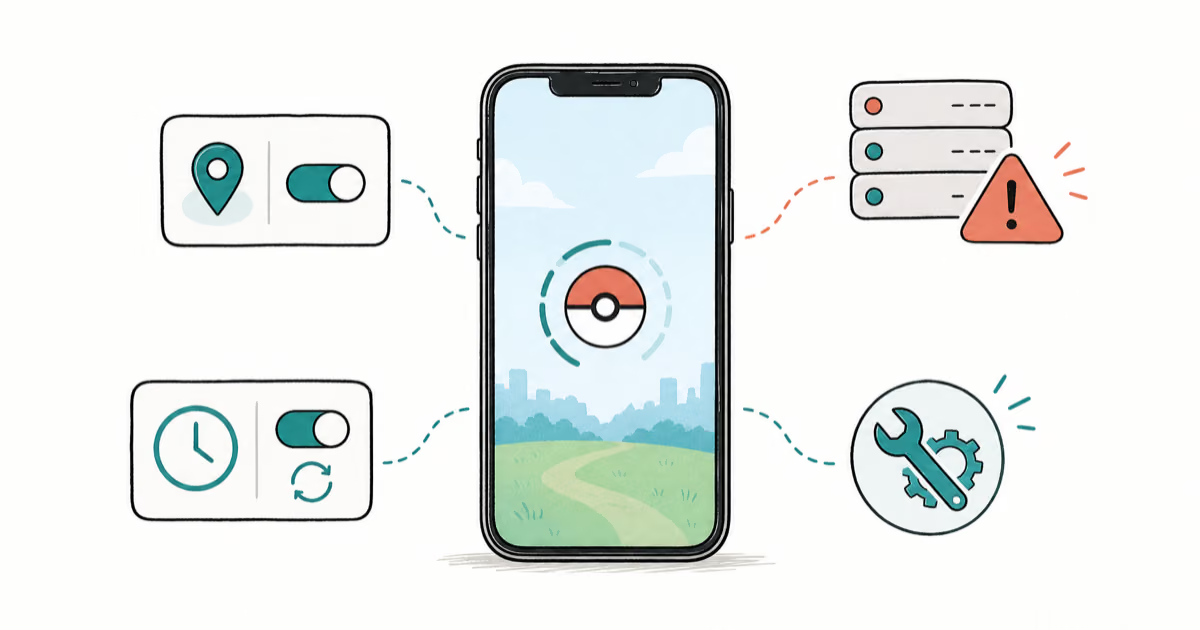
Pokemon GO Not Loading? Fix the Loading Screen 2026
Pokemon GO not loading or stuck on the Pokeball? Check server status, fix automatic date and time, grant location permission, clear the cache, and update.
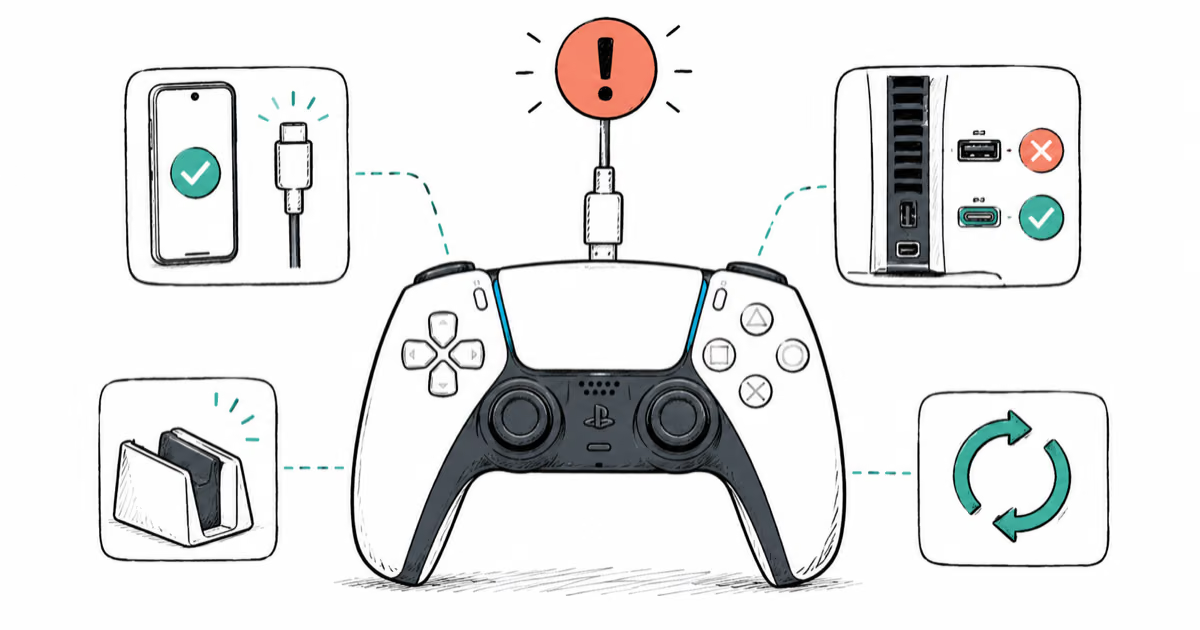
PS5 Controller Not Charging? 9 Fixes That Work (2026)
DualSense not charging? Swap the cable, use a rear port in Rest Mode, clean the USB-C port, and check power settings. 9 fixes for a dead PS5 controller.