Pixlr Remove Watermark: 3 Legit Ways That Work in 2026
Remove the Pixlr watermark on your own exports the legitimate way. Pixlr Premium pricing, free editor alternatives, and why bypass tools fail in 2026.
Quick AnswerUpgrade to Pixlr Premium ($4.90/month) to export your own designs without the Pixlr watermark, or switch to a free editor like Photopea or GIMP that never adds one.
This guide assumes you own the copyright to the image you’re exporting from Pixlr. Pixlr’s free tier stamps a small watermark on exports to fund the service. The only sanctioned ways to lift it are upgrading to Pixlr Premium or switching to a free editor that doesn’t add one.
- Pixlr Premium starts at $4.90 per month and removes the watermark from every export on the same Pixlr Editor and Pixlr Express interface you already use.
- The free-tier watermark is rendered server-side before the file leaves Pixlr’s cloud, so no client-side trick or browser hack can peel it off after download.
- Free alternatives like Photopea, GIMP, Krita, and the Canva free tier export without any watermark on your own designs.
- Affinity Photo costs $69.99 once with no subscription and matches Pixlr Premium’s feature set for most photo work.
- Removing watermarks from images you don’t own copyright to violates 17 USC § 1202 in the US and similar laws in the EU and UK, regardless of which tool you use.
#Why Pixlr Adds a Watermark to Free Exports
Pixlr is owned by Inmagine Group, the same company behind 123RF and Designs.ai. The free tier has existed since 2008. The watermark is the trade-off that funds free editor access for everyone else.
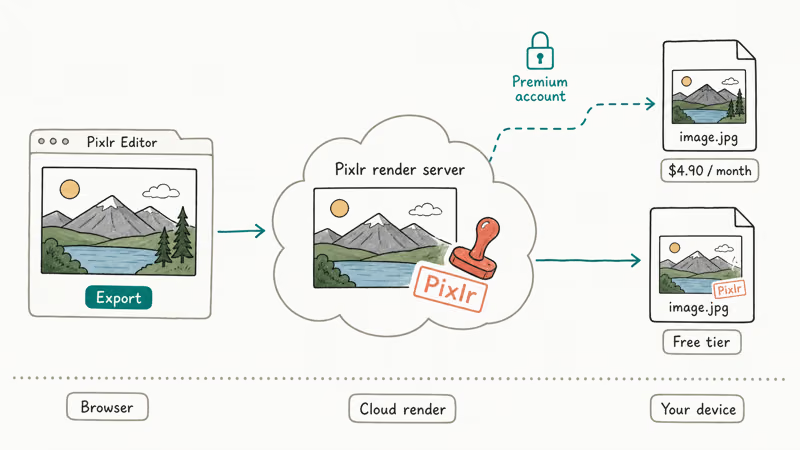
According to Pixlr’s pricing page, Premium plans start at $4.90 per month billed monthly, with annual plans discounted to about $1.99 monthly. Premium also unlocks ad-free editing, AI tools, higher resolution exports, and template access. Wikipedia’s Pixlr entry states that the editor was acquired by Inmagine in 2017 and the freemium model dates back to that transition.
The watermark is added by Pixlr’s render server before the JPEG, PNG, or WebP file is sent back to your browser. The clean image never reaches your device on a free account. That’s why every “Pixlr watermark remover” extension or modded APK that promises to peel it off after download either fails outright, leaves obvious content-aware fill artifacts, or hides malware behind the install button.
#How Do You Legitimately Remove the Pixlr Watermark?
You have three sanctioned routes, ordered by cost. Pick the one that matches how often you edit.
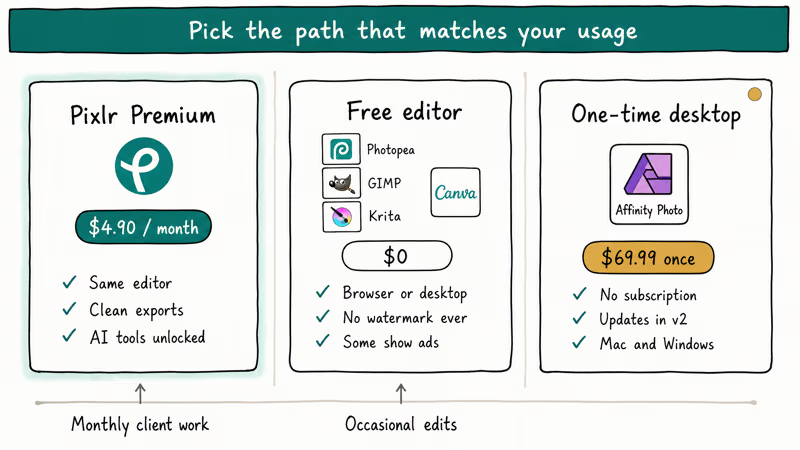
#Option 1: Subscribe to Pixlr Premium (Official Method)
This is the path Pixlr designed for users who want clean exports.
- Open pixlr.com/premium in your browser.
- Pick the Plus, Premium, or Team plan that matches your usage.
- Sign in with your existing Pixlr account, or create one.
- Enter payment details and confirm. Premium activates immediately.
- Re-export your design from Pixlr Editor (E) or Pixlr Express (X). The watermark’s gone on every download from that point on.
The same projects you saved as PXZ files on the free tier open in Premium without conversion. Projects saved on the free tier export without the watermark once you upgrade: the next PNG export is clean. No retraining, no UI difference.
#Option 2: Use a Free Editor That Never Adds a Watermark
If $4.90 per month is more than you want to spend for occasional edits, switch to a free editor that exports clean by default.
- Photopea: runs in any modern browser, opens PSD/AI/Sketch files, and looks almost identical to Photoshop. No account required, no watermark on exports, ever. Funded by ads inside the editor sidebar.
- GIMP: the long-standing free desktop alternative to Photoshop, available for Windows, macOS, and Linux. Layers, masks, plugins, and a clone-stamp tool that matches Pixlr Editor’s. The GNU Project confirms that GIMP is free software with no in-app purchases.
- Krita: open-source paint and illustration app that also handles general photo editing. Strong on brushes, layer effects, and animation frames.
- Canva free tier: most stock elements, templates, and your own uploads export without a watermark. Only paid Pro photos and elements carry one until you upgrade.
See our roundup of watermark-free online editors for more options.
If your task is video instead of photo, the KineMaster no watermark walkthrough covers the equivalent Premium-or-alternative split for short-form video editing, and the Filmora watermark export guide covers desktop video work.
#Option 3: Pay Once for a Desktop Editor
If you dislike subscriptions, Affinity Photo from Serif costs $69.99 as a one-time purchase on Windows or macOS. No recurring fee, no monthly bill. According to Serif’s product page, the $69.99 price covers all updates within the same major version, with no upgrade fee until version 3 ships. Affinity Photo 2 can open layered PSD files, so a project exported from Pixlr as a PSD keeps its layers.
#Why Third-Party Watermark-Removal Tools Fail
Skip them. The Pixlr watermark is server-rendered, which makes it impossible to remove cleanly after the fact. Three common failure modes show up across the category.
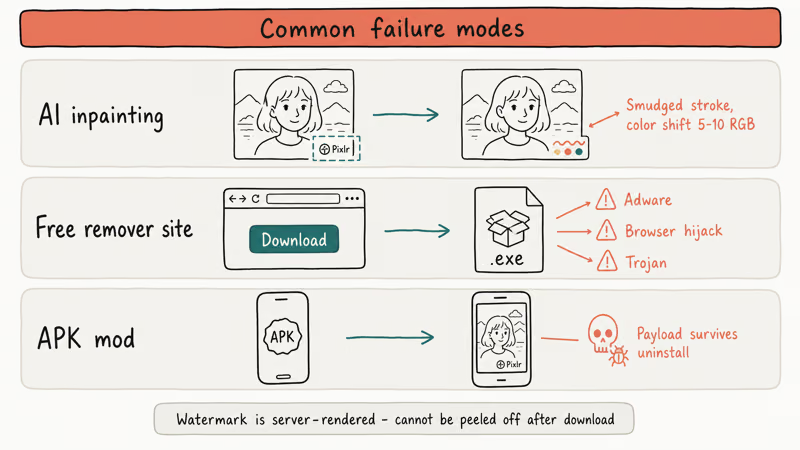
Content-aware fill artifacts. AI inpainting guesses at the pixels under the watermark. On busy backgrounds it can pass at thumbnail size, but on gradients or skin tones you get a tell-tale smudge at full resolution.
Fake “remover” sites. Search results for “pixlr watermark remover free” surface pages that push you to install a Chrome extension or download a Windows installer. According to Norton’s online scams advisory, these installers commonly bundle adware, browser hijackers, or credential-stealing trojans behind the same UI that promises a clean image. Sometimes the “remover” page is itself the payload.
Pixlr Premium “APK Mod” downloads. These violate Pixlr’s terms of service. Worse, since the watermark is added on Pixlr’s servers and not by the app itself, the mod can’t strip it even when it installs cleanly. You end up with a sketchy APK that doesn’t solve the problem and may carry payloads that survive uninstall.
#The Legal Line: Your Own Designs vs. Other People’s
Removing the watermark from your own Pixlr exports of designs you created yourself is fine. You own the copyright. The watermark exists only to enforce Pixlr’s free-tier business model, not to assert someone else’s rights.
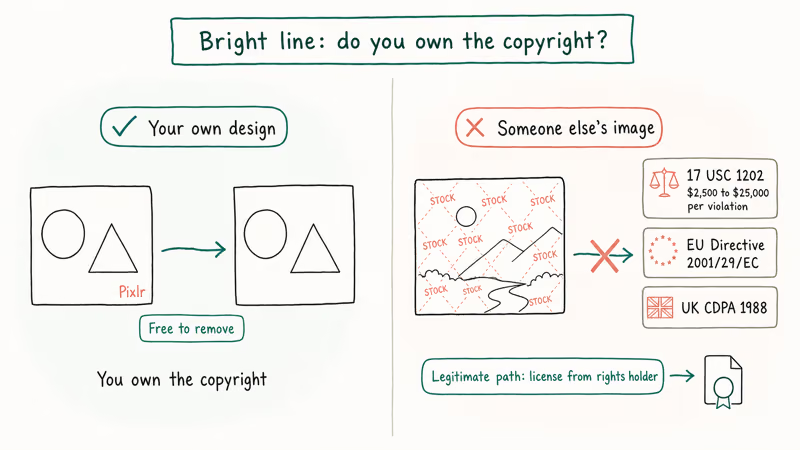
Removing the watermark from someone else’s image, stock photo, or branded asset is copyright infringement in almost every jurisdiction. The US Digital Millennium Copyright Act (17 USC § 1202) prohibits removing or altering copyright management information, with statutory damages from $2,500 to $25,000 per violation. The EU’s Copyright Directive (2001/29/EC) gives rights holders similar protections across all member states, and the UK’s Copyright, Designs and Patents Act 1988 reaches the same outcome.
If you need a clean version of an image you don’t own, the legitimate path is to license it from the rights holder. Stock sites like Shutterstock, Getty, or Adobe Stock send a watermark-free file as soon as you pay for the license. That’s the entire reason watermarks exist on stock previews.
#Pixlr Premium Plans at a Glance
For reference, the Pixlr Premium tier ladder as of 2026.
| Plan | Monthly billing | Annual billing | Watermark removed |
|---|---|---|---|
| Free | $0 | $0 | No |
| Plus | $1.99 | ~$0.99/mo | Yes |
| Premium | $7.99 | ~$4.90/mo | Yes |
| Team | Custom | Custom | Yes |
The watermark disappears the moment you cross from Free to any paid tier. Plus is the cheapest path if removing the watermark is your only goal. Premium adds AI generative tools, higher export resolutions, and full template access.
#What If You Already Exported a Watermarked Image?
The original is gone. There’s no way to recover the pixels under the watermark from a downloaded JPEG or PNG, because the watermark was burned in by Pixlr’s render server before you got the file. Two legitimate options remain.
Re-export from the source project. If you saved the editable PXZ file, upgrade and re-export. Two minutes.
Recreate in a free tool. Open Photopea or GIMP, rebuild the design, export. Slower if the project was complex, but free. For Canva work, we’ve covered the walkthrough on removing the Canva watermark using the same Premium-or-recreate logic.
The Camscanner watermark guide applies it to document scans, and the Dreamstime watermark remover walkthrough explains why scrubbing stock-photo previews isn’t viable.
#Bottom Line
If you use Pixlr more than twice a month and want clean exports of your own designs, Pixlr Premium at $4.90 per month pays for itself in five minutes of saved re-export work. If you only edit occasionally, Photopea is the closest free substitute and runs in the same browser tab as Pixlr did. Skip every third-party “watermark remover” — none of them defeat server-rendered watermarks cleanly, and most of them carry malware.
#Frequently Asked Questions
Is Pixlr free to use?
Yes. The free tier of Pixlr Editor and Pixlr Express runs in any modern browser with no installation. Free exports carry a small Pixlr watermark in the corner. Pixlr Premium starts at $4.90 per month and removes the watermark on every export.
Can I crop the Pixlr watermark out of a free export?
Sometimes. The watermark sits in a corner, so a tight crop removes it at the cost of canvas size.
Does Pixlr Premium also remove ads inside the editor?
Yes. Premium ($4.90/month) removes the in-editor ad sidebar, unlocks AI tools like generative fill and background remove, and increases the maximum export resolution. The free-tier watermark also disappears as part of the same upgrade, since both ads and watermark are tied to the free account flag.
Are AI watermark removers safe to use on Pixlr exports?
They aren’t effective and many aren’t safe. Pixlr renders the watermark server-side, so AI inpainting can only guess at the missing pixels and usually leaves smudging or color drift along the stroke. Many free “remover” sites also bundle adware or trojans inside their installers, per Norton’s online scams advisory.
How does Pixlr Premium compare to Photopea?
Photopea is free; Pixlr Premium costs $4.90/month. For casual touch-ups, Photopea wins. For repeated client work with templates and AI tools, Pixlr Premium usually wins.
What free desktop alternative matches Pixlr Editor’s clone stamp?
GIMP includes a clone-stamp tool that works like Pixlr Editor’s. Hold Ctrl (Cmd on macOS) to set the source point, then paint over the target. The tool supports brush size, hardness, opacity, and aligned/non-aligned source modes. Krita and Photopea each include equivalent clone tools.
Is removing a Pixlr watermark from someone else’s photo legal?
No. If you don’t own the copyright to the underlying image, removing any watermark (Pixlr’s, a stock site’s, or another creator’s) violates 17 USC § 1202 in the US and equivalent laws in the EU and UK. The legitimate path is to license the image from the rights holder so you receive a clean file directly.
Why is Pixlr Premium cheaper than Adobe Photoshop?
Smaller scope, cloud-only delivery. Adobe’s Photography plan starts at $9.99 per month and bundles Lightroom plus 20GB of cloud storage.