How to Fix iPhone Mute Switch Not Working (2026 Guide)
iPhone mute switch stuck or unresponsive? Clean debris, toggle Change with Buttons, force restart, or repair iOS to fix silent mode glitches.
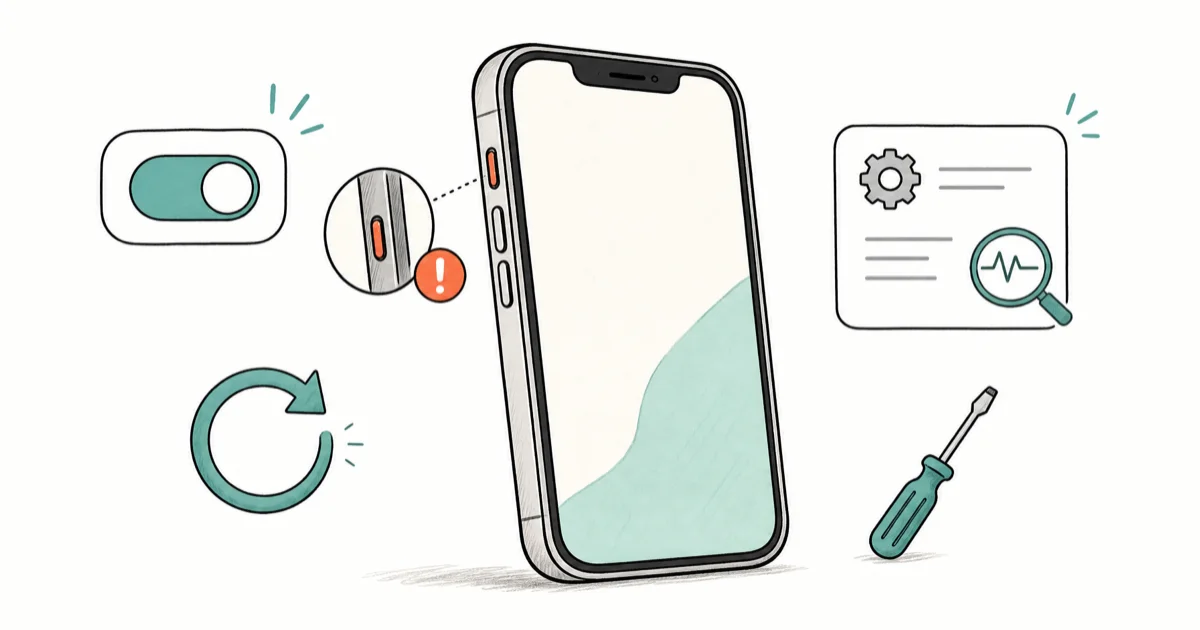
Quick AnswerIf your iPhone mute switch is stuck or unresponsive, toggle it ten times to clear debris, force restart the phone, then turn off Settings > Sounds & Haptics > Change with Buttons. If silent mode keeps switching on its own, run an iOS system repair tool or visit an Apple authorized service provider when the lever feels physically loose.
The iPhone mute switch is the small lever on the upper-left side that toggles silent mode in a single motion, and when it stops responding the entire alert system goes sideways. The fixes below cover the lint-clearing routine, a force restart, and a Standard Mode iOS repair, ordered from simplest to most involved.
- Mute switch errors fall into three buckets: physical debris under the lever, an iOS bug after a recent update, or hardware damage from drops or long-term wear.
- Toggling the switch ten times in a row often dislodges pocket lint, which is the single most common cause on devices older than two years.
Disabling Settings>Sounds & Haptics>Changewith Buttons stops the volume rocker from overriding the silent mode position and explains many “switching on its own” complaints.- A force restart clears transient iOS glitches without erasing any data, and it works the same on every iPhone from the 6s through the 16 Pro Max.
- If the lever feels loose or wiggly after a drop, software fixes won’t help, and an Apple authorized service provider is the right next step.
#Understanding the iPhone Mute Switch
The mute switch, officially called the Ring/Silent switch in Apple’s user guide, sits above the volume buttons on every iPhone. The exception is the iPhone 15 Pro family and every iPhone 16, where Apple replaced it with the configurable Action button.
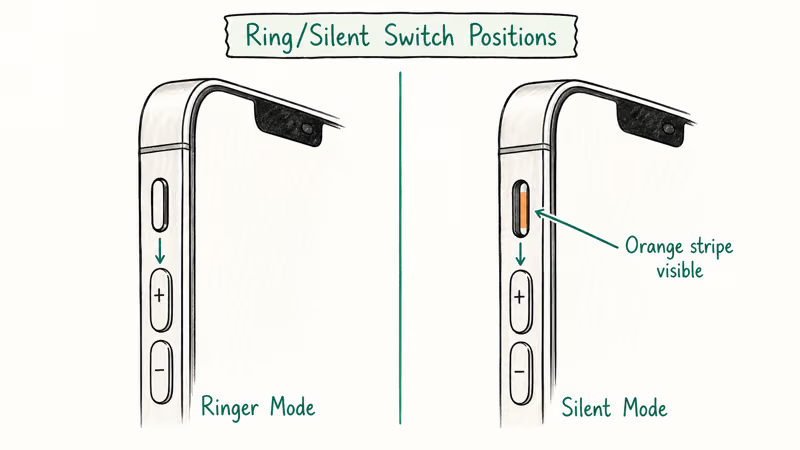
According to Apple’s iPhone 15 Pro support page, the Action button defaults to silent mode but can be reassigned to Focus modes, the camera, or shortcuts. If you’re on an iPhone 15 Pro or newer and silent mode is misbehaving, the troubleshooting flow below still applies, but you’re working with a button rather than a lever. Our iPhone Action Button setup ideas covers the 10 most useful assignments beyond the default silent toggle.
For every other iPhone, the switch has two positions. Pushed toward the back of the phone shows a thin orange stripe, which means silent mode is on. Flush with the side means ringer mode is on.
#Common Causes of an Unresponsive Mute Switch
Three causes explain almost every silent mode complaint:
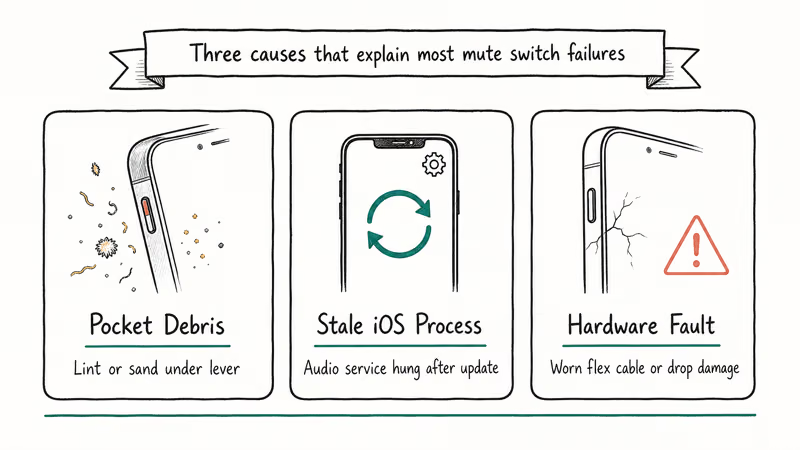
- Pocket debris. Lint, sand, or skin oils build up around the small gap where the lever moves. The switch registers an “in between” state and the iPhone interprets it inconsistently. This is by far the most common cause on older devices.
- A stale iOS process. A background audio service hangs after an iOS update or a long uptime, and the phone stops respecting the switch position until you reboot. Apple’s support note on restarting your iPhone confirms a reboot resolves a wide range of audio and notification glitches.
- A hardware fault. The internal flex cable behind the switch can wear out, or a drop can knock the lever off its track. This shows up most often on iPhone 6s, 7, and 8 units that are five or more years old.
Settings can also masquerade as a broken switch. Focus modes, DND schedules, and the Change with Buttons toggle all interact with how loud (or silent) your iPhone behaves, and they get blamed for switch failures that are really just configuration drift.
If your alerts are quiet for a different reason, our guide on why my iPhone won’t ring covers the deeper notification audio chain.
#Quick Triage: Is It the Switch or the Settings?
Before you open Apple’s support flow or buy a third-party repair tool, run this two-minute test on your own device:
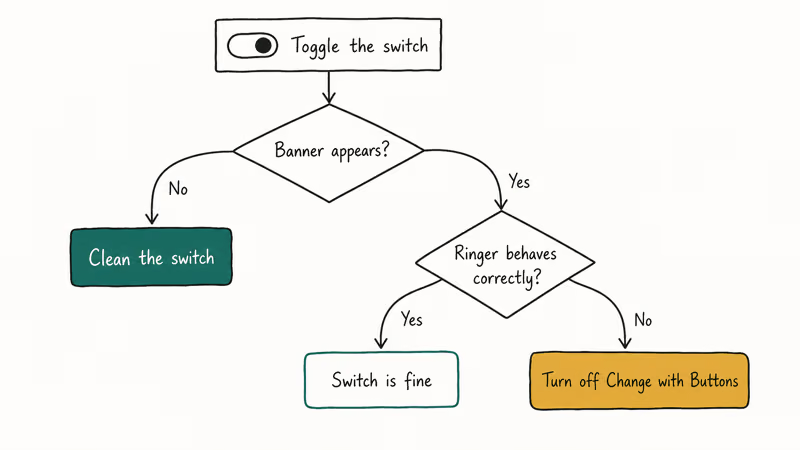
- Toggle the switch back and forth slowly while watching the screen. Each flip should show a banner that says “Silent Mode On” or “Ring Mode On.”
- If no banner appears, the switch itself isn’t registering. Skip to the cleaning step.
- If the banner appears but the actual ringer behavior is wrong, the switch is fine and a setting is overriding it. Move to the Change with Buttons fix.
On a healthy switch, the banner responds almost instantly on every toggle, and the on-screen indicator matches the lever position every time. A delay longer than two seconds, or a banner that flickers between states, usually means debris is wedged under the lever and the contact is intermittent.
#Step-by-Step Fixes That Actually Work
#Step 1: Clear Debris From the Switch
Hold the iPhone face-down. Toggle the switch ten times. Sweep a wooden toothpick along the gap.
Compressed air at low pressure works on the same gap, but keep the can upright to avoid spraying liquid propellant into the chassis. On an older iPhone with intermittent switch failures, the toggle-and-sweep routine often restores normal behavior right away.
Apple’s support article on cleaning your iPhone recommends a soft, slightly damp lint-free cloth for the exterior and warns against aerosol sprays, household cleaners, and anything abrasive.
#Step 2: Turn Off Change With Buttons
This setting is the hidden cause behind a lot of “my silent mode keeps switching on” complaints. When Change with Buttons is on, the volume rocker can override the physical switch position based on whatever audio source is active.
Open Settings > Sounds & Haptics. Drag the Ringer and Alerts slider to a level you actually want. Then turn off Change with Buttons. After this, your ringer volume only changes when you drag this slider, and the side buttons only affect media playback like Apple Music, podcasts, and video calls.
Turning this off resolves a large share of “switching on its own” complaints, including cases where a charging case bumps the volume rocker inside a pocket.
#Step 3: Force Restart Your iPhone
Force restart clears the audio daemon. The key combo depends on your model:
- iPhone 8, X, and newer (including iPhone 16): Press and release Volume Up. Press and release Volume Down. Hold the Side button until the Apple logo appears.
- iPhone 7 and 7 Plus: Hold the Side button and Volume Down together until the Apple logo appears.
- iPhone 6s and earlier: Hold the Home button and the Side (or Top) button together until the Apple logo appears.
Apple states that this hard reboot doesn’t erase any data. It’s the natural second step on any audio glitch, right after the cleaning routine.
#Step 4: Update iOS or Use a System Repair Tool
If the switch problem started after an iOS update or coincided with other glitches like the alarm not firing, a software fix is the next step. Open Settings > General > Software Update and install any available patches.
If iOS Update doesn’t help, try a system repair tool. iToolab FixGo handles 200+ iOS errors in Standard Mode without erasing data.
Some links on this page are affiliate links, which means fone.tips may earn a commission at no extra cost to you.
Dr.Fone System Repair offers a similar Standard repair flow plus iOS downgrade support, and Wondershare states that it’s compatible with the latest iOS releases. Both tools require connecting your iPhone to a Mac or PC over USB and downloading a matching firmware bundle.
Standard Mode keeps your data; deep repair modes don’t. Always confirm a fresh iCloud or computer backup before clicking Repair Now.
#Step 5: Rule Out Focus, DND, and Cases
If the ringer is still wrong after the steps above, two settings often hide in the background:
- Focus / DND.
Open Settings>Focus andcheck whether any Focus is set to a schedule or to “Smart Activation.” A Focus mode can mute calls and notifications regardless of the physical switch. Our piece on whether your alarm goes off on DND covers what stays audible inside DND so you can tell which silence is intentional. - Cases and pop sockets. A thick or warped case can sit on top of the switch and hold it halfway between positions. Slide the iPhone out and test the switch with the case removed. A budget MagSafe case that sits proud of the side rail is a common culprit.
If your iPhone keeps vibrating instead of ringing, that points to a Focus mode rather than the switch itself. Our guide on iPhone randomly vibrates walks through the haptic settings that can override your audible ringer.
#Why iOS Updates Sometimes Break the Mute Switch
A surprising number of mute switch reports cluster around the days after a major iOS release. The pattern is consistent: switch worked yesterday, today the ringer ignores it. This usually isn’t a hardware coincidence.
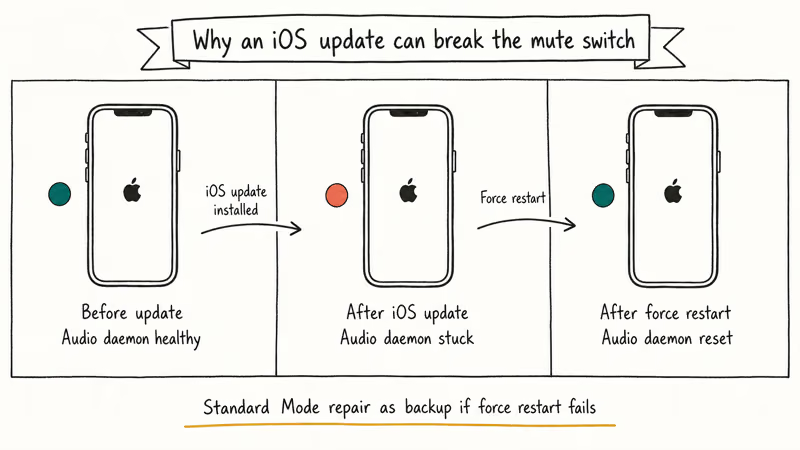
iOS updates re-initialize the audio service. On first boot, that service can get stuck. The fix is the force restart from Step 3.
If a single force restart doesn’t clear it, run the Standard Mode repair from FixGo or Dr.Fone. Both tools reflash the firmware partition that holds the audio daemon without touching your photos, messages, or apps. A complete Standard Mode run can take a fair amount of time, so plan to leave the phone connected.
For unrelated rattles or buzzes that you suspect might be confused with a mute switch issue, the iPhone alarm not going off guide covers the alarm subsystem, which has its own override paths. The iPhone battery capacity guide also explains why iOS updates sometimes change perceived battery and audio behavior at the same time.
#When Should You Stop Troubleshooting and Visit a Repair Shop?
Stop self-fixing and book a service appointment if any of the following are true:
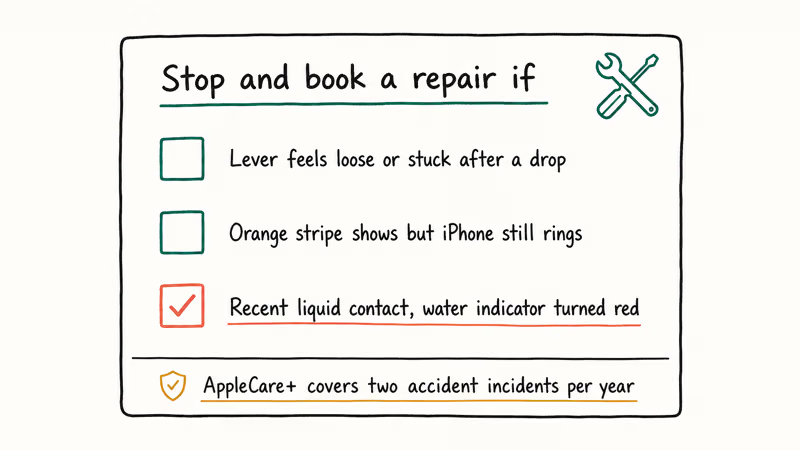
- The lever wiggles, feels loose, or sticks in one position after a drop.
- The orange silent stripe is visible but the iPhone still rings, and force restart plus a clean iOS install haven’t fixed it.
- Liquid contact occurred recently (the water indicator inside the SIM tray turns red after exposure).
Apple’s Get Service and Support page lets you book a Genius Bar visit or mail-in repair. AppleCare+ covers two accidental-damage incidents per year for a flat fee.
Independent shops can swap the switch flex cable for less. Read the parts disclosure first.
#Bottom Line
The iPhone mute switch fails for one of three reasons. The right fix depends on which one you’re facing.
If silent mode keeps switching on its own, turn off Change with Buttons and audit your Focus modes before you blame the hardware. If the switch is loose or unresponsive after a drop, skip the software steps and book a repair through Apple support.
Among the third-party tools, iToolab FixGo’s Standard Mode is the lower-risk first try because it preserves data while patching iOS-level glitches. Dr.Fone System Repair is a sensible second option, especially if you also need iOS downgrade support. Reach for either only after the free fixes (clean, restart, settings audit, official iOS update) have failed.
#Frequently Asked Questions
Why does my iPhone silent mode keep turning on by itself?
Usually one setting. The Change with Buttons toggle under Sounds and Haptics lets the volume rocker override the switch, which is the single biggest culprit behind random “ghost” silent mode toggles. Flip it off, then check whether a Focus mode is set to Smart Activation, since iOS enables focus profiles based on time or location without making it obvious. If the behavior persists, debris under the switch can also cause an in-between state.
Can I disable the iPhone mute switch entirely?
No. There’s no software toggle to disable the physical switch on models that have one.
Is it safe to clean around the mute switch with compressed air?
Yes, as long as you keep the can upright and use short, low-pressure bursts. Holding the can sideways or upside down can spray cold liquid propellant into the chassis.
Will a factory reset fix the mute switch?
A factory reset rules out software causes, but it’s overkill in most cases. Try a force restart and an iOS system repair tool first, since both keep your data. If you do go to Settings > General > Transfer or Reset iPhone > Erase All Content and Settings, take a fresh iCloud backup beforehand and verify the backup completed.
Does AppleCare+ cover mute switch repairs?
Yes, with conditions. AppleCare+ covers accidental damage and out-of-warranty hardware failures for a flat service fee that runs much lower than the full out-of-pocket repair price. A failed mute switch caused by ordinary wear typically falls under standard hardware coverage during the first year, and under AppleCare+ after that. Apple’s repair quote tool shows the fee before you book the service, so there are no surprises at drop-off.
How long should I expect a mute switch repair to take?
Same-day at a Genius Bar if the store stocks the part. Mail-in usually runs five to seven business days. Independent shops can often do the swap in a few hours.
Why did my mute switch stop working after iOS 17?
iOS updates can leave the audio daemon in a stuck state on first boot. A force restart usually clears it. If the issue persists after a reboot and a fresh iOS install, run a Standard Mode repair with iToolab FixGo or Dr.Fone System Repair, which patches firmware-level bugs without erasing your data.
Apple Siri Settlement: Who Qualifies and How to Claim
Apple's $250 million Siri settlement covers iPhone 15 Pro and iPhone 16 models bought June 2024 to March 2025. See who qualifies and how claims work.
iOS 26.6.1 Security Update: What Apple Fixed and Who Gets It
Apple released iOS 26.6.1 on August 17 with 29 security fixes, including an IPSec interception bug. See what it patches, who gets it, and how to update.
iPhone Adaptive Power: How It Works and When to Use It
Learn how iPhone Adaptive Power works, which models support it, what it changes, and when Low Power Mode is still the better battery-saving choice.
How to Transfer Data to a New iPhone Without iCloud
Move everything to your new iPhone without iCloud: Quick Start device-to-device transfer, wired migration, and encrypted Finder or iTunes backups.