iPhone Randomly Vibrates: 10 Fixes That Stop It (2026)
iPhone randomly vibrates with no notification? Stop phantom buzzes by toggling System Haptics, auditing notification settings, and isolating rogue apps.
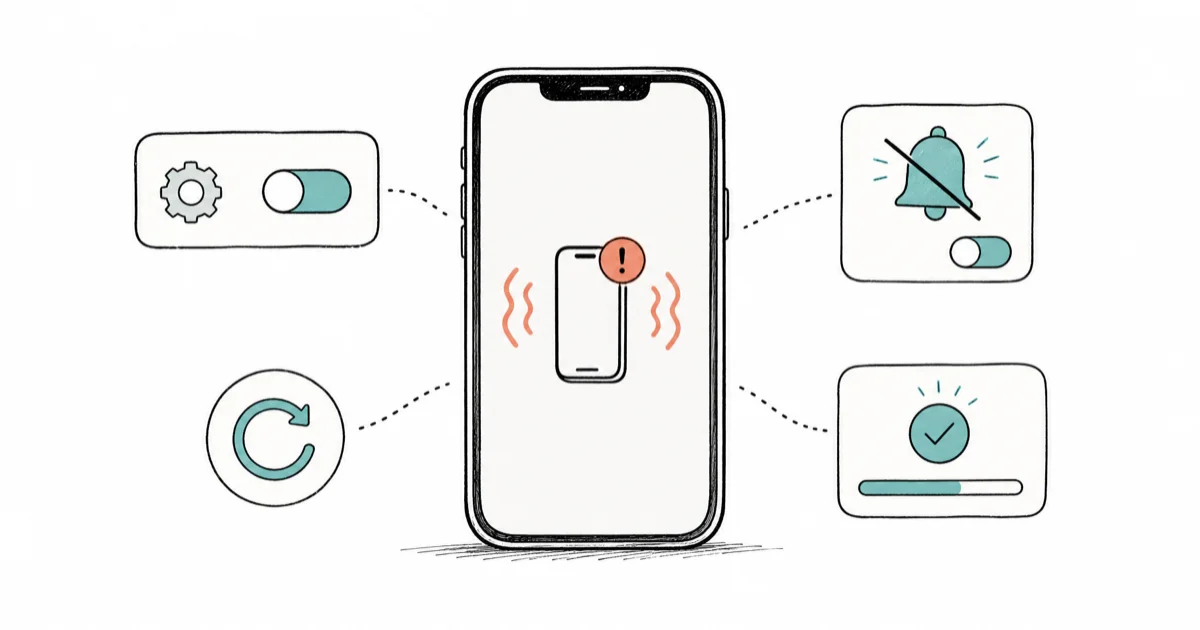
Quick AnswerOpen Settings, Sounds & Haptics, and turn System Haptics off. Then go to Settings, Notifications and disable alerts for apps you don't need vibrating in the background. If buzzes continue, force restart your iPhone, install the latest iOS, and uninstall any app installed in the past two weeks to spot a rogue trigger.
Your iPhone randomly vibrates and shows nothing on the lock screen. The cause almost always traces back to one of three places: a silent notification you forgot you allowed, a stuck System Haptics setting, or an app misbehaving in the background. The 10 steps below are ordered from quickest to most invasive, so start at the top.
- System Haptics is the single most common cause; toggling it off in Sounds & Haptics stops the large majority of phantom buzzes.
- Silent notifications often come from messaging, banking, and shopping apps with badges or sounds turned off but vibration left on.
- A force restart clears stuck haptic loops in under 30 seconds and won’t erase any data.
- Updating iOS fixes vibration regressions Apple has acknowledged in iOS 17.2 and 17.3 release notes.
- Hardware faults are rare; if vibrations continue after a Reset All Settings, book a Genius Bar appointment before paying for repair.
#Why Does My iPhone Vibrate for No Reason?
Random vibrations are almost never random. The buzz is a real haptic event, but the visual alert that should accompany it gets hidden, suppressed, or routed to a notification center you haven’t opened yet.
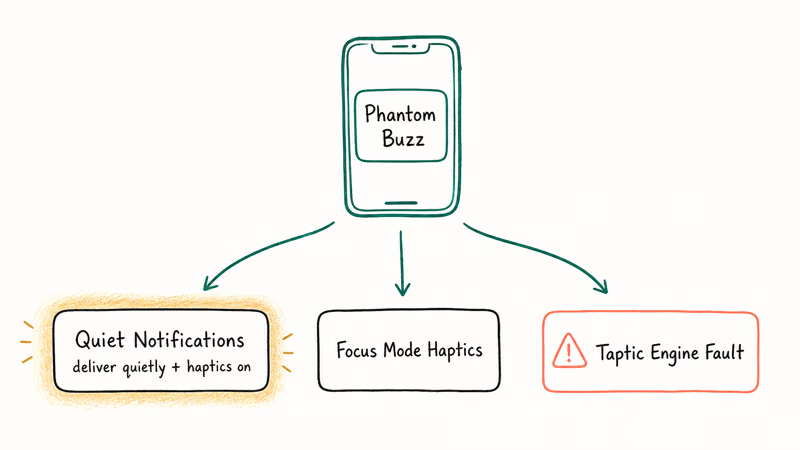
According to Apple’s notification customization guide, every app independently controls sounds, banners, and haptics, so an app set to “deliver quietly” will still vibrate unless you turn that off too. Mail, banking apps like Chase, and trading apps like Robinhood are common culprits, each capable of firing haptics with no visible banner at all.
Triggers cluster into 3 buckets. First, notification settings let an app vibrate without a banner. Second, Focus modes can allow haptics while silencing visuals. Third, hardware faults like a failing Taptic Engine account for a small fraction of cases and usually show up alongside a weak buzz or full haptic loss.
#Fix 1: Turn Off System Haptics First
System Haptics is the catch-all setting that powers tiny vibrations for keyboard taps, switch toggles, and pull-to-refresh. When the iOS haptic stack hangs, this is the toggle that releases it.
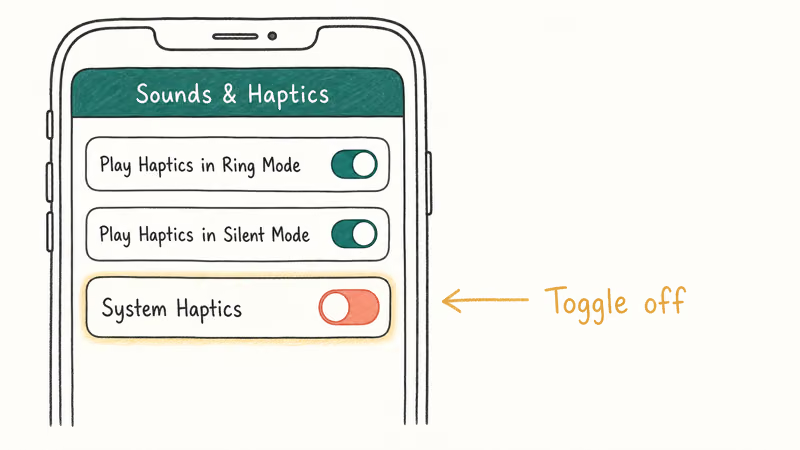
- Open Settings.
- Tap Sounds & Haptics.
- Scroll to the bottom and toggle System Haptics off.
This kills the majority of subtle phantom buzzes within seconds. It doesn’t affect call vibrations, alarm haptics, or accessibility taptics. After 24 hours of vibration-free use, you can flip it back on and see whether the issue returns. On a phone that has been buzzing every 10 to 15 minutes for days, the random pattern usually stops the moment this toggle goes off.
#Fix 2: Audit Notification Settings App by App
If turning off System Haptics didn’t fully fix it, you’ve got a notification source. Filter by recently active apps to spot the culprit fast.
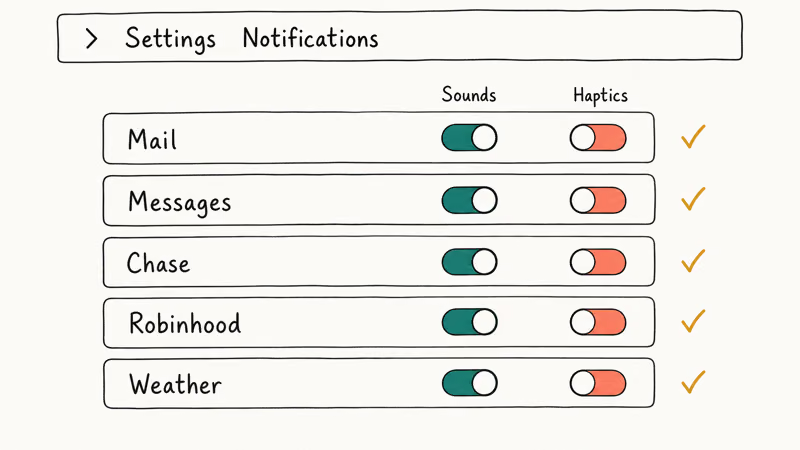
- Go to Settings then Notifications.
- Tap Show Previews and set it to Always temporarily; this surfaces hidden alerts.
- Open any app in the list, then check Sounds and the haptic options under it.
- Disable haptics for any app you don’t need buzzing in your pocket.
Mail, Messages, banking apps, and shopping apps are the usual suspects. As Apple’s iCloud Mail support guide explains, VIP and thread notifications run on a separate channel from regular Mail alerts, so you may need to toggle them individually. If you also rely on knowing when calls go through, our guide on why your iPhone won’t ring covers the related ringer and silent switch logic.
#Fix 3: Force Restart in 10 Seconds
A force restart wipes the volatile state that often holds a stuck haptic loop. It’s faster and more thorough than the slide-to-power-off method.
For iPhone 8 and later, including all Face ID models:
- Press and release Volume Up.
- Press and release Volume Down.
- Press and hold the Side button until you see the Apple logo (about 10 seconds).
For iPhone 7 and 7 Plus, hold Volume Down plus the Side button. For iPhone SE first generation, 6s, and earlier, hold Home plus the Top button. A phone stuck in a buzz-every-few-minutes loop after a point update often clears on the first force restart, since the reboot wipes the volatile state holding the stuck haptic loop.
#Fix 4: Update iOS to the Latest Build
Apple has shipped at least three iOS 17 patches that explicitly mention haptic regressions in the release notes. Running an older point release can keep you stuck with a known bug.
- Go to Settings, General, then Software Update.
- Tap Download and Install if a build is offered.
- Plug in and connect to Wi-Fi, then leave the phone alone for 20 to 30 minutes.
While you’re there, also tap Automatic Updates and turn on both Download and Install so you don’t fall behind again. If the install hangs, our walkthrough for iPhone stuck on preparing update shows the recovery steps.
#Is It a Hardware or Software Issue?
This is the question that decides whether the next steps stay free or get expensive. Three quick tests separate the two.
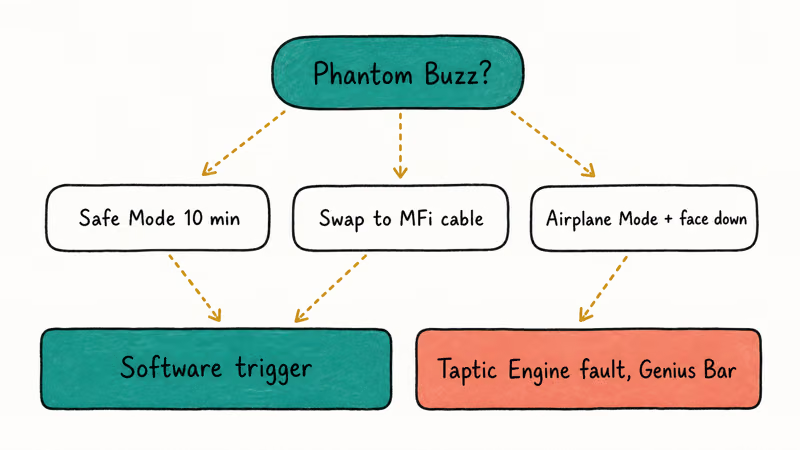
First, boot into Safe Mode by holding Volume Up during startup. Watch for buzzes for 10 minutes; a vibration-free Safe Mode points to a software trigger.
Second, swap cables.
Plug into a wall charger using an Apple-certified Lightning or USB-C cable, since a frayed or counterfeit cable can fire connection-event vibrations every few seconds even when nothing else changed.
Third, place the phone face-down on a flat surface for 60 seconds with no SIM, no Wi-Fi, and Airplane Mode on. If it still buzzes in this isolated state, the Taptic Engine may be at fault and a Genius Bar visit becomes the next step.
#Fix 5: Reset All Settings Without Erasing Data
Reset All Settings rebuilds every preferences file iOS keeps, including the haptic stack, without touching photos, messages, or apps. It’s the heaviest software fix that still preserves your data.
- Go to Settings, General, Transfer or Reset iPhone.
- Tap Reset, then Reset All Settings.
- Enter your passcode and confirm.
The phone restarts twice and lands at your home screen with default Wi-Fi, Bluetooth, wallpaper, and notification preferences. You’ll need to rejoin Wi-Fi networks and re-pair Bluetooth devices, but Apple ID, iMessage, and Health data stay intact. If your phone gets stuck during this process, our iPhone stuck on Apple logo guide has the recovery flow.
#Fix 6: Identify Rogue Apps With the Battery Graph
A misbehaving app often shows up as both a vibration source and a battery hog. Settings has a hidden timeline that pinpoints which app was active at each buzz.
- Go to Settings, Battery.
- Tap Last 24 Hours.
- Look for any app with high background activity that you don’t actively use.
Cross-reference the spikes with the time stamps of vibrations you remember. Common offenders include weather apps with severe-alert haptics enabled, fitness trackers that buzz on every step goal, and email clients that haptically alert on every sync. Delete the suspect app for 48 hours, then re-evaluate. If your phone is also draining power abnormally, our iPhone battery dying fast guide has more diagnostics.
#Fix 7: Replace or Reseat Your Charging Cable
Bad cables fire ghost connect-disconnect events. A frayed third-party cable can produce repeated buzzes whenever the phone moves on the desk, as each loose contact registers as a fresh plug-in.
Unplug the cable and watch for 15 minutes; if the buzzes stop, the cable is the cause. Switch to an Apple-branded or MFi-certified cable, and inspect the Lightning or USB-C port for lint with a flashlight. A wooden toothpick clears most port debris safely. If you keep seeing the Trust This Computer popup when plugging in, that’s another symptom of an unstable connection.
#Fix 8: Disable Vibrate on Silent and Vibrate on Ring
The two master switches at the top of Sounds & Haptics control whether haptics fire in Ring mode and Silent mode. Turning both off creates a fully silent, vibration-free phone.
- Go to Settings, Sounds & Haptics.
- Toggle Play Haptics in Silent Mode off.
- Toggle Play Haptics in Ring Mode off.
This is the right move if you only need vibrations for alarms and emergency alerts. Both still fire for system-level events even when these toggles are off. Be aware this can change how alarms behave during Focus modes; our note on whether alarms still go off in DND covers the interaction.
#Fix 9: Clear Stuck Haptics With Custom Vibration Patterns
If a single contact or app is the trigger, assigning a unique vibration pattern makes the source obvious next time it buzzes. It also flushes the haptic profile cache, which sometimes resolves stuck patterns.
- Go to Settings, Sounds & Haptics, Ringtone.
- Tap Vibration, then Create New Vibration.
- Tap a rhythm on the screen, name it, and save.
Now go into Contacts, open a frequent caller, tap Edit, and assign the new vibration. Repeat for any contact you suspect. The next phantom buzz that matches your custom pattern tells you exactly which contact or app channel is firing.
#Fix 10: Erase All Content and Settings as a Last Resort
A factory reset is the final software fix. It wipes the device, so back up first.
- Open Settings, General, Transfer or Reset iPhone.
- Tap Erase All Content and Settings.
- Sign in to iCloud when prompted and confirm.
Before the reset, run an iCloud Backup from Settings then your name then iCloud then iCloud Backup, and confirm the backup completed within the last hour. After the reset, set up the phone as new for a full diagnosis.
If vibrations stop with a clean install but return after restoring from backup, a synced setting or app is the culprit. If the issue persists on a brand-new install, that’s the strongest signal it’s hardware. According to Apple’s reset and erase article, the process completes in 10 to 30 minutes depending on storage size.
#When to Take Your iPhone to Apple
Three signals mean software fixes won’t help and you should book a Genius Bar slot:
- The phone vibrates in Safe Mode with no SIM and Airplane Mode on
- The Taptic Engine produces an audibly different click than another iPhone of the same model
- Vibrations continue after a clean Erase All Content and Settings with no apps or data restored
According to Apple’s repair pricing page, out-of-warranty Taptic Engine replacements run roughly the same as a battery service, and AppleCare+ usually covers them under accidental damage. Bring the phone in fully charged, with Find My turned off if you can, to speed up the diagnostic. While you’re there, mention any other symptoms such as green lines on your iPhone screen so the technician can run all the relevant tests.
#Bottom Line
Start with Fix 1, System Haptics off, then work through Fix 2, the notification audit. Together these two steps resolve the issue for most readers in under five minutes.
If buzzes continue after Fix 5, Reset All Settings, and you’ve already replaced the cable in Fix 7, book a Genius Bar slot instead of trying more software steps. Reinstalling apps for another hour won’t catch a Taptic Engine fault. Treat Fix 10, Erase All Content and Settings, as a true last resort because the time cost of restoring everything is real.
#Frequently Asked Questions
Why does my iPhone vibrate once with no notification?
A single buzz with nothing on screen is almost always a notification you set to deliver quietly, a Focus mode allowing haptics, or a system event like a SIM registration. Open the Notification Center by swiping down from the top-left to see if a hidden alert just landed.
Will Reset All Settings delete my photos or messages?
No. Reset All Settings only clears preferences such as Wi-Fi passwords, wallpaper, and notification settings. Your photos, messages, contacts, and installed apps stay in place, though you’ll need to reconnect to Wi-Fi networks afterward.
How can I tell if my Taptic Engine is broken?
Long-press your home screen and compare the click to another iPhone of the same model. A failing Taptic Engine sounds rattly, weaker, or silent.
Do third-party apps really cause random vibrations?
Yes. Weather, banking, fitness, and email apps frequently buzz without showing a banner if you turned visual alerts off but left haptics on. Check Settings then Notifications for each app and either disable haptics or turn off background refresh in Settings then General then Background App Refresh.
Can a software update introduce new vibration bugs?
Yes. Apple announced fixes for haptic bugs in 3 separate iOS 17 release notes (17.2, 17.3, 17.3.1). Install the next point release as soon as it ships.
Why does my iPhone vibrate when charging at night?
Connection-event haptics fire every time the phone detects a plug or unplug, so a loose cable or worn port creates a vibration every few seconds. Try a different MFi-certified cable, switch wall adapters, and clear any lint from the Lightning or USB-C port with a wooden toothpick.
Does turning off System Haptics break Apple Pay or alarms?
No. System Haptics only controls subtle interface feedback like keyboard taps and switch flips. Apple Pay confirmation buzzes, alarms, and incoming call vibrations all use independent channels and keep working.
Apple Siri Settlement: Who Qualifies and How to Claim
Apple's $250 million Siri settlement covers iPhone 15 Pro and iPhone 16 models bought June 2024 to March 2025. See who qualifies and how claims work.
iOS 26.6.1 Security Update: What Apple Fixed and Who Gets It
Apple released iOS 26.6.1 on August 17 with 29 security fixes, including an IPSec interception bug. See what it patches, who gets it, and how to update.
iPhone Adaptive Power: How It Works and When to Use It
Learn how iPhone Adaptive Power works, which models support it, what it changes, and when Low Power Mode is still the better battery-saving choice.
How to Transfer Data to a New iPhone Without iCloud
Move everything to your new iPhone without iCloud: Quick Start device-to-device transfer, wired migration, and encrypted Finder or iTunes backups.