Will My Alarm Go Off on Do Not Disturb? (iPhone & Android)
Learn why default Clock alarms usually override DND on iPhone and Android, plus volume, Focus, Bluetooth, and third-party alarm edge cases before bed.
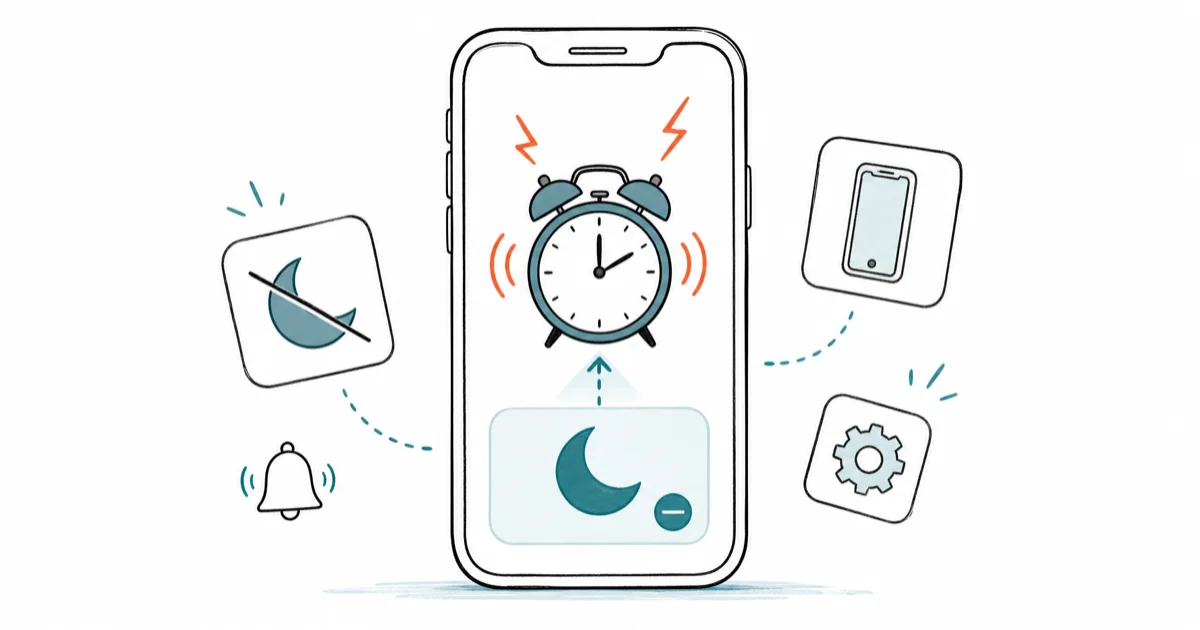
Quick AnswerYes, your alarm will still go off when Do Not Disturb is on. Alarms set in the built-in Clock app override DND on both iPhone and Android, even when the ringer is silenced or a Focus is active.
Your alarm will go off when DND is enabled. Both iPhone and Android treat alarms set in the stock Clock app as system-level events, so DND, silent mode, and Focus profiles can’t silence them. The few exceptions usually come from volume, audio routing, or third-party alarm apps.
Short version: stock alarm, default Clock app, you’re fine.
- Stock Clock app alarms on iPhone and Android always sound during DND
- iOS Focus modes such as Sleep, Work, and Personal won’t silence Clock alarms
- Silent mode and the iPhone mute switch never affect alarm volume
- Third-party alarm apps aren’t guaranteed to override DND — test them before relying on one
- Bluetooth speakers and headphones can reroute the alarm sound and make it harder to hear
#Why Alarms Override DND by Design
Apple and Google built DND to silence notifications, calls, and messages, not scheduled alarms. The reasoning is straightforward. People use DND most often at night, and the most common job of a scheduled alarm is to wake them up. Silencing one would defeat the other, so the platforms split alarm audio away from the notification volume stream early in the OS design.
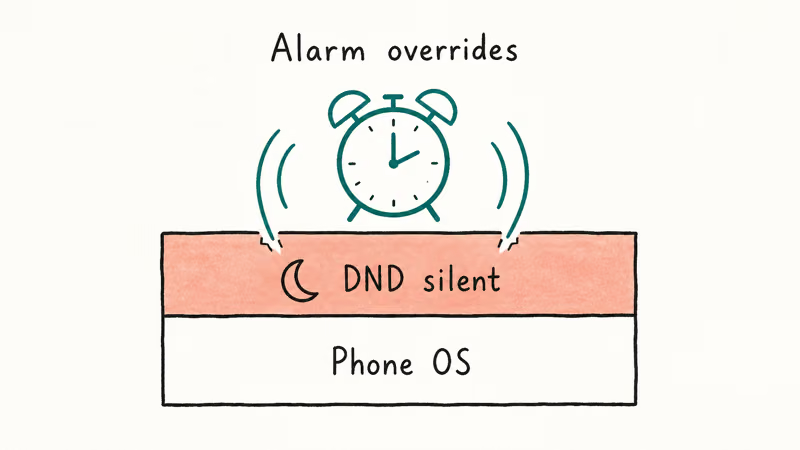
According to Apple’s iPhone User Guide for iOS 18, alarms set in the Clock app play even when iPhone is set to silent or has a Focus turned on. The alarm uses its own slider (Ringer and Alerts) and routes audio to the device speaker regardless of the silent switch position, which is why setting the ringer to mute won’t kill your morning wake-up.
Google’s Android Help documentation confirms that alarms continue to sound when DND is on across Android 11 and later. Alarms are exempted from the DND rule set, alongside media and touch sounds.
That exemption is the entire reason a 7 a.m. wake-up still rings after you’ve muted everything else at midnight.
When stock alarms fail, the cause is usually a user-configurable problem: volume turned to zero, the alarm toggle switched off, a non-default alarm app that hasn’t requested the right permissions, or a Bluetooth device that swallowed the sound.
#Does the iPhone Alarm Ring on DND?
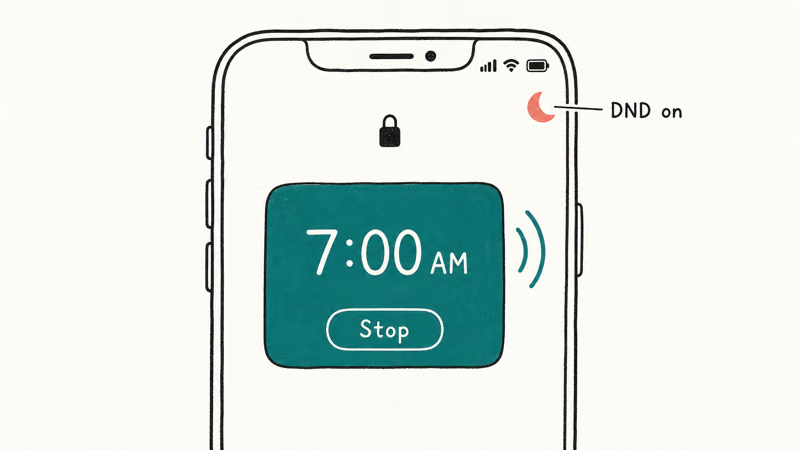
Yes. Apple’s Clock alarms are designed to sound during DND, silent mode, and Focus profiles, using the Ringer and Alerts volume you’ve set.
Loud. Clear. On time.
Sleep Focus dims the lock screen and silences notifications, but Clock alarms still use the alarm audio path. If yours isn’t ringing during sleep mode, the cause is almost always alarm volume or a deeper bug rather than DND interaction, and our guide on an iPhone alarm not going off walks through the fixes.
A few iPhone-specific points worth knowing before bed:
- The Ring/Silent switch and silent mode never silence alarms. That’s by design.
- Custom Focus profiles inherit the same rule. You don’t need to add “Clock” to an allowed-apps list.
- Alarm volume is controlled by the Ringer and Alerts slider in Settings, not the side volume buttons (unless Change with Buttons is enabled).
- If your alarm is paired with a song from Apple Music or a downloaded track, the audio can still play. A missing or removed track falls back to the default Radar tone.
#Will Android Alarms Go Off With DND Enabled?
Yes, though the picture is slightly more varied than on iPhone. Galaxy and Pixel defaults treat Clock alarms as DND exceptions.
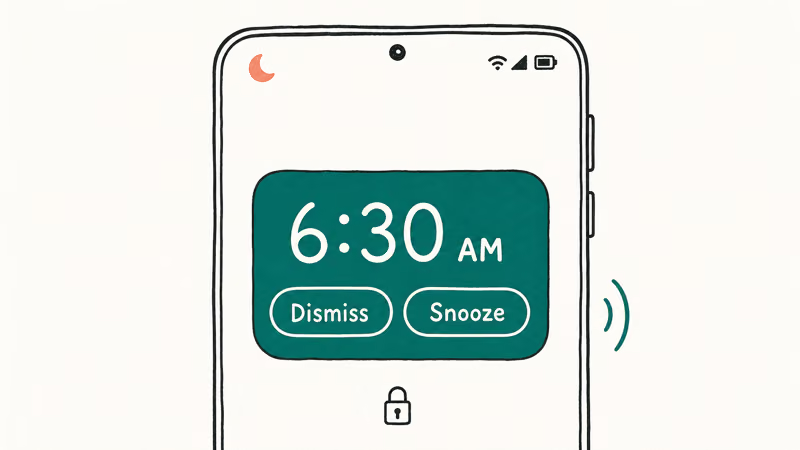
Samsung’s support documentation states that alarms in Galaxy Clock are exempt from DND on Android 12 and later. Pixel devices behave the same way out of the box because stock Android uses a dedicated alarm channel that ignores DND by default.
The Android ecosystem has a few wrinkles you should know about, especially if you use a manufacturer skin or a third-party clock app.
Some older Samsung devices on Android 10 and earlier shipped with a “Hide alarms” toggle inside DND settings. If that toggle was ever turned on, alarms can be muted during DND. The setting was removed in Android 11, but if you’ve upgraded from an older device and brought settings forward, it’s worth checking once.
Manufacturer skins such as Xiaomi MIUI, OPPO ColorOS, and OnePlus OxygenOS sometimes treat DND categories differently. Go to Settings > Notifications > DND > Exceptions to confirm that Alarms is allowed.
If you swapped to a third-party alarm app such as Sleep as Android or Alarmy, the app needs notification permission and a DND override toggle for its category. Without that, it can be silenced. Google’s Android Help center recommends keeping system alarms in the default Clock app when you want guaranteed reliability with DND.
#When Alarms Can Still Fail on DND
Even though the alarm-DND interaction is well-behaved, alarms do occasionally fail. The cause is rarely DND itself. The real culprits live elsewhere.
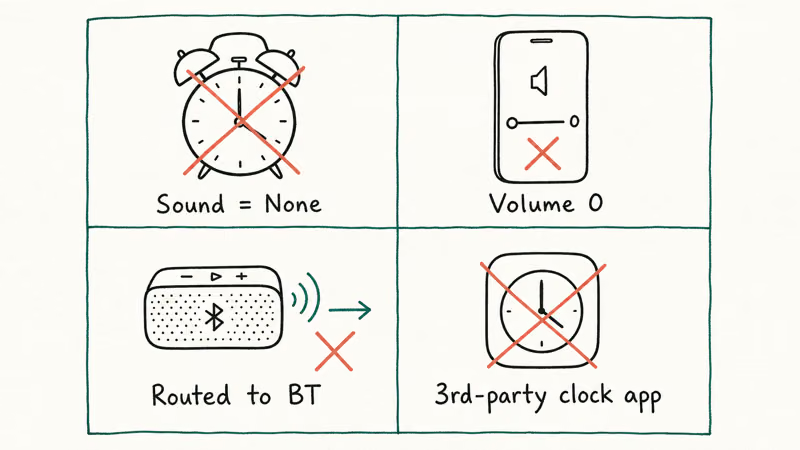
Volume set to zero. The alarm sound has its own volume on both platforms. Drag the alarm or Ringer slider to a level you can hear from across the room before going to bed.
Bluetooth audio routing. When your phone is paired with AirPods, a watch, or a speaker, alarms often route through the connected device. That can mean a very loud bedside speaker or a barely audible buzz in an earbud sitting on the nightstand. If your AirPods aren’t in your ears at alarm time, our guide on why an iPhone won’t ring covers the audio-routing fixes that apply to alarms too.
Third-party alarm apps without the right permission. Apps like Sleep Cycle, Alarmy, and Sleep as Android can override DND, but only after you grant the relevant permissions. On Android 14, the permission lives at Settings > Apps > [App] > Notifications > Allow notifications + Override DND.
Background app refresh disabled. Restricted background tasks can stop a third-party alarm from firing.
Power-saving modes. Some aggressive battery saver settings on Android postpone scheduled tasks. The stock Clock app is usually whitelisted, but custom alarm apps aren’t.
Outdated software. Bug fixes for alarm reliability ship in OS updates. Apple’s release notes for iOS 16.0 and 16.0.1 both shipped fixes for alarm issues that affected users on those builds.
Keep your phone updated when alarms feel unreliable.
If you’re seeing unrelated weirdness like your phone randomly vibrating at odd times, that’s a separate notification or haptic issue. It won’t usually affect whether your alarm rings.
#Settings to Lock Down Before You Sleep
A reliable alarm is mostly about the settings you set before lights-out, not the DND switch you flip at bedtime. Run through this short checklist whenever you set a new device or finish a major iOS or Android update, because that’s when alarm-related defaults tend to drift.
Confirm the alarm is on. Tap the alarm tile in the Clock app and look for the highlighted toggle. A grayed-out alarm won’t fire.
Set Ringer and Alerts (iPhone) or Alarm volume (Android) to a level loud enough to wake you. The system stores it separately from media and ringtone volume, so a quiet movie at 11 p.m. won’t drag the alarm down.
Stash Bluetooth audio. AirPods left on the nightstand are the single most common reason a “broken” alarm wasn’t actually broken.
Pick a default Clock app. Use the built-in app rather than a third-party one when you can. The stock app is the only setup with a guaranteed DND override.
Enable Bedtime or Sleep Focus if you want a calmer lock screen. Apple’s Sleep Focus and Google’s Bedtime mode both pass alarms through, so you get peace and a reliable wake-up at the same time.
#How to Test Your Alarm With DND On
You don’t have to trust the documentation. A two-minute test is the only way to be sure your specific phone, OS version, and audio routing behave the way you expect. Run it after setting up a new device, installing a major OS update, changing a Focus profile, or pairing a new pair of Bluetooth earbuds.
- Open the Clock app and set a new alarm for two minutes from now.
- Set the alarm volume to a comfortable level using the Ringer and Alerts slider (iPhone) or the alarm volume slider in
Settings>Sound(Android). - Enable DND from Control Center (iPhone) or Quick Settings (Android).
- Lock the phone and wait.
- Confirm the alarm rings at the expected volume.
If it does, your DND configuration is good. If it doesn’t, repeat the test with the phone set to ring/silent, Bluetooth audio disconnected, and any non-default alarm app uninstalled. That sequence helps isolate the cause.
For high-stakes mornings, set two alarms five minutes apart on different devices.
#Bottom Line
Set your alarm in the stock Clock app, leave DND on if you want, and go to sleep. The default behavior on both iPhone and Android is exactly what you want.
Alarms ring. Everything else stays quiet. The only situations where this breaks are when you’ve swapped the alarm app, paired audio that reroutes the sound, or muted the alarm volume itself. Run the two-minute test once after any major OS update and you’ll know your setup is reliable until the next one.
#Frequently Asked Questions
Will my alarm sound if my phone is on silent mode?
Yes. The silent/ring switch on iPhone and the ringer mute toggle on Android only silence notifications and ringtones, not Clock app alarms. Your alarm uses the dedicated Ringer and Alerts (iPhone) or Alarm (Android) volume, and those sliders are stored separately from media volume, so the level you set at bedtime is the level your alarm plays back in the morning regardless of the silent toggle’s state.
Does Sleep Focus on iPhone mute alarms?
No. Sleep Focus dims the lock screen, hides notifications, and silences calls, but Clock alarms are still allowed through. Apple designed Focus profiles to inherit the same alarm exemption as DND.
Do calendar event alerts ring during DND?
Calendar alerts are notifications, not alarms, so DND silences them by default. To wake up to a calendar event, recreate it as a Clock alarm instead.
Can a third-party alarm app override DND?
Sometimes. Apps like Alarmy, Sleep as Android, and Sleep Cycle can override DND on both iPhone and Android, but only after you grant the right notification permission and a Critical Alerts entitlement (iOS) or DND override toggle (Android). Test before relying on it.
Why is my alarm so quiet through AirPods?
When AirPods are connected, the alarm routes through them instead of the iPhone speaker. If the AirPods are out of your ears or in their case, the audio drops to a low volume or stops entirely. Disconnect AirPods at bedtime, or switch to a wired routine, to keep the alarm on the phone speaker where you can hear it.
Does DND affect alarm vibration?
No. The alarm’s vibration pattern follows the alarm setting, not the DND profile. If you’ve set the alarm to vibrate plus sound, both will fire even with DND on.
What happens to alarms during Bedtime or Sleep mode on Android?
Pixel and most stock-Android devices keep alarms on during Sleep mode. The screen goes grayscale and notifications mute, but the Clock alarm rings as scheduled. Samsung’s Bedtime mode behaves the same way and even shows a small alarm reminder on the lock screen the evening before, so you can confirm before you doze off.
Should I worry about alarms during iOS or Android updates?
Major OS updates have occasionally caused alarm bugs, including a well-known iOS 16.0 issue. Run the two-minute test after every major version bump and keep your phone updated through Settings > General > Software Update (iPhone) or Settings > System > Software update (Android).
Apple Siri Settlement: Who Qualifies and How to Claim
Apple's $250 million Siri settlement covers iPhone 15 Pro and iPhone 16 models bought June 2024 to March 2025. See who qualifies and how claims work.
iOS 26.6.1 Security Update: What Apple Fixed and Who Gets It
Apple released iOS 26.6.1 on August 17 with 29 security fixes, including an IPSec interception bug. See what it patches, who gets it, and how to update.
iPhone Adaptive Power: How It Works and When to Use It
Learn how iPhone Adaptive Power works, which models support it, what it changes, and when Low Power Mode is still the better battery-saving choice.
How to Transfer Data to a New iPhone Without iCloud
Move everything to your new iPhone without iCloud: Quick Start device-to-device transfer, wired migration, and encrypted Finder or iTunes backups.