How to Become a Professional Gamer: A 2026 Field Guide
Master one tier-one esport, climb to top ranked, stream from day one, and qualify for open tournaments. The realistic path to pro gaming, no shortcuts.
Quick AnswerTo become a professional gamer, master one tier-one esport, push to the top 1% in ranked queue, build at least 1,000 followers on a streaming platform, and qualify for open tournaments before approaching esports organizations. Plan for two to four years of full-time practice.
Going pro in 2026 is a real career path, but it isn’t a lottery ticket. The professional gamer route takes three things in the right order: rank, audience, and tournament results. The realistic version below is less flashy than the version that gets clipped into hype videos.
- Twitch Affiliate, the first paid creator tier, requires 50 followers, 8 hours streamed across 7 different days, and 3 average concurrent viewers within a rolling 30-day window.
- Tier-one esports concentrate the prize pools. The International 2021 paid out over $40 million, and Valorant Champions 2024 distributed $2.25 million among 16 teams.
- Skills transfer cleanly between tactical shooters: many Valorant pros came directly from CS and Overwatch ranks, not from scratch.
- Sponsorships scale with audience size, so a mid-tier player with a steady stream often earns more than a higher-ranked player who never broadcasts.
- Treat practice like a full-time job. Daily ranked queue, vod review, and aim training for two to four years are the norm before pro contracts arrive.
#What Counts as a Professional Gamer Today?
A professional gamer earns the bulk of their income from competitive play, content creation, or both.
The old definition (someone paid to play) is too narrow now. The modern pro stacks four revenue streams: tournament prize money, team salary, sponsorships, and streaming or content revenue. Almost nobody earns enough from prize money alone.
Prize money alone rarely supports a full career outside the top teams in titles like Counter-Strike 2, Dota 2, and League of Legends.
Wikipedia’s esports article states that competitive gaming was an official medal event at the 2022 Asian Games, putting it on the same competitive footing as table tennis and skateboarding. The IOC has since opened formal Olympic Esports Series events, and major broadcast networks now carry tier-one finals alongside traditional sports rights packages, so the institutional infrastructure is finally catching up to the audience that built it.
That recognition is recent. It’s what unlocked the current sponsorship boom and turned “pro gamer” into a real job title. Below tier-one ranked, you’re a competitive enthusiast with side income, not a pro.
#How Much Do Pro Gamers Actually Earn?
The honest answer: it’s a long pyramid. The top is brutal, the middle is livable, and the bottom pays nothing.
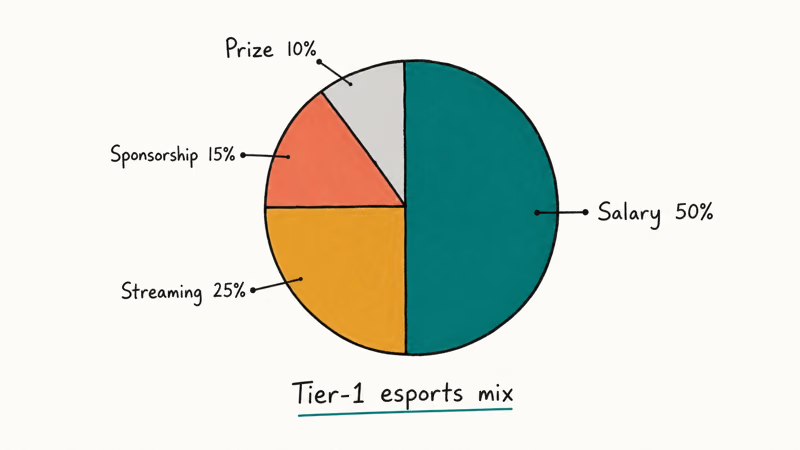
Here’s a rough breakdown of the four channels.
Prize money clusters at the top. Wikipedia’s article on The International 2021 confirms that the event paid out $40,018,195 across 18 invited teams, a record that still stands as the largest single-tournament pool in esports history. Liquipedia’s Valorant Champions 2024 page states that the event distributed a $2.25 million prize pool, with $1 million going to the winning roster.
Below tier-one events, open tournaments pay $1,000 to $5,000 to the winning team.
Salaries apply to active rostered players only. Top organizations pay monthly retainers, but the headline-grabbing six-figure deals go to stars on title-contending rosters. Newer signings on developmental rosters start in a much narrower band, often supplemented by tournament splits and a portion of sponsor revenue.
Sponsorships scale with audience. If you don’t broadcast regularly, you’ll struggle to land a meaningful sponsor deal.
Streaming revenue is the most accessible income on-ramp. Subs, Bits, ad share, and donations stack into a predictable monthly base for anyone past Twitch Affiliate. Our guide to setting up Twitch donations walks through the on-ramp for new streamers.
#Pick a Tier-One Esport
Not every game has a pro scene worth chasing.
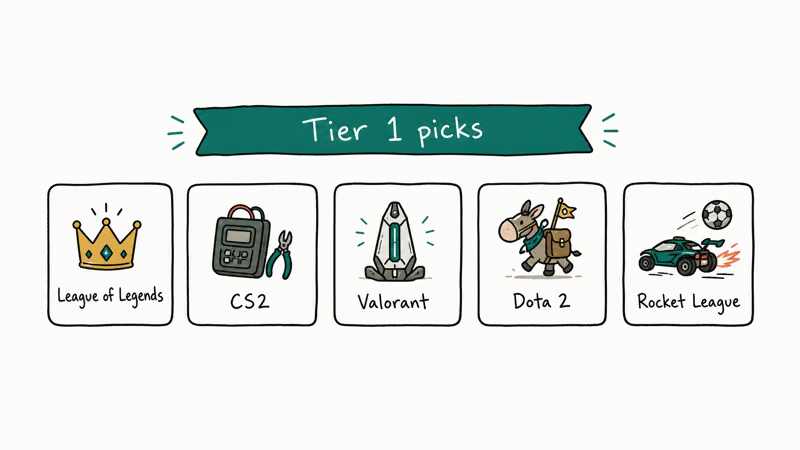
Tier-one titles in 2026 are the ones with funded leagues, regular tournaments, and active scout networks: Counter-Strike 2, Valorant, League of Legends, Dota 2, Rocket League, and Apex Legends. Pick one and commit. Splitting time across two competitive games slows rank progression in both.
Splitting serious practice between two competitive games usually slows rank progression in both.
If you’re choosing between titles, weigh three factors: prize-pool ceiling, audience size, and your platform. Console-only players have fewer paths in titles like CS2 (PC-dominant) than in Rocket League or Apex Legends.
The skill transfer rule is real, and tactical shooter veterans pick up new shooters fast. Our Valorant skill guide covers crossover drills for ex-CS players. But “fast” still means months, not weeks.
#Build the Skill Floor First
Before you stream, before you tournament, before you network with orgs, you need rank.
Specifically: top 1% in your chosen game’s ranked ladder. That’s Radiant in Valorant, Global Elite in CS2, Challenger in League of Legends. Below that floor, scouts won’t take a serious look at your VODs.
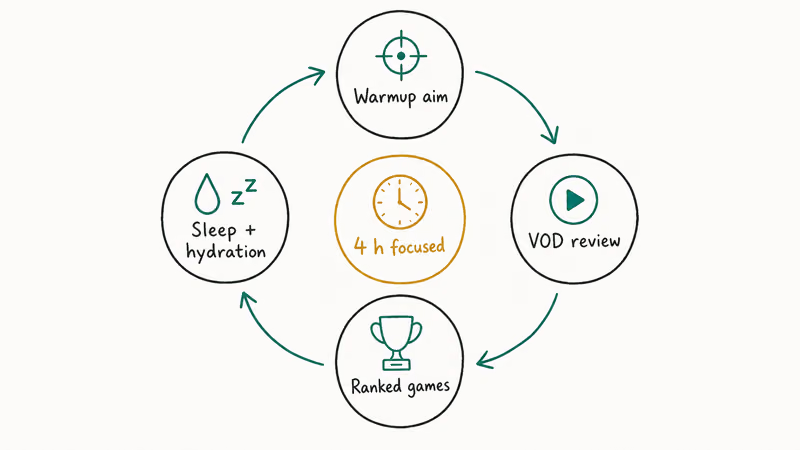
Hitting it takes structured practice, not just hours. Serious competitors usually split their day three ways:
- Aim training: 30 to 60 minutes on a routine like the Voltaic Benchmarks or Aim Lab Pro Drills.
- Ranked queue: 4 to 6 hours of competitive matches at peak skill brackets.
- VOD review: 60 to 90 minutes watching your own losses and a top player’s matches in your role.
A coach speeds this up dramatically. Decent coaching runs $30 to $100 per hour, but the cheap substitute is watching pro VODs with a notebook open. Note every decision they make that you wouldn’t have, then bring it into your next ranked session.
The right gear helps at the margin, not at the core.
Our lightest gaming mouse roundup covers the input devices the FPS pros actually use, and our best mouse for Fortnite guide goes deeper on click latency. Pick something below 70 grams with a clean optical sensor and stop optimizing.
#Stream Your Practice From Day One
Streaming and ranked grind aren’t separate tasks. They’re the same task, broadcast.
Going live during your ranked sessions builds an audience while you build skill, and that’s the only path to the income channels listed earlier.
According to Twitch’s Affiliate Program help page, eligibility requires 50 followers, 8 hours streamed, broadcasting on 7 different days, and an average of 3 concurrent viewers within a rolling 30-day window. For new streamers, the average-viewer requirement is often harder than the raw follower count because it depends on consistent live attendance.
Once you’re past Affiliate, focus on highlight clipping.
Our Twitch clipping walkthrough covers a simple workflow for turning one-hour streams into shareable 30-second TikToks and YouTube Shorts. That cross-platform reach is what gets you from 50 followers to 5,000 fastest.
Don’t try to be a personality if that isn’t you. Quiet, tactical, “I’ll explain my decision” streamers grow audiences too. The fastest way to lose viewers is to fake an energy you can’t sustain across a six-hour broadcast.
#Compete in Open Qualifiers and Land a Team Spot
Once you’ve got the rank and an audience, you need tournament results.
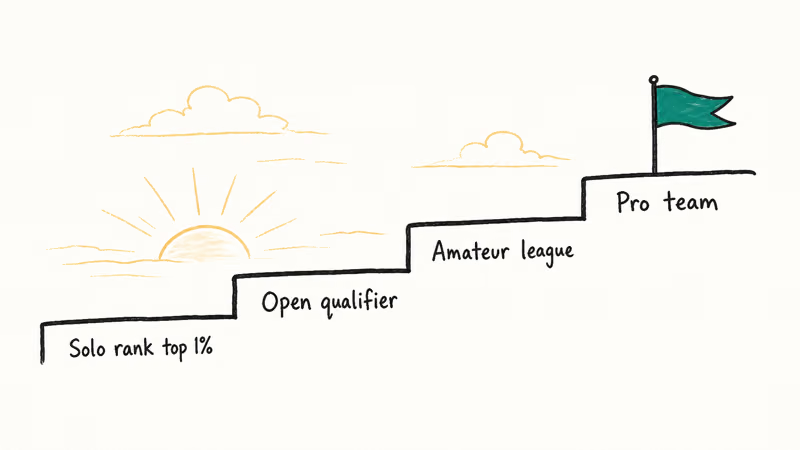
Most tier-one titles run open qualifiers any rostered five-stack can enter. Riot’s Valorant Challengers system funnels open-bracket teams up through regional ascension toward the international stage, and any ranked Immortal-plus player can register for the entry-level open bracket.
Form a roster of five with players in your rank band. Run scrims (practice matches against other five-stacks) three nights a week. Sign up for every open bracket you find.
Your audience doubles as your scouting filter. When you place top 8 in an open qualifier and post the VODs to your stream’s clip page, organization scouts notice fast. Faze Clan, 100 Thieves, Sentinels, and Cloud9 all run public scouting accounts that watch open-qualifier finals.
If you want to back a streaming friend grinding qualifiers, our Twitch Bits guide covers the cheering mechanics.
#Bottom Line
Pick one tier-one esport this week, set a 90-day rank goal one division above your current rank, and stream every ranked session. Skip the gear shopping spree and the tutorial binges. The pros who made it past 18 months of grind treated ranked queue and stream uptime like clock-in shifts.
If your rank hasn’t climbed two divisions after 6 months of focused practice, that’s the honest signal to keep this competitive as a hobby.
#Frequently Asked Questions
How long does it take to go pro?
Most pros put in 2 to 4 years of full-time practice before signing with a team. Faster outliers had years of casual high-level play in adjacent titles. If you’re starting from a sub-Diamond rank with no shooter background, plan for the longer end of that range.
Do you need expensive gear to start?
No. A mid-range gaming PC, a 144Hz monitor, and a solid mouse and keyboard cover the floor. Stable frame rates, low input lag, and reliable peripherals matter more than a luxury setup.
Can you make a living solely from professional gaming?
Yes, but only the top 1% to 5% of competitive players actually do. The honest path stacks streaming income, tournament cash, sponsor deals, and creator-fund payouts together. A pure prize-money career exists at the very top of tier-one titles like Dota 2 and Counter-Strike 2, and almost nowhere else.
What age is too late to start?
There isn’t a hard cutoff. FPS reflexes peak in the late teens and early 20s, but strategy and MOBA titles like Dota 2 and League of Legends have older pro lineages. Players in their late 20s and early 30s still compete at the top level. If you’re past 25 and starting fresh, lean toward strategy titles over twitch shooters.
Which game has the easiest path to pro?
None of them are easy.
Every tier-one title is brutal at the top. That said, newer titles with shorter pro pipelines, like Valorant when it launched in 2020, historically gave faster-rising players a window. Watch for the next major release with a funded competitive ecosystem and jump in early.
Should you go to college first or commit full-time?
Esports scholarships are real. The hybrid path of collegiate esports while streaming is the lowest-risk option for under-22 players.
Do team contracts include a base salary?
Tier-one organizations pay rostered players a monthly base, but the amount varies wildly. Stars on title-contending rosters command headline numbers; new signings on developmental rosters often start with a modest base plus tournament splits and sponsor revenue share. Always negotiate the buyout clause.
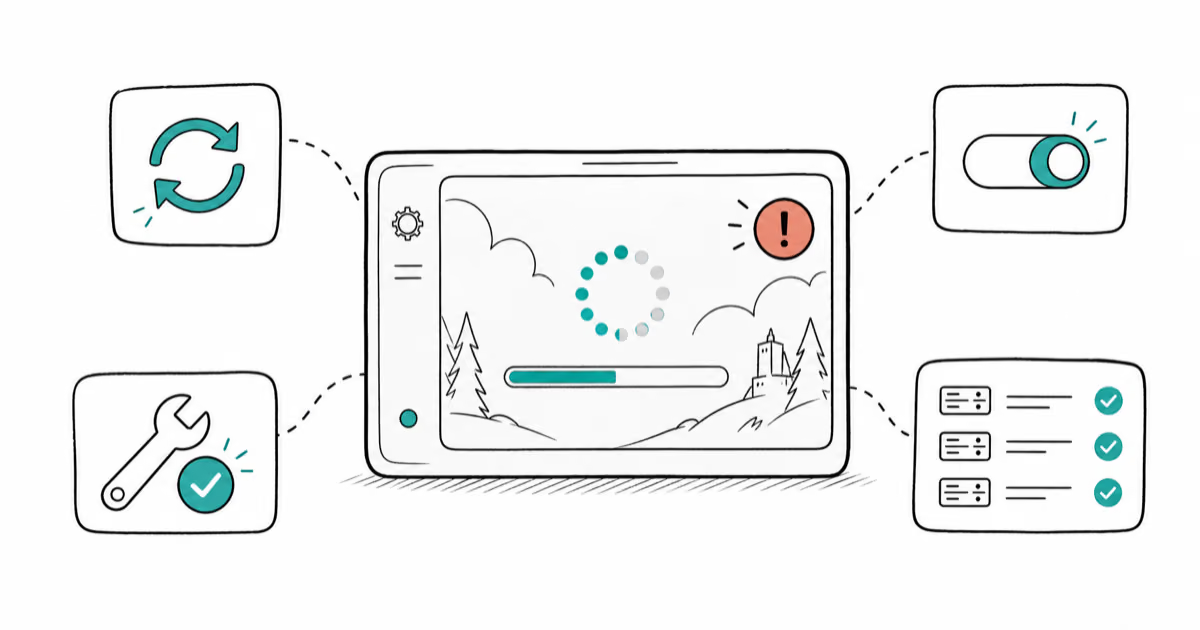
Fortnite Stuck on the Loading Screen? Fix It in 2026
Fortnite stuck on the loading screen? Check server status, fix the Windows N Media Pack and DirectX 11 on PC, clear the console cache, and verify files.
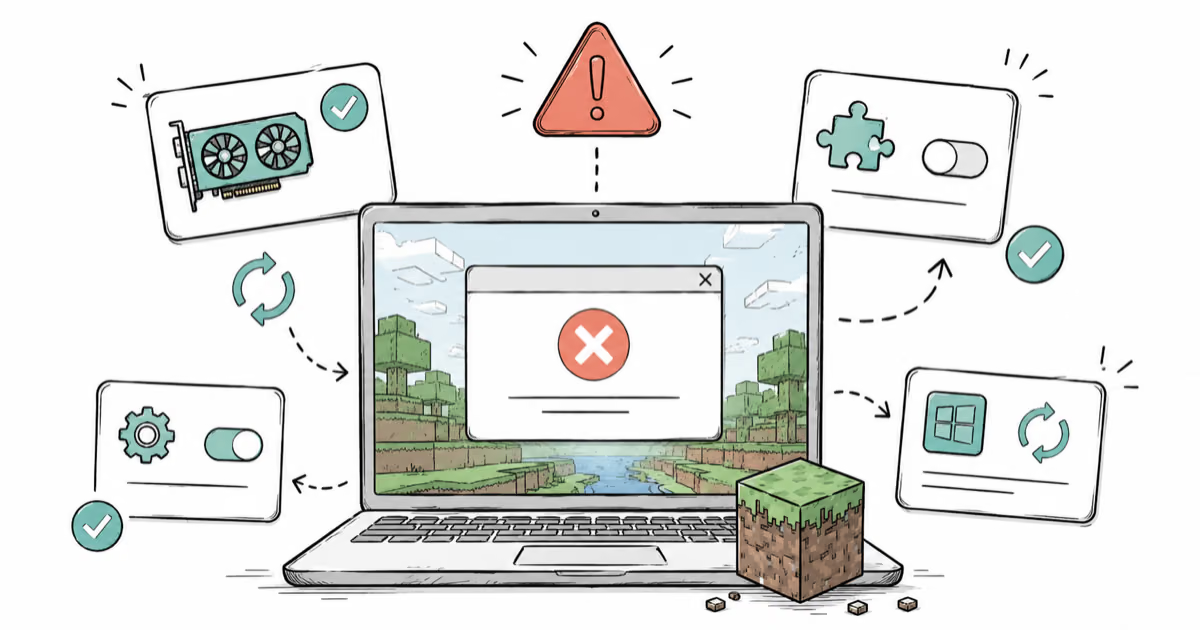
Minecraft Keeps Crashing? Java and Bedrock Fixes (2026)
Minecraft keeps crashing on startup or mid-game? Update your GPU driver, remove mods on Java, and reinstall Gaming Services on Bedrock. Fixes for both.
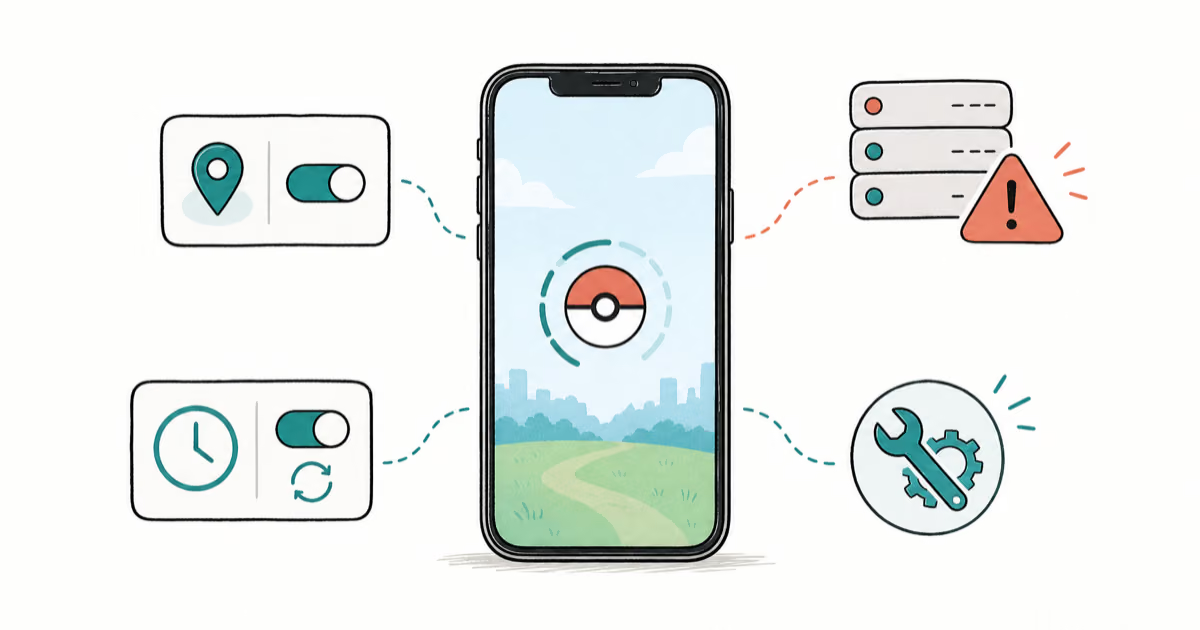
Pokemon GO Not Loading? Fix the Loading Screen 2026
Pokemon GO not loading or stuck on the Pokeball? Check server status, fix automatic date and time, grant location permission, clear the cache, and update.
PS5 Controller Not Charging? 9 Fixes That Work (2026)
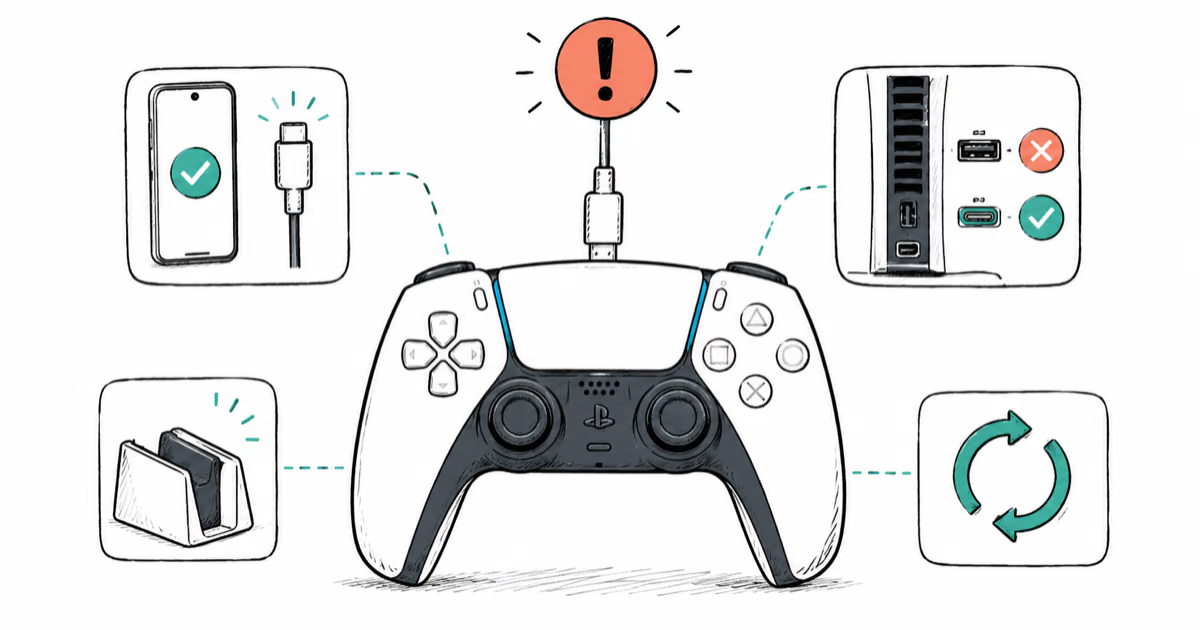
DualSense not charging? Swap the cable, use a rear port in Rest Mode, clean the USB-C port, and check power settings. 9 fixes for a dead PS5 controller.