How to Fix Gdiplus.dll Missing on Windows (Safe 2026 Guide)
Fix gdiplus.dll missing or not found errors on Windows with safe Microsoft methods: SFC, DISM, Windows Update, and Visual C++ Redistributable repair.
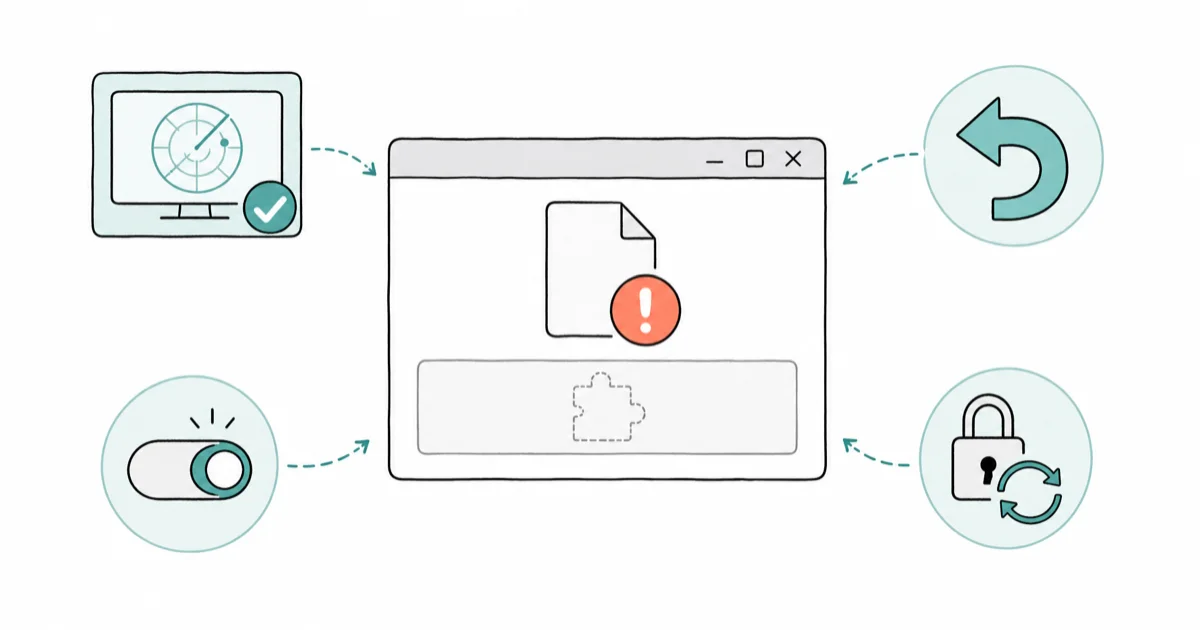
Quick AnswerGdiplus.dll is the Microsoft GDI+ graphics library Windows uses to draw images, gradients, and shapes. Run sfc /scannow from an elevated Command Prompt to restore the file, then install the latest Windows updates. Avoid third-party DLL download sites.
A gdiplus.dll error means the Microsoft GDI+ graphics library is missing or damaged on your PC. The safe repair flow uses Microsoft tools first: SFC, DISM, Windows Update, and the official Visual C++ Redistributable. The fix is mechanical, not mysterious, and you should never download the file from a random site.
- Gdiplus.dll ships with Windows itself, so the safe repair path is restoring it from Microsoft, not downloading it from a third party.
- Run sfc /scannow from an elevated Command Prompt first because it restores protected Windows files from the local servicing cache.
- If sfc reports it could not repair the file, follow up with DISM /Online /Cleanup-Image /RestoreHealth before retrying sfc.
- Many gdiplus.dll errors come from a specific app, not Windows; reinstalling that program or repairing the matching Microsoft Visual C++ Redistributable usually clears the message.
- DLL download sites are a known malware vector, so skip them and use Windows Update, in-place upgrade, or the program’s official installer instead.
#What Gdiplus.dll Actually Does on Windows
Gdiplus.dll is the runtime file for the GDI+ graphics library that ships inside Windows. Microsoft Learn’s GDI+ docs report that GDI+ exposes around 600 functions, covering 2D graphics, image codecs (BMP, JPEG, PNG, TIFF, GIF), and typography. You can read the full reference on the GDI+ overview page. Older Win32 programs, photo viewers, and many older games still call into it every time they paint a window.
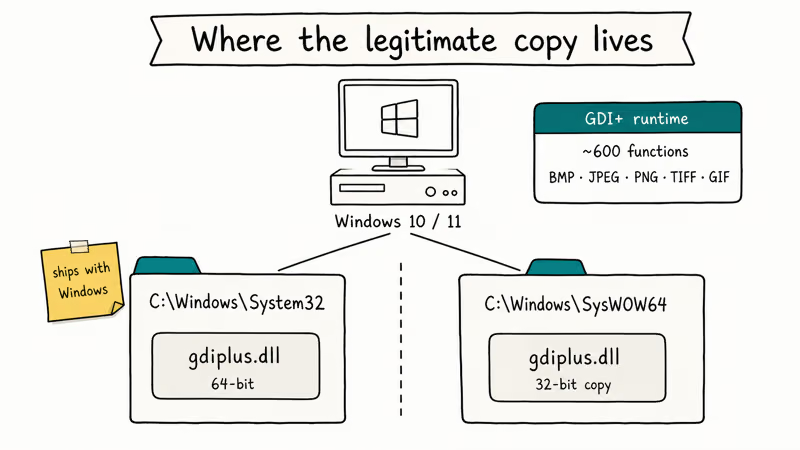
The legitimate copy lives in C:\Windows\System32\gdiplus.dll. On 64-bit Windows, a second 32-bit copy sits in C:\Windows\SysWOW64\gdiplus.dll so older 32-bit apps can load it too. Like the d3d9.dll DirectX runtime, gdiplus.dll is a system component, not an optional add-on you install yourself.
#Common Gdiplus.dll Error Messages
You’ll usually see one of these after launching an app or game:
- “The program can’t start because gdiplus.dll is missing from your computer.”
- “Gdiplus.dll not found.”
- “This application failed to start because gdiplus.dll was not found. Re-installing the application may fix this problem.”
- “Error loading gdiplus.dll. The specified module could not be found.”
The wording shifts by Windows version, but the cause is the same: the loader can’t find a working copy of the DLL when the program starts. Don’t dismiss the dialog and keep clicking, because every retry just re-triggers the failed load.
#Why Does Gdiplus.dll Go Missing?
Five causes show up over and over:
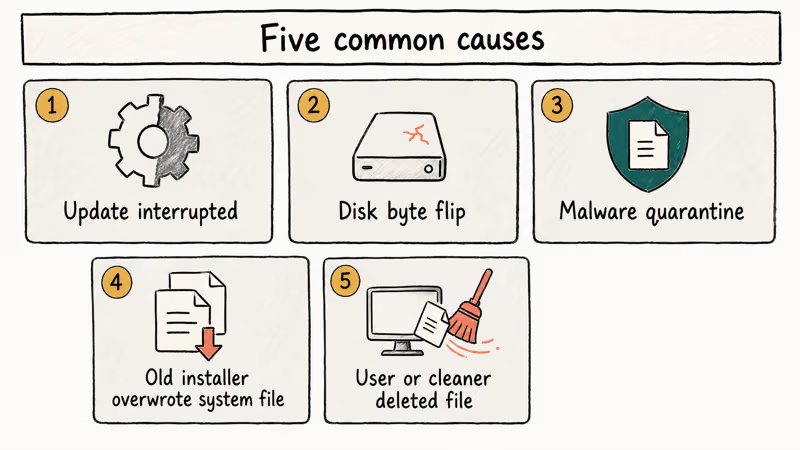
- A Windows Update or system shutdown left the file partially overwritten or corrupted.
- Disk errors flipped a few bytes in the file (chkdsk usually catches this).
- Malware quarantined or replaced the DLL with a tampered copy.
- An installer for an older program shipped its own outdated gdiplus.dll and overwrote the system one.
- A user manually deleted or moved the file, or “cleaner” software removed it as unused.
If the message only appears for one program, the cause is usually #4 or that program’s own folder. If every Windows app throws the error, the system file itself is damaged. Microsoft’s SFC and DISM repair guide confirms that 3 sequential commands fix most cases: DISM /CheckHealth, DISM /RestoreHealth, then sfc /scannow. You don’t need an installation disk to recover gdiplus.dll because Windows keeps a clean local copy inside the WinSxS servicing store.
#How to Safely Replace Gdiplus.dll
You replace it through Windows itself. Don’t download gdiplus.dll from sites like dll-files.com, dllme.com, or random forum attachments. They have no authority to redistribute the file, and many of them have shipped trojanized DLLs in the past.
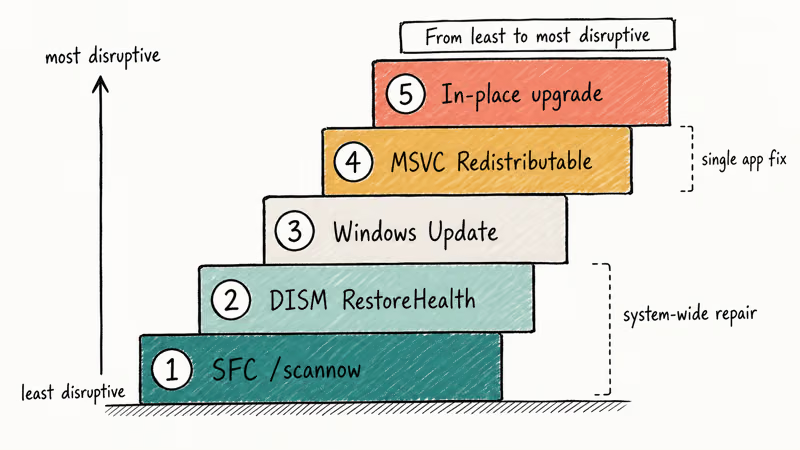
Use these sources, in order:
- System File Checker (
sfc /scannow) restores the original file from the Windows servicing cache. - DISM (
DISM /Online /Cleanup-Image /RestoreHealth) repairs the servicing cache itself if SFC can’t. - Windows Update reinstalls the latest cumulative patch, which contains a clean copy.
- Microsoft Visual C++ Redistributable for app-specific cases.
- In-place upgrade with the official Media Creation Tool when nothing else holds.
This order goes from least disruptive to most. You only move forward when the previous step fails.
#Method 1: Run System File Checker (sfc /scannow)
This is the first thing to try because it restores protected Windows files without replacing apps or personal data.
- Press the Windows key, type
cmd, right-click Command Prompt, and pick Run as administrator. - In the elevated window, type
sfc /scannowand press Enter. - Wait for the scan to reach 100%. This can take several minutes, and longer on a slower SATA SSD.
- Restart the computer when SFC reports it repaired files, then re-launch the app that threw the error.
If SFC says “Windows Resource Protection did not find any integrity violations,” your gdiplus.dll is intact and the problem is local to one app, so jump to Method 4. If it says “could not perform the requested operation” or “found corrupt files but was unable to fix some of them,” move to Method 2.
For a deeper walkthrough of corruption-style errors, our guide to error 0x80070570 file corruption covers chkdsk and DISM in more detail.
#Method 2: Repair the Component Store With DISM
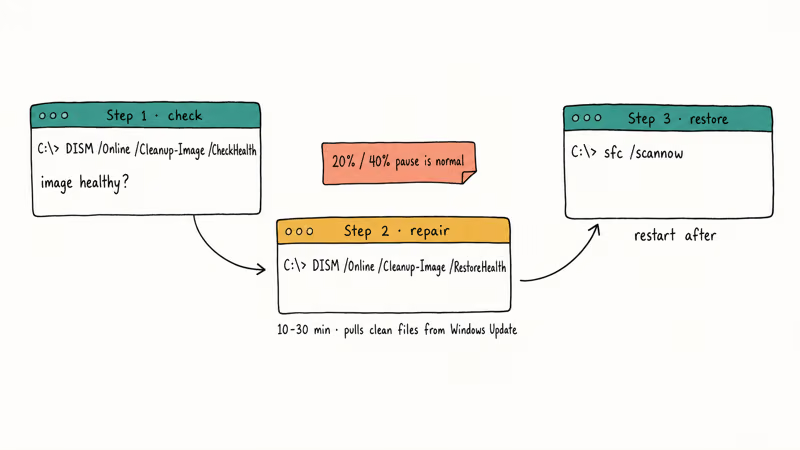
DISM rebuilds the servicing image that SFC pulls clean files from. If the servicing image itself is broken, SFC has nothing to copy.
- Open Command Prompt as administrator again.
- Run
DISM /Online /Cleanup-Image /CheckHealth. This is fast and tells you whether the image is flagged as corrupted. - If it reports any corruption, run
DISM /Online /Cleanup-Image /RestoreHealth. This pulls clean files from Windows Update and can take 10 to 30 minutes depending on bandwidth. - When DISM finishes, run
sfc /scannowagain. Microsoft’s documentation recommends this exact two-step order. - Restart the PC and check the application.
If DISM hangs at 20% or 40%, it hasn’t crashed. It’s decompressing component files. Leave it alone for at least 20 minutes before assuming a problem. If you hit DISM error 87, our DISM error 87 troubleshooting guide covers the syntax fixes that resolve most cases.
#Method 3: Install Pending Windows Updates
A clean cumulative update will replace gdiplus.dll along with every other system DLL it touches. This is the simplest fix when SFC and DISM are both clean but the error persists.
- Open
Settings>Windows Update(Windows 10 and 11). - Click Check for updates and install everything offered, including optional cumulative updates.
- Restart when prompted.
- After the system is back up, open Command Prompt as admin and run
sfc /scannowonce more to confirm the new files are intact.
According to Microsoft’s Windows Update troubleshooter docs, the built-in Windows Update troubleshooter resets 4 core services. Those services are wuauserv, cryptSvc, bits, and msiserver. They’re the same bundle that gates fresh DLL deliveries to System32.
If Windows Update itself is failing and refusing to install patches, the gdiplus.dll repair stalls before it can finish, because none of the cumulative packages reach disk. Our guides to error 0x80004002 on Windows Update and the broader repair Windows 10 without a CD flow cover the service resets, registry checks, and offline reinstall paths that get the update channel unstuck so the DLL refresh can complete normally.
#Method 4: Reinstall the Affected Program
When only one application throws the gdiplus.dll error and every other Windows app works, the program is loading its own bundled copy from its install folder. That copy is what’s broken.
- Press Windows key + I to open Settings.
- Go to
Apps>Installedapps. - Find the program that throws the error, click the three-dot menu, pick Uninstall, and confirm.
- Restart the PC. This forces Windows to release any locks on the program’s files.
- Download the latest installer from the vendor’s official site, not a mirror. Run the installer as administrator.
Reinstalling replaces every file the program ships, including its private gdiplus.dll. If the program is sold through Steam, the Microsoft Store, or another launcher, use that launcher’s “verify” or “repair” button before doing a full uninstall. It’s faster.
Skip the per-user roaming profile. The bundled DLL never lives there.
#Method 5: Install the Microsoft Visual C++ Redistributable
Many older apps and games depend on a specific Microsoft Visual C++ Redistributable, and a broken or missing redistributable can show up as a gdiplus.dll error because the runtime stack fails to load.
- Visit the Microsoft Visual C++ Redistributable download page on Microsoft Learn.
- Download both the x64 and x86 packages for the latest supported version.
- Run each installer in turn. If it offers a Repair option, choose that before reinstalling from scratch.
- Restart the PC and retry the app.
Repair the redistributable before reinstalling it from scratch when the installer offers that option. For app-specific gdiplus.dll prompts, that repair path is less disruptive than a full application reinstall.
#Method 6: Use System Restore or an In-Place Upgrade
System Restore is the lazy fix when you know the trigger. If the error started right after a driver install, an antivirus update, or “PC cleaner” software, rolling Windows back to a restore point is faster than chasing individual files, and it leaves your documents alone while reverting registry and system file changes that newer system tools can’t easily undo.
- Press the Windows key, type
Create a restore point, and open the result. - Click System Restore and pick a restore point dated before the error first appeared.
- Follow the wizard and let the PC reboot.
Expect the process to take 20 to 45 minutes. Our System Restore time expectations guide breaks down what each phase does.
If System Restore is disabled or no good restore points exist, run an in-place upgrade with the Windows 11 or Windows 10 Media Creation Tool. Choose Keep personal files and apps. This reinstalls every system file (including gdiplus.dll) without touching your data. It’s the cleanest fix short of a full reset.
#What Should You Avoid With Gdiplus.dll?
Two things, no exceptions.
Skip third-party DLL download sites. Microsoft doesn’t authorize DLL-hosting sites to redistribute Windows system files, and security researchers have repeatedly found malware bundled into the DLLs those sites serve. Restoring from Windows Update, SFC, DISM, or the Media Creation Tool is always the right path. Short version: don’t.
Don’t delete gdiplus.dll manually. It’s a protected system file. Removing it will break Photos, the snipping tool, several Settings panes, and any app that draws shapes through GDI+. If you suspect the copy on disk is malicious, run a full scan with Microsoft Defender Offline first, then let SFC restore the legitimate file.
The same logic applies to other graphics and runtime DLLs. Our companion guides to the MSVCP100.dll missing fix and the comdlg32.ocx fix recommend the exact same Microsoft-first sequence: official tools first, third-party downloads never.
#Bottom Line
Start with sfc /scannow. If it reports unfixable corruption, follow with DISM /Online /Cleanup-Image /RestoreHealth and run SFC again.
If only one app throws the error, reinstall that app and repair the Microsoft Visual C++ Redistributable. Use third-party DLL sites for nothing, ever, because they’re how a small graphics error turns into a real malware problem.
#Frequently Asked Questions
Where is gdiplus.dll located on Windows?
The legitimate copy lives in C:\Windows\System32\gdiplus.dll on 32-bit and 64-bit Windows. On 64-bit systems you also have a 32-bit copy at C:\Windows\SysWOW64\gdiplus.dll so older 32-bit apps can load it. If you find gdiplus.dll inside an application’s own folder, that’s the program’s private copy, not a system file. Don’t move or delete that copy without uninstalling the parent program first.
Is it safe to download gdiplus.dll from a DLL website?
No. Restore the file with sfc /scannow, DISM, Windows Update, or an in-place upgrade instead.
How long does sfc /scannow take to fix gdiplus.dll?
Plan for SFC to take several minutes, and longer on older storage. Don’t close the Command Prompt window while the scan is in progress, because that aborts the repair.
Can I copy gdiplus.dll from another Windows PC?
Skip it. Even matching versions break unpredictably. SFC or DISM is faster and safer.
Will reinstalling Windows fix gdiplus.dll for sure?
Yes. You don’t need a clean install — an in-place upgrade with the Media Creation Tool, choosing Keep personal files and apps, replaces every system DLL while leaving your data alone. Reserve a full reset for cases where the in-place upgrade itself fails.
Why does only one program show the gdiplus.dll error?
The program is loading a private bundled gdiplus.dll from its own install folder rather than the Windows system copy, and that bundled file is corrupted or missing. Reinstalling the program (or repairing its Microsoft Visual C++ Redistributable) replaces the private copy without touching Windows itself. If the launcher has a “verify game files” button, run it first — that usually finishes in 1 to 3 minutes and avoids re-downloading gigabytes.
Does antivirus software ever cause gdiplus.dll errors?
Sometimes. Aggressive heuristics can quarantine the system file if the engine misclassifies it. Open your antivirus quarantine, restore the file if you find it there, and run sfc /scannow to make sure the version on disk is clean.

Best Laptop for Running LLMs in 2026: Memory Comes First
The best laptop for running LLMs is a memory purchase first. Compare MacBook unified memory against NVIDIA laptop VRAM, and see what each tier really runs.

How to Run a Local LLM on Windows: A 2026 Setup Guide
Run a local LLM on Windows with LM Studio or Ollama. Pick a model that fits your GPU memory, keep every prompt offline, and skip the monthly bill.
Bluetooth Not Working on Snapdragon X? Fixes for 2026
Bluetooth not working on your Snapdragon X Copilot+ PC? Generic audio, mice, and keyboards work, but vendor apps often lack an ARM build. Fixes inside.
Docker Desktop and WSL2 Not Working on Snapdragon X? Fix It
WSL2 runs fine on Snapdragon X, but Docker Desktop ARM is Early Access and throws WSL errors. Use WSL2 plus native ARM64 Ubuntu and Docker Engine.