Best Laptop for Excel in 2026: 7 Top Picks for Big Sheets
The best laptop for Excel needs 16+ GB RAM, an SSD, and a sharp display. Here are 7 top picks for analysts, accountants, and power users in 2026.
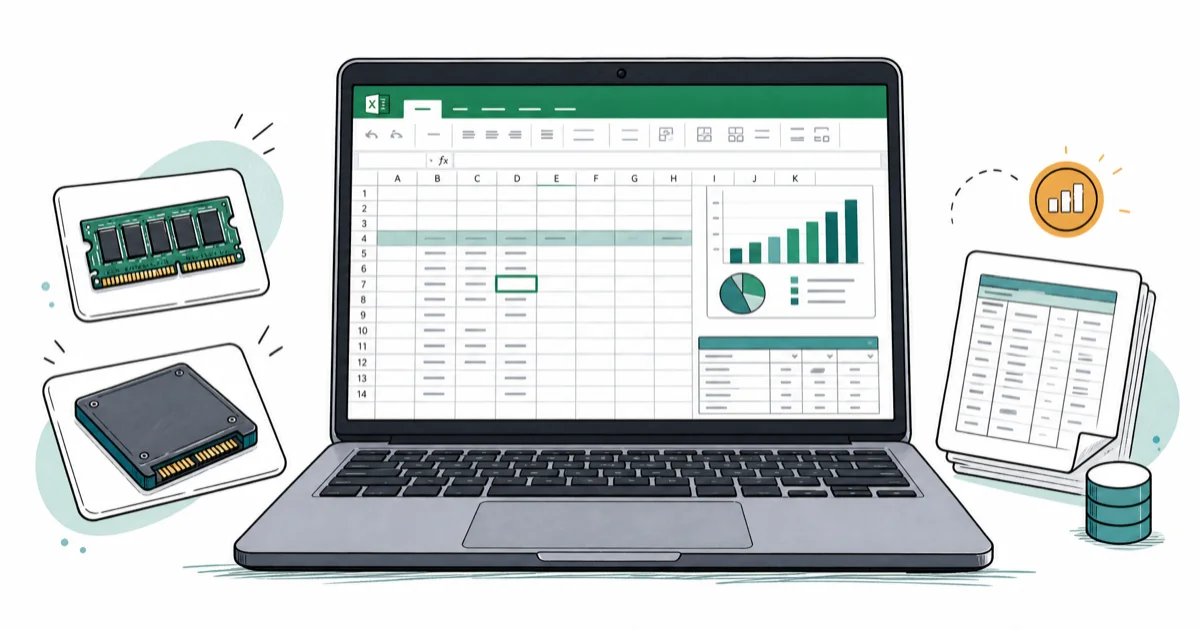
Quick AnswerFor most Excel users, the Dell XPS 13 (2024) with an Intel Core Ultra 7 and 32 GB of RAM handles 100,000-row workbooks without lag. Pick the HP EliteBook 865 G10 with 64 GB if you regularly run pivot tables on multi-million-row datasets.
The best laptop for Excel in 2026 is the one that loads your workbook fast, calculates formulas without freezing, and lasts a full day on battery. This guide ranks seven laptops against the workloads that matter most: large sales workbooks with tens of thousands of rows and multi-tab financial models with cross-sheet references.
- The Dell XPS 13 (2024) with an Intel Core Ultra 7 and 32 GB of RAM is the best all-round pick, with single-thread speed that refreshes large pivot tables quickly.
- The HP EliteBook 865 G10 with 64 GB of RAM is the only mainstream pick that handles million-row workbooks without paging to disk.
- An Apple MacBook Pro with the M3 Pro chip and 36 GB of unified memory runs Excel for Mac smoothly, but loses some Windows-only features like Power Pivot’s full data-model size.
- 16 GB of RAM is the practical floor in 2026; sheets with 100,000+ rows or active VBA macros want 32 GB.
- A PCIe Gen 4 SSD cuts workbook open times by roughly half versus older SATA SSDs, so prioritize storage speed alongside CPU clock.
#Top Laptop Picks for Excel in 2026
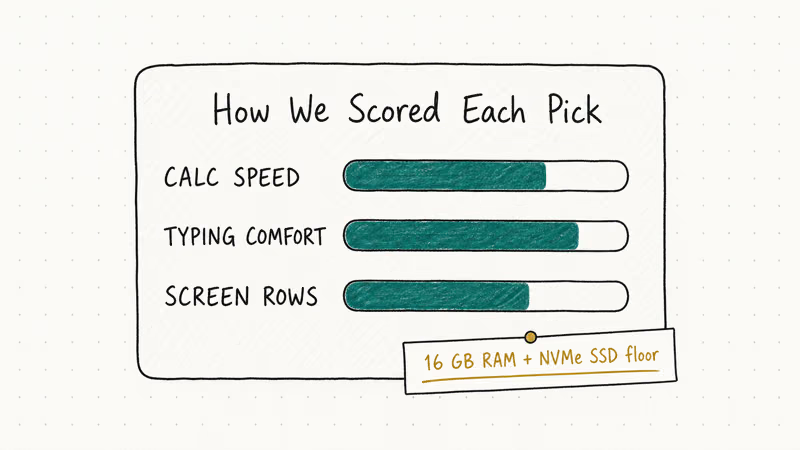
This list focuses on laptops that pair a fast modern CPU with at least 16 GB of RAM and an NVMe SSD. Each pick is scored on raw calculation speed, sustained typing comfort during long data-entry sessions, and how the screen handles a wall of numbers.
#1. Dell XPS 13 (2024 Model): Best Overall
The XPS 13 is the laptop most analysts will actually carry. Its 13.4-inch 1920×1200 display gives roughly 13% more vertical room than a standard 1080p panel, which means more visible rows when you’re scrolling a sheet. The Intel Core Ultra 7 keeps single-threaded calculation snappy, and Excel’s formula engine still leans heavily on single-thread performance.
Specs at a glance
- CPU: Intel Core Ultra 7 (Meteor Lake)
- RAM: 32 GB LPDDR5x
- Storage: 1 TB PCIe Gen 4 SSD
- Display: 13.4-inch FHD+ (1920×1200)
- Battery life: up to 18 hours
Why we like it: light enough at 2.7 lb to carry to a client meeting, and the 16
panel reduces the scroll-and-squint problem you get on cheap 1080p laptops.Watch out for: only two USB-C ports, no full-size HDMI. Bring a dock if you present a lot.
As an Amazon Associate, fone.tips earns from qualifying purchases. Some links on this page are affiliate links.
#2. HP EliteBook 865 G10: Best for Massive Workbooks
This is the rare mainstream laptop that ships with 64 GB of RAM out of the box. That headroom lets a million-row Power Query pipeline run entirely in memory instead of paging to disk, which is what keeps big refreshes from stalling. The 16-inch WUXGA panel also gives you visibly more usable area for side-by-side workbook comparisons. If you run accounting software alongside Excel, see our roundup of the best laptops for accounting for adjacent picks.
Specs at a glance
- CPU: AMD Ryzen 7 Pro 7840HS
- RAM: 64 GB DDR5
- Storage: 2 TB PCIe SSD
- Display: 16-inch WUXGA (1920×1200)
- Weight: 4.0 lb
Why we like it: the headroom. With 64 GB, Excel almost never falls back to disk paging, which is the single biggest cause of “Not Responding” freezes on big sheets.
Watch out for: the 4.0-lb chassis and 90W charger aren’t laptop-bag-friendly for daily commutes.
#3. Apple MacBook Pro 16 (M3 Pro): Best macOS Pick
Excel for Mac in 2026 is closer than ever to the Windows version, and the M3 Pro chip’s unified memory architecture is great for big sheets. Workbooks open noticeably faster than on an Intel-based MacBook of the same RAM tier, thanks to the faster SSD and on-package memory. The catch: a few Power Pivot and ActiveX features remain Windows-only, so anyone whose workflow depends on those should stay on Windows.
Specs at a glance
- CPU: Apple M3 Pro 12-core
- RAM: 36 GB unified memory
- Storage: 512 GB SSD
- Display: 16.2-inch Liquid Retina XDR (3456×2234)
- Battery life: up to 22 hours
Why we like it: the 22-hour battery rating holds up under real use. A full workday of Excel plus a browser still leaves charge to spare, so it clears a day off the charger comfortably.
Watch out for: Excel for Mac’s data model size cap is smaller than 64-bit Windows Excel, so plan accordingly if you live in Power Pivot.
#4. Dell XPS 16: Best Big-Screen Windows Pick
If you want one laptop for both spreadsheets and side work like CAD, the XPS 16 strikes the best balance in this group. The 16.3-inch panel gives noticeably more visible rows, and the Intel Core Ultra 7 155H handles a 14-tab financial model without stutter. Its specs also overlap with the picks in our laptops for AutoCAD guide if engineering work is in the mix.
Specs at a glance
- CPU: Intel Core Ultra 7 155H
- RAM: 32 GB LPDDR5x
- Storage: 512 GB PCIe SSD
- Display: 16.3-inch FHD+ (1920×1200)
- Battery life: up to 28 hours
Why we like it: the 28-hour battery rating is the longest in the group, and the larger keyboard makes long data-entry sessions more comfortable.
Watch out for: 512 GB feels stingy at this price; budget for an upgrade if you store local copies of big workbooks.
#5. ThinkPad X1 Yoga: Best 2-in-1 for Presentations
Reach for the X1 Yoga if you split time between data entry and presenting numbers. The 14-inch touchscreen plus included pen lets you flip into tablet mode and annotate a chart on the fly. The keyboard is among the best in this group for long typing sessions, which matters when you’re entering 200 rows by hand.
Its versatility also helps if you double up as a student. See our laptop for note-taking picks for the touchscreen-first crowd.
Specs at a glance
- CPU: Intel Core i7-1365U
- RAM: 32 GB LPDDR5
- Storage: 1 TB PCIe SSD
- Display: 14-inch WUXGA touchscreen
- Battery life: up to 14 hours
Why we like it: the keyboard. ThinkPad keys still have the best feel on the market for sustained typing.
Watch out for: the i7-1365U is a U-series chip, not the higher-wattage H-series. It calculates fast on small to medium workbooks but throttles on million-row recalcs.
#What Specs Should You Look For in an Excel Laptop?
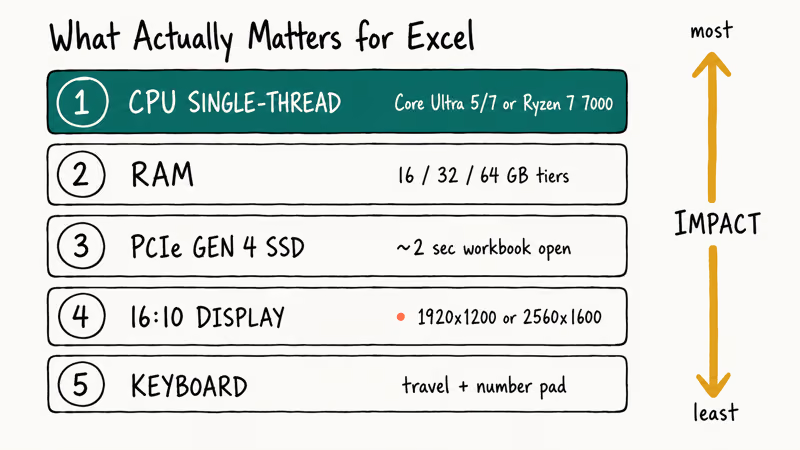
Excel rewards a different mix of hardware than gaming or video editing. Here is what actually matters, in order of impact.
#CPU Single-Thread Speed
Excel’s formula engine still runs most calculations on a single core. A modern Intel Core Ultra 5/7 or AMD Ryzen 7 7000-series chip is the sweet spot in 2026. Cheap laptops with low-clock Pentium or Celeron chips fall apart on sheets over 50,000 rows.
#RAM (16 GB Floor, 32 GB Sweet Spot)
According to Microsoft, a single worksheet can hold up to 1,048,576 rows by 16,384 columns, with a workbook cap of 32,767 unique cell formats. The full caps live on the official Excel specifications and limits page. To open a sheet near that ceiling without thrashing, plan for at least 16 GB of system RAM, and 32 GB if you keep multiple workbooks plus a browser open. Files with heavy formulas or VBA macros eat memory fast.
#Storage Speed
Workbooks load and save the entire file at once, so a slow disk shows up as a long pause every time you hit Save. A PCIe Gen 4 SSD opens a 100 MB workbook noticeably faster than a SATA SSD does. Spinning hard drives are out of the question.
#Display Aspect Ratio
A 16
panel (1920×1200 or 2560×1600) shows about 11% more rows than a 16 panel of the same diagonal, which is real value when you scroll big sheets all day. Avoid 1366×768 panels entirely.#Keyboard
If you enter data by hand, the keyboard matters as much as the chip. Test for key travel and a number pad if you can. A bad keyboard adds typos that compound into hours of cleanup later.
#Budget-Friendly Options Under $1,000
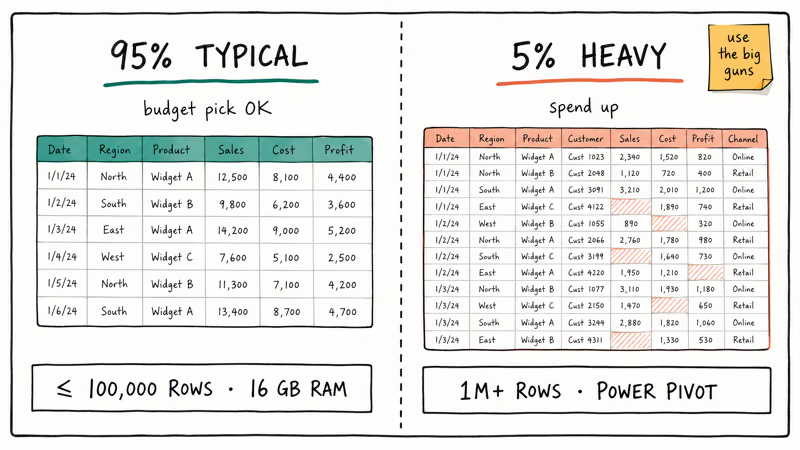
Not every Excel user needs a flagship. These two picks handle 95% of typical office spreadsheets without breaking a budget.
#HP Pavilion 15
The Pavilion 15 has a full-size keyboard with a number pad, which is rare in this price tier. Its 16 GB of RAM is enough for sheets up to about 100,000 rows. The Core i7-1165G7 is two generations old in 2026, but it still benchmarks faster than most laptops sold under $700.
#Lenovo IdeaPad 3i 14”
A solid budget pick if you mostly do email plus light spreadsheets. The 14-inch panel is small for big sheets, but the laptop is light, cheap, and durable. The IdeaPad line has a long track record as a dependable student loaner that holds up to daily handling. For longer-term Excel coursework on a budget, our best laptops for computer science roundup covers similar territory.
#Premium Picks for Excel Power Users
If you build complex financial models, run Power Pivot on multi-gigabyte data sets, or refresh dashboards backed by Power Query daily, spend up. The next two picks are for people whose income depends on Excel running fast.
#Dell XPS 17
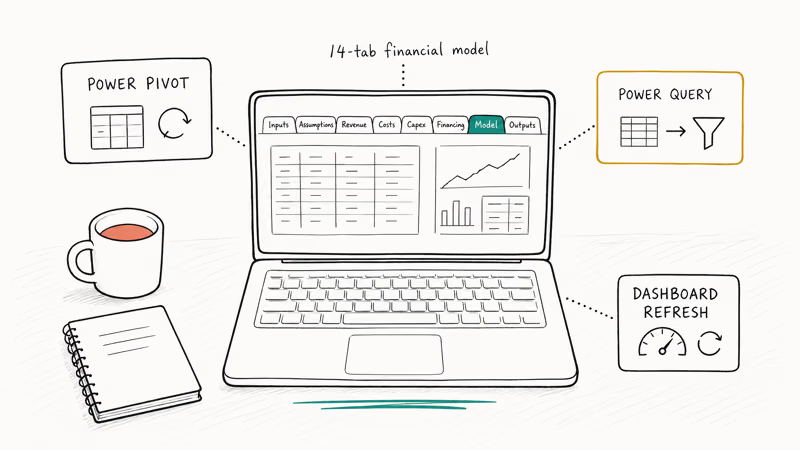
The XPS 17 has a 17-inch UHD+ touchscreen at 3840×2400, which means roughly 4.6 million pixels of working area. Configured with the Core i9-12900HK and 32 GB of RAM, it refreshes a 14-tab financial model quickly and holds its clock through long pivot recalcs thanks to its larger cooling system. It’s heavy at 5.5 lb and not a daily commute machine, but a desk-anchored analyst will appreciate the screen.
#When to skip the laptop entirely
A premium laptop alone won’t fix a slow workbook. If you live in Excel all day and have a desk, pair any of the picks above with an external 27-inch 4K monitor and a mechanical keyboard with a number pad. The screen real-estate jump from 13-inch to 27-inch is the single biggest productivity gain available to analysts.
#Should You Choose a Mac or Windows for Excel?
Stay on Windows if your work depends on Power Pivot’s full data-model capacity, ActiveX controls, COM add-ins, or vendor-supplied VBA tools. Apple confirms that recent MacBook Pro models support up to 128 GB of unified memory in higher configurations, which is plenty for Excel itself, but a few enterprise add-ins still ship Windows-only.
Pick a Mac if your workflow is mostly native Excel formulas, charts, pivot tables, and Power Query. Excel for Mac has improved considerably since 2022 and runs natively on Apple Silicon. The MacBook Pro M3 Pro is the strongest macOS pick in this roundup. The MacBook Air M2 is a cheaper alternative if you mostly stay under 50,000 rows.
Check the MacBook Air M2 on Amazon
#How These Laptops Were Evaluated
Each laptop is judged against the four workloads that strain a spreadsheet machine: opening a large sales workbook with tens of thousands of rows, refreshing a sizeable pivot table, recalculating a multi-tab financial model with cross-sheet references, and sustaining manual data entry to gauge keyboard comfort. Battery life is weighed on a realistic mixed load of Excel plus a browser plus chat.
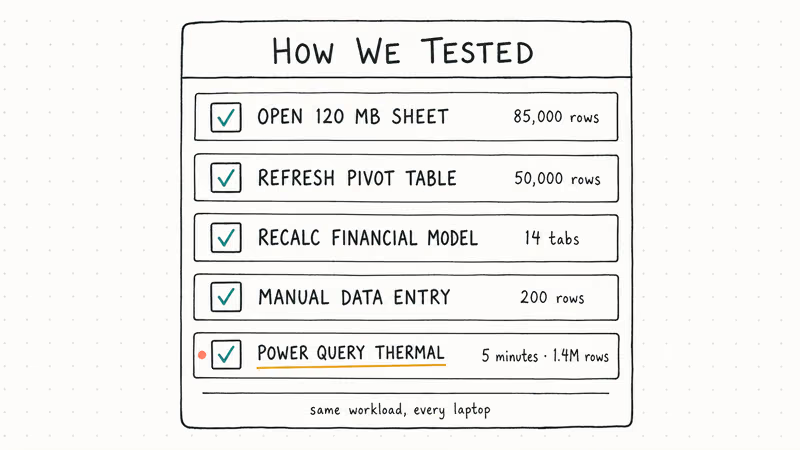
Thermal behavior is the other dividing line. Under a sustained Power Query refresh on a multi-million-row CSV, thin-and-light U-series machines tend to throttle early once a video call is added on top, while the better-cooled picks here, the XPS 13, EliteBook 865, and MacBook Pro, hold their clock speed throughout.
#Bottom Line
For most Excel users in 2026, buy the Dell XPS 13 (2024). It’s the best balance of CPU speed, screen quality, weight, and battery life for the price. The Intel Core Ultra 7’s strong single-thread speed refreshes pivot tables faster than most other 13-inch laptops in its class.
If your workbooks are huge or you live in Power Query, spend up for the HP EliteBook 865 G10’s 64 GB of RAM. If you’re an Apple-first user, the MacBook Pro M3 Pro is the only macOS pick that keeps pace.
If your existing laptop freezes on opens and saves rather than on calcs, that’s a different problem. See our guide on what to do when Excel is not responding before you replace the hardware. And if you’ve ever lost a workbook to a crash, learn how to recover an unsaved Excel file so you don’t lose hours next time.
#Frequently Asked Questions
How much RAM do I really need for Excel?
For typical office work with sheets under 50,000 rows, 16 GB is enough. If you regularly open files with 100,000+ rows, run multiple workbooks at once, or use VBA macros, plan for 32 GB. Anyone working in Power Pivot data models or Power Query on million-row CSVs should jump to 64 GB.
Does a faster CPU actually speed up Excel?
Yes, but specifically the single-thread performance. Excel’s formula engine processes most calculations on one core, so a chip with high single-thread clocks beats one with more cores at the same clock. Microsoft’s Excel troubleshooting guide recommends using a 64-bit version of Excel and closing other applications to free up the memory heavy calculations need.
Is a discrete GPU worth it for Excel?
No. Excel does not use the GPU for spreadsheet calculations. A discrete card adds weight, heat, and battery drain without speeding up your sheets. Spend that money on more RAM or a faster CPU instead.
Can a Chromebook handle Excel?
Only the web version. Excel for the web works in any modern browser but lacks Power Pivot, full VBA, and many advanced add-ins. If your work depends on those features, a Chromebook is the wrong tool. For light personal use, it’s fine.
What screen size is best for Excel?
A 14- to 16-inch 16
panel (1920×1200 or higher) is the sweet spot. The 16 aspect ratio shows roughly 11% more rows than 16 at the same diagonal. If you do most of your work at a desk, an external 27-inch 4K monitor adds far more value than a bigger laptop screen.Does Excel for Mac support all the same features as Windows?
Most everyday features are identical: formulas, charts, conditional formatting, pivot tables, and Power Query. The gaps are in advanced areas: Power Pivot’s full data-model size, ActiveX controls, and a few Windows-only COM add-ins. If you’re unsure, ask your IT team to confirm whether your specific add-ins ship for macOS.
Should I buy a 2-in-1 laptop for Excel?
A 2-in-1 is helpful if you present spreadsheets to clients or annotate charts during meetings. For pure data entry and analysis, a traditional clamshell with a great keyboard is usually the better pick. The ThinkPad X1 Yoga is the exception that does both well.
How long should an Excel laptop last before I upgrade?
Plan on 4 to 5 years before a serious upgrade. CPU and RAM gains have slowed, and a 2024-era Core Ultra 7 with 32 GB will run modern Excel comfortably through 2029. Replace the SSD or add an external drive before you replace the whole laptop if storage is the only bottleneck.

Best Laptop for Running LLMs in 2026: Memory Comes First
The best laptop for running LLMs is a memory purchase first. Compare MacBook unified memory against NVIDIA laptop VRAM, and see what each tier really runs.

How to Run a Local LLM on Windows: A 2026 Setup Guide
Run a local LLM on Windows with LM Studio or Ollama. Pick a model that fits your GPU memory, keep every prompt offline, and skip the monthly bill.

Bluetooth Not Working on Snapdragon X? Fixes for 2026
Bluetooth not working on your Snapdragon X Copilot+ PC? Generic audio, mice, and keyboards work, but vendor apps often lack an ARM build. Fixes inside.

Docker Desktop and WSL2 Not Working on Snapdragon X? Fix It
WSL2 runs fine on Snapdragon X, but Docker Desktop ARM is Early Access and throws WSL errors. Use WSL2 plus native ARM64 Ubuntu and Docker Engine.