The Ultimate Guide to Downloading Snapchat Stories in 2026
Download Snapchat Stories using built-in Memories, screen recording, or third-party tools with this step-by-step guide for saving your favorite snaps.
Quick AnswerTo download your own Snapchat Story, open it and tap the download icon to save it to Memories or your camera roll. For others' stories, use your device's built-in screen recording, though Snapchat may notify the poster.
Snapchat Stories disappear after 24 hours by design, but there are several legitimate ways to save them before they vanish. This guide compares Snapchat’s built-in save tools, screen recording, and third-party downloader claims for saving Stories in 2026.
- Snapchat’s download icon saves your own Stories to Memories or your camera roll instantly
- The “Save to Camera Roll” setting in Memories auto-backs up every Story you post
- Screen recording captures any Story but may notify the sender depending on their privacy settings
- Third-party Story downloaders risk account suspension since Snapchat actively blocks them
- Downloading someone else’s Story without permission may violate copyright and Snapchat’s Terms of Service
#How Do You Save Your Own Snapchat Story?
Saving your own Story is straightforward using Snapchat’s built-in tools, and those tools don’t notify other users because the Story is yours.
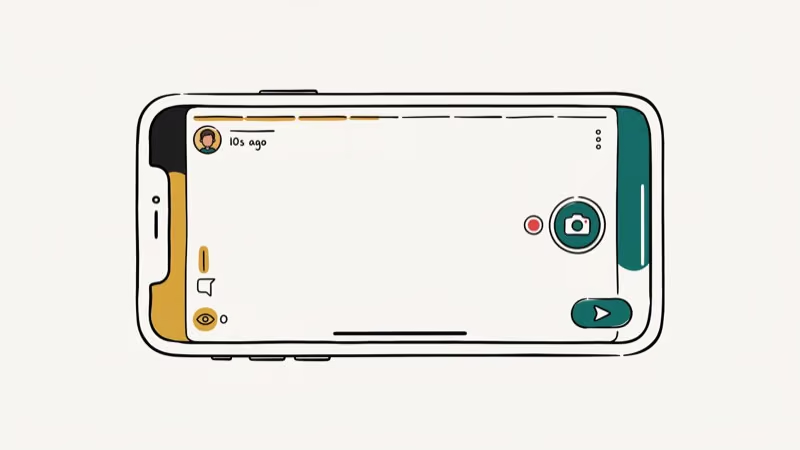
Save to Memories:
- Open Snapchat and tap your profile icon
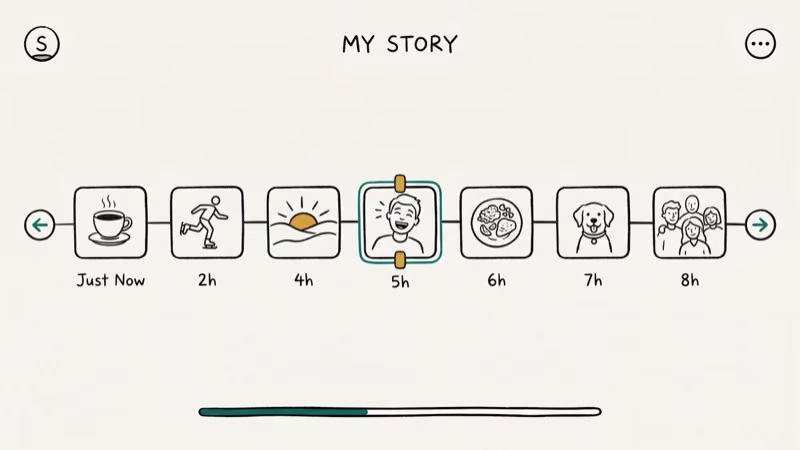
- Tap My Story to view it
- Tap the download icon (downward arrow) on the Snap you want to keep
- The Snap saves to Memories immediately
Auto-save to Camera Roll:
Go to Settings > Memories > Save to Camera Roll and toggle it on. After that, every Story you post automatically saves to your device gallery.
Export a Story:
- Open the Memories tab (swipe up from the camera)
- Find the Story or Snap you want
- Tap the three dots (…) and choose Export Snap
- Pick your destination (camera roll, email, AirDrop)
#Can You Download Someone Else’s Snapchat Story?
Snapchat doesn’t provide an official download button for other users’ Stories. Screen recording is the most reliable workaround and works on both iPhone and Android.
iPhone: Swipe down from the top-right corner (or up from the bottom on older models) to open Control Center. Tap the screen record button, then go to the Story you want to capture. The recording saves to Photos automatically.
Android: Pull down the notification shade and tap Screen Recorder. If you don’t see it, add Screen Recorder to Quick Settings first.
Snapchat’s Privacy Center explains the company’s data practices including how screenshots are detected. Screenshot and screen-recording notifications aren’t perfectly predictable, so you should assume the sender will know.
#Third-Party Story Download Tools
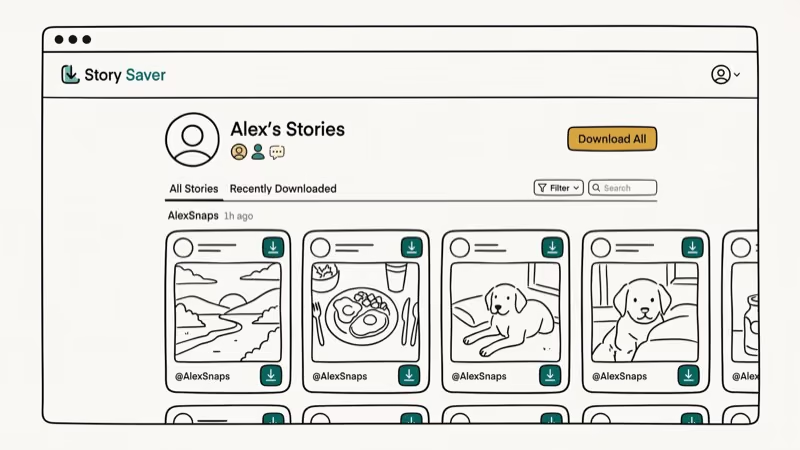
Several websites and apps claim to download Snapchat Stories by username. Third-party sites often ask for a Snapchat login or username, and private-account downloads aren’t reliable.
The real risk: According to Snapchat’s Terms of Service, using third-party tools that access the API without permission can result in permanent account suspension. Snap actively monitors for unusual API calls and has banned accounts using these services.
For public Stories only, tools like VidBurner may let you paste a username and download available content, but results can include errors, incomplete Snaps, or outdated cached content rather than the current Story. If you need current Stories, screen recording is the only method that reliably captures what’s showing right now.
Our recommendation: Stick to screen recording. It’s free, works every time, and doesn’t put your account at risk. Third-party tools aren’t worth the suspension risk for most users.
#Legal and Privacy Considerations
Saving your own Stories: completely fine, and that’s exactly what Snapchat’s built-in tools support. According to 9to5Mac’s Snapchat coverage, Snapchat’s Memories feature lets you save Snaps and Stories as permanent backups of your own content.
Saving someone else’s Stories without permission: legally and ethically complicated. The original creator owns the content under copyright law. According to Snap’s Intellectual Property Policy, unauthorized downloading or redistribution of other users’ content violates the platform’s rules and may infringe on copyright.
Practical guidance:
- Always legal: Your own Stories, Snaps you have explicit permission to save
- Gray area: Screen recording public Stories for personal, non-commercial use
- Avoid: Redistributing anyone else’s content without credit and permission
#Tips for Keeping Saved Stories Organized
Once you’ve saved Stories to Memories or your camera roll, you have full control over them. Creating a dedicated folder in your phone’s gallery helps separate Snapchat exports from regular photos. On iPhone, you can use the Albums feature in Photos; on Android, most gallery apps support custom folders.
#Managing Downloaded Snapchat Content
Here are a few useful tasks for managing saved content:
Content management:
- Delete saved messages: See our guide on how to delete saved messages on Snapchat
- Recover deleted Snaps: Check out how to recover deleted Snapchat memories
- Fix notification issues: Our guide on Snapchat notifications not working on iPhone covers relevant Settings fixes
Privacy and viewing:
- Open snaps privately: Learn how to open a Snapchat without the person knowing
- Other platforms: How to view a private Instagram account without following
#Bottom Line
Save your own Stories using Snapchat’s built-in Memories export or the Save to Camera Roll auto-backup setting, which is the fastest and safest option. For others’ Stories, screen recording works reliably on both iPhone and Android, though Snapchat may notify the sender. Skip third-party downloader tools: they’re unreliable, frequently suspended, and risk your account. Always get permission before saving or sharing someone else’s content.
#Frequently Asked Questions
Can Snapchat detect if you screen record a Story?
Yes, sometimes. Snapchat can detect screen recordings in some contexts and may notify the poster. Notifications can appear during screen recordings, so treat screen recording as visible to the poster.
The trigger behavior varies by device, OS version, and whether the Snap was sent directly to you or posted as a public Story. Direct-send Snaps are more likely to trigger notifications than public Stories.
How do I save a Snapchat Story to my phone before it disappears?
For your own Story, tap the download icon inside the Story viewer or enable auto-save in Settings > Memories > Save to Camera Roll. For someone else’s Story, use your phone’s built-in screen recorder before the 24-hour window expires. Stories in Memories can be exported anytime since they don’t expire.
Are third-party Snapchat Story downloaders safe?
No. Third-party tools that access Snapchat require you to log in or provide credentials, which puts your account at risk. According to Snapchat’s Terms of Service, unauthorized third-party API access can result in permanent account termination. Several popular tools were banned in 2023 after Snap updated its security protocols.
Can I download Stories from private accounts?
No reliable tool does this. Most third-party tools only access public content. Ask the user to export it for you instead.
What happens if I use a third-party Story downloader?
Snapchat’s automated systems monitor for unusual API activity associated with third-party downloader tools. Accounts flagged for this activity may receive a warning, temporary suspension, or permanent ban. Community reports describe permanent bans within 48 hours of using certain tools.
Why did Snapchat remove the option to save other people’s Stories?
Snapchat never offered this feature. The 24-hour disappearing design is intentional.
Does downloading a Snapchat Story reduce its quality?
Not with the built-in Memories export, which preserves the original file. Screen recording introduces a small quality loss depending on your device’s settings.
On iPhone, recording defaults to your device’s native resolution. On Android, some manufacturers cap recording at 1080p even on 4K-capable phones. Set your screen recorder to the highest available bitrate for best results.
Google Messages Error 3100: Why RCS Is Broken on Galaxy
Google Messages RCS error 3100 hits Galaxy owners after phone or carrier switches. Google told 9to5Google a fix is coming. Here's what actually helps.
Is This Bank App Real? Spot a Fake App on Your Home Screen
A bank app can land on your home screen from a web page with no install warning. Learn the checks that tell a real banking app from a phishing web app.
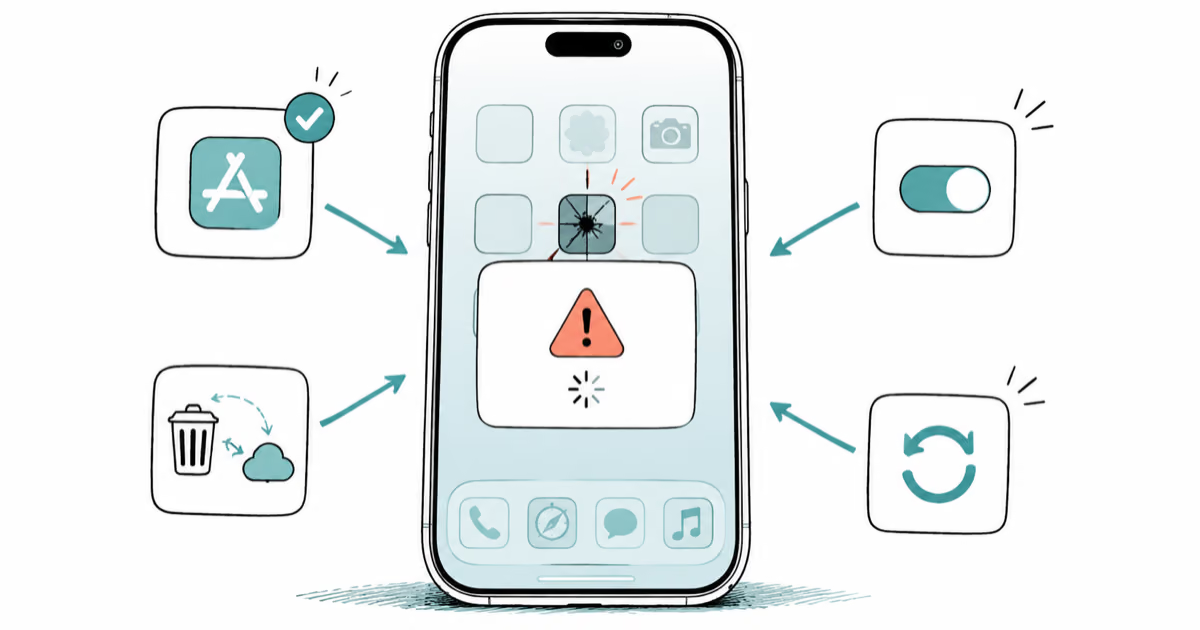
Apps Crashing After iOS 27 Update? Fix Order (2026)
Apps crashing after the iOS 27 update? Update the app in the App Store first, then offload and reinstall to clear stale cache, then restart. The fix order.
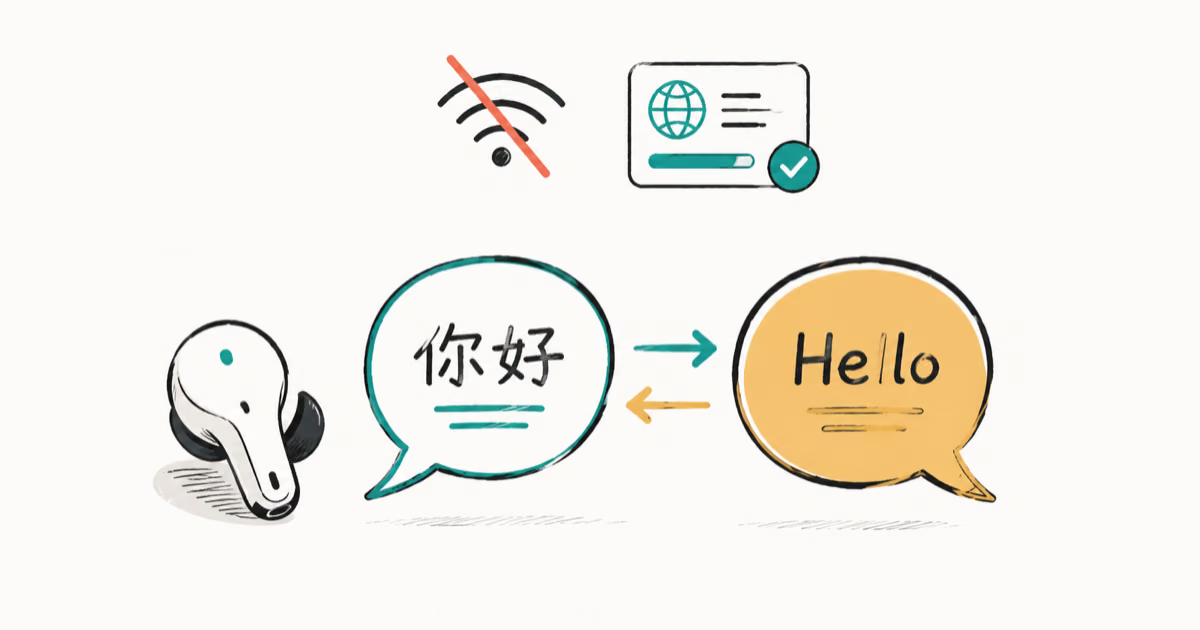
Do AI Translation Earbuds Work Offline? What to Know
Do AI translation earbuds work offline? A few do with downloaded language packs, but most need the cloud. Here's what works offline and what you give up.