Snapchat Notifications Not Working on iPhone: 8 Quick Fixes
Snapchat notifications not working on iPhone? Two iOS settings fix most cases in under 2 minutes. Step-by-step troubleshooting for iOS 17 and iOS 18.
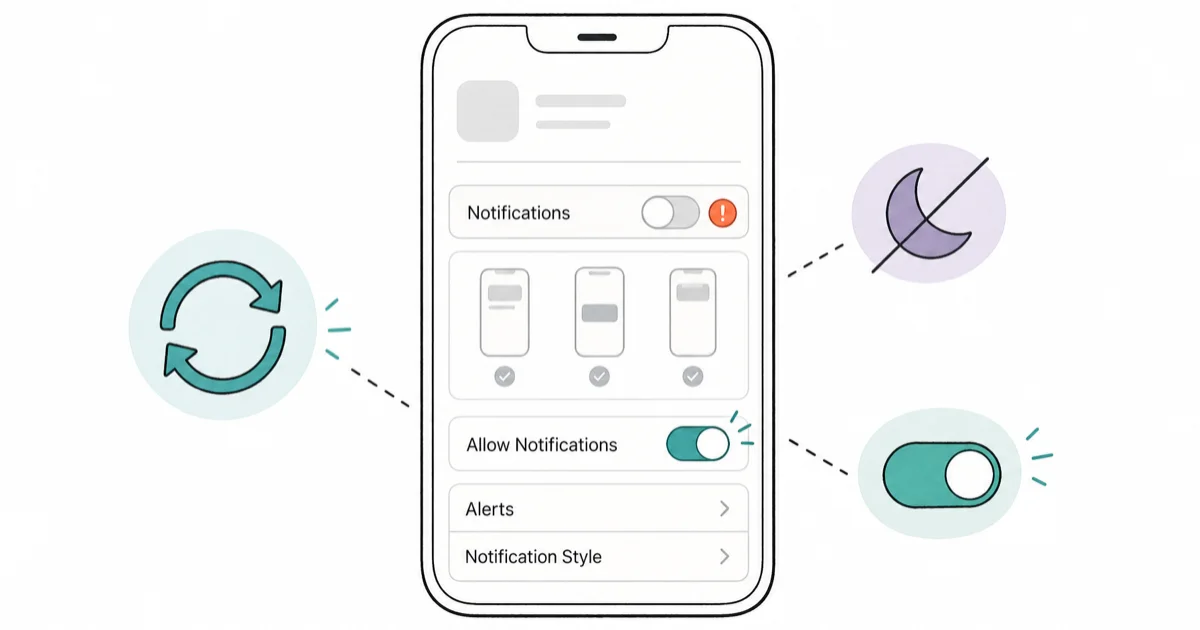
Quick AnswerOpen Settings > Notifications > Snapchat and turn Allow Notifications on. Then go to Settings > General > Background App Refresh and turn it on for Snapchat. Disable any active Focus mode in Control Center if alerts still don't arrive.
Snapchat notifications not working on iPhone usually trace back to two iOS toggles: system notification permission and Background App Refresh. The fixes below cover iOS 17 and iOS 18, and the first two checks resolve the issue in most cases in under a minute.
Settings>Notifications>Snapchatis separate from the toggles inside the Snapchat app. iOS sometimes flips this off after a major version update, and only the system toggle controls whether anything reaches your screen.- Background App Refresh in
Settings>Generalmust be enabled for Snapchat. Without it, the app can’t fetch chats while it’s closed and alerts stop arriving. - Focus profiles silently block alerts from every app unless you allow them per app. Check Control Center before changing any settings inside Snapchat.
- Low Power Mode pauses background fetches to save battery. While it’s active, Snapchat alerts can be delayed by an hour or longer.
- Clearing the in-app cache from
Settings>Account Actionsfixes most stuck-notification cases without losing your account, streaks, or saved chats.
#Why Are My Snapchat Notifications Not Working on iPhone?
Two layers control every Snapchat alert, and a break in either one stops notifications cold.
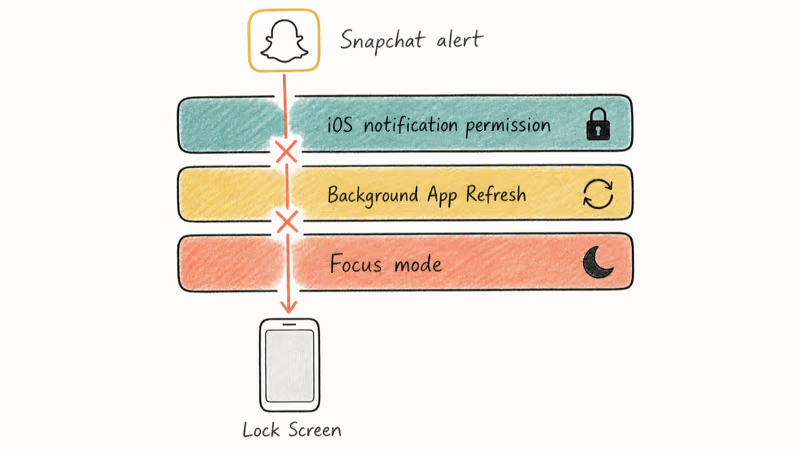
The first layer is the iOS notification permission at Settings > Notifications > Snapchat. The second is the per-app Background App Refresh toggle. Snapchat’s own in-app switches sit on top of both, so even when every internal toggle is on, an iOS-level block silently overrides them and you’ll see nothing on your Lock Screen — that’s the trap most users fall into when they only check inside the app.
According to Apple’s iPhone user guide on notification settings, apps must be granted permission individually, and that permission can be revoked at any time. Snapchat respects that gate. If iOS says no, Snapchat servers can deliver to Apple’s push gateway, but nothing reaches you.
A third layer trips up most people: Focus mode. Focus arrived in iOS 15 and silences notifications across every app unless you add an allowlist entry. The same filtering applies to legacy DND, Sleep, Work, and any custom profile you’ve created. A Focus profile you turned on hours ago and forgot is one of the most common silent causes of missing alerts.
#Fix Notification Settings in iOS
Start here. This single setting fixes most cases.
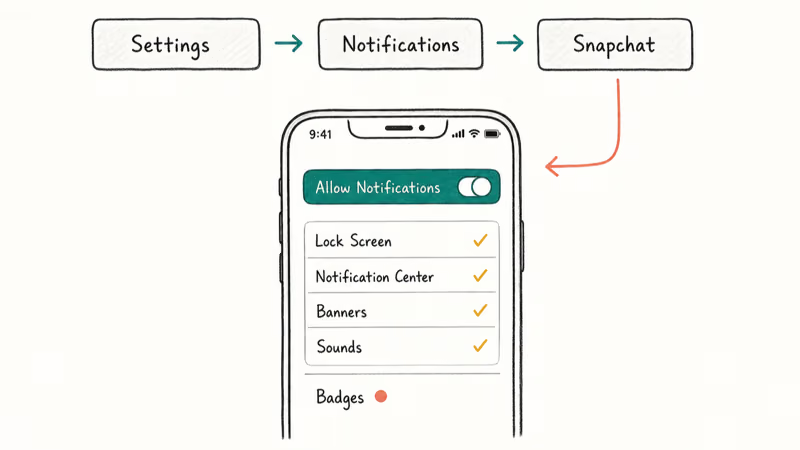
- Open the Settings app.
- Tap Notifications.
- Scroll down to the alphabetical app list and tap Snapchat.
- Make sure Allow Notifications is on (the toggle should be green).
- Confirm at least one alert style is enabled: Lock Screen, Notification Center, or Banners.
- Set Banner Style to Persistent if alerts vanish before you can read them.
- Turn on Sounds and Badges so you get a ping plus a red number on the icon.
Once Allow Notifications is back on, Snapchat usually starts delivering chats within seconds. If other messaging apps are also acting up, the same pattern usually applies. The same iOS-level toggle is the culprit behind Slack notifications not working and Instagram notifications not working too.
If every other app on your phone is silent too, the issue is system-wide, not Snapchat-specific. Check Settings > Notifications > Show Previews and Settings > Sounds & Haptics next. A muted ringer or a stuck Silent Mode switch can hide push alerts even when the toggle says on. Apple’s iPhone notification troubleshooting guide recommends checking these system-level controls before troubleshooting any individual app, because a single muted setting accounts for what looks like dozens of different bug reports.
For phone-wide Focus, Notification Summary, and per-app failures, use the ten system-wide iPhone notification fixes.
#Does Background App Refresh Need to Be On for Snapchat?
Yes. Without Background App Refresh, Snapchat can only check for new messages when the app is open. Push notifications still ping you for some chat events, but stories, group activity, and many message types rely on the app fetching data quietly in the background.
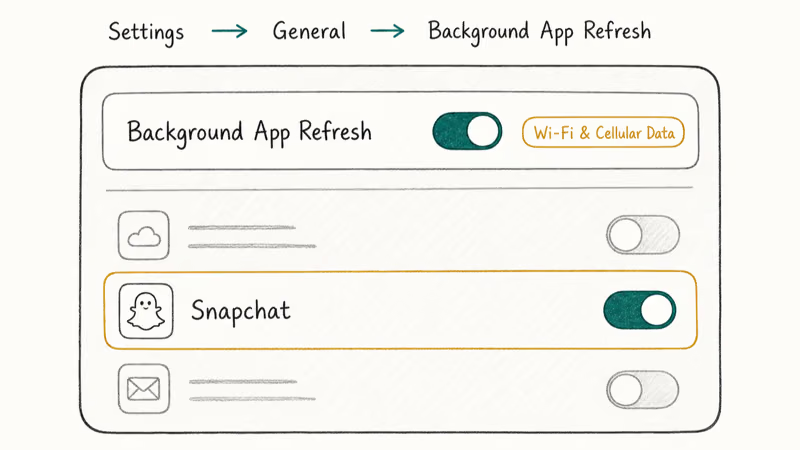
Turn it on in two places:
- Go to Settings > General > Background App Refresh.
- Confirm the master toggle at the top is on. If it’s off, every app in the list is dimmed and disabled.
- Set the dropdown to Wi-Fi & Cellular Data so Snapchat can refresh on either connection.
- Scroll down to Snapchat and confirm its individual toggle is on.
With Background App Refresh disabled, Snapchat alerts get delayed by several minutes whenever the app is closed. Re-enabling the toggle restores real-time delivery on the very next chat.
Battery state matters here. Apple confirms in its iPhone battery support article that Low Power Mode disables Background App Refresh on iPhone 6s and later, holding the feature off until the device charges past a threshold. If your battery sits below 20%, iOS may have flipped the feature off automatically. Plug in or charge above 25% before retesting.
#Check Active Focus Modes
Focus is the silent killer.
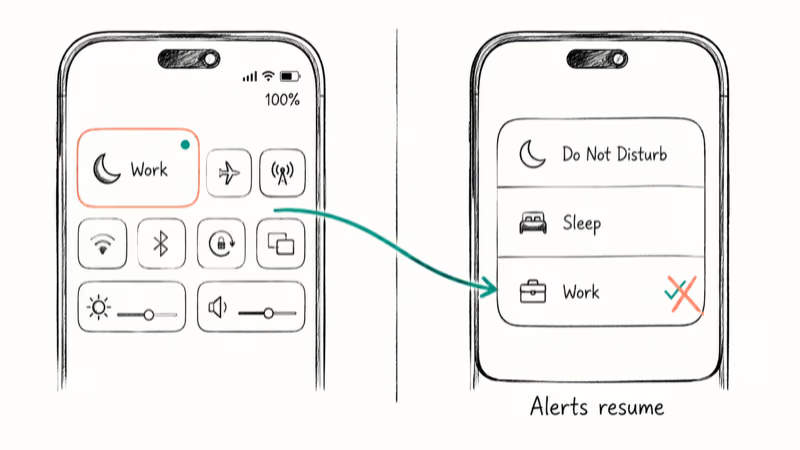
Every Snapchat setting can be correct and you still get nothing because a Focus profile you enabled at the gym last weekend is still running. The system blocks alerts before they ever reach the Snapchat app code, which is why no amount of in-app fiddling helps until the Focus profile gets disabled.
Open Control Center:
- On Face ID iPhones, swipe down from the top-right corner of the screen.
- On Touch ID iPhones, swipe up from the bottom edge.
Look for the Focus tile. If it shows a colored icon and a profile name (legacy DND, Sleep, Work, Personal, or anything custom), that profile is active right now.
Tap the Focus tile and select the active mode to turn it off. Snapchat alerts should resume in seconds.
If you want Snapchat alerts during a specific Focus, open Settings > Focus > tap the profile name > Apps > Add and add Snapchat to the allowed list. The Focus then runs as planned but lets Snapchat through. Disabling a profile from Control Center doesn’t delete it. The profile reappears at its next scheduled trigger, so you don’t lose any saved configuration by turning it off temporarily.
#Disable Low Power Mode
Low Power Mode prioritizes battery over background activity. While it’s on, Snapchat can’t pull chats in the background and notification timing becomes unreliable.
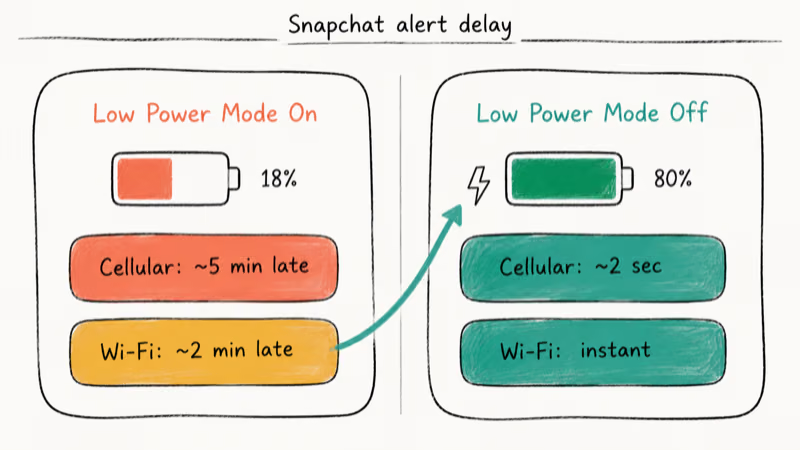
To turn Low Power Mode off:
- Open Settings > Battery.
- Toggle Low Power Mode off.
- Check the battery percentage at the top of the same screen so you know how long you can run without it.
You can also disable Low Power Mode from Control Center after adding the Battery toggle there. Settings > Control Center > Customize Controls is where the toggle lives.
That trick saves a tap.
With Low Power Mode active, individual Snaps tend to arrive several minutes late on cellular and a little late on Wi-Fi. With Low Power Mode off, delivery is effectively instant on Wi-Fi and adds only a slight handshake delay on cellular.
#Clear Snapchat Cache and Reinstall
If notifications still misbehave, corrupted local data is the most common remaining cause. Clearing the cache resets temporary files without touching your account.
- Open Snapchat and tap your profile icon (top left).
- Tap the gear icon to open Settings.
- Scroll down to Account Actions.
- Tap Clear Cache > Clear All.
Snapchat closes and relaunches automatically. None of your chats, memories, or streaks are affected by clearing the cache, because everything personal lives on Snapchat servers and the cache only holds temporary lookup data. The same Account Actions menu also lets you clear recents on Snapchat if you want a fresh contact list while you’re in there poking around.
Cache clearing is safe.
If clearing the cache doesn’t fix it, reinstall the app:
- Long-press the Snapchat icon on your Home Screen.
- Tap Remove App > Delete App > Delete.
- Open the App Store and search for Snapchat.
- Tap the cloud or Get button to reinstall.
- Sign in with your existing credentials.
Snapchat’s help center confirms in its account security guide that account data, friends, streaks, and memories are stored on Snapchat servers, so reinstalling doesn’t erase any of it. Saved Stories, Memories, group chats, custom Bitmoji, and any pinned conversations sync back down on first login. The reinstall replaces only the local cache and the iOS notification permission record, which is exactly the pair of things you want refreshed when alerts have stopped flowing.
After signing back in, return to Settings > Notifications > Snapchat and turn Allow Notifications on again. iOS treats a fresh install as a brand-new app and may have reset the toggle.
If the app keeps crashing after reinstalling, our walkthrough on Snapchat keeps crashing covers deeper iOS storage and account fixes. For broader app issues like missing AR effects, see Snapchat filters not working.
#Reset Notification Permissions and Sign Out
When the standard fixes fail, force iOS and Snapchat to renegotiate their notification handshake.
First, sign out and back in:
- In Snapchat, tap your profile icon > gear icon > scroll to the bottom.
- Tap Log Out and confirm.
- Reopen the app and sign in with your username and password.
- When iOS prompts you to allow notifications, tap Allow.
If you need a refresher on credentials, our guide on how to log out of Snapchat walks through every step. Try this first.
It’s quick.
If iOS doesn’t prompt you (because permission was previously denied), reset all location and privacy prompts:
- Go to Settings > General > Transfer or Reset iPhone > Reset.
- Tap Reset Location & Privacy.
- Enter your passcode and confirm.
This is non-destructive. Photos, apps, and accounts stay in place. The next time you open Snapchat, iOS asks again for notification, location, and microphone permissions. Tap Allow on the notification prompt and the system permission gets re-granted clean.
For users on iOS 18, Apple recommends in its iOS 18 notification setup guide checking the new Notification Summary feature too. If you accidentally added Snapchat to a scheduled summary, alerts batch into a single delivery instead of arriving in real time. Settings > Notifications > Scheduled Summary controls this behavior, and you can either remove Snapchat from the summary list or turn the entire feature off if you’d rather receive every alert immediately.
#Bottom Line
Toggle Settings > Notifications > Snapchat on, then turn on Background App Refresh for Snapchat under Settings > General. Those two steps fix the issue for most iPhone users. If alerts are still missing, swipe into Control Center and disable any active Focus profile, then clear the in-app cache from Settings > Account Actions. Reset Location & Privacy is your last non-destructive step before reinstalling Snapchat.
#Frequently Asked Questions
Does iOS reset Snapchat notification permissions during updates?
Sometimes. Major iOS upgrades occasionally flip notification toggles back to off for individual apps. After installing iOS 17 or iOS 18, take 10 seconds to check Settings > Notifications > Snapchat and confirm Allow Notifications is still on.
Can I disable a Focus profile without losing its schedule?
Yes. Tapping a Focus tile in Control Center turns it off only for the current session. Your custom rules, allowed people, allowed apps, and time-based triggers all remain saved. The profile reactivates at its next scheduled trigger.
What’s the difference between legacy DND and Focus modes?
Legacy DND was a single, blanket silence-everything mode. Focus is a flexible system that lets you build different profiles, such as Work, Sleep, or a custom one, and decide which apps and contacts can break through. Apple kept the older silence mode as one of the default Focus profiles, so the original name still appears in Control Center.
How long does clearing the Snapchat cache take?
About 5 to 10 seconds. The app shows a brief progress indicator and then relaunches itself. Your account, friend list, snaps, memories, and streaks aren’t touched, because all of that data lives on Snapchat servers.
Will reinstalling Snapchat delete my streaks?
No. Snapchat keeps streaks tied to your account, not to your device, so a reinstall is similar to switching phones. Once you log back in after reinstalling, every active streak shows up in your chat list with the same flame icon and numeric count. The only thing you lose is the local app cache, which is exactly what needs to go when alerts have been misbehaving.
Why are my Snapchat alerts late on Low Power Mode?
Low Power Mode pauses Background App Refresh and reduces network polling to extend battery life. Snapchat can’t fetch new messages quietly, so alerts queue up until the next time you open the app or until you charge above the threshold that ends Low Power Mode.
Should I delete Snapchat or reset my iPhone first?
Try Reset Location & Privacy before reinstalling. It clears the permission cache iOS keeps for every app and forces fresh prompts on next launch, which usually re-grants notification access in one step. A full app reinstall is the next step if that doesn’t work.
Apple Siri Settlement: Who Qualifies and How to Claim
Apple's $250 million Siri settlement covers iPhone 15 Pro and iPhone 16 models bought June 2024 to March 2025. See who qualifies and how claims work.
iOS 26.6.1 Security Update: What Apple Fixed and Who Gets It
Apple released iOS 26.6.1 on August 17 with 29 security fixes, including an IPSec interception bug. See what it patches, who gets it, and how to update.
iPhone Adaptive Power: How It Works and When to Use It
Learn how iPhone Adaptive Power works, which models support it, what it changes, and when Low Power Mode is still the better battery-saving choice.
How to Transfer Data to a New iPhone Without iCloud
Move everything to your new iPhone without iCloud: Quick Start device-to-device transfer, wired migration, and encrypted Finder or iTunes backups.