Fix Windows Installation Error 0x80300024 (6 Methods)
Fix Windows installation error 0x80300024 by disconnecting extra drives, adjusting BIOS boot order, and formatting the target partition during setup.
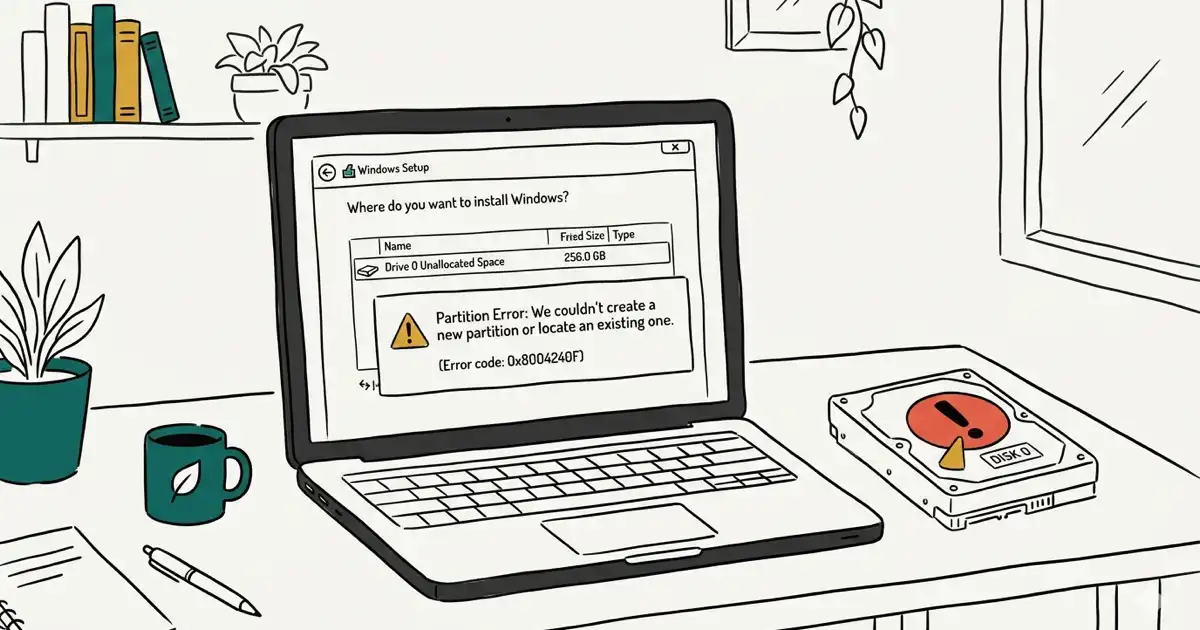
Quick AnswerError 0x80300024 indicates Windows can not install to the selected disk. Disconnect unnecessary drives, set the correct boot order in BIOS, format the target partition, and make sure you have enough disk space.
Error 0x80300024 stops Windows installation with “Windows is unable to install to the selected location.” It appears when the installer can’t write to your target drive, most often because multiple connected drives are confusing the setup process.
- Disconnecting extra hard drives and keeping only the target drive connected resolves the error in most cases
- Error 0x80300024 means Windows can’t write to the partition, not that your drive is broken
- Setting BIOS boot order with USB installer first and target drive second prevents bootloader conflicts
- Deleting and reformatting the target partition via Drive options (advanced) clears partition table issues
- Using a USB 2.0 port for installation media resolves compatibility problems on some boards
#Common Causes of Error 0x80300024
The Windows installer can get confused when multiple drives are connected because setup may try to place boot files on a different disk from the target Windows partition.
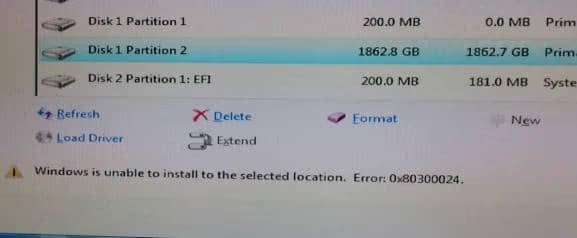
The specific triggers:
- Multiple connected drives sending conflicting signals to the installer
- Wrong boot order in BIOS causing bootloader placement issues
- Insufficient free space on the target drive (Windows 10 needs 32 GB minimum)
- Corrupted partition table left over from a previous OS installation
Similar installation errors include 0x80300001 (BIOS/UEFI mismatch) and 0x80070570 (corrupted media).
Another related code is 0x80070652, which appears when update conflicts collide with the install process.
#How Do You Fix Error 0x80300024?
Start by disconnecting extra drives. That removes the most common bootloader conflict behind this error.
#Fix 1: Disconnect All Extra Drives
Power off your PC completely. Open the case and unplug the SATA or power cables from every drive except the one you’re installing Windows on. Leave only the target drive and your installation USB connected.
Reconnect the other drives after installation. Windows detects them automatically.
#Fix 2: Set the Correct Boot Order
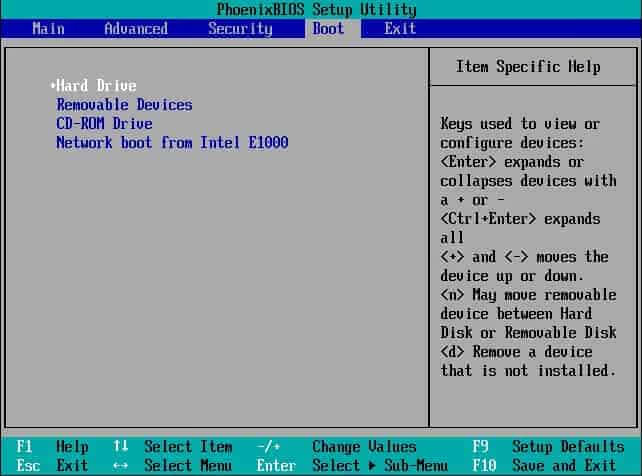
If you can’t physically disconnect drives (laptop, or drives share a cable), change the BIOS boot order instead.
Restart and enter BIOS (press F2, DEL, or F12 during boot). Go to the Boot tab and set your USB installation drive as first and your target installation drive as second. This tells the installer exactly where to put the bootloader. According to PCMag’s boot order guide, incorrect boot priority is the second most common cause of installation location errors.
#Fix 3: Format the Target Partition
On the drive selection screen, click Drive options (advanced) and delete each existing partition. Then select the unallocated space and click New.
Warning: deletes all data on the target drive. This can clear mixed or damaged partition tables left behind by another operating system.
#Fix 4: Free Up Disk Space
Windows 10 needs 32 GB free. Windows 11 needs 64 GB.
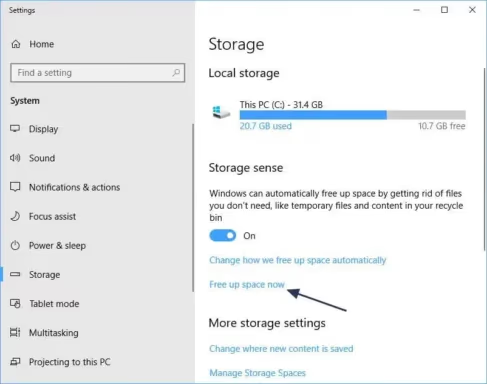
Run Disk Cleanup if you have a working Windows installation, or connect the drive to another PC and delete files from there. If the drive is under 64 GB total, you’ll need a larger one for Windows 11.
#Fix 5: Use Diskpart to Deep-Clean the Drive
If formatting through the installer doesn’t work, Diskpart removes everything including hidden recovery partitions.
Boot from installation media and press Shift + F10 for Command Prompt. Run:
diskpart
list disk
select disk X
clean
Replace X with your target drive number. After running clean, return to the installer and create a new partition. This removes stubborn OEM recovery partitions and hidden metadata that the normal Delete button may leave behind.
#Fix 6: Try a Different USB Port
Some motherboards have USB compatibility issues during the installation boot phase. Move your installation USB from a USB 3.0 port (blue) to a USB 2.0 port (black).
If that doesn’t help, try creating new installation media. Download the Microsoft Media Creation Tool and build a fresh USB drive. Corrupted installation media can cause 0x80300024 even when the target drive is fine.
Disk-related errors like 0x80070426 and 0x80004002 can also appear when system components are corrupted.
#Should You Update Your BIOS Firmware?
Outdated BIOS can cause compatibility issues with newer drives and partition styles. Visit your motherboard manufacturer’s website, download the latest BIOS version for your exact model, and follow those instructions closely.
According to BIOS background, BIOS firmware initializes hardware before the operating system starts. Outdated firmware can therefore cause installation failures on older systems, especially when newer NVMe drives or partition styles are involved.
#Verifying Installation Media
A corrupted USB drive causes the same error even when your target drive is perfectly fine. According to the Microsoft Media Creation Tool page, Microsoft provides the official download for creating Windows installation media. Build a new USB drive before blaming the target disk.
#Related Installation Errors
Error 0x80300024 shares root causes with several other installation codes. The 0x0000007B INACCESSIBLE_BOOT_DEVICE error appears when Windows loses access to the system partition during boot, often after a SATA mode change. If you’re seeing 0xc0000005 instead, that’s a memory access violation pointing to faulty RAM rather than drive issues.
For post-installation problems, check our guides on the Video Scheduler Internal Error and Windows Update error 0x8007001f.
#Preventing Future Installation Problems
Always disconnect extra drives before starting a Windows installation. Keep your BIOS updated and use the official Microsoft Media Creation Tool to build installation USB drives. These habits prevent 0x80300024 and most other installation errors.
#Bottom Line
Disconnect extra drives first. If that doesn’t work, set the correct boot order in BIOS and format the target partition. These three steps fix the vast majority of 0x80300024 errors. For stubborn cases, use Diskpart to deep-clean the drive or update your BIOS firmware.
#Frequently Asked Questions
What does error 0x80300024 mean?
The Windows installer can’t write to your selected drive. Multiple connected drives or a wrong boot order is usually the cause.
Can I fix 0x80300024 without losing my data?
Depends on the fix. Disconnecting drives or changing BIOS settings doesn’t touch your data at all. Deleting partitions or running Diskpart clean erases everything on the target drive, so back up first.
Does error 0x80300024 mean my hard drive is broken?
No. It’s a configuration issue, not hardware failure. The drive is fine.
How long does fixing this error take?
The basic checks are quick, but the full installation still depends on your drive speed, USB media, and Windows version.
Can I use a USB drive to install Windows?
Yes. Create a bootable USB using the Microsoft Media Creation Tool with a USB drive that has at least 8 GB of storage. For best compatibility, plug it into a USB 2.0 port on older motherboards (pre-2018) and a USB 3.0 port on newer ones for faster file copying during the installation process.
How do I convert MBR to GPT for Windows 11?
Boot from installation media and press Shift + F10 to open Command Prompt. Run diskpart, then select disk X, clean, and convert gpt. This wipes the drive and converts it to GPT format, which is what Windows 11 requires alongside UEFI boot mode. You’ll need to reinstall everything from scratch after converting since clean erases all partitions and data on the selected disk.
Is this error related to Windows version?
No. It appears on Windows 7, 8, 10, and 11 with identical causes.
Can a virus cause error 0x80300024?
Extremely unlikely. Malware that damages the partition table could theoretically trigger it, but the error is usually caused by multiple connected drives, an incorrect boot order, or insufficient disk space on the target partition rather than any form of malware infection or virus activity.
Best Laptop for Running LLMs in 2026: Memory Comes First
The best laptop for running LLMs is a memory purchase first. Compare MacBook unified memory against NVIDIA laptop VRAM, and see what each tier really runs.
How to Run a Local LLM on Windows: A 2026 Setup Guide
Run a local LLM on Windows with LM Studio or Ollama. Pick a model that fits your GPU memory, keep every prompt offline, and skip the monthly bill.
Bluetooth Not Working on Snapdragon X? Fixes for 2026
Bluetooth not working on your Snapdragon X Copilot+ PC? Generic audio, mice, and keyboards work, but vendor apps often lack an ARM build. Fixes inside.
Docker Desktop and WSL2 Not Working on Snapdragon X? Fix It
WSL2 runs fine on Snapdragon X, but Docker Desktop ARM is Early Access and throws WSL errors. Use WSL2 plus native ARM64 Ubuntu and Docker Engine.