Fix Windows Error 0xc0000005: Access Violation (6 Methods)
Fix Windows error 0xc0000005 (access violation) by testing RAM, running SFC/DISM, and updating drivers. Proven fixes that work on Windows 10 and 11.
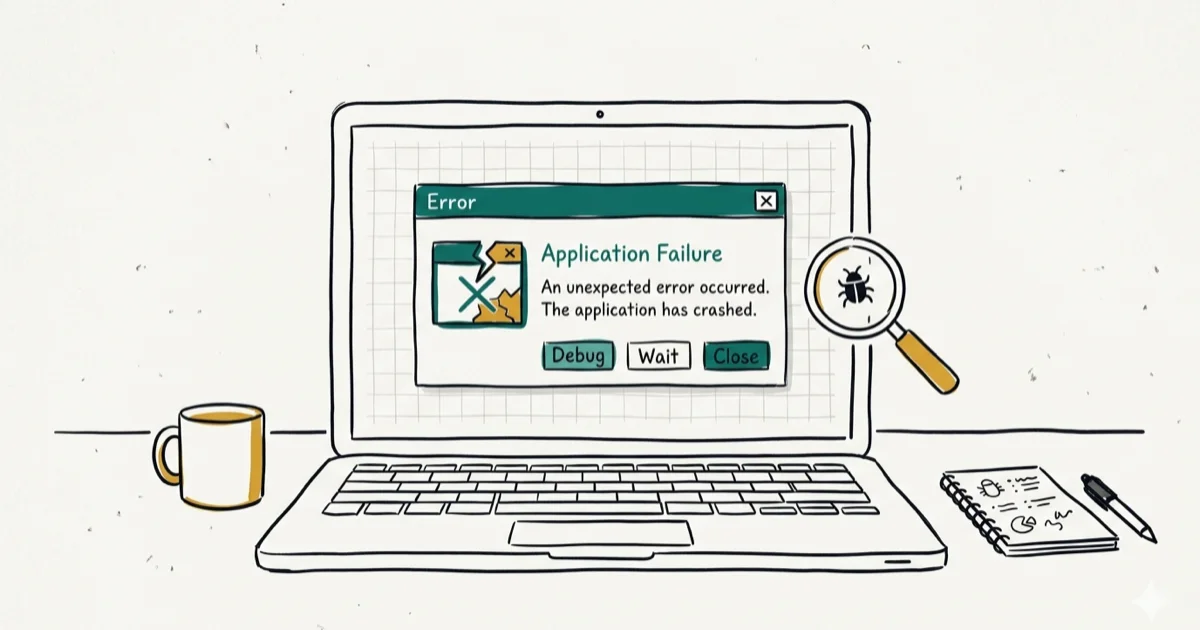
Quick AnswerError 0xc0000005 is an access violation that occurs when a program tries to use unauthorized memory. Check for faulty RAM, run SFC to repair corrupted system files, and update your drivers to resolve it.
Error 0xc0000005 crashes programs or triggers a Blue Screen of Death when software tries to access memory it’s not allowed to use. It’s one of the most common Windows errors, showing up during app launches, game sessions, and Windows updates.
- Error 0xc0000005 is an access violation where a program reads or writes memory it’s not authorized to use
- Faulty RAM is the top hardware cause; run Windows Memory Diagnostic to test your modules
- Running sfc /scannow repairs corrupted system files that trigger the error
- Outdated drivers with yellow exclamation marks in Device Manager are a frequent software cause
- Malware can corrupt system files and cause access violations; run a full scan first
#Common Causes of Error 0xc0000005
The error means a program tried to read or write a memory address it doesn’t have permission to access.
This error has both hardware and software roots. Faulty RAM is the most consistent hardware trigger, while corrupted system files are the most common software cause. SFC often turns up corrupted files when an access violation keeps recurring.
The specific causes include:
- Faulty or failing RAM modules causing random memory access errors
- Corrupted Windows system files that programs depend on
- Outdated or incompatible drivers creating memory conflicts
- Malware infections damaging system files and memory structures
- Failed Windows updates leaving the system in an inconsistent state
This error is different from 0xc00d36c4 (media codec issue) or 0x0000007b (boot device error). Each has its own causes.
#How Do You Fix Error 0xc0000005?
Start with the RAM test since hardware issues are the hardest to diagnose through trial and error. If RAM checks out, move to software fixes.
#Fix 1: Test Your RAM
Open the Start menu and type Windows Memory Diagnostic. Click Restart now and check for problems. The test runs during the next boot and takes about 10-15 minutes.
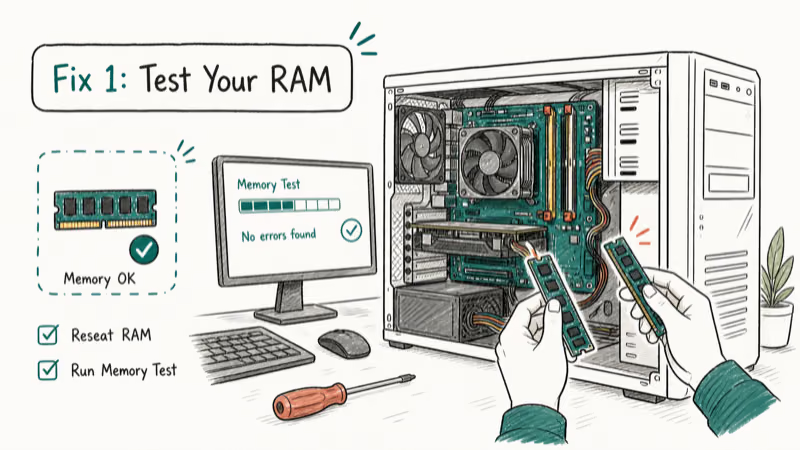
If the diagnostic flags errors on a memory module, replacing that stick usually clears the crashes. When errors appear and you have more than one stick installed, remove them one at a time and rerun the diagnostic after each change, so you can isolate the single faulty module instead of replacing all of your RAM at once.
#Fix 2: Run SFC and DISM
Corrupted system files are the most common software cause. Open Command Prompt as administrator:
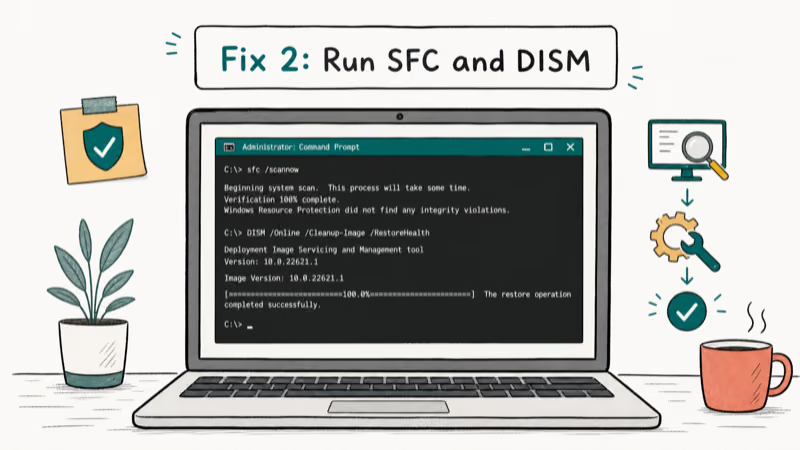
sfc /scannowIf SFC reports unrepairable files, run DISM first and then SFC again:
DISM /Online /Cleanup-Image /RestoreHealthOn a Windows 11 PC throwing 0xc0000005, SFC can find and repair the corrupted files, and the error often clears after a reboot. According to PCMag’s system repair guide, running DISM before a second SFC pass catches files that SFC can’t repair on its own.
#Fix 3: Update Your Drivers
Open Device Manager (right-click Start > Device Manager). Look for any device with a yellow exclamation mark. Right-click the flagged device and select Update driver.
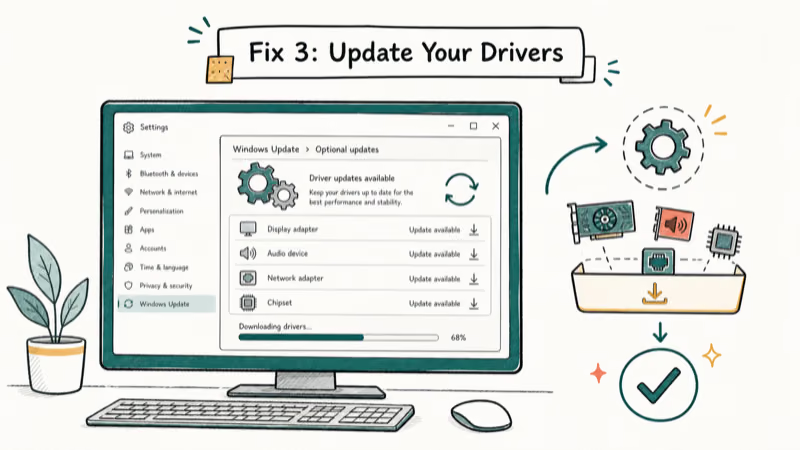
Pay special attention to graphics drivers and chipset drivers since these interact with memory the most. If hunting down each driver manually feels tedious, a driver updater like Driver Easy scans the system and fetches current versions in one pass. An outdated Nvidia graphics driver is a common culprit for 0xc0000005 crashes in games, and updating to the latest version usually stops them.
As an Amazon Associate, fone.tips earns from qualifying purchases. Some links on this page are affiliate links.
#Fix 4: Run a Full Malware Scan
Malware corrupts system files and causes access violations. Open Windows Security > Virus & threat protection > Scan options > Full scan and click Scan now.
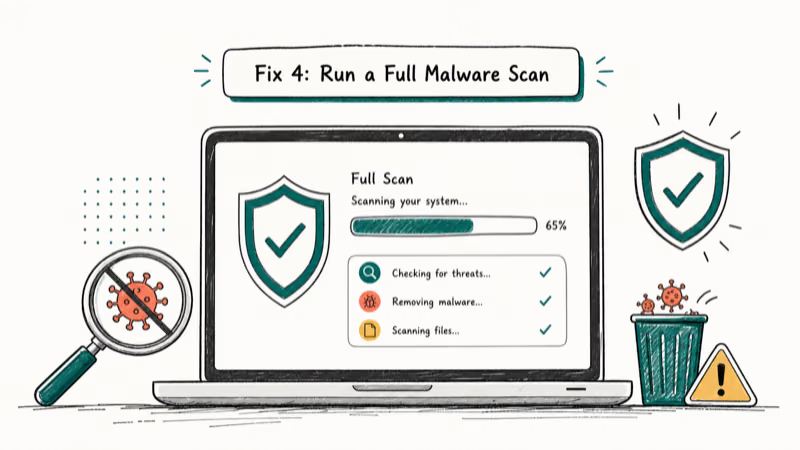
A trojan infection can modify system DLLs and trigger access violations. After removing the infection and running SFC to repair the damaged files, the 0xc0000005 errors typically stop. Consider using Malwarebytes alongside Windows Defender for a more thorough scan.
#Fix 5: Perform a Clean Boot
A clean boot starts Windows with only essential services, helping identify which program causes the conflict.
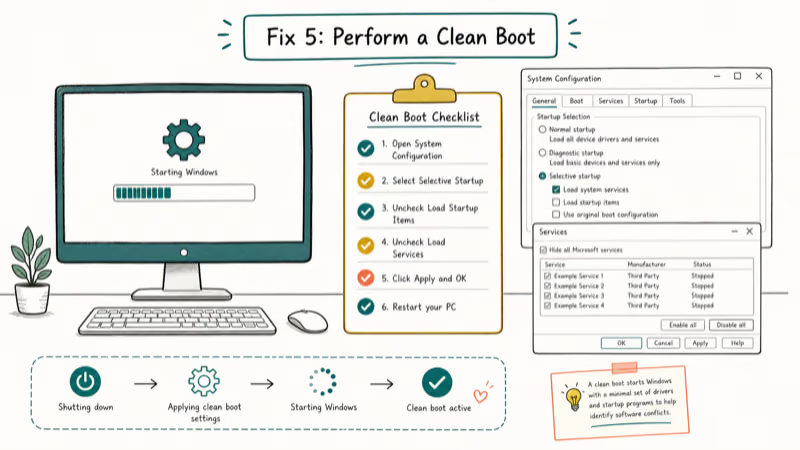
Type msconfig in the Start menu and open System Configuration. Go to the Services tab, check Hide all Microsoft services, then click Disable all. Go to the Startup tab, click Open Task Manager, and disable all startup items. Restart your PC.
If the error disappears in clean boot, enable services one by one until you find the culprit.
#Fix 6: Adjust Data Execution Prevention (DEP)
DEP blocks programs from running code in memory regions marked as non-executable. Some legitimate programs trigger 0xc0000005 because of overly strict DEP settings.

Open System Properties (right-click This PC > Properties > Advanced system settings). Click Settings under Performance. Go to the Data Execution Prevention tab and try switching to Turn on DEP for essential Windows programs and services only.
#Is Error 0xc0000005 Related to Specific Programs?
Yes. If the error only happens when launching one particular application, that program is likely the cause. Try these steps:
- Reinstall the program with a fresh download
- Run as administrator (right-click > Run as administrator)
- Check for program updates from the developer’s website
For example, 0xc0000005 often stops after updating an older Adobe Photoshop build that had been failing on launch, since the patched version no longer touches the restricted memory region. According to Wikipedia’s overview of access violations, this kind of fault happens when a process reads or writes memory outside the range the operating system granted it.
If you’re seeing related errors in programs like Outlook, check our guides on Outlook error 0x8004060c and error 0x80048002.
#Repairing Windows Without Reinstalling
If none of the above fixes work, try an in-place Windows repair. This reinstalls Windows while keeping your files and apps intact.
Download the Microsoft Media Creation Tool and select Upgrade this PC now. According to Microsoft, this option reinstalls Windows and repairs corrupted system components while keeping your personal files and apps in place. The process usually takes 30-60 minutes. For more details, see our guide on repairing Windows 10 without a CD.
#Symptoms and Impact of Error 0xc0000005
The error shows up in different ways depending on what triggered it. Application crashes are the most common: a program freezes, shows the 0xc0000005 code, and closes. Blue Screens happen when a system process or driver is affected. Failed installations occur when Windows Update or a setup wizard hits the access violation during file extraction.
If you’re seeing the error intermittently (every few hours or days), faulty RAM is the most likely cause. If it’s consistent with one program, the issue is software-specific.
#Preventing Future Access Violations
Run Windows Memory Diagnostic once per quarter if you experience intermittent crashes. Keep drivers updated and run sfc /scannow after any failed Windows Update since incomplete updates corrupt system files.
For related issues, check our guide on error 0x80040610.
#Bottom Line
Test your RAM first with Windows Memory Diagnostic. If that passes, run SFC/DISM to repair system files and update your drivers. These three steps fix the majority of 0xc0000005 errors. For program-specific crashes, reinstall or update the affected application.
#Frequently Asked Questions
What does error 0xc0000005 mean?
It’s an access violation. A program tried to read or write a memory address it isn’t authorized to use. The crash can be caused by faulty RAM, corrupted system files, bad drivers, or malware.
Can error 0xc0000005 damage my computer?
The error itself doesn’t cause permanent damage. But faulty RAM can corrupt files over time, and malware spreads if untreated. Fix the root cause promptly.
How do I know if RAM is causing the error?
Run Windows Memory Diagnostic (type it in the Start menu). If it reports errors, you have a faulty RAM module. You can also try removing one stick at a time and testing whether the error persists with each individual module installed.
Can I fix 0xc0000005 without reinstalling Windows?
Yes. SFC/DISM repairs, driver updates, and malware removal fix most cases. Only consider an in-place repair or reinstall as a last resort.
Does this error affect both Windows 10 and 11?
Yes. Error 0xc0000005 appears on all Windows versions from 7 through 11. The fixes are the same across versions because they all use the same memory management architecture. The error code hasn’t changed since Windows XP, and the SFC/DISM tools work identically on all modern versions.
Can antivirus software cause 0xc0000005?
Yes, overzealous antivirus software can block legitimate memory access and trigger the error. Try temporarily disabling your antivirus to test. If the error stops, add the affected program to your antivirus exceptions list.
Is error 0xc0000005 the same as a Blue Screen?
Not always. It usually crashes a single app. But if a critical system process is affected, you’ll get a full Blue Screen (BSOD).
Should I replace my RAM if the memory test fails?
Yes. Faulty RAM causes unpredictable errors across all programs and can corrupt files silently. Replace the failing module. RAM is relatively inexpensive (a 16 GB DDR4 stick costs $25-40 in 2026) and straightforward to install.

Best Laptop for Running LLMs in 2026: Memory Comes First
The best laptop for running LLMs is a memory purchase first. Compare MacBook unified memory against NVIDIA laptop VRAM, and see what each tier really runs.

How to Run a Local LLM on Windows: A 2026 Setup Guide
Run a local LLM on Windows with LM Studio or Ollama. Pick a model that fits your GPU memory, keep every prompt offline, and skip the monthly bill.

Bluetooth Not Working on Snapdragon X? Fixes for 2026
Bluetooth not working on your Snapdragon X Copilot+ PC? Generic audio, mice, and keyboards work, but vendor apps often lack an ARM build. Fixes inside.
Docker Desktop and WSL2 Not Working on Snapdragon X? Fix It
WSL2 runs fine on Snapdragon X, but Docker Desktop ARM is Early Access and throws WSL errors. Use WSL2 plus native ARM64 Ubuntu and Docker Engine.