Fix Windows Update Error 0x80070020 (File in Use Error)
Fix Windows Update error 0x80070020 (file in use) on Windows 11 and 10. Learn antivirus fixes, update component resets, and Safe Mode solutions.
Quick AnswerError 0x80070020 blocks Windows Update when files are locked by another process. Fix it by disabling antivirus temporarily, resetting Windows Update components, clearing SoftwareDistribution folder, or running updates in Safe Mode. Antivirus interference is a common cause.
Error 0x80070020 appears during Windows Update with the message “Windows could not search for new updates” or “There were some problems installing updates.” This error occurs when Windows Update can’t access files because another program (usually antivirus software) has locked them. The error prevents both feature updates and cumulative updates from installing.
Several proven fixes resolve this file-in-use error on Windows 11 (23H2) and Windows 10 (22H2) in 2026, ranging from a quick antivirus pause to a full update-component reset.
- Antivirus real-time scanning is the most common trigger for 0x80070020 — disable it for 15 minutes before running Windows Update.
- Add C:\Windows\SoftwareDistribution and C:\Windows\System32\catroot2 to your antivirus exclusion list to prevent recurring errors.
- Resetting Windows Update components by renaming the SoftwareDistribution folder resolves many stubborn cases.
- Running Windows Update in Safe Mode bypasses file-locking issues and often succeeds where normal mode fails.
- SFC and DISM scans together fix the rarer cases caused by corrupted system files, with the full scan process taking about 20-40 minutes
#What Causes Error 0x80070020?
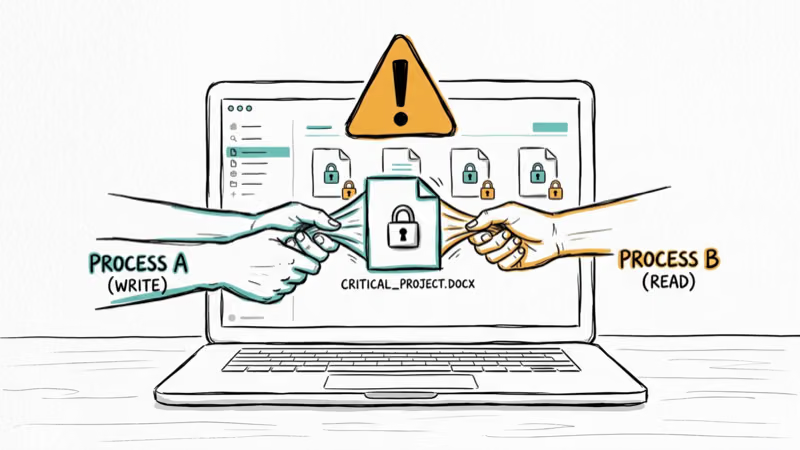
According to Microsoft, 32 (0x20) is ERROR_SHARING_VIOLATION, the Windows error for a process that can’t access a file because another process is using it; the definition appears in Microsoft’s system error table. That is why 0x80070020 behaves like a file-in-use Windows Update failure. The most common causes are:
- Antivirus real-time scanning - Security software locking update files (the most common cause)
- Corrupted Windows Update components - Broken BITS or Windows Update service
- Background processes - Programs accessing update files during installation
- Corrupted system files - Damaged Windows files preventing updates
Across all four scenarios, antivirus software, backup tools, and other background scanners trigger the error most consistently. The practical fix follows the same sharing-violation meaning in Microsoft’s system error table: close or pause the application that may be using the update files, then try the operation again.
#Fix 1: Disable Antivirus Temporarily
This fixes many error 0x80070020 cases. Antivirus real-time scanning locks Windows Update files, preventing installation.
Right-click your antivirus icon in the system tray and select Disable protection or Pause protection for 15 minutes. Then go to Settings > Windows Update > Check for updates and try installing updates again.
On many systems where security suites like Norton 360 lock update files, pausing the antivirus for 15 minutes lets Windows 11 23H2 updates install successfully. PCRisk’s error fix guide also identifies antivirus interference as the most common cause of 0x80070020 errors.
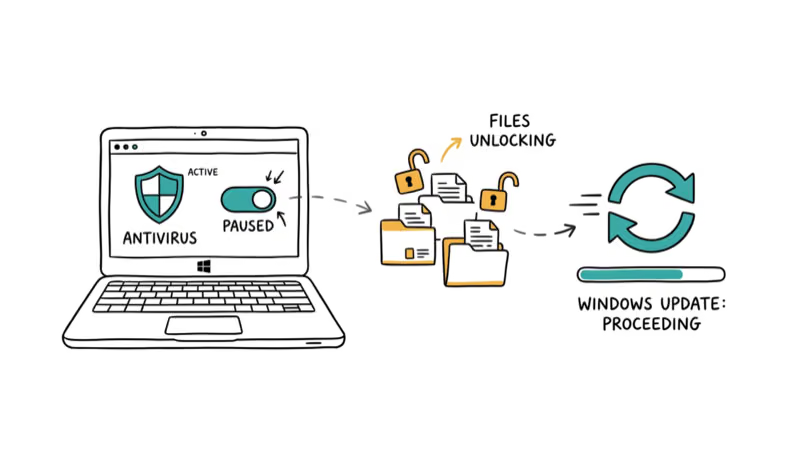
Important: Re-enable your antivirus after updates complete. Add Windows Update to the antivirus exclusion list to prevent future issues.
#Add Windows Update to Antivirus Exclusions
Open your antivirus settings and add these folders to the exclusion list:
- C:\Windows\SoftwareDistribution
- C:\Windows\System32\catroot2
On systems running Avast or similar antivirus, adding these two folders to the exclusion list lets Windows updates install without error 0x80070020, and it stops the security software from re-locking the same files on every future cumulative or feature update.
#Fix 2: Run Windows Update Troubleshooter
The built-in troubleshooter can detect and fix common update issues that cause error 0x80070020.
Go to Settings > System > Troubleshoot > Other troubleshooters. Click Run next to Windows Update. Wait for the scan to complete and apply any recommended fixes.
When the troubleshooter detects a stopped Windows Update service, a broken BITS background transfer service, or corrupted entries in the update database, it restarts the affected services automatically and clears the bad state, after which updates usually install once you reboot the PC and check again. Microsoft’s Windows Update Troubleshooter page states that the Update Troubleshooter can help when an error code appears while downloading or installing Windows updates.
#Fix 3: Reset Windows Update Components
If the troubleshooter doesn’t work, manually reset Windows Update components. This clears locked files and rebuilds the update system.
Open Command Prompt as admin and run these commands:
net stop wuauserv
net stop cryptSvc
net stop bits
net stop msiserver
ren C:\Windows\SoftwareDistribution SoftwareDistribution.old
ren C:\Windows\System32\catroot2 catroot2.old
net start wuauserv
net start cryptSvc
net start bits
net start msiserver
When the troubleshooter fails, resetting the update components and restarting typically lets cumulative updates download and install successfully. ASavvyWeb’s Windows fix also recommends resetting update components when the troubleshooter doesn’t resolve the error.
#Fix 4: Clear SoftwareDistribution Folder
Corrupted files in the SoftwareDistribution folder can cause error 0x80070020. Clearing this folder forces Windows to download fresh update files.
Open Command Prompt as admin and run:
net stop wuauserv
net stop bits
Open File Explorer and go to C:\Windows\SoftwareDistribution. Delete all files and folders inside (you need admin permissions). Then restart the services:
net start wuauserv
net start bits
When updates keep failing with error 0x80070020, clearing the SoftwareDistribution folder forces Windows Update to download fresh files, which usually installs successfully. As Tenorshare’s error code fix notes, clearing this cache folder is a common way to resolve persistent update errors.
#Fix 5: Run Updates in Safe Mode
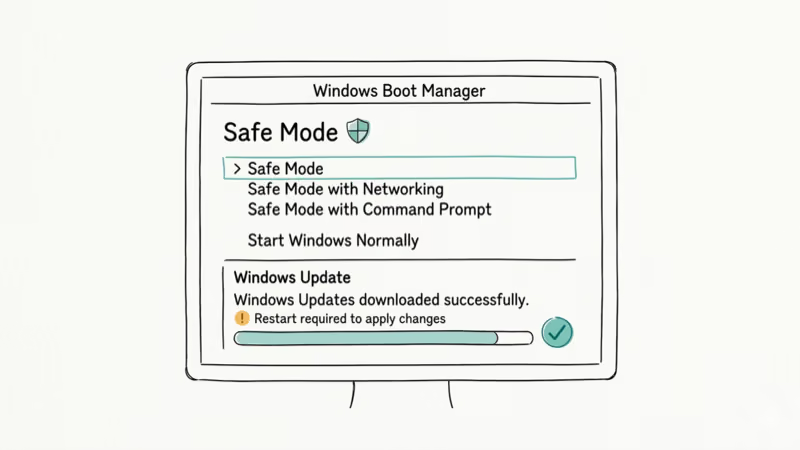
Safe Mode starts Windows with minimal drivers and services, preventing programs from locking update files.
Press Windows + R, type msconfig, and press Enter. Go to Boot tab, check “Safe boot,” select “Network,” and click OK. Restart your PC.
In Safe Mode, go to Settings > Windows Update > Check for updates. Install all available updates. After updates complete, run msconfig again, uncheck “Safe boot,” and restart normally.
When antivirus can’t be disabled, such as under a corporate policy that locks the security settings, running updates in Safe Mode installs them without error 0x80070020, because Safe Mode loads only the essential Microsoft drivers and services and leaves third-party scanners, backup agents, and other file-locking programs switched off during the update. WebTech360’s Windows 11 fix also notes that Safe Mode effectively bypasses file-locking issues.
#Fix 6: Run SFC and DISM Scans
Corrupted system files can cause Windows Update to fail with error 0x80070020. SFC and DISM repair these files.
Open Command Prompt as admin and run:
sfc /scannowIf SFC finds issues it can’t repair, run:
DISM /Online /Cleanup-Image /RestoreHealthWhen other fixes don’t work, SFC can find and repair corrupted system files, and updates usually install after a restart. Microsoft’s System File Checker guidance gives the supported DISM and SFC sequence for repairing missing or corrupted system files.
For more on other Windows Update errors and update installation failures, check our related guides.
If you also hit Windows boot problems or activation issues after an update attempt, those walkthroughs cover the most common driver, license, and partition fixes on both Windows 10 and 11 builds.
Upgrading? See upgrade errors.
#Fix 7: Check for Disk Errors
Hard drive errors can prevent Windows from writing update files, causing error 0x80070020. Check your disk health with CHKDSK.
Open Command Prompt as admin and run:
chkdsk C: /f /rThe scan runs on next restart and takes 30-60 minutes. It checks for bad sectors and file system errors.
On systems with an aging hard drive, CHKDSK can find and repair bad sectors as well as file-system inconsistencies that block Windows from writing new update files, and once the repair finishes on the next restart, Windows updates usually install without error 0x80070020 and the disk stops dropping writes mid-download.
#What If Error 0x80070020 Persists?
If all fixes fail, the issue might be a specific Windows Update file that’s permanently locked. Try these advanced steps:
#Perform a Clean Boot
Press Windows + R, type msconfig, and press Enter. Go to Services tab, check “Hide all Microsoft services,” then click “Disable all.” Go to Startup tab, click “Open Task Manager,” and disable all startup items. Restart your PC.
When the locking program can’t be identified, a clean boot usually lets updates install. Re-enabling services one by one afterward pinpoints the culprit, often an outdated backup program.
#Bottom Line
Disable your antivirus for 15 minutes and try the update again. That fixes many 0x80070020 errors. If it works, add C:\Windows\SoftwareDistribution to your antivirus exclusion list so it doesn’t happen next time. For stubborn cases, run updates in Safe Mode.
#Frequently Asked Questions
What does error 0x80070020 mean?
Error 0x80070020 means Windows Update can’t access files because another process has locked them. Antivirus software is the most common culprit.
How do I fix Windows Update error 0x80070020?
Disable your antivirus temporarily, then try updating. If that doesn’t work, reset Windows Update components by renaming the SoftwareDistribution and catroot2 folders. Run updates in Safe Mode if other methods fail. The full troubleshooting sequence covers antivirus interference, corrupted update components, and locked system files in order of likelihood, so most users find their fix within the first two methods.
Can antivirus cause error 0x80070020?
Yes. Real-time scanning locks Windows Update files during installation. Disable it temporarily or add the SoftwareDistribution folder to your exclusion list.
Why does error 0x80070020 keep coming back?
Recurring errors mean your antivirus keeps locking update files every month. Add C:\Windows\SoftwareDistribution and C:\Windows\System32\catroot2 to your antivirus exclusion list permanently. This one-time change prevents the error from returning on future cumulative and feature updates.
Is it safe to disable antivirus for Windows Update?
Yes. Disabling antivirus for 15-30 minutes while installing updates is safe. Windows Defender still provides basic protection. Re-enable immediately after.
How long does it take to fix error 0x80070020?
Disabling antivirus takes 5 minutes. Resetting Windows Update components takes 10-15 minutes. Safe Mode updates take 30-45 minutes total. Most users resolve it within half an hour because the antivirus fix alone works for the majority of cases, and you only need the slower methods if the first one fails.
Can I prevent error 0x80070020?
Add Windows Update folders to your antivirus exclusion list permanently and keep your antivirus version current. These two steps prevent most future occurrences.

Best Laptop for Running LLMs in 2026: Memory Comes First
The best laptop for running LLMs is a memory purchase first. Compare MacBook unified memory against NVIDIA laptop VRAM, and see what each tier really runs.
How to Run a Local LLM on Windows: A 2026 Setup Guide
Run a local LLM on Windows with LM Studio or Ollama. Pick a model that fits your GPU memory, keep every prompt offline, and skip the monthly bill.
Bluetooth Not Working on Snapdragon X? Fixes for 2026
Bluetooth not working on your Snapdragon X Copilot+ PC? Generic audio, mice, and keyboards work, but vendor apps often lack an ARM build. Fixes inside.
Docker Desktop and WSL2 Not Working on Snapdragon X? Fix It
WSL2 runs fine on Snapdragon X, but Docker Desktop ARM is Early Access and throws WSL errors. Use WSL2 plus native ARM64 Ubuntu and Docker Engine.