Wisptis.exe: What It Is, Its Purpose, and How to Manage It
Learn what wisptis.exe is, why it uses high CPU usage, and how to safely disable this Windows pen and touch input system process completely.

Quick AnswerWisptis.exe is a legitimate Windows process that handles pen and touch input for tablets and stylus devices. It commonly causes high CPU usage on desktop computers that don"t need these features.
Wisptis.exe is consuming your computer’s resources, and you’re wondering what it does. This Windows process manages pen and touch input for tablets and stylus devices, but it often runs unnecessarily on desktop computers that don’t need these features, wasting valuable system performance.
- Wisptis.exe is a legitimate Windows system process located in C:\Windows\System32 that manages pen and touch input functionality
- It’s automatically installed with Microsoft Office, Adobe products, and Windows updates, even on computers without touchscreens
- High CPU usage from wisptis.exe is common on desktop computers that don’t need pen or touch input features
- You can safely disable it through Task Manager temporarily or permanently via Windows Services without affecting core functionality
- Malware sometimes uses this filename, so always verify the file location and Microsoft digital signature for security
#What Is Wisptis.exe?
Wisptis.exe stands for Windows Ink Services Platform Tablet Input Subsystem. It’s a legitimate Microsoft process that enables handwriting recognition, digital ink features, and touch gestures on Windows devices.
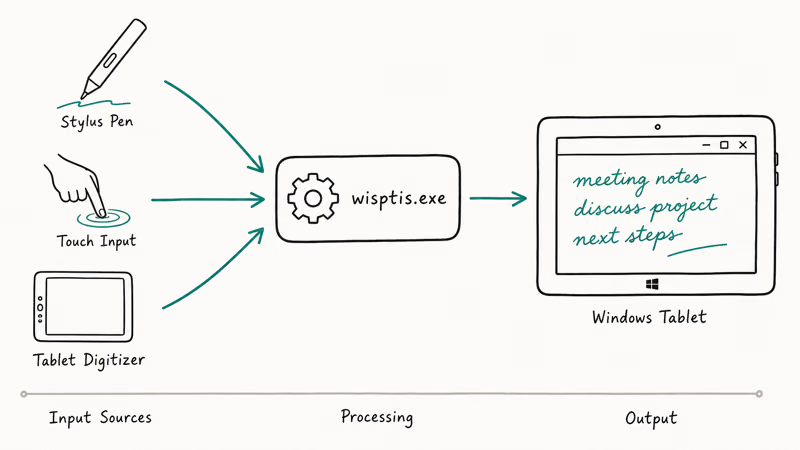
Wisptis.exe can start automatically even on desktop computers without touch capabilities. During normal operation, the process usually uses only a small amount of RAM and CPU, but startup, Microsoft Office, or pen-enabled apps can temporarily push usage higher.
#How Wisptis.exe Gets Installed
This process arrives on your system through several common installation channels that most Windows users encounter:
- Microsoft Office installations (especially versions with OneNote)
- Adobe Creative Suite products that support pen input
- Windows updates that add tablet PC components
- Third-party applications requiring handwriting recognition
The legitimate file resides in C:\Windows\System32 and carries a valid Microsoft digital signature. According to Microsoft’s documentation, wisptis.exe is part of the Tablet PC Input Panel system that’s been included since Windows XP Tablet PC Edition. Microsoft confirms that this process supports over 50 handwriting languages and runs on systems with Windows 7 or later.
#Why Does Wisptis.exe Use So Much CPU?
On desktop computers, wisptis.exe can show elevated resource usage for several reasons:
#Background Monitoring
The process continuously monitors for pen and touch input events, even when no stylus or touchscreen is connected. This constant monitoring creates unnecessary overhead on traditional desktop systems.
#Multiple Application Triggers
When Microsoft Office or Adobe products launch, they can spawn additional wisptis.exe instances. Systems with both Office and Adobe creative software may show multiple wisptis.exe processes while those apps are active. Adobe recommends adequate system resources for optimal performance when using pen-enabled creative applications.
#Memory Leaks
On older systems running Windows 10, wisptis.exe occasionally develops memory leaks, gradually consuming more RAM over extended periods. Restarting the process typically resolves this issue immediately.
Similar to other Windows processes like nvdisplay.container.exe, wisptis.exe can significantly impact system performance on lower-end hardware. If you’re experiencing system slowdowns, also check for other resource-heavy processes that might affect your Windows 10 keyboard not working or other input devices.
#How to Check If Wisptis.exe Is Legitimate
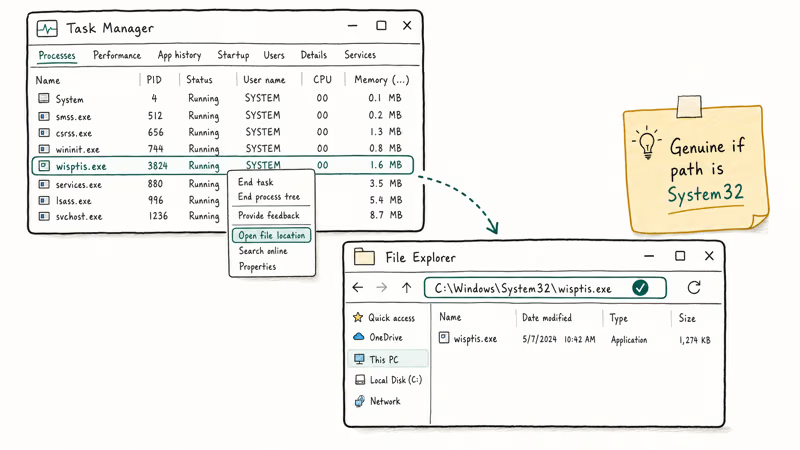
Malware sometimes disguises itself using this filename. Here’s how to verify authenticity:
#File Location Verification
- Open Task Manager (Ctrl + Shift + Esc)
- Right-click wisptis.exe and select “Open file location”
- Legitimate location: C:\Windows\System32\wisptis.exe
- Suspicious locations: Any other directory, especially user folders or temp directories
#Digital Signature Check
- Right-click the wisptis.exe file in Windows System32
Select Properties>Digital Signatures- Valid signature: Microsoft Corporation with a certificate from Microsoft Code Signing PCA
- No signature or unknown publisher: Potential malware
Microsoft’s security documentation confirms that legitimate system processes always carry valid Microsoft signatures. Windows Defender provides real-time protection against malware, and Windows security best practices recommend checking digital signatures for any suspicious executable files.
#Is It Safe to Disable Wisptis.exe
Yes, disabling wisptis.exe is safe for most desktop users who don’t use pen or touch features. It doesn’t affect core Windows features, but it removes tablet input capabilities.
#What You’ll Lose
Disabling wisptis.exe removes these features:
- Handwriting recognition in supported applications
- Digital ink capabilities for drawing and annotation
- Touch gesture support on touchscreen devices
- Pen pressure sensitivity for graphics tablets
#What Won’t Be Affected
These functions continue working normally:
- Regular mouse and keyboard input
- Standard Windows operations
- Most software applications (unless they specifically require pen input)
- Gaming and productivity tasks
- Basic Windows file operations and file system functionality
#4 Methods to Disable Wisptis.exe
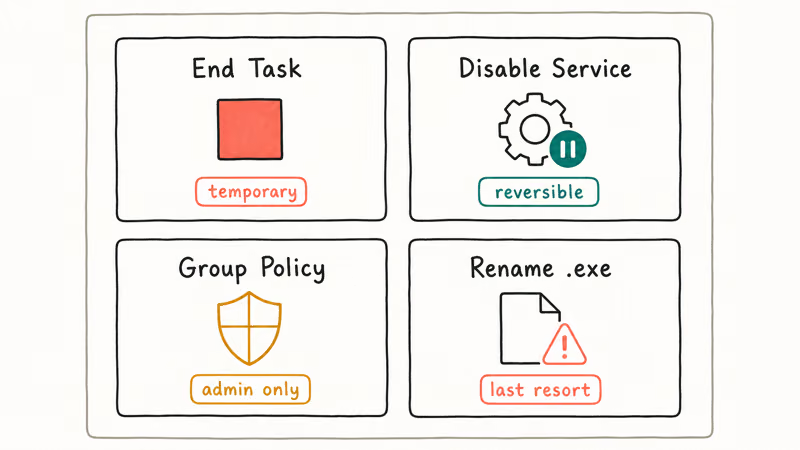
#Method 1: Task Manager (Temporary)
This stops the process immediately but it’ll restart after reboot:
- Press Ctrl + Shift + Esc to open Task Manager
- Go to the Processes tab
- Right-click wisptis.exe and select “End task”
Time required: 30 seconds
Permanence: Until next restart
Best for: A quick check to see if wisptis.exe is causing performance issues
#Method 2: Disable Touch Keyboard Service (Permanent)
This permanently prevents wisptis.exe from starting:
- Press Windows + R, type “services.msc”
- Find “Touch Keyboard and Handwriting Panel Service”
- Right-click and select Properties
- Set Startup type to “Disabled”
- Click Stop, then OK
Time required: 2 minutes
Permanence: Until manually re-enabled
Best for: Desktop users who never use touchscreen or pen input features and want permanent CPU savings
#Method 3: Group Policy Editor (Advanced Users)
For systems with Windows Pro or Enterprise editions that include Group Policy management:
- Press Windows + R, type “gpedit.msc” to open the Group Policy Editor
- Go to
Computer Configuration>Administrative Templates>Windows Components>Tablet PC - Enable the policy setting “Turn off pen and touch input services”
- Restart your computer to apply the changes
#Method 4: Registry Edit (Expert Level)
Warning: Only attempt if you’re comfortable with registry editing and understand the risks involved.
- Press Windows + R, type “regedit” and press Enter
- Navigate carefully to HKEY_LOCAL_MACHINE\SOFTWARE\Microsoft\Windows\CurrentVersion\Run
- Look for and delete any wisptis.exe-related startup entries you find
- Restart your computer to complete the registry changes
#Troubleshooting Wisptis.exe Issues
#High CPU Usage Fix
When wisptis.exe consumes excessive CPU resources:
- End the wisptis.exe process via Task Manager immediately
- Restart your computer to clear any memory-related issues
- If high CPU usage persists after restart, disable the Touch Keyboard service permanently
CPU usage should drop once the offending wisptis.exe process or service is stopped on affected systems.
#Runtime Error Solutions
If you encounter wisptis.exe error messages:
- Update Microsoft Office to the latest version
- Run System File Checker: Open Command Prompt as administrator and type
sfc /scannow - Reinstall related software that might have corrupted the process
#Process Won’t End
Sometimes wisptis.exe resists termination through Task Manager, especially when it’s being used by active applications like Microsoft Office or Adobe Creative Suite:
- Open Command Prompt as administrator
- Type:
taskkill /f /im wisptis.exe - Press Enter
This forcefully terminates the process when standard Task Manager methods fail to respond.
#Missing File Errors
If Windows complains that wisptis.exe is missing:
- Run Windows Update to restore system files
- Use the
sfc /scannowcommand to repair corrupted files - Consider reinstalling Microsoft Office if the error persists
Related Windows system issues use similar troubleshooting approaches:
- File corruption errors like 0x80070570 respond to the same sfc /scannow repair
- Background processes like VulkanRT follow comparable service-disable patterns
- Touchscreen problems often trace back to HID compliant touch screen missing driver issues
#Bottom Line
Disable wisptis.exe through Windows Services if you’re using a desktop computer without touchscreen or pen input needs. Go to Services, find “Touch Keyboard and Handwriting Panel Service,” set it to Disabled, and click Stop. This immediately reduces CPU usage and frees up system resources without affecting your computer’s core functionality. Only keep it enabled if you actively use a stylus, graphics tablet, or touchscreen device.
#Frequently Asked Questions
Is wisptis.exe a virus?
No. It’s a genuine Microsoft process.
That said, malware authors occasionally borrow this filename to hide in plain sight, so verifying the file path and signature matters. The real wisptis.exe lives in C:\Windows\System32 and carries a Microsoft Corporation digital signature. Any copy you find in user folders, temp directories, or AppData is almost certainly malicious and should be flagged for removal through Windows Defender or your security tool of choice.
Why does wisptis.exe start automatically?
Windows launches it on demand when applications that depend on tablet input components register themselves at install time.
Will disabling wisptis.exe break my software?
No. Standard software keeps working normally without it.
Only features that explicitly need pen or touch capabilities lose function: handwriting recognition in OneNote, pressure sensitivity in Photoshop, sketch-to-shape conversion in PowerPoint, and similar specialty tools. Office documents still open and edit fine, browsers behave identically, and games run without interruption. If you later want any of those pen-specific features back, re-enabling the service takes about 30 seconds.
Can wisptis.exe cause system crashes?
Direct crashes are rare.
The more common pattern is gradual slowdown: a memory leak slowly inflates wisptis.exe’s RAM footprint across uptime, and on older hardware with 4-8 GB total RAM the cumulative pressure eventually triggers application hangs, Windows Explorer restarts, or full system instability. Restarting just the wisptis.exe process, or rebooting the computer, typically clears the leak and restores normal performance within seconds.
How do I re-enable wisptis.exe if needed?
Open services.msc, find “Touch Keyboard and Handwriting Panel Service,” and switch the startup type back to Automatic.
Does wisptis.exe affect gaming performance?
Yes, on resource-tight systems.
Background CPU cycles spent monitoring nonexistent pen input directly compete with the game’s render thread, especially on dual-core or quad-core processors at high utilization. Disabling the service can reduce input-service overhead on resource-tight gaming PCs, but frame-rate changes depend on the game, CPU headroom, and what else is running.
What’s the difference between wisptis.exe and ctfmon.exe?
Wisptis handles pen and touch input. Ctfmon manages the language bar and text input services.
Can I delete the wisptis.exe file completely?
No. Windows protects it as a system file.
Even if you manage to remove it through aggressive tools, Windows Update or the System File Checker will restore it on the next maintenance cycle. The correct approach is service disabling, which stops execution without touching the file — fully reversible, no risk of breaking Windows updates, and no Trusted Installer permission battles to fight through.

Best Laptop for Running LLMs in 2026: Memory Comes First
The best laptop for running LLMs is a memory purchase first. Compare MacBook unified memory against NVIDIA laptop VRAM, and see what each tier really runs.

How to Run a Local LLM on Windows: A 2026 Setup Guide
Run a local LLM on Windows with LM Studio or Ollama. Pick a model that fits your GPU memory, keep every prompt offline, and skip the monthly bill.
Bluetooth Not Working on Snapdragon X? Fixes for 2026
Bluetooth not working on your Snapdragon X Copilot+ PC? Generic audio, mice, and keyboards work, but vendor apps often lack an ARM build. Fixes inside.
Docker Desktop and WSL2 Not Working on Snapdragon X? Fix It
WSL2 runs fine on Snapdragon X, but Docker Desktop ARM is Early Access and throws WSL errors. Use WSL2 plus native ARM64 Ubuntu and Docker Engine.