What Is Focus Status on iPhone? Complete Guide (2026)
Learn what Focus Status is on iPhone, how it differs from Do Not Disturb, and how to set up custom Focus modes for work, sleep, and more in 2026.
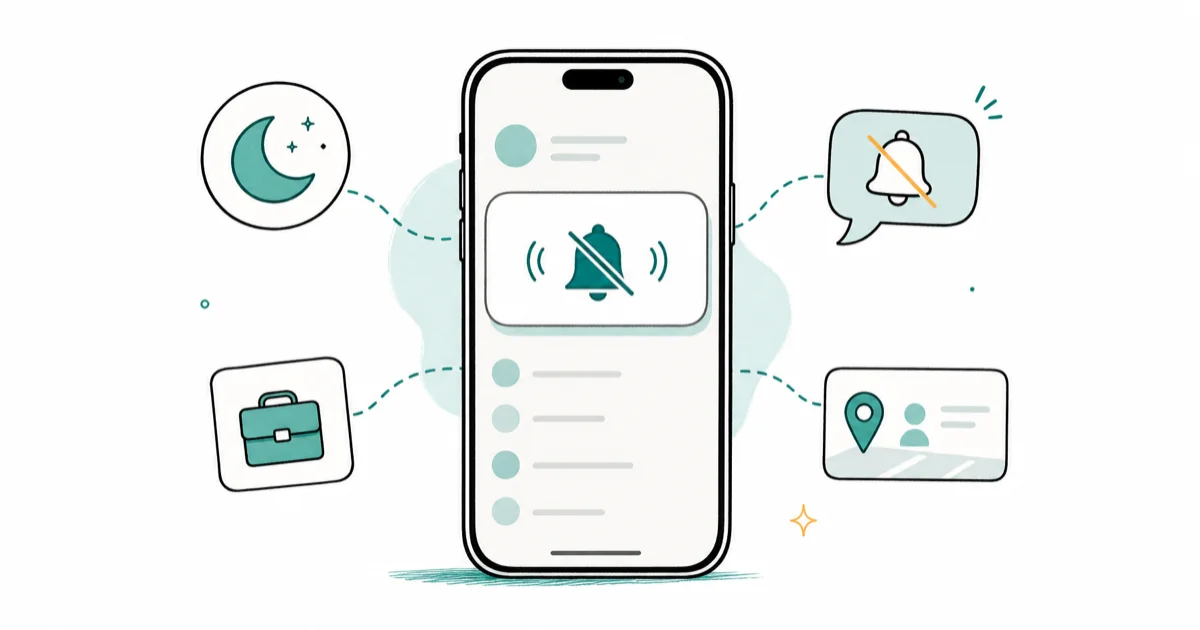
Quick AnswerFocus Status is an iPhone feature introduced in iOS 15 that silences notifications based on custom modes like Work, Personal, or Sleep, and optionally tells your iMessage contacts you have notifications silenced without revealing which mode is active.
Focus Status on iPhone is the small “[Name] has notifications silenced” badge your iMessage contacts see when a Focus mode is active.
The feature shipped with iOS 15 in September 2021 and replaced the older DND toggle. It works across iPhone, iPad, Mac, and Apple Watch once you sign in to the same Apple ID. This guide covers what Focus Status does, how to set it up, how to share or hide it, and how to fix the most common reasons alerts still slip through.
- Focus Status was introduced in iOS 15 in September 2021 as an evolution of the older DND toggle, with named modes such as Work, Personal, and Sleep that each have their own allow lists.
- Share Focus Status only signals iMessage contacts that you have notifications silenced; it never reveals which Focus mode is active.
- Each Focus mode supports its own contact and app exceptions plus Smart Activation rules based on time, location, or which app is open.
- Focus settings sync across devices signed in to the same Apple ID, so toggling Work Focus on iPhone also silences the same alerts on iPad and Mac within seconds.
- A Focus that “doesn’t work” is almost always caused by Time Sensitive notifications being allowed, an app override, or the Focus syncing back on from another device.
#What Does Focus Status Do on Your iPhone?
Focus Status is two things working together: a notification filter and an availability signal.
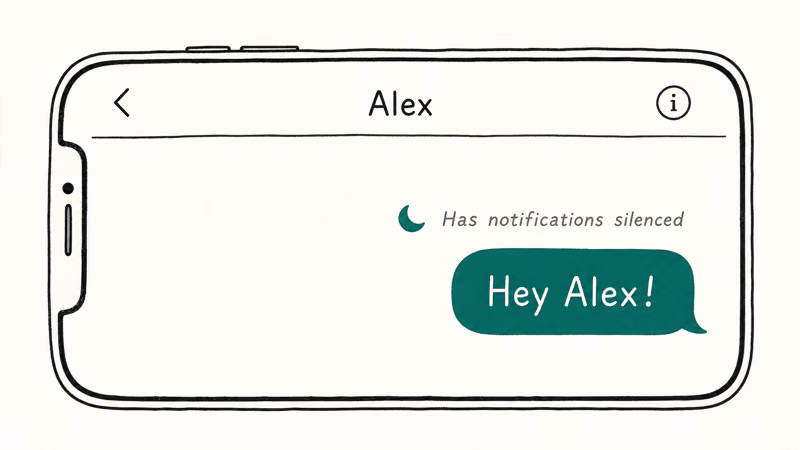
The filter is the part most people notice first. When you turn on a Focus mode such as Work or Sleep, your iPhone hides notifications from apps and people that aren’t on your allow list. The lock screen doesn’t light up, the badge counts don’t appear in real time, and incoming calls go straight to voicemail unless the caller is on the allowed list.
The availability signal is the second half. When Share Focus Status is on, anyone messaging you in iMessage sees a line under the text input that reads “[Your Name] has notifications silenced.” They can tap “Notify Anyway” to break through if it’s urgent.
According to Apple’s Focus support page, Focus status is meant to set expectations without exposing your exact activity. That’s why the recipient never sees which specific mode you’re using.
Behind the scenes, every Focus mode has three pieces: an allow list (people and apps that can still notify you), a screen configuration (which Lock Screen and Home Screen pages show up), and a set of optional filters that let supported apps switch into a different state, such as Mail showing only your work account.
#Focus Status vs. DND: The Key Differences
DND is now one of the preset Focus modes, not a separate setting. The difference is that Focus is a system of modes, while the old DND was a single on/off switch with one allow list. The result is more flexibility for cases like keeping a partner’s calls breaking through during work hours but silencing them during a 6 a.m. Sleep window.
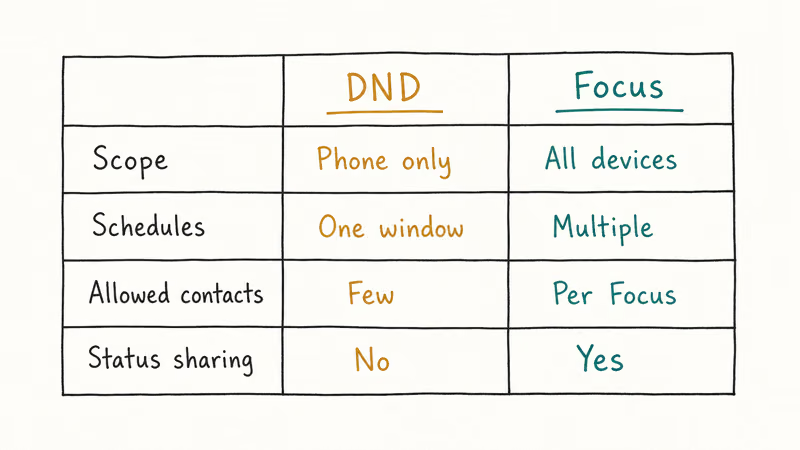
The most important practical differences:
- Multiple modes. Focus has separate Work, Personal, Sleep, Driving, Fitness, Gaming, Mindfulness, and Reading presets, plus custom modes you create from scratch.
- Granular allow lists. Each mode has its own list of people and apps that can break through. Your Sleep allow list might be three family members while your Work list runs to a longer team roster.
- Status sharing. Only Focus tells iMessage contacts that you have notifications silenced. Classic DND never did this.
- Screen customization. Each Focus can hide specific Home Screen pages and switch the Lock Screen, which classic DND couldn’t do.
Alarms behave the same way under any Focus as they did under DND: a scheduled alarm still rings at full volume. If you aren’t sure, our deeper write-up on whether your alarm goes off in DND mode walks through every alarm exception including timer apps and bedtime alarms.
#How to Set Up a Focus Mode on iPhone
Apple’s iPhone User Guide states that Focus modes have been bundled with the operating system since iOS 15.0 (released September 20, 2021) and that you set one up from Settings > Focus, then tap the + button in the top-right corner.
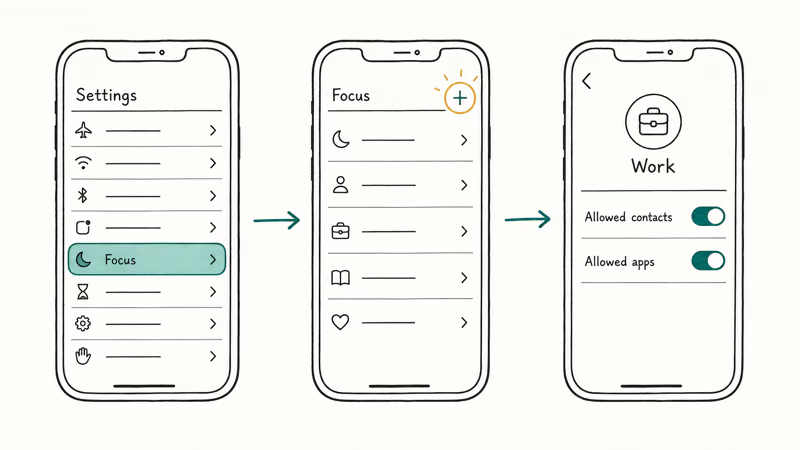
The presets cover most everyday needs. Pick the custom option if you want a mode named after a project, a class schedule, or a recurring meeting block.
The basic flow:
- Open Settings, then tap Focus.
- Tap the + in the top-right corner.
- Pick a preset (Work, Sleep, Personal, etc.) or tap Custom and name it.
- Add People allowed to notify you, then add Apps allowed to notify you. Both lists are independent.
- Choose a Lock Screen and Home Screen to switch into when the Focus is active.
- Open Add Schedule or Automation to turn the Focus on automatically by time, location, or app.
Two settings inside each Focus are easy to miss.
The first is the Allow Calls From option, which defaults to “Allowed People Only” but can be set to “Everyone,” “Favorites,” or a specific contact group. The second is Time Sensitive Notifications, which is on by default and lets apps such as Uber or food delivery break through even when their app is otherwise blocked. If a Focus isn’t silencing as expected, this toggle is almost always the cause.
#How to Share Your Focus Status With iMessage Contacts
Share Focus Status is a per-device, per-mode setting. Turning it on for one Focus doesn’t enable it for the others. That’s useful if you want coworkers to see you’re silenced during Work hours but don’t want your dinner group to see anything during Personal time.
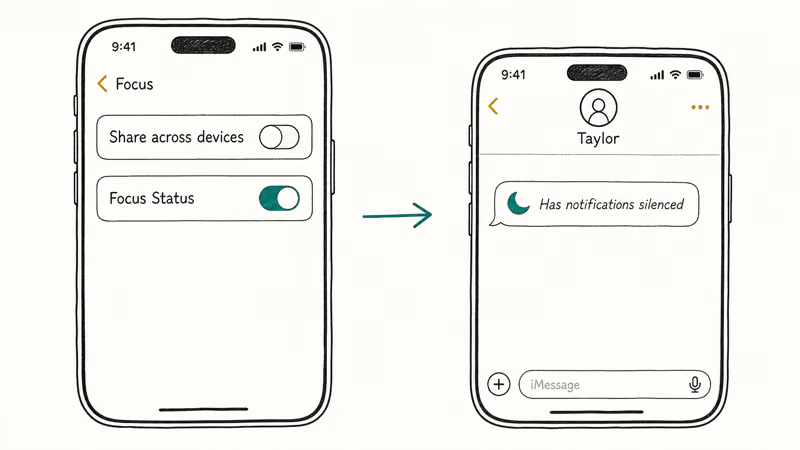
To control sharing:
- Go to
Settings>Focus>Focus Status. - Toggle Share Focus Status at the top to control the master setting.
- Below that, you’ll see each Focus mode listed individually. Toggle each one on or off.
When Share Focus Status is enabled for the active Focus, iMessage can show the “has notifications silenced” banner to the sender. If Share Focus Status is off for that mode, the sender doesn’t see the banner.
The badge only appears in iMessage threads. SMS green-bubble threads and third-party messengers don’t show it.
If your iMessage contacts aren’t seeing the badge at all, the cause is usually iMessage itself not registering. Our guide on iMessage not working covers the activation, network, and Apple ID checks that most often resolve it.
#Customizing Focus With Smart Activation, Filters, and Screens
Smart Activation is the automation layer. Apple’s iPhone User Guide recommends pairing each Focus with a schedule trigger: Sleep with your nightly bedtime window, Work with weekday business hours, and Driving with CarPlay or Bluetooth connection to your car stereo. The system also offers a “Smart Activation” toggle (different from a fixed schedule) that learns from your routine and turns the Focus on at adaptive times based on location and app usage.
Focus filters take customization a step further by changing what supported apps show while a Focus is active.
The built-in filters include:
- Mail filter: pick which accounts appear (work-only in Work Focus, personal-only in Personal Focus).
- Calendar filter: show only specific calendars.
- Messages filter: show only conversations from people on the allow list.
- Safari filter: switch to a different Tab Group, useful for separating research tabs from leisure tabs.
Mail filters can hide personal accounts during Work Focus while keeping a work account visible, as long as the accounts are configured in Mail and the filter is enabled.
For Lock Screen and Home Screen customization, link a custom Lock Screen wallpaper and widget set to each Focus from Settings > Focus > [Mode] > Customize Screens. This pairs well with Screen Time for parents who want a Kids Focus Lock Screen with limited apps visible during homework hours.
#Why Does Focus Status Sometimes Let Notifications Through?
The most common reason a Focus “doesn’t work” is that the notification was actually Time Sensitive.
Apple gives third-party apps a category called Time Sensitive (used for things like ride-share arrivals, two-factor codes, smart home alerts, and game session reminders) that breaks through any Focus unless you specifically disable it. To turn it off per Focus, go to Settings > Focus > [Mode] > Options and toggle Time Sensitive Notifications off.
Other recurring causes:
- Another device toggled the Focus off. Because settings sync across an Apple ID, turning off Sleep on an Apple Watch also turns it off on the paired iPhone.
- A contact is in the Favorites list. Calls from Favorites have a separate override on the call-routing screen, and many users forget they enabled this years ago.
- An app explicitly requested critical alert permission. Health, baby-monitoring, and home-security apps can request a special Critical Alerts permission that bypasses every Focus.
- Notification settings inside the app itself. Sometimes the iOS Focus is fine but the individual app (Snapchat is a frequent example) has notifications disabled at the app level. If you see no notifications even when Focus is off, our Snapchat notifications fix guide walks through the app-level toggles.
Alarms are a separate story. Scheduled Clock alarms ring through any Focus by default; see iPhone alarm not going off for fixes when they fail.
#Bottom Line
For most iPhone owners on iOS 15 or later, the highest-value setup is two custom Focus modes: a Work Focus tied to weekday business hours with iMessage Share Focus Status on, and a Sleep Focus tied to your nightly bedtime with Share Focus Status off so emergency contacts can ping you without seeing your schedule.
Add the key people you need in each allow list and leave Time Sensitive Notifications off in modes where interruptions should stay blocked. That setup removes many nighttime and meeting-time interruptions while still letting alarms, explicitly allowed Time Sensitive apps, and the people you care about break through.
#Frequently Asked Questions
Does Focus Status work on iPad, Mac, and Apple Watch too?
Yes. Focus Status syncs across every device signed in to the same Apple ID, including iPad, Mac, and Apple Watch. Turning on Work Focus on your iPhone can silence the same notifications on your iPad when Focus syncing is enabled, and the Apple Watch shows a small Focus indicator in the status bar.
Will my contacts know which Focus mode I have on?
No. They only see “[Your Name] has notifications silenced.” The specific mode name is never shared.
Can I turn Focus on and off without opening Settings?
Yes. Open Control Center by swiping down from the top-right corner (or up from the bottom on older iPhones), tap the Focus tile, and pick the mode you want. You can also ask Siri, “Turn on Work Focus” or “Turn off Sleep,” which works hands-free during driving or workouts.
Do third-party apps integrate with Focus?
Yes. Apple released APIs in iOS 15 and expanded them in iOS 16, so any app can declare itself Focus-aware. Slack, for example, can route messages differently when you’re in Work Focus versus Personal Focus. If you use third-party messaging apps and the notifications still seem off, the issue is usually inside the app’s own notification settings rather than Focus.
Does Focus silence FaceTime calls too?
Yes. FaceTime audio and video both follow the same Focus rules as standard phone calls.
Why does my Focus turn itself off?
The most common reason is Smart Activation, which learns your patterns and ends the Focus when it thinks you’re done. A second reason is that another Apple device (typically an Apple Watch or iPad) manually disabled the mode and the change synced back. To stop the automatic ending, open Settings > Focus > [Mode] > Add Schedule and remove any Smart Activation entry, then add a fixed time or location trigger instead.
Can I have two Focus modes on at the same time?
No, only one Focus can be active at any moment, and iOS enforces this automatically. If you turn on Sleep while Work is already running, iOS turns off Work first without warning. Apps needing alerts across multiple contexts should be added to the allow lists of every relevant Focus rather than stacking modes. Apple Watch is a partial exception that can show a smaller subset of allowed notifications even when a different Focus is active on the paired iPhone.
Apple Siri Settlement: Who Qualifies and How to Claim
Apple's $250 million Siri settlement covers iPhone 15 Pro and iPhone 16 models bought June 2024 to March 2025. See who qualifies and how claims work.
iOS 26.6.1 Security Update: What Apple Fixed and Who Gets It
Apple released iOS 26.6.1 on August 17 with 29 security fixes, including an IPSec interception bug. See what it patches, who gets it, and how to update.
iPhone Adaptive Power: How It Works and When to Use It
Learn how iPhone Adaptive Power works, which models support it, what it changes, and when Low Power Mode is still the better battery-saving choice.
How to Transfer Data to a New iPhone Without iCloud
Move everything to your new iPhone without iCloud: Quick Start device-to-device transfer, wired migration, and encrypted Finder or iTunes backups.