What Happens When You Mute Someone on WhatsApp in 2026
Find out exactly what happens when you mute someone on WhatsApp, whether they get notified, how it differs from blocking, and how to unmute them.
Quick AnswerMuting someone on WhatsApp silences push notifications and badge counts from that chat, but the muted person is not notified and can still send messages, call you, and see your online status. You can mute for 8 hours, 1 week, or Always, and unmute any time from the chat's notification settings.
When you mute someone on WhatsApp, you stop hearing from that chat without ending the conversation. The muted contact keeps full access to message you, call you, and see your status, but your phone stays quiet until you open the app yourself. The behavior is consistent on both the iPhone and Android versions of WhatsApp, with only the menu paths differing.
- Muting silences push notifications, badge counts, and in-app alert sounds for the chosen chat. The muted contact gets no notice and sees nothing change on their end.
- WhatsApp has 3 mute durations: 8 hours, 1 week, or Always. Always replaces the older 1-year limit and stays in effect until you manually unmute the chat.
- Muting is not blocking. The muted person can still call you, see your last seen and online status, view your profile photo, and watch your status updates.
- You can mute one-on-one chats, group chats, and individual status story authors. Each mute is set independently from the chat’s notification menu.
- Muting only affects your device. The other person’s WhatsApp shows nothing different, and end-to-end encryption protects every message the same as before.
#What Happens When You Mute Someone on WhatsApp?
Muting silences your phone, not the chat itself. Once you mute, 3 things change on your device and 3 things stay the same on theirs.
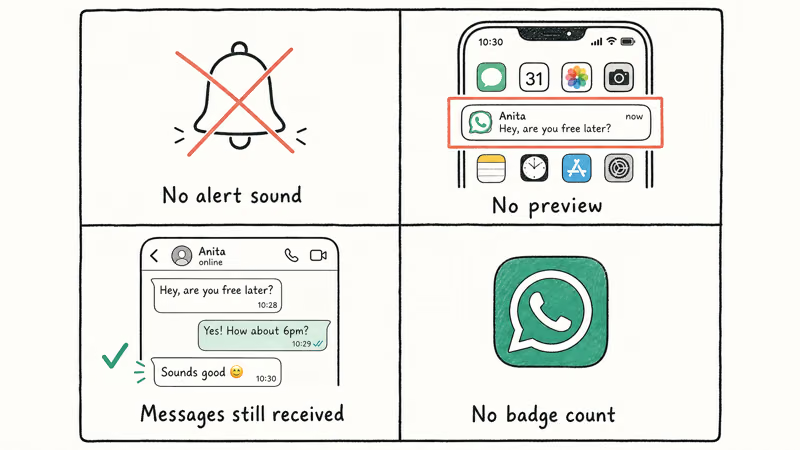
On your phone, lock-screen and banner notifications stop appearing for that chat. The chat row in your WhatsApp list no longer pushes itself to the top with each new message or flash a green dot. A small mute icon (a speaker with a line through it) shows up next to the contact’s name in the chat header so you can tell at a glance the chat is silenced.
On the muted person’s phone, almost nothing changes.
Their WhatsApp keeps showing your usual online status, last seen, and read receipts (the blue ticks) if both of you have them enabled. Their messages still go through and show the same single tick (sent), double tick (delivered), and blue ticks (read) timeline as before. They get no banner, no badge, no email, no SMS, and no in-app cue indicating the mute.
According to WhatsApp’s help center, all 3 message ticks (sent, delivered, read) still flow normally back to the sender even after you mute a chat, since muting only silences notifications on your own device. The chat itself stays open and active. Messages from a muted contact are delivered and show double ticks just as quickly as any other chat.
There is one effect that often gets missed: muting hides incoming chat badges from the WhatsApp app icon as well.
If you previously had a red badge counting unread messages, a muted chat no longer increments that counter unless you toggle on “Show notifications” inside the mute dialog. On iOS, the WhatsApp app icon can stay at 0 even with a stack of unread messages waiting from a muted contact.
Calls are different. Voice and video calls still ring on your device unless you also mute notifications for calls separately in WhatsApp’s settings. Muting a chat doesn’t silence the call ringer for that chat.
#How to Mute a Contact or Group on WhatsApp
The mute control lives inside each chat’s notification settings. Here is the path on both platforms.
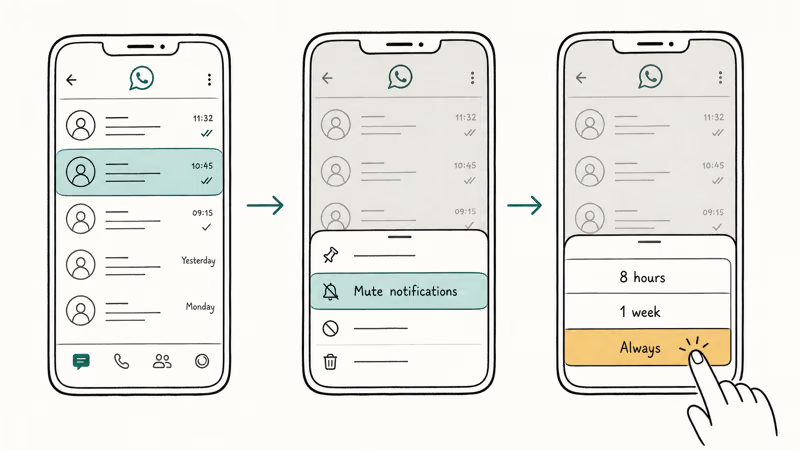
On iPhone, open WhatsApp and tap the chat you want to silence. Tap the contact name or group name at the top of the screen. Tap “Mute Notifications,” then pick 8 hours, 1 week, or Always. Tap “OK” to confirm.
On Android, open WhatsApp and tap the chat. Tap the three-dot menu in the top-right corner. Tap “Mute notifications,” pick a duration, and tap “OK.”
You can mute several chats at once.
Long-press a chat in the main list to enter selection mode, then tap each additional chat you want to add. The top toolbar shows a speaker-with-slash icon. Tap it, pick a duration, and every selected chat is muted in one batch. Several chats can be muted this way in just a few seconds.
Status story mutes live in a different menu entirely.
To mute someone’s status updates (the disappearing photo and video stories), open the Updates tab, long-press the contact’s status circle, and tap “Mute.” Muting a chat doesn’t hide that person’s stories, and muting their stories doesn’t silence chat notifications. The two mutes stay independent.
If notifications still come through after muting, the system-level notification channel may have its own override. Apple’s Focus Mode documentation confirms that Focus profiles can override per-app settings by allowing specific contacts through, so a WhatsApp mute can be effectively bypassed by a misconfigured Focus list.
Our WhatsApp notifications not working guide walks through the iOS Focus Mode and Android notification channel settings most often responsible.
#Muting vs Blocking on WhatsApp: The Real Differences
Blocking severs the connection. Muting silences your phone. The two settings sit in different menus and produce different effects.
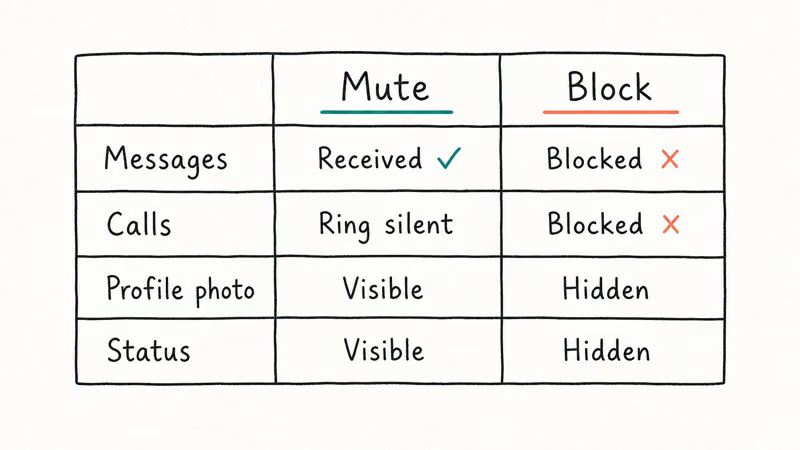
WhatsApp’s blocking documentation confirms that a blocked contact can’t see your last seen, online status, profile photo, or status updates, losing 4 privacy signals at once, and any message they send never reaches your inbox. Calls from the blocked contact ring on their end but never connect.
Here is how the two compare on the points users ask about most:
| Behavior | Muted | Blocked |
|---|---|---|
| Push notifications on your phone | Off | Off (no message arrives at all) |
| Messages still delivered to you | Yes | No |
| Contact can see your online status | Yes | No |
| Contact can see your last seen | Yes (subject to your privacy setting) | No |
| Contact can see your profile photo | Yes | No |
| Contact can see your status stories | Yes (subject to your privacy setting) | No |
| Voice and video calls ring through | Yes (unless calls are muted separately) | No (call drops on their side) |
| Contact is notified about the change | No | No (but they notice the symptoms) |
| Reversible | Yes, instantly | Yes, but contact may notice the unblock |
The reversibility difference matters socially.
Unmuting brings nothing visible to the muted person, since their chat keeps working as if nothing happened. Unblocking doesn’t send a notification either, but the symptoms (a profile photo suddenly reappearing, last seen showing again, status updates returning) can tip them off if they’re paying attention.
Curious whether the same tricks work for someone who blocked you? We cover the symptoms and recovery options in our guide on how to unblock yourself from WhatsApp.
#What the Muted Person Sees on Their End
The muted person sees nothing. That is the entire point of the feature.
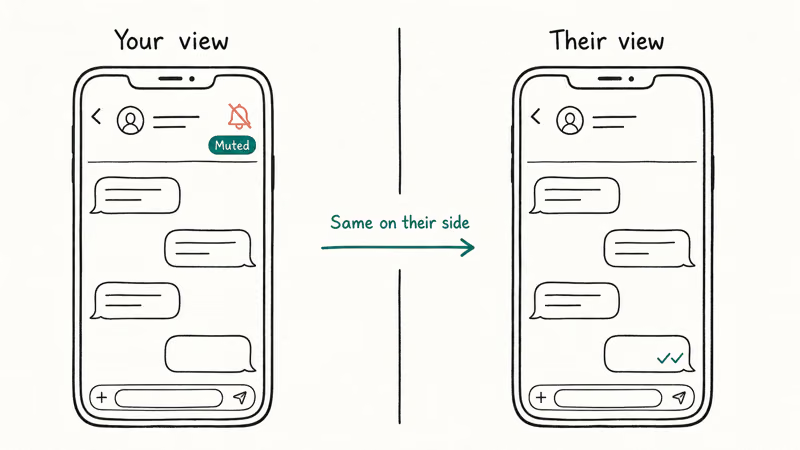
WhatsApp doesn’t show a muted badge, a muted notice, a muted profile change, or a muted read-receipt difference on the other side. From the muted contact’s view, the chat looks identical to every other chat they have open with you. They see your typing indicator when you type, your online status when you’re in the app, and your last seen timestamp when you leave, assuming their privacy settings haven’t restricted those.
Read receipts also stay untouched.
When you open a muted chat and the message gets a blue tick, the muted sender sees that blue tick instantly, exactly as they would in any other conversation. If you’d rather hide read receipts entirely, that toggle lives in Settings > Privacy > Read Receipts and applies to every one-on-one chat (group chats always show read receipts).
The only way the muted person could indirectly figure it out is by guessing from your reply pattern. If you used to answer within minutes and now reply hours later, they may suspect notifications are off. Even then, a slower reply pace is easy to attribute to being busy, so a mute almost never gets noticed from timing alone.
Common edge cases worth knowing:
- If WhatsApp returns a Free msg: unable to send message error, that has nothing to do with muting. It’s a carrier-side block or device-side problem.
- Voice notes from a muted contact play sound only after you open the chat manually. They don’t auto-play through speakers when the phone is locked.
- WhatsApp Business accounts behave the same way for muting as personal accounts. There is no separate business mute mechanic.
#Does Muting Hide Status Updates, Calls, and Profile Updates?
Muting only touches notifications. It doesn’t change visibility, call behavior, or profile information.
For status stories, muting a chat doesn’t hide that person’s status circles from your Updates tab. They keep showing up unless you separately mute their status. Muting a contact’s chat for “Always” leaves their status circles appearing in the Updates tab indefinitely.
For voice and video calls, muting a chat does nothing to the call ringer.
Incoming calls from a muted contact ring loud, vibrate, and appear on the lock screen exactly as before. To silence calls from a specific contact, you have to mute notifications at the system level (iOS Focus Mode or Android’s Do-Not-Disturb mode with custom exceptions), not inside WhatsApp.
For profile photo, About, and last seen, muting changes none of these.
The muted contact’s profile photo updates still show up in your view, and your profile changes still show up in theirs.
Group chat mute follows the same rule. Muting a large family group silences only that group’s notifications, while individual members’ direct chats with you stay loud. Mentions inside the muted group still surface a single “You were mentioned” notification because WhatsApp’s mention system has its own override. That override is toggled inside each group’s mute dialog under “Show notifications.”
If you want to stop seeing status updates from someone without affecting chat notifications, mute their status separately. WhatsApp’s security overview states that one-on-one chats, group chats, and calls use end-to-end encryption by default regardless of notification settings: every message stays encrypted in transit whether you’ve muted, blocked, or left the chat fully open.
#When to Mute Instead of Block or Archive
Mute, block, and archive each solve different problems. Picking the right one stops you from over-correcting.
Mute when you want to keep the contact reachable but stop being interrupted. Examples: a chatty colleague during work hours, a family group that fires off 200 messages a day, a project group where you need the history but not the alerts. Because muting leaves no trace on the other end, even long-standing mutes go unnoticed by the contacts on the receiving end.
Archive when you want the chat off your main list but still want notifications when something arrives.
Archiving hides the conversation, while muting silences it.
WhatsApp added the option “Keep chats archived” (Settings > Chats) so archived chats stay hidden even when new messages arrive, which is useful for a long-tail contact you rarely message but don’t want to delete from your address book entirely.
Block when the contact is harassing you, spamming you, or you no longer want to be reachable to them at all. Blocking is the only setting that prevents messages from arriving in the first place. WhatsApp also offers “Report and block,” which sends the last 5 messages from that contact to WhatsApp’s moderation team along with the block.
Delete the chat when you want to wipe the message history but keep the contact.
Deleting a chat removes the messages from your device but leaves the contact in your WhatsApp address book. Before any reset that touches your history, see our WhatsApp contact backup guide.
The 8-hour and 1-week durations are useful for short bursts of focus, like deep-work sessions or sleeping hours. The “Always” option is what most users want for chronic offenders. On Instagram, the equivalent of WhatsApp’s mute is the per-account mute we cover in our Instagram unmute guide.
#Bottom Line
Mute is WhatsApp’s quietest setting and the right tool for most everyday annoyances on the platform.
Set the duration to “Always” for chats you want permanently silent, and reserve the 8-hour option for short focus windows. If the contact is harassing you, skip mute and go straight to block — that is the only WhatsApp setting that actually stops messages from arriving.
#Frequently Asked Questions
Can the muted person see my online status or last seen?
Yes. Muting only changes how alerts behave on your phone, not what the other person can see inside WhatsApp.
Will I still receive the muted person’s messages?
You’ll receive every one. Every message from the muted contact arrives in your WhatsApp inbox normally. The only difference is that your phone doesn’t ring, vibrate, light up the screen, or increment the app badge. You can open the chat at any time and read the full conversation.
Can I mute someone on WhatsApp indefinitely?
Yes. Pick “Always” in the mute dialog, which replaced the older “1 year” limit and stays in effect until you manually unmute.
Does the muted person know they have been muted?
No. WhatsApp doesn’t send any notification, badge, or visible cue to the muted contact at any point. Their app shows your chat exactly the same as before: same online status, same last seen, same read receipts, same typing indicator, same blue ticks, and the same profile picture. The only way they could guess is from your reply timing, and even that takes close attention to a consistent delay pattern over several days or weeks of conversation.
Will the muted person see my read receipts (blue ticks)?
Yes. Muting and read receipts are separate features. The muted sender sees double blue ticks the instant you open the chat, even though your phone stayed quiet when their message arrived.
Can I mute a group chat without muting individual contacts?
Yes. Group mutes and one-on-one mutes are fully independent inside each chat’s three-dot menu.
Does muting on WhatsApp work the same on iPhone and Android?
The behavior is identical; only the menu path differs. On iPhone, tap the contact name at the top of the chat to reach the mute dialog, while on Android you tap the three-dot menu in the top-right corner instead. Both platforms offer the same 8-hour, 1-week, and Always durations.
Google Messages Error 3100: Why RCS Is Broken on Galaxy
Google Messages RCS error 3100 hits Galaxy owners after phone or carrier switches. Google told 9to5Google a fix is coming. Here's what actually helps.
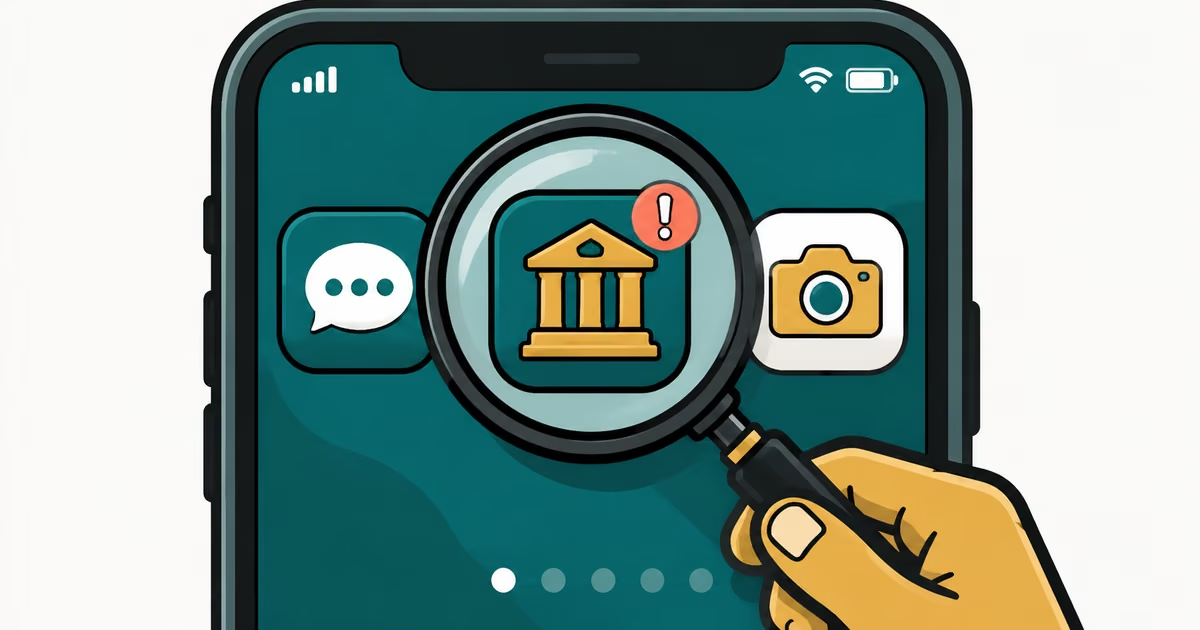
Is This Bank App Real? Spot a Fake App on Your Home Screen
A bank app can land on your home screen from a web page with no install warning. Learn the checks that tell a real banking app from a phishing web app.
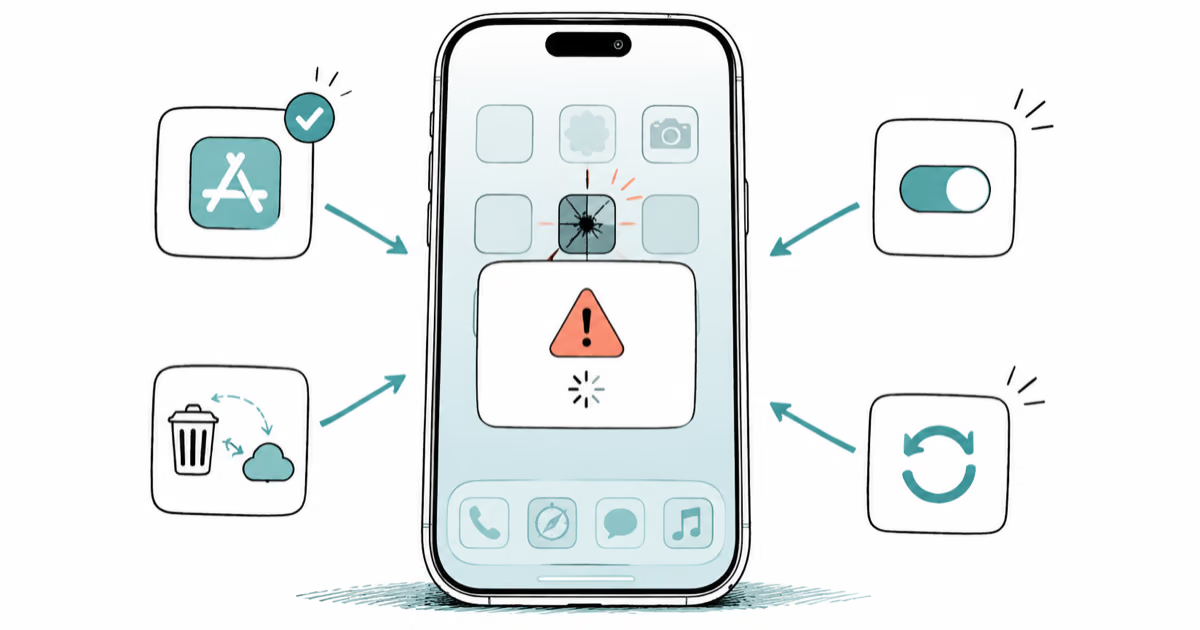
Apps Crashing After iOS 27 Update? Fix Order (2026)
Apps crashing after the iOS 27 update? Update the app in the App Store first, then offload and reinstall to clear stale cache, then restart. The fix order.
Do AI Translation Earbuds Work Offline? What to Know
Do AI translation earbuds work offline? A few do with downloaded language packs, but most need the cloud. Here's what works offline and what you give up.