How to Unblock Yourself from WhatsApp: What Actually Works
Learn how to unblock yourself on WhatsApp when someone has blocked you. Explore methods like deleting your account and using group chats to reconnect.
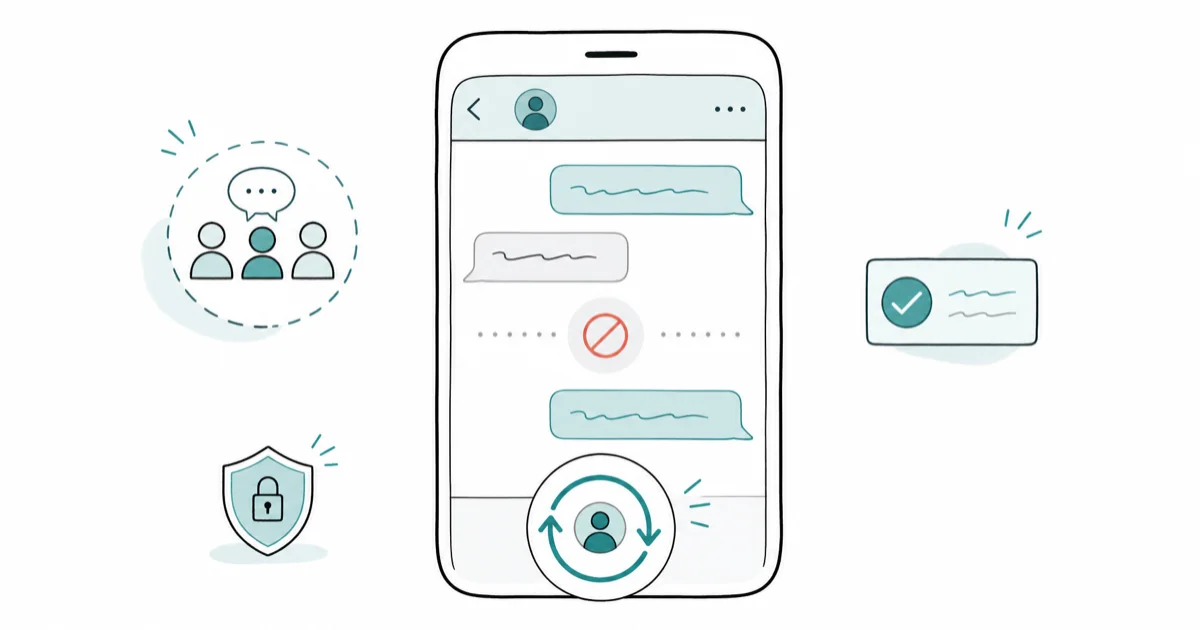
Quick AnswerYou cannot directly unblock yourself on WhatsApp. The safest option is to respect the block or ask a mutual contact to mediate; account deletion and second-number workarounds are risky and can cost your chat history.
When someone blocks you on WhatsApp, there is no button you can press to undo it. The block is controlled entirely by the other person. However, there are a few risky workarounds that use a different channel or a new account state. This guide separates those options from a true unblock, which only the other person controls.
This guide applies only to a device or account you own.
- There is no way to directly unblock yourself on WhatsApp; the block is controlled by the person who set it.
- Deleting and recreating your WhatsApp account is risky, permanently disruptive, and not a verified way to clear someone else’s block.
- Using Android’s Dual Apps feature creates a second WhatsApp with a different number so you can contact the person without deleting your main account.
- Group mediation through a mutual friend lets you communicate in a group, but does not restore direct messages or calls.
- Before trying any workaround, consider whether respecting the block is the right choice in your situation.
#How Can You Tell If Someone Blocked You on WhatsApp?
Before trying any workaround, confirm you are actually blocked rather than dealing with a technical issue.
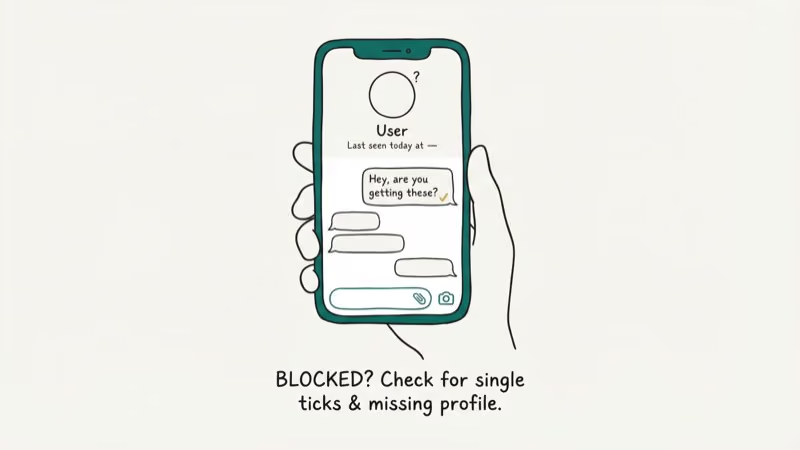
Signs of a WhatsApp block:
- Messages show only one gray checkmark (sent) and never advance to two checkmarks (delivered)
- You can’t see their last seen time or online status
- Their profile photo no longer updates for you
- Calls to them ring but are never picked up and no voicemail is delivered
According to Digital Trends’ guide to WhatsApp block indicators, missing profile updates, a vanished last-seen status, 1-checkmark messages, failed calls, and failed group adds are all signals to consider together. None of them proves a block by itself.
According to Tom’s Guide’s WhatsApp block explainer, blocked contacts no longer see your last seen, online status, status updates, or profile-photo changes. That is why the signs are deliberately ambiguous: the same missing details can also come from ordinary privacy settings.
#Method 1: Understand the Account Deletion Tradeoff
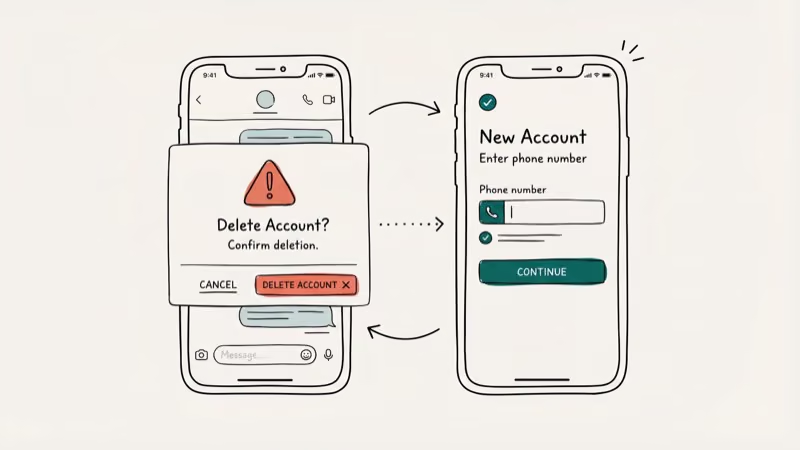
Don’t delete your account just because someone blocked you. Treat the old claim that deleting and recreating WhatsApp reliably removes you from another person’s block list as unverified, and the cost is real: account deletion can break chat history, groups, backups, and linked devices.
Steps:
- Open WhatsApp and go to
Settings>Account>Delete My Account - Enter your phone number and confirm deletion
- Uninstall WhatsApp from your device
- Reinstall WhatsApp and create a new account with the same number
Treat this as a last-resort account reset, not an unblock method. If you still choose to delete the account, do it only after exporting critical chats and accepting that the other person may keep blocking the new account state.
What you lose: All chat history, all group memberships, and any linked devices. Back up critical chats before proceeding. Our guide on transferring WhatsApp from Android to iPhone covers backup options if you’re also switching devices.
#How Does Group Mediation Work as a Workaround?
This method doesn’t require deleting anything. A mutual friend can add both you and the blocking person to a new WhatsApp group. Within the group, you can both send messages to each other even though the block remains for direct conversations.
Steps:
- Ask a mutual friend to create a new WhatsApp group
- They add you and the person who blocked you to the group
- They can leave the group afterward
A mutual group can create a channel for communication while the direct block remains active. Direct messages and calls outside the group still remain blocked.
This method works best when you need to convey a specific message or resolve a misunderstanding, not for ongoing contact.
#Method 3: Use Dual Apps on Android
Some Android phones include a “Dual Apps” or “Clone Apps” feature that lets you run two instances of WhatsApp simultaneously. You’d set up the second instance with a different phone number and use that to contact the person.
This requires a second phone number, which you can get through a temporary SIM or a VoIP service like Google Voice. The other person doesn’t automatically know the second number is you, though they may recognize you if your contact name is the same.
To find this feature, look for it in your phone’s Settings under “Dual Apps,” “Parallel Space,” or “App Clone” depending on your device manufacturer. Samsung, Xiaomi, and OnePlus all support this natively.
#What Should You Consider Before Bypassing a Block?
Legality: These workarounds aren’t automatically illegal in most jurisdictions, but repeated unwanted contact can become harassment. According to the Electronic Frontier Foundation’s article on online harassment, online harassment can cause real and lasting harms, so use a mutual friend or a separate professional channel only when there’s a legitimate reason to resolve a misunderstanding.
Ethical consideration: WhatsApp’s block feature exists to let people control who can reach them. Before bypassing it, consider whether the block was intentional. In cases of a genuine misunderstanding, reaching out via a mutual friend or a different communication channel entirely is often more effective.
The account deletion tradeoff: Losing all chat history and group memberships is significant. If you’ve saved important conversations in WhatsApp, export them first. Our guide on exporting WhatsApp chat history covers how to save conversations before deletion.
You can also find someone on WhatsApp to verify whether their account is still active if you’re unsure whether they blocked you or deleted their account.
If you want to understand more about WhatsApp’s privacy controls, our guide on hiding your number on WhatsApp explains what information is visible to contacts and how to limit it.
For backing up your messages before attempting account deletion, see our WhatsApp backup guide for both Android and iOS.
#Bottom Line
You can’t directly unblock yourself on WhatsApp. The practical options are group mediation through a mutual contact or contacting the person through a separate, appropriate channel. Deleting and recreating an account has permanent consequences and is not a verified unblock guarantee. Before proceeding with any workaround, think about whether the block was intentional and whether the person wants to hear from you.
#Frequently Asked Questions
Can I unblock myself without the other person knowing?
Not reliably. If you delete and recreate your account, they may notice your profile reappears in their contacts. If you use a mutual group, they’ll see you in the group. There’s no invisible method.
Will the person be notified if I delete and recreate my account?
No direct notification is sent. However, their contacts list will show your profile again after you recreate the account, so they may notice.
Is it against WhatsApp’s rules to use dual apps to bypass a block?
Using dual apps is not prohibited by WhatsApp specifically, but creating accounts to contact people who have blocked you may violate their terms of service regarding harassment and unwanted contact.
Can I recover my chats after deleting my WhatsApp account?
Only if you backed them up before deletion. WhatsApp offers Google Drive backup (Android) and iCloud backup (iPhone). Without a backup, deleted chats are permanently gone.
How do I know if someone blocked me or just deleted their account?
If they deleted their account, their profile becomes blank and their contact no longer appears in group members. If they’re blocked, their profile shows limited information (no last seen, no profile photo updates) but their account still exists. Both look similar, which is intentional.
Does WhatsApp tell someone when I call them but am blocked?
No. Calls to a number that blocked you don’t ring on their end. The call appears to ring on your side, but they receive nothing. This prevents the caller from knowing immediately that they’ve been blocked.
What’s the best approach if a work contact blocked me by mistake?
Reach out through another channel first, such as email or a phone call, and ask them to check their WhatsApp blocked contacts. Accidental blocks are common and easily fixed on their end through Settings > Privacy > Blocked contacts.
Google Messages Error 3100: Why RCS Is Broken on Galaxy
Google Messages RCS error 3100 hits Galaxy owners after phone or carrier switches. Google told 9to5Google a fix is coming. Here's what actually helps.
Is This Bank App Real? Spot a Fake App on Your Home Screen
A bank app can land on your home screen from a web page with no install warning. Learn the checks that tell a real banking app from a phishing web app.
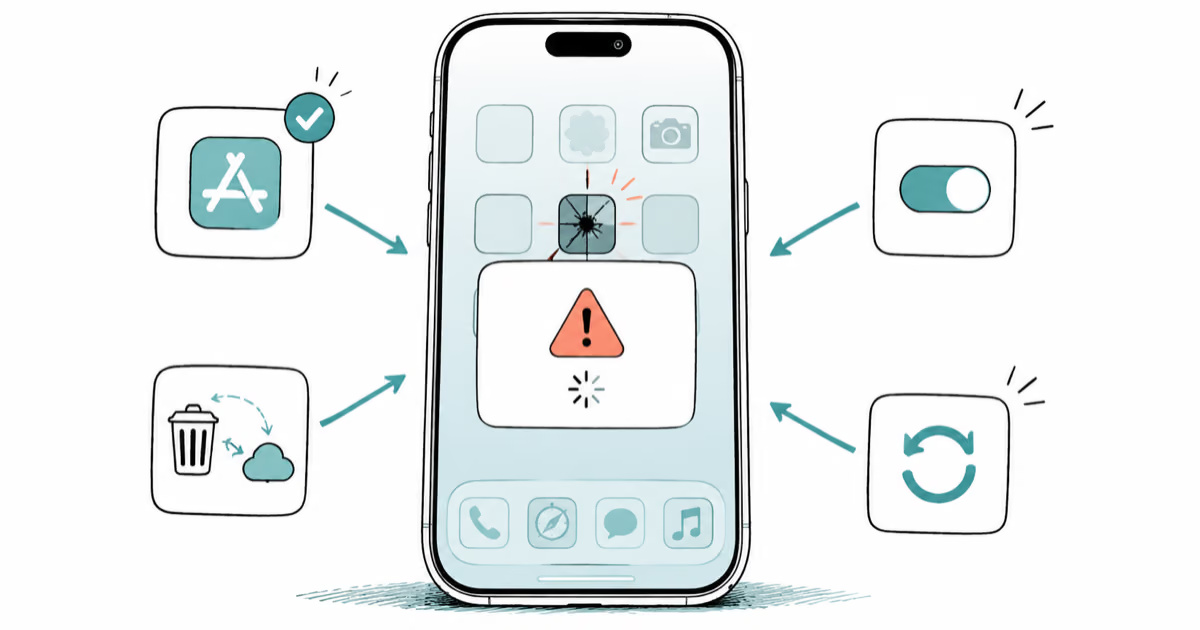
Apps Crashing After iOS 27 Update? Fix Order (2026)
Apps crashing after the iOS 27 update? Update the app in the App Store first, then offload and reinstall to clear stale cache, then restart. The fix order.
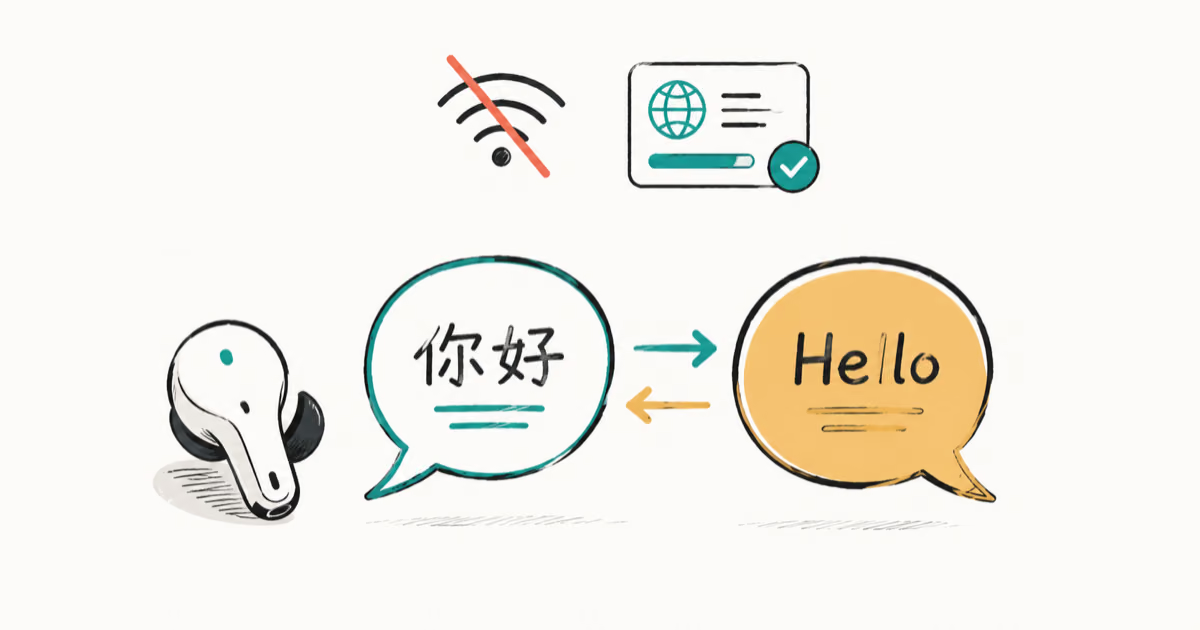
Do AI Translation Earbuds Work Offline? What to Know
Do AI translation earbuds work offline? A few do with downloaded language packs, but most need the cloud. Here's what works offline and what you give up.