How to Fix Video TDR Failure BSOD on Windows 10 Permanently
Fix the Video TDR Failure BSOD error on Windows 10 by updating or rolling back graphics drivers, running system scans, and adjusting power settings.
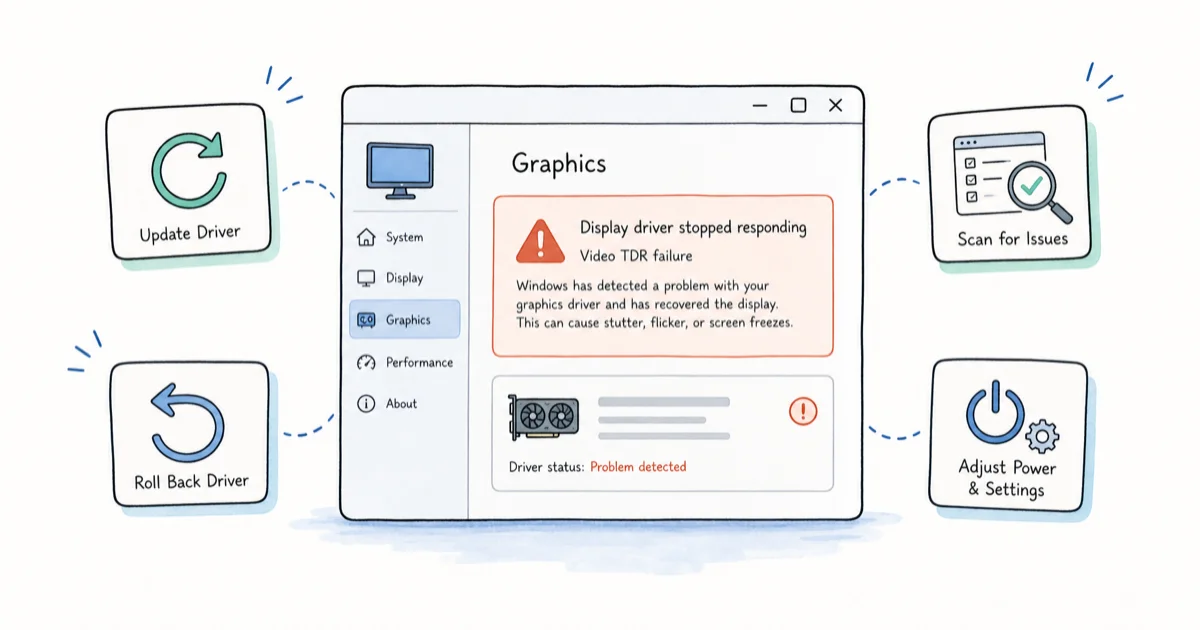
Quick AnswerThe Video TDR Failure blue screen occurs when Windows doesn't receive a response from your graphics driver within 2 seconds. Update your graphics driver through Device Manager by right-clicking your display adapter and selecting Update Driver, or roll back recent driver updates if the error started after an update.
The Video TDR Failure blue screen of death (BSOD) is one of the most frustrating errors Windows 10 users encounter, especially during gaming or demanding graphics tasks. This error forces an immediate system restart and can corrupt unsaved work.
- Video TDR Failure is a Windows timeout detection and recovery mechanism that triggers when the graphics driver doesn’t respond within 2 seconds
- Rolling back or updating the graphics driver resolves the majority of TDR failures, making it the most effective first solution
- Overclocking software like MSI Afterburner and GPU-Z can trigger TDR failures when GPU settings are unstable
- System file corruption can cause persistent TDR errors and is worth checking with SFC and DISM scans
- Creating a system restore point before attempting fixes provides a guaranteed rollback path if any solution causes additional system instability
#What Is Video TDR Failure and Why Does It Happen?
Video TDR (Timeout Detection and Recovery) Failure is a protective Windows mechanism designed to prevent complete system freezes. When your graphics driver stops responding for more than 2 seconds, Windows forces a driver restart and displays the blue screen to maintain system stability.
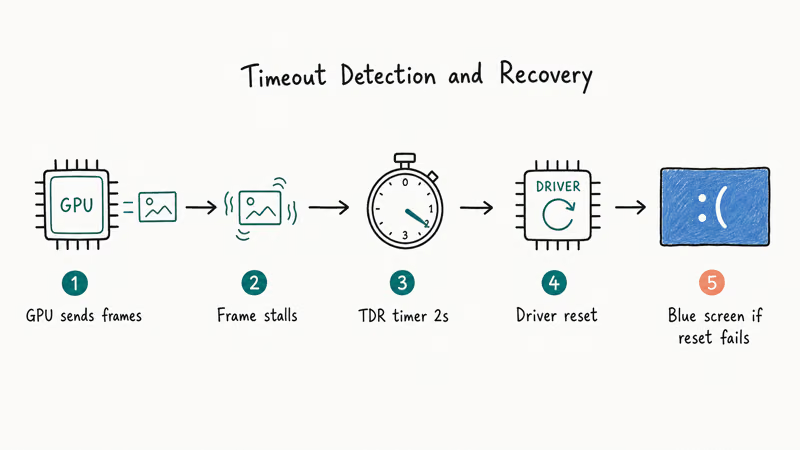
Microsoft’s Timeout Detection and Recovery documentation states that the default timeout is 2 seconds before Windows forces a driver reset, because unresponsive graphics drivers historically caused permanent system hangs requiring hard reboots.
Most troubleshooting starts with drivers, overclocking, system files, and power settings because those are the common software layers involved in TDR failures.
#Common Causes of Video TDR Failure
The error typically manifests with specific files depending on your graphics hardware: NVIDIA cards show nvlddmkm.sys failure, AMD cards display atikmpag.sys or atikmdag.sys failure, and Intel integrated graphics trigger igdkmd64.sys failure.
Each file represents the core graphics driver managing communication between Windows and your GPU, and when these files become corrupted, outdated, or conflict with system changes due to hardware incompatibilities, software conflicts, or improper system configurations, the TDR mechanism activates as a protective response to prevent complete system freezes and potential data loss from unresponsive graphics subsystems.
For users experiencing BAD POOL CALLER errors alongside TDR failures, the problems often share the same root cause in graphics driver stability.
#Method 1: Rolling Back Your Graphics Driver
Driver rollback resolves most TDR failures where the error started after a recent graphics driver update. This method restores your system to the previously stable driver configuration.
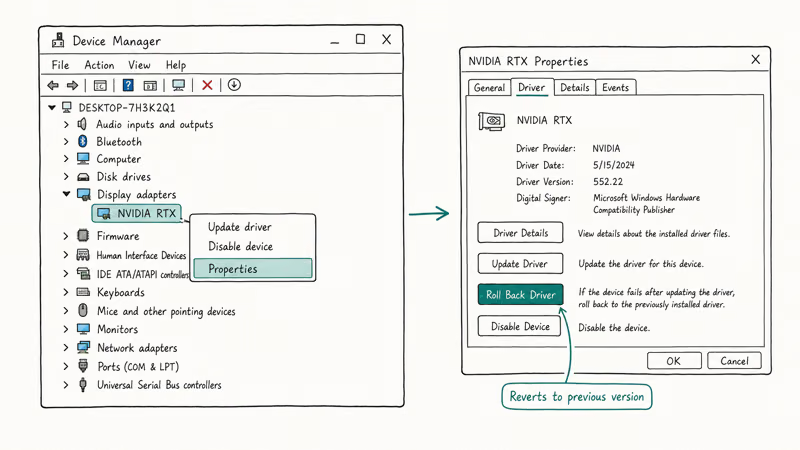
Step-by-step rollback process:
- Right-click the Start button and select Device Manager
- Expand Display adapters
- Right-click your graphics card and choose Properties
- Click the Driver tab, then Roll Back Driver
- Select a reason for rolling back and click Yes
- Restart your computer when prompted
If the Roll Back Driver button appears grayed out, Windows doesn’t have a previous driver version stored. In this case, you’ll need to manually download an older driver version from your graphics card manufacturer’s website.
For manual rollback:
- NVIDIA users: Visit nvidia.com/drivers and download a driver from 2-3 months ago
- AMD users: Access amd.com/support and select an earlier Radeon Software release
- Intel users: Download previous drivers from intel.com/content/www/us/en/support
Rollback is most useful when TDR failures begin immediately after a graphics driver update. The sooner you restore the previous driver, the less time you spend chasing unrelated settings.
#Method 2: Updating to the Latest Graphics Driver
When your current driver is significantly outdated (more than 6 months old), updating often resolves compatibility issues causing TDR failures. Modern drivers include stability improvements and bug fixes for known TDR triggers.
Automatic driver update:
- Open Device Manager (Windows + X, then select Device Manager)
- Expand Display adapters
- Right-click your graphics card and select Update driver
- Choose Search automatically for updated driver software
- Allow Windows to download and install the latest version
- Restart when the installation completes
For better results, download drivers directly from manufacturers: use GeForce Experience for NVIDIA cards or install AMD Radeon Software for AMD graphics. Microsoft also recommends keeping your graphics driver current as a first line of defense against display-driver crashes. Intel users should grab the latest package from the Intel support site listed in Method 1 above.
If juggling vendor utilities feels tedious, a third-party tool like Driver Easy can automate driver management across mixed hardware.
Some links on this page are affiliate links, which means fone.tips may earn a commission at no extra cost to you.
Pro tip: Clean installation prevents conflicts. Use DDU (Display Driver Uninstaller) in Safe Mode before installing new drivers if you continue experiencing issues.
#Method 3: Disabling Overclocking Software
Overclocking utilities can trigger TDR failures by pushing graphics cards beyond stable operating parameters, especially when cooling or voltage settings are marginal.
Common overclocking software to disable: MSI Afterburner, EVGA Precision X1, GPU-Z (when GPU monitoring is active), CPU-Z (when overclocking features are enabled), and any manufacturer-specific overclocking utilities.
Safe disabling process:
- Close all overclocking software currently running
- Reset GPU memory and core clocks to default values before closing
- Restart your computer to ensure default clock speeds
- Disable these programs from startup using
Task Manager>Startuptab - Test system stability for 24-48 hours
If TDR errors disappear, gradually re-enable overclocking with conservative settings by increasing clocks in 25 MHz increments for memory and 10 MHz for core speeds while testing stability after each change.
Related power management issues can also trigger TDR failures. Users experiencing Windows 10 keyboard not working should verify their power settings aren’t forcing aggressive GPU throttling.
#How Can I Fix Corrupt System Files Causing TDR Errors?
Corrupted system files are a less common but stubborn cause of persistent TDR failures. System File Checker (SFC) and Deployment Image Servicing Management (DISM) are the built-in Windows tools for detecting and repairing those corruptions.
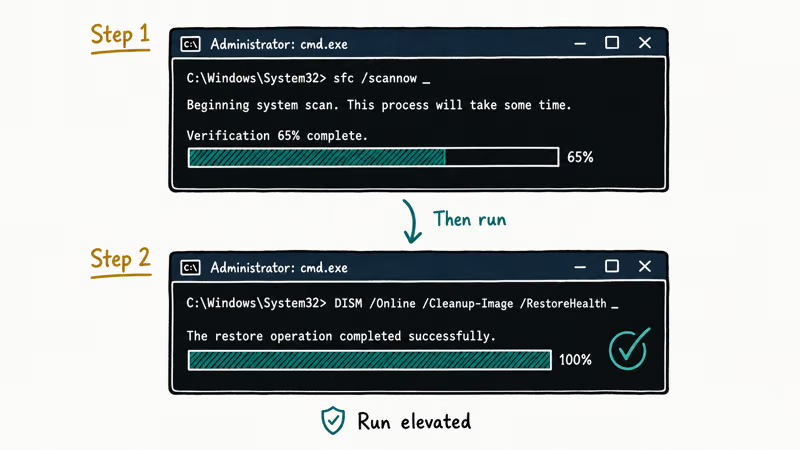
Complete system repair sequence:
- Press Windows + X and select Windows PowerShell (Admin)
- Run DISM first to repair the Windows image:
DISM /Online /Cleanup-Image /RestoreHealth - Wait for completion (typically 10-30 minutes depending on your system)
- Run SFC to check system file integrity:
sfc /scannow - Allow the scan to complete (usually 15-45 minutes)
- Restart your computer
Understanding the output results:
- “Windows Resource Protection found corrupt files and successfully repaired them” indicates successful repair
- “Windows Resource Protection found corrupt files but was unable to fix some of them” requires manual intervention through alternative repair methods, registry fixes, or system component reinstallation procedures
- “Windows Resource Protection did not find any integrity violations” confirms healthy system files requiring no further action
For cases where SFC can’t repair files, the detailed log at C:\Windows\Logs\CBS\CBS.log identifies specific problems requiring manual fixes.
#Method 5: Adjusting PCI Express Power Management
Windows’ aggressive power management can cause communication failures between your motherboard and graphics card, triggering TDR errors. Disabling PCI Express Link State Power Management eliminates this variable.
Power management adjustment:
- Open
Control Panel>Hardware and Sound>Power Options - Click Change plan settings next to your current power plan
- Select Change advanced power settings
- Expand
PCI Express>Link State Power Management - Set both On battery and Plugged in to Off
- Click Apply and OK
- Restart your computer
This change prevents Windows from putting your PCIe slots into low-power states that can interrupt graphics communication. The impact on battery life is minimal for most users since graphics cards already consume significant power during active use.
For users with multiple graphics-related issues, this power management fix often resolves NTFS.sys errors simultaneously. Reviewing our DPC Watchdog Violation fixes helps confirm that driver conflicts don’t reoccur after system updates.
#Resetting BIOS Settings for TDR Fixes
BIOS modifications, particularly those related to PCIe settings, memory timings, or CPU overclocking, can destabilize graphics driver communication and cause TDR failures.
Safe BIOS reset procedure:
- Restart your computer and press the BIOS key during startup (typically F2, F12, Delete, or F10)
- Go to the Exit or Advanced menu
- Look for Load Defaults, Reset to Default, or Load Optimized Defaults
- Confirm the reset and select Save and Exit
- Allow your system to restart normally
BIOS settings that commonly cause TDR issues: PCIe slot speed forced to incorrect values, memory overclocking without adequate voltage, CPU overclocking affecting PCIe lanes, and integrated graphics settings conflicting with dedicated cards.
After BIOS reset, test system stability for at least one full day before reapplying any custom settings. If TDR errors return after re-enabling specific BIOS modifications, that setting is likely the cause.
#Bottom Line
Video TDR Failure errors are almost always solvable through systematic troubleshooting. Start with driver rollback if the error began after a recent update, as this resolves the majority of cases. For older systems or persistent issues, update graphics drivers and disable overclocking software before moving to more intensive solutions like system file repairs.
The key is working through solutions methodically rather than trying multiple fixes simultaneously. Each method targets a specific cause, and combining them can create new conflicts. Always create a system restore point before making changes, and test stability for 24 hours after each successful fix.
#Frequently Asked Questions
What does Video TDR Failure mean exactly?
Video TDR Failure stands for Video Timeout Detection and Recovery Failure. It occurs when Windows detects that your graphics driver has stopped responding for more than 2 seconds and attempts to restart it. If the restart fails, Windows displays this blue screen to prevent a complete system freeze.
Can outdated Windows updates cause TDR failures?
Yes, Windows updates can trigger TDR failures by installing incompatible graphics drivers or changing system configurations. If the error appears soon after a major Windows update, rolling back the recent graphics driver usually resolves that conflict.
Is it safe to ignore Video TDR Failure errors?
No, you shouldn’t ignore TDR failures as they indicate unstable graphics driver communication that can lead to data loss, system corruption, or hardware damage. While the error prevents immediate system damage, persistent TDR failures often worsen over time and can’t be ignored since they eventually cause permanent graphics card failure.
How do I know if my graphics card is dying?
Signs of graphics card failure include increasing frequency of TDR errors, visual artifacts on screen, system crashes during graphics-intensive tasks, and abnormal fan noise. If TDR failures persist after trying all software solutions, run a graphics stress test like FurMark for 30 minutes to check hardware stability.
Can RAM problems cause Video TDR Failure?
Yes, faulty RAM can cause TDR failures, especially if the memory modules used by graphics processes become corrupted. Run Windows Memory Diagnostic (type “mdsched” in Start menu) to check for memory errors. Bad RAM is one possible cause when persistent TDR failures don’t respond to driver fixes.
Why does TDR Failure happen mostly during gaming?
Gaming stresses your graphics card more than typical desktop use, exposing driver instabilities or hardware limitations that remain hidden during normal operation. Games also use more VRAM and GPU processing power, making systems more sensitive to driver timeouts, overheating, or power delivery issues.
Should I replace my graphics card if nothing fixes TDR failures?
Consider hardware replacement only after exhausting all software solutions and confirming hardware failure through stress testing. TDR failures are often software-related, so replace hardware only if stress tests consistently crash the system or reveal artifacts.
Can Windows Safe Mode help diagnose TDR failures?
Yes, Safe Mode loads basic graphics drivers and disables third-party software that might cause conflicts. If TDR failures don’t occur in Safe Mode, the issue is likely software-related rather than hardware failure. Use Safe Mode to safely uninstall problematic drivers or disable overclocking software.

Best Laptop for Running LLMs in 2026: Memory Comes First
The best laptop for running LLMs is a memory purchase first. Compare MacBook unified memory against NVIDIA laptop VRAM, and see what each tier really runs.
How to Run a Local LLM on Windows: A 2026 Setup Guide
Run a local LLM on Windows with LM Studio or Ollama. Pick a model that fits your GPU memory, keep every prompt offline, and skip the monthly bill.
Bluetooth Not Working on Snapdragon X? Fixes for 2026
Bluetooth not working on your Snapdragon X Copilot+ PC? Generic audio, mice, and keyboards work, but vendor apps often lack an ARM build. Fixes inside.
Docker Desktop and WSL2 Not Working on Snapdragon X? Fix It
WSL2 runs fine on Snapdragon X, but Docker Desktop ARM is Early Access and throws WSL errors. Use WSL2 plus native ARM64 Ubuntu and Docker Engine.