How to Use Apple Watch Digital Crown to Eject Water
Use the Apple Watch Digital Crown to exit Water Lock, eject water from the speaker, and dry the case safely after swimming, surfing, or showering.
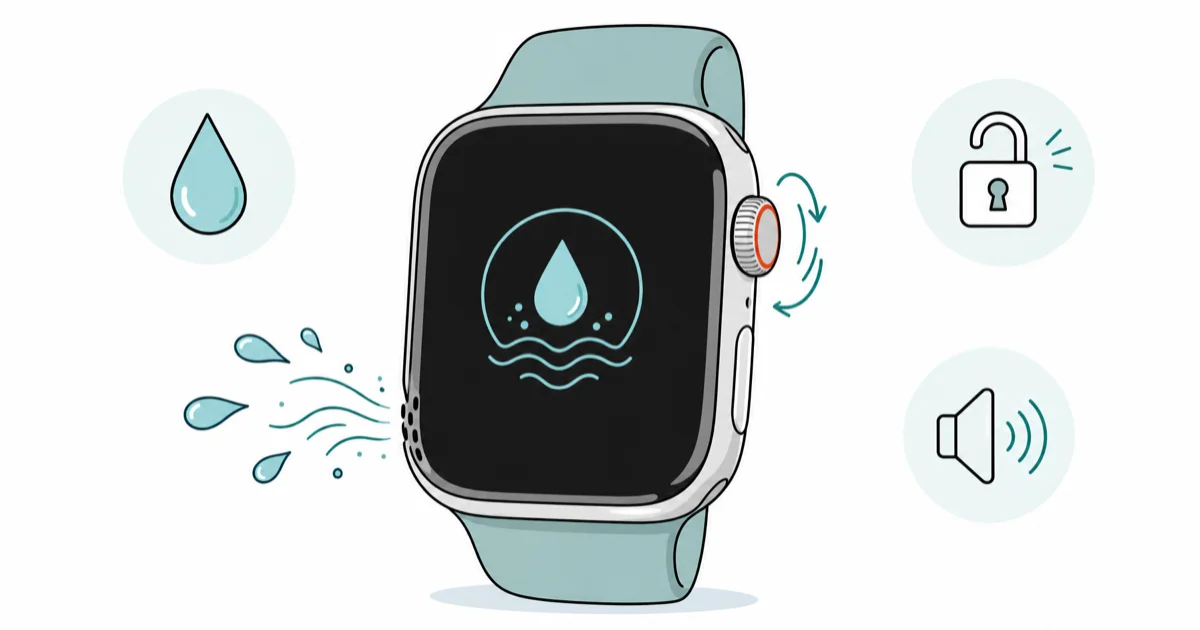
Quick AnswerTurn the Digital Crown on your own Apple Watch in any direction for three to five rotations until the screen shows Unlocked and three rising tones play. Water Lock turns on automatically during swim workouts or manually from Control Center.
The Apple Watch Digital Crown does more than scroll lists. After Water Lock activates, that dial becomes a tiny pump that vibrates water out of the speaker grille so the watch can hear and speak clearly again. This guide covers Water Lock on your own Apple Watch (a device you own and have paired to your iPhone), the exact crown technique that works, and what to do when the crown feels gritty after a salty swim.
- Water Lock turns on automatically when you start a swim workout in the Workout app, and you can also tap the blue droplet in Control Center to enable it before any wet activity.
- Turn the Digital Crown on the side of the case until the screen shows Unlocked and you hear three rising tones, which means the speaker has pushed the water out.
- Apple Watch Series 2 and every later model support Water Lock; Series 1 and the original Apple Watch don’t, and Apple rates them only as splash resistant.
- Apple Watch Ultra adds a Depth gauge and lets you trigger Water Lock from the Action button, useful for free diving down to 40 meters per the Ultra spec sheet.
- After the speaker tones finish, pat the case dry with a lint-free cloth and let the watch sit speaker-down for two minutes so any residue evaporates.
#What Is Water Lock and When Does It Turn On?
Water Lock is a watchOS safety mode that disables the touch screen, queues notifications quietly, and primes the speaker driver to act as a water pump. Apple introduced the feature with watchOS 3 alongside the Apple Watch Series 2 because capacitive touch panels misread water droplets as taps, which can launch workouts you didn’t want or end a workout you wanted to keep running.
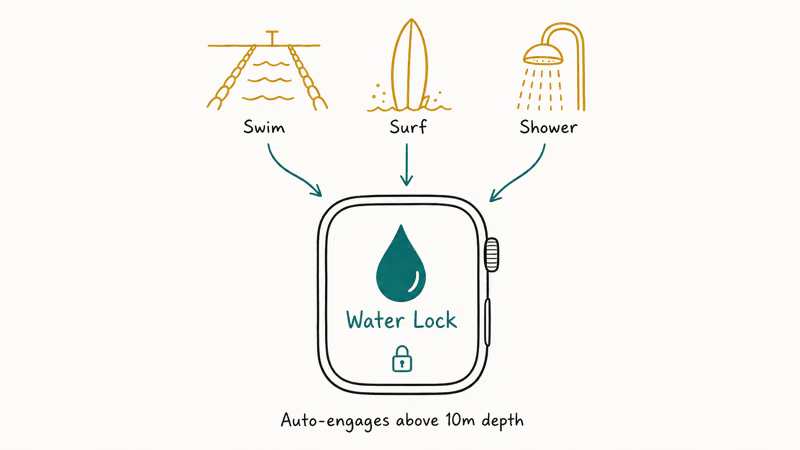
You can enable Water Lock three ways on your own Apple Watch:
- Automatic during swim workouts. Open the Workout app, scroll to Pool Swim or Open Water Swim, and tap the workout tile. Water Lock locks the screen the moment the countdown ends.
- Manual from Control Center. Swipe up from the watch face (or press and hold the bottom edge on watchOS 10 and later), then tap the blue water droplet icon.
- Action button on Apple Watch Ultra. In Settings, Action Button, assign Water Lock as a single press so you can trigger it underwater with gloves on.
According to Apple Support’s Use Apple Watch in water guide, the screen stays unresponsive until you eject water with the Digital Crown, even if you tap repeatedly. No amount of jabbing at the display will wake it while Water Lock is active, which is the whole point of the feature.
#Which Apple Watch Models Support Water Lock?
Compatibility tracks the water resistance rating. Apple’s official tech specs list these tiers:
- Original Apple Watch and Series 1: IPX7 splash resistant. No Water Lock, no swimming.
- Series 2 through Series 9 and SE (1st and 2nd gen): ISO 22810 rated to 50 meters. Water Lock supported. Avoid scuba diving and waterskiing.
- Apple Watch Ultra and Ultra 2: EN 13319 dive standard plus 100 meter ISO rating. Water Lock plus Depth app and recreational dive use down to 40 meters.
Apple’s Apple Watch Ultra 2 technical specifications list the built-in Depth app and water-resistance context, which is the relevant spec behind automatic water-use behavior.
#How Do You Turn the Digital Crown to Unlock and Eject Water?
Once Water Lock is on, the droplet icon stays at the top of the watch face. To exit:
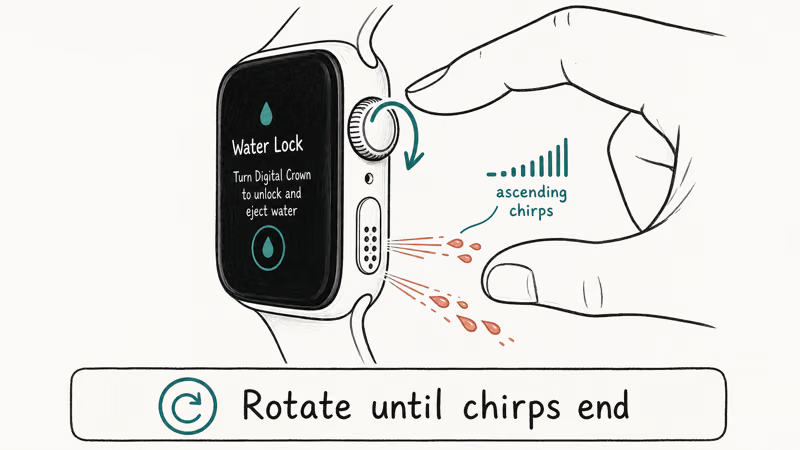
- Wake the screen with a wrist raise so the droplet icon is visible.
- Place the watch flat on a towel or hold your wrist horizontally with the speaker facing down.
- Turn the Digital Crown steadily in either direction. Direction doesn’t matter on watchOS 9 and later, despite older instructions saying away from you.
- Keep turning for about three to five full rotations until you hear three rising chimes and feel a long vibration.
- When the screen displays Unlocked, the touch panel is live again and the droplet icon disappears.
A successful eject usually takes between two and four seconds of crown rotation. Apple recommends pointing the speaker grille downward so gravity helps, and turning the crown with the watch flat on its back tends to take a touch longer than holding it speaker-down.
#Why You Should Not Tap or Press Other Buttons
The side button and screen are intentionally disabled. Pressing them harder won’t help and can cause condensation if you peel back the back crystal seal during a forced restart underwater. The Digital Crown is the only input the watch listens to in Water Lock mode, and Apple Support’s About water resistance article confirms that pressing the side button to wake the screen during Water Lock has no effect by design.
#Best Practices Before You Get Wet
Treat Water Lock as a habit, not an afterthought. A two second prep saves a sticky crown later.
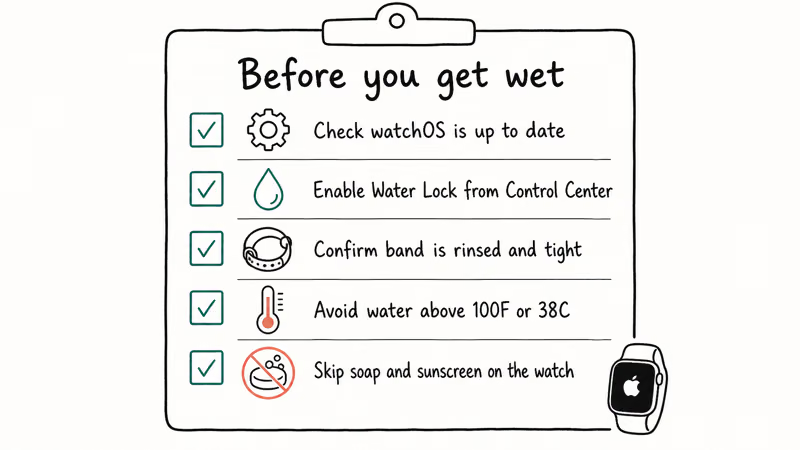
- Enable Water Lock manually before stepping into a hot tub, a pool, or the ocean, even if you don’t plan to swim. Splashes and jets read as touches.
- Rinse your Apple Watch with fresh tap water for 10 to 15 seconds after pool or saltwater exposure. Apple states that soap, shampoo, sunscreen, perfume, and insect repellent can degrade the seals and band materials.
- Skip Water Lock for the dishwasher, washing machine, or pressure washer. Apple Support’s documentation states that high velocity water can force droplets past the gaskets.
- Replace leather bands before swimming. Use silicone, nylon, or Ocean Band designs, which the Apple Watch user guide recommends for water sports.
#Troubleshooting a Crown That Won’t Eject Water
When you turn the crown and nothing happens, run through these checks on your own Apple Watch before assuming hardware damage.
#Step 1: Confirm Water Lock Is Actually On
If you swiped past the droplet icon, the watch is unlocked already. Re-enable Water Lock from Control Center, then immediately turn the crown to test the tones.
#Step 2: Clean a Sticky Digital Crown
Salt and pool chemicals leave deposits that grind the crown shaft. The official Apple cleaning procedure:
- Power off your Apple Watch and remove it from the charger.
- Hold the case under lightly running, warm fresh water for 10 to 15 seconds.
- While the watch is under water, press and turn the crown several times to dislodge debris.
- Pat dry with a non-abrasive, lint-free cloth, then let the watch air dry for at least 30 minutes before charging.
#Step 3: Restart the Watch
A forced restart resets the speaker driver firmware. Press and hold the side button plus Digital Crown for 10 seconds until the Apple logo appears. If the watch refuses to reboot, our guide on Apple Watch stuck on Apple logo covers recovery options.
#Step 4: Check for watchOS Updates
watchOS 10.4 fixed a known speaker calibration bug that left water in the grille after ejection.
Open the Watch app on your paired iPhone, go to General, Software Update, and install any pending update. If the update tile is grayed out, our walkthrough on Apple Watch unable to check for update lists the network and storage fixes you should run through before booking service.
#Step 5: Book a Genius Bar Visit
If repeated rinses and a restart still produce muffled audio after Water Lock, water may have breached an internal seal. Apple’s official repair flow asks you to bring the watch you own to an Apple Store with proof of purchase. Out of warranty service for liquid damage starts at the rates listed on Apple’s support site for your model.
#Privacy, Security, and Why Water Lock Does Not Weaken Your Watch
A reader wrote to ask whether enabling Water Lock disables the passcode or makes the watch easier to access if someone finds it on a pool deck. Short answer: no. Water Lock only freezes the touch screen.
According to Apple’s Apple Watch security guide, watchOS still enforces encrypted storage, wrist detection, and the passcode requirement. If the band leaves your wrist, the watch locks automatically and asks for the passcode before exposing any data, regardless of Water Lock state.
Bypassing those passcode protections on a watch you don’t own is illegal under the Computer Fraud and Abuse Act in the United States and parallel privacy statutes in the European Union, the United Kingdom, Canada, and Australia. Apple ships Activation Lock as a permanent ownership check precisely because of that legal exposure, and the company won’t unlock a found Apple Watch even with a police report unless the original Apple ID owner cooperates through their iCloud account.
A few related guardrails worth knowing:
- Passcode entry limits still apply. If a stranger keeps guessing the code, you may end up locked out. Our note on too many passcode attempts on Apple Watch covers the unlock paths.
- Activation Lock remains on. Even after a wipe, the watch still demands the original Apple ID. See Apple Watch activation lock for legitimate proof of ownership steps.
- Find My continues to track location in the background. If you lose the watch at the beach, your iPhone can ping it through the Find Devices tab.
These protections matter because the Apple Watch you own usually pairs with Apple Pay, Wallet keys, and health data. Apple Support documentation states that even a wiped Apple Watch can’t be paired to a different iPhone without the original Apple ID credentials, which is why secondhand buyers should always verify Activation Lock status before paying.
#Recovering From Water Damage Across Your Apple Devices
Sometimes the watch makes it through Water Lock cleanly but other devices in your bag suffered. Our coverage on a dropped iPhone in water and on getting water out of an iPhone charging port shows the parallel ejection methods Apple supports for iPhones from the 7 series onward.
For the Apple Watch itself, the early warning signs of water intrusion are:
- Fogging or condensation under the display crystal.
- A faint sloshing sound when you tap the case lightly.
- Muffled speakerphone calls or Siri responses that sound underwater days after exposure.
- A battery percentage that drops noticeably faster, often coupled with Apple Watch battery drain patterns after water exposure.
If any of these appear, stop charging, set the watch on a dry towel, and book service. Putting a wet Apple Watch on a magnetic puck can short the contacts. When moisture is detected on the charger, the watch shows the snake animation on the charger and pauses charging, which is Apple’s built-in safety cutoff doing its job.
#Bottom Line
Enable Water Lock from Control Center every time you swim, shower, or surf with the Apple Watch you own. After the activity, turn the Digital Crown for five full rotations until the screen shows Unlocked and the three rising tones complete, then let the speaker face down on a lint-free towel for two minutes.
If audio still sounds muffled, repeat the eject cycle once more and then run the official Apple Watch fresh-water rinse before charging.
For Apple Watch Ultra 2 owners, map Water Lock to the Action button so you can trigger it with one press even with neoprene gloves on. Skip third-party drying tools like uncooked rice or compressed air, both of which Apple Support warns against because they push debris into the microphone port.
#Frequently Asked Questions
Can I shower with my Apple Watch?
Yes, on Series 2 and later. Plain water only.
Does Water Lock turn on automatically every time the watch gets wet?
Water Lock auto-enables only when you start a Pool Swim or Open Water Swim workout. For showers, dishwashing, rain, or any other splash, tap the blue droplet in Control Center yourself, or use the Action button shortcut on Apple Watch Ultra. The watch can’t infer a shower without that explicit signal, so build the habit of one tap before any wet activity.
How long should I turn the Digital Crown to eject water?
About two to four seconds of steady rotation is usually enough to produce a full ejection, signaled by the three rising tones and a long vibration.
What happens if I forget to enable Water Lock before swimming?
The watch remains water resistant on its own, so a single swim without Water Lock won’t damage hardware. The real risk is accidental screen taps that start, pause, or end your workout mid-lap, which loses the heart-rate and pace data you swam for. After exiting the pool, manually run the Digital Crown eject sequence once anyway to clear any water that pooled around the speaker grille and microphone port, since trapped droplets can muffle Siri responses and calls for hours.
Does Water Lock weaken Apple Watch security or passcode protection?
No, Water Lock only freezes the touch screen so droplets can’t trigger taps. watchOS still enforces encrypted storage, the wrist detection passcode prompt, and Activation Lock.
Can I trigger Water Lock on the original Apple Watch or Series 1?
No. Water Lock requires Apple Watch Series 2 or later.
Why do I hear muffled audio after using Water Lock?
A small amount of water may remain in the speaker chamber. Repeat the Digital Crown eject cycle two or three times, then place the watch speaker-down on a microfiber towel for 30 minutes. If audio is still muffled after a fresh-water rinse and air-dry, book a Genius Bar appointment because internal seals may need inspection.
Is it safe to dive with Apple Watch Ultra using only Water Lock?
Water Lock alone is not the diver safety mechanism. Apple Watch Ultra and Ultra 2 use the Oceanic+ app, the Depth gauge, and EN 13319 certification for recreational dives down to 40 meters. Water Lock prevents accidental touch input while the dive app handles ascent, decompression, and surface alerts. Without Oceanic+ running, the Ultra is just a water-resistant smartwatch with a frozen screen, not a certified dive instrument.
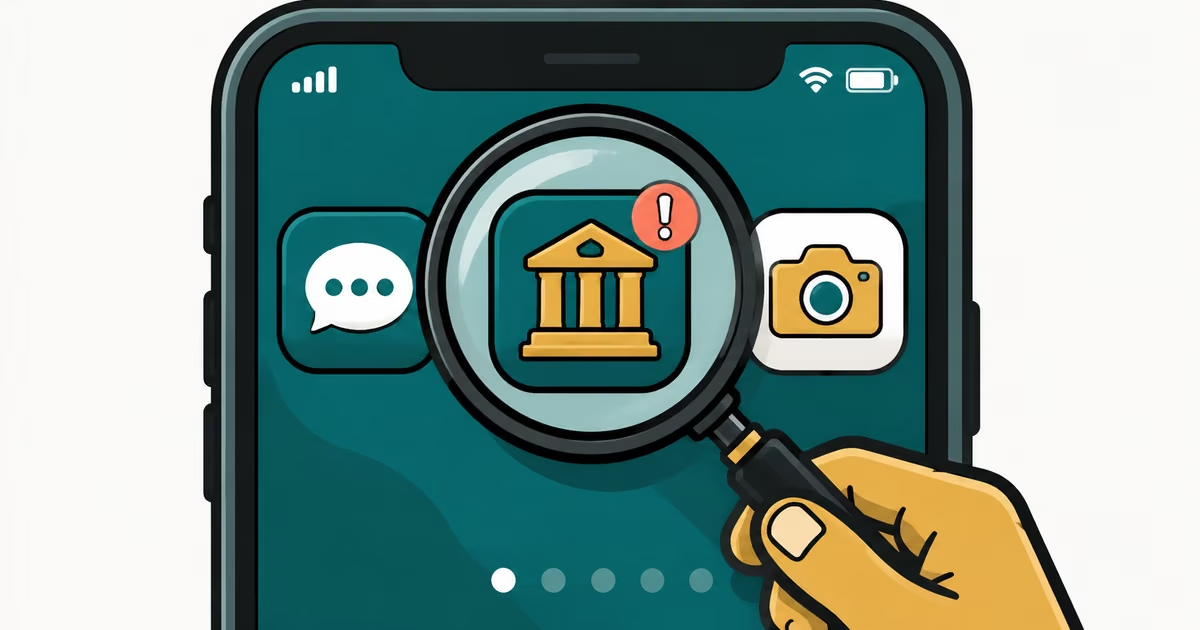
Is This Bank App Real? Spot a Fake App on Your Home Screen
A bank app can land on your home screen from a web page with no install warning. Learn the checks that tell a real banking app from a phishing web app.
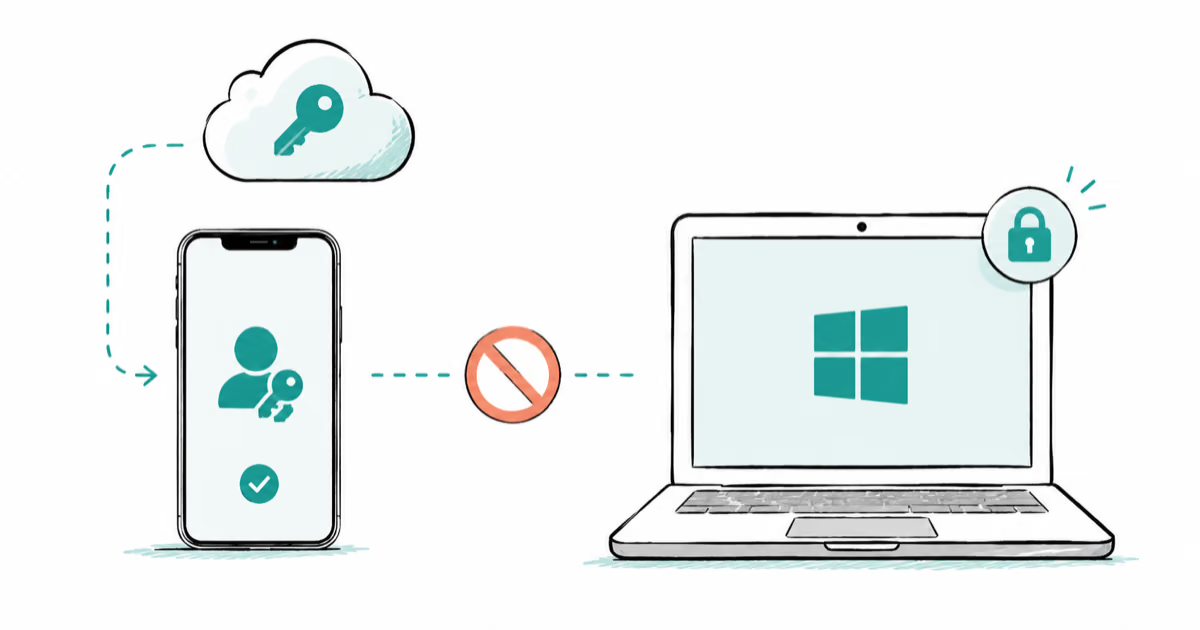
Passkeys Not Syncing Between iPhone and Windows? Read This
Passkeys not syncing between iPhone and Windows is by design, not a bug. Here is why iCloud passkeys skip Windows Hello and the three ways to fix it.
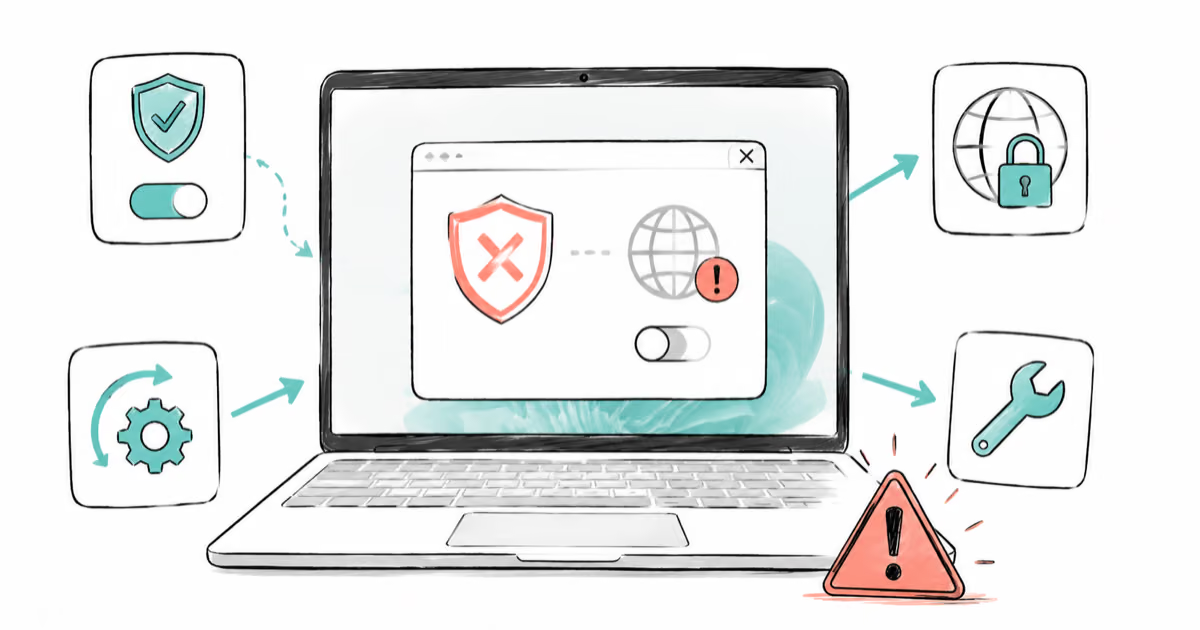
VPN Not Working on Snapdragon X? Why It Fails, How to Fix
Your VPN won't install or connect on a Snapdragon X Copilot Plus PC because Windows on ARM can't emulate the network driver. Here are the fixes that work.
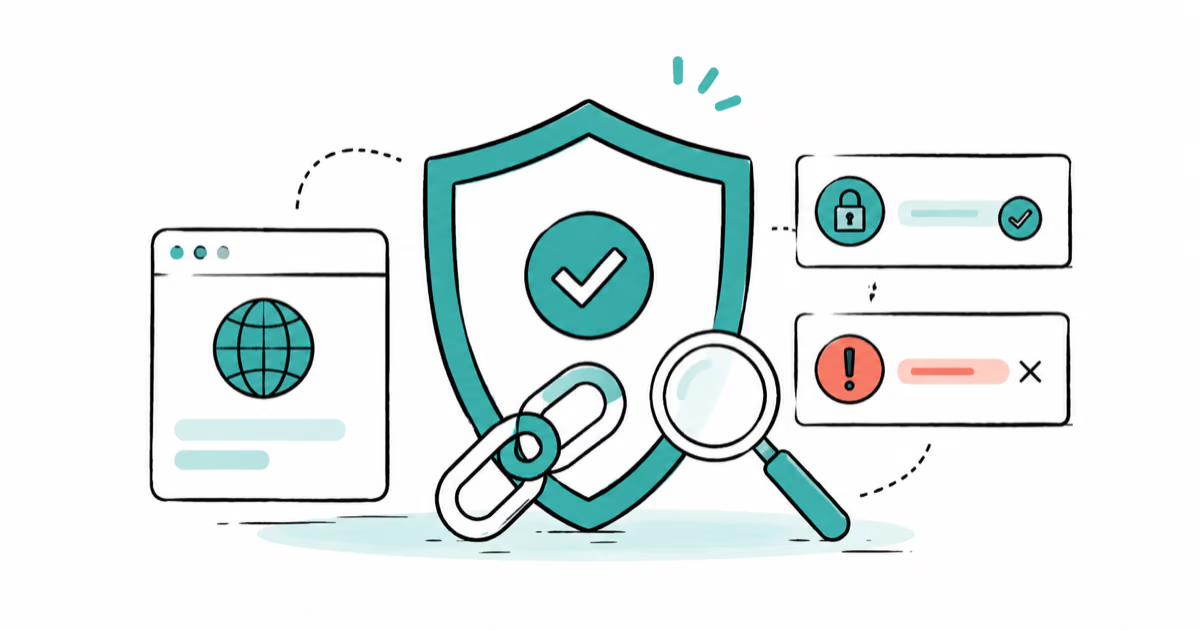
How to Check If a Link Is Safe Before You Click It
Learn how to check if a link is safe with official-first steps: read the real domain, use the app instead, and treat scanners as a second opinion only.