Apple Watch Battery Drain: 10 Checks and Safe Fixes
Troubleshoot Apple Watch battery drain with current display, background activity, Low Power Mode, update, battery-health, and service guidance.
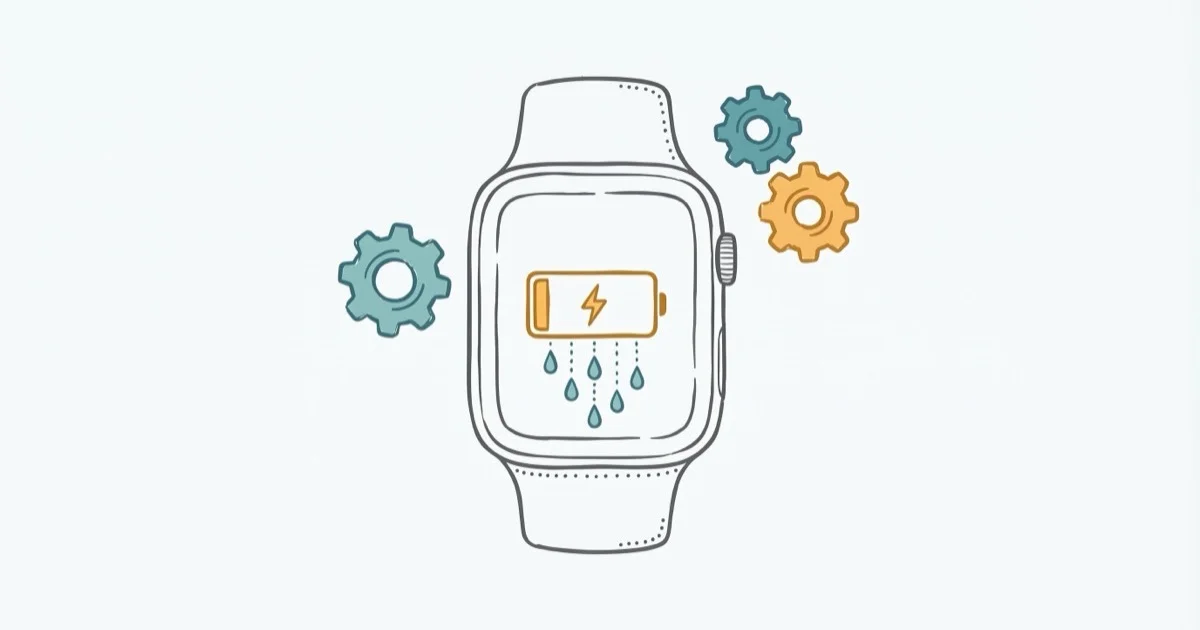
Quick AnswerCompare your exact model with Apple’s rating. Then shorten display wake time, trim background refresh, compare the same routine, and try Low Power Mode; update or unpair only after smaller changes.
Apple Watch battery ratings vary by model, configuration, network use, and mode. A result that is normal for one model can look like severe drain on another, so compare your watch with Apple’s rating for that exact model before treating the battery as faulty.
- Check the exact model’s published battery rating instead of applying one hour target to every Apple Watch
- Shorter display wake time, fewer background refreshes, and fewer notifications reduce avoidable work
- End a workout when you finish so its sensors don’t keep recording unintentionally
- Low Power Mode trades background features and some notifications for lower power use
- Unpairing erases and restores the watch, so keep it as a late troubleshooting step
#Why Is Your Apple Watch Dying So Fast?
Display time, background activity, workout sensors, connectivity, battery condition, and software can all affect battery use. The timing of a change can narrow the comparison, but it does not identify the cause by itself.
According to Apple’s current Watch comparison page, normal-use and Low Power Mode ratings differ across models. The footnotes also make clear that test workloads and radio use differ by model and that actual results vary. Use the model name in Settings > General > About to find the matching specification instead of relying on a universal runtime claim.
If your Apple Watch is stuck on the Apple logo, that’s a different problem.
#10 Checks and Fixes for Apple Watch Battery Drain
Start with the reversible checks and compare battery use under similar conditions. The later reset and service steps are for cases that don’t improve.
#1. Reduce Wake Screen Duration
Longer display-on time can increase power use, but don’t assume the watch is set to the longest option.
On the watch, open Settings > Display & Brightness > Wake Duration and choose the shorter available duration. According to Apple’s current wake-screen guide, this menu also offers a longer 70-second option.
You can also toggle off Wake on Wrist Raise entirely and wake the screen only by tapping or pressing the Digital Crown. This can reduce display wakeups throughout the day.
#2. Turn Off Background App Refresh
This setting lets apps update some information when you’re not using them. Limit it only for apps whose background information you don’t rely on, then compare the same routine before and after.
On your iPhone, open the Watch app. Go to My Watch > General > Background App Refresh. Turn off the master toggle for a short comparison, or disable individual apps you don’t need updating in the background. Restore the setting if the change does not help or an app stops delivering information you rely on.
#3. Lower Screen Brightness
Open the Watch app on your iPhone. Go to My Watch > Display & Brightness. Drag the brightness slider down a notch or two.
If your watch supports an Always-On Display, consider turning it off under Settings > Display & Brightness > Always On. This is a reversible test: compare battery use over a normal day, then restore the setting if it makes no meaningful difference for your watch.
#4. End Workout Sessions Manually
An unfinished workout can keep applicable heart-rate, motion, location, and radio features active, so it can use more power than the watch’s idle state. The exact sensors and battery effect depend on the workout, watch, and connection.
When you finish exercising, swipe right on the workout screen and tap End. If a session is still running, open the Workout app and end it, then compare the next similar day rather than assigning a fixed drain rate to the workout.
#5. Disable Unnecessary Notifications
Notifications can wake the display or trigger haptics, depending on your settings. Frequent alerts add activity, so mute the ones you don’t need on your wrist.
On your iPhone, open the Watch app and tap Notifications. Turn off mirroring for apps that don’t need wrist alerts. Social media and email apps are the usual offenders. If your Apple Watch can’t check for updates after changing settings, restart both devices.
#Advanced Fixes for Persistent Battery Drain
If the first five fixes didn’t solve your problem, these deeper changes target software-level issues.
#6. Turn On Low Power Mode
Press the side button to open Control Center, tap the battery percentage button, and turn on Low Power Mode. You can also open Settings > Battery > Low Power Mode on the watch.
According to Apple’s current Low Power Mode guide, the mode turns off the Always-On Display and background heart-rate measurements, pauses several health notifications, and makes background app refresh less frequent. Workout heart rate and pace can still be measured. The runtime gain depends on the exact watch model, settings, network, and use, so treat it as a temporary battery-saving mode rather than a fixed-hour promise.
#7. Keep the Paired iPhone Nearby When Practical
Apple Watch can use Bluetooth, Wi-Fi, or cellular depending on the model and whether the paired iPhone is nearby. Repeated cellular or Wi-Fi use away from the iPhone can change battery results, but disabling a radio as a blanket fix can also break calls, messages, updates, and safety features.
For a fair comparison, leave the normal radio settings intact and keep the paired iPhone nearby for one ordinary day. If battery life improves, review which apps or cellular features were active when the phone was away rather than leaving connectivity disabled.
#8. Unpair and Re-Pair Your Apple Watch
Unpairing erases the watch and normally creates a fresh backup on the paired iPhone. Use it only after recording your settings and confirming that the iPhone has enough space and a current backup; re-pairing is a reset, not a guaranteed battery repair.
On your iPhone, open the Watch app. Go to My Watch > All Watches. Tap the i icon next to your watch and select Unpair Apple Watch. After the process completes, bring the watch close to your iPhone and tap Start Pairing to set it up fresh.
If you’ve been dealing with too many passcode attempts and had to reset, re-pairing is required anyway.
#9. Delete Apps You Don’t Use
Installed apps may refresh data, use location, or send notifications. Remove apps you no longer use, but don’t assume every installed app is consuming power in the background.
Press the Digital Crown to see your app list. Long-press any app you don’t need, then tap the X. Focus on removing apps that access location, health sensors, or network data.
#10. Update watchOS
An available watchOS update may include fixes relevant to power use, but an update is not proof that every drain problem is software-related.
On your iPhone, go to the Watch app and tap My Watch > General > Software Update. Install a compatible update only when the watch meets the on-screen power and connectivity requirements. Afterward, compare battery use across the same activities rather than applying a fixed post-update waiting period.
#Common Battery-Use Areas to Compare
Display behavior, background activity, workout sensors, connectivity, and notification wakeups can all affect battery use. The table is a troubleshooting checklist, not a measured ranking; change one item at a time and compare the same routine before and after.
| Feature | Why it matters | Reversible check |
|---|---|---|
| Background App Refresh | Apps can update when not in the foreground | Limit refresh for unused apps |
| Always-On Display | The display remains visible at rest | Turn it off for a comparison |
| Wake duration | A longer selection keeps the screen active | Choose the shorter duration |
| Workout sensors | Heart rate and location may stay active | End the workout when finished |
| Frequent notifications | Alerts can wake the screen repeatedly | Mute nonessential app alerts |
If you want to pair your Apple Watch manually after a reset, our separate guide walks through the pairing sequence step by step including troubleshooting tips for common errors.
#When Should You Replace Your Apple Watch Battery?
If battery use remains far below the published rating for your exact model under comparable conditions, open Settings > Battery > Battery Health on the watch and record Maximum Capacity before contacting Apple.
Apple’s current Watch repair page says eligible AppleCare+ coverage includes battery service at no extra charge when capacity drops below 80%; Apple confirms eligibility during the service process. Out-of-warranty price and service options depend on model and region, so use Apple’s live estimate instead of a fixed price from an article.
#watchOS Updates That Caused Battery Issues
If drain begins immediately after an update, note the watch model, watchOS version, Battery Health reading, recent activity, and recent charge history shown by the watch. Apple Watch doesn’t provide an iPhone-style per-app battery ranking, so don’t invent one from that screen. Check Apple’s current release information and support channels for the exact version; forum reports can identify a pattern, but they don’t prove that your battery has the same cause.
#Bottom Line
Start with reversible comparisons: use the shorter wake duration, limit unneeded background refresh and notifications, and test Low Power Mode. Update only when the watch meets Apple’s requirements, and unpair only after the smaller steps. If battery use remains far below the rating for your exact model or Battery Health is low, contact Apple Support for model-specific service options.
#Frequently Asked Questions
How long should an Apple Watch battery last on a full charge?
There is no one rating for every current Apple Watch. Check Apple’s comparison page or the technical specifications for your exact model and mode; radio use, workouts, display settings, network conditions, and battery condition all affect the result.
Does the Always-On Display drain battery significantly?
It can affect power use because the display remains visible while your wrist is down, but the size of the change varies by model and use. Turn it off for a normal comparison period and keep the setting only if the result is useful to you.
Can a bad watchOS update cause battery drain?
It can, but timing alone does not prove the cause. Record the watchOS version and battery-use view, compare the same activities, and check for a newer compatible release. Don’t apply a universal re-indexing duration to every update or model.
Should I charge my Apple Watch overnight?
Apple Watch manages charging automatically, and optimized charging may delay a full charge based on your routine. If the charging screen shows the snake icon, leave the watch on a compatible charger and follow Apple’s charging troubleshooting rather than relying on a fixed boot time.
Does Low Power Mode disable health tracking?
Low Power Mode turns off the Always-On Display and background heart-rate measurements, makes background refresh less frequent, and turns off several health notifications. Apple’s current guide says heart rate and pace can still be measured during a workout. Check that guide for the exact effects on your model and watchOS version rather than assuming all health features behave normally.
Will a factory reset fix battery drain?
Not necessarily. Unpairing erases the watch and can rule out some configuration problems, but it can’t repair a worn or damaged battery. Back up first and use it only after the smaller, reversible checks.
How do I check my Apple Watch battery health?
Go to Settings > Battery > Battery Health on your watch. Record Maximum Capacity and compare it with Apple’s service terms; price and eligibility vary by model, coverage, and region, so check the live repair estimate.
Why does my Apple Watch die fast after a workout?
Workouts can use heart-rate, motion, location, and radio features together. Battery impact varies with the workout, watch model, connection, and settings. End the workout when you’re done so its measurements don’t continue unintentionally.
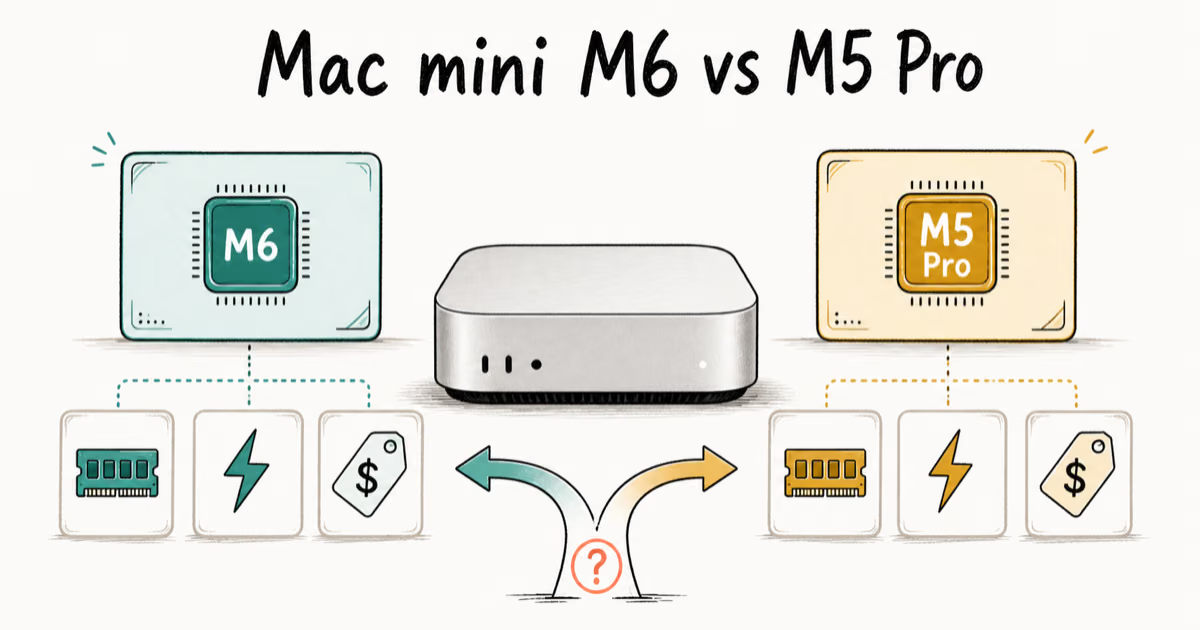
Mac mini M6 vs M5 Pro: Which Model Should You Buy?
Mac mini M6 vs M5 Pro compared on price, memory, ports, displays, and real workloads. Find the better 2026 Mac mini for your desk and budget.
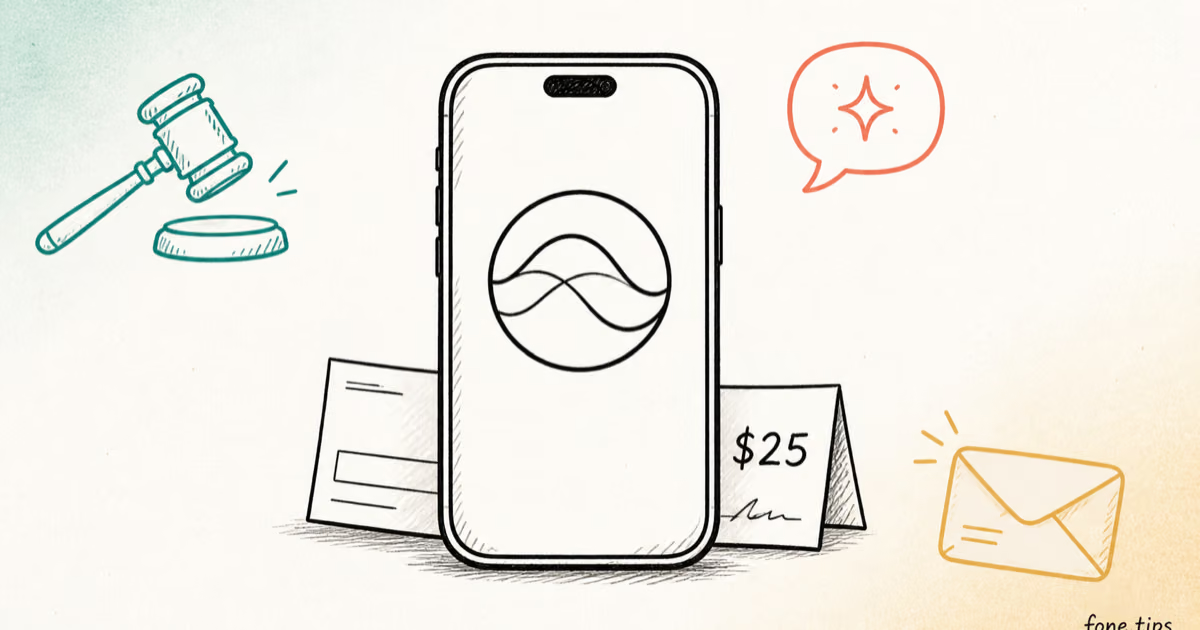
Apple Siri Settlement: Who Qualifies and How to Claim
Apple's $250 million Siri settlement covers iPhone 15 Pro and iPhone 16 models bought June 2024 to March 2025. See who qualifies and how claims work.
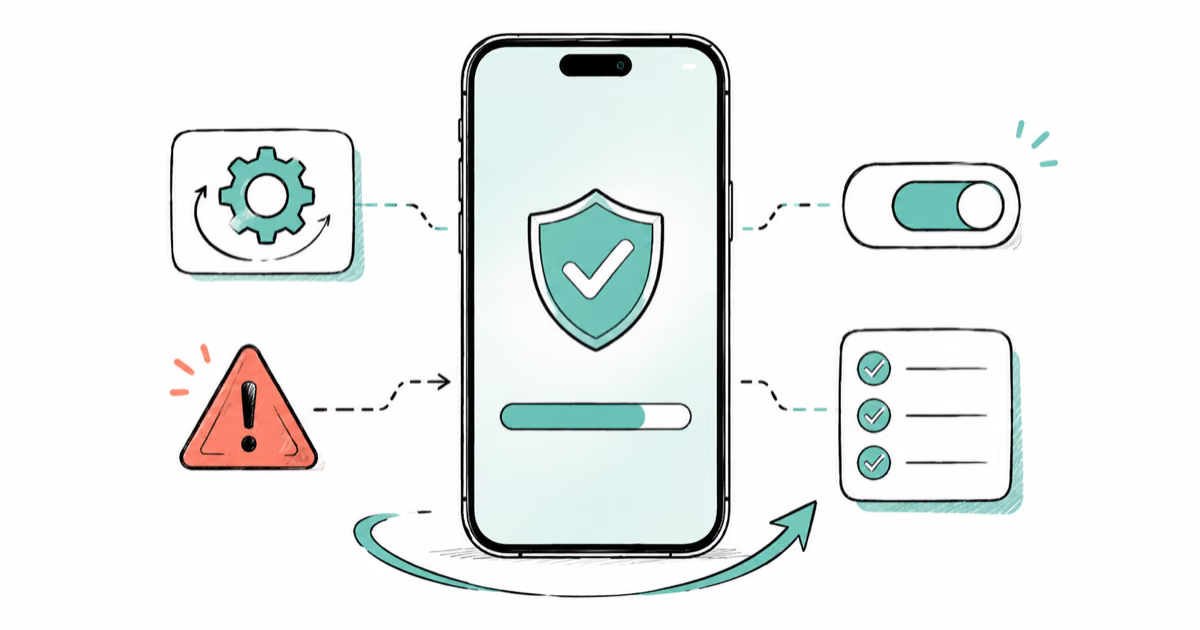
iOS 26.6.1 Security Update: What Apple Fixed and Who Gets It
Apple released iOS 26.6.1 on August 17 with 29 security fixes, including an IPSec interception bug. See what it patches, who gets it, and how to update.
iPhone Adaptive Power: How It Works and When to Use It
Learn how iPhone Adaptive Power works, which models support it, what it changes, and when Low Power Mode is still the better battery-saving choice.