This Number Is No Longer in Service: What the Text Means
"This number is no longer in service" usually means the line is suspended, not gone. Learn how to verify, find the cause, and reach the person.
Quick Answer"This number is no longer in service" means the line has been temporarily disconnected, usually because of unpaid bills, a carrier switch, or the owner canceling service. Try a different contact method or wait a few days before assuming the number is gone for good.
Hearing “this number is no longer in service” doesn’t always mean the line is gone for good. The recording is what your carrier plays when the dialed line has been suspended, ported, or canceled, and most of the time the situation is reversible. The meaning shifts depending on the wording, your carrier, and how the call cuts off.
- “This number is no longer in service” is almost always temporary. The line is suspended for billing, a carrier switch, or an account hold, not permanently retired.
- A disconnected number plays an automated recording before the call drops. A blocked number drops the call almost immediately with no ring.
- iMessage and SMS often show “Delivered” to a disconnected number, so delivery status alone doesn’t prove the line is active.
- Apps like Google Voice and call-forwarding tricks let people fake the out-of-service recording on purpose for specific contacts.
- Carriers keep a disconnected number in an aging pool for several weeks before reassigning it, so the recording can disappear without warning.
#What “This Number Is No Longer in Service” Actually Means
The recording means your carrier’s switch can’t complete the call to the dialed number. The line was active at some point, but right now the phone number has no associated service plan. Carriers play this exact message when a number has been suspended for billing, voluntarily canceled, or temporarily held during a port-out to a new carrier.
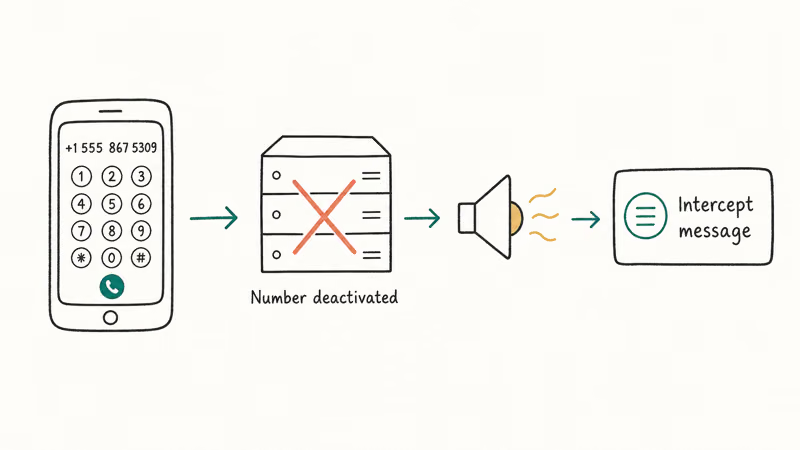
Three things the recording does NOT necessarily mean:
- The owner blocked you specifically. Block behavior is different (more on that below).
- The owner threw away their phone.
- The number is permanently retired and gone forever.
A carrier-side suspension can route calls to the disconnected recording until the account or porting issue is cleared. Reactivation timing depends on the carrier and account state.
#Why You Hear This Recording: 6 Common Causes
The most common reasons a working phone number suddenly plays the disconnected recording:
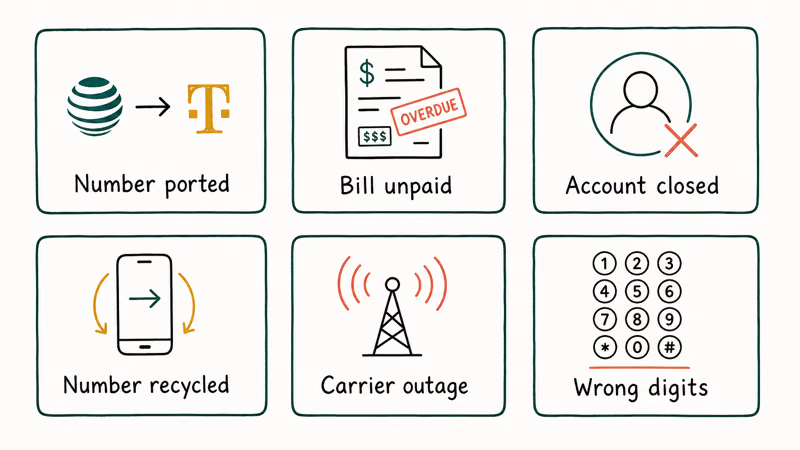
- Unpaid bill (most common). Carriers usually suspend service after one or two missed billing cycles. Once the customer pays, the line reactivates within hours.
- Carrier switch in progress. When someone ports their number from Verizon to T-Mobile (or any combination), the line can briefly be out of service until the new carrier finishes routing calls and texts.
- Voluntarily canceled. The owner chose to drop the line. Reactivation depends on whether the carrier will reissue the same number, which most won’t do after the aging window closes.
- Lost or stolen phone. Owners often call their carrier to suspend the number while they replace the device.
- Wrong number entered. People miss a typo more often than they expect. Double-check the digits against your last text or contact card.
- Carrier-side technical fault. Rare, but a regional outage or routing error can play the message on numbers that are actually fine.
Airplane mode does NOT trigger the “no longer in service” recording. If the phone is active but unreachable, calls usually route to voicemail or an unavailable message. The disconnected recording comes from the carrier’s switch, not from anything happening on the receiving phone.
#How Can You Tell a Disconnected Number From a Blocked One?
The behavior is different in three places: ring count, the recording wording, and how texts behave.
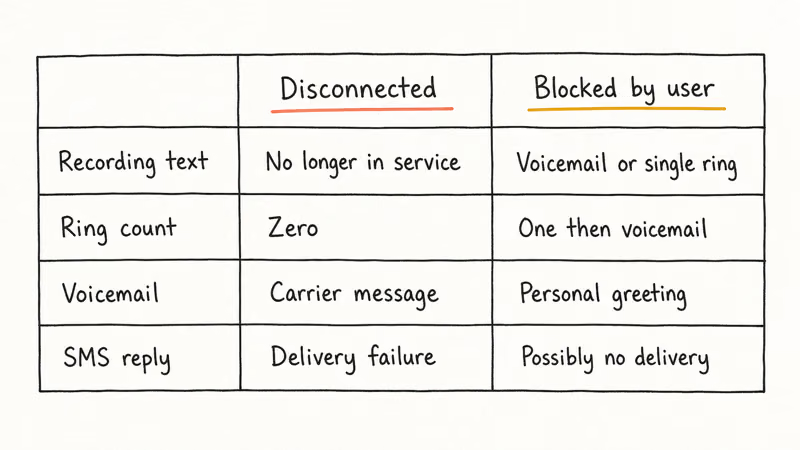
| Scenario | What you hear on the call | Texts |
|---|---|---|
| Number disconnected | Automated “no longer in service” recording before call drops | iMessage may show “Delivered” or no status; SMS varies |
| You’re blocked (iPhone) | One ring, then straight to voicemail | iMessage shows no “Delivered” status under your bubble |
| You’re blocked (Android) | Goes straight to voicemail or single ring then disconnect | SMS shows “Sent” but no “Delivered” |
| Phone off / no signal | Goes to voicemail or “subscriber unavailable” recording | Texts queue and deliver when phone reconnects |
The clearest tell: a disconnected number plays a recording with specific wording, then ends the call. A blocked number cuts you off with silence or a single ring. The key difference is routing: blocking happens on the recipient/device/account side, while a disconnected recording comes from the carrier switch.
For more on why iPhone-side text delivery breaks even when the line is fine, see the walkthrough on iPhones not receiving texts.
#Texting a Disconnected Number: What Actually Happens
If you text a number whose line is suspended, expect one of these:
- iMessage. Often shows “Delivered” if the recipient’s iPhone is still tied to the Apple ID server-side. The recording on the voice side doesn’t always sync with iMessage status. The message goes to Apple’s servers, but the recipient won’t pull it down unless they reactivate.
- SMS. Behavior varies by carrier. Some return “undelivered” almost instantly. Others queue the message and silently drop it after a few days.
- Group chats. A disconnected number kicked into a group chat usually shows as “Not Delivered” for everyone else, which is one way to spot a recently disconnected line.
If you sent a verification code that never arrived and the recipient line might be the cause, the walkthrough on verification code texts not getting through covers the carrier and phone-side fixes.
The takeaway: delivery status alone doesn’t prove the line is active. A “Delivered” iMessage to a disconnected number is misleading. To confirm a line, you need a voice call or a second contact channel.
#Can Someone Fake the Out-of-Service Recording on Purpose?
Yes, and it’s more common than you’d think. Three methods people use:
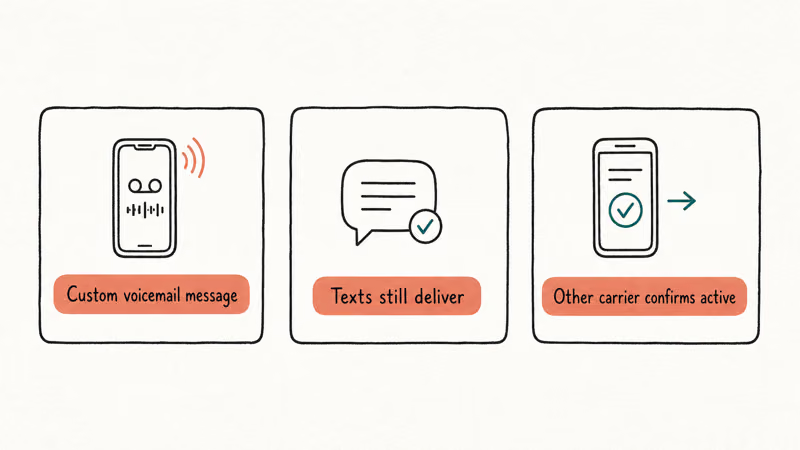
1. Google Voice with call screening off. A Google Voice number can forward calls in a way that callers hear a “this person isn’t accepting calls” or carrier-style recording. According to Google’s Voice setup documentation, call forwarding and screening rules can be configured per-contact, which is what makes the trick work.
2. Call forwarding to a dead number. Some Android phones let you forward all calls to a number that doesn’t exist or one you’ve disconnected. Callers hear the carrier’s standard out-of-service message.
3. Third-party blocker apps. Apps like RoboKiller and Truecaller can route specific contacts directly to a recording instead of letting the call ring through. This is typically a paid feature.
What this means: if one specific person seems to have a disconnected number but their other contacts don’t get the same recording, you might be the only one hearing it. A quick check is to call from a different phone or have a friend try. Similar-sounding recordings can come from call forwarding or screening tools, so compare more than one call path before assuming the number is truly disconnected.
If you want to set up legitimate call routing through Google Voice, the guide on finding the email associated with a Google Voice number is a good starting point for account recovery.
According to the FTC’s guide on blocking unwanted calls, the agency recommends using carrier-provided blocking tools and built-in phone controls as the first line of defense, rather than relying on customer-side recordings or workarounds.
#What to Do If Your Own Number Says “No Longer in Service”
Hearing it on your own line? Here’s the order to follow.
- Check your carrier account online or in the app. Look for unpaid balance or “service suspended” status. Pay any past-due amount and wait 1 to 4 hours for reactivation.
- Reseat your SIM card. Power off, remove the SIM (physical or eSIM via Settings on iPhone), wait 30 seconds, reinsert. A loose physical SIM tray can cause random “out of service” reports, so reseating is a low-risk check.
- Restart the phone. Sounds basic, but it can clear temporary carrier registration issues.
- Check for carrier outages. DownDetector or your carrier’s status page lists active incidents. If your area is red, wait it out before troubleshooting further.
- Call carrier support. If billing is paid and the SIM is fine, the issue is likely on the carrier’s side. Have your account number and a backup phone ready.
If your SIM is showing the related “SIM not provisioned” message, the fix path is different. The walkthrough on SIM not provisioned for voice covers that exact wording.
If your iPhone calls keep going straight to voicemail without your line actually being disconnected, the cause is usually a setting rather than a billing issue. The breakdown lives in iPhone goes straight to voicemail.
According to the FTC, forwarding unwanted SMS to 7726 routes the spam report directly to your carrier for investigation, and the agency tracks scam patterns through those reports to coordinate with carriers and federal investigators on shutdown actions; their guide on spam text messages walks through the steps if you suspect the “no longer in service” recording you’re hearing is tied to a scam targeting your number specifically.
#Bottom Line
Don’t keep redialing. If you’re hearing “this number is no longer in service” for one specific person, send them a single text and wait 48 hours instead. Most disconnections are billing suspensions that resolve on their own once the customer catches up.
If the recording continues for more than a week and you can’t reach them through email, social, or mutual contacts, the number was probably canceled or ported. After the carrier-side aging window, the number will likely belong to someone new entirely.
#Frequently Asked Questions
Does “no longer in service” mean the person blocked me?
No. The recording is a carrier message for a suspended or canceled line, not a block.
Can a disconnected number be reactivated?
Usually yes, if the same customer reactivates within the carrier’s grace window. After the aging window passes, the number goes back into the carrier’s pool and gets reassigned, at which point the original owner can’t reclaim it. Some carriers also offer a paid “save my number” option for people who want to hold the line during a longer cancellation gap.
Why does my text still show “delivered” if the number is disconnected?
iMessage delivery confirms only that Apple’s servers received your message, not that the recipient picked it up. SMS delivery reports vary by carrier, and some carriers report “delivered” even when the message ultimately fails. Voice calls give a faster, more reliable answer.
How long does a number stay disconnected before someone else gets it?
The exact window varies by carrier and region. After the aging window, the number typically goes back to general availability.
Can I tell which carrier a disconnected number used to belong to?
Sometimes. Free reverse-lookup tools can show the original carrier even after disconnection, though the data goes stale once a number is reassigned. The recording itself sometimes hints at the carrier, since different carriers use slightly different wording and voice talent. If you need a definitive answer for a legal or billing dispute, the FCC’s number portability database is the authoritative source, but it’s primarily designed for carrier use rather than consumer lookups.
What if I hear the recording on my own number?
Check your carrier app first. If billing is fine, restart and reseat the SIM.
Is it illegal to fake the out-of-service recording?
In most US jurisdictions, no. Setting up Google Voice forwarding or using a blocker app to route specific callers to a recording is generally legal. Spoofing caller ID with intent to defraud is illegal under federal law, but using a recording to dodge calls from one specific contact is not.
Can I check if a number is active without calling and hearing the recording?
Carrier lookup APIs and reverse phone lookup services can verify whether a number is currently assigned, though many free tools have outdated data. The most accurate method is to send a text and call from a different number, then compare the behavior across both channels. Some paid services pull live HLR data from carrier databases and can return active/inactive status in real time, which is what fraud detection systems use, though most consumer tools rely on slower, cached records.
Apple Siri Settlement: Who Qualifies and How to Claim
Apple's $250 million Siri settlement covers iPhone 15 Pro and iPhone 16 models bought June 2024 to March 2025. See who qualifies and how claims work.
iOS 26.6.1 Security Update: What Apple Fixed and Who Gets It
Apple released iOS 26.6.1 on August 17 with 29 security fixes, including an IPSec interception bug. See what it patches, who gets it, and how to update.
iPhone Adaptive Power: How It Works and When to Use It
Learn how iPhone Adaptive Power works, which models support it, what it changes, and when Low Power Mode is still the better battery-saving choice.
How to Transfer Data to a New iPhone Without iCloud
Move everything to your new iPhone without iCloud: Quick Start device-to-device transfer, wired migration, and encrypted Finder or iTunes backups.