Not Getting Verification Code Texts? 8 Fixes That Work
Verification code texts not arriving on iPhone or Android? Fix it by checking message filters, resetting network settings, and unblocking short codes.
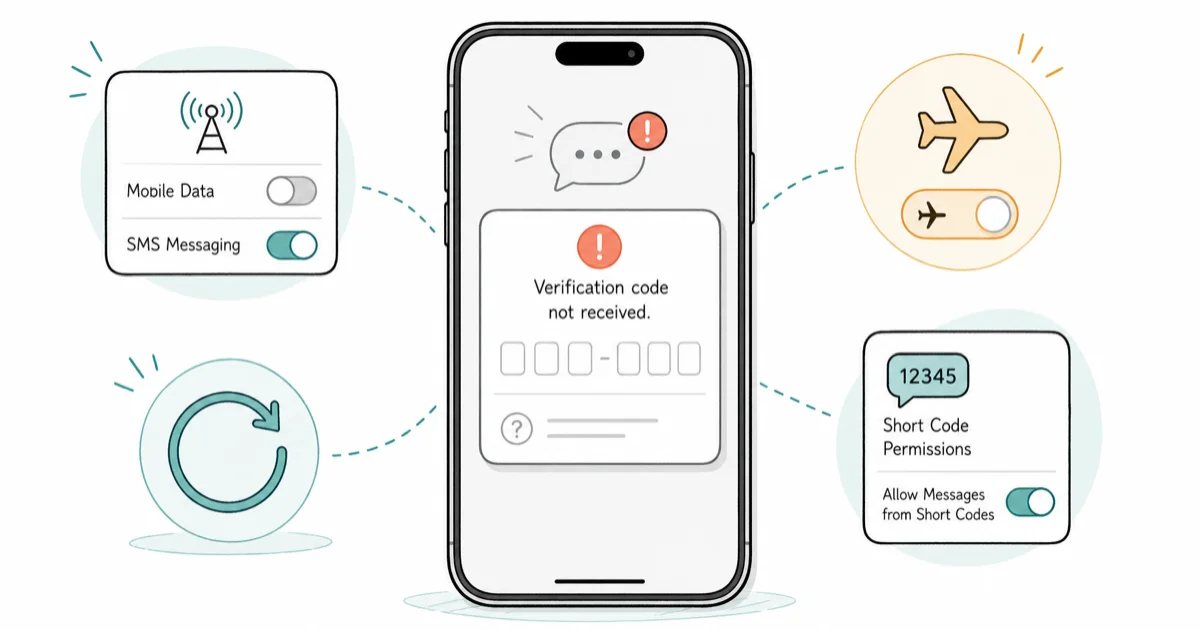
Quick AnswerIf you're not getting verification code texts, turn off Filter Unknown Senders and Focus, toggle Airplane Mode for 30 seconds, then ask your carrier to unblock short codes.
Missing verification code texts can lock you out of banking, social, and work logins. The cause is almost always one of six fixable issues on iPhone and Android, and most clear in under five minutes.
- Six causes account for nearly every missing verification text: wrong number, message filters, Focus mode, weak signal, carrier short-code blocks, and a full inbox
- Toggling Airplane Mode for 30 seconds forces a fresh tower handshake and often clears a stuck SMS queue on AT&T and Verizon
- iPhone users should disable Filter Unknown Senders, which silently routes verification codes to a hidden folder
- Android users should clear the Messages app cache and review numbers under Spam & blocked
- A network settings reset is the strongest device-side fix but wipes saved Wi-Fi passwords and Bluetooth pairings
#Why Aren’t You Getting Verification Code Texts?
Verification codes travel over standard SMS, not iMessage or RCS, so they bypass the encryption your regular messages use. That makes them sensitive to anything that disrupts the carrier signal path: weak coverage, message filtering, blocked-sender lists, or a stalled SIM connection.
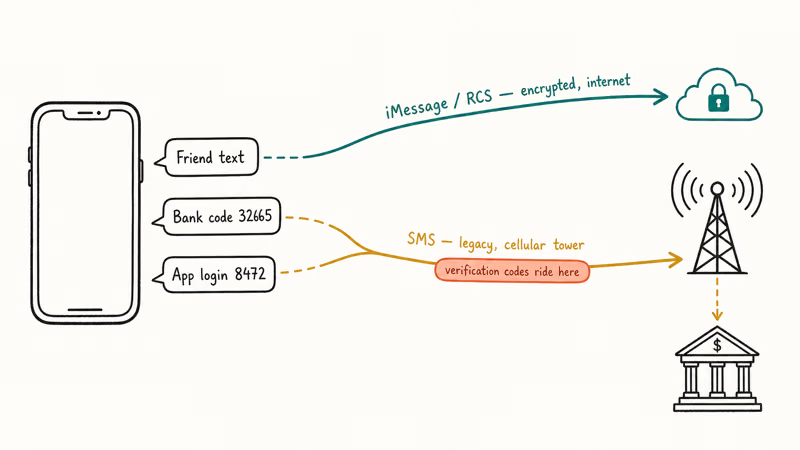
Most services send codes from a 5- or 6-digit short code (like 32665 for Facebook) rather than a regular phone number. According to Apple’s Messages support documentation, iMessage and SMS use separate delivery paths, and your iPhone falls back to SMS only after iMessage times out. Short codes always ride the SMS path, so a code can fail even when texts from friends arrive normally.
On both iPhone and Android, three issues cause most verification-code failures: filtered unknown senders, a Wi-Fi calling handoff during weak signal, and stale carrier provisioning after a SIM swap.
#Quick Settings Check Before Anything Else
Start here before touching network settings. Most missed verification texts trace back to a setting on your own device, not a carrier problem.
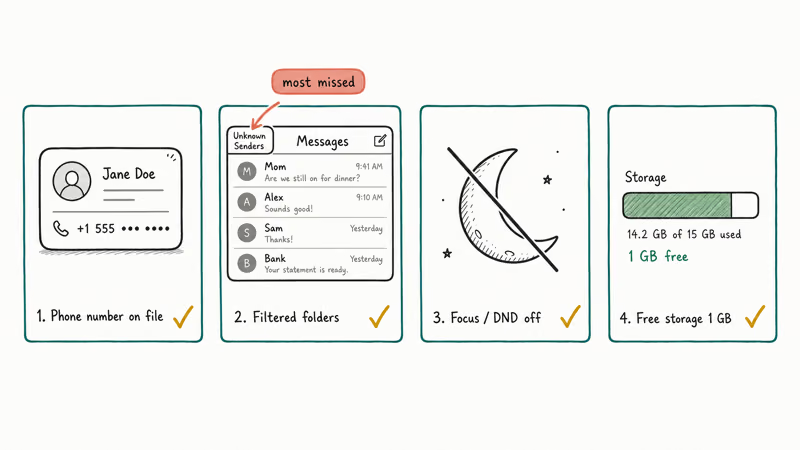
- Verify the phone number on file. Log into the service from a desktop browser and confirm the number under your account or 2FA settings. A typo or a stale number left over from years ago is one of the single most common causes.
- Open Messages and check filtered folders. On iPhone, tap Filters in the top-left of Messages and look under Unknown Senders. On Android Messages, tap the Spam & blocked folder from the menu.
- Turn off Focus and DND modes. On iPhone, swipe down from the top-right and tap the moon icon to disable any active Focus. On Android, pull down twice and toggle off the moon-shaped silence tile labeled DND.
- Free up storage. A messaging inbox crammed with thousands of texts and attachments can stall new SMS delivery. Delete old threads if your phone is below 1 GB free.
Still nothing? The issue is network or carrier-side.
#Carrier and Network Fixes
Network problems show up as inconsistent SMS reception: regular texts work, verification codes don’t, or codes arrive 30 minutes late. Run these in order.
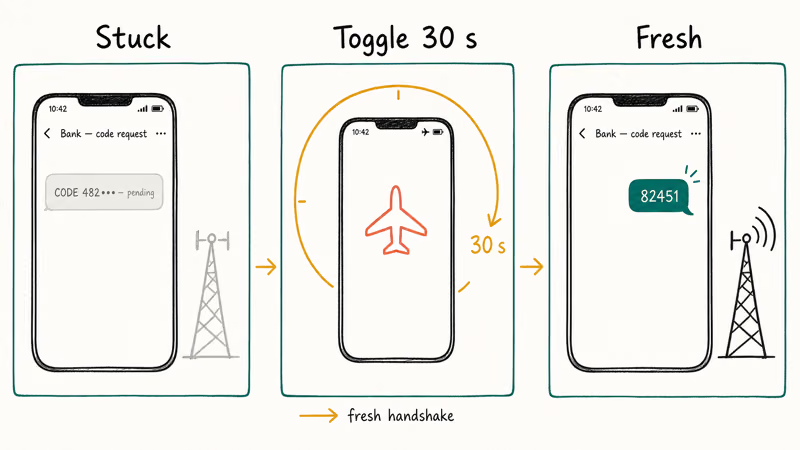
- Toggle Airplane Mode for 30 seconds. This forces a fresh tower handshake. On most carriers, including AT&T and Verizon, it clears a stuck SMS queue within seconds of turning Airplane Mode back off.
- Restart your phone. A full restart (not just a screen lock) clears the baseband modem state. Hold the side button + volume up on iPhone, or volume down on most Android phones.
- Check Wi-Fi calling. If Wi-Fi calling is on but your home Wi-Fi has weak upload, SMS can stall. Turn Wi-Fi calling off and request the code over cellular instead.
- Confirm short-code SMS is enabled with your carrier. This is the one most people miss. T-Mobile’s short-code support page confirms that customers can text BLOCK or UNBLOCK to 9999 to control short-code messaging, and Verizon and AT&T have similar opt-in controls inside their carrier apps.
- Test from a different location. If you’re in a basement, parking garage, or rural fringe, weak signal can drop SMS while keeping data alive. Step outside or move to a window before requesting another code.
For T-Mobile customers facing widespread issues, our guide to T-Mobile not receiving texts covers carrier-specific fixes including IMEI re-provisioning.
#How Do You Reset Network Settings on iPhone or Android?
A network settings reset is the strongest device-side fix for persistent verification text failures, but it wipes your saved Wi-Fi passwords, Bluetooth pairings, VPN configs, and cellular preferences. Save those before resetting, since some carriers also require you to re-enter APN settings on Android afterward and reauthorize Wi-Fi calling on iPhone if you rely on it as a backup SMS path.
iPhone: Open Settings > General > Transfer or Reset iPhone > Reset > Reset Network Settings. Enter your passcode and confirm. The phone restarts and reconnects to your carrier in about 90 seconds.
Android: Open Settings > System > Reset options > Reset Wi-Fi, mobile & Bluetooth. Tap Reset settings and confirm. The exact path varies slightly by manufacturer (Samsung, Google, OnePlus), but the wording stays consistent.
After the reset, reconnect to your home Wi-Fi network and request a new verification code immediately. If a code arrives within 60 seconds, the previous failure was a stuck network state and your phone is back to normal. If it still doesn’t arrive, the issue is upstream at your carrier or the sending service, and you’ll save time calling carrier support directly instead of continuing to troubleshoot device settings that aren’t the bottleneck.
#iPhone-Specific Verification Code Fixes
iPhone has three settings that silently route verification codes away from your main inbox. Check all three.
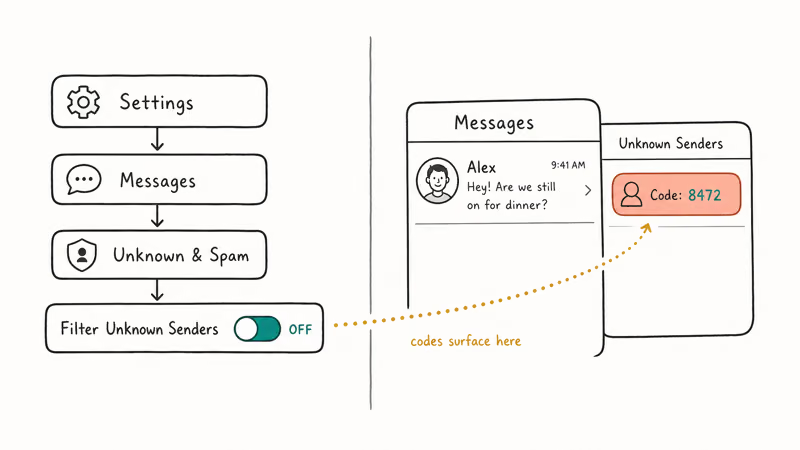
Disable Filter Unknown Senders. Go to Settings > Messages > Unknown & Spam and turn off Filter Unknown Senders. With this on, codes from short codes you’ve never texted before land in a hidden filtered folder and never trigger a notification. According to Apple’s filter and block messages guide, the filter relies on your contacts list, so first-time codes from a new bank or app get hidden by default.
Check that iMessage isn’t intercepting SMS. If iMessage needs to be enabled to send messages, follow the linked guide. To force SMS, turn iMessage off temporarily under Settings > Messages.
Verify your IMEI matches your carrier’s records. Dial *#06# to display your IMEI, then call your carrier and confirm it matches the device on file. Mismatches cause silent SMS rejection. This shows up on refurbished iPhones where the previous owner’s account was never closed out, and on warranty-replaced units where the swap was completed in-store but the carrier’s billing system kept the original IMEI flagged until the new device’s short-code path finally cleared.
If your texts arrive but show in the wrong order, our guide on iPhone text messages out of order covers how time-zone and carrier timing bugs distort SMS delivery.
For Apple Account codes versus bank short codes on iPhone, our eight iPhone verification-code fixes go deeper on trusted numbers and filtering.
#Android-Specific Verification Code Fixes
Android’s settings are more fragmented than iPhone, but the high-impact fixes are these.
Clear the Messages app cache. Go to Settings > Apps > Messages > Storage > Clear cache. This dumps temporary state without losing your conversation history. On Pixel and Samsung phones it’s a good first step for “verification code never arrives” cases, since a corrupted cache can quietly stall new SMS until it’s flushed.
Check spam protection settings. Open Google Messages, tap your profile icon, then Messages settings > Spam protection. Turn it off temporarily to test whether the spam filter is blocking legitimate verification codes. Google’s Messages spam protection page confirms the system uses signal patterns from carrier networks rather than only keyword matching, so a real code can still trigger a false positive on a new carrier or burner SIM.
Review blocked numbers. Open the Phone app > three-dot menu > Settings > Blocked numbers. If a number was blocked years ago and you’ve since moved carriers, the block can persist and silently filter verification SMS from that range.
Update the Messages app. Outdated versions can mishandle short codes. Open the Play Store, search “Messages,” and tap Update if available. If only Instagram codes are missing, our Instagram not sending SMS code guide covers the app-side resends and account checks that Google Messages settings alone can’t fix.
#Switching to an Authenticator App or Better Alternative
If you’ve worked through every fix above and codes still don’t arrive consistently, stop fighting SMS.
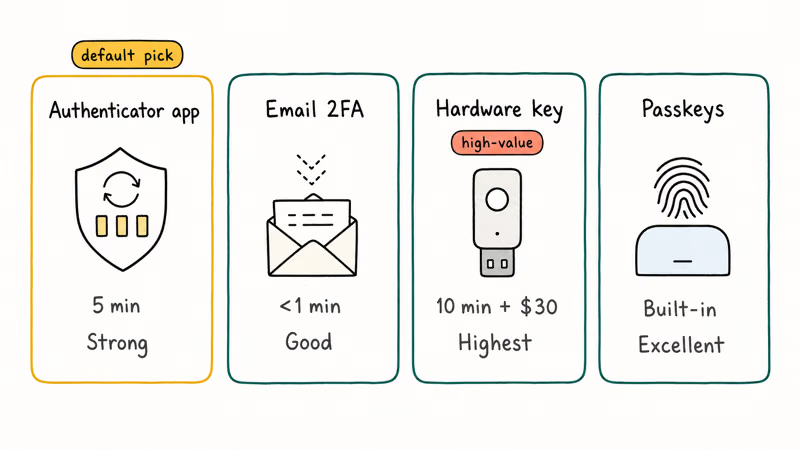
SMS is a 30-year-old protocol that wasn’t designed for security-critical delivery, and most major services now offer better channels.
Comparison of 2FA channels by setup time and reliability
| Alternative | Setup time | Reliability | When to use |
|---|---|---|---|
| Authenticator app (Authy, Google Authenticator, Microsoft Authenticator) | About 5 minutes | Works offline, no SMS dependency | Banking, work tools, primary email |
| Email-based 2FA | Under 1 minute | Good if email is secured with its own 2FA | Lower-stakes accounts |
| Hardware security key (YubiKey, Google Titan) | About 10 minutes plus $30-50 hardware | Highest reliability and security | High-value accounts |
| Passkeys (FaceID/TouchID-backed) | Built into iOS 16+ and Android 9+ | Excellent for supported services | Apple ID, Google, GitHub |
For a deeper comparison, see our passkey vs password vs 2FA breakdown, and our Apple ID verification guide for switching an Apple account to passkey or hardware-key 2FA.
#When Weak Coverage Is the Real Culprit
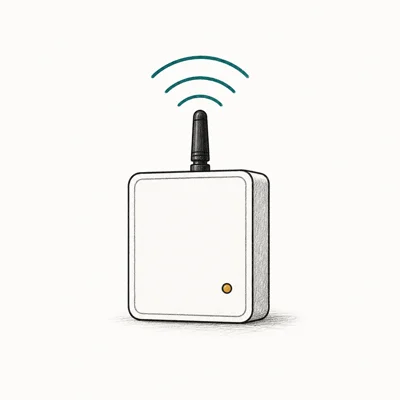
If codes never arrive and your bars sit near empty at home, the problem is coverage, not the verification system. Call your carrier and ask them to confirm signal strength at your address. When they confirm the tower is too far, a cell signal booster is the hardware fix: it captures the faint outdoor signal, amplifies it, and rebroadcasts it indoors.
- Covers a whole home or apartment, not just one room
- Works on every US carrier at once (Verizon, AT&T, T-Mobile)
- FCC-approved and self-installable in under an hour
Last updated on Jun 13, 2026
As an Amazon Associate fone.tips earns from qualifying purchases. Prices and availability on Amazon are accurate as of the date above and subject to change.
#Bottom Line
Run the Quick Settings Check first. On both iPhone and Android, disabling Filter Unknown Senders plus a 30-second Airplane Mode toggle resolves most missed-code problems. If those don’t work, reset network settings. If codes still fail after a reset, move the affected login to an authenticator app rather than continuing to troubleshoot SMS — that single switch ends the recurring lockouts for banking, email, and work accounts.
#Frequently Asked Questions
Why are my verification texts coming in late or out of order?
Late delivery usually means weak signal or a carrier queue backup, especially during peak hours. Codes that land 5-10 minutes late and out of order point to a network handoff issue. Move closer to a window or step outside, then request a new code.
Can a VPN block verification code texts?
A VPN doesn’t directly block SMS since SMS rides on cellular, not data. But a VPN can interfere with Wi-Fi calling, which routes some texts over the internet.
How long should I wait before requesting another verification code?
Wait at least 90 seconds between requests. Spamming the resend button can trigger a temporary lockout that delays codes by 15-30 minutes.
Does prepaid or pay-as-you-go service affect verification text delivery?
Some prepaid plans block short codes by default to reduce premium SMS fraud. Call your carrier and ask whether short-code messaging is enabled on your plan. If it isn’t, ask them to turn it on, which most carriers do at no charge. The change usually takes effect within an hour.
Why do verification codes work on Android but not iPhone with the same SIM?
This is almost always Filter Unknown Senders on iPhone. Codes from short codes you’ve never texted before land in a hidden folder on iPhone, but show normally on Android. Turn the filter off in Messages settings to fix it.
Do verification codes go to my email if SMS fails?
Some services have email fallback, but most don’t auto-fallback. Check your account’s security settings and turn on email or an authenticator app as a backup method before you get locked out.
Can clearing my Messages app data delete my verification history?
On Android, “Clear cache” is safe and keeps your conversations. “Clear storage” wipes message history. Always pick Clear cache for troubleshooting unless you’re prepared to lose old texts. iPhone doesn’t expose this option directly, but the equivalent is offloading the Messages app under Settings > General > iPhone Storage.
What if my phone says “no service” only when verification codes are due?
Coincidence is possible but rare, and the more likely cause is intermittent SIM provisioning. Restart the phone, then call your carrier to confirm the line is fully active. If the SIM is failing on and off, our guide on SIM failure on iPhone covers diagnosis steps. When the signal disappears entirely each time you request a code, our phone has no signal bars walkthrough covers the carrier-side and SIM-reseat fixes that overlap with this pattern.
Apple Siri Settlement: Who Qualifies and How to Claim
Apple's $250 million Siri settlement covers iPhone 15 Pro and iPhone 16 models bought June 2024 to March 2025. See who qualifies and how claims work.
iOS 26.6.1 Security Update: What Apple Fixed and Who Gets It
Apple released iOS 26.6.1 on August 17 with 29 security fixes, including an IPSec interception bug. See what it patches, who gets it, and how to update.
iPhone Adaptive Power: How It Works and When to Use It
Learn how iPhone Adaptive Power works, which models support it, what it changes, and when Low Power Mode is still the better battery-saving choice.
How to Transfer Data to a New iPhone Without iCloud
Move everything to your new iPhone without iCloud: Quick Start device-to-device transfer, wired migration, and encrypted Finder or iTunes backups.