How to Share Your Screen on Slack Calls and Huddles
Slack screen sharing works on Windows and macOS desktop apps on paid plans. Click the share icon in any huddle or call. Setup, fixes, and FAQ inside.

Quick AnswerTo share your screen on Slack, start a huddle or call, click the screen share icon in the toolbar, choose a window or your entire screen, and click Share. Screen sharing requires the desktop app on Windows or macOS and a paid plan; Slack Free and mobile apps don't have it.
Slack screen sharing turns your monitor into a shared whiteboard during huddles and calls. Click the share icon, pick a window, and you’re broadcasting after the share prompt. For team reviews, a live share is usually faster than describing the screen over voice.
- Slack screen sharing requires the desktop app on Windows or macOS plus a paid plan; mobile, browser, and Free tier can’t initiate a share.
- Sharing a single application instead of your whole screen hides notifications, private tabs, and other windows from everyone in the call.
- Slack Pro caps each call at 15 participants, Business+ at 50, and Enterprise Grid is unlimited; Slack Free has audio and video but no screen sharing.
- Live annotations are on by default; presenters can disable Allow others to draw to keep solo control of the canvas.
- Only one person can share at a time, and Slack queues a second request until the first presenter clicks Stop sharing.
#How to Share Your Screen in Slack?
The button clicks take about 20 seconds end to end. The first time, expect another 30 seconds for permission prompts, depending on your operating system.
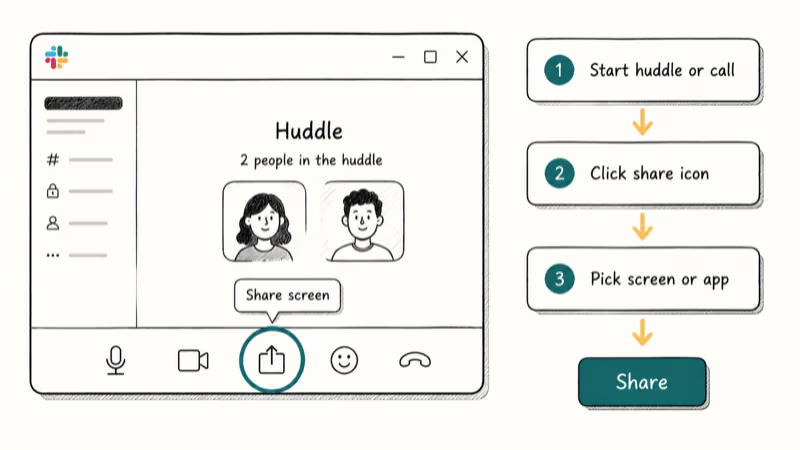
Open the Slack desktop app and start a huddle or call from any channel or DM. Look at the bottom of the call window for a small toolbar. Click the icon that looks like a rectangle with an upward arrow; that’s the share button.
A picker window appears with two tabs: Share your entire screen or Share an application. Pick one, select the screen or window you want, and click Share. You’re live.
Most teams default to the application option because it hides browser tabs, Slack notifications, and anything else open in the background. Application mode is the safer default because it keeps Calendar pop-ups, private tabs, and Slack notifications out of the broadcast.
To stop, click the red Stop sharing button in the same toolbar. Other people on the call keep talking and watching while you switch back to chat mode.
For a quick comparison of how this differs from gaming and creator tools, see our walkthrough of Discord screen share, which uses a similar but more permissive flow.
#Why Won’t My Slack Screen Share Work?
If the share icon doesn’t appear or clicking it does nothing, one of four things is wrong.
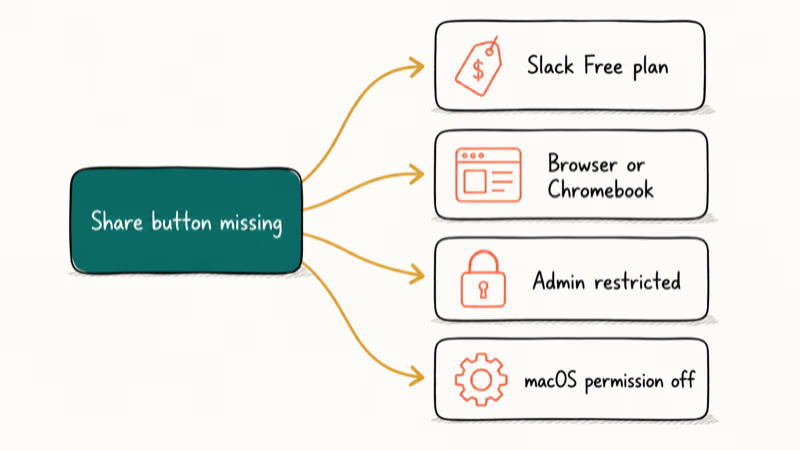
You’re on Slack Free. Screen sharing requires Pro, Business+, or Enterprise Grid. On Free workspaces the icon isn’t rendered at all.
You’re using the browser app or a Chromebook. The share button only renders inside the native desktop app on Windows or macOS. The web client at app.slack.com hides it because Chrome’s screen-capture API can’t grant Slack the right window-level permissions. If you can install the desktop app, do that. If you’re stuck on Chromebook, there is no workaround.
Your workspace admin restricted the feature. Open Slack > Preferences > Audio & video to check Call settings, and verify your Slack notifications are working since admin restrictions often span both features.
macOS hasn’t granted Screen Recording permission. Open System Settings > Privacy & Security > Screen & System Audio Recording and toggle Slack on. Restart the app. macOS Sonoma and Sequoia both gate this behind a confirmation prompt every time you upgrade Slack, so this is the most common Mac fix.
If audio cuts out during the share, that’s a separate issue. Our guide on fixing screen-share sound problems walks through the same root causes (system audio routing, Bluetooth headset profile switching) that affect Slack on macOS.
#Slack Plans That Include Screen Sharing
Slack states that all 3 paid tiers (Pro, Business+, Enterprise Grid) bundle screen sharing at no extra cost; only the participant cap changes. The full breakdown lives on Slack’s pricing page.
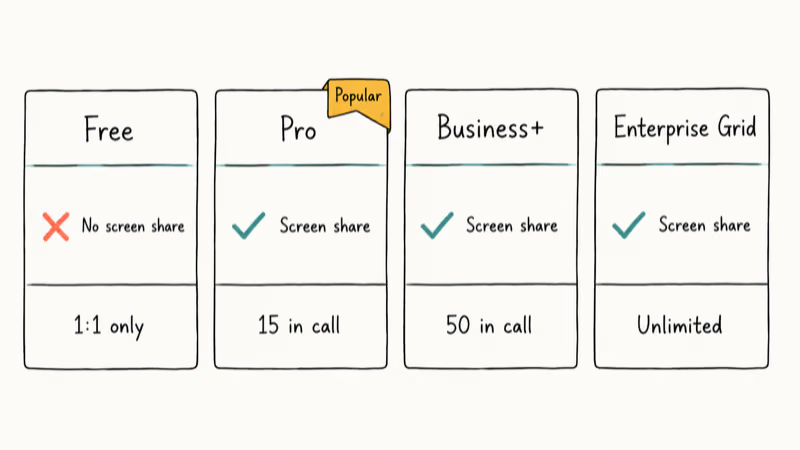
| Plan | Screen sharing | Max call participants |
|---|---|---|
| Free | No | 1 only (audio/video) |
| Pro | Yes | 15 |
| Business+ | Yes | 50 |
| Enterprise Grid | Yes | Unlimited |
For most product, design, or engineering teams, the 15-person Pro cap is generous. If you’re hosting a 50-person all-hands with screen sharing, you probably want a webinar tool like Zoom Webinars or Microsoft Teams Live Events anyway. Compare your options against Discord vs Zoom if your team also lives in voice channels for casual collaboration.
The catch with Slack Free: 1
audio and video calls work, but the share toolbar simply isn’t there. There’s no upgrade path that doesn’t involve switching the entire workspace to a paid plan.#Annotating and Drawing on Shared Screens
Yes, and it’s on by default. The moment you start sharing, both you and every viewer get a pencil icon in the call toolbar. Tap it and you can draw arrows, circles, freehand strokes, and highlights anywhere on the shared canvas.
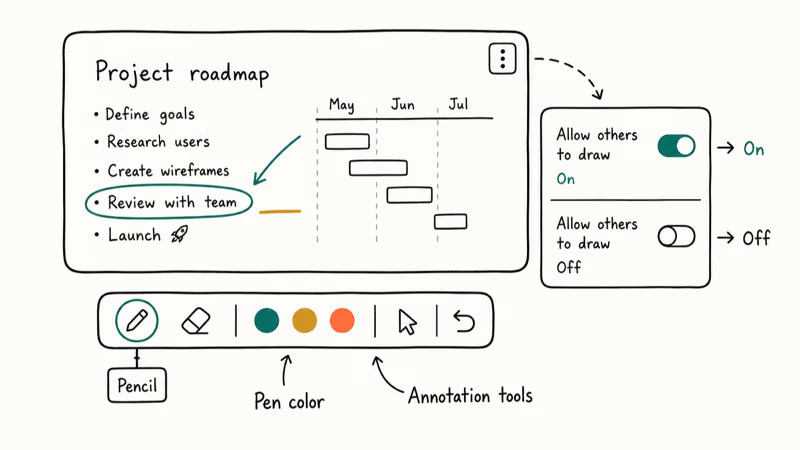
Cmd-click (Mac) or Ctrl-click (Windows) the color swatch in the drawing toolbar to change pen color. Annotations clear when you stop sharing; nothing is saved.
If you want solo control, click the kebab menu next to the share toolbar and toggle off Allow others to draw. Leave annotations on for collaborative design reviews where the team needs arrows, circles, and labels on the same canvas. Turn them off for polished demos or confidential walkthroughs.
This live-annotation model is more cooperative than most gaming or streaming tools; for context, see how the Discord in-game overlay and similar Discord features prioritize broadcast over collaboration.
#Privacy and Security During a Share
This guide assumes you’re sharing content from your own work device with explicit permission to broadcast it. Anything else can violate workplace policy or, in some jurisdictions, privacy law.
When you start sharing, Slack mutes incoming desktop notifications and disables your input devices on the shared canvas. You can still type, click, and switch apps; viewers just can’t drive your machine. There’s no remote-control feature in Slack, which is a deliberate security choice.
A red banner pins to the top of your screen the entire time, reminding you that the broadcast is live. According to Slack’s screen sharing help article, the banner stays visible until you click Stop sharing or the call ends. Slack encrypts call media using TLS, the same protocol that secures online banking and HTTPS web traffic.
Slack recommends application-window sharing whenever the content includes financial data, hiring docs, or anything personally identifiable. A few practical privacy rules:
- Always pick application mode when sharing financial dashboards, hiring docs, or anything with PII.
- Quit password managers (1Password, Bitwarden) before sharing your whole screen; their menu bar icons can leak account names in fly-outs.
- Confirm participants before clicking Share. Slack’s pre-share dialog lists everyone in the huddle, so a quick scan catches uninvited guests.
- Get explicit consent before sharing anyone else’s screen content. Sharing a coworker’s window without permission can violate workplace policy and, in some jurisdictions, privacy law.
Anyone in the call can also take a screenshot or record from their end, and Slack has no way to detect that. Treat a screen share like a whiteboard in a glass conference room: assume it’s visible. The same goes for casual side conversations in DMs while you’re presenting; if a viewer pastes a screenshot into another channel, that content is suddenly searchable across the entire workspace forever.
#Switching Between Screens and Windows
With two monitors, you choose one screen at the start of the share. You can’t swap to the other monitor without stopping and restarting the share.
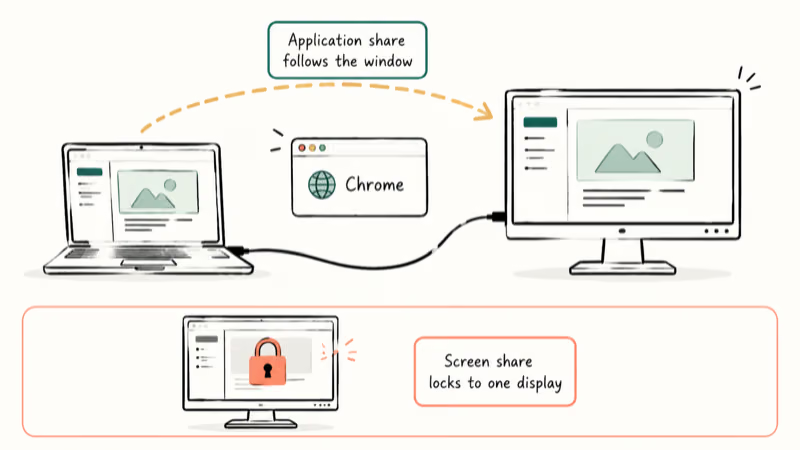
On a dual-monitor setup, Slack shares the selected screen until you stop and restart the share. If the tool you need lives on another monitor, share an application instead of the whole display.
Single-monitor setups don’t hit this. Multi-monitor users have one workaround: share an application instead of a screen. Slack tracks the application across monitors, so dragging a Chrome window from your laptop to your external display keeps the share intact. Mid-share window switches work the same way; just resist the urge to alt-tab to a private window because Slack will follow you there.
#Bottom Line
On any paid Slack plan, default to application mode for every share. It hides notifications, blocks tab leaks, and survives multi-monitor switches.
Save full-screen sharing for the rare multi-app demos where you actually need to show how programs interact, and close password managers and email clients first. If the share button is missing, check the plan tier, then desktop-vs-browser, then macOS Screen Recording permissions. Those three causes cover the common missing-button path.
#Frequently Asked Questions
Can I record a Slack screen share?
Slack has no built-in recording. Use ScreenFlow on macOS or OBS Studio on Windows; for mobile capture, see screen recording on FaceTime with sound.
Can I share my screen in a 1 direct message?
Yes, but only on paid plans. Slack Free includes audio and video in 1
DMs, but the share toolbar is locked behind Pro. This is a common gotcha for solo Free-tier consultants working with paid clients. The fix is upgrading to Pro or asking the client to host the call from their paid workspace.Do viewers need the desktop app to watch?
No. Anyone in the call can view a share from the browser, mobile, or desktop app; only the presenter needs the Windows or macOS desktop client.
What happens if two people try to share at the same time?
Slack queues the second request. The first presenter clicks Stop sharing before the second person can start. There’s no co-presenting mode like Zoom’s dual-screen share or Google Meet’s simultaneous slides; the strict one-at-a-time model trades collaboration speed for predictability. If you need true co-presenting for live demos with two facilitators, use a webinar-grade tool instead.
Is screen sharing safe for confidential work?
Slack encrypts call media in transit using TLS, but viewers can still screenshot or screen-record from their end. For sensitive material, share an application window and confirm the participant list before broadcasting.
Why doesn’t screen sharing work on iPhone or iPad?
The Slack mobile app has audio and video calls but no screen sharing on iOS or Android.
Does Slack notify participants if I’m recording the share?
No. Slack doesn’t show recording indicators because it has no native recording feature, and third-party recorders run outside Slack’s awareness. Workspace admins can mandate disclosure as a policy, but the app won’t enforce it. Treat anything you broadcast as potentially captured, and if you’re the one recording, tell the room before you hit start.
Google Messages Error 3100: Why RCS Is Broken on Galaxy
Google Messages RCS error 3100 hits Galaxy owners after phone or carrier switches. Google told 9to5Google a fix is coming. Here's what actually helps.

Is This Bank App Real? Spot a Fake App on Your Home Screen
A bank app can land on your home screen from a web page with no install warning. Learn the checks that tell a real banking app from a phishing web app.
Apps Crashing After iOS 27 Update? Fix Order (2026)
Apps crashing after the iOS 27 update? Update the app in the App Store first, then offload and reinstall to clear stale cache, then restart. The fix order.
Do AI Translation Earbuds Work Offline? What to Know
Do AI translation earbuds work offline? A few do with downloaded language packs, but most need the cloud. Here's what works offline and what you give up.