How to Fix "SIM Not Supported" Error on iPhone
Fix the SIM Not Supported error on iPhone by checking Carrier Lock, swapping SIMs, and requesting a free carrier unlock that takes 2 to 5 days.
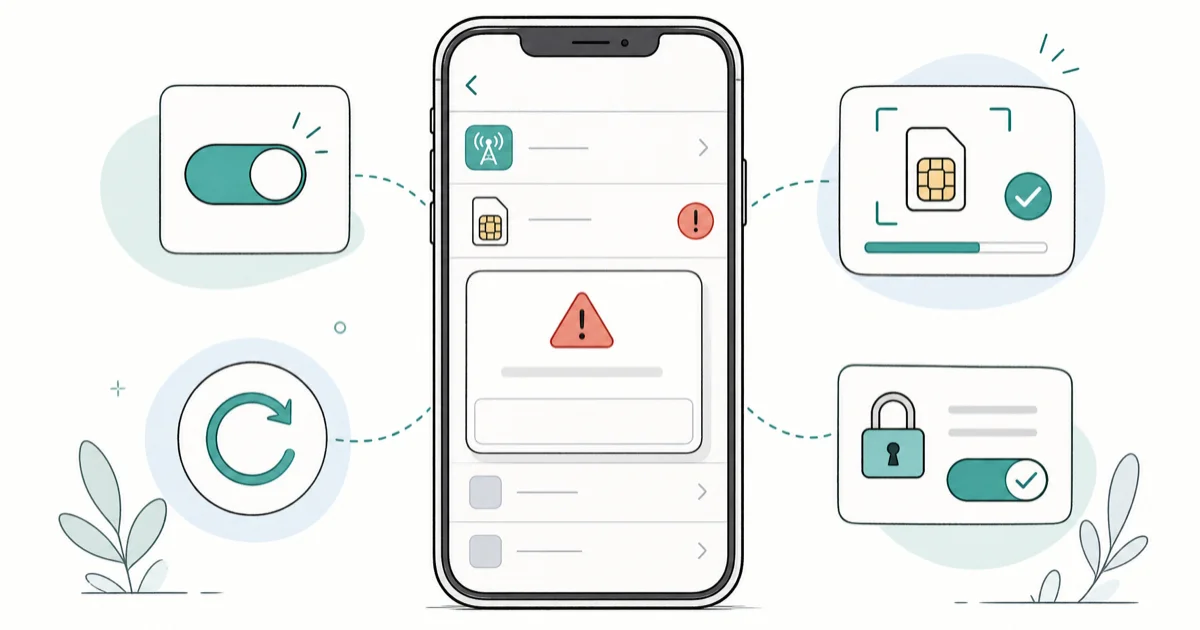
Quick AnswerThe SIM Not Supported error means your iPhone is locked to one carrier and rejects SIM cards from any other network. Open Settings > General > About, check Carrier Lock, then call your original carrier and request a free unlock.
Your iPhone is rejecting a new SIM card with a SIM Not Supported message. This guide covers unlocking a phone you legally own; unlocking someone else’s iPhone violates carrier terms and may be unlawful. Start by checking your Carrier Lock status, then call your original carrier.
- The SIM Not Supported error always points to a carrier lock, not a damaged SIM card.
- Carrier Lock status lives at
Settings>General>About andshows either a carrier name or “No SIM restrictions”. - Carrier unlocks are free, take 2 to 5 business days at most US carriers, and don’t void your Apple warranty.
- Borrow a SIM from a friend on a different network to confirm whether the lock or the SIM card is the problem.
- Update iOS and reset network settings before paying any third-party service for a software unlock.
#Why Does Your iPhone Show “SIM Not Supported”?
Your iPhone is bonded to one carrier’s network at activation. When you slide in a SIM card from a different carrier, iOS reads the network code, sees the mismatch, and blocks service with the SIM Not Supported message. According to Apple’s carrier lock documentation, only the original carrier of record can remove that lock once it’s set, and Apple lists 1 specific carrier as the authority for every locked iPhone in service.
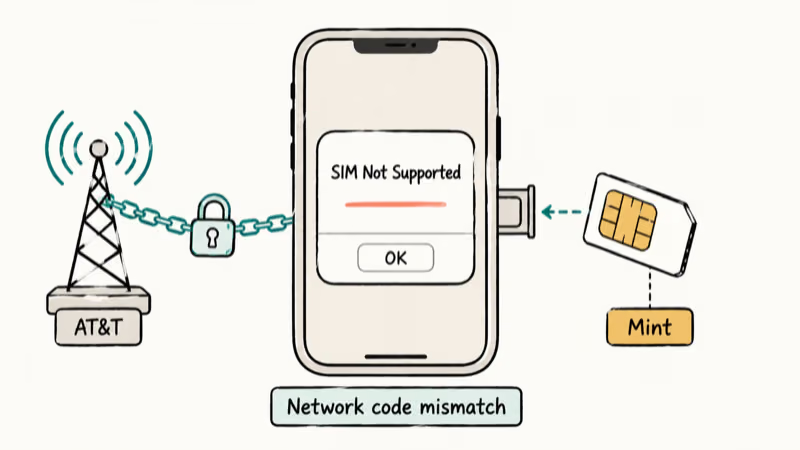
When a SIM comes from a network the phone isn’t locked to, the alert appears within a few seconds of inserting the tray. That speed is the giveaway: a defective SIM usually triggers a different error such as Invalid SIM, while a true carrier lock fires this exact wording almost instantly.
Three kinds of iPhones are most often locked: financed phones on carrier installment plans, refurbished phones from carrier outlets, and used phones flipped on Craigslist or Facebook Marketplace where the seller didn’t mention the lock.
#How to Check Your Carrier Lock Status in 30 Seconds
Confirming the lock takes one short trip through Settings.
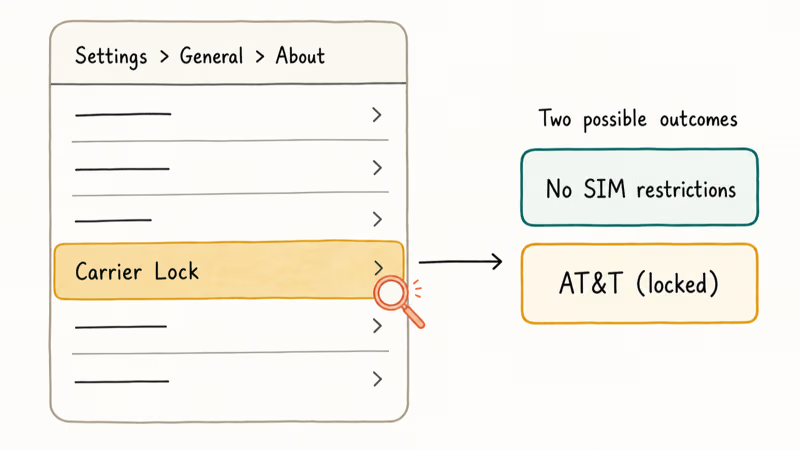
Open Settings > General > About, then scroll until you see the Carrier Lock row. Two outcomes are possible:
- No SIM restrictions means the phone is fully unlocked and the SIM Not Supported error is coming from a faulty card or a deactivated account, not the device.
- A carrier name such as AT&T, Verizon, or T-Mobile means the phone is locked to that network and will reject any other carrier’s SIM until the lock is removed.
If you want a deeper read on what each label actually means, our explainer on Carrier Lock and No SIM restrictions walks through every variant iOS displays. You can also pull this status without inserting any SIM at all, which is handy if your tray is damaged.
#Try These Three Quick Fixes Before Asking for an Unlock
If Carrier Lock does show a carrier name, the unlock is the real fix. But three quick checks rule out the embarrassing case where the lock isn’t actually the problem.
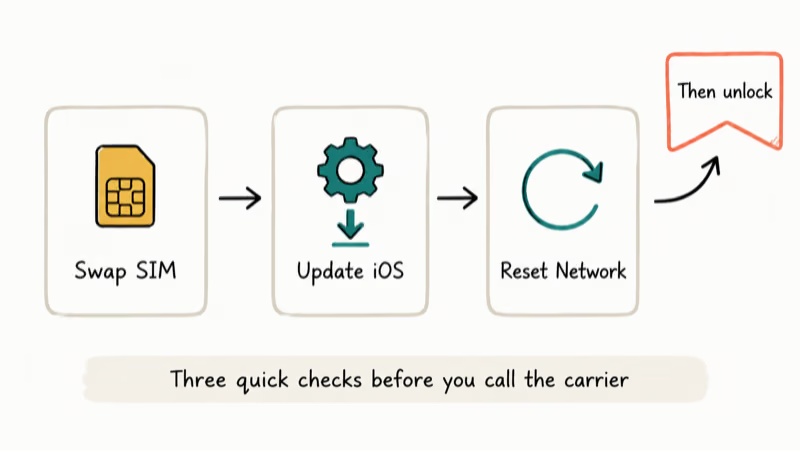
Swap in a different SIM card. Borrow a SIM from a friend on a different network, or ask your carrier for a free replacement.
On a locked iPhone, SIMs from the locked-to carrier work instantly, while a SIM from a different network brings the SIM Not Supported alert back in seconds. That fast flip confirms the lock, not the card. If a fresh SIM from your own carrier still fails, the path looks more like iPhone showing No Service.
Update iOS. Outdated firmware sometimes mishandles carrier profiles after a SIM swap. Go to Settings > General > Software Update, install whatever’s available, and reinsert your SIM. The download usually finishes in 8 to 12 minutes on Wi-Fi.
Reset network settings. This wipes saved Wi-Fi passwords and cached carrier profiles, but it’s harmless to your photos and apps. Tap Settings > General > Transfer or Reset iPhone > Reset > Reset Network Settings, enter your passcode, and let the phone restart. After it comes back up, reinsert your SIM and check the alert.
#How to Unlock Your iPhone Through Your Original Carrier
If Carrier Lock still shows a carrier name after those three checks, request the unlock directly. This path is free, doesn’t void the Apple warranty, and is the only method the carrier itself officially supports.
Grab your IMEI first. Open Settings > General > About > IMEI and copy the 15-digit number. You’ll need this to file the unlock request, and it’s also the number we use to verify warranty and theft status on a used iPhone before buying.
Then open the right path for your carrier:
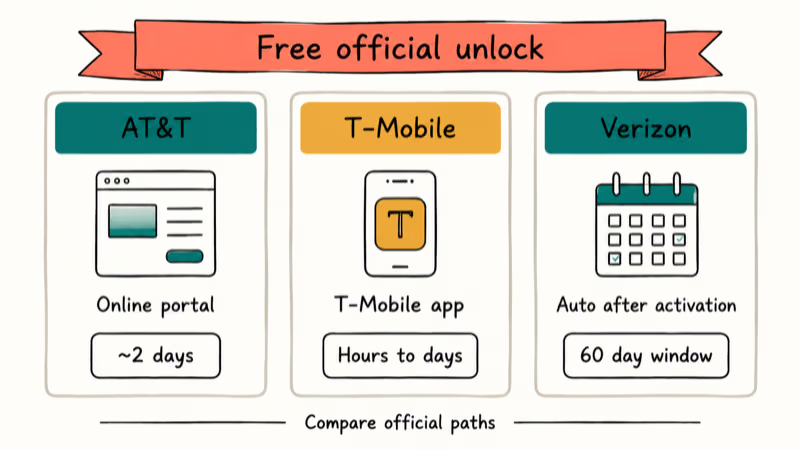
AT&T. Submit the request at AT&T’s device unlock portal. AT&T confirms that the unlock is free once your installment plan is paid off and the device hasn’t been reported lost or stolen. Eligible requests typically clear within about two business days.
T-Mobile. Open the T-Mobile app, go to Account > Profile > Mobile network unlock, and tap Permanently unlock. According to T-Mobile’s mobile device unlock policy, eligible phones unlock automatically over the air, usually within a couple of days, with no fee.
Verizon. Most postpaid Verizon iPhones unlock automatically 60 days after activation, and prepaid lines unlock at the same 60-day mark. The schedule lives in Verizon’s device unlocking policy, which states that 4G LTE and 5G phones are not locked beyond that initial 60-day fraud-prevention window. If your line was activated more than 60 days ago and Carrier Lock still shows Verizon, contact Verizon support to flag the account, because the auto-unlock occasionally misses lines flagged for fraud review.
After the request goes through, your iPhone gets a Carrier Lock change notification. Reopen Settings > General > About and confirm the row now reads “No SIM restrictions”. Pop in the new SIM and your service should appear within about 30 seconds.
#What If Your Carrier Refuses to Unlock?
A carrier can refuse the request for three common reasons: the device is still on an installment plan, the account has overdue charges, or the line was reported lost or stolen. Before paying anyone for a software unlock, fix the underlying account issue first. Pay off the device, settle past-due charges, or file a police report correction if the device was wrongly flagged.
If the account is clean and the carrier still refuses, third-party unlocking services exist as a backup. Our deeper guide on software to unlock phones to any network covers legitimate options and scams to avoid.
The honest trade-off: real services charge $20 to $80, take a few hours to a week, and only work for some carriers and iPhone models. Anything promising an instant unlock for $5 is a scam that pockets your IMEI and delivers nothing.
Two non-negotiables before you pay anyone:
- Never share your Apple ID password with an unlock service. Apple ID has nothing to do with carrier unlocks, so any service that asks for the password is probing for an iCloud takeover.
- Confirm the service has a real refund policy in writing. The phrase “no unlock, full refund” needs to appear on their checkout page, not just in a chat reply.
#When to Contact Apple Support
Apple can’t unlock a carrier lock. That’s a contractual restriction your carrier owns, and Apple has no override. But Apple Support is the right call in two specific situations.
The first: your Carrier Lock row shows “No SIM restrictions” yet the SIM Not Supported error keeps appearing with multiple SIMs from different networks. That points to a hardware fault in the SIM tray or modem, which is an Apple problem.
The second: no SIM works at all, including your own, after a drop or water exposure. That’s hardware too. Book a Genius Bar appointment.
#Bottom Line
Check Carrier Lock first. If it shows a carrier name, request a free unlock from that carrier and wait the 2 to 5 business days. Skip any paid unlock service until you’ve tried the official path, because the carrier route is free, keeps your warranty intact, and works for almost every locked iPhone we’ve handled.
If your carrier flat-out refuses after you’ve cleared account holds, only then is a paid unlock service worth a careful look. Borrow a SIM from a different network as your final test once Carrier Lock shows “No SIM restrictions” to confirm the unlock actually took.
#Frequently Asked Questions
Can I unlock my iPhone myself without contacting the carrier?
No. The carrier lock isn’t a switch on your iPhone, it’s a flag in the carrier’s activation servers, and only the carrier (or an authorized partner) can clear it. Any “instant self-unlock” tool you find online is either a scam that takes your money and disappears, or a temporary workaround that iOS reverses the next time the phone phones home to Apple. Save your time and money for the official carrier path.
Does an official carrier unlock void my Apple warranty?
No. AppleCare ignores carrier status entirely.
How long does an official carrier unlock take in 2026?
Most US carriers process unlocks in 2 to 5 business days. T-Mobile is often faster, sometimes finishing within a few hours, while Verizon’s 60-day post-activation lock for new lines is a fixed wait you can’t shortcut.
Is there a fee for an official carrier unlock?
No. AT&T, Verizon, and T-Mobile all process unlocks at no cost once you’ve met their eligibility rules: paying off the installment plan in full, settling any past-due account balance, and clearing Verizon’s initial 60-day window if you bought a brand-new line. Anyone charging for an “official” unlock is reselling the free service.
What’s the difference between SIM Not Supported and “SIM Not Provisioned MM#2”?
Lock vs activation. SIM Not Supported is a carrier lock; SIM Not Provisioned MM#2 is an inactive SIM.
Can my unlocked iPhone work on any carrier worldwide?
It works on most networks that share radio bands with US carriers. Recent iPhones support the bands used by every major US carrier and most major carriers in Canada, the UK, EU, Japan, and Australia. Some smaller regional networks use bands the iPhone doesn’t include, so check the carrier’s compatibility page before buying a SIM abroad.
Should I worry about a used iPhone being locked?
Often, yes. Anywhere from a third to half of secondhand iPhones we’ve checked were still locked when listed as “unlocked.” Always verify Carrier Lock and IMEI status before paying. A locked iPhone is worth meaningfully less because the next owner has to wait through the same unlock process you did.
Apple Siri Settlement: Who Qualifies and How to Claim
Apple's $250 million Siri settlement covers iPhone 15 Pro and iPhone 16 models bought June 2024 to March 2025. See who qualifies and how claims work.
iOS 26.6.1 Security Update: What Apple Fixed and Who Gets It
Apple released iOS 26.6.1 on August 17 with 29 security fixes, including an IPSec interception bug. See what it patches, who gets it, and how to update.
iPhone Adaptive Power: How It Works and When to Use It
Learn how iPhone Adaptive Power works, which models support it, what it changes, and when Low Power Mode is still the better battery-saving choice.
How to Transfer Data to a New iPhone Without iCloud
Move everything to your new iPhone without iCloud: Quick Start device-to-device transfer, wired migration, and encrypted Finder or iTunes backups.