Samsung Screen Rotation Not Working? 5 Quick Fixes
Samsung screen rotation stuck? Fix it in under 10 minutes with Auto Rotate, restart, cache wipe, or sensor diagnostics. Works on Galaxy S24/A54.
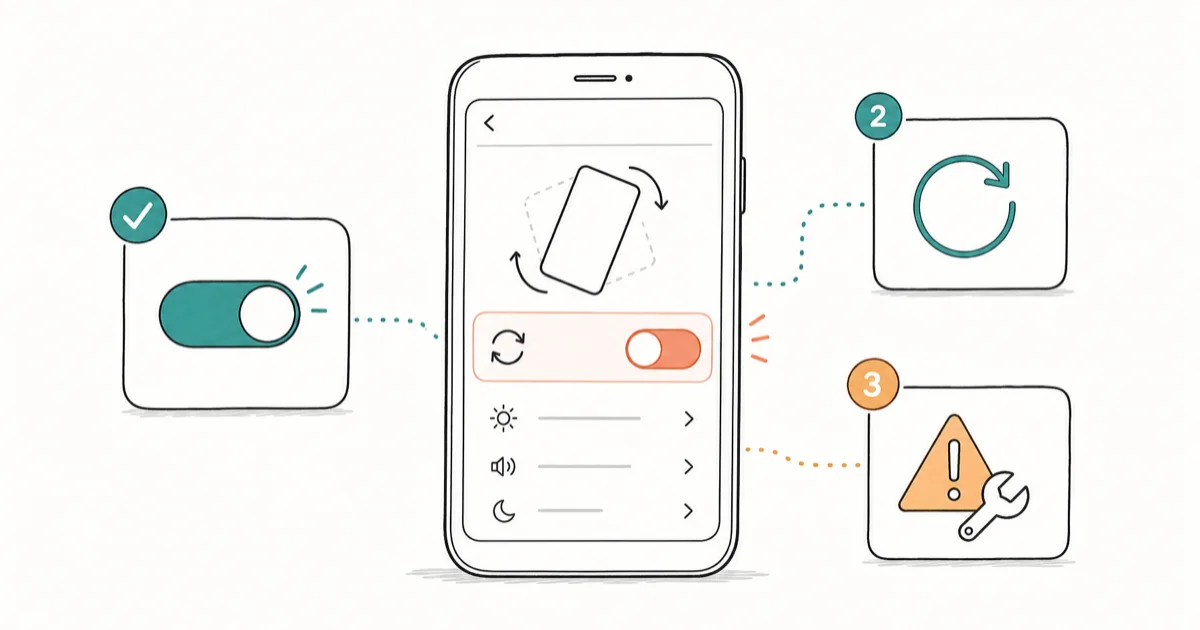
Quick AnswerSwipe down to Quick Settings and tap Auto Rotate. If already on, restart your phone. Still stuck? Clear system cache from Recovery Mode.
Samsung screen rotation stops working and the display locks in portrait no matter how you tilt the phone. Most fixes take under 10 minutes. Hardware sensor failures are rare but possible, so this guide walks through both the software-side troubleshooting and the diagnostic test that tells you whether the accelerometer itself is dead.
Use these steps on your own device or one you have explicit permission to repair.
- Auto Rotate must be on AND set to “Rotation,” not “Portrait” or “Landscape” lock.
- If only 1-2 apps refuse to rotate, the issue is app-level, not hardware. Update or clear app cache first.
- Wiping the system cache from Recovery Mode (Volume Up + Power) takes around 2 minutes and keeps your data.
- Safe Mode tells you whether a third-party app is blocking rotation in under 5 minutes.
- Factory reset wipes everything, so back up with Samsung Smart Switch before using it as the last software step.
#Is Your Auto Rotate Actually On?
Swipe down twice from the top of your screen to open Quick Settings. Look for the Auto Rotate icon (a circular arrow or rotating phone). According to Samsung’s screen rotation guide, the icon appears blue or white when Auto Rotate is enabled, and gray when set to Portrait or Landscape lock.
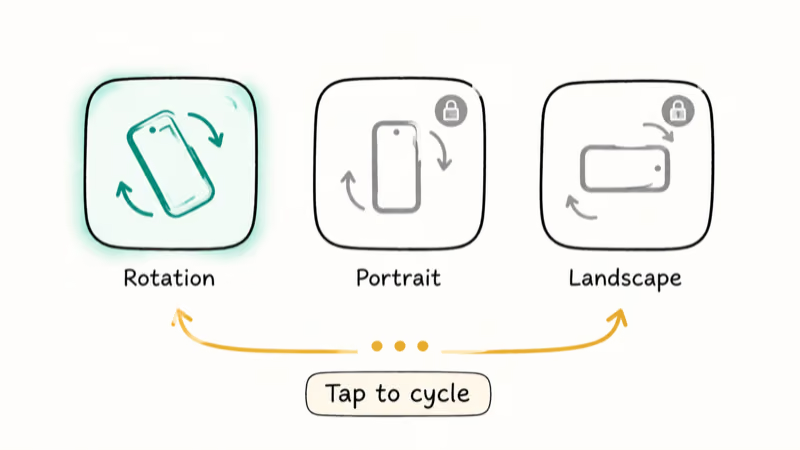
The Auto Rotate toggle has three states: full rotation, Portrait lock, and Landscape lock. The label under the icon tells you which state is active, and the icon is highlighted only in full rotation mode, matching Samsung’s documentation.
If the toggle is missing entirely, tap the pencil icon at the bottom of Quick Settings, drag Auto Rotate from the available buttons into your active panel, and tap Done.
Open the camera and tilt the phone. The preview should flip in under a second.
#Does Rotation Work in Some Apps but Not Others?
Try Gallery, Chrome, and YouTube one after the other. If only certain apps refuse to rotate, the device is fine.
Some apps lock portrait by design. Snapchat, TikTok, most US banking apps, and X (formerly Twitter) intentionally block rotation for layout reasons. Check the app’s own settings menu first; if it has a rotation option, that overrides the system toggle.
For app-only rotation bugs, clear that app’s cache first. The path is Settings > Apps > Instagram > Storage > Clear cache. The same shortcut applies to WhatsApp and Spotify. If clearing cache fails, our WhatsApp message backup guide for Samsung devices preserves chat history before a reinstall.
#Restart Your Phone (Seriously)
Hold the Power button until the power menu shows up, then tap Restart. The full reboot takes about 90 seconds on a recent Galaxy.
Frozen and unresponsive? Hold Power for 10-15 seconds. The phone will force-restart when you see the Samsung logo.
Test rotation right after the lock screen unlocks.
Restart is worth doing before invasive steps because temporary Android glitches often disappear after a fresh boot.
#Clear System Cache Without Losing Data
A cache wipe scrubs temporary system files without touching your apps, photos, or messages. Use it when restart didn’t fix the rotation.
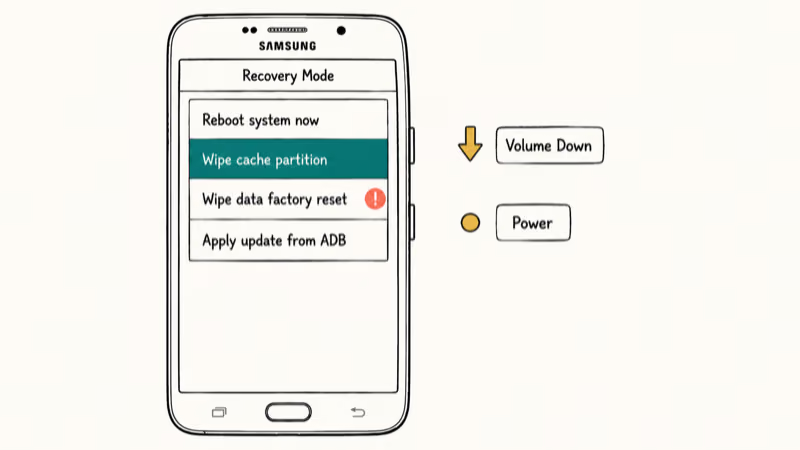
- Power off the phone completely.
- Hold Volume Up + Power simultaneously until the Samsung logo appears.
- Release both buttons. The Recovery Mode menu will load after 5-10 seconds.
- Use Volume Down to highlight Wipe cache partition.
- Press Power to confirm.
- Wait about 30 seconds, then choose Reboot system now.
Test rotation after boot.
If rotation still fails after a cache wipe, move to Safe Mode. If your Samsung also has charging issues alongside the rotation glitch, fix the Samsung Galaxy charging fault before retrying. A frozen phone that won’t even reach Recovery Mode is a separate problem covered in our Samsung tablet frozen guide.
#Use Safe Mode to Spot Bad Apps
Safe Mode disables every third-party app you’ve installed. If rotation works there, the culprit is something you installed.
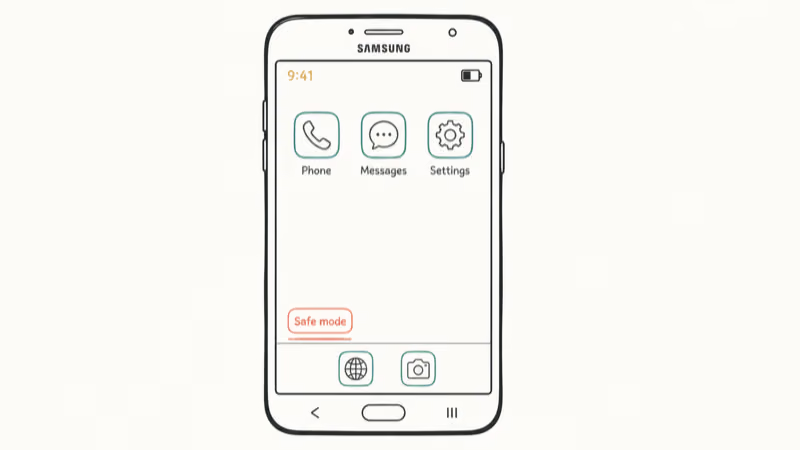
- Press and hold Power.
- When the menu shows, touch and hold Power off until “Safe mode” appears.
- Tap to confirm. The phone reboots with a “Safe mode” watermark in the corner.
- Open Gallery, Chrome, and YouTube. Tilt the phone.
If rotation works in Safe Mode, exit Safe Mode (a normal restart does it), then uninstall the most recent app you added. Test again, and repeat until rotation breaks. The last app you removed before the fix held is the offender. Update it from Google Play or replace it with an alternative.
#Run a Sensor Diagnostic Test
Your phone uses an accelerometer plus a gyroscope to detect rotation. Open the Phone app and dial *#0*# to bring up the diagnostic menu.
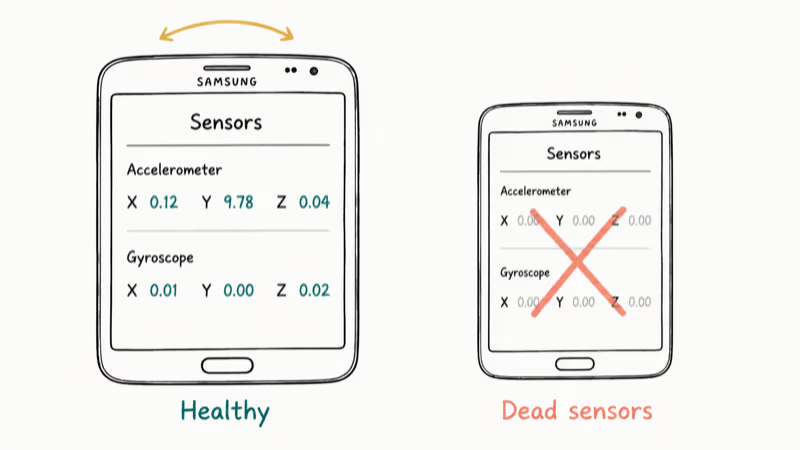
Tap Sensors and watch the Accelerometer and Gyroscope readouts as you tilt the device. Samsung’s troubleshooting page for screens that won’t rotate recommends placing the phone flat, then rotating it from one side to the other; if the sensors are healthy, the X, Y, and Z angle values change in real time. Frozen values mean the hardware itself is bad.
Android’s motion sensor reference confirms that sensor sample rates are throttled starting in API 31, the level Google announced alongside Android 12. The throttle doesn’t break rotation outright, but it can make it feel sluggish on older Galaxy phones paired with aggressive battery savers.
If the sensors are dead, this is a board-level repair, not a software fix; the same diagnostic check works for Samsung fingerprint sensor failures when Touch ID is also acting up.
#Advanced Option: Factory Reset
Factory reset is the last software step. It wipes everything and reinstalls One UI from clean.
Back up first. Use Samsung Smart Switch, and if Smart Switch itself stalls, see our fix for Samsung Smart Switch taking a long time.
- Go to
Settings>Generalmanagement > Reset. - Tap Factory data reset.
- Confirm. The phone restarts and erases all data, which takes around 5-8 minutes on a Galaxy S22 or newer.
After reset, restore from your Smart Switch backup. If the reset clears the issue, corrupted system files were the likely cause rather than hardware. If rotation still fails after reset and the diagnostic menu shows dead sensors, book a Samsung service appointment; soldered sensor chips can’t be user-replaced.
#Bottom Line
For most Samsung rotation issues, the order that wins is: Auto Rotate check (30 seconds), restart (90 seconds), cache wipe (2 minutes), Safe Mode (5 minutes). Stop at whichever step gives you back rotation.
If everything above fails and the diagnostic menu shows dead accelerometer or gyroscope readings, skip factory reset and book service. Board replacements aren’t cheap, so weigh that against trade-in value before committing. If you’re also seeing related Samsung hardware faults like a hotspot that won’t turn on, the sensor failure is likely part of the same root cause and worth getting inspected together.
Samsung Galaxy Guide
#Frequently Asked Questions
Why does rotation only work sometimes?
Inconsistent rotation usually points to either app cache buildup or a system cache bug. Restart first, then wipe the system cache. If rotation works for a few hours and then breaks again, factory reset is the next move.
Can a phone case block screen rotation?
No. Cases don’t shield the accelerometer or gyroscope from gravity, which is what they actually measure. If rotation broke the same week you added a case, that’s coincidence; an app update or system patch usually landed at the same time.
Is there a way to recalibrate the sensors?
Not directly on stock One UI. The diagnostic menu (*#0*#) shows live sensor readings but offers no calibration button. Cache wipe, restart, and factory reset are your real recovery options. Samsung Members has built-in sensor diagnostics, and the calibration runs automatically in the background, so there’s no manual trigger or slider you can nudge.
Does Auto Rotate drain battery?
Not measurably. The accelerometer is always on for system functions like step tracking and shake-to-undo. Auto Rotate just signals Android to act on the data already coming in.
What happens to rotation after a software update?
Updates can reset Quick Settings tile order, which sometimes hides Auto Rotate. Check it’s still on, then clear cache. If a fresh update broke rotation, you can roll back from Settings > Software update > Show update history on supported Galaxy models running One UI 6 or later, or wait for Samsung’s hotfix in the next maintenance build.
Do I need a service center to fix dead sensors?
Yes if the diagnostic menu confirms frozen accelerometer or gyroscope readings even after factory reset. The chips are soldered to the main board and can’t be swapped at home. Take the device to an authorized Samsung center for board-level repair.
Why does rotation feel laggy on my older Galaxy?
Lag usually means an older Galaxy running Android 12 or later is hitting the system-wide sensor rate limit. Turn off Adaptive battery in Settings > Battery > More battery settings and retest.
Which apps refuse to rotate by design?
Snapchat, TikTok, X, most US banking apps, Cash App, and Venmo lock portrait for UI consistency. This isn’t a bug. Check the app’s own settings for a rotation toggle. If you specifically need landscape playback, our iPhone won’t rotate guide covers cross-platform workarounds that also work on Android.
Samsung Secure Folder: Setup, Hide Apps, Clone Apps
Set up Samsung Secure Folder in under 5 minutes. Hide apps and photos, clone a banking app, and hide the Secure Folder icon on any Galaxy S8 or newer.
How to Use Google Find Hub: Setup + Find Lost
Set up and use Google Find Hub to locate, ring, lock, or erase your own Android phone, including offline finding and powered-off Pixel support.
Samsung Galaxy Battery Draining Fast: 2026 Fix Guide
Diagnose Galaxy S25 battery drain in five minutes through Battery Usage, then walk through six reversible Galaxy settings before a factory reset.
Samsung Parental Controls: Full Setup Guide for Parents
Set up Samsung parental controls in three layers: Samsung Kids, Google Family Link, and Digital Wellbeing. Free step-by-step guide for Galaxy parents.