How to Fix Samsung Hotspot Not Working (8 Proven Methods)
Samsung hotspot not working? Try 8 fixes: check your data plan, disable Battery Saver, reset network settings, update Android, and more in 2026.
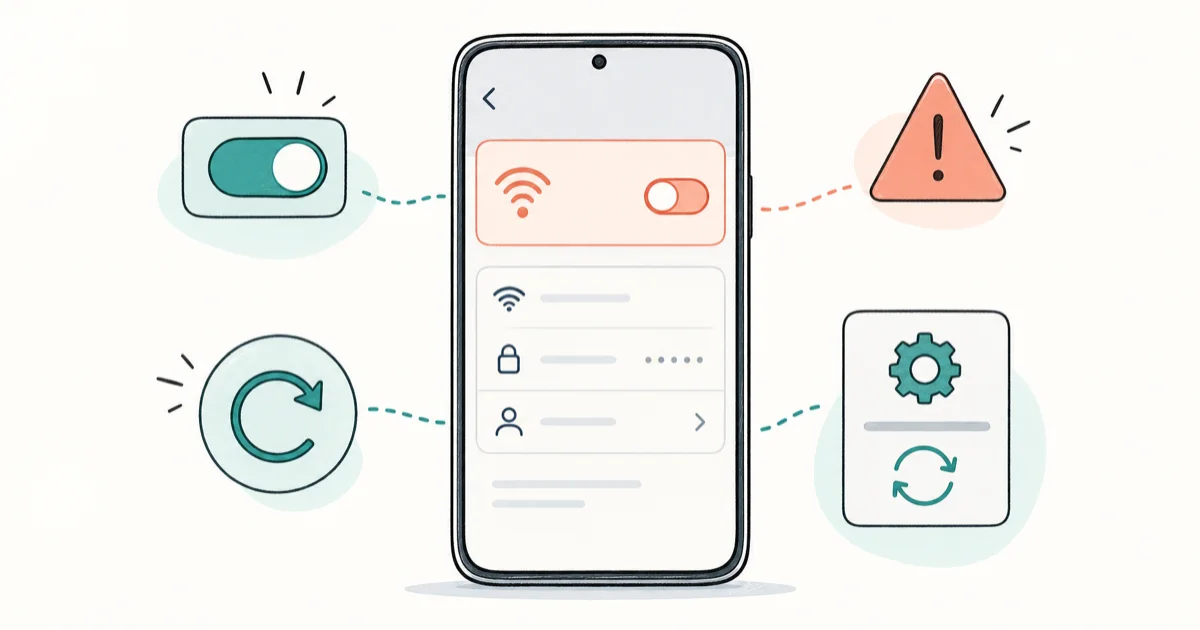
Quick AnswerOpen Settings > Connections > Mobile Hotspot, toggle the switch off, wait 10 seconds, then turn it back on. If that fails, confirm your data plan is active, disable Battery Saver, and reset network settings via Settings > General Management > Reset > Reset Network Settings.
Samsung hotspot not working stops you from sharing your phone’s data with a laptop, tablet, or another phone. The cause is almost always one of three things: an inactive data plan, a setting that quietly blocks tethering, or a stale network profile on the device that’s trying to connect. Most fixes finish in under five minutes once you know where to look.
Use these steps only on your own device or a device you have explicit permission to repair. Respect legal and privacy boundaries. Don’t use recovery, reset, or troubleshooting steps to access someone else’s data or account.
- Your data plan must be active with remaining balance because hotspot shares your mobile data, not a separate service.
- Battery Saver mode automatically disables hotspot. Switch it off in
Settings>Battery anddevice care. - Reset network settings finishes in about 2 minutes via
Settings>General Management>Reset>Reset Network Settings. - Connected devices must be within roughly 30 feet for a stable signal on most Samsung phones.
- Pending Android updates sometimes block hotspot.
Check Settings>Aboutphone > Software update.
#Why Has Your Samsung Hotspot Stopped Working?
Samsung hotspot failures usually trace to three buckets. The phone might be missing a prerequisite (an active data plan, mobile data turned on, or hotspot toggled on). A power or security setting can override tethering, including Battery Saver, MAC randomization, or a device allowlist. The other device may also hold onto an old, broken connection profile.
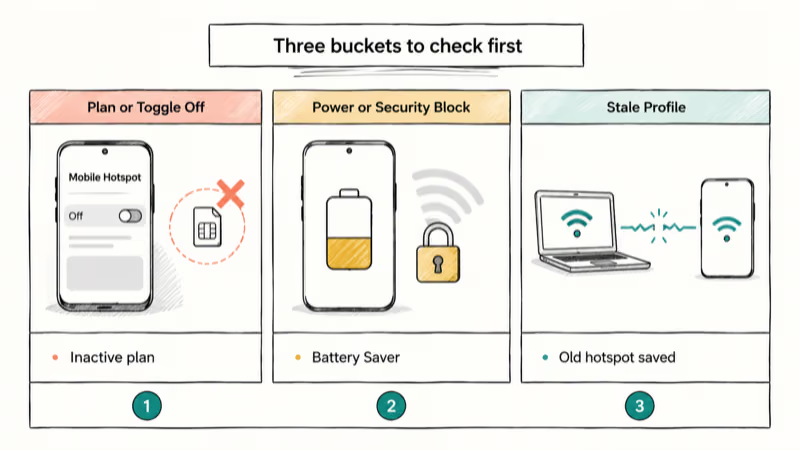
The eight fixes below work across modern Galaxy phones on recent Android versions. Most hotspot outages clear after the first three methods.
#Confirm Your Data Plan and Mobile Data
Hotspot shares your phone’s cellular data. If your plan is suspended, paused, or capped, your hotspot will refuse to share even when the toggle says it’s on.
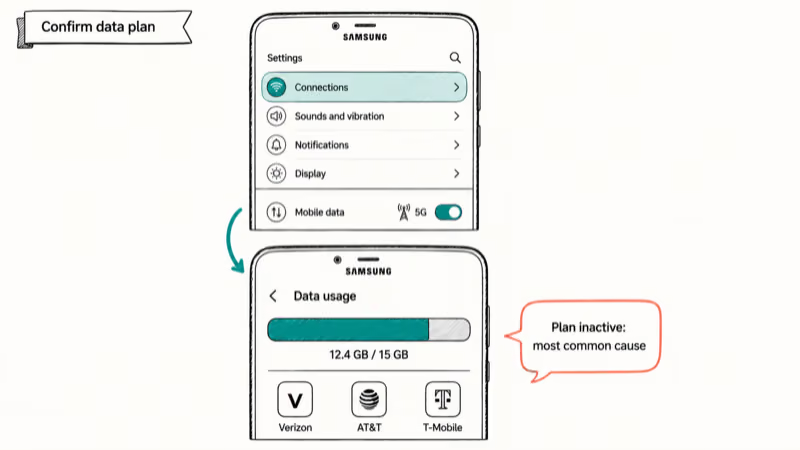
- Open Settings and go to
Connections>Mobiledata. - Confirm the mobile data switch is on and shows an active 4G or 5G indicator.
- Go back to
Connections>Datausage to see your current monthly usage against your plan limit. - If usage already crossed the limit, contact your carrier or wait for the next billing cycle.
According to Google’s Android tethering documentation, tethering relies on your phone’s mobile data and some carriers charge separately or block hotspot on certain plans. Your carrier’s app (Verizon, AT&T, T-Mobile) is the fastest way to confirm balance. An inactive or capped plan is one of the most common reasons a Samsung hotspot refuses to share.
If your speeds feel painful even after the connection works, see our guide on phone Wi-Fi running slow.
#Toggle Hotspot Off and On
The simplest fix works often. Toggling resets the hotspot radio without restarting the entire phone.
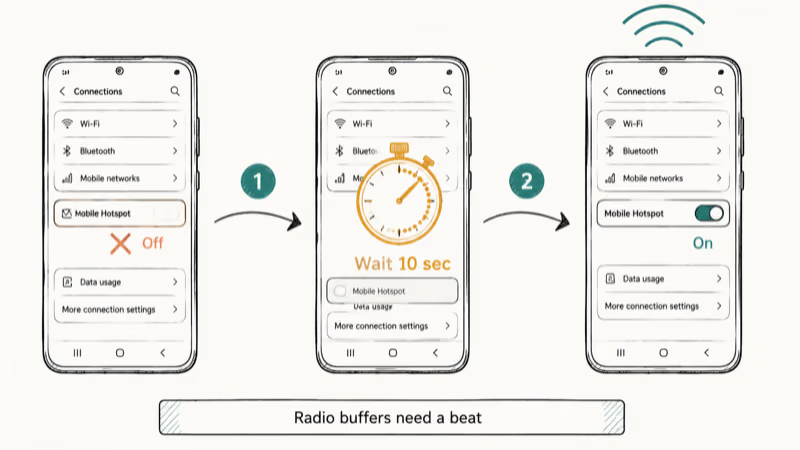
- Go to
Settings>Connections>Mobile Hotspot. - Toggle the switch OFF.
- Wait 10 full seconds. Don’t tap rapidly.
- Toggle the switch back ON.
- Have your other device reconnect to the Samsung hotspot network.
The wait matters because the Wi-Fi radio needs a beat to release its buffers. After a phone has been broadcasting hotspot for hours, an immediate re-toggle often keeps failing until a full 10-second pause clears it.
#Disable Battery Saver Mode
Battery Saver and Maximum Power Saving modes both restrict background and tethering services to stretch runtime. The hotspot icon may stay green while sharing is silently blocked underneath.
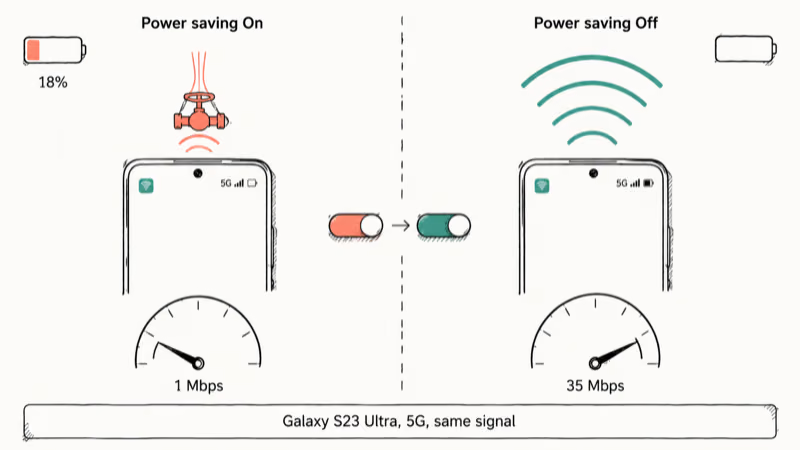
- Open
Settings>Battery anddevice care. - Tap
Battery>Powersaving. - Switch Power saving to Off (don’t leave it on Medium or Maximum).
- Return to your hotspot screen and reconnect.
Samsung’s battery service guide states that aggressive power-saving modes restrict background services including mobile data sharing. At low battery levels, throughput can be throttled hard until the saver is off; once disabled, speeds usually jump back to full on the same signal.
#Forget and Reconnect on the Other Device
Sometimes the laptop or tablet trying to connect remembers an old hotspot password or security profile and silently fails the handshake.
- On the connecting device, open Wi-Fi settings.
- Find your Samsung hotspot network name and tap Forget (or Remove).
- On your Samsung phone, restart the hotspot from
Settings>Connections>Mobile Hotspot. - Back on the connecting device, scan for networks again and select the Samsung hotspot.
- Enter the password shown under your phone’s Mobile Hotspot screen.
When a laptop has connected to a hotspot that was later renamed or given a new password, forgetting the network and rejoining is often the only fix that sticks. If you’ve changed your hotspot password recently, every previously paired device needs this step.
Skip ahead if all your devices are brand new pairings.
#Add the Device to Your Allowed List
Some Galaxy phones expose a per-device allowlist (sometimes called Allowed devices). When the toggle is on, only devices whose MAC addresses are pre-approved can connect.
- Open
Settings>Connections>Mobile Hotspot. - Tap the three-dot menu, then Allowed devices.
- If the list is empty and the switch is on, you’ve found the problem.
- Tap Add and enter your device’s name plus its Wi-Fi MAC address.
- Save and reconnect.
Your device’s MAC address lives in its own Wi-Fi or Hardware settings (usually labeled “Hardware address,” “MAC address,” or “Wi-Fi MAC”). On newer Galaxy models running One UI 6 or later, the allowlist is hidden behind the gear icon instead.
If your phone doesn’t show an Allowed devices entry, this method doesn’t apply.
#Update Your Android Software
Outdated Android builds occasionally ship with hotspot bugs that later monthly security patches fix. Stuck installs can also leave the hotspot driver in a half-loaded state where the toggle reports On but never broadcasts an SSID.
- Open
Settings>Aboutphone > Software update. - Tap Check for updates.
- If an update is available, tap Download and install.
- Allow the phone to restart and finish installing. This step takes 5 to 10 minutes.
If the over-the-air install fails, Samsung recommends using Smart Switch on a PC to push firmware directly. A phone stuck on a partial One UI install can show hotspot toggled on while never broadcasting an SSID, and a Smart Switch reflash usually clears that on the first try.
#Reset Network Settings
Network reset wipes all saved Wi-Fi networks, Bluetooth pairings, and mobile network preferences. It’s more aggressive than toggling, but it solves connectivity problems that nothing else touches.
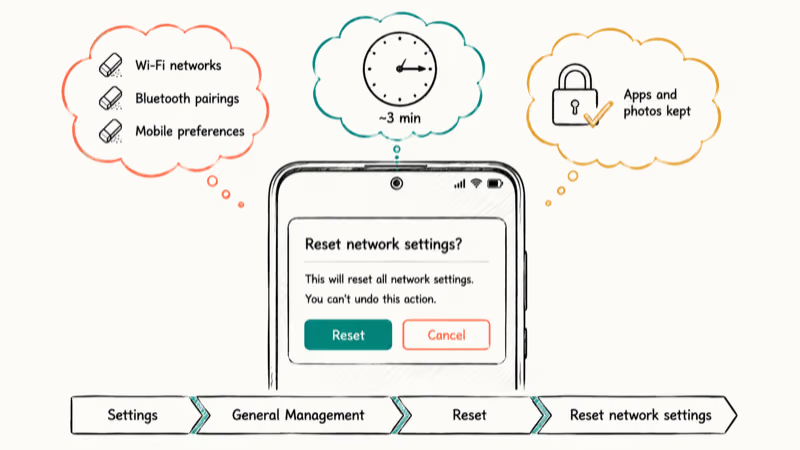
- Back up any Wi-Fi passwords you’ll need to re-enter, since they all get wiped.
- Open
Settings>General Management>Reset. - Tap Reset network settings.
- Confirm by tapping Reset settings and entering your PIN.
- Wait for the phone to restart, then reconnect to your home Wi-Fi and try hotspot again.
The full reset forces your phone to rebuild its network configuration from scratch. A network reset clears most of the stubborn broadcast issues that survive methods 1 through 6. If you also see an authentication error when joining your home Wi-Fi after the reset, our walkthrough on the Wi-Fi authentication error explains the related fix.
#When Should You Try a Factory Reset?
Factory reset is the last resort. It erases everything on the phone, so use it only after Methods 1 through 7 fail and you can dedicate 30 to 60 minutes to back up and restore.
- Back up the entire phone to Samsung Cloud, Google Drive, or your PC.
- Open
Settings>General Management>Reset. - Tap Factory data reset.
- Scroll down and tap Reset, then enter your PIN.
- Tap Delete all to confirm.
- After setup, go to
Settings>Connections>Mobile Hotspotand test before restoring apps.
This step is rarely necessary, and when it’s needed, the cause is usually a botched custom-ROM-style modification. If a factory reset doesn’t fix it, the hotspot radio is almost certainly a hardware fault that requires authorized service rather than another DIY pass. Samsung walk-in repair typically swaps the radio module under warranty within one to two weeks.
If you also lose Wi-Fi entirely after the reset, see a phone that won’t connect to Wi-Fi. For password recovery, reading saved Wi-Fi passwords on Android saves time.
A network reset can also disrupt nearby device connections, so if screen sharing breaks afterward, our fix for Samsung Smart View not working covers that side of the problem.
#Bottom Line
Walk the methods in order. Methods 1 through 3 catch most cases.
Confirm your data plan is active because it causes more outages than people expect, toggle hotspot off and on, and turn off Battery Saver. If those three don’t fix it, forget the hotspot on the connecting device (Method 4) and verify the allowlist isn’t blocking it (Method 5). Reset network settings (Method 7) before you commit to a factory reset (Method 8).
For most Galaxy phones, only the network reset and a Smart Switch reflash call for the heavier treatment.
Samsung Galaxy Guide
#Frequently Asked Questions
Can I use my Samsung hotspot without a data plan?
No. Without an active data plan with remaining balance, hotspot can’t share anything.
How do I check my remaining data balance?
Open Settings > Connections > Data usage to see current usage against your monthly limit. Your carrier’s app (Verizon, AT&T, T-Mobile) shows real-time balance and any tethering allowance separately. Calling the carrier directly is the fastest route if the app reports a different number than the phone.
Why does my hotspot keep disconnecting?
The most common cause is Battery Saver kicking in as the battery dips. Range matters too: Galaxy hotspots reach roughly 30 feet on 2.4 GHz, less on 5 GHz. Too many connected devices also drag throughput down to where each device times out. Disable Battery Saver, move the device closer, and disconnect anything you don’t actively need.
How many devices can I connect to my Samsung hotspot at once?
Most Galaxy phones support up to 10 devices, but 4 to 5 is the practical ceiling before throughput collapses for everyone.
Is my hotspot slower than my home Wi-Fi?
Usually, yes. Hotspot routes through 4G LTE or 5G, which is slower than fiber or cable broadband in most homes. Expect 10 to 50 Mbps on hotspot versus 100+ Mbps on home internet, although mid-band 5G in dense urban areas can briefly close the gap. Latency is also higher on cellular networks: home internet typically pings under 20 ms, while LTE hotspot pings often land between 40 and 80 ms, which video calls and gaming notice immediately.
Should I delete apps if hotspot is not working?
Probably not. A third-party app blocking hotspot is rare. If you suspect one, disable it temporarily under Settings > Apps and test hotspot before uninstalling. Check your data plan and Battery Saver first because those two cause the bulk of hotspot failures.
Does my hotspot password reset when I toggle the feature off?
No. The network name and password persist until you change them manually or factory reset the phone.
Can I use hotspot while on a phone call?
Yes on newer Galaxy models (S21 and later running Voice over LTE), but expect data to slow because the call and the shared connection share the same cellular link. On older Galaxy phones, an incoming voice call drops hotspot until the call ends.
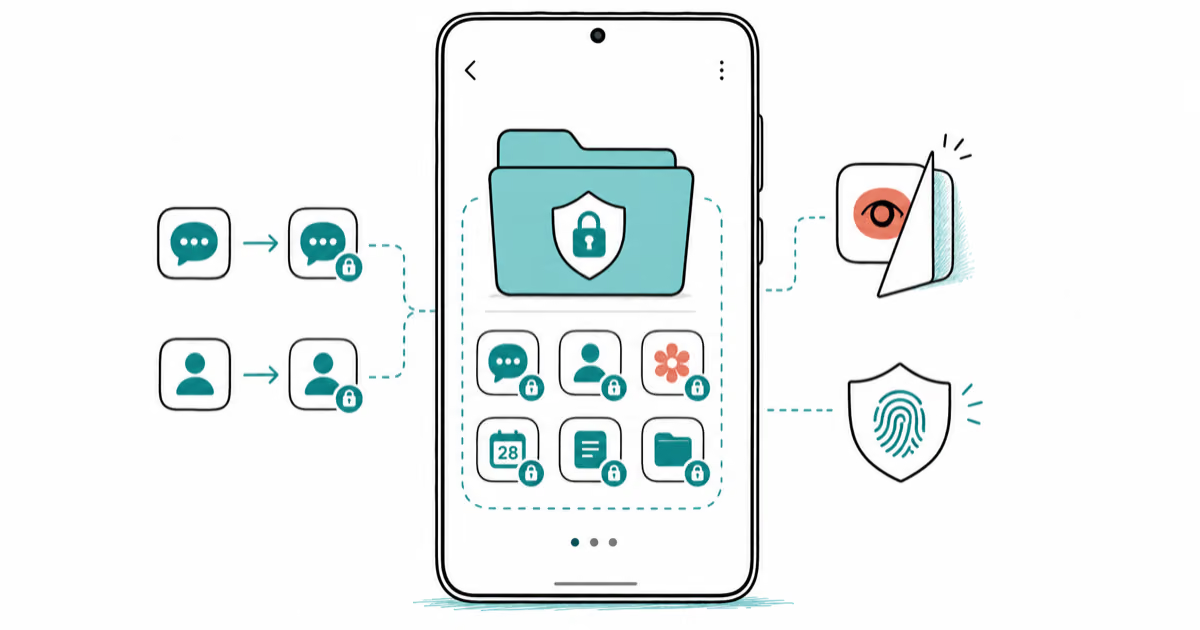
Samsung Secure Folder: Setup, Hide Apps, Clone Apps
Set up Samsung Secure Folder in under 5 minutes. Hide apps and photos, clone a banking app, and hide the Secure Folder icon on any Galaxy S8 or newer.
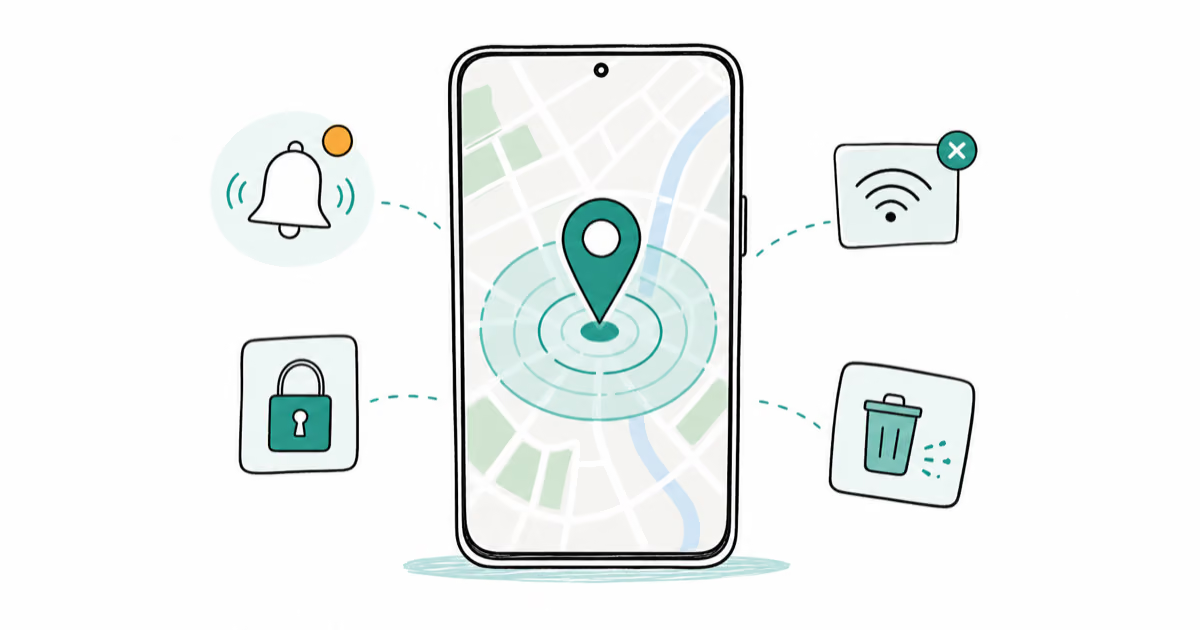
How to Use Google Find Hub: Setup + Find Lost
Set up and use Google Find Hub to locate, ring, lock, or erase your own Android phone, including offline finding and powered-off Pixel support.
Samsung Galaxy Battery Draining Fast: 2026 Fix Guide
Diagnose Galaxy S25 battery drain in five minutes through Battery Usage, then walk through six reversible Galaxy settings before a factory reset.
Samsung Parental Controls: Full Setup Guide for Parents
Set up Samsung parental controls in three layers: Samsung Kids, Google Family Link, and Digital Wellbeing. Free step-by-step guide for Galaxy parents.