How to Recover Snapchat Photos: A Comprehensive Guide
Recover deleted Snapchat photos through Memories Trash, iPhone or Android camera roll backups, account-data downloads, and trusted recovery tools.
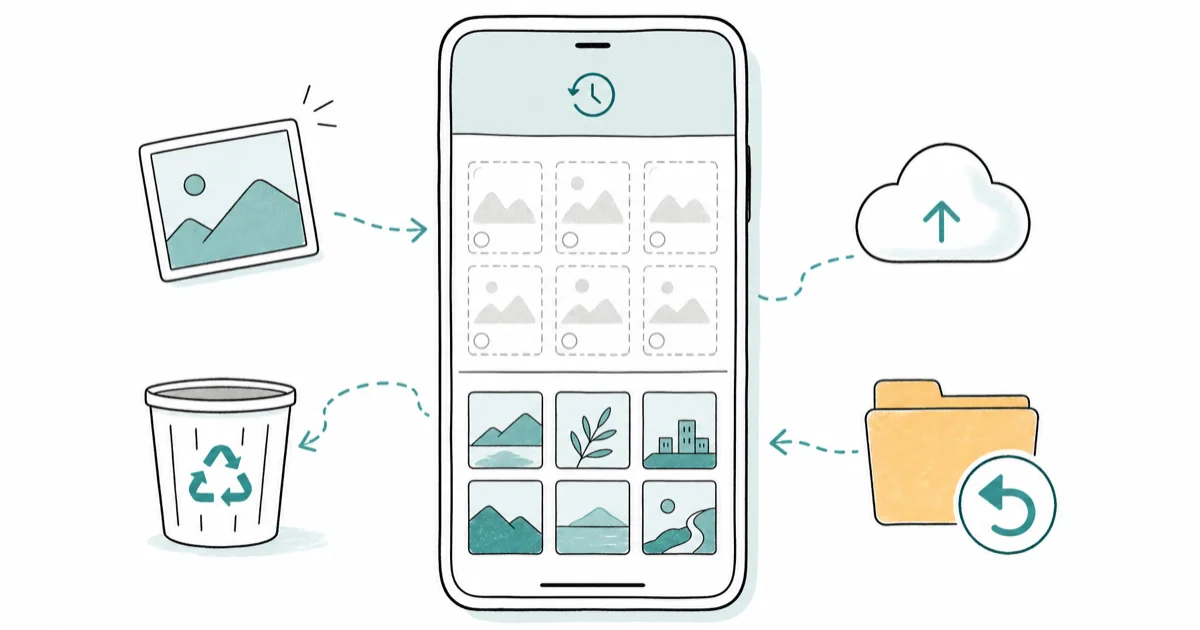
Quick AnswerOpen Snapchat Memories and tap the three-dot icon to find Recently Deleted, then restore saved Snaps within Snapchat's stated holding window. If the Snap was saved to your camera roll, check the iPhone Photos Recently Deleted album or your Android Trash for backed-up files. Snaps that were never saved are usually gone.
Recovering Snapchat photos depends entirely on whether you saved them somewhere before they expired. Snaps that lived only on Snapchat’s servers and got viewed once are gone by design. Snaps you saved to Memories, your camera roll, or a device backup can usually come back if you move fast. This guide walks through every legitimate recovery path on your own Snapchat account, plus the honest caveats so you don’t waste hours chasing scams.
- Snapchat Memories has a Recently Deleted area accessed via the three-dot icon, which holds saved Snaps you removed for a limited window before permanent deletion.
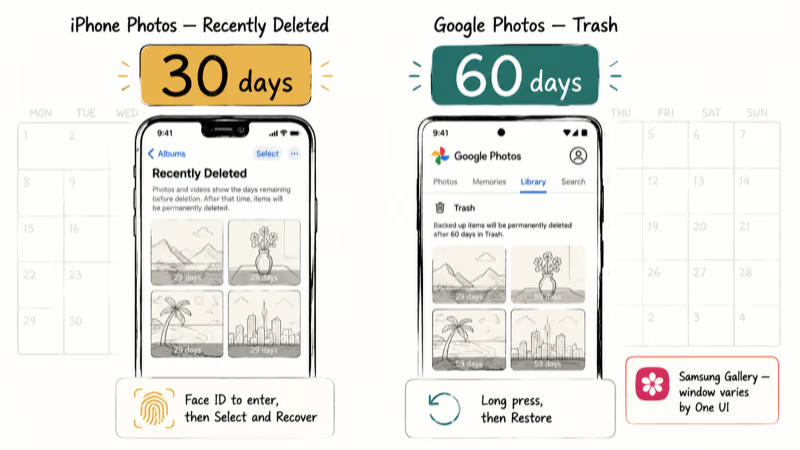
- iPhone Photos keeps deleted images in the Recently Deleted album for 30 days, and Google Photos holds backed-up trash for 60 days per Google’s official documentation, so camera-roll Snaps are recoverable inside that window.
- Snapchat’s My Data download (
Settings>Privacy>My Data) returns a JSON archive within roughly 24 hours that may include media depending on which save settings you had on. - Restoring a full iCloud or Google One backup made before deletion can bring back Snapchat app data, but it overwrites everything saved on the phone after that backup point.
- Expired Snaps that were never saved to Memories, camera roll, or a backup are typically unrecoverable, so any tool promising 100 percent Snap recovery is a scam to avoid.
#Where Snapchat Actually Stores Your Photos
Snapchat is built around ephemeral content, but several features quietly create persistent copies. Knowing which feature held your photo decides which recovery path works.
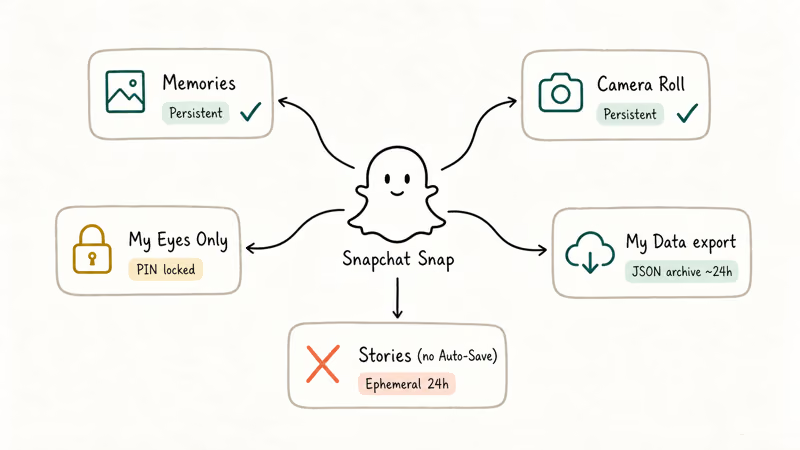
Memories is the in-app archive. Saved Snaps, Camera Roll uploads, and Stories saved to Memories all live here. Memories has its own Recently Deleted holding area that you reach by tapping the three-dot icon inside Memories.
Camera Roll holds a Snap only if you flipped on Save to Camera Roll under Settings > Memories before capturing. Once that toggle is on, every Snap you take saves a copy to your phone’s Photos app or Gallery automatically. Standard photo recovery then applies, which is the strongest single recovery surface in the entire pipeline because it survives Snapchat-side ephemerality entirely.
My Eyes Only is the PIN-protected vault. Items there sit separately from the main Memories Trash and need your PIN to restore, so a single PIN reset accidentally locks you out of those items even when Memories Trash is otherwise functional. If you forgot the PIN, the items are not recoverable through the normal Memories flow.
Account-data download is the JSON archive Snapchat builds on request. Media payload depends on plan and save settings.
Stories auto-save to Memories only if Auto-Save Stories was on. Without that toggle, Stories vanish 24 hours after posting.
Camera Roll save is the most reliable recovery surface because the photo leaves Snapchat’s ephemeral pipeline and lands in the phone’s normal photo library. Memories Trash can help when the item was saved inside Snapchat, but raw Snaps that hit neither surface usually leave no recoverable copy.
#How to Restore From Snapchat Memories
Try this first. If the photo was ever saved to Memories, whether manually, through Auto-Save Stories, or because Save to Camera Roll and Memories was enabled, the Trash inside Memories likely still has it.
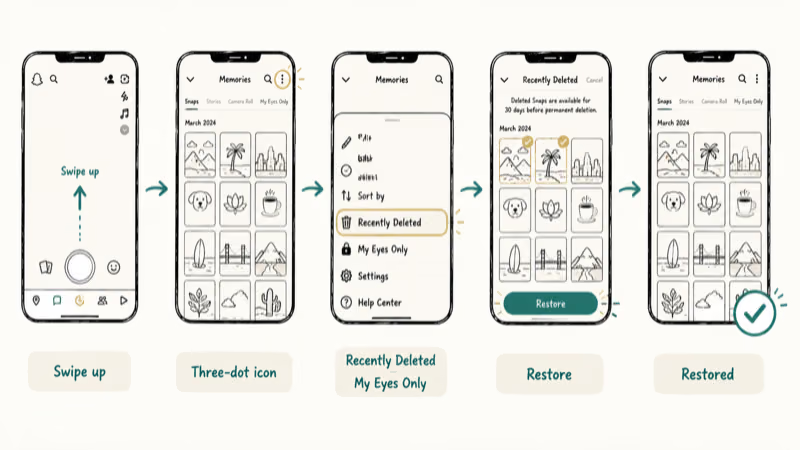
- Open Snapchat and swipe up from the camera screen to enter Memories.
- Tap the three-dot icon in the top-right corner of the Memories screen.
- Choose My Eyes Only if the missing item was vaulted there, or look for the Recently Deleted option (label varies by app version).
- Select the photos you want back and tap Restore.
- Confirm the restore and check the Memories grid to verify the item returned.
Snapchat doesn’t publish a fixed retention number for Memories Trash, and the exact label moves between app versions. If you don’t see Recently Deleted in your build, update Snapchat from the App Store or Google Play, then retry. Our recovery walkthrough on how to recover deleted Snapchat Memories covers the version-by-version path differences.
If the missing item was a Story, check whether Auto-Save Stories was on. When that toggle is on, the Story copy lives inside Memories the same way a saved Snap does. If it’s off, the 24-hour Story window has closed and you’ll need a different path.
#Can You Recover Snaps From iPhone or Android Backups?
Yes, with one big caveat: the restore overwrites the phone’s current data.
#iPhone iCloud and Finder backups
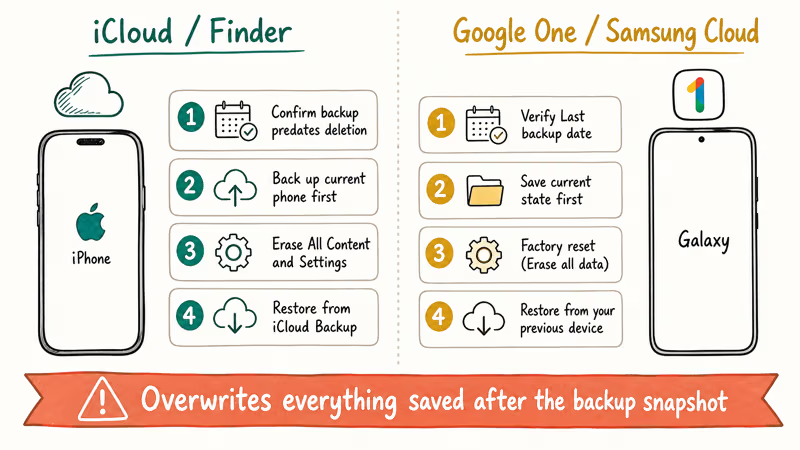
When iCloud Backup is on, your iPhone backs up app data, the camera roll, and most account state daily over Wi-Fi while charging. Apple states that an iCloud restore replaces the device’s current data with the backup snapshot, which is why this method only makes sense when the deleted photo is more important than anything you have done since the last backup.
Steps:
- Confirm a usable backup exists. Open Settings > [your name] > iCloud > iCloud Backup and check the Last Successful Backup timestamp. The timestamp must predate the deletion.
- Back up everything currently on the phone. Plug into a Mac, open Finder, select your iPhone, and choose Back Up Now as a safety net.
- Erase the iPhone via
Settings>General>Transferor Reset iPhone>Erase All Content and Settings. - During Setup Assistant, choose Restore from iCloud Backup and pick the relevant snapshot.
- After the device finishes restoring, open Snapchat. Snapchat will sign you back in and the Memories cache should reappear.
The Finder/iTunes path is the same: choose a backup made before deletion.
Backup restores can bring back saved Memories or camera-roll copies that existed at the backup point. A Snap that had been viewed and never saved still won’t return, because Snapchat’s servers have no copy to re-pull after it expires.
#Android Google One and Samsung Cloud backups
Google One backup covers app data for many apps, plus call history, contacts, and SMS. Samsung Cloud backs up app data on Galaxy phones independently. The trade-offs match iOS: a full restore brings back a full snapshot at the cost of newer content.
- Open
Settings>Google>Backupto verify a recent backup exists, and check the Last backup date. - Back up your current device state through the same screen before doing anything destructive.
- Factory reset via
Settings>System>Resetoptions > Erase all data (factory reset). - After reboot, sign back into your Google account during Setup Wizard and select Restore from your previous device > pick the relevant backup.
- Reinstall Snapchat. Sign in. Verify Memories returned.
For broader Android workflows, our walkthrough on recovering deleted photos from Android internal storage covers parallel paths when the Snap also touched the gallery.
#Recover From Your Camera Roll Trash
This is the path most people skip. If you ever toggled Save to Camera Roll in Settings > Memories, every Snap you took landed in your phone’s Photos app. The Photos app, in turn, has its own deleted-item holding area.
#iPhone Photos Recently Deleted
The Recently Deleted album in iOS Photos holds items for 30 days before permanent erasure, per Apple’s standard documentation for the Photos app. Inside that window, recovery is one tap.
- Open
Photos>Albums>Recently Deleted. - Authenticate with Face ID, Touch ID, or your passcode.
- Tap Select, choose the Snapchat photos you want back, and tap Recover.
#Google Photos Trash on Android
Google’s official documentation states that backed-up photos and videos stay in trash for 60 days before permanent deletion, while non-backed-up items get only 30 days (see Delete photos and videos). That makes Google Photos the most generous safety net of the three native trash systems if your Snaps were syncing.
- Open the Google Photos app.
- Tap
Library>Trash. - Long-press the Snapchat photos you want back.
- Tap Restore.
Samsung Gallery user? Open Gallery > menu > Trash. Holding window varies by One UI version. Check the Trash header for the exact countdown.
If the Snap was saved to Camera Roll and synced to Google Photos, restore it from Trash before the documented retention window closes.
#Should You Use Paid Recovery Software?
Sometimes yes, often no. Paid recovery tools scan your phone’s storage for files marked as deleted but not yet overwritten. They can sometimes pull cached image fragments, especially on Android, where Snapchat caches more aggressively to disk.
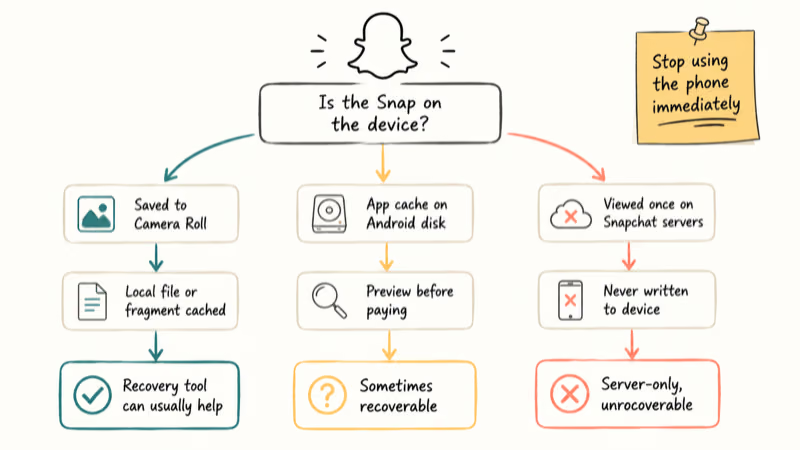
What they can’t do: retrieve a Snap that was viewed once on Snapchat’s servers and never touched your device’s storage. That data is gone.
| Tool | Platforms | Best For | Honest Limit |
|---|---|---|---|
| Tenorshare UltData for iPhone | iOS | Cached items in iPhone backups | Won’t recover server-only Snaps |
| Wondershare Dr.Fone Data Recovery | iOS and Android | Camera-roll fragments, app cache | Free preview, paid recovery |
| Wondershare Recoverit | Computer drives | Snaps copied to a computer | Not for phone-internal scans |
Some links on this page are affiliate links, which means fone.tips may earn a commission at no extra cost to you.
Our reviews of these tools, Tenorshare UltData for iPhone and Wondershare Dr.Fone for Android, explain where local recovery can and can’t help. None of them recover unsaved Snaps. If a marketing page promises “recover any deleted Snapchat photo” or “unlock any account’s snaps,” walk away. That category of tool is targeting Snapchat’s privacy reputation to sell you something that doesn’t work.
Workflow when you do try a recovery tool:
- Stop using the phone immediately. Every photo you take, every app you open, increases the odds that the deleted file’s storage block gets overwritten.
- Plug the phone into a computer and run a paid scanner against the device’s backup or filesystem snapshot.
- Preview before paying. Reputable tools show recoverable items in the trial.
- Recover to a separate folder on your computer, never back to the same phone.
- Verify the file opens correctly before you delete the original recovery image.
#How to Request Your Snapchat Account Data
When live recovery paths fail, the My Data export sometimes surfaces images you forgot Snapchat had on file, including older saved Stories, Memories metadata, and account-tied media. According to Snapchat’s official privacy policy, Snap stores certain account information including saved Memories, and the My Data tool returns a downloadable archive once the export is built.
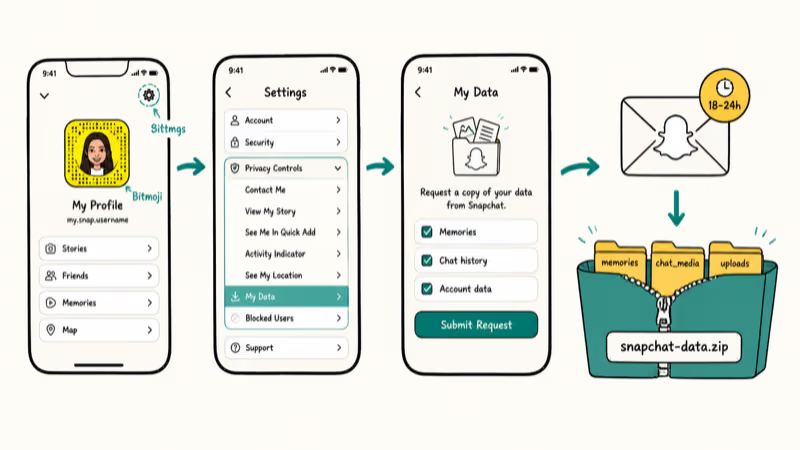
- Open Snapchat > tap your Bitmoji > Settings.
- Scroll to Privacy Controls and tap My Data.
- Verify your email address, choose what to include (Memories, Chat history, account data), and tap Submit Request.
- Wait for the email. Snapchat sends the download link after the export is built.
- Click the link in the email, sign in to Snapchat’s web portal, and download the ZIP.
Open the ZIP and look inside the memories, chat_media, and uploads folders. The richness of media depends on which saving features were enabled when you used the app. If Save to Memories was off and Auto-Save Stories was off, the export will be sparse.
Bonus: the archive holds your full friend list, login history, and a JSON of conversations. Useful metadata if you also need Snapchat data recovery context after losing a username, want to inspect login locations from suspicious cities, or are reconstructing a chat thread that was deleted from the app side. Keep the archive somewhere encrypted, since it contains everything Snapchat knows about your account in one bundle.
#When Your Snapchat Account Is Locked or Banned
Recovery shifts when you can’t open the app. If you see a temporary lock, work through Snapchat’s standard unlock URL inside the app (Settings > Support > I Need Help).
For account state issues, our guides on logging out of Snapchat cleanly and reactivating a Snapchat account cover the most common failure paths. A reactivated account in the 30-day grace window typically returns Memories intact. An account that crossed the permanent-deletion line can’t be restored.
If your account was banned for a Terms violation, the photos tied to it are effectively gone. Snapchat doesn’t return media on banned accounts, even via My Data, because the export pipeline requires an active session.
#Legal Boundaries for Snap Recovery
Everything in this guide assumes the photos are yours, on your account, on a device you own or are authorized to use. Three quick boundaries to keep in mind:
- Recovering Snaps another user sent you that you never saved is technically possible only if your device cached them locally. Re-sharing those Snaps without the sender’s consent breaks Snapchat’s Terms of Service and can violate state-level recording or privacy laws.
- Logging into someone else’s Snapchat account to recover their photos is a federal Computer Fraud and Abuse Act issue in the United States, regardless of intent. Don’t do this.
- Tools that claim to “recover deleted Snaps from any account” are scams. Many harvest your own Snapchat credentials. Avoid them. Snapchat’s official help channels remain the only legitimate path for account-level recovery requests.
For a deeper privacy framing, the Electronic Frontier Foundation’s Surveillance Self-Defense site explains how the underlying laws apply to messaging app recovery in plain language.
#Bottom Line
Work the four legitimate paths in order. Start with Memories Trash for saved Snaps. Then check your phone’s Photos Recently Deleted album for any Snap that hit the camera roll. If those come up empty, run a full iCloud or Google One restore from a backup made before the deletion.
Last resort: a paid scanner like Tenorshare UltData for cached fragments. Skip anything promising recovery of unsaved Snaps. That data left Snapchat’s servers the moment it expired.
Best fix is prevention. Turn on Save to Camera Roll, enable iCloud or Google One backup tonight, and let the safety nets do the work next time.
#Frequently Asked Questions
Can I recover Snapchat photos that were never saved?
Almost never. Unsaved Snaps leave Snapchat’s servers after viewing and were never written to your phone’s storage in a recoverable way. The rare exception is a cached fragment a paid recovery tool sometimes surfaces on Android, but treat that as a long shot, not a reliable path.
How long does Snapchat keep deleted Memories before they’re gone forever?
No fixed number. Snapchat doesn’t publish a single retention figure for Memories Trash, and the holding window has shifted across app versions. The practical answer: restore as soon as you notice the deletion. If the Recently Deleted area inside Memories no longer shows the item, your last-resort options are a device backup restore or the My Data export, both of which only work if you set them up before the loss happened.
Will restoring an iCloud or Google One backup recover my Snapchat photos?
Yes, with one big caveat. The backup must predate the deletion, and the restore overwrites everything on the phone since that snapshot. Save current photos and chats to a separate backup first.
Can I see Snaps that someone else sent me but I did not save?
Almost never, and you shouldn’t try. Snaps you opened but never saved are designed to be unrecoverable on the recipient side. Tools that promise to bring them back are usually credential-harvesting scams. The only legitimate path is to ask the sender to resend.
Are paid Snapchat recovery tools worth the money?
Sometimes. Tools like Tenorshare UltData and Dr.Fone can recover photos Snapchat saved to your camera roll or that linger in your phone’s cache. They can’t recover server-only Snaps.
Always use the free preview before paying. If the trial scan returns nothing relevant, the paid version won’t either.
What does the My Data download from Snapchat include?
A ZIP. Inside are JSON files for chat history, login history, friend lists, and account metadata, plus media folders for Memories, chat media, and uploads when those features were active. Media depends on Save settings.
Is using third-party recovery software against Snapchat’s Terms?
Reading data from your own phone’s storage with a recovery tool doesn’t interact with Snapchat’s servers, so it’s generally outside the Terms of Service. What does cross the line is any tool that signs into your account with non-Snapchat clients or scrapes server data. Stay on tools that scan local storage or local backups.
How do I prevent this from happening again?
Turn on Save to Camera Roll under Snapchat Settings > Memories so every Snap goes to Photos automatically. Enable iCloud Backup on iPhone or Google One on Android so the camera roll syncs nightly. Save important Stories to Memories before they expire. With those three toggles on, most accidental deletions become a 30-second restore from your phone’s Trash, not a recovery emergency.
Google Messages Error 3100: Why RCS Is Broken on Galaxy
Google Messages RCS error 3100 hits Galaxy owners after phone or carrier switches. Google told 9to5Google a fix is coming. Here's what actually helps.

Is This Bank App Real? Spot a Fake App on Your Home Screen
A bank app can land on your home screen from a web page with no install warning. Learn the checks that tell a real banking app from a phishing web app.
Apps Crashing After iOS 27 Update? Fix Order (2026)
Apps crashing after the iOS 27 update? Update the app in the App Store first, then offload and reinstall to clear stale cache, then restart. The fix order.

Do AI Translation Earbuds Work Offline? What to Know
Do AI translation earbuds work offline? A few do with downloaded language packs, but most need the cloud. Here's what works offline and what you give up.