PS4 USB Hub: Expanding Your Console Port Connectivity
Find the right PS4 USB hub for controllers, drives, and PSVR. Compatibility tips, USB 3.0 picks, and setup steps that actually work in 2026.
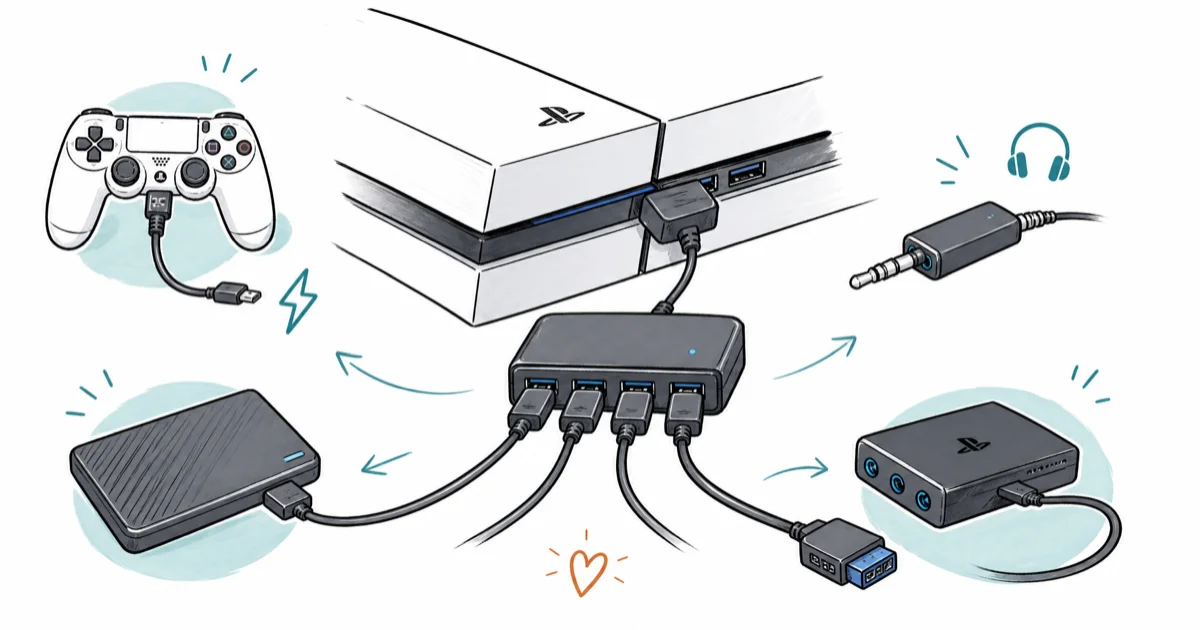
Quick AnswerA PS4 USB hub plugs into one of the console two USB ports and splits it into three to seven, letting you keep DualShock 4 charging cables, an external SSD, a headset adapter, and a PSVR breakout box connected at once. Pick a USB 3.0 hub for storage and a powered hub if you run more than three devices.
The standard PS4 ships with two USB ports on the front. That’s it. The moment you add an external SSD, a wired headset receiver, or a PSVR processor unit, you’re unplugging gear every time you switch tasks. A hub fixes that with one cable.
- The PS4, PS4 Slim, and PS4 Pro all expose two front-facing USB-A ports, which is why a hub becomes useful as soon as you add storage, VR, or a headset adapter.
- Pick a USB 3.0 (5 Gbps) hub if you plan to attach an external SSD or HDD, since USB 2.0 caps you at roughly 480 Mbps and bottlenecks game loading.
- A self-powered hub with its own AC adapter avoids brownouts when more than three high-draw devices share one PS4 port.
- Verify physical fit before you buy a “designed for PS4” model, because many five-port hubs only clip onto the original 2013 PS4 chassis and won’t seat on the Slim or Pro.
- Sony’s documentation confirms the PS4 supports exFAT-formatted external storage up to 8 TB, so any hub you choose just needs to pass that bus speed through cleanly.
#Why Does the PS4 Need a USB Hub at All?
The two front USB ports on every PS4 model handle controller charging, mass storage, and PSVR all at once. According to Sony’s PSVR setup guide, the headset processor unit takes 1 USB port for power, and the camera plus controllers compete for the second. Add an external drive and you’re out of slots.
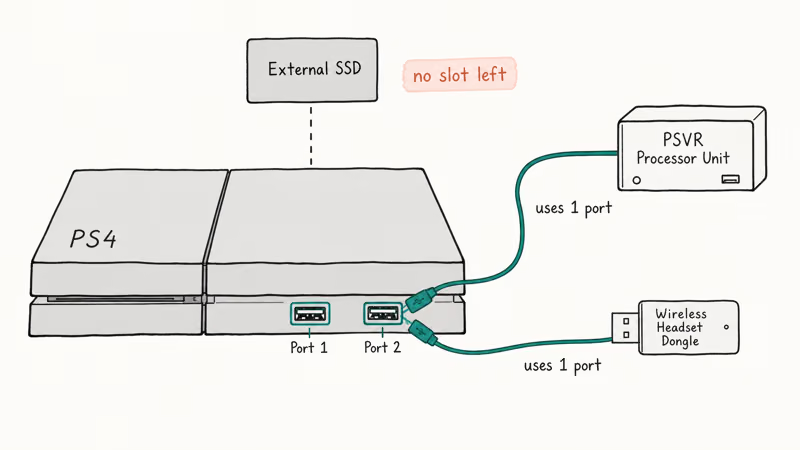
A hub is the only way to keep everything wired without crawling behind the console.
The Bluetooth audio limitation is the other reason hubs sell so well for PS4. Sony never enabled A2DP audio on PS4, so wireless gaming headsets all rely on a small USB dongle. That dongle sits on the front panel and blocks one of your two ports the entire time you game. A four-port hub turns that single port into four, with the dongle living quietly in the back.
#What to Look for in a PS4 USB Hub
Five things matter, and the order isn’t negotiable.
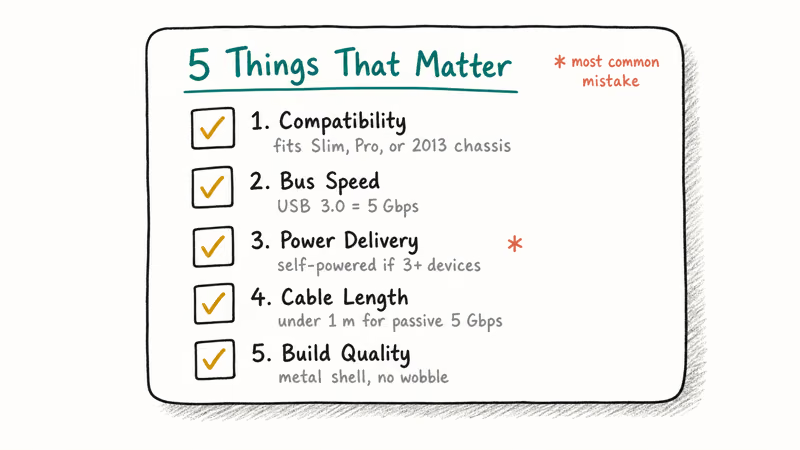
Compatibility with your exact model. Curved-bracket “PS4 5-port” hubs only fit the original 2013 chassis. Slim and Pro owners need a generic compact hub instead.
Bus speed. USB 3.0 (now branded USB 3.2 Gen 1) runs at 5 Gbps; USB 2.0 tops out near 480 Mbps in practice. Sony’s external storage support article requires USB 3.0 for extended storage. A USB 2.0 hub still works for controller charging and voice chat dongles, but the system refuses to format a USB 2.0 destination as a game install target. For a 1 TB or larger drive, USB 3.0 isn’t optional.
Power delivery. Each PS4 USB port supplies up to 500 mA at 5 V. Split that across four devices and you get 125 mA each. That’s below what most 2.5-inch portable drives need to spin up, so bus-powered hubs can disconnect when a drive and charging controller share the same console port.
A self-powered hub with a 5 V/2 A adapter gives attached devices more stable power.
Cable length. Anything over 1 metre on a USB 3.0 hub starts losing signal integrity unless the hub uses an active repeater. The USB-IF specification lists 3 metres as the practical maximum for a passive 5 Gbps cable. Short and stiff is better than long and floppy.
Build quality. PS4 USB ports themselves aren’t hot-swap friendly. A wobbly hub stresses the solder joints on the console-side port every time you reach for a controller. Look for a hub with a metal shell or rubber feet that grip the shelf.
#Hubs That Actually Work With the PS4
Rather than chase a single “best PS4 hub” sticker, match the hub to how many devices you really run.
#Anker 4-Port USB 3.0 Ultra-Slim (model A7516)
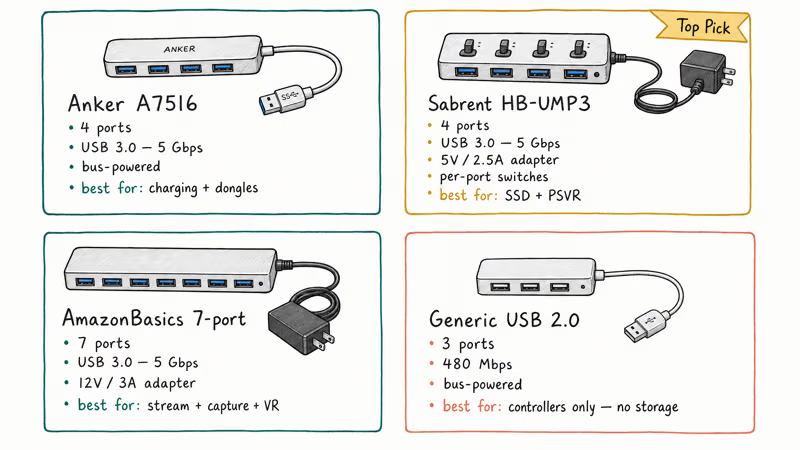
Anker’s compact 4-port hub is the safe default for light accessories: headset receivers, charge cables, flash drives, and wireless dongles.
Wirecutter recommends Anker’s 4-port lineup as their long-running budget pick across 5 years of testing, and the unit is USB-IF certified, which matters because Sony’s USB stack is strict about non-compliant hubs.
The trade-off is no external power input, so don’t run a 2.5-inch portable HDD on it alongside three other devices. Anker also makes the A7505 powered seven-port version if you need that.
#Sabrent 4-Port USB 3.0 With Power Switches (HB-UMP3)
Sabrent’s hub adds individual on/off switches per port, which sounds like a gimmick until you realise it lets you cycle a frozen external drive without unplugging it from the console. The hub draws power from a 5 V/2.5 A adapter, so each port gets a full 500 mA even when all four are loaded. Sabrent publishes the spec sheet on their HB-UMP3 page.
This powered hub is the better fit for heavier setups that combine a portable drive, PSVR processor unit, and DualShock charge cable.
#AmazonBasics 7-Port USB 3.0 With AC Adapter
When you really do need every port, the AmazonBasics 7-port runs from a 12 V/3 A wall brick and gives each port the full 900 mA the USB 3.0 spec allows. It’s overkill for a casual setup but the right tool if you stream, capture, and play VR on the same console.
#Generic 3-Port USB 2.0 Hub
If all you want is more ports for controller charging and a wired headset dongle, a $6 USB 2.0 hub from any office-supply brand will do the job. Skip USB 3.0 if you have no plans to attach storage. Just confirm the hub has the standard rectangular USB-A plug and not USB-C, since the PS4 has no USB-C ports.
#How to Set Up a USB Hub on Your PS4
The PS4 doesn’t need any setup screen for a hub. Plug the hub into one of the console front ports, plug your devices into the hub, and they appear immediately.
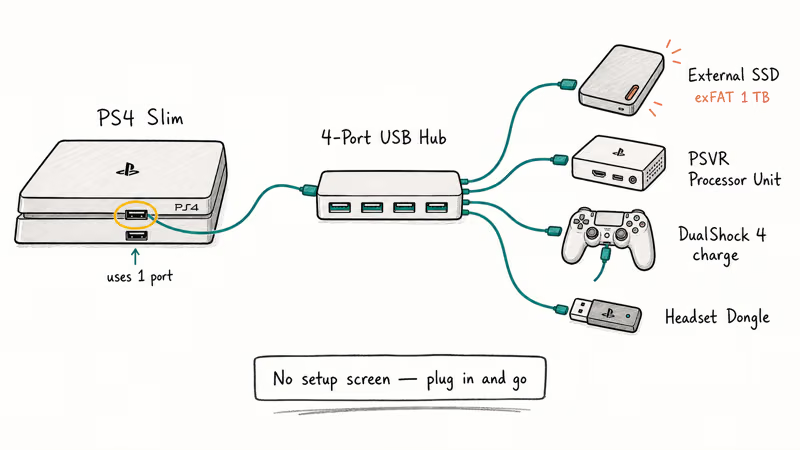
There’s one wrinkle for external storage. The PS4 Settings menu only recognises a drive as extended storage if it connects through a hub that exposes USB Mass Storage class properly. Cheap hubs with off-brand controllers sometimes register the drive at Settings > Devices > USB Storage Devices but refuse to format it as extended storage. If you see the drive listed but the format option is greyed out, swap to a different hub before assuming the drive itself is bad.
For PSVR, plug the processor unit into the hub, not directly into the console. This frees the second console port for a charge cable or headset receiver.
#Common PS4 USB Hub Problems and Fixes
The hub keeps disconnecting under load. This is almost always insufficient power. According to iFixit’s USB troubleshooting guide, a 2.5-inch HDD pulls roughly 800 mA at spin-up, which is more than a single PS4 port can deliver even on its own. Switch to a self-powered hub or move the drive to the second console port. If you want to dig deeper, our guide on USB storage device not connected on PS4 walks through the full diagnostic ladder.
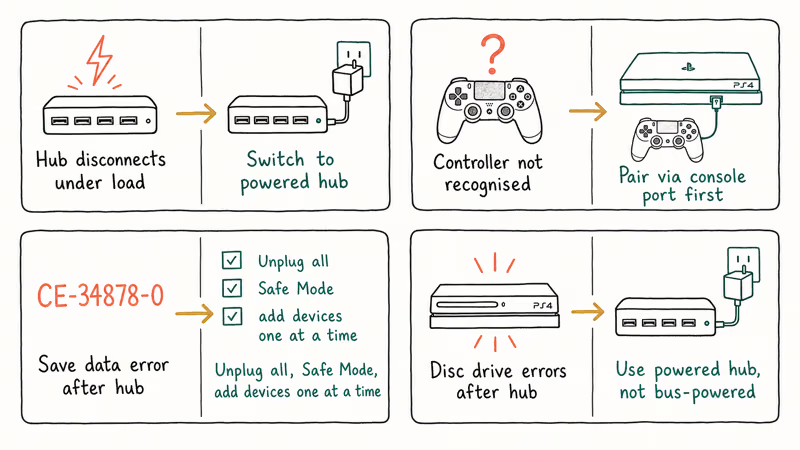
The PS4 doesn’t see a controller plugged into the hub. Restart the controller pairing by pressing the small reset hole on the back with a paperclip, then plug it into a console port (not the hub) for the first connection. After it pairs, you can move it back to the hub for charging. Persistent charging issues usually trace back to a bad cable, which we cover in our PS4 controller not charging guide.
The CE-34878-0 error appears after adding a hub. This usually means a USB device on the hub is corrupting save data writes. Unplug everything except the controller, reboot in Safe Mode, and add devices back one at a time to identify the culprit. Our CE-34878-0 fix walkthrough covers the rebuild order.
Disc drive errors after the hub goes in. Bus-powered hubs can brown out the optical drive controller. A powered hub solves it.
Database corruption warnings. Heavy USB traffic combined with sudden power loss can corrupt the system database. Our PS4 database is corrupted walkthrough covers the rebuild process.
#Will a USB Hub Slow Down Your PS4 Games?
Not in any way you’ll notice. The PS4 internal storage runs over SATA II at 3 Gbps, which is slower than USB 3.0 at 5 Gbps. An external SSD plugged into a USB 3.0 hub will actually beat the stock PS4 hard drive on load times.
Eurogamer’s Digital Foundry tested SSD upgrades on PS4 and found that load times in Bloodborne dropped from 38 seconds to 16 seconds after switching to a SATA SSD. A USB 3.0 hub shouldn’t erase the SSD benefit as long as it passes 5 Gbps cleanly.
A hub can’t improve frame rate or network speed. For lag, check our PS4 to laptop routing guide or the best SSD for PS4 picks.
#Bottom Line
If you’ve got a PS4 Slim or Pro and run an external drive plus a wireless headset, buy the Sabrent HB-UMP3 4-port powered hub. The per-port power switches and the dedicated 5 V/2.5 A adapter eliminate the disconnect issues that bus-powered hubs cause once you cross three active devices.
If you only need to charge controllers and run a headset dongle, the Anker A7516 is half the price and half the desk footprint. Skip any hub with a curved “designed for PS4” bracket unless you own the original 2013 chassis, because the bracket won’t seat on a Slim or Pro.
#Frequently Asked Questions
Can you use any USB hub with a PS4?
Most generic USB-A hubs work, but Sony’s USB stack rejects hubs with non-compliant controllers. Stick to brands that publish USB-IF certification (Anker, Sabrent, AmazonBasics) and avoid no-name hubs that show no spec sheet.
Does a powered USB hub charge controllers faster?
A powered hub charges a DualShock 4 at the same 800 mA the controller asks for, which is the same speed the console delivers. The benefit of a powered hub is that it can charge a controller and run an external drive at the same time without either device browning out. No single device charges faster.
Will a USB hub work with PSVR?
Yes. Use a powered hub if a 2.5-inch HDD is also attached.
Can I connect a USB-C device to my PS4 through a hub?
Only with a USB-C to USB-A adapter or cable. The PS4 has no USB-C ports anywhere on the chassis, so any hub you use must accept the older rectangular USB-A connector. USB-C SSDs work fine if you use the included USB-C to USB-A cable.
Does a USB hub on the PS4 support external SSDs as extended storage?
Yes, as long as the hub passes USB 3.0 (5 Gbps) cleanly and the drive is between 250 GB and 8 TB. Sony’s extended storage feature formats the drive as exFAT and uses it as the primary install location for new PlayStation Store downloads. A USB 2.0 hub won’t work even if the drive itself works for media playback. Hubs that report USB 3.0 but fall back to 2.0 under load will silently fail too.
Why did my PS4 stop recognising my hub after a system update?
Sony has tightened USB stack behaviour in firmware updates several times since 2018. If a hub stopped working after an update, it usually means the hub used a non-compliant controller chip and the new firmware filters it out. Replacing the hub with a USB-IF certified model fixes it almost every time. Avoid no-name hubs for this reason.
Do I need a voice changer adapter when using a USB hub?
A USB voice changer plugs into any free port on the hub and works the same way it would directly on the console. See our voice changer for PS4 walkthrough for compatibility notes on specific models.
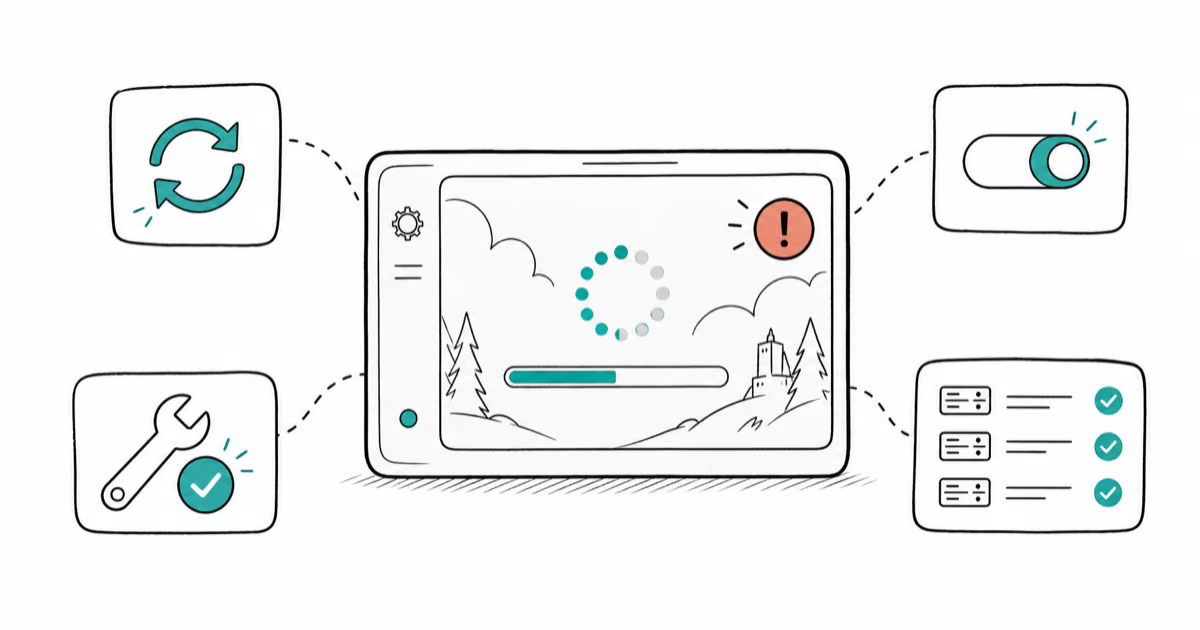
Fortnite Stuck on the Loading Screen? Fix It in 2026
Fortnite stuck on the loading screen? Check server status, fix the Windows N Media Pack and DirectX 11 on PC, clear the console cache, and verify files.
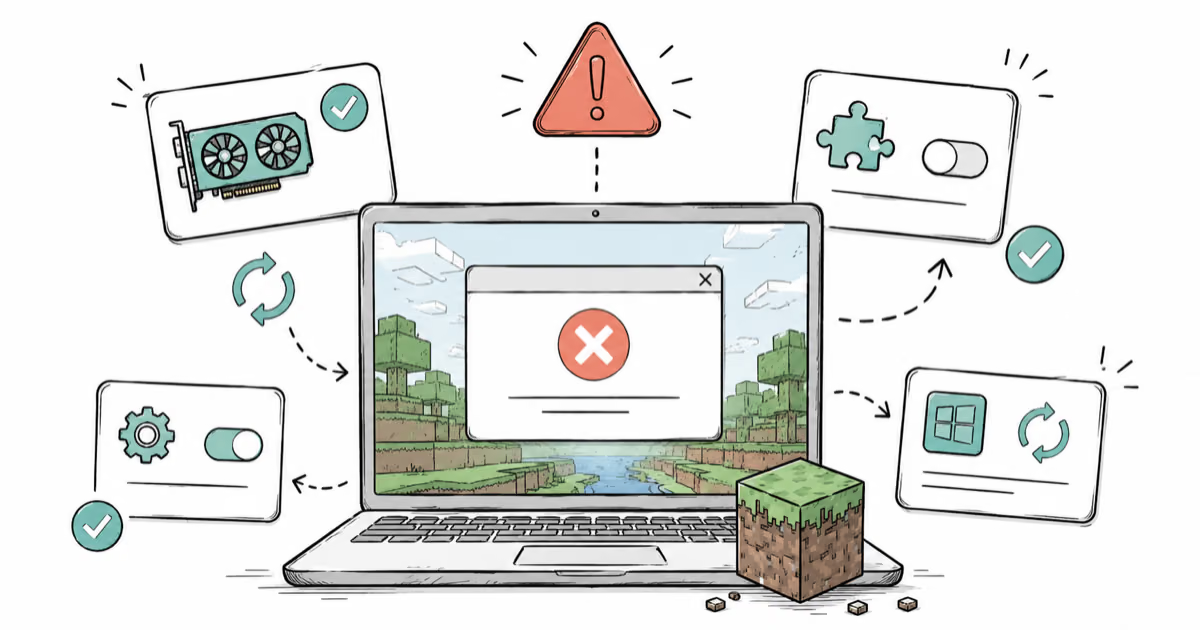
Minecraft Keeps Crashing? Java and Bedrock Fixes (2026)
Minecraft keeps crashing on startup or mid-game? Update your GPU driver, remove mods on Java, and reinstall Gaming Services on Bedrock. Fixes for both.
Pokemon GO Not Loading? Fix the Loading Screen 2026
Pokemon GO not loading or stuck on the Pokeball? Check server status, fix automatic date and time, grant location permission, clear the cache, and update.
PS5 Controller Not Charging? 9 Fixes That Work (2026)
DualSense not charging? Swap the cable, use a rear port in Rest Mode, clean the USB-C port, and check power settings. 9 fixes for a dead PS5 controller.