PS4 Database Is Corrupted: Fix Error CE-37704-1 in Safe Mode
Fix the PS4 'database is corrupted' error (CE-37704-1) with a Safe Mode rebuild that keeps your saves. Backup, initialize, and HDD upgrade options too.
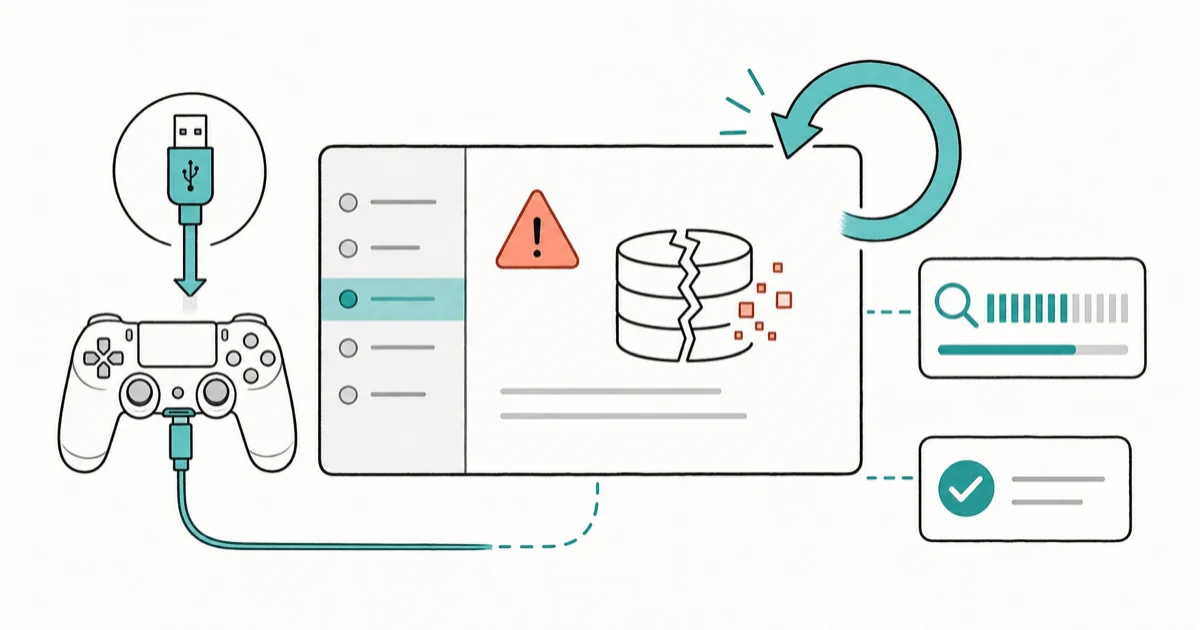
Quick AnswerHold the PS4 power button for 7 seconds to enter Safe Mode, plug the controller in via USB, and pick option 5, Rebuild Database. The scan keeps your games and saves and usually finishes in 1 to 4 hours.
Your PS4 throws error CE-37704-1 and refuses to load past the Safe Mode prompt.
Don’t panic. A Safe Mode rebuild fixes this in roughly nine cases out of ten, your saves stay put, and the whole thing usually wraps up before bedtime. The cases where it doesn’t typically mean a full initialize or, if the drive is actually failing, a swap to a 2.5-inch SATA SSD; we’ll walk through both paths in detail so you don’t lose your trophies along the way.
- Error CE-37704-1 means the file index, not your games, is broken; rebuilding the database in Safe Mode fixes most cases without deleting saves.
- Hold the power button for 7 seconds (two beeps), connect the controller via USB, then pick option 5, Rebuild Database.
- Back up saves to PS Plus cloud or a FAT32/exFAT USB drive before any Initialize PS4 step, which wipes everything.
- If the rebuild loops or fails twice in a row, the stock 5,400 RPM HDD is usually dying; a 2.5-inch SATA SSD swap takes about 30 minutes.
- Sudden power loss during a system update is the single biggest trigger; an uninterruptible power supply pays for itself after one near-miss.
#What Error CE-37704-1 Actually Means
The PS4 keeps an internal index of every game, save, screenshot, theme, and trophy on the drive. When that index drifts out of sync with the actual files, the system shows CE-37704-1 and refuses to boot to the home screen. According to Sony’s official PS4 Safe Mode guide, the console drops you straight into Safe Mode so you can repair the drive before anything else loads.
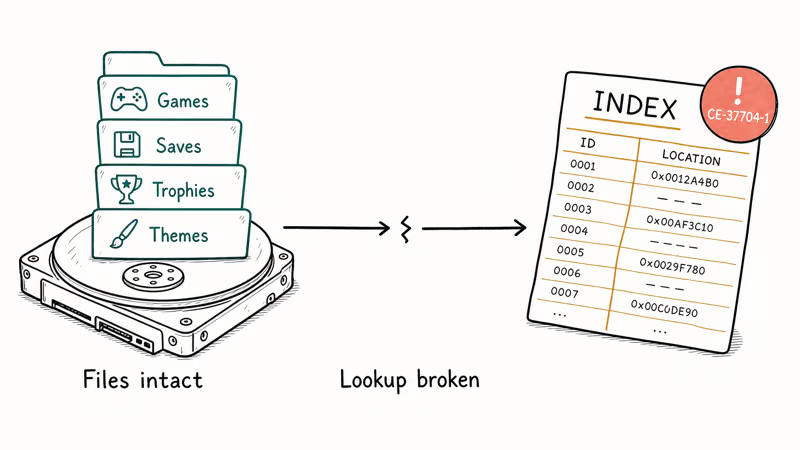
The index is the casualty, not the games themselves. Rebuild Database is designed to repair the file index while keeping installed games, saves, trophies, and themes intact. Initialize PS4 is the destructive option.
Two patterns trigger it most often. One is a power cut during a system software update, which leaves the index half-written and the file allocation tables inconsistent in a way the boot loader notices on the next start. The other is bad sectors developing on the original 5,400 RPM mechanical drive, which is documented in detail on the Wikipedia entry for hard disk drive failure. Both paths land on the same error code.
#How to Rebuild the PS4 Database in Safe Mode
Rebuild Database is the first thing to try. It’s non-destructive, it takes between an hour and most of an afternoon, and it resolves the bulk of CE-37704-1 reports.
#Step 1, Force a Full Shutdown
Stuck on the error screen? Hold the front power button down until you hear one short beep, then a longer beep at about the 7-second mark. The system is now off, not in rest mode.
#Step 2, Boot Into Safe Mode
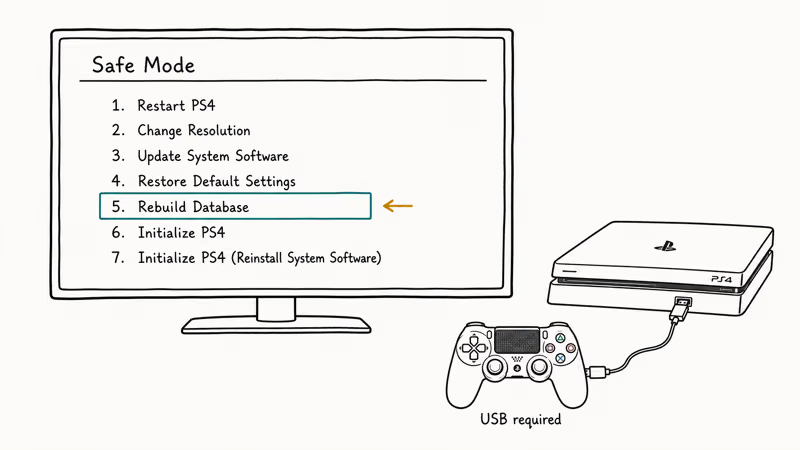
Press and hold the power button. The first beep fires the moment you press; keep holding for the second beep, which lands at about the 7-second mark. Release on that second beep and you’ll see the black-and-blue Safe Mode menu instead of the normal home screen, with seven options listed in a vertical column. If you instead see the regular boot animation, you released too early; power off again with a long press and retry.
#Step 3, Connect the Controller via USB
Wireless pairing is disabled in Safe Mode, so the controller has to be wired. Plug your DualShock 4 into one of the front USB ports with the cable that shipped with the console, or with any data-capable USB-A to micro-USB cable from a phone or e-reader; charge-only cables (the thin ones bundled with cheap battery packs) won’t enumerate. Press the PS button to wake it.
#Step 4, Pick Option 5, Rebuild Database
The menu lists seven options. Use Option 5: Rebuild Database. Sony’s Safe Mode option list confirms this is the correct entry; option 7, Initialize PS4, will wipe the drive and is reserved for when the rebuild fails.
Press X to start. A blue progress bar appears with an estimated time. The wait depends on how much data is on the drive, the drive’s health, and whether the console uses a stock HDD or an SSD.
Don’t unplug the controller, don’t press any buttons, and don’t pull power. The console will restart on its own when finished.
#Step 5, Verify the Fix
After reboot, open Settings, go to Storage, and confirm the system reads your installed games and saves. Launch a recent save to check write integrity. If everything loads, you’re done.
If the error returns within a week, skip ahead to the HDD section. The drive is dying.
#Backing Up Saves Before You Initialize
Skip this section if Rebuild Database worked. If it didn’t, Initialize PS4 is the next step, and that wipes everything: saves, themes, screenshots, video clips, accounts, the entire drive. Back up first.
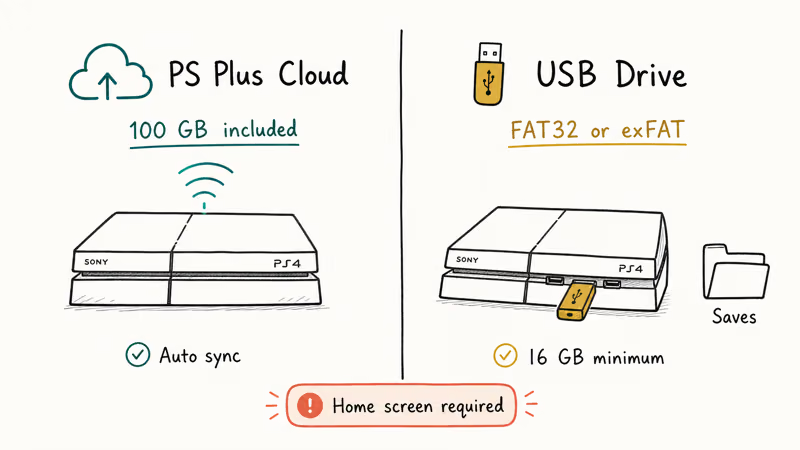
You have two routes.
#PlayStation Plus Cloud Storage
Active PS Plus members get 100 GB of cloud space for save data. Saves auto-upload by default, but only when the system is on (or in rest mode with Stay Connected to the Internet turned on). According to Sony’s PS Plus cloud save documentation, you can also force an upload manually from Settings, Application Saved Data Management, Saved Data in System Storage, Upload to Online Storage.
If your console won’t boot past Safe Mode, cloud save uploads aren’t possible from this state. You’d need a working boot, which is exactly what you don’t have. Cloud only helps if you’ve been letting it auto-sync all along.
#USB Backup, the Method That Always Works
A blank USB drive formatted FAT32 or exFAT is the reliable path. 16 GB handles most libraries; pick larger if you record clips.
The catch: full USB save backup needs the system to boot to the home screen. If you’re stuck in Safe Mode, try Option 6: Restore Default Settings first; it sometimes brings you to the home screen without a full wipe. From there, plug the USB in, go to Settings, Application Saved Data Management, Saved Data in System Storage, Copy to USB Storage Device.
If even Restore Default Settings fails to bring up the home screen, your only options are Initialize PS4 (lose saves) or pull the drive and try data recovery on a PC, which is expensive and not guaranteed. This is exactly why PS Plus cloud sync, set and forgotten, is worth the subscription.
For the trickier disc-detection path that sometimes pairs with this error, check our walkthrough on the PS4 unrecognized disc error.
#When the Rebuild Fails Twice, Replace the Drive
Two failed rebuilds in a row is the signal. The stock 5,400 RPM 2.5-inch SATA HDD that ships in every PS4 has a 5 to 7 year design life. Many launch consoles are now past that. A new drive, ideally a SATA SSD, fixes the underlying read failure permanently.
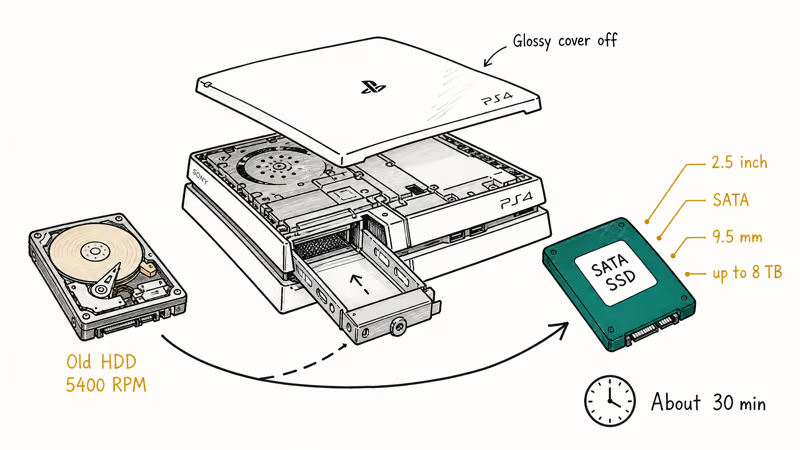
Sony documents the supported internal drive specs clearly: 2.5-inch SATA, 9.5 mm or thinner, capacity up to 8 TB. A modern 1 TB SATA SSD can make the console feel more responsive than an aging mechanical drive. Spec-matched picks live in our best SSD for PS4 breakdown.
The physical swap is straightforward. Slide off the glossy top cover, undo the single screw with the PlayStation symbol, slide the drive caddy out, swap drives, reinsert. Then download the full PS4 reinstallation file (around 1.2 GB; not the smaller update file) from Sony’s site to a USB stick, boot into Safe Mode, and pick Option 7, Initialize PS4 (Reinstall System Software). The console writes a fresh OS to the new drive in under 30 minutes.
Bonus: a fresh SSD can reduce the slow menu lag and long cold boots that creep in as the stock HDD ages, even on consoles that haven’t hit corruption yet.
#How Do You Stop CE-37704-1 From Coming Back?
Once you’re past it, four habits keep this error from returning. None of these take more than a minute of attention.
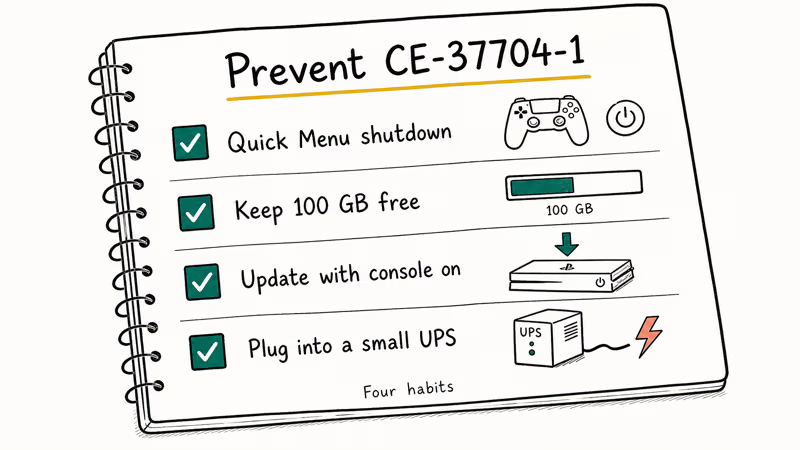
Always shut down through the Quick Menu. Press and hold the PS button on the controller, then pick Power, then Turn Off PS4. Pulling the wall plug while the console is updating or saving is the single most common cause of database corruption.
Keep at least 100 GB free. A near-full drive forces the system to fragment writes across remaining sectors, which both slows downloads and raises the odds of a half-written save during an autosave or trophy pop. Sony’s PS4 storage management guide recommends regular cleanup of unused games; removing games you haven’t touched in a while keeps the headroom comfortable without much thought.
Skip rest mode for system updates. Rest mode auto-updates usually work fine, but the rare ones that fail mid-write are where corruption begins. When a major firmware update drops, run it manually from Settings, System Software Update, with the console fully on.
Use a small UPS during storms. A 600 VA uninterruptible power supply costs about $70 and gives you 5 to 10 minutes of runtime, which is enough to shut the console down cleanly if power goes out.
If you’re juggling external storage, our PS4 USB hub guide covers powered options that don’t yank current from the console mid-write.
#What if Rebuild Database Itself Crashes?
If the progress bar freezes for more than 30 minutes without moving, or the console restarts itself mid-rebuild and lands back at CE-37704-1, the drive’s read errors are too severe for the firmware to work around.
The honest answer: you’re at the drive replacement step. Trying the rebuild a third time risks worsening the surface damage and making data recovery harder if you ever try to pull files off the drive on a PC.
A faster middle path before swapping hardware is Option 3, Update System Software from Safe Mode (USB stick with the latest full installer). This sometimes resolves cases where a botched update is the actual culprit, because the firmware reinstall rewrites the system partition cleanly. It takes about 15 minutes and doesn’t touch your saves.
If even that returns CE-37704-1, the hardware fix is unavoidable. Two related codes that often show up alongside this one are CE-34878-0 (application crash) and the dreaded PS4 white light of death (full hardware fault).
#Bottom Line
Try Rebuild Database first. Hold power for 7 seconds, USB the controller, pick option 5, walk away for a couple of hours. That fixes most CE-37704-1 reports.
If the rebuild fails twice or returns within a week, the drive is the issue. Back up saves to a FAT32 USB if the home screen still loads, then swap in a 2.5-inch SATA SSD and reinstall the system software. Plug the console into a small UPS afterward and this error becomes a one-time event, not a yearly ritual.
#Frequently Asked Questions
Will rebuilding the database delete my games or saves?
No. It rebuilds the file index, not the files. Initialize PS4 is the destructive option; Rebuild Database is safe.
How long does the rebuild take on a full 1 TB PS4?
Plan for 2 to 4 hours on a near-full 1 TB stock HDD. Lighter libraries (under 300 GB used) finish in 30 to 60 minutes. SSD-equipped consoles finish faster on the read side but the rebuild is bottlenecked by the index write speed, so the gain is smaller than you’d expect, maybe 20 to 30 percent.
Why does CE-37704-1 keep coming back after a successful rebuild?
Recurring corruption almost always means the drive itself has bad sectors. The rebuild succeeds because it can find a clean spot to write the new index, but normal gameplay writes hit the bad regions again and re-corrupt the database within days. Replacing the drive is the only permanent fix.
Can I use my PS4 while the database is rebuilding?
No. The screen is locked, the controller is dead to inputs, and any forced shutdown makes things worse. Walk away.
What’s the difference between Rebuild Database and Initialize PS4?
Rebuild Database (option 5) reorganizes the file index, keeps everything intact, and runs in 1 to 4 hours. Initialize PS4 (option 7) wipes the entire drive, reinstalls system software, and gives you a factory-fresh console with no games, no saves, no accounts. Always try option 5 first; option 7 is the last resort.
Do I need PS Plus to back up my saves before initializing?
No. PS Plus auto-syncs saves to 100 GB of cloud storage, which is the easiest route. Without it, copy saves to a FAT32 USB drive manually, but only if the home screen still loads.
Is it worth swapping the stock HDD for an SSD even if I don’t have CE-37704-1?
For active players, yes. A SATA SSD can make booting, menu navigation, and loading screens feel faster than an aging stock HDD. It also avoids the mechanical wear that triggers CE-37704-1 in the first place.
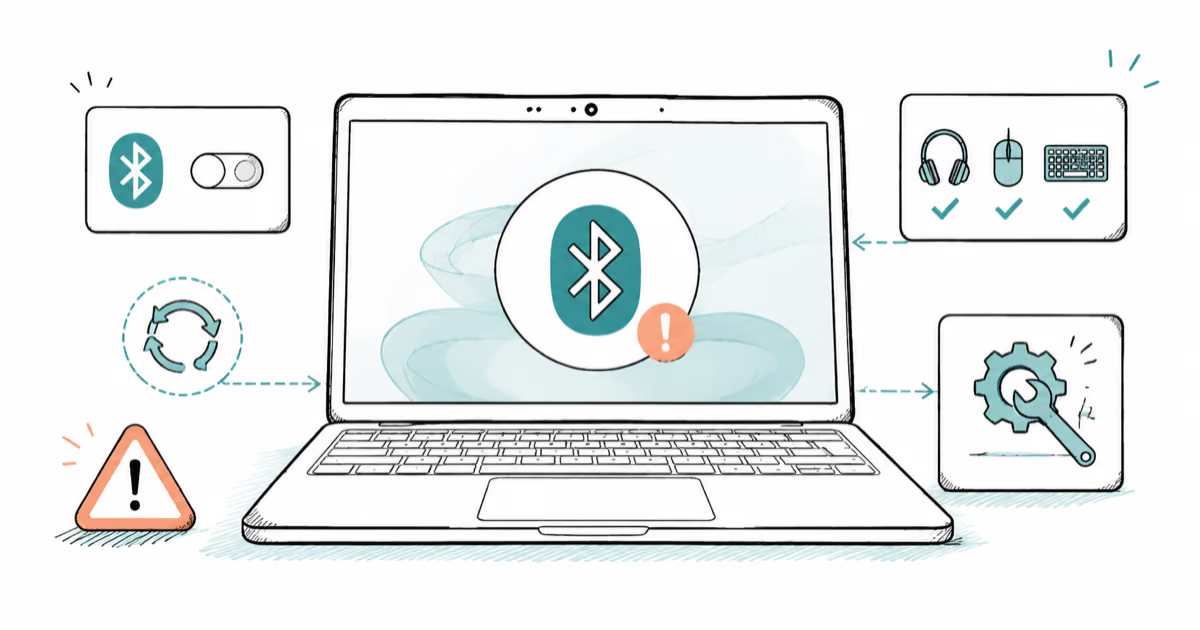
Bluetooth Not Working on Snapdragon X? Fixes for 2026
Bluetooth not working on your Snapdragon X Copilot+ PC? Generic audio, mice, and keyboards work, but vendor apps often lack an ARM build. Fixes inside.
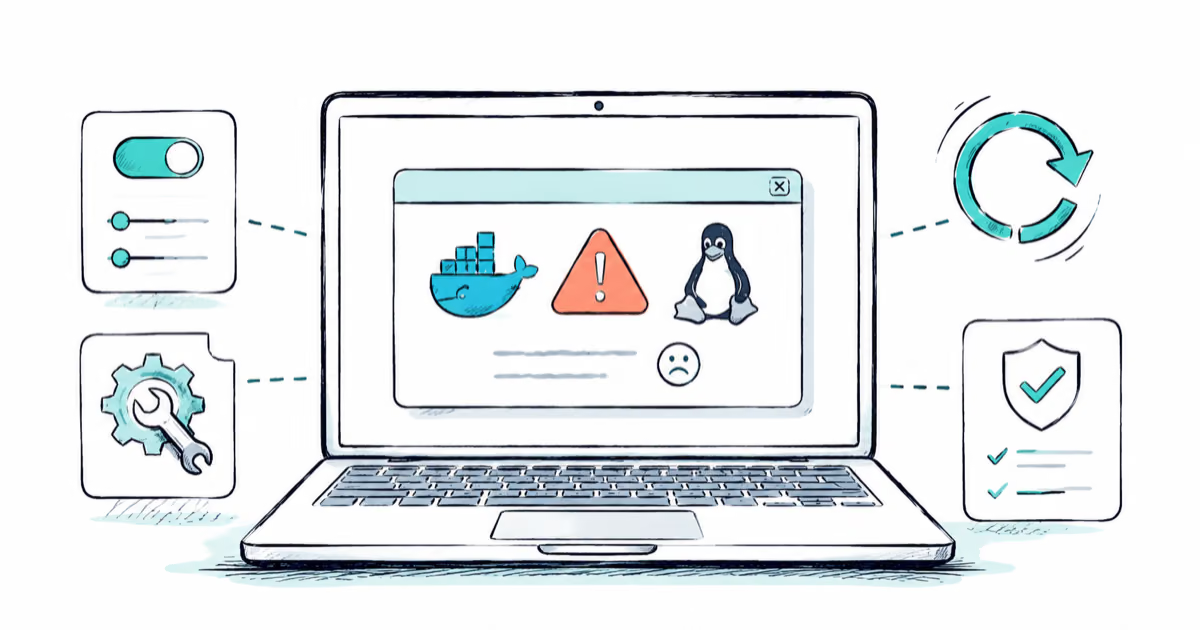
Docker Desktop and WSL2 Not Working on Snapdragon X? Fix It
WSL2 runs fine on Snapdragon X, but Docker Desktop ARM is Early Access and throws WSL errors. Use WSL2 plus native ARM64 Ubuntu and Docker Engine.
Does iTunes Work on Snapdragon X? ARM Windows 11 Guide
Yes, iTunes runs on Snapdragon X laptops through Prism emulation, but the Apple Devices app is the smoother route. Here is what to install on ARM.
Does OBS Studio Work on Snapdragon X? ARM64 Build Guide
Yes, OBS Studio has an experimental ARM64 build since version 31.1, but x64 plugins won't load and hardware encoding is missing. Here is what works.