Pokemon GO Spawn Maps 2026: Legitimate Tools vs Illegal
Compare safe Pokemon GO spawn and event maps in 2026 — LeekDuck, Silph Road, Nest Atlas — versus illegal live scanners that violate Niantic ToS.
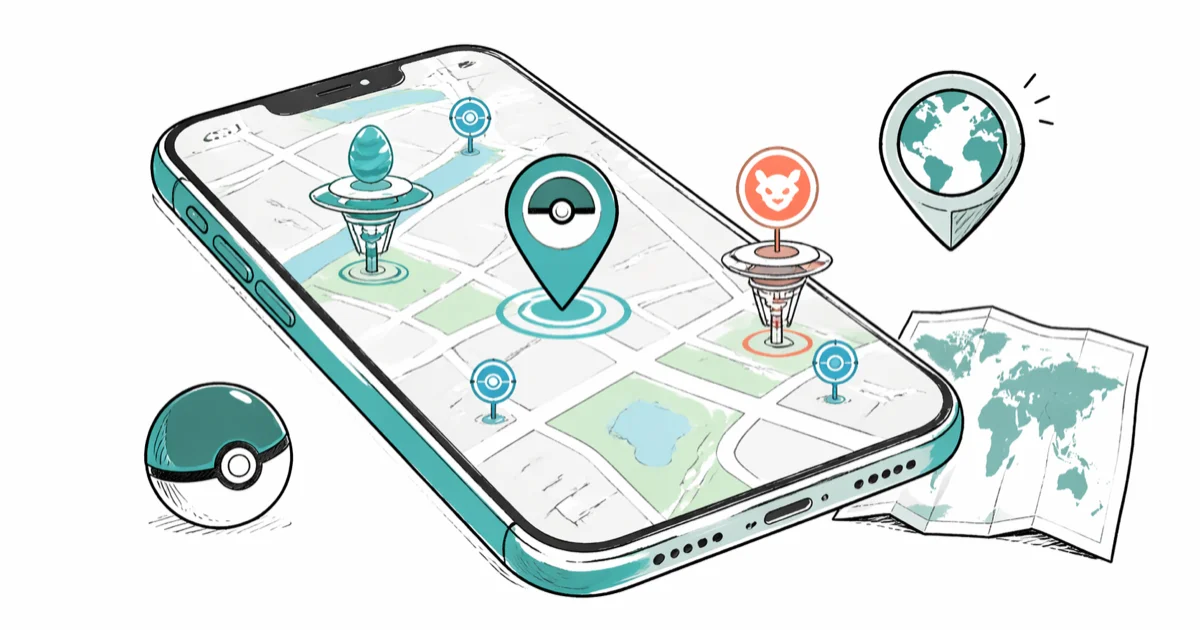
Quick AnswerUse LeekDuck for event maps, Silph Road for nest research, and PokemonGOHub for monthly spawn pools. These are legitimate community tools. Skip any site claiming live spawn data, since Niantic API scraping violates the Terms of Service and risks a permanent ban.
There’s a clear line between Pokemon GO maps that are safe to use on your own account and the live spawn scanners that violate Niantic’s Terms of Service. The picture in 2026 is very different from the PokeFinder and FastPokeMap days. This guide separates the legitimate research and event maps from the illegal API scrapers that get accounts banned.
- LeekDuck, The Silph Road, PokemonGOHub, and Nest Atlas are legitimate community-research maps that don’t scrape Niantic data
- Niantic’s API isn’t public, so any site claiming “live spawn data” is using unauthorized API access
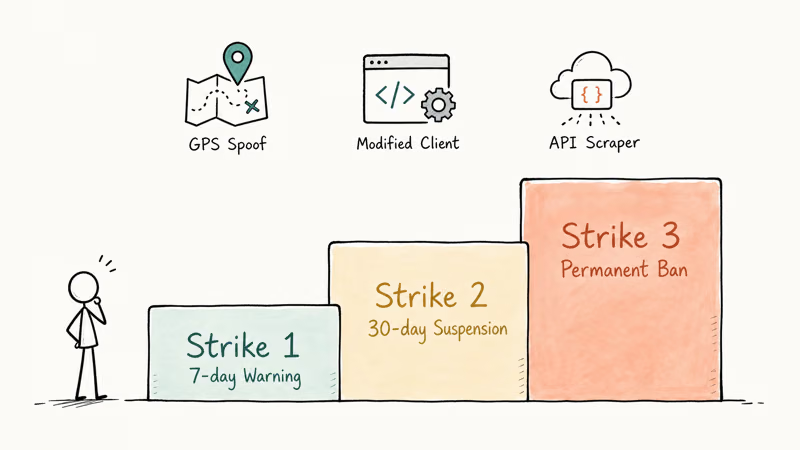
- Niantic’s three-strike enforcement still applies: warning at strike one, 30-day suspension at strike two, permanent ban at strike three
- The Silph Road website shut down in 2023, but silph.gg relaunched in 2024 with research-only event and nest data
- Real-time scanners and Discord live-spawn bots use the same illegal scraper tech behind a different interface
#What Counts as a Legitimate Pokemon GO Map?
A legitimate Pokemon GO map gets its data from one of three sources: Niantic’s official published event calendar, players who voluntarily submit reports through a Discord or web form, or research aggregated across player communities. None of those touch the game’s internal API.
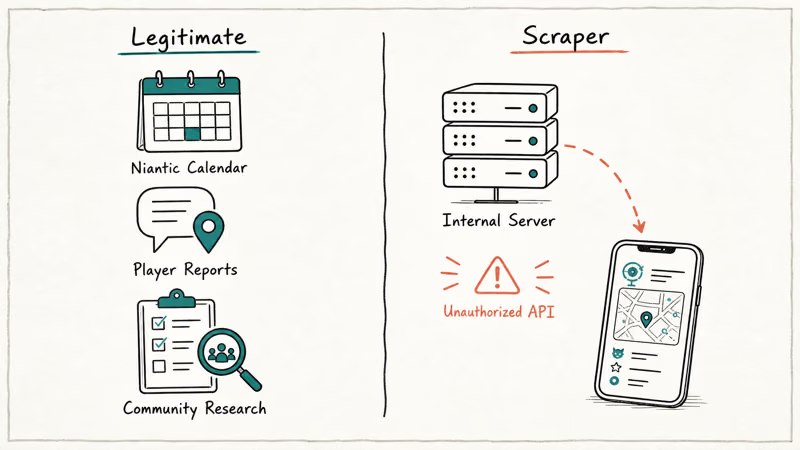
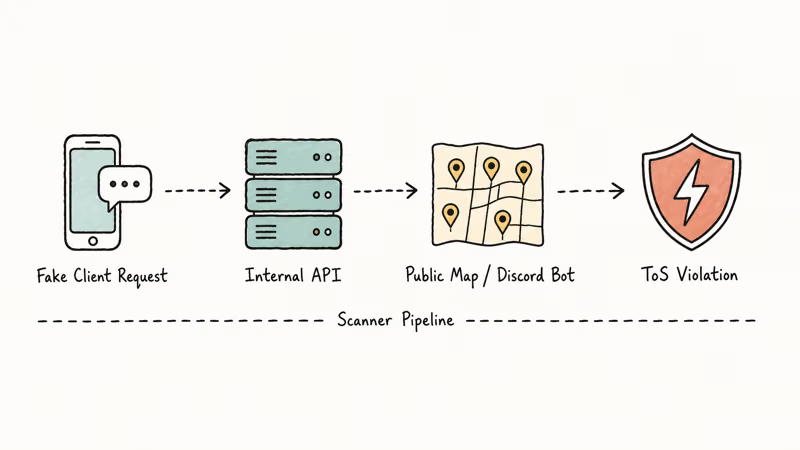
A live spawn scanner does the opposite. It sends fake client requests to Niantic’s servers, scrapes the response, and rebroadcasts the spawn data on a public map.
According to Niantic’s Gameplay Fairness Policy, the 3 violation tiers cover bots, scrapers, and any tool that talks to Niantic’s API without permission. That definition has not moved since the policy was first formalized in 2018, despite repeated lobbying from the spoofing community to carve out exceptions for “research” or “personal use” scrapers. Niantic’s position is that any unauthorized API call counts.
Event and research maps should never ask for your trainer login. Live-spawn sites often ask users to sign in with Google, geolocate the device, or install a companion app. That’s the tell, and legitimate tools never need your account.
#Best Legitimate Pokemon GO Maps in 2026
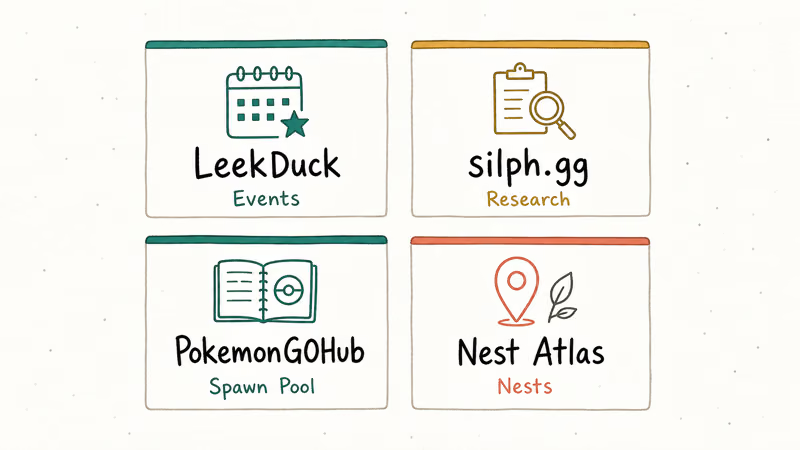
These are the safest maps for daily use. All four pull from player research, official Niantic announcements, or community Discord submissions. None scrape the API.
#LeekDuck
LeekDuck publishes event maps showing scheduled Niantic events: Spotlight Hours, Community Days, Raid Hours, and Go Battle League seasons. The data comes from Niantic’s official announcements, not spawn scanning.
LeekDuck also has a useful Pokemon eggs hatch chart.
Filter by current season, distance (2 km, 5 km, 7 km, 10 km), and rarity. Extremely good before you commit to a long walk.
#The Silph Road (silph.gg)
The original The Silph Road web tools shut down in May 2023. The community relaunched at silph.gg in 2024 as a research-only network, with no real-time spawn data.
Content covers nest research, weather boost analysis, raid hour participation data, and PVP meta reports, all from player-submitted research. Based on the Dexerto report on the original closure, Niantic pulled its ambassador-program sponsorship in 2023 and the team had no funding to keep the live data infrastructure online. The new silph.gg deliberately avoids that infrastructure entirely.
#PokemonGOHub
PokemonGOHub runs event guides, monthly spawn-pool changes, and research articles. Spawn pool refers to which species Niantic has flagged for boosted appearance during a specific window. That information is published by Niantic in event announcements and aggregated by Hub editors, so there’s no scraping involved.
Hub’s spawn-pool articles are best used as planning references, then cross-checked against the official in-game radar while you play.
Hub also has the most readable raid boss chart for current and upcoming weeks.
#Nest Atlas
Nest Atlas is community-reported nest data submitted through Discord. Each report represents a player who walked the location, observed which species was nesting, and submitted a report with timestamp and coordinates. No API scraping, no automated client.
Same model that powered the original Silph nest atlas, just on Discord rails.
The official Pokemon Go Friend Code Discords host regional channels where local trainers post nest swaps and rare spawn alerts. These are the closest thing to a live tracker that doesn’t break Niantic’s rules.
#Why Live Spawn Scanners Are Illegal
PokeFinder, FastPokeMap, and the modern clones with rebranded names all rely on the same technique: scrape Niantic’s unauthorized internal API, store the response, render it on a map. Niantic blocked the original API access in mid-2016 and has been enforcing against scraper tooling ever since.
The legal precedent is clear.
Unauthorized live-spawn projects remain fragile because they depend on access Niantic can revoke. The Pokemon Go overview is the durable game citation; that enforcement history is why most live-spawn projects went dark or moved to invite-only Discords.
Discord bots claiming live spawn alerts are the same tech wrapped in a different interface. The bot operator runs a scanner farm. The bot just relays the output to your server. Joining one and acting on the data still requires that someone is scraping Niantic’s API somewhere upstream, which violates the Terms of Service regardless of where you sit in the chain.
Some sites that previously hosted live scanners now claim to be “info only”, and you should exercise caution.
A few transitioned to safe research like silph.gg, but others rebranded the URL and still aggregate scanner output on a separate page. If a site shows individual spawn pins with timers and IV values for your current location, it’s scraping the API regardless of what the homepage says.
#How to Stay Safe While Using Pokemon GO Maps
Viewing an event map or research site never gets you banned.
Niantic can’t detect what website is open in your browser. The risk comes from what you do with the information and which categories of tool you connect to your account.
According to Niantic’s help center on Terms of Service violations, the 3-strike system uses 7-day, 30-day, and permanent ban tiers across 3 violation categories:
- GPS spoofing, using software to fake your device’s location
- Modified game clients, third-party APKs, IPAs, or mods that alter game behavior
- Unauthorized API access, bots, scrapers, and any tool that talks to Niantic’s servers without permission
The strike outcomes are unchanged from the 2018 enforcement update.
A warning lasting roughly 7 days with rare spawns hidden hits at strike one, a 30-day account suspension follows at strike two, and a permanent ban with no appeal lands at strike three. Crowdsourced event maps in your browser don’t fall into any of the three categories. Just don’t pair them with location spoofing tools or unofficial location-change apps, since that crosses straight into category one.
The safest option is the official method built into the game itself. Niantic’s in-game “Nearby” radar shows Pokemon at PokeStops within walking distance, and the Today View feature surfaces active events without any third-party tool. Use the official app for live information about your immediate surroundings, then use the legitimate research maps above for planning.
#Five Signals to Tell a Real Map From a Scraper Site
Five signals separate legitimate research maps from illegal scanners. Apply them before you trust any new site.
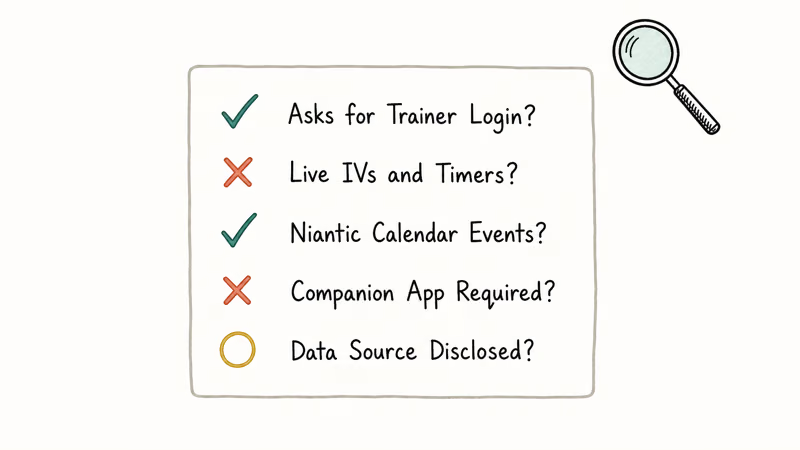
Does it ask for your trainer login? Legitimate research maps never need your Pokemon GO account. If a site asks you to sign in with your trainer account, walk away. The legitimate ones treat your Niantic credentials as untouchable, because they have no reason to want them in the first place.
Does it claim live spawn data with timers and IVs? Niantic doesn’t publish a live spawn API. Any site showing per-spawn IV percentages, despawn timers, and CP values is scraping unauthorized endpoints, period.
Does it show events from Niantic’s official calendar, or individual spawns? Event maps showing Spotlight Hours and Community Day boosts are pulling from announcements. Spawn maps showing individual Pokemon pins on your block right now are scraping. Easy distinction once you know to look for it.
Does it ask to install a companion app? Live scanners often distribute through unofficial APKs, mods, or IPAs to bypass app-store review. The official app stays the only safe install.
Where does the data come from? Legitimate sites say it explicitly: “submitted by Discord”, “from Niantic’s official announcement”, “compiled from research surveys”. Scrapers stay vague or claim “real-time community data”. The phrasing matters because honest community projects describe their pipeline openly, while scrapers obscure it on purpose.
#Tips for Getting the Most Out of Legitimate Maps
A few habits make the legitimate research maps far more useful, especially during events when official information moves fast.
Track nest rotations weekly. Nests rotate every two weeks, typically on Thursdays. Cross-check Nest Atlas Discord reports with your own scouting. Old nest data can go stale quickly on rotation day, particularly during Community Day weeks when nest behavior gets erratic and Discord reporting volume drops because players are out playing the event itself rather than logging nest swaps.
Use LeekDuck for event prep, not real-time hunts. Pull up the event map the night before a Community Day, plan your route around a high-PokeStop area, then put the phone down and play normally during the event itself.
Pair Hub spawn pools with the in-game radar. PokemonGOHub’s monthly spawn-pool article tells you which species Niantic boosted this month. The official “Nearby” radar in the app then tells you which of those are in walking distance of your current PokeStops. That combination is fully ToS-compliant and works well in urban areas with high PokeStop density.
Report what you find. Discord-based community maps stay accurate only when players contribute back. Takes 10 seconds.
Cross-reference for regional exclusives. Pokemon like Carnivine and Comfey only spawn in specific geographic zones. Research maps confirm the zone, but you still need to physically be in that region to catch them.
Some trainers attempt GPS teleportation to bypass these locks, which is GPS spoofing under category one and puts the account at serious risk of a permanent ban.
#Which Pokemon GO Tools Should You Avoid Entirely?
Three categories carry a real ban risk and should be avoided regardless of how the marketing is framed.
Live spawn scanners. Includes the historical PokeFinder and FastPokeMap, modern clones with rebranded names, and any site showing per-spawn IV percentages or despawn timers. According to GamesRadar’s report on Pokemon GO bans, Niantic has run multiple ban waves targeting scraper-tool users specifically, with the largest waves hitting in late 2024 and early 2025.
GPS spoofing apps. Tools that change your location in Pokemon GO place you in spawn-heavy zones you aren’t physically in. Niantic detects this through GPS jumps faster than the laws of physics allow, plus device-side fingerprinting.
Modified clients and Discord scanner bots. Any modified IPA or APK is category two, and Discord bots claiming live spawn alerts are category three because someone upstream is still scanning. Auto-walk hardware for egg hatching falls into a different category and is a common gray area, but the same risk principle applies. Read the Niantic policy before connecting any tool to your account. The broader Pokemon GO spoofing scene discusses these tools openly, but discussion isn’t endorsement.
Catching Ditto is a good example of why no map can save you anyway. Ditto disguises as common Pokemon and the disguise is rolled per player, so even a perfect spawn map can’t tell you which Pidgey is secretly a Ditto.
#Bottom Line
For 2026, the legitimate Pokemon GO map stack is LeekDuck for events, silph.gg for research, PokemonGOHub for monthly spawn pools, and Nest Atlas plus regional Discords for community nest reports. None of those touch Niantic’s API, none risk your account. Skip every site that claims live spawn data with IVs and timers, since that’s API scraping, full stop. Niantic’s enforcement record on scrapers since the 2020 Global++ settlement is consistent enough that the ban risk is real, not theoretical.
Pokémon GO Guide
#Frequently Asked Questions
Are Pokemon GO event maps considered cheating?
No. Event maps like LeekDuck publish data from Niantic’s own announcements.
Can you get banned for using a Pokemon GO research site?
Viewing a research site like silph.gg or PokemonGOHub in your browser carries zero ban risk. Niantic enforces against GPS spoofing, modified game clients, and unauthorized API access. None of those happen when you read a website. The risk only kicks in when you connect a third-party tool that talks to Niantic’s servers, installs a modified game client on your phone, or feeds your account a fake GPS coordinate.
What’s the safest Pokemon GO spawn map right now?
LeekDuck for scheduled events and Nest Atlas for community-reported nest swaps are the two safest choices. Both publish information that Niantic itself either announces or has no objection to players sharing.
Did The Silph Road permanently shut down?
The original thesilphroad.com data tools went offline between May and August 2023 after Niantic pulled the ambassador-program sponsorship. The community relaunched at silph.gg in 2024 with research articles only. The subreddit r/TheSilphRoad also remains active.
Why is there no public Pokemon GO API?
Niantic has never published a public spawn data API and shut down unofficial API access in mid-2016. The reason is anti-cheating. A public spawn API would make scanning trivial and undermine the walking-based gameplay loop that the game was designed around, and Niantic has been consistent in its public statements that the company has no plans to expose live spawn endpoints to third parties.
Do live spawn scanners still exist in 2026?
Some still operate. Usually on invite-only Discord servers or rebranded URLs.
Can spawn maps help find Raid battles legally?
Event maps showing scheduled Raid Hours and Elite Raids are legal because that schedule comes from Niantic’s official calendar. Maps claiming to show every active raid in your neighborhood with countdown timers are scraping. Stick to LeekDuck’s raid boss chart and the in-game radar for live raid information.
What about Discord bots that announce rare spawns?
Discord bots that announce rare spawns are doing the same thing a public scanner site does, just delivered through Discord. Someone upstream is still scraping Niantic’s API. Joining the server and acting on the alerts still violates Niantic’s Terms of Service even if you personally aren’t running the scraper.
Pokemon GO GPS Signal Not Found: 7 Proven Fixes (2026)
Pokemon GO GPS signal not found? Seven ordered fixes for Android and iPhone covering precise location, permissions, mock-location, and more.

TweakBox Pokemon GO Review: Does It Still Work in 2026?
TweakBox Pokemon GO usually fails. Learn why, what Niantic's ban policy means for your account, and which official alternatives to use instead.

How to Auto Walk in Pokemon GO: Safe and Risky Methods
Learn how Pokemon GO Adventure Sync credits real activity, why fake-step and GPS tools risk account strikes, and which official options to use.
How to Find Magikarp Nests in Pokemon GO (2026 Guide)
Find Magikarp nests in Pokemon GO using community maps, water biomes, and rainy weather boosts. Plus candy farming tips to evolve Gyarados fast.