iSpoofer Pokemon Go Shut Down: Risks and What to Do Now
iSpoofer Pokemon Go was shut down in 2020 after a Niantic lawsuit. Here is what happened, the real account ban risks, and legitimate alternatives.
Quick AnsweriSpoofer for Pokemon Go was shut down in 2020 after Niantic took legal action, and the official site no longer hosts a working installer. Using any GPS spoofing tool still violates the Pokemon Go Terms of Service and can lead to permanent account bans.
iSpoofer for Pokemon Go was once one of the most-searched location spoofing tools for iOS. The project was shut down in 2020 and the official download is gone. If you’ve landed here looking for the installer or a working mirror, the honest answer is that there is nothing left to install safely.
Trying anyway puts your account, your iPhone, and sometimes your wallet at real risk. This article explains what happened, why Niantic acted, and what trainers can do instead.
- iSpoofer for Pokemon Go was discontinued in 2020 after Niantic filed legal action, and the official iSpoofer domain no longer distributes a working iOS installer.
- Niantic’s three-strike discipline policy treats GPS spoofing as cheating and can permanently ban your Pokemon Go account on the third offense.
- Mirror sites and “still works in 2026” repackaged installers are the most common delivery vector for malware, sideloaded profiles, and paid support scams.
- Niantic added official remote tools after 2020, including Remote Raid Passes and Adventure Sync, that reduce the original incentive to spoof.
- Free or paid spoofing apps that promise to bypass detection can’t guarantee safety, since detection happens server-side on Niantic’s infrastructure.
#A Short History of iSpoofer for Pokemon Go
iSpoofer was a desktop application that tethered an iPhone over USB and faked the GPS coordinates the device reported to apps. The Windows and Mac builds worked alongside iTunes and supported joystick movement plus GPX route playback. A stationary phone would appear to be jogging through a city, while the real device sat on a charger at home and the player tapped the joystick on a laptop.
Trainer forums treated it as the default.
Between 2018 and 2020 it was the most widely recommended iOS spoofing tool in those communities. The main draw was that it didn’t require a jailbreak and was easier to set up than profile-based methods. iSpoofer also offered cooldown warnings, GPX trail import, and a “teleport” mode that let users jump between coordinates instantly. The app was developed by an independent team and was never affiliated with Niantic or The Pokemon Company.
The free tier was capped at a handful of movements per day.
The paid tier unlocked the most-used features and was billed monthly. By mid-2020 the paid version had grown to a sizeable Pokemon Go-specific subscriber base, which is one reason the lawsuit drew attention quickly inside trainer forums.
#Why Did iSpoofer Shut Down?
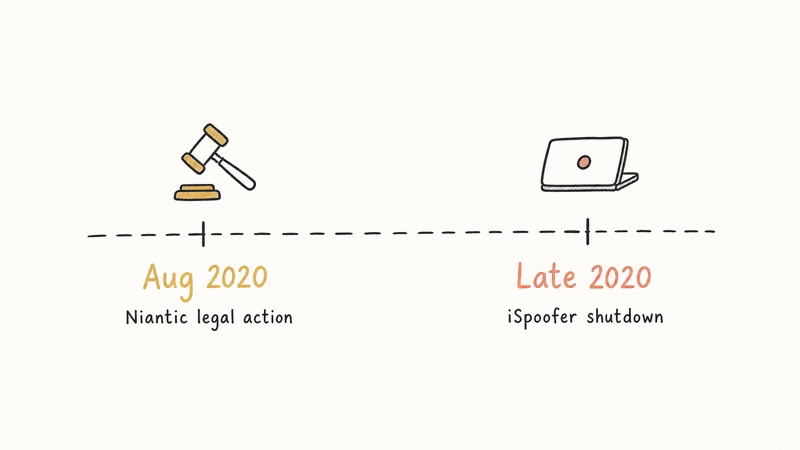
iSpoofer’s iOS version was discontinued in August 2020. The shutdown came after Niantic filed a lawsuit in the United States District Court for the Northern District of California, naming the iSpoofer developers alongside several other cheating tools. The complaint argued the spoofer violated Pokemon Go’s Terms of Service and damaged the game’s competitive integrity. Within weeks the iSpoofer team posted a notice on their website ending support for Pokemon Go.
The historical iSpoofer domain no longer serves a Pokemon Go product page, and the remaining pages point to unrelated utilities.
According to Niantic’s Terms of Service, using third-party software to access the game is grounds for termination, and the company has pursued tool developers in civil court since 2019. The Niantic three-strike discipline policy confirms that spoofing can result in a permanent ban after 3 infractions.
Two things follow from this. There is no legitimate download to find. Even if a binary turns up on a mirror, the Pokemon Go anti-cheat has been updated multiple times since 2020, so a tool that worked under iOS 13 won’t behave the same way on iOS 17 or iOS 18. Pokemon Go has also moved to a server-side detection model, which the Wikipedia entry on Pokemon Go documents in the “Cheating and bans” section.
#What Are the Real Risks of Using Pokemon Go Spoofing Tools?
The risks fall into three buckets, and each one has gotten worse since iSpoofer disappeared. None of them are theoretical.
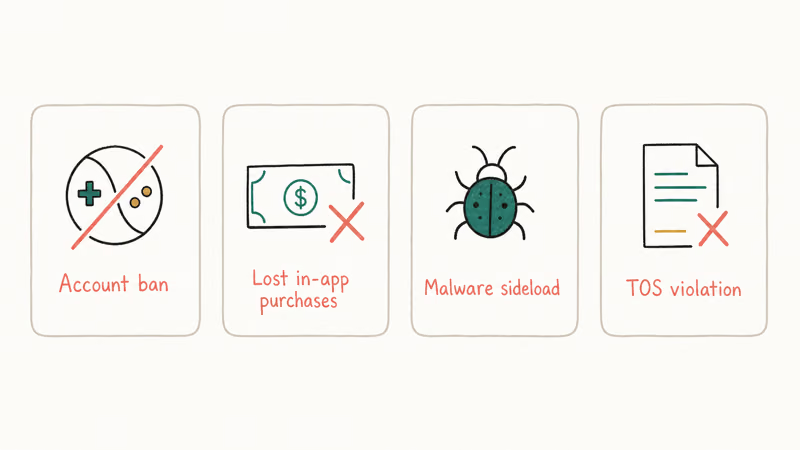
Account bans. Niantic’s player guidelines state that GPS spoofing, multi-accounting, and use of unauthorized software all sit in the same enforcement bucket. Strike one is a soft warning. Strike two is a 30-day suspension that wipes Raid passes and stops Sponsored Gifts. Strike three is a permanent ban that takes Pokemon, items, and progress with it, and friends-list contacts and team progress don’t transfer to a fresh account.
Malware on the desktop or sideloaded profile. With the official iSpoofer download gone, the searches that used to land on the real installer now land on repackaged binaries hosted on file-locker sites. The top search results for “iSpoofer download 2026” typically lead to a paid “support” subscription, an Apple Configurator profile that demands device-management access, or a Defender-flagged Windows installer.
Wallet and contact risk. Account hijacking is a documented side effect, because the same desktop apps often ask for the Google or Pokemon Trainer Club login. Pokemon Go’s account security guidance warns that using unauthorized third-party apps risks permanent account termination, with no guarantee of recovery.
Jurisdiction matters too.
In the United States, spoofing is a Terms-of-Service violation rather than a criminal offense. Stricter computer-misuse statutes in other regions can complicate the analysis, and EU consumer-protection discussions have flagged in-game economy abuse without producing a specific regulation yet.
#Niantic’s Three-Strike Discipline Policy
Niantic published the formal three-strike framework in August 2019. The same policy still applies across Pokemon Go, Pikmin Bloom, and Monster Hunter Now, and it’s the single most important thing to understand before considering any location workaround.
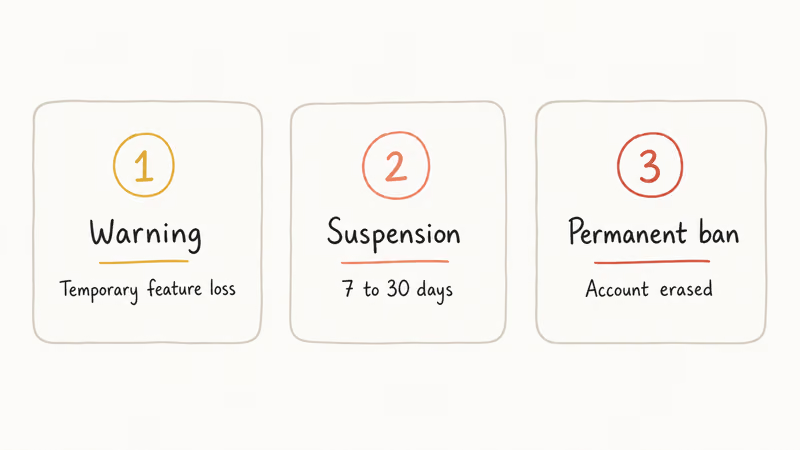
Strike one. A warning. The message appears in the app for around 7 days, and during this window rare and shiny encounters are suppressed, raid rewards are reduced, and Pokestops give fewer items. The account stays playable, and the strike rolls off after a clean stretch of play, which gives most accidental triggers a path back without further intervention from Niantic support.
Strike two. A suspension of around 30 days. The trainer can’t log in.
Strike three. Permanent termination, with the account, friends list, and inventory all unrecoverable. Appeals are accepted only when the trainer can demonstrate a clear false positive.
The strike clock is server-side. Reinstalling Pokemon Go, switching from iOS to Android, or wiping the phone doesn’t reset the warning level.
#Third-Party Alternatives Are Not Safe Replacements
Search results in 2026 are full of pages claiming to offer “the new iSpoofer,” “iPogo for free,” or “PGSharp for iOS.” Most of these recommendations should be treated as marketing copy, not safety guidance.
Sideloaded IPA installers rely on enterprise certificates that Apple revokes regularly. When the certificate is revoked the app stops opening, and users are often pushed toward a paid “premium” renewal. Pokemon Go also detects when the binary is signed by anything other than the App Store identifier, which feeds directly into the three-strike system. Coverage of this revocation cycle on 9to5Mac lines up with the patterns reported in community ban threads.
Jailbroken tweaks sit at the opposite extreme. They can be more powerful, but jailbreaking voids the Apple warranty, blocks Apple Pay and several banking apps, and exposes the device to a Pokemon Go integrity check that flags unsigned root partitions. The combination of jailbreak plus spoofing tweak is the fastest path to a strike-two suspension reported in community recovery threads.
That assumes the jailbreak even holds.
Android emulators on PC. Some guides recommend running Pokemon Go inside BlueStacks or Nox to spoof from the desktop. Niantic has detected emulator signatures since 2017 and continues to issue suspensions for accounts that look like they’re playing inside one. The same detection applies whether or not a spoofing layer sits on top.
Treat “undetectable” claims as a red flag.
Anti-cheat detection is server-side on Niantic’s infrastructure, and no client-side tool can credibly promise immunity. The developer of the tool has no insight into what telemetry Niantic actually evaluates, which means any “guaranteed safe” marketing language is, at best, a bet against detection rules the tool’s authors have never seen.
For broader context on this category of app, three related guides cover what changed and what stayed legal:
- Location spoofer overview explains how the major platforms have hardened their anti-cheat systems over the past several years.
- Pokemon Go fake GPS detection covers the specific signals Niantic uses to flag accounts.
- iPhone location settings guide walks through what Apple permits at the operating-system level.
#Legitimate Ways to Reach More Pokemon Without Traveling
The honest pitch from the iSpoofer era was that rural trainers struggled with sparse spawns. Niantic has since released several features that close most of that gap without putting an account at risk.
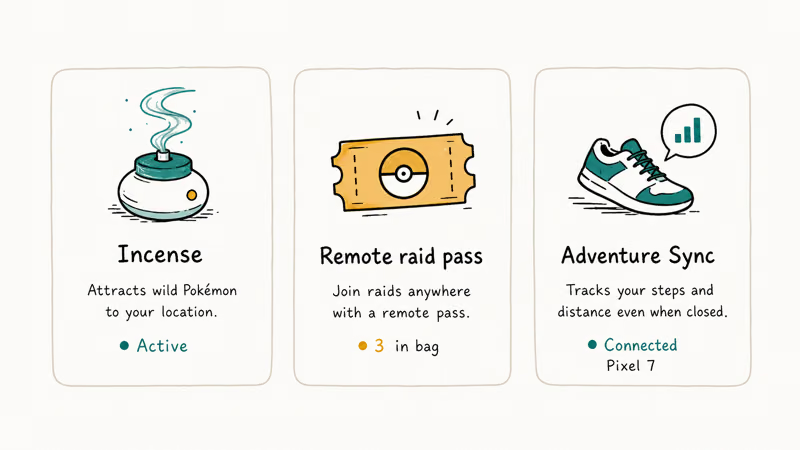
Remote Raid Passes. Introduced in 2020 and revised in 2023, Remote Raid Passes let you join any in-progress raid from home. The April 2023 revision capped remote raids at 5 per day and raised the price. The feature still removes the “I can’t get to a gym” pain point. Niantic confirms that remote raiders earn the same encounter chances as in-person raiders.
Adventure Sync. Adventure Sync uses your phone’s healthkit or Google Fit step counter to award distance toward egg hatches and Buddy candy. It works even when the app is closed. The device doesn’t need GPS movement, it just needs to record steps from normal daily activity, such as walking to the kitchen or commuting.
Community Day and Spotlight Hour. These rotating events concentrate a single species into worldwide spawns for a few hours.
They flatten the rural-versus-urban gap by saturating the map for everyone simultaneously, and the official Pokemon Go events calendar lists the schedule 3 to 4 weeks ahead, which gives rural trainers enough notice to plan a walking loop around the event window.
PokeStop Showcases and Routes. Showcases let you submit the largest Pokemon of a given species for local leaderboards. Routes provide guided walking paths that include rural-friendly spawns. Both features arrived in 2023 specifically to give players in less dense areas more goals than just catching what walks by.
Wayfarer nominations. If your area really is empty of stops and gyms, the Wayfarer program lets you nominate real-world locations as candidates. Approvals add stops permanently for every trainer in the area. For broader gameplay tactics, our guide on the Great throw bonus in Pokemon Go walks through the in-game mechanic most likely to compound your XP gains once you do find spawns.
None of these features replicate the experience of teleporting to Tokyo for an exclusive regional. They eliminate most of the day-to-day frustration that pushed players toward iSpoofer in the first place.
#Cleanup Steps if You Used iSpoofer in the Past
If you used iSpoofer before its 2020 shutdown and your account is still active in 2026, you’re most likely past the rollback window for those specific actions. Niantic’s three-strike clock looks at current activity, and any silent strikes applied at the time will have expired or been escalated already.
These cleanup steps apply only to your own device and your own Pokemon Go account. Uninstall any leftover desktop helper.
If you reused the same Pokemon Go password elsewhere, change it on every site and turn on two-factor authentication on the linked Google account. Also remove any old Apple Configurator profile under Settings > General > VPN & Device Management that you no longer recognize. According to Niantic’s account security guidance, Pokemon Trainer Club passwords should be unique and long, mixing uppercase and lowercase letters with numbers and symbols.
If you receive a warning, suspension, or termination notice and believe it’s a false positive, the appeal form sits inside the Pokemon Go app under Settings > Help Center > Contact Us. Appeals work best when you can show clean account history, a single device, and no third-party software ever installed. Reddit’s r/TheSilphRoad keeps a long-running megathread of successful appeals worth searching before you submit your own.
If you built multiple accounts in the iSpoofer era, our Pokemon Go multi-account guide covers what Niantic permits.
#Bottom Line
iSpoofer for Pokemon Go isn’t coming back, and no version still hosted at the original site is safe to install. The most useful thing to take from this article is the underlying ban math, not a replacement tool. Niantic’s three-strike policy makes spoofing a one-bad-week problem at minimum and a lost-account problem at worst, while the official remote features added since 2020 cover most of the original use case without that downside.
The honest play is to stay inside the rules.
If you live somewhere with sparse spawns, lean on Remote Raid Passes, Adventure Sync step credit, and the monthly Community Day cycle. If you simply liked the convenience of joystick movement, that experience is gone for Pokemon Go specifically. Chasing a mirror installer in 2026 most often costs you the account, the device’s security posture, or both, and there’s no upside that the official remote features don’t already provide for the rural-trainer use case that drove the original demand.
Pokémon GO Guide
#Frequently Asked Questions
Can I still download iSpoofer for Pokemon Go in 2026?
No. The official Pokemon Go installer was pulled in August 2020.
Why did Niantic sue iSpoofer?
Niantic argued in court filings that iSpoofer and several similar tools violated the Pokemon Go Terms of Service and damaged the in-game economy. A separate claim accused the developers of reverse-engineering the location API in ways that infringed on Niantic intellectual property. The case ended with the iSpoofer team agreeing to stop distributing the Pokemon Go version, and Niantic has continued similar legal action against successor tools.
Will my old iSpoofer account be banned today?
Probably not for those specific 2020 actions. Niantic doesn’t retroactively re-scan historical activity. Your account may still carry one or two existing strikes that could escalate if you spoof again.
Are PGSharp, iPogo, or PokeGo++ safe alternatives?
They aren’t. All three rely on enterprise certificates that Apple revokes regularly or on jailbreak tweaks, and all three trigger the same three-strike enforcement on the Niantic side.
Does using a VPN count as spoofing in Pokemon Go?
A VPN changes your IP address but not your GPS coordinates, so it doesn’t directly affect what Pokemon spawn around you. Niantic’s anti-cheat does flag accounts that show large mismatches between IP geolocation and GPS, and it suspends accounts using VPNs to access regions blocked by Niantic. For most trainers a VPN gives no in-game benefit. The general rule is that a VPN is fine for everyday phone privacy but should be off while playing Pokemon Go.
What is the difference between a warning, a suspension, and a ban?
A warning lasts around 7 days and reduces rare and shiny encounter rates. A suspension locks the account for roughly 30 days. A ban is permanent, with the friends list, Pokemon collection, and items lost.
Can I appeal a Pokemon Go ban if I never used iSpoofer?
Yes, false positives do happen, especially for trainers who travel for work, use multiple devices, or live in border areas where GPS drift is common. The appeal form sits inside the Pokemon Go app under Settings, Help Center, Contact Us. Appeals are most successful when the account history shows a single device, no jailbreak, no installed certificate profiles, and a clear travel explanation when location jumps occurred.
Pokemon GO GPS Signal Not Found: 7 Proven Fixes (2026)
Pokemon GO GPS signal not found? Seven ordered fixes for Android and iPhone covering precise location, permissions, mock-location, and more.
TweakBox Pokemon GO Review: Does It Still Work in 2026?
TweakBox Pokemon GO usually fails. Learn why, what Niantic's ban policy means for your account, and which official alternatives to use instead.
How to Auto Walk in Pokemon GO: Safe and Risky Methods
Learn how Pokemon GO Adventure Sync credits real activity, why fake-step and GPS tools risk account strikes, and which official options to use.
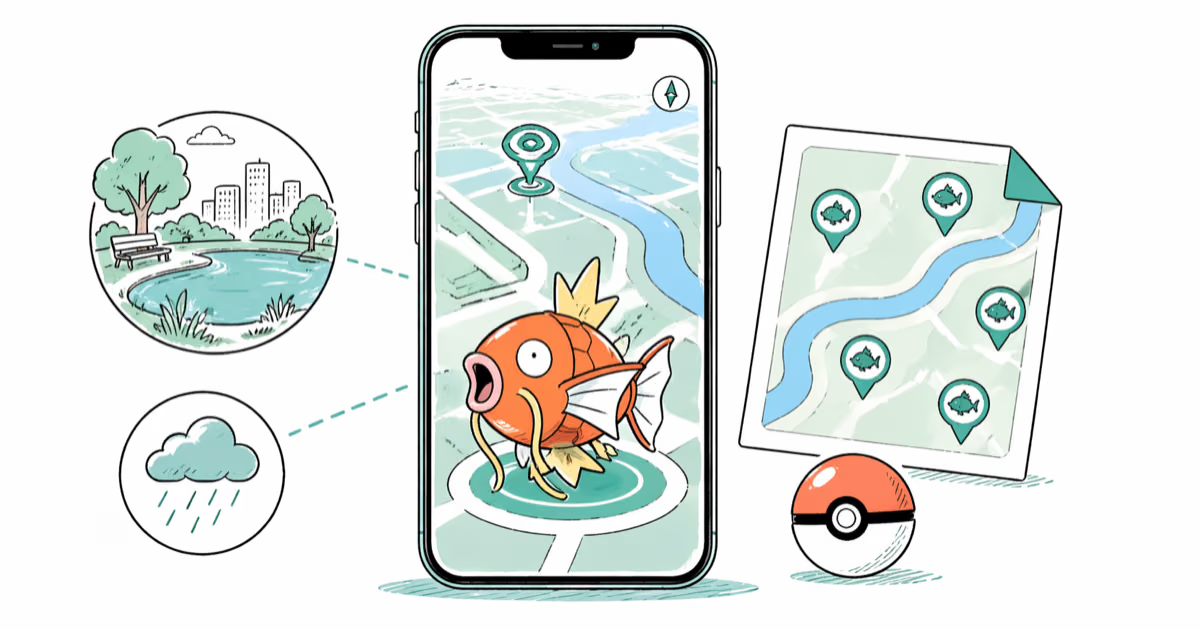
How to Find Magikarp Nests in Pokemon GO (2026 Guide)
Find Magikarp nests in Pokemon GO using community maps, water biomes, and rainy weather boosts. Plus candy farming tips to evolve Gyarados fast.