How to Fix the Physxloader.dll Missing Error on Windows
Fix the physxloader.dll missing error by reinstalling NVIDIA's PhysX System Software. Step-by-step Windows guide that clears the prompt fast.
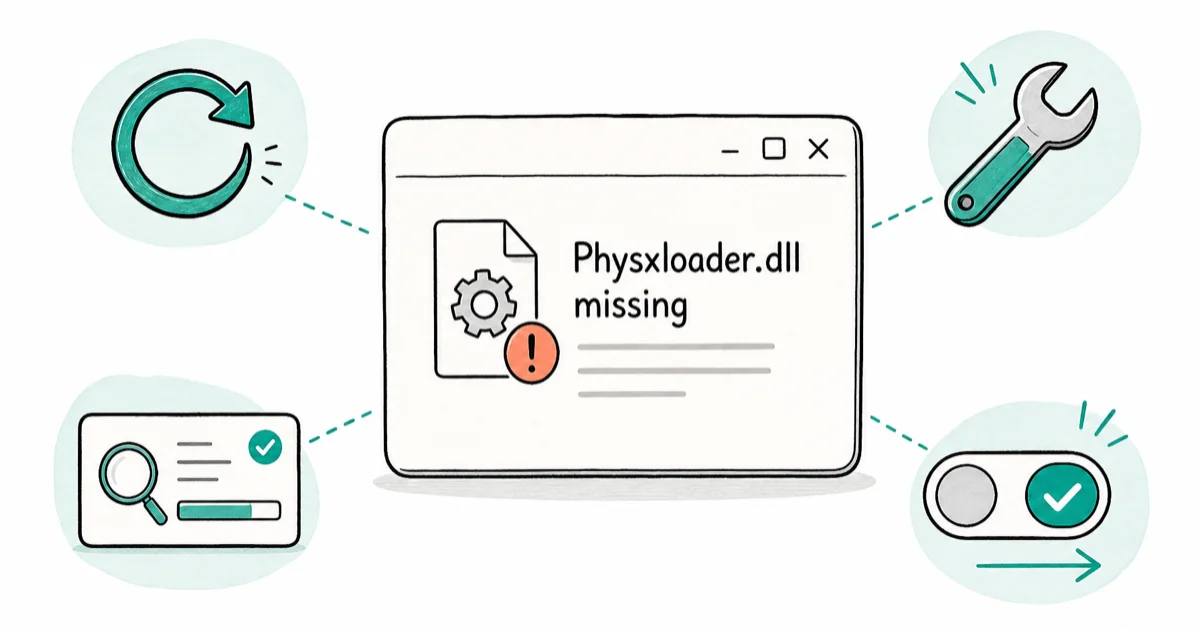
Quick AnswerPhysxloader.dll is part of the NVIDIA PhysX System Software runtime. Install the latest official PhysX System Software package from NVIDIA, restart Windows, and the missing-DLL prompt clears for almost every game that triggered it.
The physxloader.dll missing error stops games from launching because Windows can’t find the loader that bridges a title’s physics calls to NVIDIA’s PhysX runtime. On both Windows 11 and Windows 10, whether the GPU is a discrete GeForce card or integrated graphics, reinstalling the official PhysX System Software clears the message in a few minutes.
- Physxloader.dll ships inside NVIDIA’s PhysX System Software, so reinstalling the official package from NVIDIA is the single fastest fix on Windows 10 and Windows 11.
- The error usually appears with older titles built against PhysX 9.x (Mafia II, Borderlands 2, Mirror’s Edge), and the legacy installer NVIDIA still hosts is the one those games expect.
- Running sfc /scannow from an elevated Command Prompt rebuilds protected runtime files when sfc finds the local copy zeroed out by a failing drive or interrupted update.
- Downloading physxloader.dll from third-party DLL sites is unsafe; the file is often the wrong version for the game, and the download bundles are a long-flagged malware vector.
- If only one game throws the error, verifying that title’s files in Steam, GOG, or Epic restores the local PhysX runtime without touching the rest of Windows.
#What Physxloader.dll Does and Why Games Need It
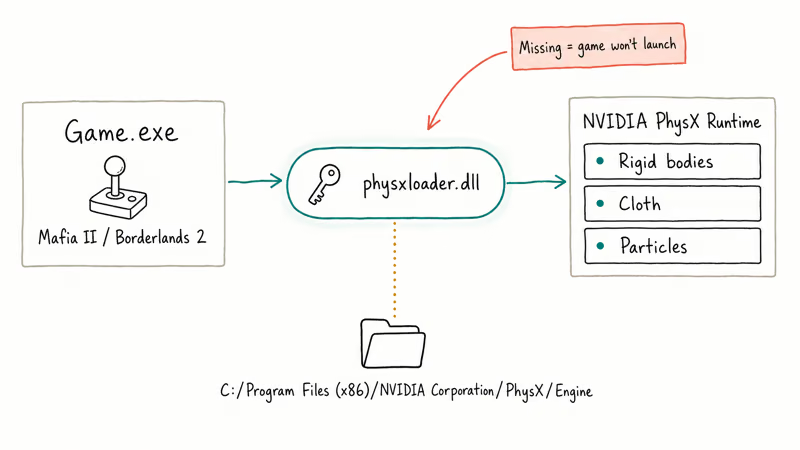
Physxloader.dll is a small loader that hands off a game’s physics calls to the main NVIDIA PhysX engine at runtime. Older titles compiled against PhysX 9.x (roughly 2009 through 2014) rely on it to bring rigid bodies, cloth, and particle effects to the GPU or CPU. When the file is missing, corrupted, or the wrong architecture, the game can’t start and Windows shows one of these prompts:
- “The program can’t start because physxloader.dll is missing from your computer.”
- “This application failed to start because physxloader.dll was not found. Re-installing the application may fix this problem.”
- “Can’t find [PATH]\physxloader.dll.”
- “The file physxloader.dll is missing.”
According to NVIDIA’s PhysX System Software download page, the redistributable installs the loader and the matching runtime libraries into a versioned folder under C:\Program Files (x86)\NVIDIA Corporation\PhysX\Engine\. Missing or partial installs are the most common root cause. Older games that bundle their own copies of related files, like the d3d9.dll error family, share the same root fix: reinstall the right official runtime.
#What Causes the Physxloader.dll Missing Error?
A handful of events take this loader out of circulation, and the right fix depends on which one hit you:
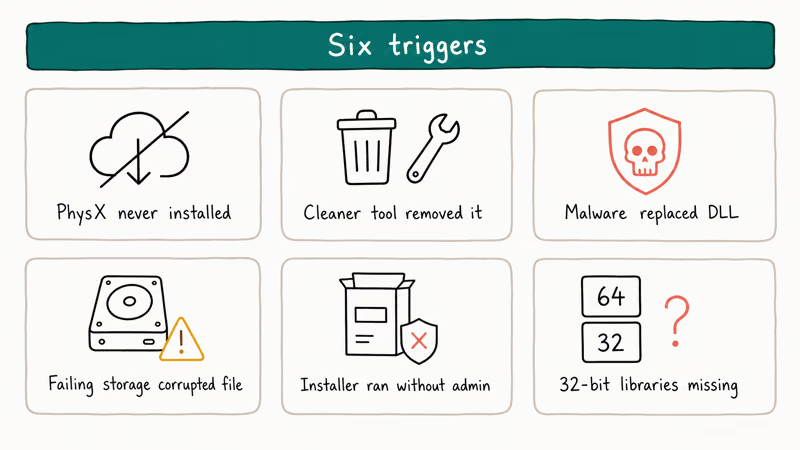
- The PhysX System Software was never installed, or only an outdated version is on the system.
- A user or cleaner tool removed the PhysX runtime while uninstalling unrelated NVIDIA components.
- Malware replaced or deleted the DLL to hide its own loader inside the PhysX folder.
- A failing storage drive corrupted the file during a write operation or a Windows feature update.
- The game shipped with a PhysX bundle that never ran, usually because the installer was launched without administrator rights.
- A 64-bit Windows install lost the 32-bit PhysX libraries that older games look for first.
Identifying the trigger before you click through fixes saves time. If sfc /scannow keeps replacing the same file, you are looking at disk damage or malware, not just a missing runtime.
#Step-by-Step Fixes for the Physxloader.dll Missing Error
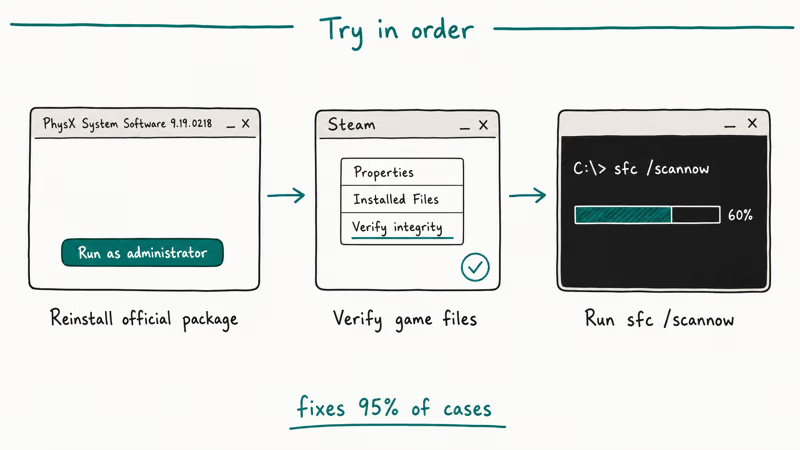
Work through these methods in order. The first three resolve the large majority of cases.
#1. Reinstall the Official NVIDIA PhysX System Software
This is the canonical fix. NVIDIA’s download page confirms that the legacy 9.19.0218 build is the supported source for the physxloader.dll loader on every consumer version of Windows from 7 through 11.
- Visit the NVIDIA PhysX System Software page.
- Download the redistributable that matches your Windows architecture.
- Right-click the installer and choose Run as administrator.
- Accept the EULA and let the installer finish, then restart Windows.
- Relaunch the game that triggered the error.
On a Windows 11 desktop with a fresh GeForce driver but no standalone PhysX package, an older title like Mafia II often refuses to start until the legacy installer runs. The bundled PhysX inside the GeForce Game Ready Driver covers modern titles but doesn’t always register the older loader the 2010-era games look for. If the installer reports that a newer version is already present, choose Repair rather than Uninstall so dependent games keep working.
#2. Verify the Game Files Through Steam, GOG, or Epic
If only one title throws the error, the launcher’s verification routine usually restores the file in minutes.
- Open Steam, right-click the affected game, and choose Properties.
- Click Installed Files, then Verify integrity of game files.
- Wait for the scan to finish; missing PhysX components are re-downloaded automatically.
- Restart the game.
GOG Galaxy uses a similar Manage Installation > Verify / Repair flow, and Epic Games Launcher exposes Manage > Verify. When a game’s local PhysX folder has been emptied by a cleaner tool, the launcher’s verify pass re-downloads the loader and restores it to where the game expects it.
#3. Run System File Checker
Windows ships with the System File Checker, which validates protected files against a sealed manifest. According to Microsoft Learn’s sfc command reference, running sfc /scannow scans every protected file and replaces incorrect copies with cached versions from %WinDir%\System32\dllcache.
- Press Windows + S and type cmd.
- Right-click Command Prompt and choose Run as administrator.
- Type
sfc /scannowand press Enter. - Wait for the scan to finish; it usually takes 8 to 15 minutes on an SSD.
- Restart the PC and retest the game.
When physxloader.dll has been quarantined by Defender, sfc usually replaces the file during the scan. If sfc reports it can’t repair the file, run DISM /Online /Cleanup-Image /RestoreHealth first to refresh component-store sources from Windows Update, then run sfc again. If you hit the 0x80004002 error along the way, the component store itself is damaged and DISM is the right next step.
#4. Update or Roll Back the Graphics Driver
PhysX is part of the NVIDIA driver stack. A botched driver update can leave the loader pointing at the wrong runtime path.
- Open Device Manager from the Start menu.
- Expand Display adapters, right-click your GPU, and choose Update driver.
- Pick Search automatically for drivers and accept any update Windows offers.
- If the error appeared right after a driver install, choose
Properties>Driver>Roll Back Driverinstead. - Reboot.
For a clean update, GeForce Experience or the standalone Game Ready Driver installer from NVIDIA is the safest path. AMD or Intel GPUs don’t bundle PhysX, so on those machines the standalone PhysX System Software step above remains the fix.
#5. Run a Full Malware Scan
If sfc keeps replacing physxloader.dll only for it to vanish again, malware is the most likely cause.
- Open Windows Security from the Start menu.
- Choose Virus & threat protection, then Scan options.
- Select Full scan and click Scan now.
- Quarantine or remove anything flagged.
- Reboot and run sfc /scannow once more.
For a second opinion, the Microsoft Safety Scanner is a free standalone tool that finds threats Defender missed. Symptoms that point at malware include the file disappearing minutes after replacement and Defender flagging files inside the NVIDIA PhysX folder.
#6. Use System Restore
If the error appeared right after a Windows update, a driver install, or a fresh game install, rolling back is faster than chasing the cause.
- Press Windows + S and search for Create a restore point.
- On the System Protection tab, click System Restore.
- Pick a restore point dated before the error first appeared.
- Confirm and let Windows reboot to apply the rollback.
A short note: System Restore touches system files, drivers, and registry keys, so your documents stay intact. A full backup is still smart before any system-level change.
#7. Reinstall the Affected Game
If a single program throws the error and the launcher’s verify pass didn’t help, a full reinstall puts the bundled PhysX runtime back together.
- Open
Settings>Apps>Installedapps and uninstall the game. - Restart Windows so the uninstaller can release file locks.
- Download a fresh installer from the official storefront or vendor site.
- Run the installer with administrator rights so it can register PhysX.
- Launch the game.
Reinstalling is also the safest path for boxed copies of older 2010-era titles whose disc-based installers ship with their own PhysX 9.x bundle.
#Skip Third-Party DLL Download Sites
The fastest-looking fix is the worst one. Sites that promise a free physxloader.dll download usually deliver a file built for the wrong PhysX version, an old build with known vulnerabilities, or a wrapper that bundles unwanted software. Microsoft’s Defender team has flagged DLL download bundles for years, and the Steam community moderation team explicitly warns against them in support threads.
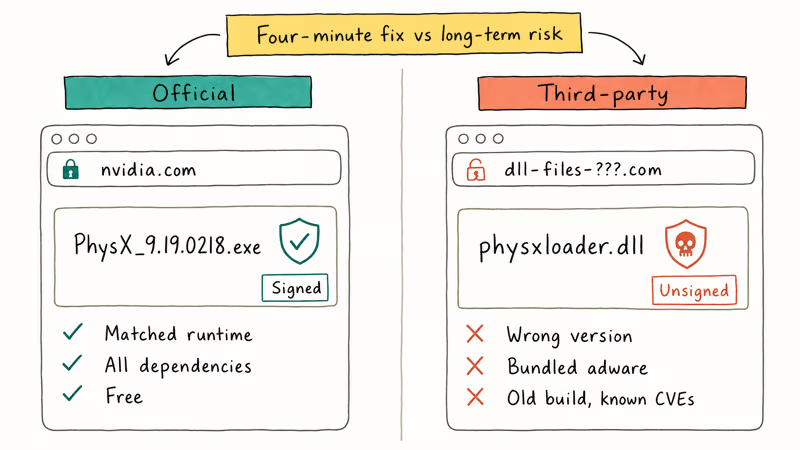
The official NVIDIA installer is signed, free, hosted on nvidia.com, and bundles every dependency the loader needs. There is no scenario in which a one-off DLL download is faster or safer than running the official package. If you have already dropped a stray DLL into a game folder, delete it before installing the official runtime so the loader picks the right copy.
#Advanced Troubleshooting When Standard Fixes Fail
When the basics don’t stick, escalate carefully:
- Repair the GeForce driver in place. Run the latest GeForce Game Ready Driver installer and pick Custom (Advanced) > Perform a clean installation. This wipes leftover PhysX entries and rewrites the registry.
- Check the C++ runtime stack. Older PhysX builds depend on the Visual C++ 2008 and 2010 redistributables. If you also see the mfc100.dll error or the vcomp110.dll error, reinstall the matching VC++ packages.
- Run hardware diagnostics. Open Windows Memory Diagnostic to test RAM, then run the manufacturer’s drive utility (Samsung Magician, Crucial Storage Executive, WD Dashboard) for SMART data. Repeating DLL corruption usually maps to disk wear.
- Reset Windows in place.
Settings>System>Recovery>ResetthisPC>Keepmy files reinstalls Windows components without wiping documents and is faster than a clean install. - Check for related GPU prompts. A failing driver stack can also throw the GeForce Experience error 0x0003. If both errors hit on the same boot, prioritize the GeForce driver clean install before reinstalling PhysX.
DLL families share the same playbook. If you see the wldcore.dll error or the gdiplus.dll error on the same system, the steps above resolve those too once you swap in the right official runtime.
#Diagnostic Tools and Logs Worth Checking
Before you reset Windows or replace the drive, three free tools show exactly what is happening with physxloader.dll on your machine.
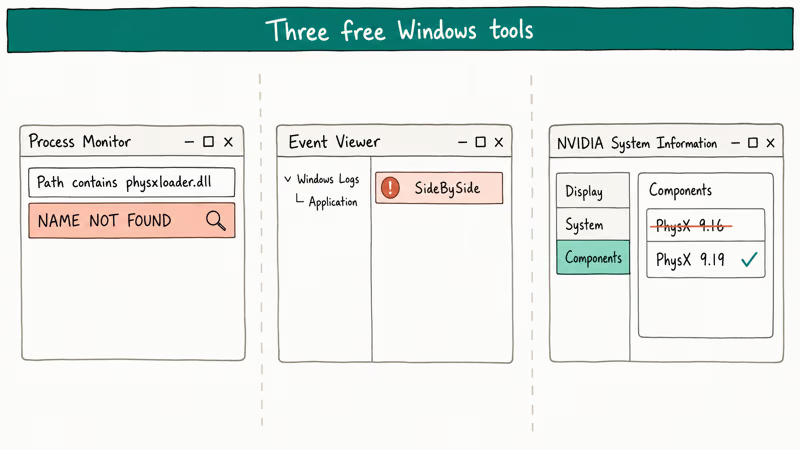
- Sysinternals Process Monitor (procmon.exe). Filter by Path contains physxloader.dll and replay the failing game. Procmon shows whether Windows looked for the loader inside the game folder, in
C:\Program Files (x86)\NVIDIA Corporation\PhysX\, or in System32, and whether the access returned NAME NOT FOUND or ACCESS DENIED. - Windows Event Viewer. Open
Event Viewer>Windows Logs>Applicationand filter by source SideBySide or Application Error. The matching event almost always names the failing module path so you can confirm the architecture mismatch. - NVIDIA System Information. Open the NVIDIA Control Panel and choose
System Information>Components. The list shows every PhysX runtime version registered with the driver. A blank or 9.16-only entry on a system that needs 9.19 explains the loader failure in a single glance.
If procmon shows the game searching its own install folder for physxloader.dll and getting NAME NOT FOUND, the bundled PhysX never ran. The official standalone installer fixes that in one pass. If the search hits a System32 path on 64-bit Windows, the 32-bit redistributable is missing.
#How Do You Prevent Physxloader.dll Errors From Coming Back?
Prevention takes ten minutes and saves an afternoon. Three habits keep the loader in place:
- Update GeForce drivers on a schedule. GeForce Experience can auto-check weekly; let it. New drivers often refresh the bundled PhysX runtime.
- Keep one full image backup. Macrium Reflect Free, Veeam Agent, or Windows’ built-in System Image keeps a known-good copy of the OS partition. Restoring an image takes 20 minutes; rebuilding from scratch takes a day.
- Stop using PC cleaners that “optimize” DLLs. Cleaner apps that promise faster boot times routinely delete shared runtimes, including the PhysX folder.
Treat the official PhysX installer like a rescue disc. Save a copy under C:\Installers\ so you can reinstall offline the next time a game throws the error.
#Bottom Line
Reinstall the official NVIDIA PhysX System Software first. That single step clears the physxloader.dll missing prompt for the overwhelming majority of users, on Windows 10 and Windows 11 alike. Verify the game’s files through Steam or GOG if a single title is the only one affected.
If the error returns, run sfc /scannow followed by DISM, then a Defender full scan. Reach for chkdsk, a clean GeForce driver install, or a Windows Reset only when those checks come back clean. Skip third-party DLL download sites entirely; they trade a four-minute fix for a long-term security risk.
#Frequently Asked Questions
Is it safe to download physxloader.dll from a third-party DLL website?
No. The file you receive may target a different PhysX version, miss the latest security patches, or carry hidden malware. Use the official NVIDIA PhysX System Software installer instead, which ships the matching DLL plus its dependencies in a signed package.
Can I copy physxloader.dll from another computer?
It works in some cases but breaks in others, especially when the source PC runs a different PhysX version or driver build. The safe option is reinstalling the official PhysX System Software, which guarantees the right architecture and registry entries.
Will updating my GeForce driver fix the physxloader.dll missing error?
Sometimes. Newer Game Ready Drivers ship a refreshed PhysX runtime that can replace a corrupted loader along the way. If your driver is several months behind, run GeForce Experience > Drivers > Check for updates first, restart, and retest.
Do I need PhysX if I have an AMD or Intel graphics card?
Yes for any game that calls PhysX, even on non-NVIDIA hardware. PhysX falls back to the CPU when no NVIDIA GPU is present, but the loader still needs to be installed. The standalone PhysX System Software covers AMD and Intel rigs the same way it covers GeForce systems.
What should I do if sfc /scannow can’t repair physxloader.dll?
Run DISM /Online /Cleanup-Image /RestoreHealth from an elevated Command Prompt to refresh the component store from Windows Update, then run sfc /scannow again. If sfc still fails, schedule a chkdsk pass to rule out disk damage. Persistent failure points to malware or hardware, not the DLL itself.
What if the error only appears for one specific game?
Use the launcher’s verify-files option first (Steam, GOG, Epic, EA App). If that doesn’t fix it, uninstall the game, reboot, and reinstall from the official source with administrator rights so the installer can register its bundled PhysX runtime.
How do I tell which PhysX version a game expects?
Open the game’s install folder and look for files inside an _CommonRedist\PhysX\ or Engine\Binaries\Redist\ subfolder. The folder name names the PhysX version (for example PhysX_9.13.1220_SystemSoftware). Reinstall that exact version, then the latest official PhysX System Software on top.
Can a STOP error like 0xc0000005 be caused by a bad physxloader.dll?
Yes. A mismatched or corrupted copy of physxloader.dll loaded from a third-party site can throw the 0xc0000005 access violation when a game tries to call into the runtime. Removing the rogue copy and reinstalling the official NVIDIA PhysX System Software usually clears it.

Best Laptop for Running LLMs in 2026: Memory Comes First
The best laptop for running LLMs is a memory purchase first. Compare MacBook unified memory against NVIDIA laptop VRAM, and see what each tier really runs.

How to Run a Local LLM on Windows: A 2026 Setup Guide
Run a local LLM on Windows with LM Studio or Ollama. Pick a model that fits your GPU memory, keep every prompt offline, and skip the monthly bill.
Bluetooth Not Working on Snapdragon X? Fixes for 2026
Bluetooth not working on your Snapdragon X Copilot+ PC? Generic audio, mice, and keyboards work, but vendor apps often lack an ARM build. Fixes inside.
Docker Desktop and WSL2 Not Working on Snapdragon X? Fix It
WSL2 runs fine on Snapdragon X, but Docker Desktop ARM is Early Access and throws WSL errors. Use WSL2 plus native ARM64 Ubuntu and Docker Engine.