Best MTG Izzet Commanders for Draw and Damage (2026)
Updated 2026 guide to the best MTG Izzet commanders for EDH. Niv-Mizzet, Parun, Mizzix, Brudiclad, and more, with deck strategy and Izzet combos.
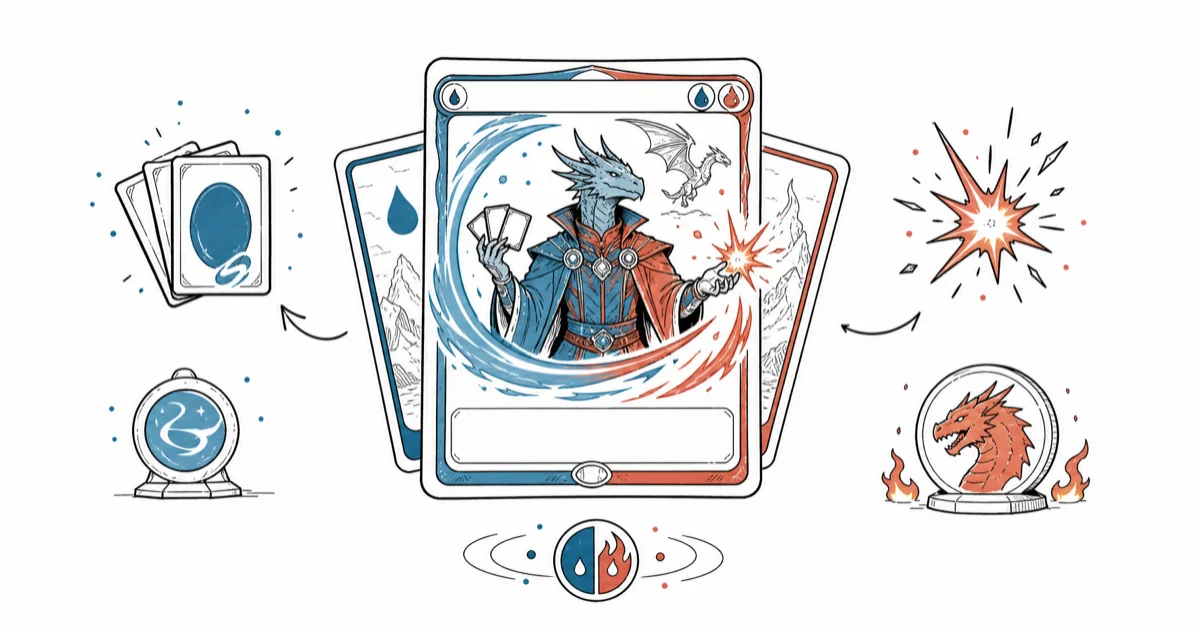
Quick AnswerThe best Izzet commanders are Niv-Mizzet, Parun for draw-and-burn, Jori En, Ruin Diver for low-cost card advantage, and Brudiclad, Telchor Engineer for token explosions. Mizzix of the Izmagnus rewards instant and sorcery decks, while The Locust God turns every card draw into a flying token.
The best MTG Izzet commanders all reward one deck-building idea: cast more instants and sorceries than the rest of the table, then turn that volume into damage, tokens, or extra cards. The right commander defines the deck, not the other way around.
This guide is for sleeving real cards in a Commander pod with permission to play (paper, Magic Online, or Magic Arena historic Brawl). Nothing here excuses proxying outside friend-pod rules.
- Izzet pairs blue’s card draw and counters with red’s burn and copy effects, which is why most Izzet commanders read “draw a card” or “deal damage” in their text box.
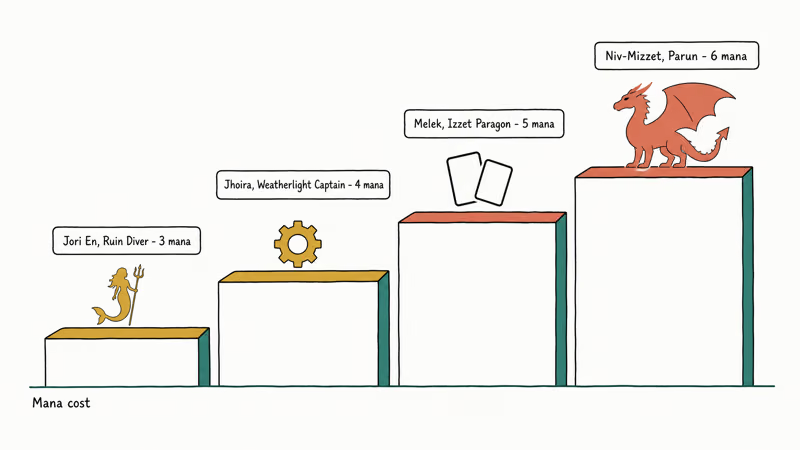
- Niv-Mizzet, Parun costs three blue and three red mana, deals one damage on every card draw, and ends most pods within four turns of resolving in a stable shell.
- Mizzix of the Izmagnus reduces instant and sorcery mana costs as experience counters accumulate, so a turn-eight Mizzix can chain three to four big spells in a single turn.
- Brudiclad, Telchor Engineer turns one strong creature token into many on its activated ability, which is why Brudiclad lists run roughly 12 to 15 token-makers.
- Jori En, Ruin Diver is the budget pick at three mana and draws an extra card on every second spell, making it the easiest Izzet commander for a first EDH build.
#What Defines an Izzet Commander Strategy?
The Izzet League is one of the ten Ravnica guilds, blending blue’s draw and counterspells with red’s burn and copy effects. According to Wikipedia’s Magic: The Gathering article, MTG launched in 1993 and Ravnica’s guild pairs were introduced in the 2005-2006 block. The Izzet color identity has stayed the same across 20 years of sets: blue plus red, with no white, black, or green allowed.
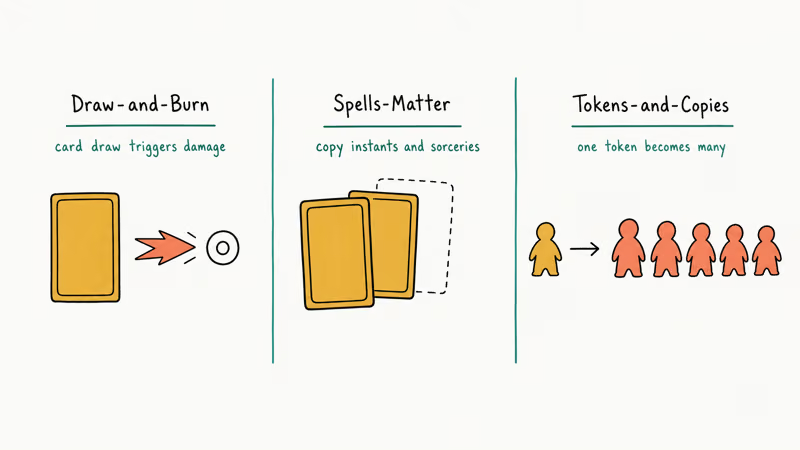
Three Izzet game plans repeat across every viable build. The first is draw-and-burn: stack triggers that deal damage every time you draw or cast a spell, then chain card draw to lethal. The second is spells-matter, which copies extra instants and sorceries to double the value of every removal spell, counter, or burn card. The third is tokens-and-copies — generate a small token, copy it many times, then alpha-strike one combat step.
Each plan closes at a different speed. Spells-matter and draw-and-burn plans usually aim to chain a decisive turn once the commander is protected, while token decks need more setup but hit harder when they land.
The trade-off shows up in mana base. Izzet has access to fast lands (Spirebluff Canal), shocklands (Steam Vents), and check lands (Sulfur Falls), and most lists run 36 to 38 lands with eight to ten dual lands. The mana base is cheaper than three-color builds, which is part of why Izzet stays popular for budget Commander pilots.
#Top Izzet Commanders for Spell-Heavy Decks
The strongest Izzet commanders in 2026 reward casting volume. Each one turns a deck full of instants and sorceries into burn, card draw, or both.
#Niv-Mizzet, Parun
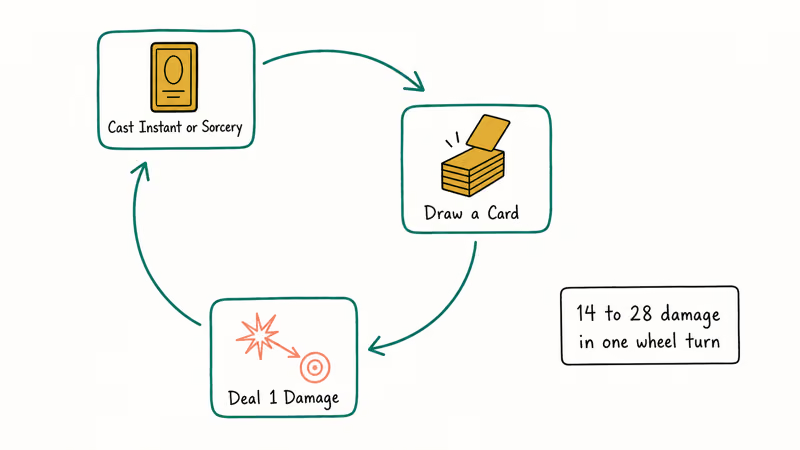
Niv-Mizzet, Parun is the gold-standard Izzet commander for draw-and-burn. The card costs three blue and three red mana, has 5/5 stats with flying, and reads “deal one damage to any target whenever you draw a card” plus “draw a card whenever you or another player casts an instant or sorcery.”
The two triggers feed each other.
Every spell on the stack draws Niv a card, and every drawn card pings a target. Resolve a Windfall or Wheel of Fortune with Niv on the field and the table can take 14 to 28 damage in a single turn.
According to Wikipedia’s Guilds of Ravnica article, the set was released October 5, 2018, and Niv-Mizzet, Parun was the headline mythic of the Izzet guild, reprinted again in Ravnica Remastered (released January 12, 2024). EDHREC’s Niv-Mizzet, Parun page confirms that the average decklist runs roughly 30 instants and sorceries plus a wheel package of Windfall, Reforge the Soul, and Wheel of Fortune.
The weakness is the six-mana cost. Niv-Mizzet sits behind Counterspell range and removal aimed at him stings, because he can’t be cast through commander tax cheaply. Run six to eight protection pieces (Heroic Intervention, Lazotep Plating) to keep him alive after he resolves.
#Mizzix of the Izmagnus
Mizzix of the Izmagnus is the spells-matter king. Four mana for a 2/2 body, gaining an experience counter every time you cast an instant or sorcery with mana value greater than your current experience count. Each counter then reduces the cost of every instant and sorcery you cast by one, with a minimum cost of one mana.
The combo math gets ugly fast.
A turn-five Mizzix with three counters means a six-mana spell costs three. A turn-eight Mizzix with seven counters means almost every instant or sorcery costs one or zero mana, which is how Mizzix decks chain three or four big spells in a single turn.
Mizzix needs time to build experience counters before the chain starts, and waiting too long gives the table more chances to hold up removal or counterspells.
Counterspell backup like Mana Drain and Force of Negation keeps Mizzix alive long enough to spike. For finisher options, the biggest creatures in MTG covers the Eldrazi and dragon options that close a Mizzix game once the counters stack up.
#Melek, Izzet Paragon
Melek, Izzet Paragon copies the next instant or sorcery you cast each turn. Five mana for a 2/4 body, with a passive that reveals the top card of your library so you can play it if it’s an instant or sorcery.
Melek is the budget alternative to Mizzix. Mizzix needs experience counters and dies easily, while Melek’s copy trigger is automatic.
The trade-off is speed.
Melek copies one spell per turn, not many, so it closes the game more slowly. The Melek shell wants extra-turn spells (Time Warp, Temporal Manipulation, Karn’s Temporal Sundering), big sorceries (Cruel Ultimatum is rough on a budget but Volcanic Fallout works), and library manipulation (Scroll Rack, Sensei’s Divining Top) to control what Melek reveals on top.
#Top Izzet Commanders for Tokens and Artifacts
Izzet’s second pillar is token and artifact generation, where the commander copies, doubles, or transforms permanents instead of spells.
#Brudiclad, Telchor Engineer
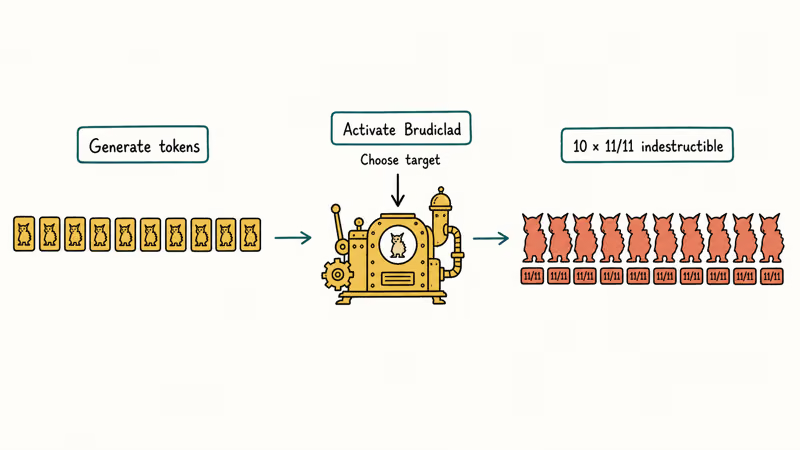
Brudiclad, Telchor Engineer is the token-deck commander. Six mana for a 4/4 body, with a triggered ability that gives every creature token you control haste and a 2/1 myr token at the beginning of combat. The kicker is the activated ability — choose a creature token, then turn every other creature token you control into a copy of it.
That copy ability is what makes Brudiclad a turn-eight or turn-nine finisher.
Generate ten tokens through Talrand, Sky Summoner triggers, then activate Brudiclad targeting a Blightsteel Colossus token (made from a Mirror March copy of Blightsteel) and the table dies to ten 11/11 indestructible infect creatures.
EDHREC’s Brudiclad page confirms that Brudiclad lists run roughly 12 to 15 token-generating cards plus four to six “copy a creature” effects like Mirror March, Helm of the Host, and Phantasmal Image. For the copy backbone of the deck, the best clone cards in MTG breaks down which clones earn slots and which fall behind in 2026.
#The Locust God
The Locust God is the draw-token engine. Six mana for a 4/4 body, with a trigger that reads “whenever you draw a card, create a 1/1 red and blue insect creature token with flying and haste.” A second activated ability lets you pay two and discard a card to draw a card.
Every Wheel effect with The Locust God on the field turns into seven flying haste tokens. Resolve Windfall against three opponents, refill all four hands to seven, and you’ve made roughly 20 tokens that can attack the same turn.
The 4/4 stats are softer than Brudiclad’s.
The deck plays well as the value engine in a turbo-draw shell with Rhystic Study, Mystic Remora, and Fact or Fiction, plus a few sweepers (Cyclonic Rift, Pyroclasm) to clear blockers before the alpha strike. The Locust God dies to commander damage faster than Brudiclad does, so an early Tower Defense or a Lightning Greaves slot keeps the engine alive longer.
#Saheeli, the Gifted
Saheeli, the Gifted is one of the few planeswalker Izzet commanders. Four mana, four starting loyalty, with three abilities that all care about artifacts.
The +1 makes a 1/1 servo. The -2 generates a mana cost reduction on the next artifact spell, scaling with X. The -7 ultimate copies every artifact you control.
Saheeli is the artifact-prison alternative to Brudiclad. The deck wants Mox-style fast mana, every Izzet-color artifact creature in the format, and ways to protect a planeswalker on the field. For broader walker context, the best planeswalkers in MTG covers the high-loyalty walkers that close games once they resolve, and the best artifact creatures in MTG lists the bodies that earn a Saheeli slot.
#Budget and Underrated Izzet Commanders
Not every Izzet table needs a six-mana finisher. The next group costs three or four mana and rewards repetition rather than a single huge turn.
#Jori En, Ruin Diver
Jori En, Ruin Diver is the cheapest competitive Izzet commander. Three mana for a 2/3 merfolk wizard, drawing a card whenever you cast your second spell in a turn. A deck packed with cantrips (Brainstorm, Ponder, Preordain) generates one to two free cards per turn after Jori resolves.
Jori is the easiest first Izzet commander for a new EDH pilot because the shell is cheap, low-curve, and patient.
#Jhoira, Weatherlight Captain
Jhoira, Weatherlight Captain draws a card whenever you cast a historic spell (artifact, legendary, or saga). Four mana for a 2/2 with the same color identity as Saheeli, this commander rewards an artifact-heavy build with a long curve.
The card draw stacks fast.
A turn-six board with a Mox Opal, a Sol Ring, and a Goblin Welder triggers Jhoira three times, drawing three cards before combat. The shell wants to play roughly 25 to 30 artifacts, which is why the best equipment in MTG is the natural companion guide for a Jhoira build.
#Jhoira of the Ghitu and Dalakos, Crafter of Wonders
Jhoira of the Ghitu suspends any card from your hand for four turns at the cost of two mana. A turn-five Jhoira plus four mana suspends an Eldrazi Titan or a Cruel Ultimatum for a turn-nine free cast. The deck needs cards that remove time counters (Fury Charm, Paradox Haze) to speed up the payoff and tends to lose to fast aggro because the suspended cards take four turns to resolve.
Dalakos, Crafter of Wonders gives every equipped creature flying and haste, plus taps for two mana for artifact spells. It’s the Voltron-style Izzet commander, with one big creature (Ulamog, the Ceaseless Hunger; Hellkite Tyrant) carrying voltron equipment to commander damage. Dalakos lists run 30+ artifacts and a small set of beaters, and the deck closes on turn 9 to 11 once a single suited-up creature reaches the table.
#Choosing Your Izzet Commander by Pod Power Level
The right Izzet commander depends on your local pod, not abstract tier lists. Match the deck to the table.
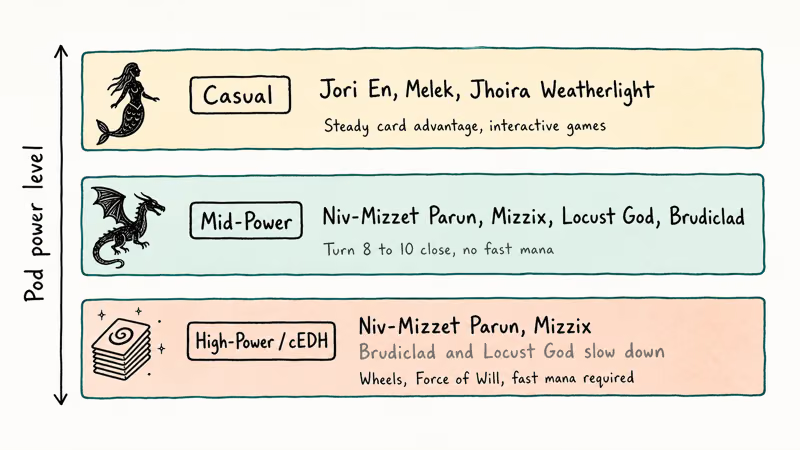
For a casual table where everyone is running pre-cons or budget decks, Jori En, Ruin Diver, Melek, and Jhoira, Weatherlight Captain are the strongest picks. These commanders generate steady card advantage without locking the table out, which means games stay interactive instead of ending on turn six.
Mid-power tables (75% optimization, no infinite combos) are the sweet spot for Niv-Mizzet, Parun, Mizzix of the Izmagnus, The Locust God, and Brudiclad, Telchor Engineer. Each closes the game in a focused turn-eight to turn-ten window without needing fast mana like Mox Opal or Mana Crypt.
High-power and cEDH tables are different. Niv-Mizzet, Parun and Mizzix can keep up with optimized lists if they pack a wheel package, Force of Will, and four-mana counterspells, but Brudiclad and The Locust God fall behind because token strategies need three turns to set up. For a slower archetype that wins through stalling, MTG control decks covers Azorius and Esper builds that close with a single planeswalker instead of a draw-and-burn engine.
#How Do You Build an Izzet Commander Deck?
A working Izzet deck breaks into six card categories: ramp, card draw, removal, counterspells, the engine that pairs with your commander, and a finisher.
Most lists run eight to ten ramp pieces (Sol Ring, Arcane Signet, Izzet Signet, Talisman of Creativity), eight to twelve card-draw effects (Rhystic Study, Mystic Remora, Brainstorm, Ponder), six to eight removal spells (Lightning Bolt, Chaos Warp, Cyclonic Rift), and four to six counterspells (Counterspell, Mana Drain, Negate). The remaining 20 to 25 slots split between commander-specific theme cards and finishers.
Land counts matter.
Izzet decks generally want 36 to 38 lands. Five to seven of those should be utility lands like Reliquary Tower (no max hand size), Riptide Laboratory (return wizard commanders), and Mystic Sanctuary (recur counterspells in a basic-island shell). According to Wizards’ Commander format rules, color identity restricts every card in the deck to symbols that appear on the commander, which means basics are limited to Island and Mountain plus utility lands with red or blue color identity.
Sideboarding doesn’t exist in EDH, but pre-mulligan card choices matter. Opening hands usually need two lands and at least one ramp piece.
#Bottom Line
For a first Izzet commander, pick Jori En, Ruin Diver. The three-mana cost, low-curve cantrip shell, and forgiving game plan make it the easiest entry point. A Jori deck can be built for under 150 USD and still close games against a budget pod.
For a draw-and-burn finish, Niv-Mizzet, Parun is the strongest closer in 2026. The six-mana cost is real, but the wheel-effect package (Windfall, Wheel of Fortune, Reforge the Soul) wins in a single turn once Niv resolves with mana up for protection.
The pick changes for spells-matter.
For a spells-matter chain, Mizzix of the Izmagnus beats Melek, Izzet Paragon at the same role because the experience counters compound across turns. Melek’s automatic copy trigger is more reliable but slower, while Mizzix has the higher ceiling once the counters stack up.
For a token-and-copy combat finish, Brudiclad, Telchor Engineer is the only Izzet commander that turns ten small tokens into ten copies of an Eldrazi or a Blightsteel Colossus. The deck takes longer to set up than Niv-Mizzet, but the alpha strike is harder to interact with once it lands.
Avoid Saheeli, the Gifted as a first commander.
Planeswalker commanders die to almost any creature attacking the table, and Saheeli’s copy ultimate is too slow without a strong mana-rock package already in play. Sleeve her up after you’ve piloted a creature-based commander first.
#Frequently Asked Questions
What are Izzet’s color identity rules in Commander?
Izzet decks can include only blue and red cards, plus colorless cards and lands with red or blue color identity. This rule applies to every card in the 100-card deck, including the mana symbols in activated and triggered abilities. A card like Hallowed Fountain (white and blue dual land) is not legal in an Izzet deck because it has white in its color identity.
Is Niv-Mizzet, Parun better than Niv-Mizzet, Reborn for Izzet?
Niv-Mizzet, Parun is the better Izzet-only commander because Reborn is five-color. Reborn requires a Cascade-style deck that runs every guild’s color identity, while Parun stays inside Izzet’s two colors. For a pure Izzet build, Parun is the choice; for a five-color shell with Izzet themes, Reborn fits a different deck entirely.
How much does a competitive Izzet Commander deck cost in 2026?
A budget Izzet deck built around Jori En, Ruin Diver runs roughly 100 to 200 USD. A mid-tier Niv-Mizzet, Parun or Mizzix of the Izmagnus list sits closer to 400 to 700 USD, with the wheel package (Wheel of Fortune at 250+ USD), Mana Drain, and dual lands as the priciest pieces. A high-power Mizzix or Brudiclad list with optimized fast mana can climb past 1,500 USD, mostly from Mox Opal, original duals, and Force of Will.
Can I run Niv-Mizzet, Parun and Niv-Mizzet, the Firemind in the same deck?
Yes, but only one is your commander. The other slots into the 99-card library since both share Izzet color identity. Most pilots pick Parun because the trigger fires on every card draw, not just on activated abilities.
Are Izzet decks good for new Commander players?
Yes for Jori En and Melek, no for Niv-Mizzet, Parun and Mizzix. Jori En’s draw trigger is automatic and the deck plays cantrips, which is forgiving when new players miss an interaction. Niv-Mizzet rewards careful tracking of damage triggers across four players at the table, and Mizzix’s experience counters lock you out of your best chain if you sequence spells wrong. Pick a low-mana commander first, then graduate to a six-mana finisher once you know the format.
What’s the difference between Izzet and Grixis in Commander?
Izzet is two colors (blue and red); Grixis adds black on top. The Grixis identity unlocks Demonic Tutor, Toxic Deluge, and Cruel Ultimatum, plus reanimator targets like Razaketh, the Foulblooded. The trade-off is a three-color mana base with more taplands and more ways to miss colors on early turns. Most Izzet pilots pick a two-color shell because the mana is more reliable and the deck closes faster, but Grixis wins more matchups against control because of the discard package.
Do I need a planeswalker to win an Izzet game?
No. Saheeli, the Gifted is the only Izzet planeswalker commander. Most Izzet decks close with a draw-trigger combo, a token-copy combo, or a spell chain. Planeswalkers like Ral Zarek work as 99-card slots, not as the commander.

Fortnite Stuck on the Loading Screen? Fix It in 2026
Fortnite stuck on the loading screen? Check server status, fix the Windows N Media Pack and DirectX 11 on PC, clear the console cache, and verify files.

Minecraft Keeps Crashing? Java and Bedrock Fixes (2026)
Minecraft keeps crashing on startup or mid-game? Update your GPU driver, remove mods on Java, and reinstall Gaming Services on Bedrock. Fixes for both.

Pokemon GO Not Loading? Fix the Loading Screen 2026
Pokemon GO not loading or stuck on the Pokeball? Check server status, fix automatic date and time, grant location permission, clear the cache, and update.
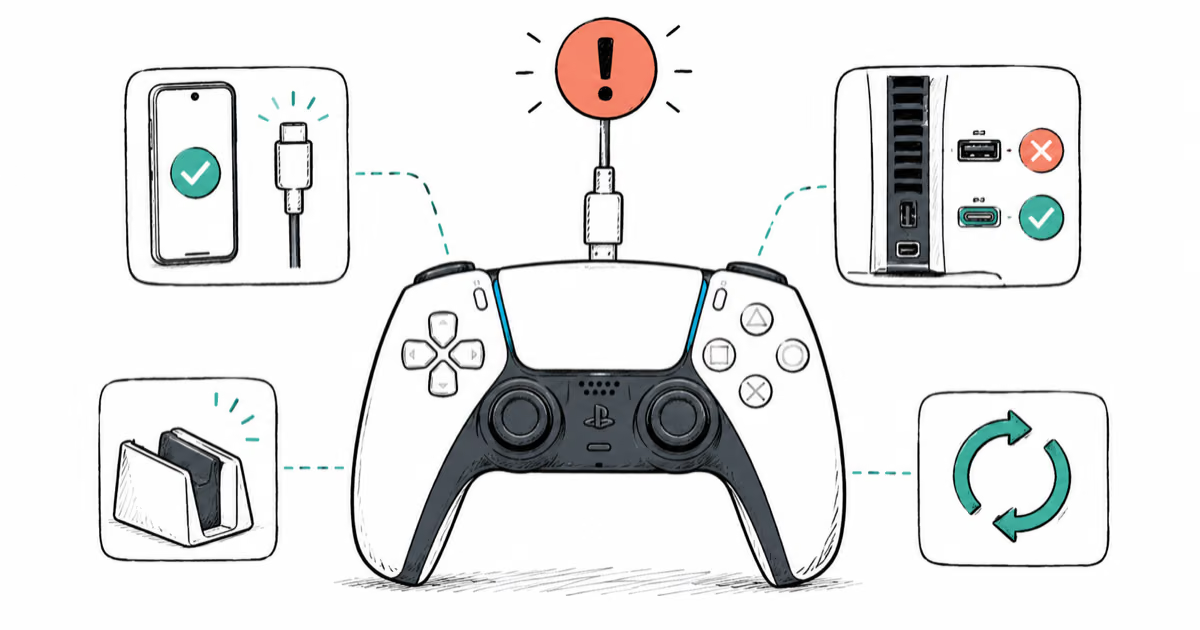
PS5 Controller Not Charging? 9 Fixes That Work (2026)
DualSense not charging? Swap the cable, use a rear port in Rest Mode, clean the USB-C port, and check power settings. 9 fixes for a dead PS5 controller.